Organic compounds are vast in number and show a wide variety of structures and properties. To make their study simple and systematic, they are classified into different groups based on the structure of the carbon skeleton and the arrangement of atoms. This classification helps in understanding the similarities and differences in their properties and reactions. It also provides a convenient way to study a large number of compounds in an organized manner.
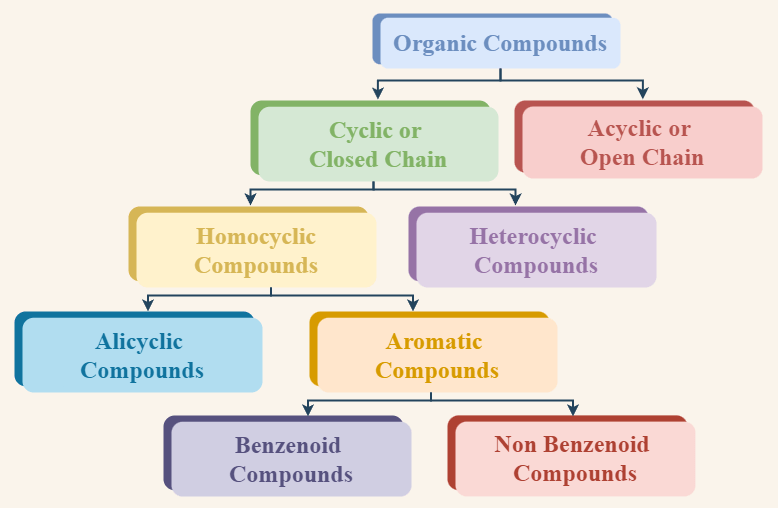
Acyclic or Open Chain Compounds
When organic compounds are formed by joining carbon atoms in the form of an open chain, they are called open-chain organic compounds.
They are further classified as either straight-chain compounds or branched-chain compounds.
1. Straight Chain Compounds
In straight-chain compounds, the carbon skeleton is in the form of a straight chain.
Example: n-Butane
2. Branched Chain Compounds
In Branched chain compounds the carbon skeleton is in the form of a branched chain.
Example: Isobutane
Cyclic or Closed Chain Compounds
These are the compounds in which carbon atoms are joined to form one or more rings with or without heteroatom. On the basis of heteroatoms in the cycle, they are further classified into two types
1. Homocyclic or Carbocyclic Compounds
Homocyclic Compounds are compounds, in which the ring structure is formed by similar atoms of carbon. They are also called Carbocyclic compounds. No other element besides carbon exists in these compounds.
Examples: benzene, naphthalene, tetracene, and so on.

They are further classified as
- Alicyclic compounds: Alicyclic compounds are cyclic compounds that resemble aliphatic compounds in properties. For example Cyclopropane, etc.
- Aromatic Compounds: These compounds contain at least one aromatic ring which resembles benzene in their chemical behaviour. e.g. Benzene, etc.
2. Heterocyclic Compounds
These compounds include one or more heteroatoms like oxygen, nitrogen, sulphur, etc. in the ring of carbon atoms. They are also further divided into two types.

- Hetero-alicyclic compounds: Alicyclic compounds which contain at least one heteroatom in the ring are called hetero-alicyclic compounds. Example include Tetrahydrofuran (THF), etc.
- Hetero-aromatic compounds: Aromatic compounds which contain at least one heteroatom in the ring are called hetero-aromatic compounds. Example include Furan, etc.
Aromatic Compounds
Aromatic Compounds are a special type of organic compound that involves benzene and other ring-related compounds. Aromatic compounds contain benzene ring or follow special stability due to delocalised electrons.
Aromatic compounds are highly stable organic compounds and can further be classified into two categories.
1. Benzenoid Aromatic Compounds
Benzenoid Aromatic compounds are derivatives of benzene. These compounds are distinguished from other organic compounds as they contain one or more than one benzene ring. These compounds can be further arranged on the basis of the benzene rings fused together as Monocyclic, Bicyclic and Tricyclic.
Examples: Phenanthrene, Naphthalene, and Anthracene.

2. Non-Benzenoid Aromatic Compounds
Non-benzenoid Aromatic Compounds consist of other unsaturated rings instead of benzene rings. These compounds are highly stable.
Examples: Tropolone and Azulene.

Classification of Organic Compounds based on Functional Group
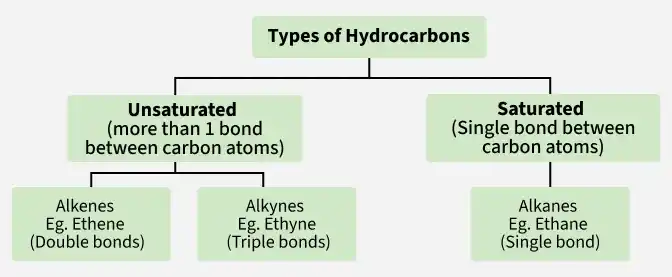
Organic compounds can also be classified based on the functional group present in them. A functional group is an atom or group of atoms that determines the characteristic chemical properties and reactions of an organic compound. Compounds having the same functional group show similar chemical behavior, even if their carbon skeletons are different. Therefore, this classification helps in studying organic compounds in a systematic and convenient way.
Class | General Formula | Functional Group | Common Suffix/prefix (systematic) |
|---|---|---|---|
Alkanes | R - H | C - C | -ane |
Alkenes | R - CH = CH - R | C = C | -ene |
Alkynes | R - C ≡ C - R | C ≡ C | -yne |
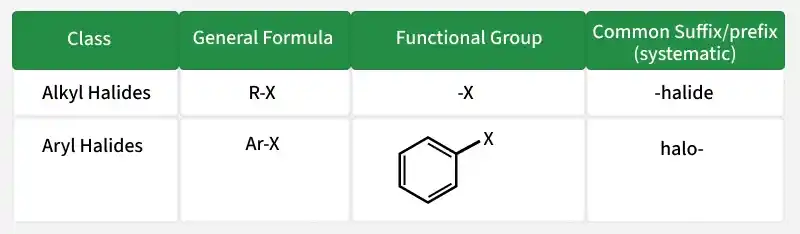
1. Compounds Containing Halogen
Organic halides or organohalides or simply halogenated compounds, are those organic compounds that contain halogen atoms such as fluorine, chlorine, bromine, or iodine. These compounds can be classified is further:
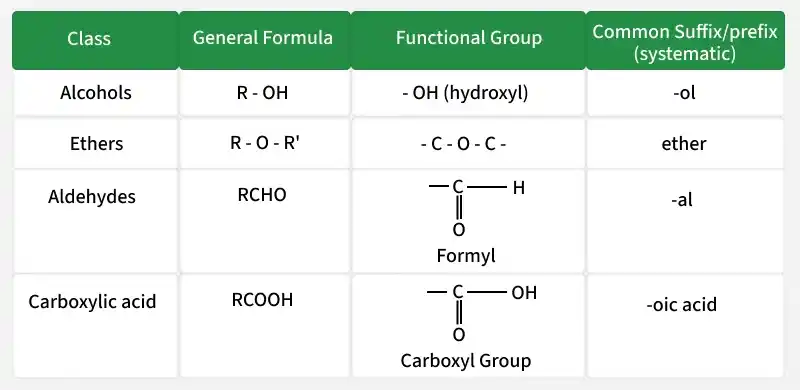
2. Compounds Containing Oxygen
Compounds containing oxygen are an important class of organic compounds in which oxygen is present as a functional group.
3. Carboxylic Acid Derivatives
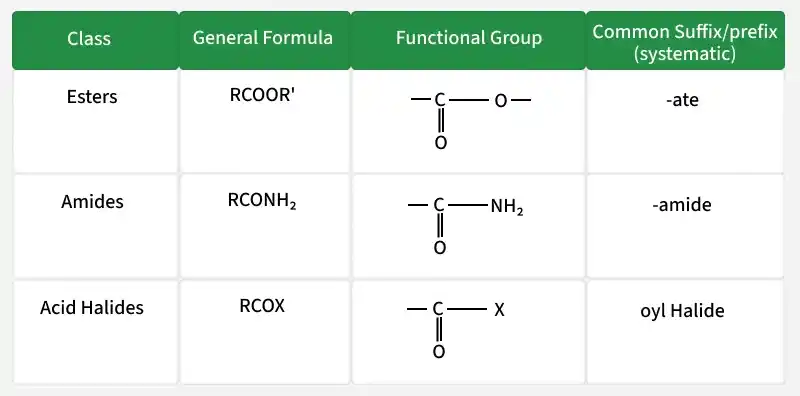
Carboxylic acid derivatives are a class of organic compounds that are structurally related to carboxylic acids. They contain a carbonyl group (C=O) bonded to a heteroatom, such as oxygen, nitrogen, or sulfur.
4. Compounds Containing Nitrogen
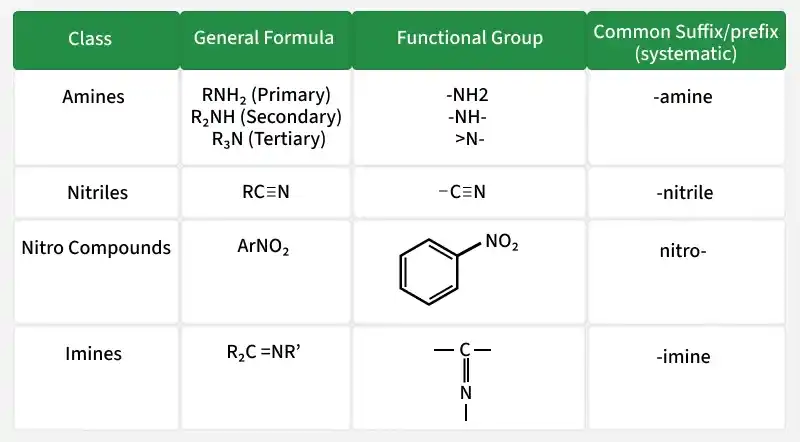
Nitrogen is the seventh most abundant element in the universe and is present in a wide range of compounds, including amino acids, DNA, and proteins thus compounds containing nitrogen are a diverse and essential class of organic compounds. Some compounds containing nitrogen are:
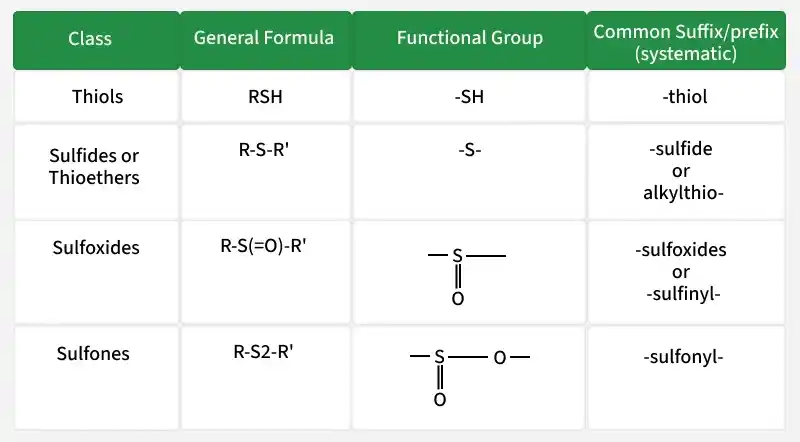
5. Compounds Containing Sulfur
Sulfur-containing compounds are molecules that contain one or more sulfur atoms in their chemical structure. Sulfur is a non-metallic element with the atomic number 16 and is found in many minerals and organic materials. Some organic compounds containing Sulfur are: