Showing posts with label UN. Show all posts
Showing posts with label UN. Show all posts
27 January 2015
Planet of Cities ~ Room for Urban Expansion...
Shlomo (Solly) Angel who runs the Urban Expansion Initiative at NYU Stern and authored a Planet of Cities both writes and speaks about making room for cities to grow by plan...

12 November 2014
I Belong ~ UNHCR End Statelessness Campaign
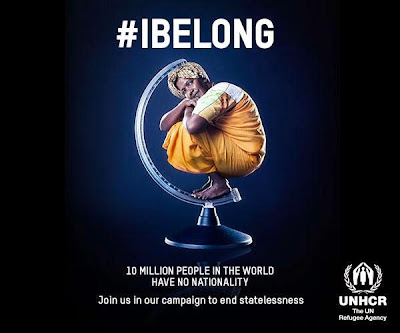 Bronwen Manby at African Arguments asks How will the UNHCR’s statelessness campaign affect Africa?
 "On 4th November the UN launched a global campaign to end statelessness within ten years. I confidently predict that the result of this campaign will be to ‘increase’ statelessness by many millions of people. This is not because I think that the campaign is misconceived -- far from it -- but because the statistics on the numbers of stateless persons are currently so inadequate that one of the main impacts of greater attention to the issue will be that currently uncounted populations will come into focus. This is a good thing."Read the rest, it's important.
05 April 2014
African Holocaust ~ Rwanda Genocide 20 Yrs Ago
 Two decades ago, extreme violence seized the small but densely populated African nation of Rwanda. Peacekeeping efforts were overwhelmed, the UN and outsiders were slow to act, many, many died. We're still not sure what lessons to draw from the whole experience. But at least it's worth remembering what happened. First, contemporary reports, for example, Nightline Rwanda 1994... Next, retrospective documentaries from a decade ago, including the Ghosts of Rwanda 2004... The overwhelmed UN General Dallaire whose memoir is tellingly titled Shake Hands with the Devil... President Kagame reflects on 20 years... Finally, amidst the craziness of that time emerged several remarkable protectors and heroes. The BBC's Mark Doyle tells of A good man in Rwanda, the Senegalese Captain Mbaye Diagne, a UN observer...
 "This is the story of the bravest man I have ever met. [...] We will never know exactly how many people owe their lives to Mbaye. [He] was part of a small group who had been willing to risk their lives to save others. [Mbaye] had a sense of humanity that went well beyond orders, well beyond any mandate."

01 July 2013
Innovation Generation ~ Sengeh Enables Makers!
MIT Media Lab's David Sengeh gives Keynote Address at the 2013 UN High-level Segment of the Economic and Social Council on the Innovation Generation, enabling African youth makers!
14 May 2013
Edible Insects ~ UN on Future Food Prospects...
 The UN FAO wants humanity to eat bugs according to latest report Edible insects: Future prospects for food and feed security...
 "Insects as food and feed emerge as an especially relevant issue in the twenty-first century due to the rising cost of animal protein, food and feed insecurity, environmental pressures, population growth and increasing demand for protein among the middle classes. Thus, alternative solutions to conventional livestock and feed sources urgently need to be found. The consumption of insects, or entomophagy, therefore contributes positively to the environment and to health and livelihoods. [...] It is estimated that insects form part of the traditional diets of at least 2 billion people. More than 1 900 species have reportedly been used as food. [...] Insects are a highly nutritious and healthy food source with high fat, protein, vitamin, fibre and mineral content. [But] the polarity of views surrounding the practice of entomophagy necessarily requires tailormade communication approaches for each of the various stakeholders. In the tropics, where entomophagy is well established, media communication strategies should promote edible insects as valuable sources of nutrition to counter the growing westernization of diets. Western societies require tailored media communication strategies and educational programmes that address the disgust factor."The BBC investigates Can Eating Insects Save the World?
22 July 2012
Operation Palliser ~ Enlightened Intervention...
I'm very interested in the current boom times in Sierra Leone, with dramatic growth rates and the problems of prosperity and entanglements over ownership and sharing the wealth. How different from just over a decade ago when SL was in the throes of civil war. Until, that is, Operation Palliser, which began as an evacuation by UK troops but escalated into the protection of the capital, Freetown, and fight against the RUF rebellion. The story deserves further review because it is a successful example of Enlightened Intervention by outside powers in ending strife and restoring a people to a more peaceful pathway forward. The BBC tells of The brigadier who saved Sierra Leone, the story of the British deployment and their leader...
"The force commander, a little-known brigadier called David Richards, had other ideas. He saw a chance, took a risk, and changed the fate of the country. [...] "I could see," he told me, "that with a little robustness, we could make a difference." [...] Richards promised the president that Britain would supply arms and ammunition to the government forces. [...] Richards was committing Britain to taking sides in Sierra Leone's civil war. However, there was one important difficulty. The general's political bosses in London had sent him to carry out a quick evacuation and then leave. "So," I asked him 10 years on, "you were promising the president all this before you had the political authority from London to do so?" "Er, yes," he said, "I'm afraid I was, yes."Wow! See more from the BBC about this remarkable story... And here's a Master's thesis by Patrick Evoe on Operation Palliser: The British Military Intervention into Sierra Leone, A Case of a Successful Use of Western Military Interdiction in a Sub-Sahara African Civil War.
03 April 2012
World Governance Goals ~ MDG's for Civics...
Very interesting OpEd in WSJournal by Mark Palmer, Patrick Glen, and Paul Wolfowitz asking How About Some World Governance Goals?
"Progress against poverty requires measuring countries by the rule of law, judicial independence and free speech [...] If the U.N. is serious about promoting democracy, it should establish goals, similar to its Millennium Development Goals. [The important thing] is the measurement of progress over time on such issues as establishing written constitutions and laws; implementing universal suffrage and free elections; guaranteeing freedom of speech and association; protecting the independence of the judiciary; and ensuring the accountability of officials. Realization of these goals would mean the effective end of dictatorial and autocratic rule and lay foundations for strong and genuine democracy. [...] The benefits of establishing Millennium Goals focused on governance and the rule of law are twofold. First, setting goals agreed upon by the international community would establish a minimum standard of good governance for judging a state's actions and provide a way to measure progress. Second, promoting better governance would lead to greater progress on the U.N.'s existing development goals."Definitely read the rest. And also look at both recent book on Why Nations Fail and the Freedom House report mentioned in the piece.
17 October 2011
CITIES @ UN ~ Design with Other 90% Exhibit
 Design with the Other 90%: CITIES exhibit is at UN NYC HQ and...
 "...features sixty projects, proposals, and solutions that address the complex issues arising from the unprecedented rise of informal settlements in emerging and developing economies. Divided into six themes -- Exchange, Reveal, Adapt, Include, Prosper and Access -- to help orient the visitor, the exhibition shines the spotlight on communities, designers, architects, and private, civic, and public organizations that are working together to formulate innovative approaches to urban planning, affordable housing, entrepreneurship, nonformal education, public health, and more."Here's just one compelling exhibit element, the Medellín Metrocable and Northeast Integral Urban Project...
18 September 2011
UN Women ~ Chile's Bachelet on Global Mission
 Gayle Tzemach Lemmon writes in Newsweek that former Chilean President Michelle Bachelet Has a Mission -- running the United Nations Entity for Gender Equality and the Empowerment of Women -- popularly known as UN Women. While the mission of gender equality and protection and a voice for women is hugely important, Lemmon itemizes the many challenges...
 "...from the beginning of Bachelet’s tenure there have been problems. To begin with, U.N. Women was not accorded the power of a full agency, a distinction that matters at the United Nations. It is the product of four years of negotiations that nearly ended in gridlock after member states split on the organization’s mission. What emerged was an entity with an operational responsibility to run programs on the ground when countries want them, and a policymaking arm to ensure women sit at the center of the U.N.’s work. All that costs real money, which points to the more fundamental problem: the financial resources critical to U.N. Women’s success have failed to materialize. While countless U.N. speeches have eloquently emphasized the importance of improving the lot of women and girls, contributions to the fledgling organization haven’t lived up to the rhetoric."Despite this, Bachelet seems up to the task.
Subscribe to:
Posts (Atom)


.svg.png)


