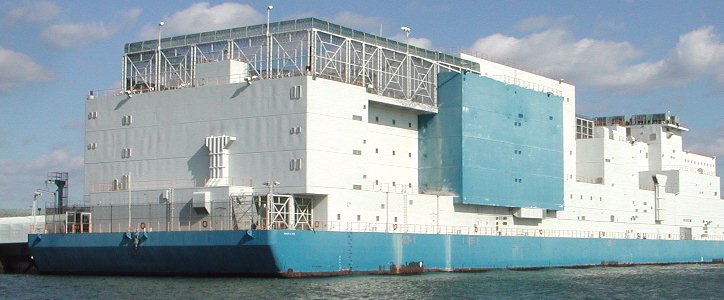
"A new modular medium speed engine power barge design [...] This radiator-cooled modular power barge design permits the same hull to be utilized with a range of power outputs from 80 MW to 180 MW. [...] The new design is presently being modified for dual fuel and natural gas operations to suit combined operations with LNG […] and combined cycle systems for specific market opportunities."
Power barges are the fastest way to ramp up electricity (and cogen + water desal) infrastructure in coastal or navigable river areas. By floating in and being modular, they can be incrementally added to (with more barges) or floated out and moved to new or better location (and/or refurbished). See also my previous posts on this topic!
One of the latest beneficiaries of the Mercy Ships floating hospital organization (and one of my favorite examples of flexible & fast floating solutions) is Sambany, a 55yo burdened by an 8kg facial tumor. Not only is his treatment story epic, but so too is the essential life-affirming mission of MS... See more on the MS channel.
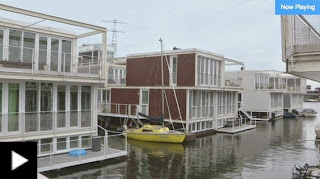
I've written before about floating hospital ships, Shell's ginormous LNG processing ship, floatable power plants, and other flexible infrastructure (including lots of containerized stuff) and even a jail. Here's some new additions to the list! First, NEAPO's float-in three-storey apartment block built at Turku Shipyard and transferred in one go by water to the island of Hirvensalo, Finland... To build the Snøhvit LNG processing facility in the remote northern Barents Sea, Norway's Statoil commissioned the liquefaction plant from a Spanish engineering firm and floated it via heavy-lift to the Melkøya Island off Hammerfest... Perhaps the most (in)famous example of this is American billionaire Daniel Ludwig's Project Jari, shifting a Japanese-made paper pulp mill around the world and up the Amazon to a Brazilian wood plantation! Here'a a more recent example on a personal scale in this BBC Horizons show on Innovations on water featuring Dutch architect Marlies Rohmer and her waterfront development. Each of the dozens of apartments "floats" are made in a shipyard.
It has me wondering about other potential offshore development opportunities. One thought in the article particularly struck me: it was the comment about augmenting land-scarce cities like NY with services they need. Why not build condos -- even communities -- near-shore? Or office buildings? People love the water, the view and proximity to the city. This is a viable solution to a real estate crunch. Think South East Asia. Plus, there is already ferry service in the Boston Harbor, in NYC, and SF. People vaction on house boats, take cruises, and travel to islands ... why not live there!
Indeed, said I, pointing out that the powers that be -- brighter minds than ours -- are already on it! Check out these multi-million dollar accomodations moored off New York City. Hundreds of people already live there... Seriously, though, this is a damn great idea. Floatable stuff is fast: fast to install, fast to change, fast to improve, fast to remove. All excellent qualities, worldwide.
MIT $100K Entrepreneurship Competition, Enterprise Forum Global, Enterprise Forum of Cambridge, Muddy Charles Pub, African Business Club, Sloan Entrepreneurs for International Development, Global Startup Workshop, Sustainability@MIT, TechLink, Making Progress, HighTechFever.tv, MIT Innovation Tours




.svg.png)


