Linux commands are the foundation of DevOps operations used for system administration, automation and troubleshooting. They help engineers manage files, processes, users, networks and system resources efficiently. These commands are widely used in servers, cloud environments and CI/CD pipelines.
Manage and control running processes and services
Automate repetitive tasks using shell scripting
Debug issues using logs and system monitoring tools
Enable secure remote server access (e.g., SSH)
Configure system components like permissions, storage and networks
Basic Commands
1. pwd
The pwd command helps you identify your current location in the file system:
The pwd command is used to display the current working directory.
Command:
pwd
pwd
2. ls
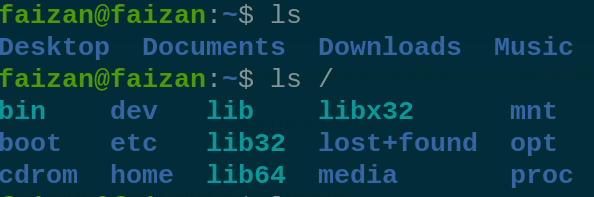
The ls command is used to list files and directories in the current location.
Command:
ls - List Files and Directories
Command
Description
ls <Path Name>
Lists all files and directories in the specified path.
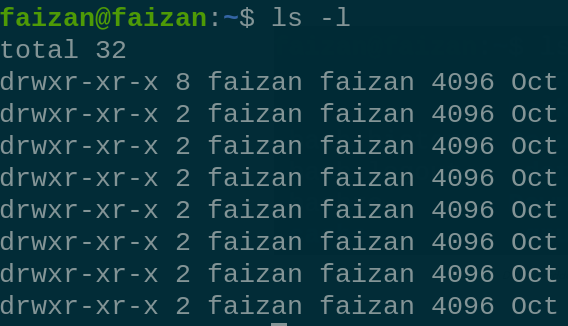
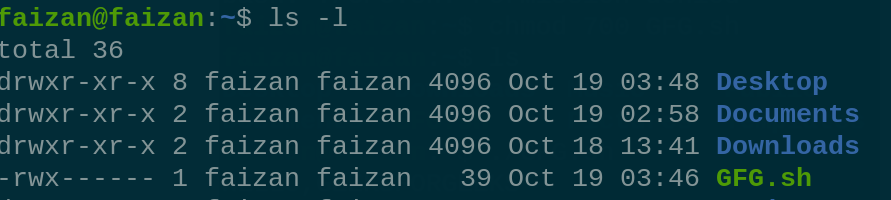
ls -l
Lists directory contents in long format with details like permissions, owner, size and modification time.
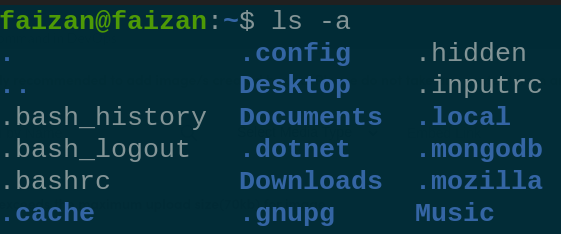
ls -a
Shows all files and folders, including hidden files (dotfiles).
List Files and DirectoriesDisplay hidden filepermission of all file
3. uname
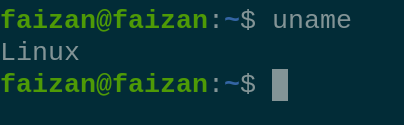
The uname command is used to display system information.
Command:
uname
uname
Note: uname -r shows the kernel release version.
Command:
uname -r
uname -r
4. cd
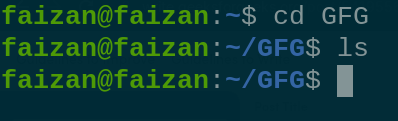
The cd command is used to change the current directory.
Command:
cd
Cd
5. clear
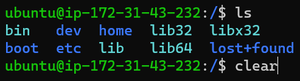
The clear command clears the terminal screen, providing a clean workspace.
Command:
clear
clear
6. whoami
The whoami command displays the current logged-in user.
Command:
whoami
whoami
7. history
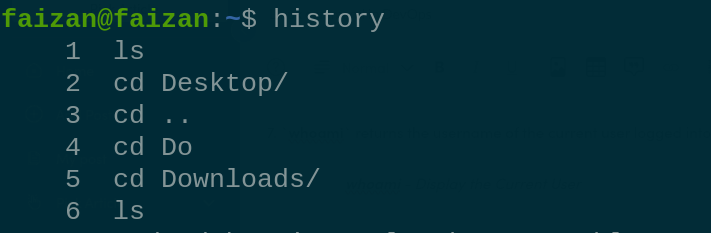
The history command shows previously executed commands.
Command:
history
History
8. free
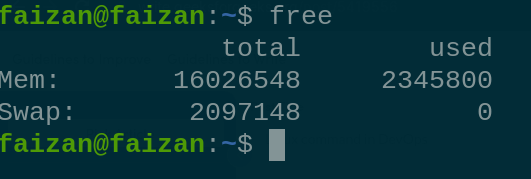
The free command is used to check memory usage.
Command:
free
free
9. nslookup
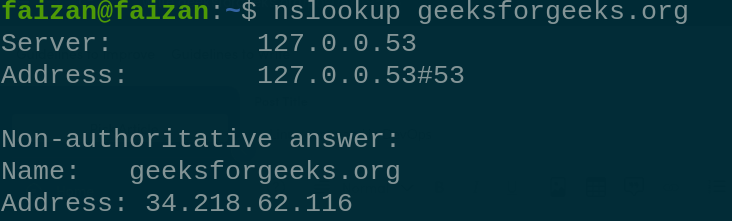
nslookup is used to obtain information for DNS server. It stands for Name Server Lookup.
Command:
nslookup <domain name>
nslookup
10. ssh-keygen
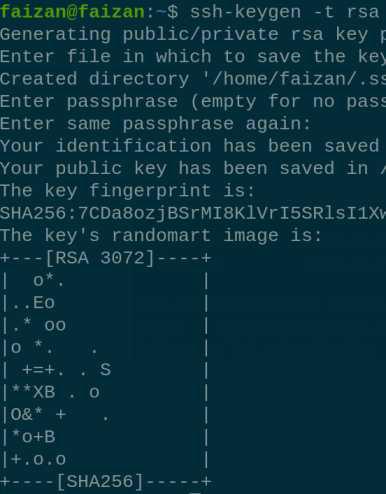
The ssh-keygen command generates SSH public/private key pairs.
Command:
ssh-keygen -t rsa
11. curl
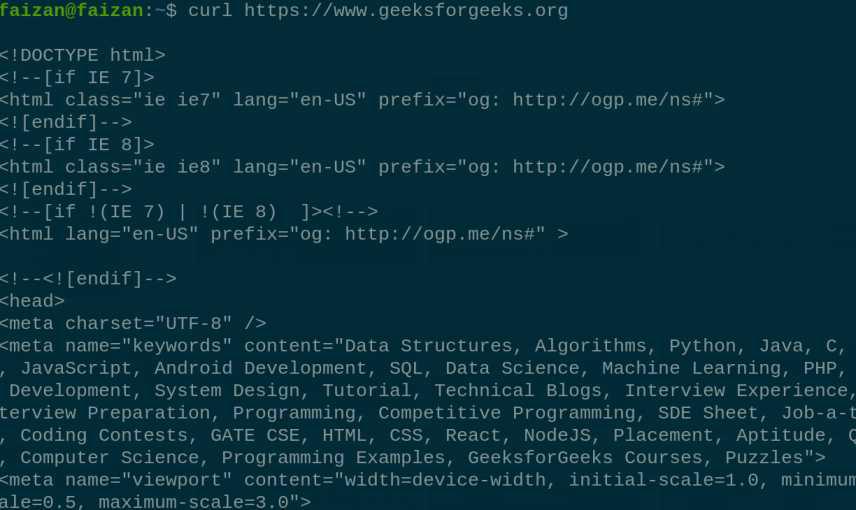
The curl command is used to transfer data from or to a server.
Syntax:
curl [options] [URL]
curl
12. curl -o
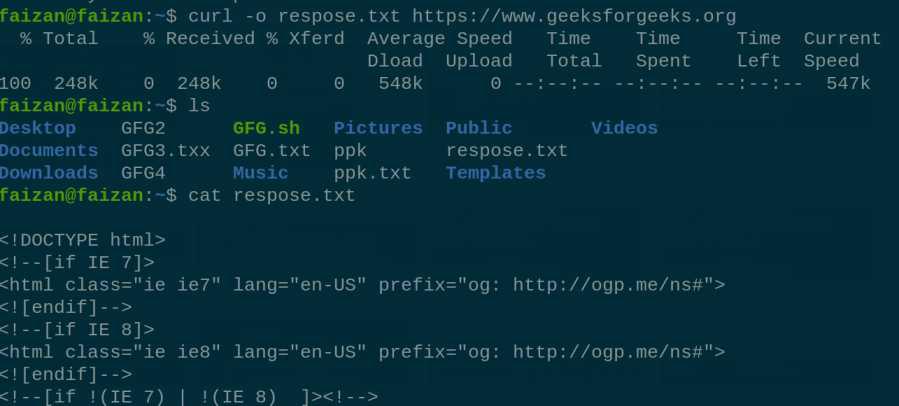
curl -o flag saves the data into a file on the local machine.
Syntax:
curl -o [file_name] [URL...]
store response on local machine
13. apt-get
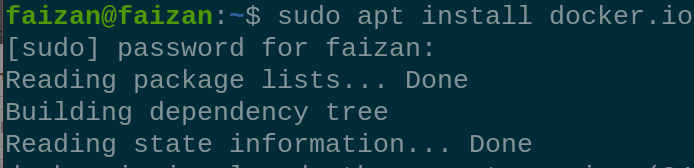
apt-get command used to manage packages in the linux. APT stand for the Advanced Packaging Tool and its main used of install, update, upgrade and remove the packages.
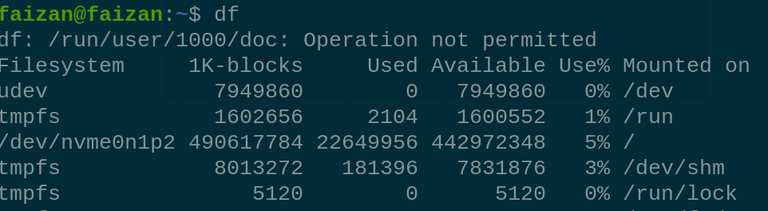
df command is used to check the available disk space in system.
Command:
df -h
df
16. ifconfig
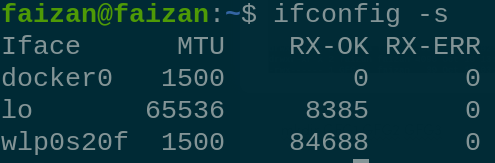
ifconfig command is used to view the information about your network interface.
Syntax:
ifconfig [OPTIONS] [INTERFACE]
ifconfig
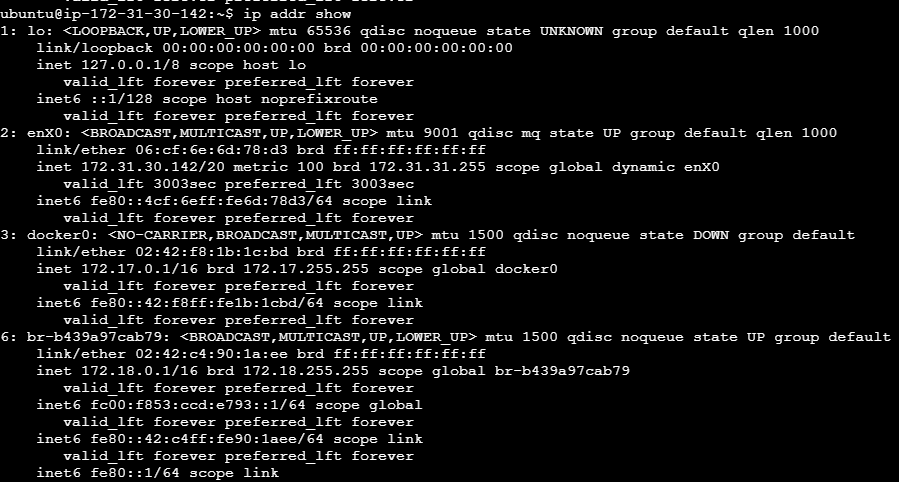
17. ip
ip command is a modern replacement of ifconfig command. It is used to view and manage network settings. You can check Ip addresses, configure network interfaces, view routing tables by this command.
Syntax:
ip [OPTIONS] OBJECT {COMMAND | help}
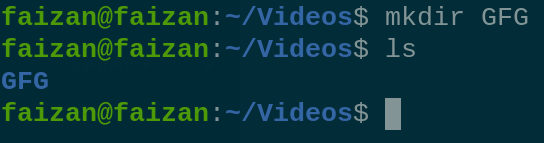
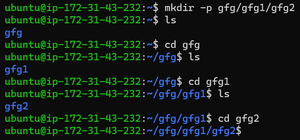
Creating Files and Directories
In DevOps, creating and managing files and directories is a common task. Here are some essential commands:
We can create file in linux by using various commands like vi, touch, echo, nano etc. The following table will explain the use case of each command:
Command
Purpose
Example
touch
Creates an empty file
touch file.txt
echo
Creates a file with content
echo "Hello" > hello.txt
cat
Creates/writes to a file via input
cat > notes.txt (Ctrl + D to save)
nano
Opens a simple terminal editor
nano file.txt
vi / vim
Opens a powerful terminal editor
vi file.txt
Copying and Pasting Files and Directories
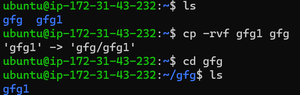
The cp command is used in Linux to copy files and directories. Below are common options and examples
Command (verbose, recursive, force overwrite):
cp -rvf gfg1 gfg
cp -rvf
Removing Files and Directories
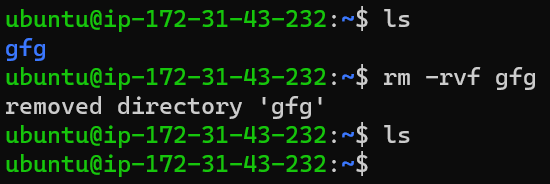
In Linux (and DevOps environments), the rm command is used to delete files and directories. Use it carefully, as deletion is permanent.
For removing a directory and its contents
Command:
rm -rvf gfg
rmRenaming Files and Directories
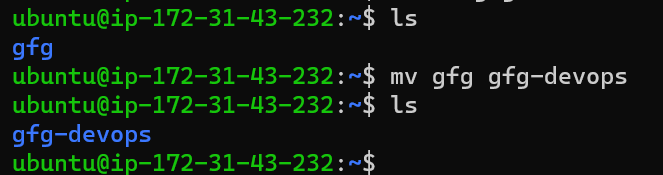
The mv command in Linux is used to rename files or directories (and also to move them).
Command:
mv gfg gfg-devop
mv
User Management
User management in Linux is a crucial aspect of DevOps and system administration. Managing users and their permissions ensures that your systems are secure, organized and meet the needs of your organization. Heres an overview of user management in Linux within a DevOps context:
1. Creating a User
To create a new user in Linux, you can use the useradd command. For example:
Syntax:
sudo useradd [username]
sudo useradd GEEKSFORGEEKSGEEKSFORGEEKS user created
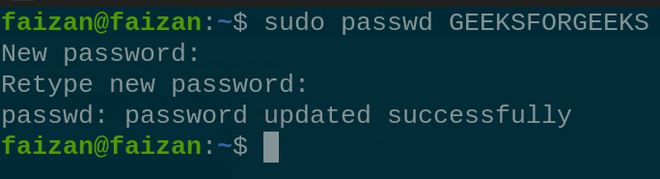
2. Setting a Password
After creating a user, set a password using the passwd command:
Syntax:
sudo passwd [username]
setting password for GEEKSFORGEEKS user
3. Deleting a User
To delete a user, use the userdel command:
Command:
sudo userdel [username]
deleting user GEEKSFORGEEKS
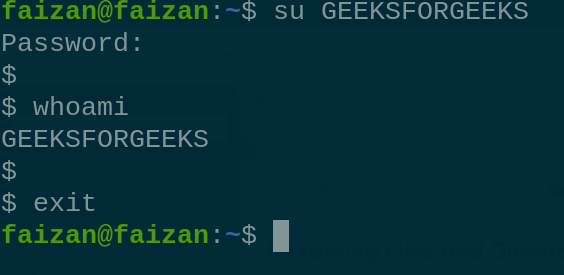
4. Switch to Another User
The su command allows you to switch to another users account by providing the username as an argument. To exit from the users account and return to your original session, you can simply type exit.
Syntax:
su [USER NAME]
Switch to user GEEKSFORGEEKS
5. Rename the User
To change the username from the current name (oldname) to the new name (newname), use the following command.
Command:
sudo usermod -l [newname] [oldname]
change the user name from GEEKSFORGEEKS to GFG
Group Management
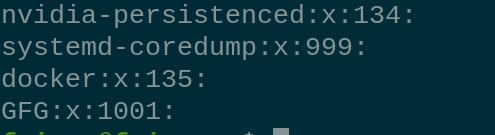
A group is a collection of user accounts that is very useful to administrators for managing and applying permission to a number users.
Command
Description
sudo groupadd <groupname>
Creates a new group
sudo groupdel <groupname>
Deletes an existing group
sudo usermod -g <groupname> <username>
Adds/assigns a user to a group
create the new Group called GFG
Process Management
A process management is the process of controlling and monitoring the process running on a Linux system.
1. ps
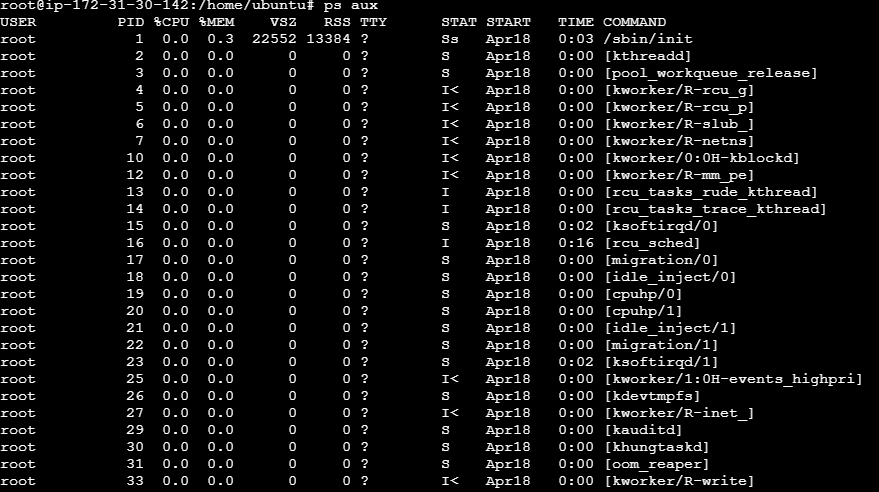
ps command displays currently running processes.
Command:
ps aux
2. top
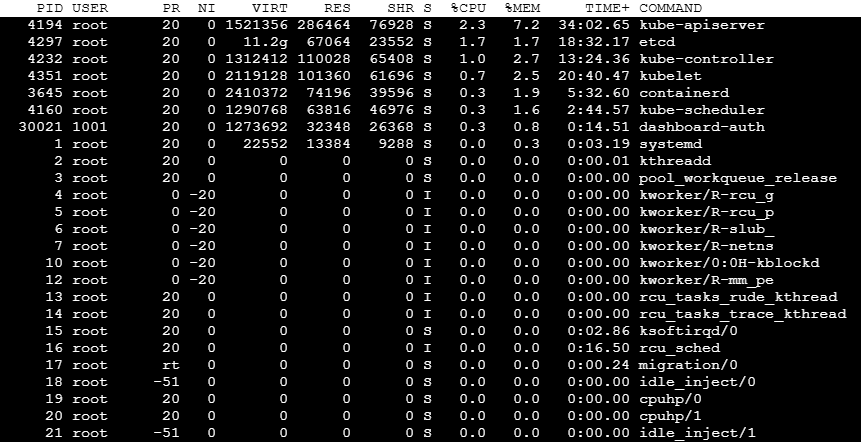
The top command is used for memory monitoring. It shows a real-time view of system processes.
Command:
top
3. kill
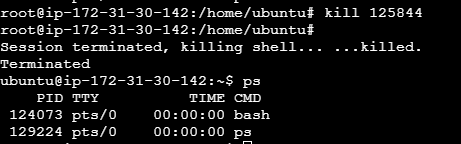
The kill command is used to terminate a process using its PID.
Command:
kill 1234
4. pidof
The pidof command is used to gets the PID of a running process by name.
Command:
pidof bash
5. systemctl
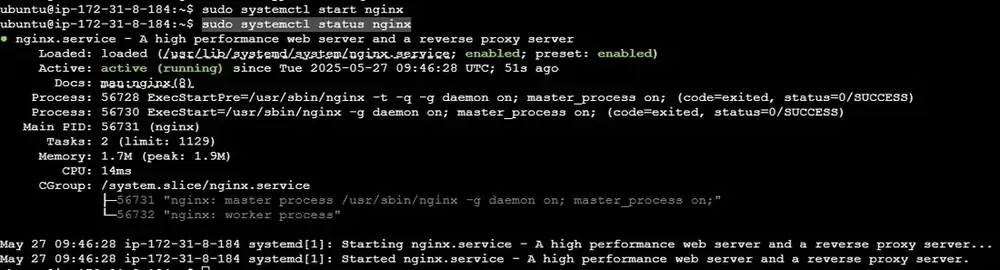
The systemctl command is used to start/stop/restart systemd-managed services (like Docker, Nginx etc.)
Command:
sudo systemctl status nginx
Linux File System Permission
In Linux, file and directory permissions are used to improve system security.
There are three main types of permissions:
Read (r): View file contents
Write (w): Modify file contents
Execute (x): Run a file or access a directory
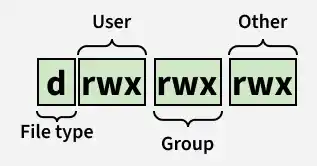
Permissions are assigned to three categories of users:
User (u): Owner of the file
Group (g): Users who are part of the file’s group
Others (o): All other users
Example:
If a file has read permission only for the user, then:
The user can read the file
The group cannot access it
others cannot access it either
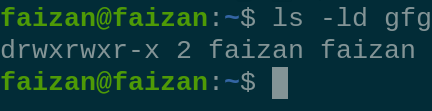
1. ls -ld
It is used to check the permission of directory
Command:
ls -ld
check the permission of directory
Permission with numeric & symbol
Number
Permission Type
Symbol
0
No permission
---
1
Execute
--x
2
Write
-w-
3
Write + Execute
-wx
4
Read
r--
5
Read + Execute
r-x
6
Read + Write
rw-
7
Read + Write + Execute
rwx
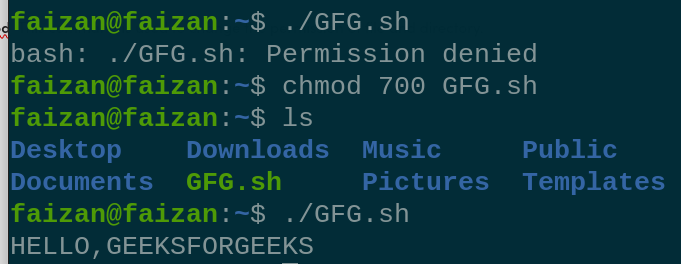
2. chmod (Change Mode)
This command is used to change the permission of file and directory.
Syntax:
chmod [permissions] filename
GFG fileGive execution permission
3. chown (Change Owner)
It is used to change the owner of the file and directory.
Syntax:
chown [owner_name] [file name]
current ownership is faizanownership change to GFG user
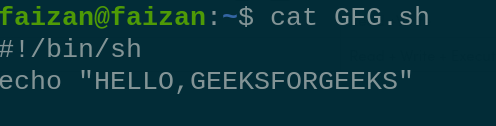
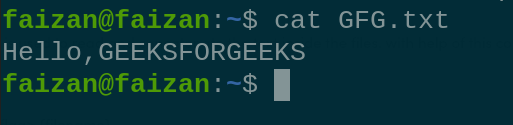
4. cat
It is used to read and concatenate the text inside the files. with help of this command we can displays the content inside the file.
Syntax:
cat <flag> {filename}
Command
Description
cat -b
This flag adds number to the text line.
cat -E
This flag add $ at the end of each line.
Display the contain the file GFG
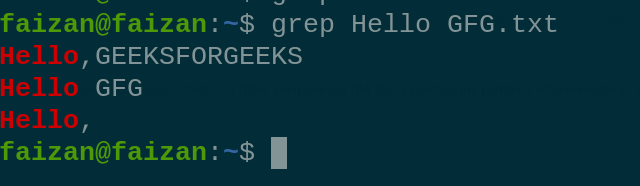
5. Grep (Global Regular Expression Print)
It filter and searches a file for a particular pattern of characters and displays all lines that contain the pattern.
Command:
grep <flag or search_word> {file name}
Command
Description
grep -i
Delivers results for case-insensitive strings.
grep -n
Retrieve the corresponding strings and their respective line numbers.
grep -v
Provides the output of lines that do not contain the search string.
Search key word Hello from GFG.txt
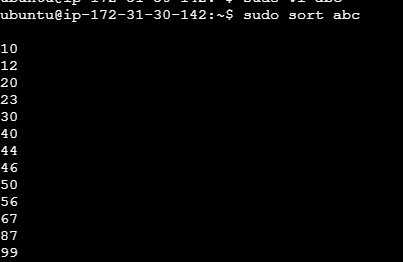
6. Sort
It print the output of a file, either alphabetically, numerically or by other specified way.
Command:
sort filename
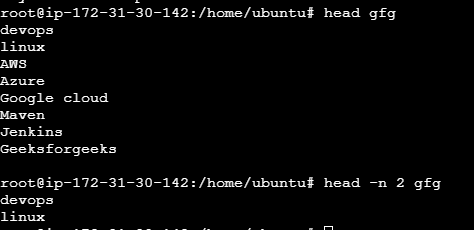
7. head
The head command is used to display the first few lines of one or more text files.
Command:
head -n 2 gfg
8. tail
The tail command is used to display the last few lines of one or more text files.
Command:
tail -n 3 gfg
9. find
The find command is used to search files and directories based on different criteria such as name, size, type and modification date.
Command:
find [path] [expression]
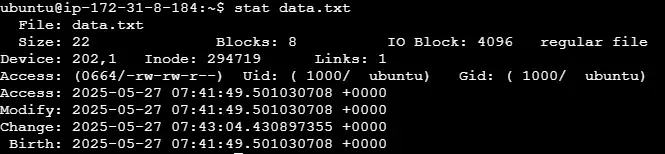
10. stat
The stat command is used to display detailed permission and ownership metadata.