
Hashcat is famous as the fastest password cracker and password recovery utility. Hashcat is designed to break or crack even the most complex passwords in a very short amount of time.
Working Of Hashcat
Usually Hashcat tool comes pre-installed with Kali Linux, but if we need to install it, write down the given command in the terminal.
sudo apt-get install hashcat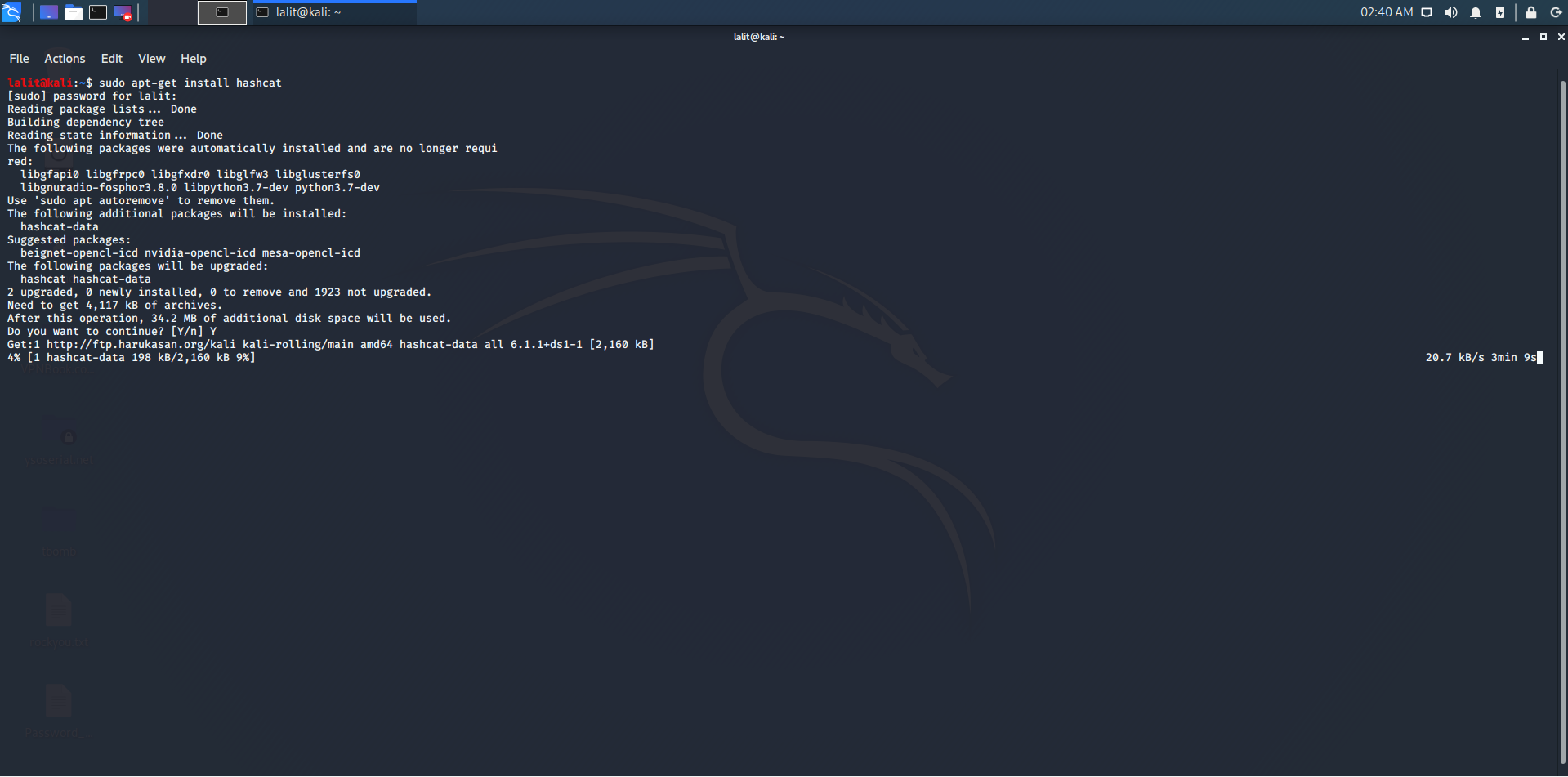
Now, you can find the hashcat Tool in Password Cracking Tools :
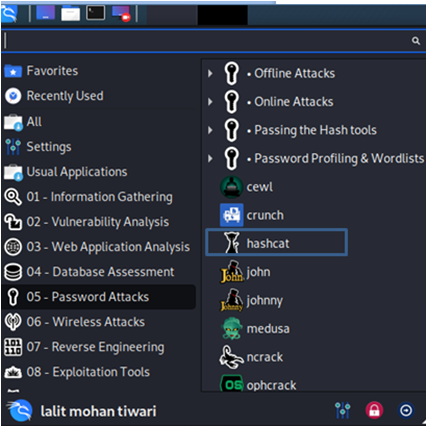
We are going to perform Dictionary Attack to crack Password in this article.
1. Creating Hash Entries
These entries will then be outputted to a file called “Dictionary_hashes”.
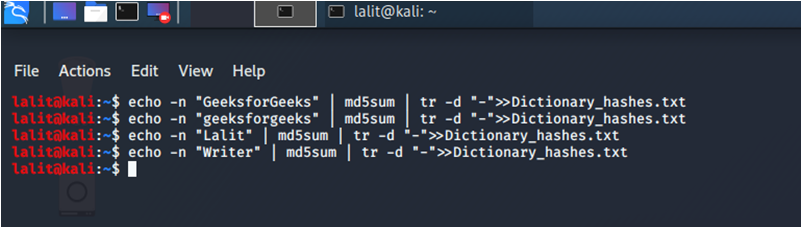
- -n: This option removes the new line added to the end of entries as we don’t want the newline characters to be hashed with our entries.
- tr -d: This option removes any characters that are a space or hyphen from the output.
2. Checking the stored Hashes
We can check the stored hashes with the help of the below command :
cat Dictionary_hashes.txt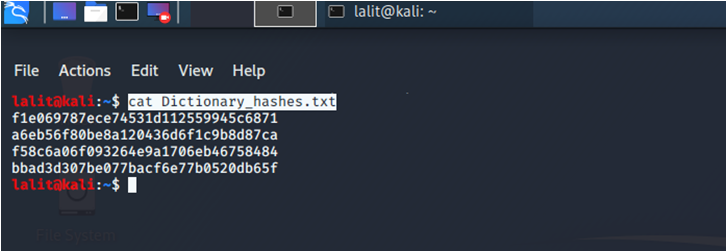
Some password hashes that can be cracked with hashcat can be seen below :
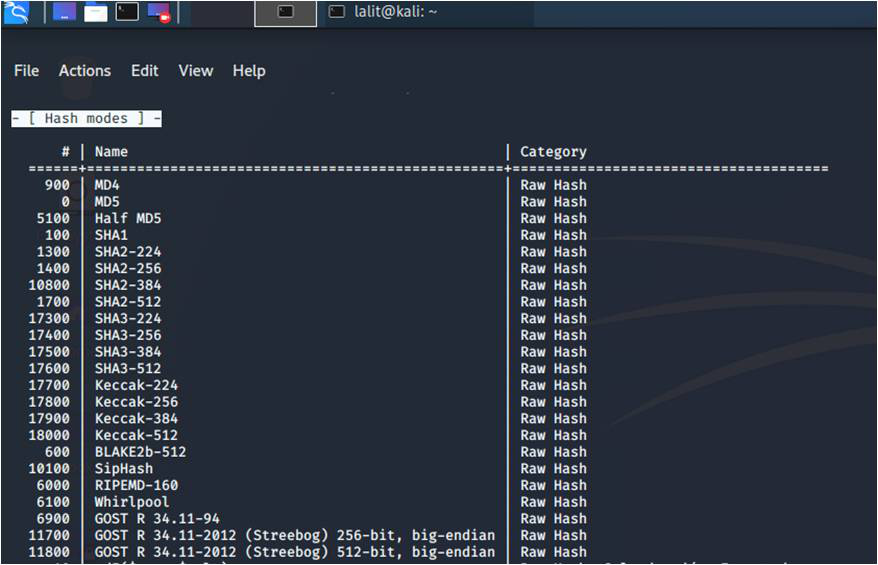
3. Choose the wordlists
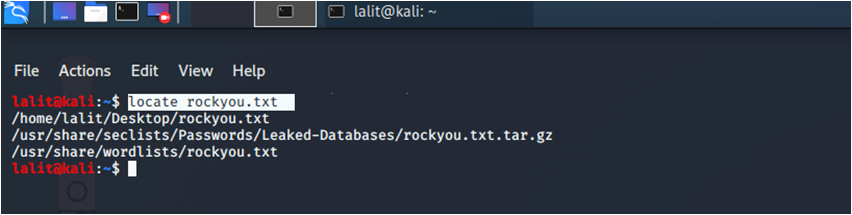
We are going to use the “rockyou” wordlist.
4. Cracking the Hashes
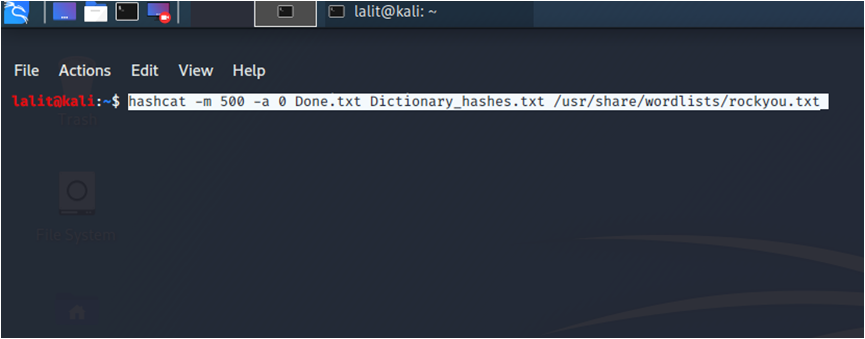
Now we can crack the hashes that we stored in Dictionary_hashes.txt and we will store the result in the Done.txt file.
5. Results
Now we can see the results stored in the Done.txt file by the below command:
cat Done.txt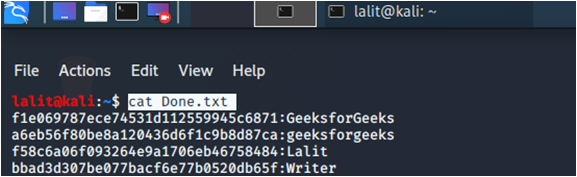
Features of hashcat
Here’s a clear list of the features of Hashcat
- The 90+ Algorithm can be implemented with performance and optimization in mind.
- The number of threads can be configured.
- Hashcat is a multi-algorithm based ( MD5, MD4, MySQL, SHA1, NTLM, DCC, etc.).
- All attacks can be extended by specialized rules.
- It is multi-hash and multi-OS-based (Windows and Linux).
- It supports both hex-charset and hex-salt files.
Use Cases
Here are some of the use cases of the Hashcat Tool
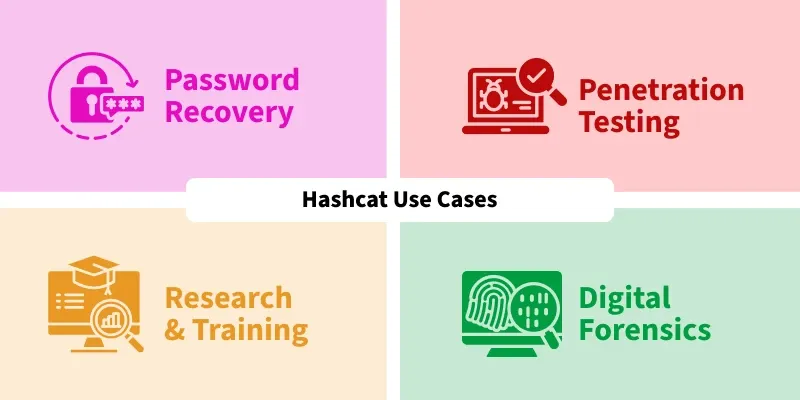
- Password Recovery: For individuals or organizations that need to recover lost or forgotten access.
- Penetration Testing: To identify weak or guessable passwords in systems.
- Digital Forensics: Law enforcement or investigators use it in cybercrime cases.
- Research & Training: To understand password strength and cracking methods.