
Inscribed and Circumscribed Figures: Geometry contains a great number of interesting ideas, and among them, the inscribed and circumscribed figures are considered to be the most captivating. These figures are present in many types and hold important positions in connection with theory and application in mathematics.
In this article, we will discuss both topics in detail including definitions, properties, relationships, and applications of inscribed and circumscribed figures. We will also include solved examples and practice questions that will help you understand the concepts discussed here better.
What are Inscribed Figures?
An inscribed figure is one where one geometrical figure can be completely enclosed inside another figure where all the vertices of a geometrical figure are touching the boundary of another figure.
For example when one side of a square is enclosed in a circle by resting its corner point on the circle then it is an inscribed square. Figures inscribed in different situations may be polygons inscribed in circles, circles inscribed in polygons or one polygon inscribed in another. The thought behind it is that the inscribed figure is ‘locked inside’ the outer perimeter of another shape, thus making a fairly tight geometric connection.
Properties of Inscribed Figures
Inscribed figures exhibit specific properties that make them unique and important in geometry:
- Every vertex of the inscribed shape touches the boundary of the larger shape, ensuring that the figure is perfectly enclosed within the outer shape.
- Angles subtended by the same arc in a circle are equal. This property is fundamental in solving many problems related to circles and angles.
- The inscribed angle in a semicircle is always 90 degrees. This property is often used in problems involving right triangles and circles.
- Central angles subtended by the same arc are equal, leading to interesting relationships between angles and arcs in circles.
Examples of Inscribed Figures
Written below are the few of the examples of Inscribed Figures:
Inscribed Figures in Circles
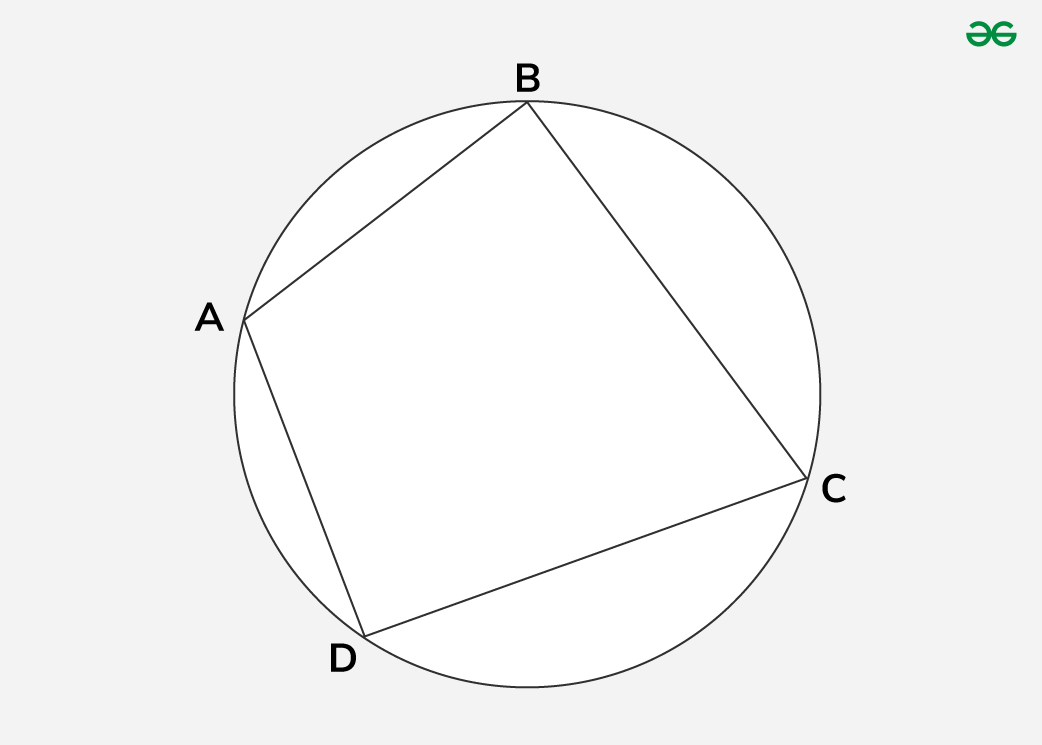
In geometry, when one says that a figure is circumscribed about a circle, this means that all the vertices of the figure lies on a circle.
For instance, a quadrilateral where all four vertices lie on a circle is an example of a cyclic quadrilateral, which is an inscribed figure in the circle.
Inscribed Figures in Triangles
Inscribed figures in triangles refer to shapes or points that are placed within a triangle in such a way that they touch certain elements of the triangle.
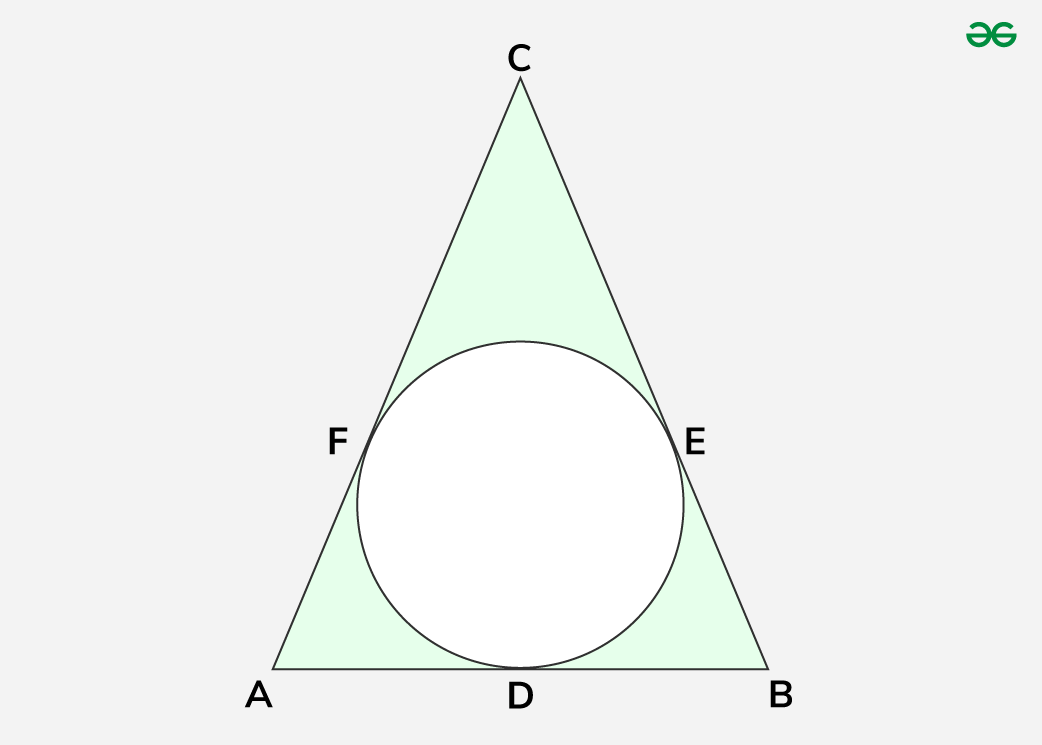
Incircle (Inscribed Circle) [Example of Inscribed Figures in Triangles]
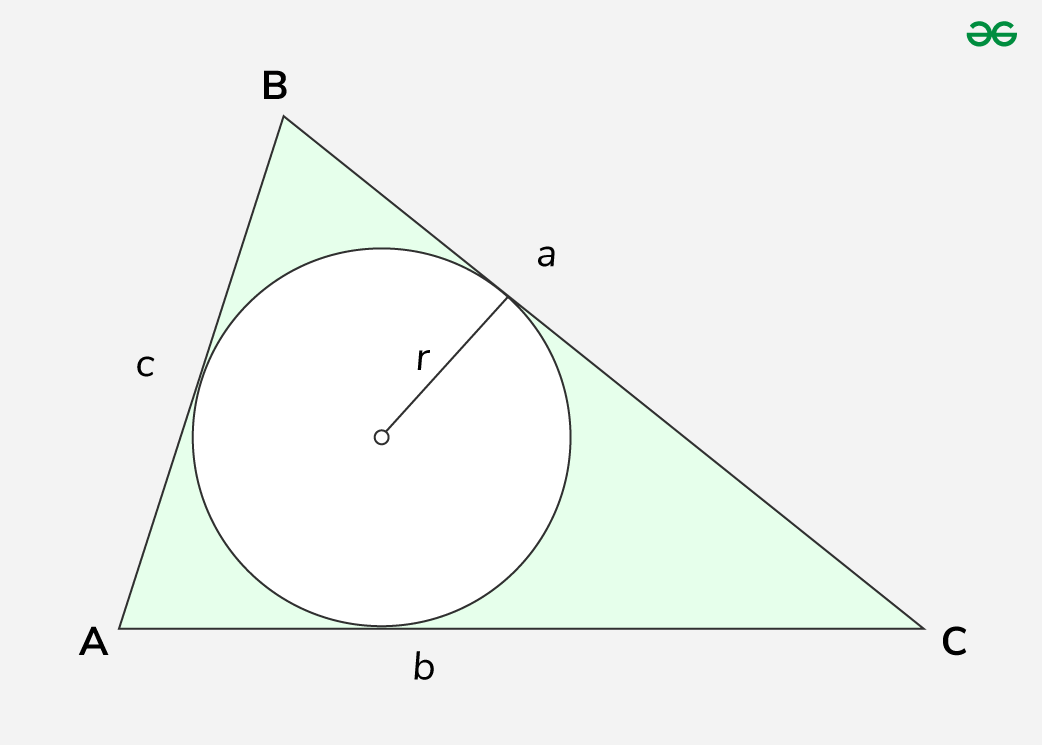
- The incircle of a triangle is the largest circle that fits inside the triangle and touches all three sides. The center of this circle is called the incenter, which is the point where the angle bisectors of the triangle intersect.
Inscribed Figures in Polygons
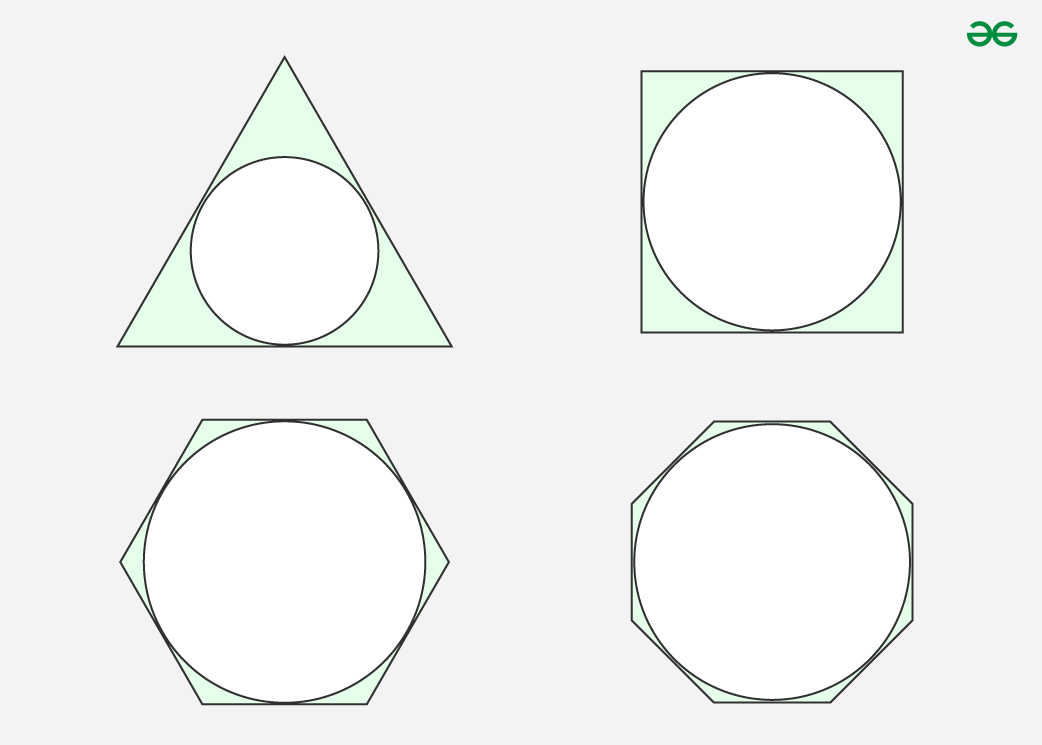
Inscribed figures in polygons refer to shapes, usually circles or other polygons, that are placed within a polygon such that they touch certain elements of the polygon.
Following images are some examples of inscribed figures in polygons:
Inscribed Figures in Quadrilaterals
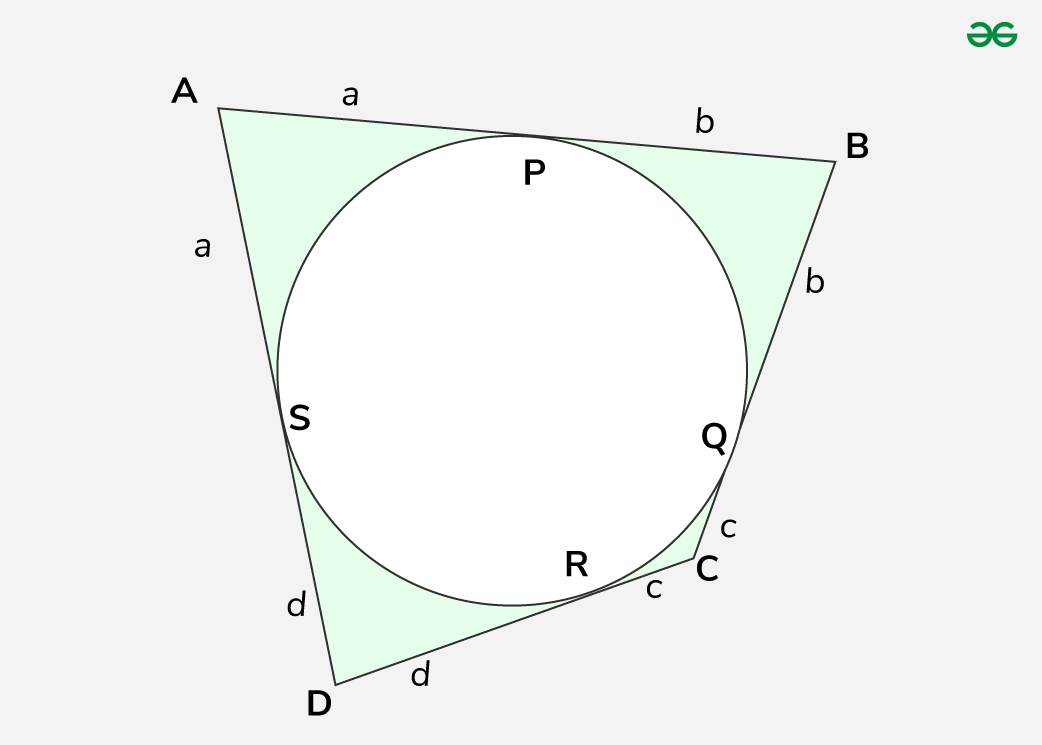
Inscribed figures in quadrilaterals refer to shapes or points placed within a quadrilateral in such a way that they touch certain elements of the quadrilateral.
A circle inscribed in a quadrilateral is given below:
Inscribed Figures in Hexagons
Inscribed figures in hexagons refer to shapes that are placed within a hexagon such that they touch certain elements of the hexagon.
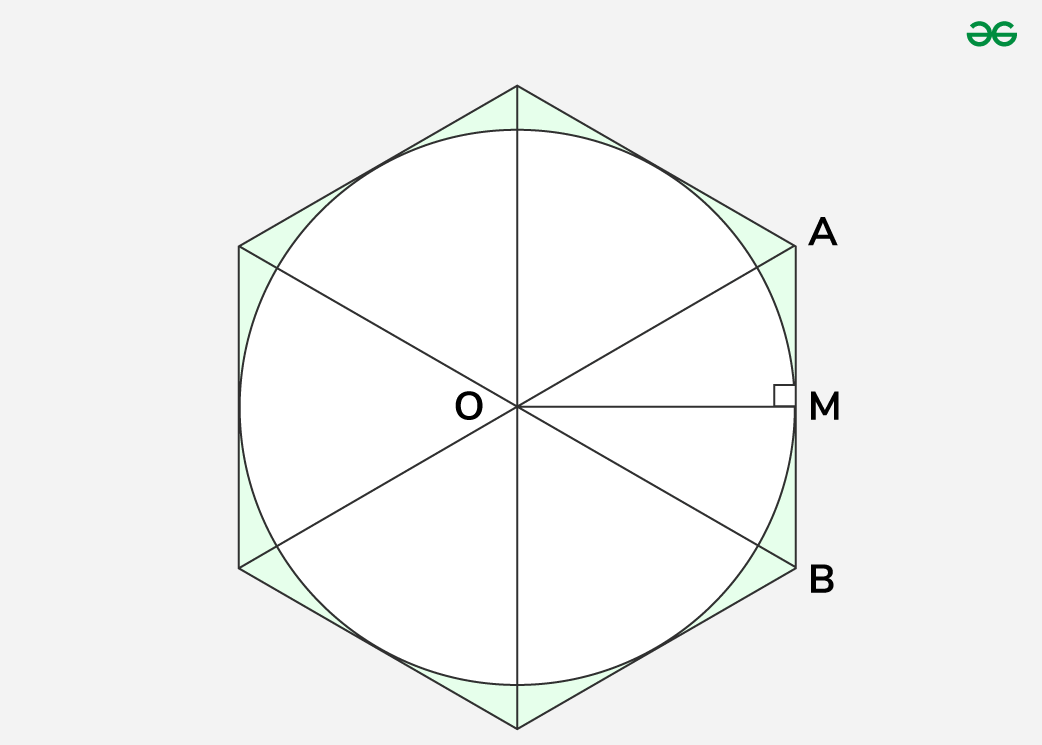
Inscribed Figures in Rectangles
Inscribed figures in rectangles refer to shapes that are placed within a rectangle such that they touch certain elements (sides, vertices, or midpoints) of the rectangle.
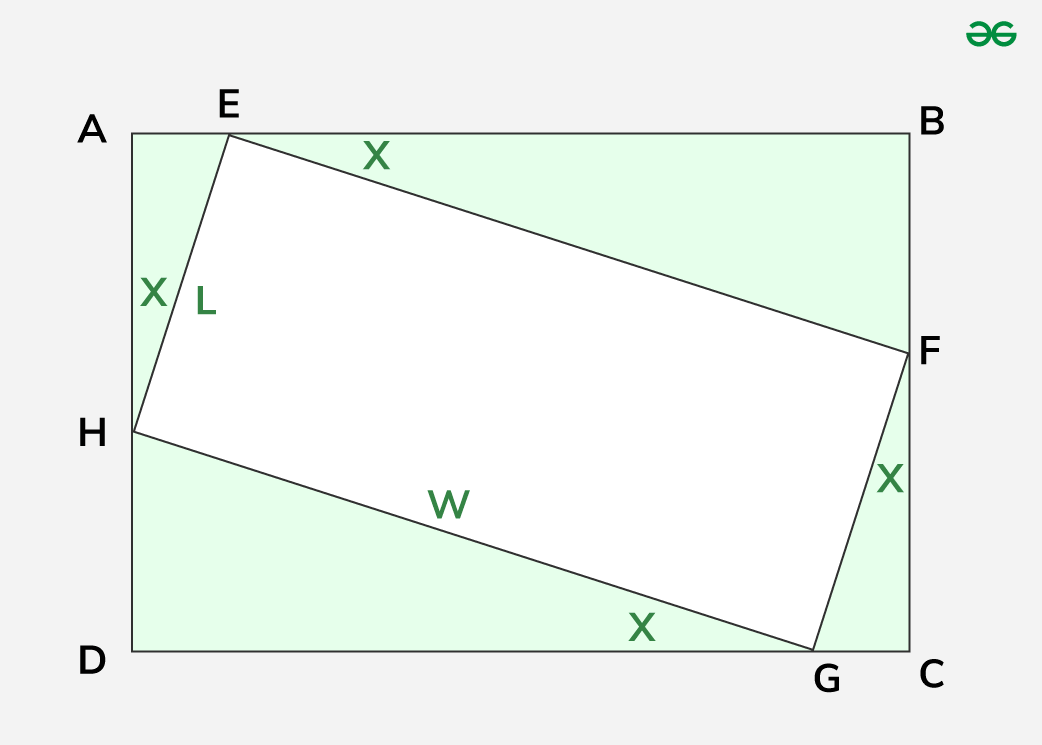
What are Circumscribed Figures?
A circumscribed figure is also known as a surrounding figure is the one that surrounds the other figure and touches each of its vertices or sides. In geometry the circumscribed figure is a larger figure that is outlined around the smaller figure of an inscribed shape.
For example the circle drawn round a triangle such that all the vertices of the triangle touch the circle is called circum circle. This concept can be taken further with reference to polygons surrounding circles or circles surrounding polygons in which outer figure seems to ‘enclose’ the inner figure geometrically.
Properties of Circumscribed Figures
Circumscribed figures also have unique properties:
- They surround another shape, ensuring that every side or corner of the inner shape touches the boundary of the outer shape.
- The centers of polygon and circumscribed polygons are the same.
- In addition, the circumscribed polygon intersects at the midpoint of each side to the inscribed circle.
- The center of the inscribed circle is equidistant from all sides of the circumscribed polygon.
- The apothem the circumscribed polygon is the radius of the inscribed circle.
Examples of Circumscribed Figures
Written below are the few of the examples of Circumscribed Figures:
Circumscribed Figures in Circles
Circumscribed figures in circles are shapes that are placed outside a circle such that the circle touches all sides of the figure.
The most common circumscribed figures in circles include polygons, such as triangles, quadrilaterals, and regular polygons.
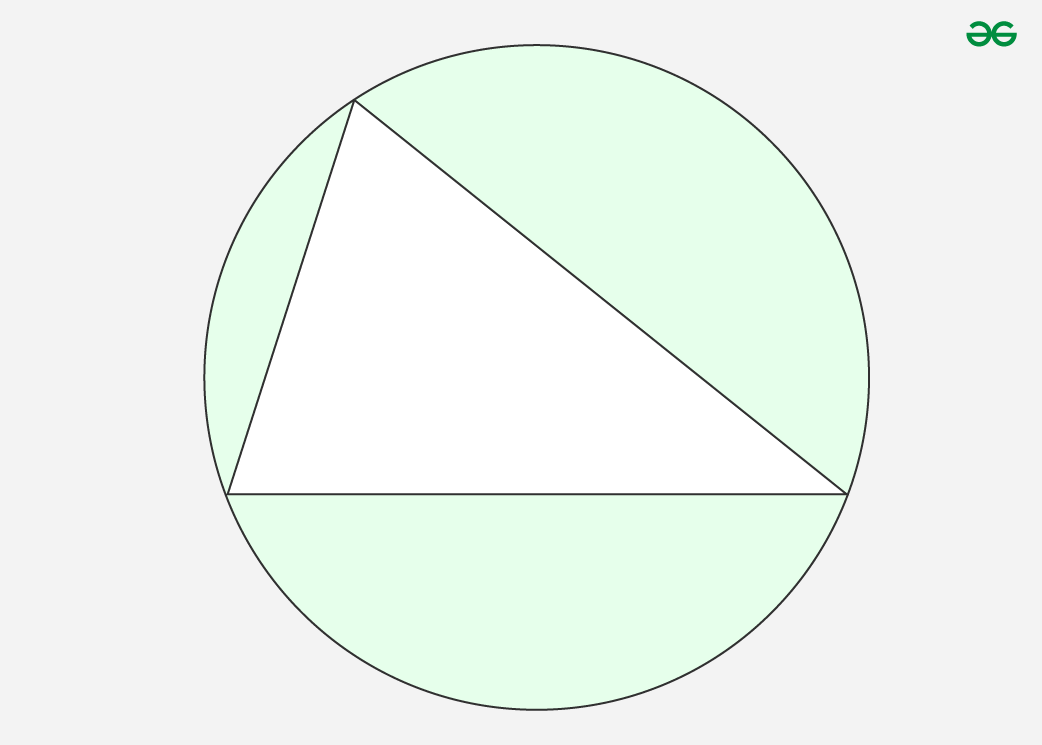
Another example is:
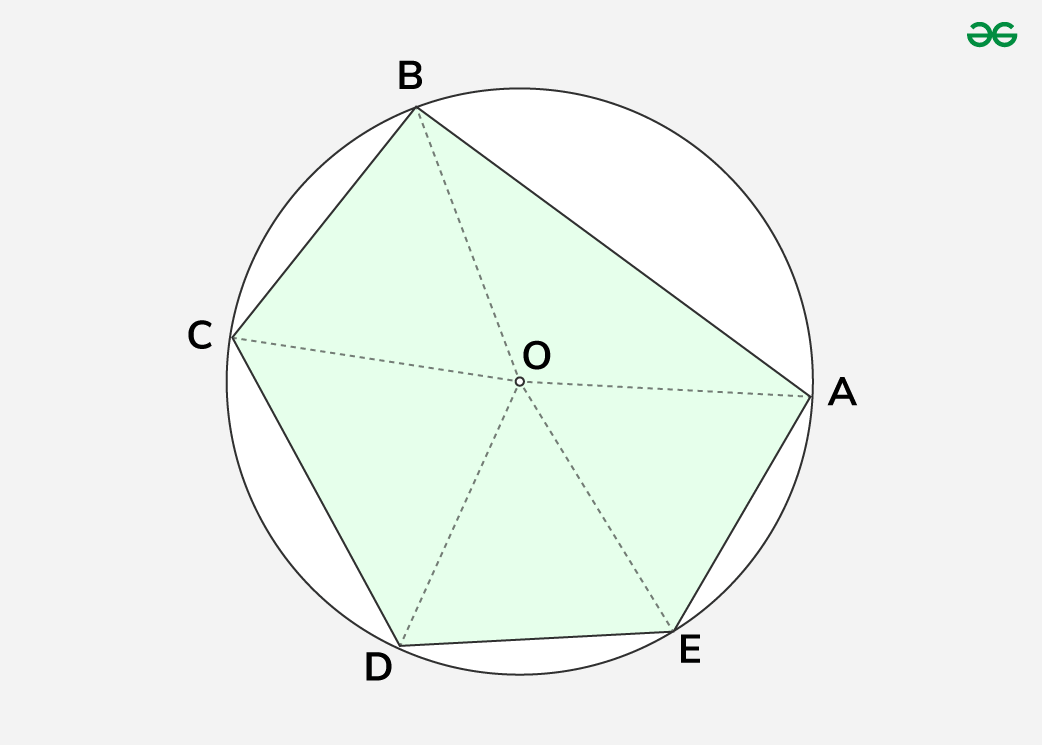
Circumscribed Figures in Triangles
Circumscribed figures in triangles specifically refer to the circumcircle of a triangle.
Circumcircle of a Triangle
A circumcircle of a triangle is a circle that passes through all three vertices of the triangle. The circle is said to be circumscribed around the triangle, and the triangle is said to be inscribed in the circle.
Circumscribed Figures in Angles
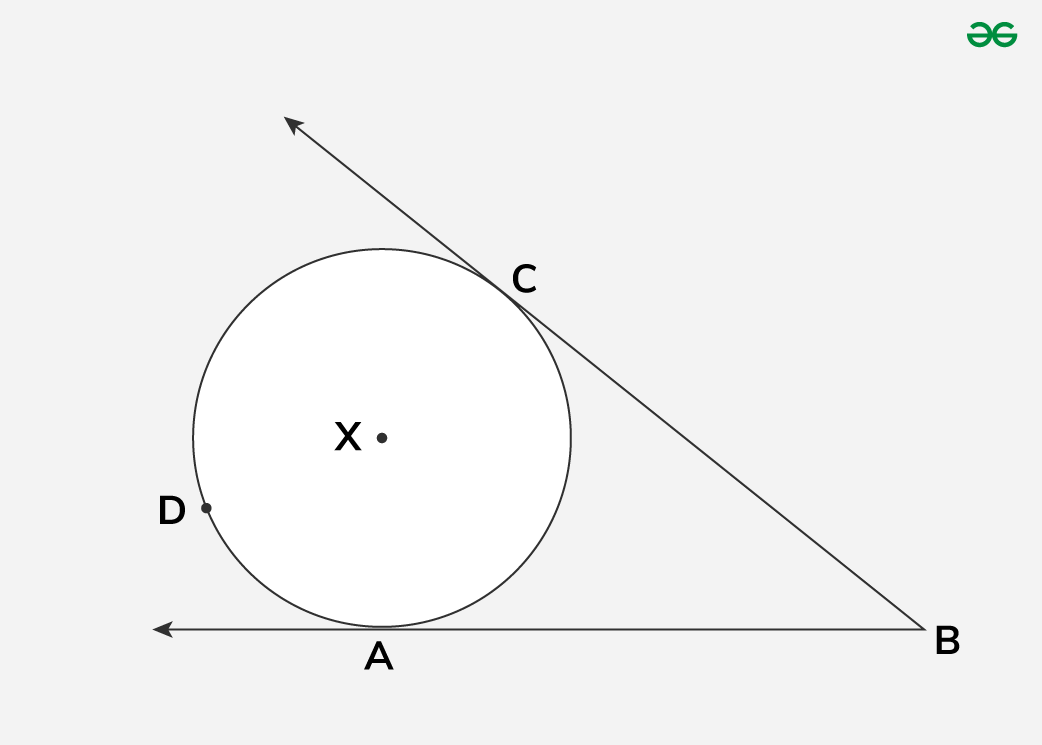
Circumscribed figures in the context of angles typically refer to circles that are drawn around specific polygons or angles, where the vertices or points of interest on the angle lie on the circle.
Circumscribed Circle in Angles
- A circumscribed circle (or circumcircle) related to angles is a circle that passes through all the significant points that define the angle.
Circumscribed Figures in Quadrilaterals
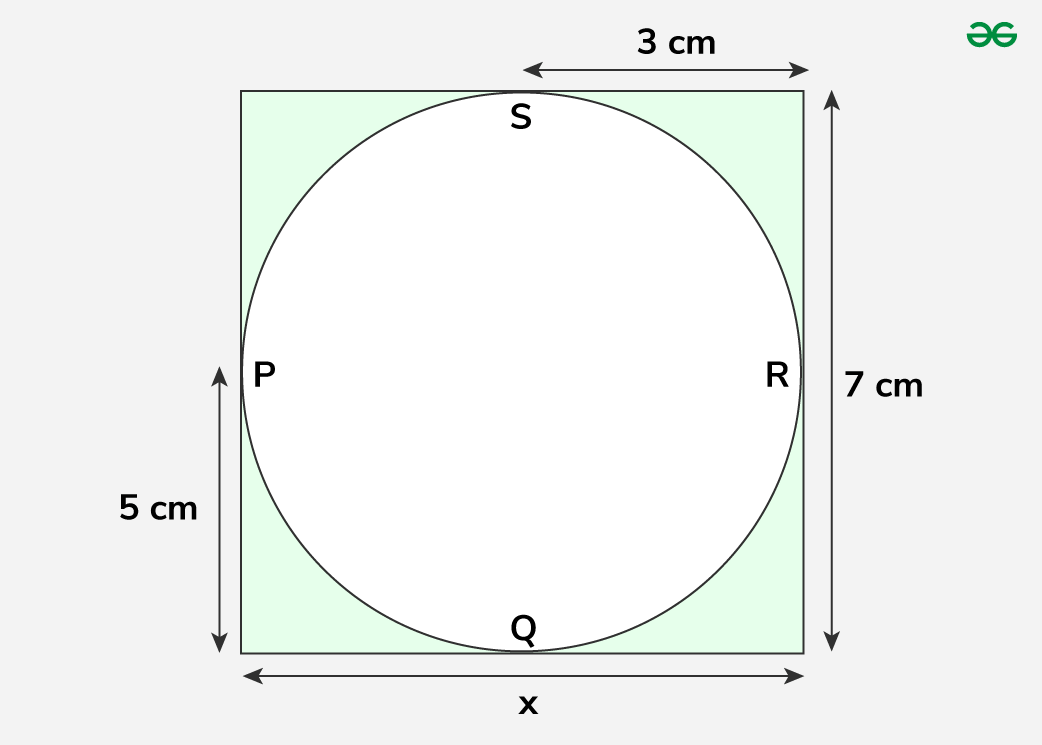
A circumscribed quadrilateral, also known as a cyclic quadrilateral, is a quadrilateral whose vertices all lie on the circumference of a single circle, called the circumcircle.
Difference between Inscribed and Circumscribed Figures
The key difference between inscribed and circumscribed figures are listed in the following table:
| Feature | Inscribed Figures | Circumscribed Figures |
|---|---|---|
| Definition | A figure drawn inside another, touching the boundary at specific points | A figure drawn around another, touching its vertices |
| Contact Points | Touches the boundary of the outer figure at specific points, typically tangentially | Encloses the inner figure, typically touching all vertices |
| Examples | A circle inside a triangle, touching all sides A square inside a circle | A circle around a triangle, touching all vertices. A triangle around a circle, touching all sides |
| Common Shapes | Circle, polygon (e.g., inscribed triangle, square) | Circle, polygon (e.g., circumscribed triangle, square) |
| Properties | The inscribed figure is always smaller or equal in size to the circumscribing figure | The circumscribed figure is always larger or equal in size to the inscribed figure |
| Area Relation | Area of the inscribed figure is less than or equal to the area of the circumscribed figure | Area of the circumscribed figure is greater than or equal to the area of the inscribed figure |
| Perimeter Relation | Perimeter of the inscribed figure is less than or equal to the perimeter of the circumscribed figure | Perimeter of the circumscribed figure is greater than or equal to the perimeter of the inscribed figure |
| Use Cases | Common in architectural design, art, and geometric constructions | Often used in geometry problems, design, and optimization problems |
| Notation | Often represented as a circle or polygon inside another figure (e.g., △\triangle△ ABC inside circle O) | Often represented as a circle or polygon surrounding another figure (e.g., circle O around △\triangle△ ABC) |
Relationship Between Inscribed and Circumscribed Figures
- Geometric Relationships: Inscribed and circumscribed shapes share an interesting connection. For example you can fit a circle inside a triangle and you can also draw a triangle around a circle.
- Algebraic Relationships: From a perspective the size of a circle (inradius) and the size of a circle (circumradius) can be linked through formulas tailored to the specific shapes involved.
Conclusion
Inscribed and circumscribed figures are essential concepts in geometry, with numerous applications and problem-solving techniques. By understanding these figures, you can tackle a wide range of geometric problems effectively.
Related Articles