Pixel Scroll 8/17/26 I Have No Internet And I Must Stream

(1) WSFA SMALL PRESS AWARD FINALISTS. The Washington (DC) Science Fiction Association (WSFA) has announced the finalists for the 2026 WSFA Small Press Award for Short Fiction. See the list at the link.

(2) PREMIO IGNOTUS 2026 FINALISTS. The finalists for the Premio Ignotus 2026 (2026 Ignotus Awards) have been announced by Spain’s Asociación Española de Fantasía, Ciencia Ficción y Terror.

(3) DISNEY TO ADD ‘VILLAINS LAND’. “Disney World’s Villains Land Gets Name, Backstory and Thrilling Ride Details” reports People.

The “Most Magical Place on Earth” is going dark!

Disney Imagineers shared new details about the long-awaited Villains land planned for Walt Disney World’s Magic Kingdom while onstage at the D23 convention in Anaheim on Saturday, Aug. 15.

“Villains land is one of the most ambitious lands we’ve ever created,” the Disney execs revealed. “It’s huge, on the scale of Star Wars: Galaxy’s Edge, and it’s completely immersive.”…

…Things got more intriguing from there, as Imagineers also confirmed the land’s two chill-inducing ride concepts.

The first, Imagineers promise, will be “thrilling coaster” inspired by Maleficent from Sleeping Beauty, situated around her mountaintop fortress. Riders will race through the spiky brambles that encase the structure, which also seems to be the area’s central landmark.

The second attraction will take place in the catacombs beneath the Evil Queen’s lair, where the Magic Mirror from Snow While summons a slew of famous Disney villains to frighten all those who dare to enter.

Artwork for the ride shows Ursula from The Little Mermaid, Scar from The Lion King, Jafar from Aladdin and more, all surrounding what a wooden ride vehicle. (No details of that ride’s format were revealed.)….

…Because the land will bring together characters from many different worlds, the Imagineers also created an original story as to why they would all be in this one place: at the center of the dark forest that makes up Villains Land sits a wishing well filled with powerful dark magic they all wish to harness….

(4) SLOP TSUNAMI. “Sick of A.I. Slop? So Are Tech Giants” reports the New York Times. (Behind a paywall.)

…LinkedIn recently developed a “Seems like AI slop” button for users.LinkedIn

Across the internet, tech companies are undertaking a generative waste detox, overwhelmed in many cases by the same slop first made by possible by their own A.I. tools. Mobile messaging appsrestaurant review sitesscholarly archives and dating services are all rooting out or downplaying junk generated by A.I. — many relying on the same technology to pull off the purge.

People are tiring of A.I.’s effect on the environment and its pressure on jobs and mental health. A.I. slop is just another “festering wound,” said Aidan Walker, a content creator and researcher studying online trends for the Carnegie Endowment for International Peace, a global affairs think tank.

“Users have gradually gotten more and more upset about it,” he said. “The climate of opinion has now recognizably shifted, so these companies are finally confronting these problems.”

Generative A.I. can produce increasingly realistic images, audio and videos, but only some of it qualifies as slop. Tech companies are largely targeting the kind of low-grade clickbait that is easy to make, spread, consume and forget — the fast fashion edging out couture, the pink slime subsuming the steak.

Unchecked, the synthetic swamp online could “crowd out human creativity, corrode cultural value and destabilize public discourse,” European researchers wrote last year.

Slop has become so prevalent that Merriam-Webster, the dictionary publisher, chose it as its word of the year in 2025. Deezer, a French streaming service, said this spring that nearly half of the tracks updated to its system each day were artificially generated, many of them never heard by users. A.I. generates more than a third of what is uploaded to Apple Music….

(5) REACHING BACK TO 1984. If Camestros Felapton feels his deep dive into Neuromancer needs to begin with a trip to a Thai shopping mall, then I’ll just have to trust his judgment: “Neuromancer”.

…It has always been a fallacy to judge a science fiction book by how accurately it predicts the future. Neuromancer fails as a piece of futurology in all sorts of ways, many of which would have been obvious even in 1984 if you thought about it. Yet, if you skip past the banks of pay phones in the airport or indeed the general lack of mobile phones, the book doesn’t feel dated even though the specifics (the USSR!) are wrong. In large part, it is because the book taps into what is now a familiar vibe, but also because it does anticipate how technology creeps into broader society. Everybody is just a little bit a cyborg in Neuromancer (and some people more than others), and crime and corporate shenanigans have also become enmeshed with data and technology. The specifics don’t match our current present, but that cyberisation of society does….

(6) NON-AI SLOP. BBC tries to figure out how “Movie that went viral for terrible animation becomes China box office hit”. (Subscription required by readers outside the UK.)

The low-budget film has started raking in ticket sales after going viral for its poor animation and complicated plot

It’s so bad, it’s become a box office hit.

Niu Lai, a low-budget animation film about a cow in a dream sequence has seen a huge jump in ticket sales after going viral for its confusing plot and terrible graphics.

It grossed just 7,705 yuan ($1,140; £843) in the first 10 days after its release, but has now made more than 11.4 million yuan, according to movie tracking site Mao Yan. That means it is holding ground against Hollywood blockbusters like The Odyssey and Spider Man: Brand New Day.

“You may regret for 80 minutes if you watch it, but if you don’t, you’ll regret it for life,” one popular social media post about the film said.

Other social media users have hailed the movie as the antidote to the AI slop that is taking over social media algorithms.

They are sharing clips praising Niu Lai’s “hand-crafted” method – a reference to the poor animation quality – as “proof” that its creators did not use AI.

“That’s some serious craftsmanship,” a Weibo user wrote.

Another social media user called it “pure handmade” and the biggest “dark horse” of the summer movie season.

Others say they are rooting for the movie because they desperately hope for a “bullish” stock market – a reference to the fact that the words “bull” and “cow” share the same character in Chinese.

“If the index reaches 4,000 tomorrow I will go to the cinema to support this movie,” one Weibo user wrote.

“It is a terrible movie but has a great name,” another comment linking the movie to stock investments said.

(7) JOEL DAVIS (1934-2026). Publisher Joel Davis, owner of Davis Publications, which founded Isaac Asimov’s Science Fiction Magazine and published it until it was sold to Dell Magazines in 1992, died July 11 at the age of 92. The local Westport Journal obituary is excerpted below: “Obituary: Joel Davis, publisher and Westporter”.

Longtime Westporter, noted publisher, former Westport Library president and Brown University trustee Joel Davis died peacefully on Saturday, July 11, after a short illness. He was 92.

After college Joel and his father Bernie founded Davis Publications. He was president and publisher for 40 years. At its peak they published 60 special interest magazines including Ellery Queen’s Mystery, Isaac Asimov’s Science Fiction, Income Opportunities, Sylvia Porter’s Personal Finance, Alfred Hitchcock’s Mystery Magazine, and Analog.

Architectural Designs was launched, with his wife Carol as editor. One of Joel’s three sons, Jonathan, was brought in 20 years later to learn the business and eventually take it over. Jon evolved AD into an e-commerce leading business, selling home plans to builders and individuals.

Joel was proud that last year his grandson, Jared Davis, became the third generation CEO of AD.

Joel’s father co-founded Ziff-Davis Publishing Company in 1928, which meant that Joel and his family have had a key role in publishing for 98 years….

(8) HAYDEN PANETTIERE (1989-2026). Actress Hayden Panettiere, whose genre work included the TV series Heroes, died August 16. See The Hollywood Reporter: “Hayden Panettiere Dead: Heroes, Nashville, Scream Actress Was 36”.

…Panettiere earned her breakout role in 2006, playing the indestructible cheerleader Claire Bennet on the NBC sci-fi series Heroes. She starred on the series for four seasons.

She garnered more fame playing Juliette Barnes on the ABC series Nashville from 2012-18 and then as Kirby Reed in the Scream horror franchise….

…Panettiere’s credits also include the films I Love You, Beth Cooper (2009), Scream 4 (2011) and Scream VI (2023) and the title role in the 2011 Lifetime telefilm Amanda Knox….

(9) MEMORY LANE.

[Written by Lis Carey.]

G. Willow Wilson’s Alif the Unseen (Allen & Unwin, 2012)

By Lis Carey: Alif the Unseen takes us on a wild ride through life in a Middle Eastern city-state, cyber-duels between State Security and gray hat hackers, jinn, a magic book, Arabic mythology, political chaos, and the difference between infatuation and love.
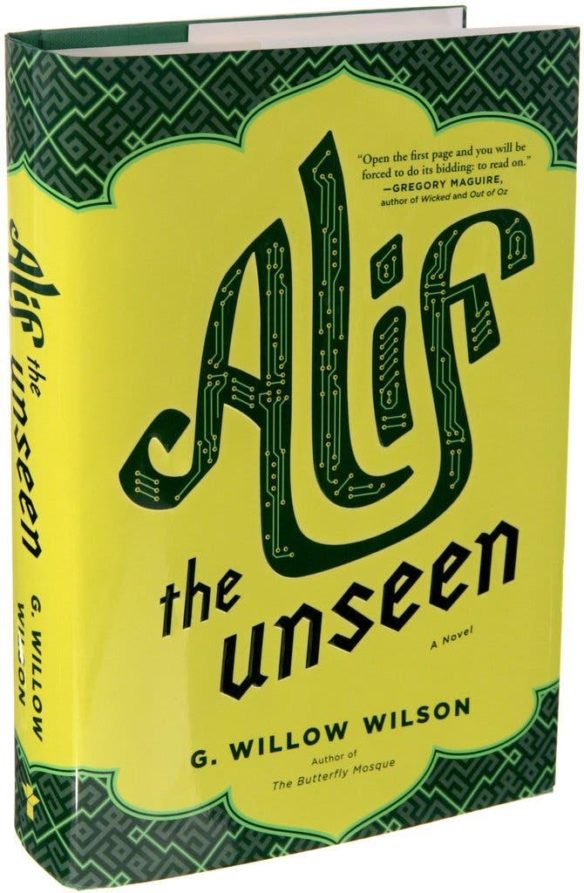
Alif is a young man, a “gray hat” hacker, selling his skills to provide cybersecurity to anyone who needs that protection from the government. He lives in an unnamed city-state in the Middle East, referred to throughout simply as the City. He’s non-ideological; he’ll sell his services to Islamists, communists, anyone.

Alif is not his real name, but it’s what he goes by, online, and among his friends. He hates his given name because it’s so common. He lives in a very modest neighborhood, in one half of a duplex, with his mother. In the other half is another family that has lived there as long as they have, and among the members of that family is Dina, a young woman his age, his friend, who has defied her family by going veiled. He’s in love, though, with Intisar, a young woman of much better family.

Everything seems to be going well, until Intisar tells him that her father has betrothed her to an important man in the City’s government. She doesn’t want to see or hear from him again. And everything starts to go wrong, in unexpected ways.

Alif, master hacker, decides to make sure she can never see or hear from him again, by designing a program that can identify her from any amount of online activity, and block her access to any information about him. The program becomes alarmingly capable; he’s not sure how he created something this flexible and seemingly independent. And while he’s using it, someone breaks into his system.

He cuts them off, but it’s very skilled hacker, and protecting his own system and the systems of his clients from discovery means shutting the whole thing down, including the software protecting his clients. This hacker must be the dread Hand of God, the City’s new and unidentified head of State Security.

And the world starts to go mad.

Alif did send Dina to bring Intisar the sheet they used the one time they had sex, unwashed, of course. She sent back by way of Dina a book. A very old book. The Thousand and One Days. And the man she’s now betrothed to wants the book, while Intisar wants Alif to find out more about the book. No explanation why, for either.

It’s the intersection of Alif’s new program, which he’s named TinSari, that launches Alif and Dina, and an American convert on a wild ride through high tech, Arabic mythology, jinn society, and political upheaval. Vikram the Vampire; a jinn woman called Sakina; a marid (a jinn, and (at least in this story) specifically the jinn from Aladdin); one of Alif’s online hacker friends, NewQuarter01, whose real-world identity comes as a shock to him; Azalel, Vikram’s sister; Sheikh Bilal, imam of the Al Basheera mosque; the dread “Hand of God” head of State Security, are all part of the adventure, as allies, enemies, or not clearly one or the other.

Oh, and The Thousand and One Days also plays an active role.

It’s a story of Alif exploring his programming abilities, encountering strangeness that might be quantum programming inspired by that old book, in which every word has seven thousand layers of meaning. He discovers levels of ruthlessness in real-world politics he never imagined while selling cybersecurity to anyone wanting to hide from their government.

There’s also a layer of romance here, too. And heroic sacrifice, cyberpunk, magical beings, and places that move when you’re not looking. It’s absorbing, exciting, terrifying, and has a satisfying ending.

Highly recommended.

(10) COMICS SECTION.

(11) PROPSTORE’S ‘HALLOWEEN’ AUCTION IS COMING.

(12) NOT EXACTLY LUDDITES. [Item by SF Concatenation’s Jonathan Cowie.] Now, I have oft warned that the machines are taking over, but no-one ever listens…  Though the physicist Sabine Hossenfelder, has noticed that it now seems to be war…

The war on artificial intelligence is no longer just online arguments and complaints about data centres. Something has shifted, and law enforcement has noticed. Where did this new anti-technology movement come from, who’s behind it, and where is it heading next? Let’s take a look.

You can see the video here  (7 minutes) or below

(13) VIDEO OF THE DAY. “11 Soviet Sci-Fi Movies Most Westerners Have Never Seen” – as recommended by The Sci-Fi Graveyard

For decades, Hollywood defined what science fiction looked like. But while Kubrick, Lucas, and Scott were building the Western canon, Soviet filmmakers were making something just as ambitious and almost none of it crossed the Iron Curtain. I covered 11 Soviet sci-fi films most Westerners have never seen: a silent moon landing designed by the actual father of rocketry, a love story that beat The Shape of Water by 50 years, a film that may have literally killed the people who made it, and the cult comedy whose invented vocabulary entered the real Russian language. One of these films directly inspired George Lucas. He flew to Moscow to meet the director. Soviet officials had no idea who he was talking about.

Films covered in this video:

  • Cosmic Voyage (1936)
  • Aelita: Queen of Mars (1924)
  • Through the Thorns to the Stars (1981)
  • City Zero (1988)
  • Amphibian Man (1962)
  • Inquest of Pilot Pirx (1979)
  • Dead Man’s Letters (1986)
  • Planet of Storms (1962)
  • Solaris (1972)
  • Stalker (1979)
  • Kin-dza-dza! (1986)

[Thanks to Steven French, Mike Kennedy, Andrew Porter, Lis Carey, John King Tarpinian, Cat Eldridge, SF Concatenation’s Jonathan Cowie, Chris Barkley, Mark Roth-Whitworth, Kathy Sullivan for some of these stories. Title credit belongs to File 770 contributing editor of the day Randall M.]

Pixel Scroll 6/21/26 Pixel Scrollers Spend Half Their Time Tuning And Half Their Time Scrolling Out Of Tune

(0) I’m sad to report that my mother died last night. She was 99-1/2. She had been looking so much better since returning from the hospital to her nursing home I’d thought she would make it to a hundred. However, she never got back into the daily rhythm of the activities that have sustained her for years.

(1) KING’S BIRTHDAY HONOURS. “John Wagner, Creator Of Judge Dredd, Gets An MBE From The King” reports Bleeding Cool. The list was announced on June 12.

John Wagner, best known as the co-creator of Judge Dredd and the longest writer on 2000 AD, has been appointed a Member of the Most Excellent Order of the British Empire, otherwise known as an MBE, in King Charles III’s Birthday Honours for 2026. The honour recognises his outstanding contributions to British comic books and the comic book industry. Charles confessed to having read the Eagle comic book regularly as a child, very much a precursor to 2000AD. Wagner also wrote for Action, the weekly kids comic book that was condemned in Parliament…

Here are some other notables who were recognized (“King’s Birthday honours: How does the UK honours system work?” – BBC.)

  • Damehoods: Acclaimed children’s authors Julia Donaldson (The Gruffalo) and Malorie Blackman (Noughts & Crosses) were made dames for their contributions to literature.
  • Companion of Honour: Iconic actress Dame Helen Mirren was appointed to the Order of the Companions of Honour.

(2) M. JOHN HARRISON Q&A. [Item by Steven French.] Wonderful interview with the inimitable Mr Harrison: “M John Harrison: ‘If we met a real alien we’d have no clue what they thought’” in the Guardian.

Three years ago, in a greasy spoon on the fringes of the City of London, M John Harrison – Mike to his friends – told me about the novel he was working on. Rather than describing its plot or characters, he spoke purely about the challenge the book presented to him as a writer. With this one, he said, he wanted to push things as far as they could go.

Now that book, The End of Everything – his 13th novel – is about to be published. It describes a disintegrating Britain in which the iGhetti – monstrously sized, extremely powerful and strange lifeforms that look like powdery, slow-motion explosions – rule the country and possibly the world. Or do they? In its unwillingness to divulge any more than its characters know, which isn’t much, the novel is more alien evasion than invasion.

No one knows where the iGhetti came from. Maybe the astral plane, or “out of the internet”. Their purpose is similarly obscure. What remains of the authorities treat them as hostile, sending ineffectual waves of bombers and attack helicopters, but the incomers might equally well be engaging in “spiritual tourism and gentrification” as in colonisation. “If we were to meet a real alien,” Harrison says, sitting on the sunny terrace of a riverside pub in Barnes, south-west London, where he used to live, “we would have no clue whatsoever what they quote ‘thought’, or why they did anything, or if they thought they were doing something.” Science fiction often pays lip service to that idea, he says, but “never passes that feeling on to the reader”….

(3) THE ORIGIN OF CYBERSPACE. Joel Miller contends “William Gibson Didn’t Predict the Future. He Eavesdropped on It” at Transmissions From Tomorrow.

…Everybody repeats the legend: Gibson the Prophet! The man who foresaw the digital age before it happened! But in 1986, he sat down with critic Larry McCaffery and dispelled that magic. No, he hadn’t predicted the internet. No, he wasn’t even all that interested in the machines he’d described. His “ignorance” (his word, not mine) wasn’t a problem he wrote around. It was the reason he could write the book at all.

It’s a testament to Gibson’s writing prowess that he wrote the defining novel of computer culture without owning a computer….

…Somebody who knew that a hard drive was a spinning, record-player-sounding gadget couldn’t have dreamed up the bottomless neon grid of cyberspace. Gibson knew nothing of the boring, raw insides of a PC, so he was free to picture Neuromancer’s “consensual hallucination experienced daily by billions of legitimate operators”….

…The origin of cyberspace: Space Invaders and Pac-Man. Not a circuit diagram or research paper. Just a bunch of teens hunched over arcade cabinets and Gibson’s gut feeling that, as far as they were concerned, there really was a space in there. He then extrapolated it into a guess about everyone he knows…

(4) WRITER REDISCOVERY. “Exploration Log 14: Anti-Racism in Chandler Davis’ ‘Stereotypes Are Dangerous’ (1950)” at Science Fiction and Other Suspect Ruminations.

Chandler Davis (1926-2022) strikes a fascinating figure. He was a communist activist, science fiction author, fanzine editor, a Professor of Mathematics at the University of Michigan, and political prisoner. He was fired from the University of Michigan in 1954 and imprisoned for six months in 1960 on charges of contempt of Congress leveled by HUAC.1 Between 1946 and 1970, he published 12 short stories. One additional story, a casualty of Harlan Ellison’s infamous unpublished Last Dangerous Visions, appeared in 1994.2 I reviewed three of his 1940s short stories on the theme of nuclear war back in 2023: “The Nightmare” (1946), “To Still the Drums” (1946), and “The Aristocrat” (1949). He’s certainly an author I need to return to on the merits of his article “Stereotypes Are Dangerous” (1950).

Publication note: Davis’ “Stereotypes Are Dangerous” was reprinted in the 1st issue of the fanzine Futurist, ed. Redd Boggs (Spring 1950). Davis’ article originally appeared in the 23rd issue of the fanzine Tumbrils, ed. James Blish (1950). I do not know if any changes were made between the two editions. Unfortunately, the original version hasn’t been digitized to the best of my knowledge. You can read the entire vol. 1 of the Futurist (1950) online here.

“Stereotypes Are Dangerous” positions science fiction as a vehicle for positive social change. Davis condemns science fiction that perpetuates common stereotypes of race and nationality. Stories like L. Ron Hubbard’s “The Automagic Horse” (1949), which contains common racist tropes for Jews and Italians, do damage that must be rectified. Rather than merely “stock types” that can be dismissed as harmless due to their commonality, Davis argues that they perpetuate and reinforce racist mentalities (5). Science fiction that plays it safe by avoiding all mention of race also are “no good, for my money” as the “writer has the opportunity to do something positive” (6). He argues that the American reader encounters more segregation in their “pulp fiction than he is likely to have seen in his daily life” (6). If readers complain that progressive depictions of minorities and women stick out “like a sore thumb,” that’s okay! He argues that over time the “reader will get used to it–which is exactly the object” (6). Writers should not be bothered by bigoted fans….

(5) TODAY’S BIRTHDAY.

[Written by Paul Weimer.]

June 21, 1938 — Ron Ely. (Died 2024.)

By Paul Weimer: Ron Ely. The name might not be familiar to you right off, but his major role will be. 

But that’s not the first time I saw Ron Ely. And since I tell these as idiosyncratic personal views, I am going to go with that. 

The first time I saw Ron Ely was in the movie Doc Savage: Man of Bronze. This was a movie I saw in the 1970’s, and only had the vaguest memories of any of it. In fact, the only sequence I remembered clearly was a fight scene which was choreographed with subtitles as Savage (played by Ely) faces off against his opponent, and both keep changing fighting styles to suit and match each other (You can think of it as an antecedent for the swordfight in The Princess Bride that does this) . I finally got to see the entire movie years later, and it is sometimes almost painfully faithful to the source material, which is a choice for good…and for ill. Ely is fantastic and believable as the polymath Savage. (You can also see his take on Savage as an antecedent to other polymaths surrounded by brilliant and skilled people such as Buckaroo Banzai.)

But you are here for Tarzan. So I will give you Tarzan. On Ely, 1938 to 2024.

Sometime after seeing Man of Bronze, I did see the two (three?) years of the Tarzan episodes in syndication. I would say it would be the definitive take on Tarzan, but the choice of removing Jane, I think, is a weakness of the show. Ely, however, is absolutely perfect in the role, every inch, I think, in Weissmüller’s league. The conceit of this Tarzan going back to the wilderness of the jungle (while being very educated) is the absolute opposite of most depictions of Tarzan. So when I saw Greystoke years later, I didn’t quite realize I had seen the “reverse” of the usual pattern of Tarzan stories in the Ely depiction.

Ely also appeared on Fantasy Island a lot, confusing me as to why the character (although it was a different character every time) kept coming back in different costumes (one time as Mark Antony, even). 

Ron Ely

(6) COMICS SECTION.

My latest books cartoon for @theguardian.com

Tom Gauld (@tomgauld.bsky.social) 2026-06-21T15:13:41.817Z

(7) END OF AN OAK. The tree Robin Hood jumped out of in the movie? This wasn’t it. “Thousand-year-old ancient oak tree tied to ‘Robin Hood’ legend has died, wildlife charity says”ABC7 Los Angeles tells the story.

A giant, ancient oak tree located in the Sherwood Forest — the iconic setting of the “Robin Hood” legend — has died, one of the U.K.’s top bird and wildlife conservation charities said. 

Famous for its enormous trunk — about 36 feet in circumference — and gnarled branches, the Major Oak was believed to be about 1,200 years old, according to the RSPB Bird & Wildlife Conservation Charity.

The tree had been in “visible decline” for several years, the charity said and failed to produce any leaves this spring. 

 “Whilst the tree’s failure to produce leaves this year is heart-breaking for everyone — from the many people over the years who have looked after this magnificent tree to the millions who have travelled here to see it — we know the Major Oak will have a lasting legacy, first and foremost because it is so inextricably linked to Robin Hood and Sherwood Forest,” Hollie Drake, senior site manager at RSPB Sherwood Forest, said in a statement…. 

(8) GEORGE LUCAS, VOICE ACTOR? “George Lucas returns to movies with an unexpected new role” reports USA Today.

…. Lucas, who stepped away from Hollywood after selling “Star Wars” to Disney in 2012, is making a return to movies in an unexpected way: He has a voice role in the new animated movie “Minions & Monsters,” a continuation of the “Despicable Me” franchise, Illumination CEO Chris Meledandri told Collider.

The animation studio head revealed he met Lucas two years ago because the “Star Wars” director loves Illumination’s movies, “specifically ‘Despicable Me,’ and even more specifically, the Minions.” So while working on the new “Minions” installment, the team came up with the idea of having Lucas appear.

While the role appears to just be a small cameo, Lucas is apparently already angling to return for future “Minions” sequels.

“I got such a fast yes,” Meledandri told Collider. “It was incredible. So, we’re thrilled to have him in the film. I saw him recently, and he’s already talking to me about the role he wants to do next in the next Minions movie. So, it’s pretty incredible.”…

(9) VISIT TO THE BIS. Henry Wismayer calls it “The Mars Delusion” at Noēma.

On the corner of a busy gyratory, a bus ride from my house in south London, sits an unremarkable yellow-brick building. Each day, thousands of commuters sweep past this corner on the way to Vauxhall Bridge. Chances are that few would give the building a second glance were it not for the diverting sign that runs between the windows of the lower floors: “BRITISH INTERPLANETARY SOCIETY.”

If the Kennedy Space Center is the gleaming capital of space exploration as a national endeavor, then this humble address, “Arthur C. Clarke House,” might be considered the enthusiasts’ spiritual home. Founded in 1933, the society headquartered here is the world’s oldest space advocacy organization. One friend, after learning I was going to visit, told me he’d always suspected it was the sanctum of “space wizards.” Inside its doors one morning in February, I found it occupied by Colin, John and Alistair, who were presently engaged in redecorating the lecture theatre. As his colleagues strained to lug a heavy model of the 1980s British HOTOL spaceplane into the lobby, Jerry Stone took a break to talk to me about settling Mars….

…[The] real boost for humanity’s Martian aspirations has come from the private sector and its new plutocratic space race. During the ill-fated shuttle missions of the 1980s, the cost of launching an object into space hovered above $54,000 per kilogram of mass. By streamlining production and pioneering reusable launch modules, SpaceX has slashed that cost to around $1,500 per kilogram. In time, this economic trajectory could see space entrepreneurs succeed where the shuttle program failed by making spaceflight routine.

Egged on by SpaceX founder Elon Musk’s conspicuous if zany advocacy, these advances have renewed optimism that humans will land on the Red Planet and potentially establish a permanent colony in the foreseeable future. In 2024, Musk, who has said he hopes to die on Mars, set out a timeline that seemed suspiciously aligned with his own probable lifespan: “Less than 5 years for uncrewed, less than 10 to land people, maybe a city in 20 years, but for sure in 30, civilization secured.”

But now the space community was reeling from an unforeseen volte-face. Two weeks earlier, Musk had turned his attention to a much nearer, and, it could be argued, less exciting celestial body. “The overriding priority is securing the future of civilization,” he posted, “and the Moon is faster.” The gray-hairs at the BIS were lamenting the pivot. “I had hoped we’d see humans on Mars in my lifetime,” said Colin Philp, the serving society president. “But it always seems to be 20 years down the line.”…

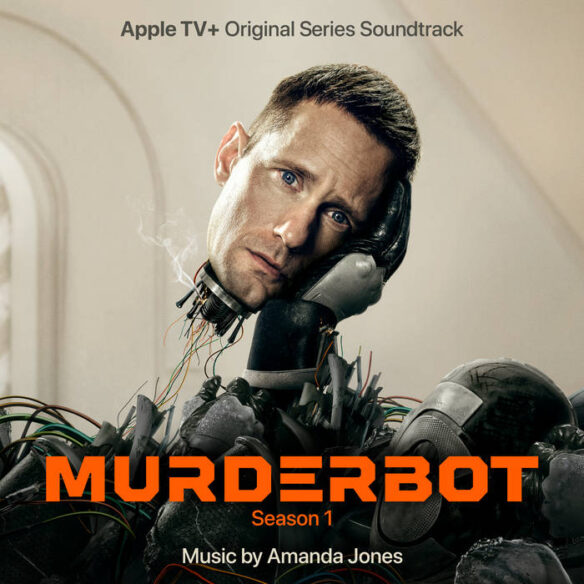
(10) MAKERS OF ‘MURDERBOT’. Next Best Picture has an interview with “Alexander Skarsgård, Chris Weitz & Paul Weitz On Bringing ‘Murderbot’ To Life”.

Actor and Executive Producer Alexander Skarsgård joins Next Best Picture alongside Writers, Directors, and Executive Producers Chris Weitz and Paul Weitz to discuss Apple TV+’s acclaimed sci-fi comedy series “Murderbot.” Based on Martha Wells’ beloved “The Murderbot Diaries” novels, “Murderbot” follows a self-hacking security construct who has secretly gained free will but would rather spend its time consuming entertainment than interacting with humans. Forced into dangerous missions while concealing its newfound autonomy, Murderbot finds itself reluctantly drawn to the very people it struggles to understand. During this conversation, Alexander Skarsgård, Chris Weitz, and Paul Weitz discuss adapting the beloved source material for television, finding the balance between science fiction, action, and comedy, bringing Murderbot’s unique internal perspective to the screen, collaborating with the ensemble cast, building the show’s distinctive tone and visual style, audience reactions to the first season, and the journey that led to the series being renewed for a second season.

[Thanks to Mark Roth-Whitworth, Kathy Sullivan, Steven French, Mike Kennedy, Andrew Porter, John King Tarpinian, Cat Eldridge, SF Concatenation’s Jonathan Cowie, and Chris Barkley for some of these stories. Title credit belongs to File 770 contributing editor of the day Patrick Morris Miller.]

Pixel Scroll 6/13/26 One Of Our Check Boxes Is Missing

(1) SOUND FAMILIAR? The New York Times poses a challenge: “Do You Recognize These Lines From Popular Science Fiction?” Link bypasses the NYT paywall.

Welcome to Literary Quotable Quotes, a quiz that tests your recognition of classic lines. This week’s installment highlights observations from future or alternate worlds depicted in popular science fiction. In the five multiple-choice questions below, tap or click on the answer you think is correct. After the last question, you’ll find links to the books if you’re intrigued and inspired to read more.

Here’s where the quiz begins – you’ll have to click the link if you need the multiple-choice options.

Question 1 of 5

Night City was like a deranged experiment in social Darwinism, designed by a bored researcher who kept one thumb permanently on the fast-forward button.

(2) ORIGINALLY IN ANOTHER TONGUE. “Rachel Cordasco on Translated SF” – an interview conducted by James Machell at the Science Fiction Encyclopedia’s Substack newsletter.

Rachel Cordasco has written a variety of entries for the SFE, most notably SF in Translation in which she places the first golden age of science fiction translation in the 1970s (see entry for more details). Her expertise in translation range from her time as translator of works from Italian, reviews for SF Signal, and founding of Speculative Fiction in Translation where she has continued to review translations from over a dozen languages. Small Planet, a magazine dedicated to further discussion, was published on Speculative Fiction in Translation last month. In this interview, she discusses her career so far, underrated works of translated SF, what distinguishes a great translation, and the direction of Small Planet #2….

…JM: Are there particular translated works which you feel deserve greater critical attention?

RC: There are so many worthy works of SFT that I’d like to highlight, but that would take up volumes because, in fact, so much SFT that comes to us is double-vetted. These texts have often already won awards in their native countries or become extremely popular with readers and Anglophone publishers only want to invest in what they think will be successful. The translators then use their talents to not only bring the text into English but also make it a beautiful and readable work. This is why so much SFT is of a very high quality. I will take this opportunity to say, as I complain often on social media, that it’s a shame we no longer have Kurodahan and Haikasoru to bring us some of the greatest Japanese SF written in the twentieth century. Another publisher needs to step into this void and continue the work that those two publishers did for a decade. I’m also always on the lookout for SFT from underrepresented languages: I would love to read more, for instance, Vietnamese SFT, Buglarian SFT, Norwegian SFT, Icelandic SFT, etc.

One more thing: I used to think that Stanislaw Lem and the Strugatskys were so well known in the Anglosphere that I didn’t have to recommend them because, you know, everybody has already read them, right? Well, I’m getting the terrible feeling that this isn’t the case. So for anyone who is just starting with SFT, go read Lem and the Strugatskys.

(3) WORLD WIDE PARTY 2026. [Item by John Hertz.] From Dale Speirs’ Opuntia 628 (p. 18):

Founded by Benoit Girard (Quebec) and Franz Mikiis (Austria) in 1994, the World Wide Party is held on June 21 every year. 2026 will be the 33rd year of the WWP. At 21h00 local time, everyone is invited to raise a glass and toast fellow members of zinedom around the world. It is important to have it exactly at 21h00 your time. The idea is to get a wave of fellowship circling the planet.

At 21h00, face to the east and salute those who have already celebrated. Then face north, then south, and toast those in your time zone who are celebrating as you do. Finally, face west and raise a glass to those who will celebrate WWP in the next hour.

Raise a glass, publish a one-shot zine, have a party, or do a mail art project for the WWP. Let me know how you celebrated the day.

(4) MATT KRESSEL Q&A. In the new episode of the If This Goes On (Don’t Panic) podcast, “The Rainseekers with Matt Kressel”, Alan Bailey and Cat Rambo talk with Matt Kressel “about writing with authenticity, writing unfamiliar cultures, Dungeons and Dragons, what writers can take from RPGs, Matt’s new novels Spacetrucker Jess and The Rainseekers, AI, plagiarism, and much more.”

(5) ORBITAL AIR BAGS – NO, NOT FAN PANELS. [Item by SF Concatenation’s Jonathan Cowie.] In this week’s Science orbital air bags proposed to block Solar storms

In a study published this week in Space Weather, the researchers describe a provocative proposal called “StormWall”: a fleet of satellites that would release hundreds of tons of gases into space just before a solar storm strikes Earth. Computer simulations suggest the artificial cloud could cut the intensity of a major solar storm by half or more.

(6) WINNING STARSCAPES. [Item by Steven French.] For a lovely ’time-line cleanse’ check out these stunning images from the “2026 Milky Way Photographer of the Year Competition” at Capture the Atlas.

Now in its 9th edition, our Milky Way Photographer of the Year brings together 25 inspiring images captured under some of the most remarkable dark skies on Earth. Each photograph in this collection represents a unique moment where planning, patience, creativity, and technical skill came together beneath the stars….

… Beyond their artistic and technical achievement, these photographs also remind us how rare truly dark skies are becoming. As light pollution continues to erase the stars from many places around the world, this collection is both a celebration of what still exists and a reminder of what we stand to lose….

(7) TODAY’S BIRTHDAY.

[Written by Cat Eldridge.]

June 13, 1893Dorothy Sayers. (Died 1957.)

I’m going to talk about Dorothy Sayers tonight who although she wrote a handful of ghost stories is here because of mysteries. Oh, what mysteries they were.

Dorothy L. Sayers

Her first novel, Whose Body?, was published in 1923. Over the next thirteen years, she would write ten more novels featuring the ever so proper Lord Peter Wimsey who solved mysteries. In Strong Poison, we would be introduced to artist Harriet Vane who Wimsey would fall in love with in a properly upper-class manner. Harriet appears off and on in the future novels, resisting Lord Peter’s proposals of marriage until Gaudy Night six novels later.

Yes, I read all ten of these novels in order some forty years back. I like them better than Agatha Christie novels on the whole as the social commentary here gives them a sharper edge and I think Sayers described her society better than Christie did. Now Christie was way more productive over a much longer period of time as Sayers stopped writing these mysteries, which includes short stories, by the later Thirties in favor of writing plays, mostly on religious themes which were performed in cathedrals and broadcast by the BBC. 

So there’s eleven novels and the short story collection, Lord Peter Views the Body, which I’ve not read but now I see is on the usual suspects as a rather good deal of just a dollar, so I’ll grab a copy now. Done. 

I’d like to speak about The Lord Peter Wimsey series starring Ian Carmichael of the early Seventies, it covered the first five novels. Carmichael said he was too old to play the part for the romantic relationship of the later novels, but it didn’t matter as the series was cancelled.  

I thought it was a rather well-done series and I caught it recently on Britbox, one of those streaming services, and it has help up rather well fifty years on with the Suck Fairy concurring. 

He did play Wimsey into the BBC radio series that covered all of the novels and ran at the same time. They are quite excellent and are available on Audible at a very reasonable price. 

Finally she wrote, according to ISFDB, a handful of genre stories, four to be precise —“The Cyprian Cat”, “The Cave of Ali Baba”, “Bitter Almonds” and “The Leopard Lady”. Three seem to be fantasy and the fourth, “Bitter Almonds” I’ve no idea about. Anyone have knowledge of these?

(8) MEMORY LANE.

[Written by Cat Eldridge.]

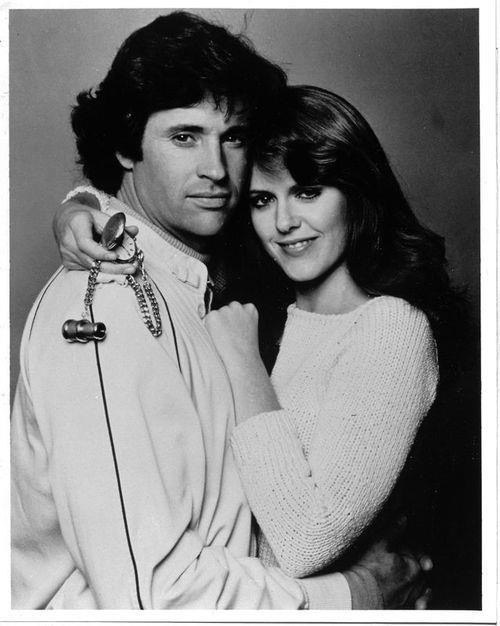
June 13, 1980The Girl, The Gold Watch & Everything

Robert Hays and Pam Dawber from the 1980 movie The Girl, The Gold Watch & Everything

Forty-six years ago, a rather charming film premiered in syndication this evening as produced by Paramount. The Girl, The Gold Watch & Everything was based on the novel of the same name by John D. MacDonald, who of course did the Travis McGee series. I know I watched it and I know I like it even four decades on.

It was written by George Zateslo who hadn’t written anything prior to this save an episode of CHiPS. After writing this, he’d write the script for the sequel, The Girl, the Gold Watch & Dynamite, originally titled the The Girl, the Gold Watch, and Everything Else before they realized that was way too long. Or so they thought.

Actors Lee Purcell and Philip MacHale from the 1981 sequel The Girl, the Gold Watch & Dynamite

The two cast members to note here are Robert Hays as Kirby Winter and Pam Dawber as Bonny Lee Beaumont. That because the story is a rather thin SF plot involving a young male who inherits from his millionaire uncle a gold watch that has the power to stop time. A series of quite unlikely and comic adventures ensue. And yes there’s a girl involved. This girl is entirely, I believe, why the novels were written, but then a girl was always present in John MacDonald’s Travis McGee novels as well. 

An episode of the Twilight Zone, “A Kind of Stop Watch”, has essentially the same story as that of “The Girl, the Gold Watch & Everything”. A lot of Twilight Zone fans would claim very loudly that McDonald ripped off Serling’s script. That episode, however, aired in October of 1963, the year after the publication of the novel on which the movie is based. Sigh. 

Can y’all remember how far back this story plot device goes? I assuming it’s present in the beginning of the genre, isn’t? 

(9) COMICS SECTION.

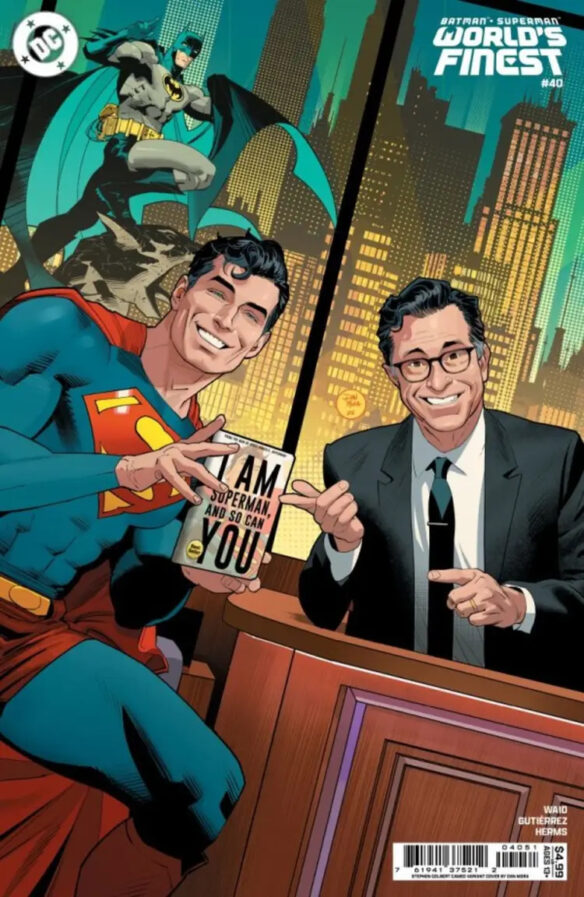
(10) JUSTICE LEAGUE STANDINGS. “Every Founding Member of the Justice League, Ranked by Importance in 2026” in the opinion of ComicBook.com.

…The League has certainly gotten bigger over the years. The advent of the Justice League Unlimited has seen nearly every superhero alive join their ranks, but the classics should always be respected. Seven people founded the League, and to this day, they are all incredible heroes. To celebrate those heroes, we’re going to take a look at how important each of the original seven is in comics in 2026. We’re only judging them by how much they are impacting overall stories and DC right now, and while each is definitely important, you might be surprised to see that some have waxed or waned more than you think. With all that said, let’s leap into ranking the League….

On the lower end of the list is —

6) Martian Manhunter

Unfortunately, sixth place on our list belongs to the beloved Manhunter from Mars. J’onn has often gotten the short end of the stick compared to his fellow founding Leaguers, especially when it comes to his own storylines. Where he is best shown off in Justice League stories, his teammates each have their own volumes focused solely on them. With the Justice League being so massive right now, that leaves even less time for Martian Manhunter to stake his claim. He’s still DC’s strongest telepath and the person everyone can turn to, but as of right now, he’s not doing nearly as much as his teammates. He is currently helping out Superboy in Action Comics (2016), so at least he’s operating in some spotlight.

(11) SCARF AND GOBBLE. [Item by SF Concatenation’s Jonathan Cowie.] I do like to go to the cinema with local SF group members. (Remember the days when the Eastercon always had a film programme as did British venued Worldcons…?)

For me, watching films is a communal experience to chat about after, or if at home, ‘pausing’ to have a mug of Builders and ask a pressing questions such as “I haven’t seen any 12 monkeys  in The 12 Monkeys so far. where are they?”

However, some can spoil the experience, as described over at the BBC. “Loud eaters and phones nearly spoiled my cinema trip – and it’s not just me” (Subscription required by readers outside the UK.)

The cinema lights are low and you’re cocooned in your seat, ready for the film to transport you to another world. But just as you settle in, you’re jolted back to reality. Audience members around you are scrolling on their phones, talking and munching loudly.

(12) SPACE LOGISTICS. [Item by Steven French.] Can we mine asteroids to colonize Mars? A new study suggests we can, if we use certain asteroids themselves to produce the fuel required: “Mining the solar system to build a new world” at Phys.org.

I watched Armageddon again fairly recently with Bruce Willis, oil drillers in space and an asteroid the size of Texas bearing down on Earth. Buried beneath the Hollywood chaos is a genuinely interesting question: What exactly could we do with an asteroid if we got our hands on one? As it turns out, the answer has nothing to do with blowing it up, sorry Bruce, but everything to do with building a new world.

Building a colony on Mars is not just an engineering problem, it’s a logistics one too. The logistics, unglamorous as it sound, may ultimately determine whether humanity becomes a multi-planetary species or stays firmly rooted on Earth.

Think about what a Mars colony actually needs. Not just food and oxygen, but metal. Structural steel for habitats, aluminum for equipment, iron for tools and many of the components will wear out, break, and need replacing. Shipping all of that from Earth every time is not a serious long-term strategy. A rocket launch costs tens of millions of pounds per ton of cargo, and the journey to Mars takes between six and nine months depending on where the two planets happen to sit in their orbits. You cannot run a hardware store on that kind of supply chain.

new study from researchers at EPFL in Switzerland posted to the arXiv preprint server has now done the hard math on mining asteroids and delivering the metals directly to Mars. The solar system contains millions of asteroids, and the metallic ones, known as M-type asteroids, are essentially giant lumps of iron, nickel, and other valuable materials floating through space. The question is whether we can actually reach them, extract what we need, and get it to Mars efficiently enough to make it worthwhile.

The answer, it turns out, is a careful yes but with conditions….

(13) HOLY VELIKOVSKY! “Scientists Link 3.5 Billion-Year-Old Asteroid Strike To Dawn Of Life On Earth” at HotHardware.

A small stone discovered in the sands of Mali is reimagining what we know about the early solar system. By examining this rare lunar meteorite, planetary scientists have mapped out a sequence of cosmic collisions that retell the history shared by Earth and the Moon.

Thanks (or no thanks) to plate tectonics, erosion, and volcanic activity on Earth, finding pristine physical evidence of what happened here billions of years ago is nearly impossible. To uncover our planet’s earliest chapters, scientists must sometimes look to the Moon, a geologically quiet place where the lack of an atmosphere or weather acts as a permanent cosmic museum.

The meteorite, called Northwest Africa (NWA) 12593, is a lunar breccia, essentially a natural concrete formed when fragments of different rocks are fused together by extreme force. A research team at the University of Colorado Boulder subjected the stone to radiometric dating and chemical analysis, revealing that it survived three distinct impacts. The last collision launched it off the Moon toward Earth, while a prior mid-history strike smashed and welded the fragments into its current concrete-like form.

However, it is the first and oldest impact that is the most interesting. Dated to roughly 3.5 billion years ago, this colossal asteroid strike released enough energy to turn the lunar surface into a sheet of liquid rock. The heat was so intense that it generated cubic zirconia, a mineral that requires extreme, controlled temperatures to form. Though the mineral fragilely dissolved as the magma cooled, researchers successfully identified its chemical fingerprints locked inside the meteorite.

This 3.5-billion-year-old timestamp coincidentally mirrors known impact records found in ancient crusts on Earth, as well as on 4 Vesta, one of the largest objects in the asteroid belt. Finding an identical bombardment signature across three completely separate bodies suggests a coordinated, system-wide event. This possibly indicates that the inner solar system was transitioning away from the constant chaos of planet formation toward a sudden, massive wave of debris, perhaps caused by the breakup of a giant asteroid….

(14) SPIELBERG Q&A. “Steven Spielberg on ‘Disclosure Day’ and alien visitations – YouTube on CBS Sunday Morning.

As a child, Steven Spielberg stared at a meteor shower on a wondrous starry night and began his love affair with the sky. The director of the classic “Close Encounters of the Third Kind” and “E.T.: The Extra-Terrestrial” has returned to the sci-fi genre with “Disclosure Day,” which imagines closely-held secrets surrounding alien visitations. He talks with Turner Classic Movies host Ben Mankiewicz about UAP/UFO phenomena, the paranormal, and his own beliefs regarding intelligent life beyond Earth.

[Thanks to Kathy Sullivan, Steven French, Mike Kennedy, John Hertz, Daniel Dern, Andrew Porter, John King Tarpinian, Cat Eldridge, SF Concatenation’s Jonathan Cowie, Chris Barkley, and Mark Roth-Whitworth for some of these stories. Title credit belongs to File 770 contributing editor of the day OGH.]

Pixel Scroll 5/26/26 The Three Filers And The Secret Of The Purple Pixel Scroll

(0) It looks like we’ll have to serve Scroll Lite tonight – my mother went back in the hospital today and I will be logging a lot of hours there for the immediate future. Thankfully Cat and Paul have stocked the shelves with Birthday and Memory pieces, so there will be something substantial to build on.

(1) A WRITER HONORS MULTIPLE GENRES. “Andrea Hairston on Crossing Genres, Science Fiction, and Taking Romance Seriously” at CrimeReads.

When I describe my recent novel, The Redemption Center is Closed on Sundays, as a SFF mystery romance, people frequently ask, “Wasn’t it difficult writing a murder mystery?”

Yes, it was.

As science-fiction author Howard Waldrop regularly told the Clarion West speculative fiction workshop I attended in 1999: Writing is hard. Given Howard’s inflection of English, the a in “hard” went on for several beats. Writing any fiction is “hard.” There are no “easy” genres. Yet nobody has asked me, was it difficult to write a romance?

The questions people do pose make me wonder: Do we suspect that writing mysteries is harder than writing romance? Or that writing science fiction is harder than writing fantasy? Do we think that crafting realistic fiction is more demanding than creating speculative works? Is writing a mathematical proof harder than writing a short story?

For me, murder mysteries are like algebra, teasing out the unknown from the known. So much of storytelling, no matter the genre-mapping, relies on the drama of mystery. You set the stage for conflict and lay out the clues, frequently in plain sight. The setting, props, and costumes are dynamic elements of the story, of the action, not just decoration or atmosphere. As characters interact with their world, they reveal themselves, often reversing audience expectations, surprising us and themselves….

… My first full-length play, Einstein, which I directed for the Black Theatre Workshop at Smith College in 1973, was a mystery. Like The Redemption Center is Closed on Sundays, the play features a black cleaning lady as the detective. It was what I termed a sci-fi carnival jam and what twenty years later would be called Afrofuturism….

(2) FIELD LOSES A PRESTIGIOUS MAGAZINE. FIYAH Literary Magazine Of Black Speculative Fiction will go on an indefinite hiatus following the publication of issue 40. Publisher and Executive Editor DaVaun Sanders made the announcement on Bluesky. Thread starts here.

(3) COVER REVEAL. The Science Fiction and Fantasy Poetry Association has unveiled the 2026 Rhysling Anthology cover.

The featured image “Death on a Pale Horse” was created by artist Julie Dillon. Find more of her incredible work here: The Art of Julie Dillon.

(4) MEMORY LANE.

[Written by Cat Eldridge.]

May 26, 1995Johnny Mnemonic, the film, not the excellent story

Ok, I’m assuming that most of you have read the Nebula-nominated story that the film Johnny Mnemonic was based off? It was originally published in the May 1981 issue of Omni magazine but it has been reprinted quite a few times in the forty years since then. I could’ve sworn it got nominated for a Hugo but the Hugo Awards site tells me it wasn’t. 

Well the film had its premiere thirty-one years ago on this date. I for one did not see in theatre, indeed did not know it existed until maybe a decade later. My opinion of it will be noted below.

The screenplay was supposedly by William Gibson as it says as IMDb so we can’t fault the script here being crafted by others, can one? Well it was as you’ll see below. 

Was it at all good? Well, the critics were divided on that. Roger Ebert in his Chicago Sun-Times review said “Johnny Mnemonic is one of the great goofy gestures of recent cinema, a movie that doesn’t deserve one nanosecond of serious analysis but has a kind of idiotic grandeur that makes you almost forgive it.” 

Caryn James of the New York Times has the last word: “Though the film was written by the cyberpunk master William Gibson from his own story and was directed by the artist Robert Longo, ‘Johnny Mnemonic’ looks and feels like a shabby imitation of ‘Blade Runner’ and ‘Total Recall.’ It is a disaster in every way. There is little tension in the story despite the ever-present threat of an exploding brain. The special effects that take us on a tour of the information superhighway — traveling inside the circuits of Johnny’s brain, or viewing his search for information while wearing virtual reality headgear — look no better than a CD-ROM. Visually, the rest of the film looks murky, as if the future were one big brown-toned mud puddle.”

Now let’s talk about numbers. It’s generally accepted that a film needs to make at least three times what it cost to produce to just break even in the Hollyworld accounting system. Johnny Mnemonic didn’t even come close to that. It cost at least thirty million to produce (the numbers are still are in dispute even to this day as the Studio stored them in a file cabinet in a basement guarded by very hungry accountants) and made just double that and that’s not even taking into account that the Studio got at best fifty percent of the ticket price. 

There were two versions of this film. The film had actually premiered in Japan earlier on April 15th, in a longer version, well six minutes longer, that was closer to the director’s cut that came out later (yes there was a director’s cut — there’s always a director’s cut, isn’t there?), featuring a score by Mychael Danna and different editing. I doubt any version makes it a better film.

I haven’t discussed the film or the cast, so NO SPOILERS here. It’s possible, just possible, that someone here hasn’t seen it yet. 

I have. Shudder. Just shudder. Bad acting, worse story and that SFX? The lead actor who I shall not name here was so wrong as being cast that role as to defy comprehension as to why he got cast for it.  Well this unfortunately was due to a common occurrence in Hollywood that the studio decided to make the casting calls so the person that I won’t mention was picked up by the studio, so we can blame them for him. Frell. 

Then there were the numerous script rewrites were forced upon them by the studio, so Gibson, the producer  and the writing staff who had a great script, at the beginning according to Longo, ended up with a piece of shit again according to him. Now that piece of shit was one that the studio loved. Idiots. Obviously not science fiction fans there, were they? Turning into what it became proved that.

A black-and-white edition of the film, titled Johnny Mnemonic: In Black and White was released three years ago. Robert Longo, the producer, says it is closer to what he and Gibson envisioned. It is available on Blu-Ray. 

Now y’all are free to give away as much as you want for spoilers. That’s on your heads. Or memory chips. 

Someday I’m hope for a better interpretation of a Gibson film.  I’ve hopes for the soon to be Neuromancer series on Amazon. Really I do. I’m even to once again going to break my long standing stance of not seeing anything made off a work I liked a lot. I did with Johnny Mnuemonic and I’m still regretting it. 

I didn’t see The Peripheral series on Sci-Fi as I don’t subscribe to that streaming service. Who watched it? Opinions please. 

It wasn’t at all liked by the audience reviewers at Rotten Tomatoes Neuromancer who gave it a rating of just thirty-one percent when I originally wrote the first version of this but there’s no pages for it there now. Interesting… 

The most excellent Burning Chrome collection which has this story is available in dead tree format from your favorite bookseller but not for purchase on Amazon though it available if you have Kindle Unlimited; iBooks also known as Apple Books has it available but not Kobo.  

(5) COMICS SECTION.

(6) TIMEY-WIMEY SCHEDULING. “New Doctor Who special tipped to be delayed from Christmas 2026” reports Radio Times.

Doctor Who’s planned return this Christmas reportedly may be delayed until Easter.

The BBC’s flagship sci-fi show was last on our screens in May 2025, when Ncuti Gatwa bowed out as the 15th incarnation of the titular space traveller after two seasons.

In the final moments, he was seen regenerating into Billie Piper, who previously played beloved companion Rose Tyler, leaving a major cliffhanger over what’s to come.

There have been long-held plans for the show to return at Christmas 2026, with showrunner Russell T Davies previously stating that BBC bosses were left “with jaws agape, loving it”, when he shared plot details for the special.

However, The Sun now claims that the festive special may be pushed back while producers continue to search for the next person to take over the role of the Doctor, and the special may instead air over Easter 2027.

The BBC declined to comment when approached by Radio Times.

(7) DRACULA A.D. 1958. “Hammer to rerelease 1958 Dracula in UK with long-lost footage added” reports the Guardian.

Hammer Films’ horror masterpiece Dracula is to be rereleased in UK cinemas in October, including footage believed to have been lost for more than six decades after it was deemed too gruesome for audiences.

The 1958 movie starring Christopher Lee as Count Dracula and Peter Cushing as Doctor Van Helsing has been fully restored in 4K.

The restoration reinstates footage previously seen only by audiences at the film’s original Japanese theatrical release in 1958.

The recovered material, which was discovered in a Warner Bros warehouse, has never been released before in the UK or US and has never appeared on home entertainment in any territory.

The chief executive of Hammer Films, John Gore, called it “the recovery of a piece of British film history that audiences believed had been lost for ever”….

[Thanks to Steven French, Mike Kennedy, Andrew Porter, John King Tarpinian, Cat Eldridge, SF Concatenation’s Jonathan Cowie, Chris Barkley, Mark Roth-Whitworth, and Kathy Sullivan for some of these stories. Title credit belongs to File 770 contributing editor of the day Jack Lint.]

Pixel Scroll 3/18/26 Smeerp, Credential, Stobor, Dracarys…I Know The Science Fiction Names For Pixels Animalculous

(1) HOT, SEXY, DANGEROUS BOYS CANNOT BE COPYRIGHTED. “Court Rules Tracy Wolff Did Not Plagiarize Crave Series” reports Publishers Weekly.

A judge in the Southern District of New York ruled that Tracy Wolff did not plagiarize her YA fantasy series Crave, according to a report that first appeared in Publishers Lunch.

The ruling concludes a multi-year lawsuit brought against Wolff by writer Lynne Freeman, alleging the series was “substantially similar” to one of her unpublished manuscripts. Freeman also named her and Wolff’s mutual agent Emily Sylvan Kim, Crave publisher Entangled Books, distributor Macmillan, and Universal City Studios—which bought film rights to the first installment in the series—in the suit. 

In the ruling, Judge Colleen McMahon wrote that “Freeman’s novel and Wolff’s Crave novels are indeed similar, but only in the ways that all young adult romantasy fiction novels are similar to each other.” 

The court added that “hot, sexy, dangerous boys—central to virtually all young adult romance novels—cannot be copyrighted.”

Courtney Milan’s comments on Bluesky are gold. Thread starts here.

(2) MORE MURDEBOT TV COMING THIS YEAR. “Apple TV’s Hit Sci-Fi Series Murderbot Will Become More Cyberpunk In Season 2” reports ScreenRant.

Apple TV+’s hit science fiction series Murderbot started out as a comedy, but it will lean much more heavily into the cyberpunk genre in its second season. Apple TV+’s Murderbot is based on The Murderbot Diaries by Martha Wells. Since it’s a direct adaptation of the acclaimed books, we can predict what will happen in the upcoming Murderbot season 2, which is expected to be released in late 2026.

As with any adaptation, however, Apple TV+’s version of Murderbot has also changed some elements of the books while adapting it into a television show. Murderbot‘s showrunners have already noted that they’re making some changes to Martha Wells’ books to keep the cast of Murderbot, which gets separated in the novellas, together for the show. Still, even with the show’s changes, the story is going to become much more cyberpunk in season 2….

…In Murderbot season 2, however, the show will have to delve more deeply into the franchise’s cyberpunk elements. Murderbot season 2 is set to adapt Artificial Condition, which saw Murderbot travel to the RaviHyral mining installation to find out the truth about its dark memories and past. Artificial Condition is when The Murderbot Diaries started to become more serious and mature, and Murderbot the show will have to follow suit….

…The setting of Murderbot season 2, a giant corporate mining installation, will give the show much more of an opportunity to be cyberpunk than the on-planet first season did. RaviHyral is a place that was built by corporations without a care for human lives and later abandoned. There will be ample opportunity to use plenty of neon lights, crowded streets, and other hallmarks of the cyberpunk genre….

The same article also covers the Apple TV+ adaptation of Neuromancer.

…With Murderbot season 2 leaning further into its cyberpunk roots, it’s providing competition for another Apple TV+ sci-fi show based on an acclaimed cyberpunk book: NeuromancerApple TV+ is adapting an adaptation of Neuromancer, the seminal cyberpunk classic by William Gibson. Since Neuromancer is set to release in late 2026, that means the streaming service will have two major adaptations of cyberpunk books airing episodes very close to one another.

In all likelihood, Neuromancer will be a better cyberpunk story than Murderbot season 2. Neuromancer is an all-time classic of the cyberpunk genre, while Murderbot is primarily a sci-fi comedy with a heavy emphasis on wholesome interpersonal connections. Neuromancer is, by design, a lot darker and more aligned with the main attractions of cyberpunk than Murderbot is….

Neuromancer, by virtue of being a pillar of the cyberpunk genre, also has quite a few expectations going along with it. It has a higher bar to surpass, and if Apple TV+ can’t do the source material justice, Neuromancer could actually end up being hated by fans. Murderbot, on the other hand, has already proven its dedication to the source material, and it has delighted critics and audiences alike. Murderbot may just surpass Neuromancer.

(3) REBOOT COMMENTARY WITH A SWIFT KICK. Amazing Stories’ Steve Davidson has a rather visceral reaction to Charlie Jane Anders’ post wishing the Firefly series would not be rebooted: “Why the Animated Version of Firefly is a Good Thing (and those who disagree should STFU)”. The title makes an excerpt redundant.

(4) ALL THE LAST REBOOTS AT ONCE. On the other hand, Camestros Felapton in “My TV Reboot Proposal”, tries to make everybody happy who wants a favorite show revived. Or at least make them laugh.

(5) WHAT REVIEWS ARE FOR. I rather enjoyed the points Sue Burke made at the end of the recently posted “Goodreads review: ‘Electromagnetic Assault’ by Bruce Landay”.

…More broadly, I think there three types of book reviews:
• The first is for readers who haven’t read the book but wonder if they want to. That’s what we’re doing here.
• The second is for readers who aren’t going to read the book but want a useful, thoughtful summary from a professional so they can feel like they’ve read the book. The review provides a lengthy non-tedious analysis. You can often read these in upscale magazines and academic settings, which is not where we are now.
• The third kind of review subjects the novel to literary criticism regarding its writing style and thematic development. I think the very short chapters add to the velocity of the book, which is an appropriate attribute for a thriller. To discuss its literary merits further, we would both need to have read the book, and so far only one of us has.

To conclude, I believe Electromagnetic Assault is a worthy addition to its sub-genre. Enough said.

(6) JUST PLUG IT BACK IN? James Davis Nicoll spotlights “Five Science Fiction Stories About Investigating Enigmatic Artifacts” at Reactor.

… Such enigmas are frustrating in real life. For authors, enigmatic artifacts can be the stuff of plot, allowing their characters to show off their intellectual and athletic prowess. Consider these five examples, drawn from across the decades.

One of Nicoll’s selections is:

“Lost Art” by George O. Smith (1943)

Enthusiastic engineers Barney Carroll and James Baler do not fully understand the forty-century old Martian device. However, the old Martians did believe in technical documentation, so the chums believe they are in possession of all the information they need to unravel the gadget’s secrets. This is why the pair elect to experiment with the relic in the middle of town.

What the old Martians failed to predict is that certain facts considered by them so obvious that they need not be mentioned might be unknown to people from another, alien, civilization. Carroll and Baler lack the information needed to operate the gadget safely. After all, safety is not their primary concern3.

It might seem odd that some core bit of information could be lost so thoroughly. But consider one of the world’s oldest known jokes: “A dog walks into a bar and says, ‘I cannot see a thing. I’ll open this one.’” We know that was a thigh-slapper back in Sumeria. We do not know why.

(7) WILLIAM C. DIETZ (1945-2026). Author William C. Dietz died March 15 at the age of 81. His family made the announcement on Facebook.

Dietz’s first book was War World (now Galactic Bounty), which was published in 1986. He published more than 60 novels including several popular with Halo game players.

According to his website bio, Dietz also wrote the script for the Legion of the Damned game based on his book of the same name, and co-wrote SONY’s Resistance: Burning Skies game for the PS Vita.

He grew up in the Seattle area, spent time with the Navy and Marine Corps as a medic, graduated from the University of Washington, lived in Africa for half a year, and has traveled to six continents.  Dietz has been employed as a surgical technician, college instructor, news writer, television producer and Director of Public Relations and Marketing for an international telephone company.

He is survived by his wife and family members.

(8) PAUL GEREMIA (1944-2026). [Item by Daniel Dern.] I don’t have any SFnal relevance for this other than no doubt many (at least a few?) fellow Fen, particularly from Boston area in the 60’s/70’s/80’s were fans of his.

I had the pleasure and privilege of seeing him bunches of times, back in the day, in Cambridge, at Passim, The Blue Parrot, among other places.

Here’s an obit that’s impressively comprehensive: “Paul Geremia, 1944-2026, giant in the world of acoustic music and hero of the blues, has passed on”  at Daily Kos.

Paul Geremia,guitarist,  songwriter and blues scholar,  left this world Saturday March 14th.  It took the interwebs two days to catch up with the news, but believe me when I say he was a giant in the world of roots music.  if you don’t know about him, you owe it to yourself to check him out.   Influenced variously by ragtime pickers, Delta bluesmen and  folk artists like Tim Hardin, he developed a distinctive voice as a guitarist, stride pianist and harp blower.  He  exclusively championed acoustic music in defiance of all trends.  He added to that body of music with original songs that stand up well with his mentors….

One of my favorite of his songs is “Henry David Thoreau” (to the tune of “Johnny B. Goode/Go, Johnny, Go!”) — here it is on YouTube. (And YouTube has a bunch of nice live recordings of him, too, e.g., via this channel.)

I’ve got a bunch of his CDs (possibly an LP or two).

One of his 2-album CDs is e-available (borrowable) via Hoopla, if your library offers access to it: “I Really Don’t Mind Livin’ / My Kinda Place” and Spotify has a bunch of his albums.

He’ll be missed!

(9) MEMORY LANE.

[Written by Cat Eldridge.]

Rainbow Mars (collection) by Larry Niven (1999)

Twenty-seven years ago this month, Rainbow Mars was published by Tor. It is my absolutely favorite work by Larry Niven, with Ringworld being my second. It contains six stories, five previously published and the longest, “Rainbow Mars”, written for this collection, plus some other material. It is about Svetz, the cross-reality traveler who keeps encountering beings who really should not exist including those Martians. 

The first story, “Get A Horse!” was first published in The Magazine of Fantasy and Science Fiction in October 1969. That was followed by “Bird in the Hand” in the same magazine, October of the next year. Surprisingly the third story, “Leviathan!” was published in Playboy in August of that year. 

(Yes I know Playboy did a lot of SF, it’s just that I wouldn’t have expected this story to show up there. It fits F&SF better in my opinion. Your opinion on that matter of course may and quite possibly will differ. I know why it’s there — just follow the money always.)

Then “There’s a Wolf in My Time Machine” was published in October of that year in the fine zine that printed the first two. Finally the last story that got printed at that time, “Death in a Cage” was published in Niven’s The Flight of the Horse collection in September of 1973 which collected these stories as well. (The Flight of the Horse also had “Flash Crowd” which I like a lot (and was the first of that excellent series) and “What Good is a Glass Dagger?” which is fantastic.) 

Now we get Rainbow Mars, the novel that finishes out the work this delightfully silly work. Some of Pratchett idea’s from a conversation he had with Niven remain in the final version of Rainbow Mars, mainly the use of Yggdrasil, the world tree. Though there’s Norsemen as well. Really there are…

There’s two other two short pieces, “The Reference Director Speaks”, in which Niven speaks about his fictional sources for the Mars he creates, and “Svetz’s Time Line” which is self-explanatory. 

An afterword, “Svetz and the Beanstalk”, rounds out the work in which Niven talks about the fictional sources for Rainbow Mars as a whole.

The fantastic cover art, which was nominated for a Chelsey Award, is by Bob Eggleton who has won, if my counting skills are right tonight, an impressive nine Hugos, mostly for Best Professional Artist though there was one for Best Related Work for his most excellent Greetings from Earth: The Art of Bob Eggleton

The artwork is by him from first and later Tor editions.

(10) COMICS SECTION.

(11) AMAZING VERSE. John Hertz helped celebrate Amazing Stories‘ 100th anniversary earlier this month with these poems dedicated to publisher Steve Davidson and his Experimenter Publishing Company, and Lloyd Penney, Editor-in-Chief. These poems are acrostic (read down the first letters of each line) in unrhymed 5-7-5-7-7-syllable lines like Japanese tanka.

So for a short time
(True in human history),
Experiments we
Value, we’ve been publishing.
Expanding you? We hope so!

Let us think “What if?”
Let it be made a story.
Over the transom
You send it, we’ll look at it;
Dare well, and we’ll dare with you.

(12) CAUTION: MAY CONTAIN SMALL PARTS. (Y’THINK?). Mental Floss says these “8 Rare McDonald’s Happy Meal Toys Worth a Small Fortune”.

When McDonald’s rolled out the Happy Meal in 1979, it had everything a kid could want, from fast food to fun figurines. Unlike its competitors, McDonald’s built an unlikely toy empire on a free-with-purchase model, selling enough burgers and fries to cover the cost of the toys—and then some. The culprits behind the craze? Whimsical Transformer-inspired menu items, customizable McNugget characters, and pint-sized Beanie Babies. While these toys were practically free back then, today they can fetch hundreds or even thousands of dollars as coveted collector’s items. Happy Meals—and their many toy collections—have become a mainstay of ’90s nostalgia, and collectors and millennials alike are using their adult budgets to snap up the childhood toys they grew up loving. Some sell for just a few dollars, while rare or complete sets can command premium prices. Before you rummage through that old toy chest, here’s a look at eight of the most valuable McDonald’s Happy Meal toys today.

Second on their list:

Changeables

In the late 1980s, McDonald’s introduced one of its most inventive Happy Meal toy lines: Changeables. First released in 1987, these plastic toys transformed menu items like hamburgers, fries, and milkshakes into small robots—essentially McDonald’s answer to the wildly popular transforming toys of the era. Kids loved flipping the food-shaped figures into mechanical characters, and multiple waves of Changeables were released through 1990, culminating with the McDino Changeables. Collectors still hunt for complete sets today, including the dinosaur- and robot-themed Changeables McDonald’s re-released in 2026. Unopened Changeables can command especially high prices: a sprawling 150-piece lot from the 2026 series sold for about $250 on eBay. Even pre-owned toys can fetch a solid return: a bundle of 26 Changeables from multiple collections released between 1987 and 1990 sold for $125 despite being listed in “used” condition.

(13) VIDEO OF THE DAY. The Old Sci Fi Movies YouTube channel did a recent segment on “The Time Tunnel (1966) 20 Weird Facts That You Didn’t Know About”.

It was one of the most ambitious sci-fi shows of the 1960s — but behind the time jumps and historical chaos were stories even stranger than the episodes themselves. In this video, we uncover 20 weird and fascinating facts about The Time Tunnel, the short-lived yet unforgettable series that blended science fiction with real historical events. Created by legendary producer Irwin Allen, the mastermind behind big-budget TV spectacles of the era, the show followed scientists Tony Newman and Doug Phillips as they became lost in time — appearing in moments like the sinking of the RMS Titanic and other major historical turning points. Though it aired for only a single season, The Time Tunnel became a cult classic and remains a beloved piece of 60s television history.

[Thanks to Steven French, Mike Kennedy, Andrew Porter, John Hertz, Daniel Dern, John King Tarpinian, Cat Eldridge, SF Concatenation’s Jonathan Cowie, Mark Roth-Whitworth, and Kathy Sullivan for some of these stories. Title credit belongs to File 770 contributing editor of the day Daniel Dern, who says today’s title is, of course, via “The Major General’s Song”, from Gilbert & Sullivan’s The Pirates of Penzance.]

Pixel Scroll 3/17/26 Last Night I Watched The Planets In My Pajamas

(1) THIS, TOO, SHALL PASS. “Noelle W. Ihli on Reading Survival Thrillers in a World of Real Danger” at CrimeReads.

Readers often ask me some version of the same question: How can I stand writing survival thrillers when there’s already so much terror and stress to survive in the real world?…

…Most days, I read at least a handful of truly disturbing headlines before my morning coffee. So why, on top of all that, would anyone choose to pick up (or write, cough) a book about being hunted, trapped, abducted, or chased down a rural highway?

I’ve learned a lot about the answer to that question over the past five years, since I started writing thrillers full-time.

I’m already an anxious person in my day-to-day life. And honestly, I expected my anxiety to skyrocket with my new career path. (To be fair, it still does when I’m writing a particularly suspenseful or scary scene.) But here’s the thing I always intuitively knew as a reader, that I’ve learned even more as a writer: Survival thrillers do something real life doesn’t.

They have a beginning, a middle, and an end. There is no limbo.

It’s all over in a night, if you binge that book.

In everyday life, anxiety can feel shapeless and never-ending. It follows us to work, to sleep, to the grocery store, to the car, even on vacation. Thrillers take that fear and anxiety and give it a shape. They lay out the danger, the person facing it, the ordeal to survive, and the resolution. And for those of us who live with that constant hum of anxiety, experiencing that narrative arc is priceless….

(2) DUNE 3. Variety introduces the “Dune 3 Trailer: Timotheé Chalamet, Zendaya, Robert Pattinson at War”.

“It’s a trailer launch? It looks like a premiere,” Denis Villeneuve joked after introducing the stars of “Dune Part Three” to an AMC theater full of journalists, film critics, bloggers and creators in Los Angeles on the Monday after the Oscars….

… “Dune: Part Three,” inspired by Frank Herbert’s “Dune: Messiah,” tells the story of what happens after Paul — the warrior prince and chosen one — defeats the Harkonnens and becomes Emperor, embracing his role as the Fremen’s messiah and initiating a holy war. He also marries Princess Irulan (Florence Pugh) for political power, causing Chani to abandon him. The teaser features explosive glimpses of the galactic conflict that follows, as well as the internal battles that plague Paul….

…. The clip opens with Paul and Chani in happier times, discussing baby names. “If we have a girl what should we name her?” Chani asks. “Her name should be Ghanima. She would need to be strong like her mother,” Paul replies, then asks, “What if it’s a boy?” Chani replies: “I would name him Leto, so he would have the wisdom of his grandfather.”

“Dune” fans will immediately recognize this bit of foreshadowing, but we won’t spoil it here. Instead, let’s relish the gorgeous, lens-flared footage of Zendaya walking along the dunes, while Chani is still the “heartbeat” of Villeneuve’s story, this is “Dune,” not “Under the Tuscan Sun.”…

(3) HIGHEST POST-OSCAR VIEWING BUMPS. JustWatch shared some streaming insights from the Oscars on Sunday, highlighting the films that saw the biggest uplift in streaming popularity in the 24 hours following the 98th Academy Awards.

The following insights are based on the 20 million monthly JustWatch users in the US:
Documentaries and short films saw the biggest post-Oscars surge in popularity.

  • Mr. Nobody Against Putin (+524%) and All the Empty Rooms (+661%) recorded the strongest growth following their wins.
  • Short film Two People Exchanging Saliva also saw a significant increase (+334%).
  • Among major winners, One Battle After Another (Best Picture) led with a +231% rise in streaming interest.
  • Sinners followed as the second most popular Big-Five winner, up +136%.

(4) BRING ME MY SPEAR: O CLOUDS UNFOLD: BRING ME MY CHARIOT OF FIRE. “Trapped! Inside a Self-Driving Car During an Anti-Robot Attack.” The New York Times reports, “In San Francisco, some passengers of autonomous taxis have experienced an unexpected hazard: being stuck in the vehicles when the cars are assaulted.” (Behind a paywall.)

In January, Doug Fulop was riding home from a night out in San Francisco when a man crossed the street in front of his car, doubled back and began screaming at him. The man punched the car’s windows and tried lifting up the vehicle. He then yelled that he wanted to kill Mr. Fulop and the other two passengers for giving money to a robot.

A taxi driver would have simply driven away. But Mr. Fulop’s vehicle had no driver — it was a self-driving Waymo.

“We felt helpless,” said Mr. Fulop, 37, who works in the tech industry.

Since autonomous cars started roaming San Francisco streets almost four years ago, they have elicited an array of unexpected behaviors from humans, including angry protests against the vehicles. That has created an unexpected hazard for passengers of self-driving cars all around the city: being stuck inside the vehicle during an anti-robot rant.

Self-driving cars are designed to stop moving if a person is nearby. People can take advantage of that function to harass and threaten their passengers. In 2024, a San Francisco man tried covering the sensors of a self-driving car that had stopped, effectively disabling it, while passengers were inside. Another video from that year showed three women screaming as a group of vandals tagged their autonomous taxi with spray paint.

It was unsettling to be trapped inside a Waymo during an attack, Mr. Fulop said. “If he had kept hammering on one window instead of alternating, I’m sure he would have eventually broken through,” he said.

The attacker did not appear to be on drugs or otherwise impaired, but seemed to be overtaken by extreme anger at the self-driving car, Mr. Fulop said. It did not seem safe to get out and run, he added, since the man was trying to open the locked doors and said he wanted to kill the passengers.

They called 911 and Waymo’s support line, Mr. Fulop said. Waymo told them that it would not manually direct the car away if someone was standing nearby, and that the passengers would be OK with the doors locked. The car’s software does not allow riders to jump into the driver’s seat and take over during an incident.

The attack lasted around six minutes. By then, bystanders had begun cheering on the man, Mr. Fulop said. That distracted the man, who moved far enough away from the car that it could finally drive away.

San Francisco police officers showed up shortly after. A police report reviewed by The New York Times supported Mr. Fulop’s account….

(5) TODAY’S BIRTHDAY.

[Written by Paul Weimer.]

March 17, 1948William Gibson, 78.

By Paul Weimer: The High Duke of Cyberpunk.

I first came to William Gibson like many other people, with Neuromancer. It took me a few years to get to it, I was still working through 50s to 80s SF through much of the 1980s, so it wasn’t until I was an adult that I finally got a deep dive into Cyberpunk.

I started with Neuromancer, of course, and found out why everyone was so interested and so enthused about it. I still think it holds up, even now, I re-read it a few years ago.  But I do admit that other Gibson novels stand on their own, and not on the shoulders of Neuromancer alone. But NeuromancerCount Zero and Mona Lisa Overdrive are, basically, what a lot of people think of when they think of “cyberpunk”. One can thank, or blame, The Matrix for taking so many notes from the Sprawl books in order to transmit that aesthetic and idea into the mainstream.

The Difference Engine, for example, which he co-wrote with Sterling, feels very dated now (and some of his attitudes are pretty awful, I think, even now), but it stands as an icon of Steampunk even today. Once again, aesthetics are important, even more so than Cyberpunk, in conveying a mood and an idea (or even, gasp, a VIBE) to science fiction. 

But would I have new readers start with either? No. I think the novel that really captures his voice, his importance and his strengths as a writer is The Peripheral. I highly enjoyed the Amazon series, even given the liberties that it took with the source material, but I think that it is a good way for people to be introduced to the virtual reality and other technological ideas that Gibson brings to the table. In a real way, The Peripheral shows how important Gibson and his point of view on technology and science fiction are in a way few have matched in any era. That makes him, in my mind, one of the advocates of a phrase I coined during the Chengdu Ineligibility, of the Science Fiction Project. 

So in the end one might say that Gibson is a godfather, or one of the prime movers at the very least, of two subgenres of science fiction, in addition to being an advocate for the Science Fiction Project. That’s a solid legacy. And as mentioned above with The Peripheral, people are still discovering and enjoying Gibson for the first time.

William Gibson

(6) COMICS SECTION.

(7) MEET APOLLO AND ARTEMIS. The US Space & Rocket Center here in Huntsville has a new pair of mascots. A public vote has helped select their names—Apollo and Artemis.

When I first saw their photo, my exact original thought was, “Oh my, that’s a bit terrifying.“ Then, wondering if I was overreacting, I reached out to my brother. He assured me I was not the only one who thought that. He told me that one wag on Reddit suggested they were to warn kids about the dangers of explosive decompression. Another mentioned the “Honeynut Cheerios Bee on meth.”

Anyway, here they are:

And here is Arnold Schwarzenegger undergoing explosive decompression in Total Recall:

(8) FABULOUS PUPPETS. [Item by Steven French.] The Guardian shares some lovely backstage photos of My Neighbour Totoro: “’Happy as can be!’ My Neighbour Totoro toasts first birthday in London’s West End”.

The spectacular stage version of Studio Ghibli’s much-loved film has spent a year at the Gillian Lynne theatre in London. To celebrate, photographer Tristram Kenton was granted backstage access…

(9) ESSENTIAL INGREDIENTS. [Item by Jeffrey Smith.] “Asteroid Ryugu Contains All 5 DNA and RNA Building Blocks, Study Shows”Gizmodo has details.

Early Earth was a brutally hot, volcanically active, radiation-bathed wasteland. Somehow amid this hostility, the necessary ingredients for life must have appeared, but where did they come from?

Astronomers have been working to answer that question for decades. They have developed several hypotheses, one of which suggests that asteroids and comets delivered the ingredients to Earth over the course of many collisions. A study published today in Nature Astronomy adds to a growing body of evidence to support this idea, finding all five nucleobases in samples of the asteroid Ryugu.

The five nucleobases are the building blocks of DNA and RNA—the genetic material inherent to all life on Earth. “This result further supports the idea that nucleobases could have been present in primitive asteroids and delivered to the early Earth, potentially contributing to the chemical evolution that preceded the origin of life,” co-author Toshiki Koga, a postdoctoral researcher at the Japan Agency for Marine-Earth Science and Technology, told Gizmodo in an email….

(10) TODAY’S TITLE EXPLANATION. [By Daniel P. Dern, with apologies to Groucho.] “Last Night I Watched The Planets In My Pajamas” via Grouch Marx, in Animal Crackers (the musical and the movie).

The item: This was in email from Qwoted (where journalists look for quoteable/info sources): ASTRONOMY/SCIENCE/SPACE EXPERT – MISLABELED PLANETS ON KIDS PAJAMAS IN VIRAL REDDIT POST (URGENT) [url1940.qwoted.com]

I’m a reporter at Newsweek and I’m working on a piece about a viral image circulating online that shows children’s pajamas with several planets mislabeled (for example, Jupiter and Mercury appear to be swapped based on size and appearance). I was hoping you might be able to offer a brief expert comment explaining why the labels are scientifically incorrect, particularly from a basic astronomy or early science education…

DPD: This appears to be the original Reddit, or at least, one that matches the criteria: “Planet names switched on kids’ pajamas” r/onejob.

And here’s the Newsweek story that ran: “Space-Themed Kids’ Pajamas Baffle Adults Who Notice Major Design Flaw”.

Dern concludes: It’s all bananas.

(11) VIDEO OF THE DAY. “Famous TV Show Cars That Were Lost And Found” from America on Wheels.

The studios sold most of these cars for less than five hundred dollars. The General Lee. KITT. The A-Team Van. Some went straight to the crusher. Others sat forgotten in barns and storage units for thirty years while their owners had absolutely no idea what they were sitting on. Today those same cars are worth hundreds of thousands of dollars — and the stories of how they were found are even better than the shows they came from. Let’s find them.

[Thanks to Kathy Sullivan, Steven French, Mike Kennedy, Daniel Dern, Jeffrey Smith, Andrew Porter, John King Tarpinian, Cat Eldridge, SF Concatenation’s Jonathan Cowie, and Mark Roth-Whitworth for some of these stories. Title credit belongs to File 770 contributing editor of the day Daniel Dern.]

Pixel Scroll 11/28/25 But I Was Just A Kid, Pixel Scrolled Out Long Before My Comments Ever Did

(1) ONE PIECE MUSIC CAUGHT UP IN CONTROVERSY. A live public performance of the ending theme of the One Piece anime by the singer Maki Otsuki was brought to an abrupt halt in Shanghai today, as seen in a video posted by the Mexican Twitter account 24 Morelos.

This performance was part of an event organized by the Japanese toy/game/media company Bandai Namco, but it is not the only Japan-related event to have sudden issues in China. The Sailor Moon Super Live stage show tour issued a statement today, an extract of which Google Translate renders as follows:

Due to unavoidable circumstances and in accordance with local regulations, we have decided to cancel all three Hangzhou performances of the “Pretty Guardian Sailor Moon” The Super Live China Tour, which were scheduled for today, November 28th (Friday) through November 29th (Saturday).

We sincerely apologize to everyone who was looking forward to the performances for the inconvenience and concern caused, and for the short notice.

We are currently in discussions regarding the Shanghai performance, and will announce the details on our official website as soon as they are decided.

Other events by Japanese performers cancelled today include concerts in Shanghai and Beijing by the singer Natori, and three early December performances by the group chilldspot.

No official statement seems to have yet been issued to explain this spate of sudden cancellations, but perhaps readers can draw their own conclusions what the underlying cause might be.

(2) EATING THE FANTASTIC. Scott Edelman invites listeners to sample samsa with Naomi Kritzer on Episode 269 of the Eating the Fantastic podcast.

Naomi Kritzer

How multi-award-winning? Naomi’s a seven-time Hugo Award nominee (winning twice for short story and twice for novelette) — a three-time Nebula Award nominee (winning once for novelette) — a three-time Lodestar Award nominee — (winning once) — a four-time nominee for the WSFA Small Press Award (winning once) — and has also won the Asimov’s readers poll. Plus she’s been a two-time Andre Norton Award nominee, as well as a finalist for the Eugie, Dragon, and William L. Crawford Awards.

The stories which won her those honors were published in such magazines as ClarkesworldAnalogAsimov’sUncannyApexF&SF, and others, and in such anthologies as Infinity’s End and The Reinvented Heart: Tales of Futuristic Relationships. Many of those stories have been gathered in her collections Gift of the Winter King and Other Stories (2011) and Cat Pictures Please and Other Stories (2017). Her novels include Catfishing on CatNetChaos on Catnet, and Liberty’s Daughter. Her novella Obstetrix, published by Tordotcom, is coming in June 2026.

We discussed why a friend stepped up to start submitting stories for her, the question she asked Madeleine l’Engle when she was nine, why she spent years not reading reviews (even the good ones), her surprise at the way “Cat Pictures Please” went viral, what it’s like when you’re on “that” panel at a convention, why she wishes she’d told the early editors to whom she’d submitted how young she was, the many writers time has passed by (and how we hope neither of us will join them), what she was told by her mentor after confessing she wanted to be Ursula K. Le Guin, the story she sold to a market by deliberately writing the sort of story that magazine said it didn’t want, the inability of writers to know which of their stories will resonate most with readers, whether the stories she’s written in response to prompts might have existed in some other form without those prompts, how our writing has been affected by the times in which we live, and much more.

(3) PEAK DEMAND. “Netflix Crashes as ‘Stranger Things 5’ Premieres” reports Variety.

“Stranger Things” briefly pulled Netflix into the Upside Down.

The streamer crashed at 5 p.m. PT on Wednesday, just as the highly anticipated fifth season of the sci-fi series premiered.

The service was down for about three minutes and continues to have bugs for some users. Tens of thousands of people who logged on to watch the sci-fi series were met with an image from “Nailed It!” with the caption: “Something went wrong. Sorry, we’re having trouble with your request. You’ll find lots to explore on the home page.”

By 5:05 p.m., the site seemed to be up and running for most users. Variety reached out to the streamer for comment; according to a Netflix spokesperson, “Some members briefly experienced an issue streaming on TV devices, but service recovered for all accounts within five minutes.”…

(4) STRANGER THINGS 5 FIRST IMPRESSIONS. “’Stranger Things’ Season 5 review: New dangers and familiar plotlines”. NPR has opinions about the first four episodes to drop. Beware spoilers.

There is a lot about this new batch of episodes that reminded me of previous storylines, as this kooky new-school Scooby Gang repeatedly pulls off elaborate plans to get past the military, sneak inside the Upside Down and search for Vecna.

Once again, there’s a ruthless doctor empowered by the military to probe the Upside Down — this time, played by Terminator alum Linda Hamilton. Our young heroes keep devising elaborate-yet-successful plans to outwit the military and access the alternate universe where Vecna is hiding. We have generous sprinkles of ’80s pop culture, from a surprising reference to pop star Tiffany to the sly use of Diana Ross’ 1980 dance hit Upside Down.

There are also winking nods to movies, with scenes that recall moments from Aliens, Good Morning, Vietnam and even Home Alone. Deft as these touches are, however, they are also moves we have seen before in this show.

And there’s a series of attacks by Demogorgons — super strong, super-teethy humanoid creatures from the Upside Down controlled by Vecna — who motivate our heroes by targeting children in Hawkins for kidnapping. This seems a deliberate callback to the way Will’s abduction jumpstarted everything in the show’s first season.

Stranger Things often juxtaposes action sequences and physical danger with protagonists separating and reuniting emotionally. So the new episodes feature Eleven pushing back against Hopper’s efforts to keep her out of the fray and safe from capture by the military, while Steve struggles with feelings for ex-girlfriend Nancy, Robin bumbles a relationship with her girlfriend and Will is continually on the verge of declaring something about his romantic feelings. Again, little of this will seem new to longtime fans.

(5) INSCRIBED ON THE HEART. Michael Chabon tells how his relatives memorably celebrated the holiday one year in “Thanksgiven – Tragic Magic”.

You people may assemble with ritual correctness at the annual table under the ancestral roof, but in my family, Thanksgiving is as homeless as the Pilgrims. Our family tree has no trunk; it’s all roots and branches. There is no grand high grandmother to ingather the tribes by fiat or the irresistible excellence of her fare. Instead, unwritten charts ensure that a byzantine system of mothers-in-law and sisters-in-law rotates the meal through the houses of our family, with guilt playing the role of gravitation. I am not at all sure that in the two decades my wife and I have been together we have ever passed consecutive Thanksgivings at the same table. We have gone to Ridgewood, New Jersey, and Calabasas, California, to my mother and my mother-in-law, to my mother’s sister-in-law and my sister-in-law’s mother. We have even, on occasion, hosted the meal ourselves.

Sometimes all these intricacies wear us down and we flee, like tax fugitives seeking shelter from a burdensome bureaucracy, to the tranquil haven of somebody else’s mishegas. One year we went to the Sacramento mansion of a Greek-American whose family gave thanks with first-generation fervor and a buffet that honored the traditions on either side of their hyphen. Another year we went to the home of some writer friends in Pacifica for a Creole soul-food extravaganza, lavishly furnished with young novelists, chess pie, and Dungeness crabs plucked that morning out of the bay. In 2002, we fled to Manka’s Inverness Lodge….

….And that, to me, is the meaning of Thanksgiving. Of all the Thanksgivings before and since, the one spent at Manka’s stands out for me as the truest, even though we were far from our places of origin. Nothing lasts; everything changes. People die, and marriages dissolve, and friendships fade, and families fall apart, whether or not we appreciate them; whether or not we give thanks every waking moment or one night a year. For the act of returning to the same table, to the same people and the same dishes — to the same traditions — can blind you to life’s transience…. 

(6) RIVAL DUNES. “The first Dune bombed, but it’s still better than Timothée Chalamet’s version” says a Polygon writer is this contrarian piece.

David Lynch’s Dune, from 1984, is a notorious turkey. It was panned by critics, bombed at the box office, and for decades, the director — who went on to become cinema’s greatest surrealist — refused to speak of it in interviews. He even went so far as to have his name removed from the credits of certain extended versions.

Over time, Dune’s reputation evolved from dud to cultish camp classic and even, among some fans, to flawed masterpiece. But a successful adaptation of the monolithic Frank Herbert sci-fi novel it was based on — a book that had already spent over a decade in development by directors as varied as David Lean, Alejandro Jodorowsky, and Ridley Scott, by the time Lynch got his hands on it — remained a white whale for the filmmaking community. When Denis Villeneuve released the first part of his acclaimed adaptation in 2021, everyone breathed a sigh of relief; now we could all pretend that Lynch’s one artistic failure never happened.

But the 1984 Dune, like all Lynch’s movies, has an uncanny, linerging potency. It’s as instinctive and dreamlike as Villeneuve’s movies are rational and grandiose, and it accesses uglier and weirder facets of the material than the ever-tasteful Villeneuve, director of the recent Dune and Dune Part 2, can stomach. Here are just a few things that it does better.

Here’s an example of their claims:

6. The Spacing Guild of Navigators

Villeneuve noped out of depicting the Spacing Guild of spice-using navigators that has a monopoly on interstellar travel in Herbert’s world, even though it is their need for spice, harvested on the desert planet Arrakis, that drives the plot. Lynch is no such coward. In his movie, the Guild is an ominous force behind the throne, embodied in the nightmarishly mutated Navigator — a kind of wrinkled whale-baby-monster — that strongarms the Emperor from inside the glass coffin of its spice tank.

Lynch even includes an utterly bizarre attempt to visualize the Navigators’ mystical spacefaring process, which in his vision involves floating around inside a lightshow and then — there’s no other way to put this — defecating beams of light from a pulsating rear orifice which then seem to manifest the planets being traveled to. It’s distractingly weird and horrible, but in Lynch’s Dune, there’s no mistaking the fear and awe the Spacing Guild inspires, nor its stranglehold on galactic power.

(7) LOOKING FORWARD. “Apple TV’s Neuromancer Will Be the Sci-Fi Event of the Decade” contends CBR.com.

…Apple TV+ is about to dip its toe into the science fiction genre once again with one of its riskiest projects yet. The streaming service is home to the greatest sci-fi shows on television right now, including critically acclaimed series like FoundationSeverance, Silo, and For All Mankind. Now, Neuromancer becomes the latest addition to Apple’s already impressive catalogue….

Neuromancer is a particularly difficult book to adapt, specifically when it comes to its depiction of “cyberspace,” a digital plane wherein humans can interact with computers. This, combined with the cyberpunk elements, gripping social critiques, and many other intricate elements of William Gibson’s sci-fi world, makes Neuromancer one of the most difficult book-to-screen adaptations ever….

(8) ANNE RICE WEBSITE NEWS. [Item by Steven French.] The Guardian previews a documentary anthology about Anne Rice: “’Stay tuned’: new Anne Rice film could foretell release of unpublished work by late author”.

The worst heartbreak and most riveting triumph of Anne Rice’s life happened in relatively quick succession, each beginning when the US novelist’s daughter – Michele, then about three – told her she was too tired to play.

Rice had never heard such a comment from a child that age, and subsequent blood tests ordered by a doctor revealed that her beloved “Mouse” had acute granulocytic leukemia, considered untreatable for her.

Mouse died in 1972 shortly before turning six. And as the devastating end neared, then the initial grief of losing her daughter, Rice mostly coped by huddling over her typewriter, crafting what became her first novel: the enduring classic Interview With the Vampire.

“I knew that writing was the only thing I could do, and when I wrote it was like fighting the darkness, pushing all the absurdity and horror away,” Rice later said of her novel about vampires fighting the complications of immortality, including a five-year-old girl inspired by Mouse.

When Rice was done, the first read went to her husband, Mouse’s father, the poet Stan Rice. Stan Rice once recounted how he read it in “approximately one sitting” and upon finishing it told himself: “Our life will never be the same.”

“And,” he said, “it never was.”…

…Now, at AnneRice.com, that story and myriad other related ones are being retold in an anthology of documentaries being made available for streaming for free starting Thursday.

Anne Rice: An All Saints’ Day Celebration was helmed by her son, the author Christopher Rice, and his business partner and her close friend Eric Shaw Quinn. It contains archival footage, privately held photographs and new interviews, paying tribute to the literary titan who died at 80 toward the end of 2021 following a stroke. And it chronicles a live event in New Orleans at the beginning of November that celebrated Rice’s legacy….

(9) TODAY’S BIRTHDAY.

[Written by Cat Eldridge.]

November 28, 1946Joe Dante, 79.

Joe Dante started off as one as us as he wrote columns and articles for fanzines and APAs. 

Now let’s look at what he’s done that I find interesting.

The first would be his collaboration with John Sayles when they completely rewrote the first draft of Gary Brandner’s The Howling novel for that film. Brandner was said to be extremely angry with the film that was produced.

Because of The Howling, Spielberg offered up Gremlins, one of my all time favorite films, to him. I’ve watched it more times than I can count and I’ve enjoyed it each time. Gremlins II, not so much. 

Spielberg also brought him on as one of the directors on John Landis’ Twilight Zone: The Movie. Dante’s segment is a remake of the original Twilight Zone “It’s a Good Life” episode as written by Serling. That story was based off a Jerome Bixby story published in 1953 in the Star Science Fiction Stories anthology series, edited by Frederik Pohl.

Ahhh, Innerspace with Dennis Quaid, Martin Short, and Meg Ryan. The Studio hated it, Dante made the film he wanted to despite the Studio and audiences stayed home.  Really stayed.  I thought it was sweet. 

I hadn’t realized til now that Dante was responsible for Small Soldiers, an interesting film. Not a great film but it had a possibility of being something. Not sure what that something would have been. Dante says that there were twelve writers involved in writing the script. Ouch. 

Finally, Dante directed Looney Tunes: Back in Action. Moving on. 

Well I will leave you with this ever so cute photo…

Joe Dante

(10) COMICS SECTION.

(11) OOPSIE! “Before a Soyuz launch Thursday someone forgot to secure a 20-ton service platform”Ars Technica tells what that means.

A Soyuz rocket launched on Thursday carrying Roscosmos cosmonauts Sergei Kud-Sverchkov and Sergei Mikayev, as well as NASA astronaut Christopher Williams, for an eight-month mission to the International Space Station. The trio of astronauts arrived at the orbiting laboratory without incident.

However, on the ground, there was a serious problem during the launch with the ground systems that support processing of the vehicle before liftoff at Site 31, located at the Baikonur Cosmodrome in Kazakhstan.

In a terse statement issued Thursday night on the social media site Telegram, the Russian space corporation that operates Soyuz appeared to downplay the incident: “The launch pad was inspected, as is done every time a rocket is launched. Damage to several launch pad components was identified. Damage can occur after launch, so such inspections are mandatory worldwide. The launch pad’s condition is currently being assessed.”

However video imagery of the launch site after liftoff showed substantial damage, with a large service platform appearing to have fallen into the flame trench below the launch table. According to one source, this is a platform located beneath the rocket, where workers can access the vehicle before liftoff. It has a mass of about 20 metric tons and was apparently not secured prior to launch, and the thrust of the vehicle ejected it into the flame trench. “There is significant damage to the pad,” said this source….

(12) THE MARTIAN ZAP. “A rover on Mars has detected a form of lightning” reports NPR.

Mini-lightning strikes created by whirling dust devils on Mars have been detected accidentally by the microphone on board the Perseverance rover.

The chance discovery is direct evidence of a form of lightning on Mars, researchers say in a report published in NatureThey describe how the rover’s microphone picked up signs of electrical arcs just a few centimeters long, which were accompanied by audible shockwaves.

“There’s been a very big mystery about lightning on Mars for a long time. It’s probably one of the biggest mysteries about Mars,” says Daniel Mitchard, a lightning researcher at Cardiff University in the United Kingdom, who wasn’t part of the research team but wrote an accompanying commentary for the journal.

“The key thing here,” he explains, “is that we actually have a rover on the surface of Mars that appears to have detected something that fits our idea of what we think lightning on Mars would look like.”

Besides Earth, flashes of lightning have been seen in the atmospheres of Jupiter and Saturn, and lightning has also been detected on Neptune and Uranus. But finding lightning has proven more elusive on our closest planetary neighbors — even though experimenters in the 1970s did lab work that suggested lightning should exist on Mars.

For example, when researchers put volcanic sand into a flask and pumped it down to Martian atmospheric pressures, swirling the sand in the flask created a glow that could be seen in the dark, says Ralph Lorenz, a planetary scientist with the Johns Hopkins University Applied Physics Laboratory….

(13) UNIT CITATION. “Doctor Who Magazine special covers UNIT” reports Cultbox.

The soldiers of UNIT have been defending the Earth from alien aggressors since the black-and-white era of Doctor Who. The makers of Doctor Who Magazine promise a lavish bookazine that traces the history of the secret organisation, from the Cyberman invasion of London to the epic spin-off series The War Between the Land and the Sea.

[Thanks to Kathy Sullivan, Mike Kennedy, Andrew Porter, Scott Edelman, John King Tarpinian, Chris Barkley, Cat Eldridge, SF Concatenation’s Jonathan Cowie, Mark Roth-Whitworth, and Steven French for some of these stories. Title credit belongs to File 770 contributing editor of the day Camestros “Goodbye Norma Jean” Felapton.]

Pixel Scroll 11/8/25 Nothing That Needs A Monkey Wrench Done To It

(1) HELP DECIDE THE DIAGRAM PRIZE. The shortlist for The Bookseller Diagram Prize for Oddest Book Title of the Year 2025 was released October 24, and is now open for a public vote on The Bookseller website here. Voting will close November 17, with the winner revealed November 21.

“Axe murder and Montreal erotica titles vie for the Oddest Book Title of the Year” reports The Bookseller.

…As always, there will be no prize for the author or publisher, but the traditional “passable bottle of claret” will be awarded to the person who nominated the winning entry.

In contention for The Diagram Prize for Oddest Book Title of the Year 2025:

  • Killing the Dead: Vampire Epidemics from Mesopotamia to the New World

A canter through the “macabre frontier of life and death where corpses are believed to do harm from the grave”, featuring not just European vampyres but female flying demons of Southeast Asia and the “lustful yoginīs of India”. Author John Blair provocatively and eyebrow-raisingly argues, the publisher says, that “corpse-killing, far from being pathological or unhealthy, served as a therapeutic and largely harmless outlet for fear”.

  • The Pornographic Delicatessen: Mid-century Montreal’s Erotic Art, Media, and Spaces

A survey of saucy materials from mid-20th-century Montreal, which became North America’s erotic capital, thanks to its thriving red-light district, nightclub scene and pornography industry.

  • Self-Recognition in Fish: Exploring the Mind in Animals

A “groundbreaking” discovery of animal self-awareness that “vividly documents” the mirror self-recognition ability of fish, which also, Springer Nature says, takes readers on “an engaging exploration of the scientific experiments”.

  • Whack Job: A History of Axe Murder

The story of the axe – “familiar implement and most human of weapons” – looks at the ways humans have used it to kill each other, from its role in warfare, as the favourite execution method of Henry VIII and instrument of choice for parricide Lizzie Borden.

  • Whiskerology: The Culture of Hair in Nineteenth-Century America

Body politics and US history intersect in a look at how Americans went coif crazy in the 1800s, obsessed by the “revelatory power of hair” and how ones’ ‘do became a marker of culture and identity.

  • Why the Hindenburg Had a Smoking Lounge: Essays in Unintended Consequences

The collection of essays from the distinguished scholar of the Smithsonian’s Lemelson Center for the Study of Invention and Innovation includes the titular piece, a look at the “inherent contradictions between consumer safety and product marketing”. Other topics addressed in this collection include: How efficient are wild animals as investors? Why was United Shoe Machinery the Microsoft of the 1890s? And have the Amish played a key role in advanced technology?

(2) THE ROADS MUST SCROLL. [Item by Steven French.] There’s one that runs just to the north of here! “’Google Maps’ for Roman roads reveals vast extent of ancient network” in Nature.

A high-resolution digital map allows people to plan their routes along the ancient roads of the Roman Empire. Combining historical records with modern mapping techniques, researchers mapped hundreds of thousands of kilometres of roads. The findings nearly double the known length of Roman roads.

The data set was published in Scientific Data on 6 November alongside an online platform called Itiner-e, which study co-author Tom Brughmans calls a “Google Maps for Roman roads”1.

“It’s a growing resource for a community to keep on adding information to to ensure that this remains the best representation of our knowledge of where all the roads in the Roman Empire were,” says Brughmans, an archaeologist at Aarhus University in Denmark.

Brughmans hopes the data set will “revolutionize our understanding of how people, ideas and infectious diseases” spread 2,000 years ago. “Such insights can be used to better understand the challenges we face today,” he adds…

(3) OWL SERVICE ON SIXTIES TV. “Filming The Owl Service – Far Off Memories from Otherly Television Landscapes” from A Year in the Country.

For myself a particular touchstone for the “wyrd” sense of patterns beneath the plough and otherly landscapes is Alan Garner’s The Owl Service book from 1967 and its television adaptation that was broadcast in 1969-1970 and that has become one of the core touchstones of wyrd culture….

Very loosely and briefly, it is the tale of three teenagers who discover a mysterious set of owl and flower-patterned dinner plates in an attic and the magical ancient legend of the “Mabinogion” comes to life once again in their Welsh valley, with the story taking in supernatural fantasy, class struggle and adolescent permissiveness….

1. The colours of the outfits of three of the main characters, Alison, Gwyn and Roger, were based on an older International Colour Code for electrical wiring (red, black and green); although it was initially broadcast in black and white, a decision was made that if it was going to be filmed in colour, they would use colour to hint at the power the three could unleash….

(4) NEW JERSEY DINOS ON THE MOVE. “Saved from extinction: Giant North Jersey dinosaurs migrating to new home” reports Gothamist.

Field Station: Dinosaurs, the animatronic Jurassic playground that has drawn visitors to Overpeck County Park in Leonia for more than a decade, will close after this weekend.

But the roaring, life-sized dinosaurs aren’t done with New Jersey just yet.

The herd is migrating down the Parkway to a new home along the Atlantic City Boardwalk.

Showboat Atlantic City has purchased all 31 life-sized dinosaurs currently on display and plans to build a dino-themed attraction next to the resort, slated to open in spring 2026.

The move keeps the creatures together and keeps them in the state, something the park’s founder and executive producer, Guy Gsell, said was important to him.

“We’re like the family who moves from a house to an apartment and has to give away their pets,” he said. “We wanted to make sure that the pets had a nice place to go and that they stayed together.”…

About a month ago, the park listed its dinosaurs on Facebook Marketplace. A feathered velociraptor was listed for $700, while a bucking green-and-orange hadrosaurus (the species first discovered in Haddonfield, New Jersey) was going for $2,450. The long-necked apatosaurus was the priciest (not counting a pair of hatching eggs) at $2,860.

Inquiries rolled in from as far away as Europe and South America, including zoos and “wealthy people who thought it would be nice to have a dinosaur next to their pool,” Gsell said.

He joked that the dinosaurs are simply following a familiar trajectory: “It’s like a really common progression in New Jersey to move from Hudson County to Bergen County to the beach.”…

(5) MEMORY LANE.

[Written by Cat Eldridge.]

Elizabeth Bear’s Sub-Inspector Ferron Series (2018 and 2020)

Sometimes it’s the offbeat stories that I really like from authors, the short works that aren’t expanded into full length stories. Such is the case with Elizabeth Bear’s Sub-Inspector Ferron series. Of course, everything she writes is a delight to read which is why I enjoyed the third White Space novel, The Folded Sky, which came out this summer.

Bear’s Sub-Inspector Ferron series at the present consists alas of but two novellas, In the House of Aryaman, a Lonely Signal Burns and A Blessing of Unicorns. Will there be more? Oh, I hope so. Will there? Read on for that answer. 

In the House of Aryaman, a Lonely Signal Burns is set a half a century from now. In the city of Bangalore, a scientist working on cutting-edge biotechnology has been discovered inside his own locked flat, his body converted into a neat block of organic material.

It’s up to Police Sub-Inspector Ferron to figure out the victim’s past and solve the crime, outwitting the best efforts of whoever is behind the death, her overbearing mother, and the complexities of dealing with the only witness – an ever so cute parrot-cat Chairman Miaow. (The latter, she says are, as I guessed, a cat with parrot colors and “a parrot-like level of intelligence and ability to mimic speech”. That cat will later be adopted by her. She already has a fox. I don’t think it said what the intelligence level of the fox is.

I’ll note that the stories aren’t freestanding, so the novella, A Blessing of Unicorns builds off the first novella, therefore must be experienced after the first is read or listened to.

Together they make up a fascinating look at the life and work of Ferron as a Police Sub-Inspector in a balkanized world where there are no national or regional police forces. No, it’s not some small libertarian wet dream here, but a real world with actual consequences to everything that happens. 

There is certainly more than enough story here for her to someday write a novel set in the universe. And I was much looking forward to that, but I asked her if there would be a novel in the series, she replied “there might be a novel someday but I really need to visit Bangalore myself to write that! I’ve been relying on friends who hail from there, or who have family there and have visited extensively, but it’s not the same as boots in the dirt experience!”

Fantastic stories told well by a master storyteller, what more do you want? I’ve never read anything by her that’s even the least bit disappointing.

The Audible narrations are done most excellently by narrator Zehra Jane Naqvi. She’s an Australian expatriate in the United Kingdom of Anglo-Indian descent. She very much handles the Indian accents quite wonderfully here.  She started her voice acting career in Big Finish Productions’ Doctor Who audio dramas with Sylvester McCoy and Peter Davison reprising the Seventh and Fifth Doctors.

The first one is available at the usual suspects, but the second remains at this time an Audible exclusive several years later.  I have a note from Elizabeth Bear that says that there will not be a print edition, “Not unless something unforeseen happens”. 

(6) COMICS SECTION.

(7) NOT QUITE THE RETURN OF PEANUT BUTTER MAN. [Item by Michael J. Walsh.] “Purdue police (mostly) solve the mystery of peanut butter man” at Boing Boing.

A man covered in what was widely assumed by onlookers to be peanut butter was spotted wandering around Purdue University in West Lafayette, Indiana, on Wednesday, November 5, causing alarm on campus, especially to those with peanut allergies. WLFI News 18 explained on Wednesday afternoon that Purdue University campus police were trying to figure out who the man was and why he was covered in peanut butter. They continue:

“Concerns arose about the potential danger to those with peanut allergies. News 18 arrived shortly after, observing an increased police presence and confused students. Boilermakers reported seeing the man walking around campus.”

WLFI News 18 also reported that cleaning crews had been called to the scene to clean up and sanitize any surfaces that had been contaminated by peanut butter dripping off the unknown man. Police officers and student witnesses speculated that perhaps the peanut butter man was a student who was undergoing some kind of hazing event.

The mystery of the peanut butter man was partly solved on Thursday, much to the relief of the Purdue community. The Journal and Courier ran an absolutely hilarious article that provided some new insight into the case — notably that Purdue Police Captain Song Kang confirmed that the man was, indeed, a student. The Journal and Courier also reports that he wasn’t actually covered in peanut butter but, instead, had been slathered from head to toe in sunflower seed butter….

I assume Michael J. Walsh’s interest in this story is nostaligic – it reminds him of the 1972 Worldcon masquerade, as chronicled here in “Scott Shaw! Deuce of Deuces”.

(8) UNUSUAL WEAPON. [Item by Mlex.] There are still things worth inventing. (Posted by William Gibson at Bluesky.)

(9) JUSTWATCH TOP 10. JustWatch has released its ranking of the Top 10 streaming movies and TV shows for October 2025.

(10) VIDEO OF THE DAY. [Item by SF Concatenation’s Jonathan Cowie.] If you have not yet had enough of Halloween, Moid over at the Media Death Cult YouTube Channel has re-visited Ghostwatch.  This was broadcast by the BBC on Halloween in 1992.  It caused quite a stir as it was meant to be a documentary….  Moid re-visits this fantastical totem of British broadcasting… “The Most Traumatic TV Show Ever Made – Ghostwatch.

[Thanks to Mark Roth-Whitworth, Steven French, Kathy Sullivan, Michael J. Walsh, Mlex, Mike Kennedy, Andrew Porter, John King Tarpinian, Chris Barkley, Cat Eldridge, and SF Concatenation’s Jonathan Cowie for some of these stories. Title credit belongs to File 770 contributing editor of the day Cat Eldridge.]

Pixel Scroll 9/20/25 The Mouse That Scrolls The Pixels Rules The File

(1) BRAINWAVES. Jack Anderson shares “Five Pointers for Writing a Genius (Even If You Aren’t One)” at CrimeReads.

As a fan of the mystery genre, I grew up reading about these intellectual titans. Sherlock Holmes and his quickfire deductions, Hercule Poirot’s touting of his little grey cells.

I adored reading about these genius detectives, but I never thought too much about the process of creating them.

Yet, when I wrote my story, The Return of Moriarty, I finally had to contend with the strange question; how do I write a genius level character and, more specifically, a character who is much smarter than I am?…

Anderson’s list begins with —

Tip One: Time Is On Your Side

Intelligence isn’t just about making good decisions; it’s about making good decisions at speed.

Therefore, one of the greatest tools in a mystery writer’s arsenal is the ability to play with time.

Have you put your hero in some impossible situation? Do they need to pull a solution from thin air while a countdown timer ticks into the single digits? A writer can put their pen down right there, make a cup of coffee, and spend hours, days, weeks thinking up the perfect course of action.

Then, when they sit down to write the scene, they can condense all that deliberation down, allowing their genius character to reach an impossible conclusion in a thirty second brainwave….

(2) OPERA BASED ON CHABON NOVEL. “’The Amazing Adventures of Kavalier & Clay’ opens New York’s Metropolitan Opera season”NPR has the story.

“The Amazing Adventures of Kavalier & Clay,” Michael Chabon’s Pulitzer Prize-winning novel, has been adapted for opera. It opens Sunday at the Metropolitan Opera.

SCOTT SIMON, HOST:

Tomorrow evening, New York’s Metropolitan Opera opens its season with an opera based on Michael Chabon’s Pulitzer Prize-winning novel “The Amazing Adventures of Kavalier & Clay.” Reporter Jeff Lunden talks with people who brought the tale of two cousins who create a superhero comic book, kind of like “Superman,” to the opera stage.

(SOUNDBITE OF MUSIC)

JEFF LUNDEN, BYLINE: Michael Chabon’s novel is a page-turner. It’s over 600 pages long, filled with incident and detail, and takes place in Prague and New York City during World War II and in the world of comic books. The opera, which runs about three hours with intermission, has music by Mason Bates and a libretto by Gene Scheer….

… LUNDEN: While the novel spends chapters in various locales, the opera can present action happening simultaneously. After Joe Kavalier escapes Nazi-occupied Prague, he moves in with his cousin Sam Clay in Brooklyn. But composer Mason Bates says opera can be two places at once.

MASON BATES: You’re seeing the family with so many challenges back in Prague. And then you see Joe, on the surface of it, working in this world of pulp fiction, but his motivations are to save his family. So that would allow me as a composer to have these worlds almost as if their, like, lighting or projections kind of come up in totally different harmonies, different textures….

(3) IN CITIES TO COME. Charles T. Rubin discusses William Gibson’s vision of “The Real City of the Future” in The New Atlantis.

There is a profound paradox in great cities today. We are accustomed to thinking of our cities as engines of creation, where creatives and disrupters of all stripes go to prosper. Yet at the same time we see widespread fears that in the future the very urban structures that have come to be the incubators of change will be particularly vulnerable to the destructive powers they have unleashed.

Futurist-oriented thinkers have easily envisioned city- and civilization-destroying conflicts since at least World War I. With the advent of nuclear weapons, such futures became even easier to imagine. Add to that decades of the looming specter of environmental destruction, with its direct or indirect consequences for the viability of cities, and dystopian urban futures only become more plausible. Covid seems to have called into question just how necessary great cities are in a world of broadband communication.Widely acknowledged as the originator of the cyberpunk subgenre of science fiction and inventor of the term “cyberspace,” the novelist William Gibson writes of future cities as working out the consequences of this paradox. Many of Gibson’s science fiction novels start with serious destruction through war, natural disasters, climate change, or global ecological collapse. And his cities of the future are the stage where he plays out stories about virtual realities, brain–machine interfaces, artificial intelligence, genetic engineering, and nanotechnology — the very constellation of technologies that some anticipate will allow, and in Gibson’s work have allowed, humans to interact in all kinds of new, non-physical ways that will both obviate the need for physical cities and create posthuman forms of intelligence far exceeding our own, calling into question the primacy of our creative efforts.

What makes Gibson’s portrait of great cities thought-provoking is that, despite all this change, he imagines them persisting at all, in some ways operating no worse than the worst that can be found today. This situation becomes all the more thought-provoking when we see how he links the fate of his cities to the fate of the modern project itself, whose deep impact on making cities what they are today will persist into the future.

The modern project — meaning here not just scientific and technological progress, but also liberal democratic politics, free market economics, and social egalitarianism — promised to alleviate many of the historical givens of the human condition, like material scarcity, rampant disease, inequality, and social and political oppression. And it absolutely has expanded the possibilities of human life for vast numbers of people over the course of time. Yet for Gibson, the modern project is also in some ways responsible for, or at least unable to prevent, the civilizational crashes his stories anticipate. 

(4) EPIC FANTASY PANEL. FanFiAddict has posted a video of their Seattle Worldcon 2025 panel “The Shifting Landscape of Epic Fantasy with George R.R. Martin, Brandon Sanderson, Robin Hobb & More”.

Join co-hosts Adrian M. Gibson, M.J. Kuhn and Greta Kelly for this special episode of SFF Addicts podcast recorded LIVE at Seattle Worldcon 2025; where they discuss “The Shifting Landscape of Epic Fantasy” with guest authors George R.R. Martin, Robin Hobb, ‪@BrandSanderson, Rebecca Roanhorse and Ryan Cahill. During this epic two-hour conversation, they delve into a (brief) history of epic fantasy, the monolith of Tolkien and LotR, approaches to epic fantasy worldbuilding, research and immersion, magic systems as a tool for storytelling, epic fantasy film/TV adaptations, breaking into epic fantasy publishing, self-publishing and crowdfunding, finding success in the modern publishing landscape and more.

(5) OH, CANADA. [Item by Steven French.] Sandra Oh talks to the Guardian about racism, dancing away from doomscrolling, the agent who told her to go back to Canada, and her new science-fiction film: “’The old white patriarchy isn’t knocking on my door!’ Sandra Oh on joy, despair – and going viral with a euphoric dance”.

…Oh’s latest project – the indie Canadian sci-fi film Can I Get a Witness? – is about finding salvation amid the burning. After an apocalyptic, AI-engineered disaster hits Earth in the very deliberately chosen year of 2025, human life has been rebuilt. It’s 2040: peace has been achieved. Offices, computers and smartphones are relics of a damned civilisation. People spend their days tending to their gardens. But there are conditions: they don’t travel, electricity is restricted and – the biggest catch – everyone must die a government-mandated death at 50. Oh plays Ellie, a survivor of the 2025 catastrophe, who is supporting her daughter into her new job as a “documenter” of these “end of life” ceremonies. These can be picked from a brochure, with options including church memorials and beachside goodbyes with champagne.

 “I was most interested in the script’s contemplation of dying,” says Oh, in particular how the knowledge of one’s impending death would change one’s approach to life. It’s an increasingly urgent question, Oh says, recalling an early screening last year in Santa Barbara while wildfires raged across Los Angeles. It brought home the idea that the film is not really about the future. “It is what’s happening right now,” she says. “We are in the burning right now.”…

(6) MEMORY LANE.

[Written by Cat Eldridge.]

September 20, 1979Buck Rogers in the 25th Century

Forty-six years ago on this evening, Buck Rogers in the 25th Century first aired on NBC.

It is of course based on characters created by Philip Francis Nowlan. It started out as a comic strip that first appeared in daily U.S. newspapers on January 7, 1929, subsequently appearing in Sunday and international newspapers, then there were books, a radio adaption, comic books, a serial film. You get the idea. 

Is there a museum dedicated to just him? If not, there should be! 

So after all of that came this series. It was developed by Glen Larson who created Battlestar Galactica and Leslie Stevens who created Outer Limits.  

It lasted but two seasons in total comprising thirty-seven episodes. A feature-length pilot episode for the series was released as a theatrical film, Buck Rogers in the 25th Century

It did spectacularly well at the box office as it cost just three-and-a-half million and made eighteen point seven more than that!  

The film was narrated as was the first season by William Conrad who had found stardom as a detective in the two series, Cannon and Nero Wolfe. Yes, he played Wolfe though briefly as it lasted but fourteen episodes. Who here saw him as Wolfe? I didn’t. 

The only cast that counts was Gil Gerard as Captain William “Buck” Rogers and Erin Gray as Colonel Wilma Deering.  Oh, and Mel Blanc in the first season voicing Twiki. Felix Silva would voice him in the second season. No idea why the change in casting of Twiki’s voice as there’s nothing about it on the web. 

Other cast members I’ll note are Tim O’Connor as Dr. Elias Huer, Pamela Hensley as Princess Ardala and Henry Silva as Kane. Andrew Thom Christopher as Hawk, a bird man with the most comical feather for hair I’ve ever seen! 

Later interviews with Gerard and Gray as well as the directors say that neither got along with the other as they thought each was getting more lines and better stories. Oh well. 

Buster Crabbe who played Buck Rogers in the original thirties Buck Roger’s film serial would play Brigadier Gordon in an episode here. Yes, a nod to his other film series. 

The casting director had a fondness for one of our favorite series. Many of the actors who had played villains in the Batman series guest-starred here such as Frank Gorshin, Roddy McDowall, Julie Newmar and Cesar Romero. 

It’s worth noting that the series re-used most of the props, star fighters, stages, some of the effects film and even costumes from Battlestar Galactica. The network obviously being keen on keeping costs down at all costs.

Ratings were excellent enough for the first season to get a second season, but dropped drastically in that season and cancellation was decided by mid-season. 

Most critics at least somewhat liked it and their feelings could be summed up by Joe Pollack of St. Louis Post-Dispatch: “The best thing about the film is that neither director Daniel Haller nor his actors take themselves seriously, and the result is one of the more pleasant ways to spend some time.”

Audience reviewers at Rotten Tomatoes sort of liked it giving it a score of 54%. 

(7) COMICS SECTION.

(8) CROWDSOURCED ART PROJECT. “The ‘Longest Flipbook Ever’ Recreates Fellowship Of The Ring with 120K Drawings”Yahoo! tells how it’s going to happen.

Andy Bailey of Andymation has a dream. Or rather, he has a fantasy. He wants to make “the flipbook to end all other flipbooks.” How is he going to do that? By making “the one flipbook to rule them all.” He’s embarked on a massive undertaking to recreate the first film in Peter Jackson’s The Lord of the Rings trilogy with more than 120,000 drawings. But just like Frodo needed help on his mission, Bailey wants yours turning The Fellowship of the Ring into “The FlipBook of the Rings.”

As if that wasn’t reason enough to lend a hand (drawn set of images), Peter Jackson himself fully supports this project….

… That’s obviously an epic amount of work, which is why he asked for other artists to help him. No surprise, there are lots of talented and eager Middle-earth fans out there. So far more than 1,000 people have contributed to the project. As of a month ago Bailey said him and his fellow artists have completed 1/5th of the movie. And while many scenes are already claimed, he makes new ones available so you can still try to partake. If you’re lucky enough to join just know Peter Jackson himself will see your work. Bailey has heard the director and his team know about the flipbook and love it. Jackson will definitely be watching when Bailey premieres the finished flipbook….

(9) GREAT TECHSPECTATIONS. “No suffering, no death, no limits: the nanobots pipe dream” – Philip Ball remembers the story at Aeon Essays.

In 2000, Bill Joy, the co-founder and chief scientist of the computer company Sun Microsystems, sounded an alarm about technology. In an article in Wired titled ‘Why the Future Doesn’t Need Us’, Joy wrote that we should ‘limit development of the technologies that are too dangerous, by limiting our pursuit of certain kinds of knowledge.’ He feared a future in which our inventions casually wipe us from the face of the planet.

The concerns expressed in Joy’s article, which prompted accusations of Luddism from tech advocates, sound remarkably similar to those now being voiced by some leaders in Silicon Valley that artificial intelligence might soon surpass us in intelligence and decide we humans are expendable. However, while ‘sentient robots’ were a part of what had spooked Joy, his main worry was about another technology that he figured might make that prospect imminently possible. He was troubled by nanotechnology: the engineering of matter at the scale of nanometres, comparable to the size of molecules.

In fact, it would be more accurate to say Joy was troubled by the version of nanotechnology that he had read about in the book Engines of Creation (1986) by the engineer K Eric Drexler, a graduate of the Massachusetts Institute of Technology. At the close of the 20th century, it was nanotechnology, not AI (which didn’t seem to be getting very far), that loomed large as the enabler of utopias and dystopias. Drexler’s book described a vision of nanotech that could work wonders, promising, in Joy’s words, ‘incredibly low-cost solar power, cures for cancer and the common cold’ as well as ‘[low-cost] spaceflight … and restoration of extinct species.’

ut Joy had learnt from the inventor Ray Kurzweil (now a scientific adviser to Google) that Drexler’s nanotech promised something yet more remarkable: the singularity, a point at which our accelerating technological prowess reaches escape velocity and literal marvels become possible – in particular, immortality through the merging of human and machine, so that we could upload our minds to computers and live forever in a digital nirvana.

‘[N]anotechnology-based manufacturing devices in the 2020s will be capable of creating almost any physical product from inexpensive raw materials and information,’ Kurzweil wrote in his book The Singularity Is Near (2005). The technology ‘will provide tools to effectively combat poverty, clean up our environment, overcome disease, extend human longevity, and many other worthwhile pursuits.’

But, Joy learned, there was a downside to all this. Drexler’s nanotechnology could get out of hand, unleashing swarms of invisibly tiny nano-robots that blindly start pulling everything apart, atom by atom, until they have reduced the world to what Drexler called ‘grey goo’. In the late 1990s, the grey-goo problem was the golem that, like ‘superintelligent AI’ today, might bring about our hubristic downfall.

You might have noticed that none of this has happened. No cures for cancer, no mind-uploading immortality, but no grey goo either. This is because Drexler’s vision of nanotechnology was a chimera. It was like the philosophers’ stone of the alchemists: magic dressed in the science of its time, by means of which almost anything becomes possible. I call these oneiric technologies: they do not and quite probably cannot exist, but they fulfil a deep-rooted dream, or a nightmare, or both….

(10) BACK TO A PAST FUTURE. [Item by Steven French.] The Guardian waxes lyrical about concerns raised by a photo: “Star Wars: Starfighter – what the new picture of Ryan Gosling tells us”.

How do you reinvent Star Wars? How do you flip the script and subvert expectations for a long-running, much-loved cosmic saga? The truth is, nobody really knows, because other than George Lucas, no one has really tried.

The prequels, for all their beige politics and clunky dialogue, were at least the Star Wars creator’s brave if misguided attempt to rewire the mainframe: a widescreen tragedy about the corruption of democracy, wrapped in a toybox of podracers and CGI frogmen with comedy accents. Elsewhere, experiments have been patchy. The excellent Rogue One took a gritty war-movie detour, only to end with a Vader cameo. The Last Jedi flirted with real subversion, then got bludgeoned into retreat by a panicked studio. And Disney+ has provided everything from samurai-inspired anime shorts (Visions) to Ewan McGregor brooding in a desert hut (Obi-Wan Kenobi). Bold strokes, yes – but ones that have usually been followed by a hasty retreat back to the warm embrace of lightsabers and Skywalker surnames.

Which brings us to Star Wars: Starfighter, introduced to the world this week via a first-look picture of Ryan Gosling looking distinctly sun-soaked floating on what appears to be the Mediterranean Sea. On the face of it, the new film looks to be the least adventurous new franchise addition since Fantastic Beasts: The Crimes of Grindelwald. But it’s not just the oddly Ikea-ish, flat-pack-ready title, which feels as if it really ought to be one of those Hollywood placeholder monikers. And it’s not the nagging sense that this film series is being mapped out like a Death Star trench run, or the decision to cast Gosling in the lead, when Star Wars has always prioritised storytelling over megastar wattage.’

(11) THE BOOK THAT INSPIRED 1984. [Item by SF Concatenation’s Jonathan Cowie.] Moid Moidelhoff over at Media Death Cult took down his past archive of videos a few years ago.  A truly great shame as there was some good stuff in there, including hour-long interviews with authors: the two hour double bill with Alastair Reynolds was particularly neat… Anyway, recently Moid occasionally re-posts one of his past videos and this week he re-posted a neat one on the book that inspired Nineteen Eighty Four, the 1921 Russian book, We, that was set in a society that lived in buildings made of glass… As Moid points out, there are many governments, today, in our world right now that would love the level of societal control portrayed in We…!

Cheer up everybody, Moid’s back to reading an Andy Weir one next week: it’s back to spaceships and astronauts…

As usual, Moid gives We a score. For intent, the lingering feeling, the sheer bollo¢ks to write this in the first place and dangle it in the face of Stalin himself, that’s all 10 out of 10.  As for the reading score… Well, you’ll have to see this 20-minute video: “WE – The Book That ‘Inspired’ 1984”.

(12) IS HONESTY THE BEST POLICY? When Honest Trailers is perfectly honest about “Wednesday (Netflix S1 & S2)” you realize the show isn’t funny – and neither is this video.

Netflix’s latest algorithmic soup of YA, IP, CGI, and the occasional LOL. Can Jenna Ortega play a sullen teenager in everything? Hollywood is determined to find out!

[Thanks to Chris Barkley, Cat Eldridge, SF Concatenation’s Jonathan Cowie, Mark Roth-Whitworth, Steven French, Kathy Sullivan, Mike Kennedy, Andrew Porter, and John King Tarpinian for some of these stories. Title credit belongs to File 770 contributing editor of the day Kip W.]

Pixel Scroll 5/26/25 Oh, I’ve Got A Brand New Pair Of Pixel Scrolls, You’ve Got To Godstalk Me

(1) GERMAN TOWN’S STEAMPUNK CELEBRATION. Cora Buhlert lets us ride along in “Hanseatic Steampunk: Cora’s Adventures at the 2025 Aethercircus Festival in Buxtehude”. Lots of photos of what she saw at the con, her food, and everything along the way. A fascinating read.

… Of course, there were also plenty of Steampunks about, ranging from cosplayers in full Steampunk gear via historical costumers and goths (I spotted a Wednesday Addams) to people who borrowed grandpa’s old suit and regular folks who accessorised their outfits with a few Steampunk piece such as an elderly lady in regular street clothes with a Steampunk necklace. Naturally, the Aethercircus attracted cosplayers who wanted to show off their costumes, but it was also heartening to see how many regular non-fannish folks made an effort to fit in. So enjoy these photos of great costumes…

(2) MURDERBOT SOUNDTRACK. Amanda Jones’ musical compositions for the first season of Murderbot are available at many platforms, including Bandcamp: “Murderbot: Season 1 (Apple TV+ Original Series Soundtrack)”. Several of the tracks are free to sample, including the “Sanctuary Moon Main Title Theme”. How can you resist?

(3) LUCAS MUSEUM ISSUES. “As George Lucas’s ‘Starship’ Museum Nears Landing, He Takes the Controls” reports the New York Times. (Article is behind a paywall.)

…Even now — 15 years since Lucas first proposed a museum, and eight years after ground was broken in Los Angeles — many questions remain about an ambitious but somewhat amorphous project that is now slated to be completed next year.

There has also been turbulence as the museum nears its final approach. In recent weeks the museum has parted ways with its director and chief executive of the past five years and eliminated 15 full-time positions and seven part-time employees, including much of the education department. Lucas is now back in the director’s chair, installing himself as the head of “content direction” and naming Jim Gianopulos, a former movie studio executive and Lucas Museum trustee, as interim chief executive….

… The museum recently said it could not give figures for the size of its staff or its projected operating budget. “As the museum is now in the process of moving from completion of construction to implementation of exhibitions and opening to visitors,” the museum spokeswoman said in an email, “both the staffing and operating budget are currently in transition and can better be addressed as we conclude our pending budgeting process.”…

…What has not changed is the fact that the core of the institution’s collection would be items amassed by Lucas over the years. Beyond Hollywood memorabilia from his films and digital animation, his collection includes book and magazine illustrations assembled over 50 years, including those by R. Crumb and N.C. Wyeth; comic books; and Norman Rockwell’s paintings — such as the artist’s 1950 cover for the Saturday Evening Post, “Shuffleton’s Barbershop,” purchased from the Berkshire Museum in 2018….

… Some of those involved in the institution’s development say they believed that Jackson-Dumont came up against Lucas’ role as the ultimate decision maker with a long history of creative control as well as his bottom-line, where-the-buck-stops primacy as founder and underwriter of the 300,000-square-foot museum. The filmmaker has had a hand in every detail of the museum’s development, former staffers say, from architectural details to exhibition layout to wall text.

Robert Storr, an art historian, critic and former dean at the Yale School of Art, said it is important for major collectors to understand the need for curatorial expertise and experience to shape exhibitions and give them scholarly context.

“If he thinks he’s the single arbiter, then he’s just like all these megalomaniacal patrons who think they know more than anyone they can hire,” Storr said. “They don’t have any methodology for how they talk about the evolution or digestion of ideas. It’s a serious intellectual problem that’s at the heart of all this.”

Conscious of his age (he turned 81 on May 14) — and the escalating construction bill — Lucas is eager to get the museum finished and open, those interviewed said, seeing it as his legacy and a long-awaited chance to share his collection with the public….

(4) NOT A POTTER NOVEL. Camestros Felapton has favorable things to say about this finalist: “Hugo 2025 Novel: Alien Clay by Adrian Tchaikovsky”.

…Tchaikovsky writes a lot of books and I’ve enjoyed each one I’ve read but this is one of the strongest of his, although structurally one of the simplest. It has a relatively small cast of characters and it mainly (aside from one part) proceeds as a first person linear account by Arton Daghdev of his experiences as a prisoner on Kiln. I suspect, part of Tchaikovsky’s secret to his prolificness actually is mirrored by how life on Kiln works. Tchaikovsky’s books rework and remix a variety of recurring ideas in new settings and new combinations….

(5) COVERT FANAC. [Item by Mike Kennedy.] “The CIA Secretly Ran a Star Wars Fan Site” says 404 Media (article is behind a paywall). A screenshot of the site can be seen at the link. The headlined Star Wars fan page was only one of many such CIA communication sites.

“Like these games you will,” the quote next to a cartoon image of Yoda says on the website starwarsweb.net. Those games include Star Wars Battlefront 2 for Xbox; Star Wars: The Force Unleashed II for Xbox 360, and Star Wars the Clone Wars: Republic Heroes for Nintendo Wii. Next to that, are links to a Star Wars online store with the tagline “So you Wanna be a Jedi?” and an advert for a Lego Star Wars set.

The site looks like an ordinary Star Wars fan website from around 2010. But starwarsweb.net was actually a tool built by the Central Intelligence Agency (CIA) to covertly communicate with its informants in other countries, according to an amateur security researcher. The site was part of a network of CIA sites that were first discovered by Iranian authorities more than ten years ago before leading to a wave of deaths of CIA sources in China in the early 2010s….

(6) DI FILIPPO CELEBRATES NEW COLLECTION. “Sci-Fi Writer Paul Di Filippo Talks Hiveheads & Nine Hundred Grandmothers!” with Mark Barsotti.

An entertaining chinwag with a first-rate writer of the fantastic (and other genres), Paul Di Filippo. We discuss Paul’s latest short story collection, THE VISIONARY PAGEANT AND OTHER STORIES. He also reveals he’ll be doing a novel set in a John Vance universe! Recorded May 6, 2025.

(7) MEMORY LANE.

[Written by Cat Eldridge.]

May 26, 1995Johnny Mnemonic

Ok, I’m assuming that most of you have read the Nebula-nominated story that the film Johnny Mnemonic was based off of? It was originally published in the May 1981 issue of Omni magazine but it has been reprinted quite a few times in the forty years since then. I could’ve sworn it got nominated for a Hugo but the Hugo Awards site tells me it wasn’t. 

Well the film had its premiere thirty years ago on this date. I for one did not see in theatre, indeed did not know it existed until maybe a decade later. My opinion of it will be noted below.

The screenplay was supposedly by William Gibson as it says as IMDb so we can’t fault the script here being crafted by others, can one? Well it was as you’ll see below. 

Was it at all good? Well, the critics were divided on that. Roger Ebert in his Chicago Sun-Times review said “Johnny Mnemonic is one of the great goofy gestures of recent cinema, a movie that doesn’t deserve one nanosecond of serious analysis but has a kind of idiotic grandeur that makes you almost forgive it.” 

Caryn James of the New York Times has the last word: “Though the film was written by the cyberpunk master William Gibson from his own story and was directed by the artist Robert Longo, ‘Johnny Mnemonic’ looks and feels like a shabby imitation of ‘Blade Runner’ and ‘Total Recall.’ It is a disaster in every way. There is little tension in the story despite the ever-present threat of an exploding brain. The special effects that take us on a tour of the information superhighway — traveling inside the circuits of Johnny’s brain, or viewing his search for information while wearing virtual reality headgear — look no better than a CD-ROM. Visually, the rest of the film looks murky, as if the future were one big brown-toned mud puddle.”

Now let’s talk about numbers. It’s generally accepted that a film needs to make at least three times what it cost to produce to just break even in the Hollyworld accounting system. Johnny Mnemonic didn’t even come close to that. It cost at least thirty million to produce (the numbers are still are in dispute even to this day as the Studio stored them in a file cabinet in a basement guarded by very hungry accountants) and made just double that and that’s not even taking into account that the Studio got at best fifty percent of the ticket price. 

There were two versions of this film. The film had actually premiered in Japan earlier on April 15th, in a longer version, well six minutes longer, that was closer to the director’s cut that came out later (yes there was a director’s cut — there’s always a director’s cut, isn’t there?), featuring a score by Mychael Danna and different editing. I doubt any version makes it a better film.

I haven’t discussed the film or the cast, so NO SPOILERS here. It’s possible, just possible, that someone here hasn’t seen it yet. 

I have. Shudder. Just shudder. Bad acting, worse story and that SFX? The lead actor who I shall not name here was so wrong as being cast that role as to defy comprehension as to why he got cast for it.  Well this unfortunately was due to a common occurrence in Hollywood that the studio decided to make the casting calls so the person that I won’t mention was picked up by the studio, so we can blame them for him. Frell. 

Then there were the numerous script rewrites were forced upon them by the studio, so Gibson, the producer  and the writing staff who had a great script, at the beginning according to Longo, ended up with a piece of shit again according to him. Now that piece of shit was one that the studio loved. Idiots. Obviously not science fiction fans there, were they? Turning into what it became proved that.

A black-and-white edition of the film, titled Johnny Mnemonic: In Black and White was released three years ago. Robert Longo, the producer, says it is closer to what he and Gibson envisioned. It is available on Blu-Ray. 

Now y’all are free to give away as much as you want for spoilers. That’s on your heads. Or memory chips. 

Someday I’m hope for a better interpretation of a Gibson film.  I’ve hopes for the soon to be Neuromancer series on Amazon. Really I do. I’m even to once again going to break my long standing stance of not seeing anything made off a work I liked a lot. I did with Johnny Mnuemonic and I’m still regretting it. 

I didn’t see The Peripheral series on Sci-Fi as I don’t subscribe to that streaming service. Who watched it? Opinions please. 

It wasn’t at all liked by the audience reviewers at Rotten Tomatoes Neuromancer who gave it a rating of just thirty-one percent when I originally wrote the first version of this but there’s no pages for it there now. Interesting… 

The most excellent Burning Chrome collection which has this story is available in dead tree format from your favorite bookseller but not for purchase on Amazon though it available if you have Kindle Unlimited; iBooks also known as Apple Books has it available but not Kobo.  

(8) COMICS SECTION.

(9) A SUPER LATE NIGHT. ScreenRant is breathless: “I Can Barely Believe It, But Stephen Colbert Is Now Part of DC’s Official Canon All Because of Superman”.

Yes, it’s true, Stephen Colbert has just been officially canonized in DC Comics lore, thanks to his appearance on an upcoming variant cover, which features Superman sitting at the iconic late night host’s desk for an interview. Notably, Colbert’s introduction into DC lore follows suit with his long-time canon status within the rival Marvel Universe.

Colbert and DC Comics shared a clip from his show on Instagram, in which the host revealed artist Dan Mora’s special variant cover for Batman/Superman: World’s Finest #40, written by Mark Waid, with art by Adrián Gutiérrez, which features a broadly smiling Superman holding up a copy of his new self-help book, alongside a beaming Stephen Colbert.

(10) SNAKE! IT HAD TO BE SNAKE! “Review and photos of Snake Plissken sixth scale action figure” by Captain Toy. Lots of photos at the link.

John Carpenter has been responsible for some of the greatest movies of the 70’s/80’s, including Halloween, the Thing, Assault on Precinct 13, They Live, Big Trouble in Little China, and of course – Escape from New York. This sci-fi action flick was a hit for Carpenter, and it made Kurt Russell an action star.

There have been a few attempts at recreating the protagonist Snake Plissken in action figure form, but the success has been questionable. I have the sixth scale version done by Sideshow, and it left a lot to be desired. Now Asmus is releasing a new, very high end version complete with ‘rooted’ hair and moving eyeball, all for the high end price of about $350. This is part of their Crown Collection, their top line series. 

There’s actually more than one version – there’s a version with sculpted hair that will run $280, one with rooted hair that runs around $350 at retailers, and an exclusive version (reviewed here) only available through the Asmus website, that includes a diorama base and costs $375…

This is the figure’s base:

(11) USE THE MEDICAL INSURANCE, LUKE. “This working Star Wars speeder bike seems too good to be true” says T3. 

Polish company Volonaut claims have to invented an “Airbike flying motorbike” that hovers and can fly at speeds up to 200kph. The compact flying machine takes us a step closer to the world imagined by Star Wars, where everyone seems to have some type of personal hovering transport.

While hover bikes are common across the Star Wars universe, the best known is the Aratech 74-Z, the speeder bikes used by the Empire’s scout troopers on the Endor during Return of the Jedi.

The person who sent File 770 the link is certainly skeptical: “First, 200 KPH on that thing? You’ve got to be kidding, right? There’s not even a windscreen. Second, there are no wheels on this sucker. Which might seem OK and I can see why they absolutely need to avoid the mostly parasitic weight and drag of those. But if you come in for a landing with a significant forward speed left and those skids catch on something, you’re gonna be eating a lot of dirt. Not from the dust being kicked up, but from your face slamming into the ground as you flip over the front of the bike. Third, there’s a long tube sticking out in front. This does sort of enhance the resemblance to the Star Wars Storm Trooper speeder bike. But I don’t think that’s the point. It looks to me like it could be a pitot tube, which makes it a piece of functioning equipment as it’s the way the bike will sense forward speed. That actually plays together with the previous point in that bending that tube could cause speed to be read incorrectly and a moderate tipping forward on landing could make the tube contact the ground or other obstacle. Depending on the overall flight control system, I’m not sure how much of a serious effect that would have. But, I could see trust vectoring having an issue balancing hover and propulsion if it got an incorrect speed reading. I’ve never been a motorcycle rider (heck, I don’t even ride bicycles) but I think even very experienced recreational motorcyclists might want to let somebody else try this out for a while first.” 

(12) YOU HAVE TO GO BACK. Saturday Night Live 50th season-ending episode includes this parody of a teen time travel adventure: “Will and Todd’s Radical Experience”. (And their phone both is not bigger on the inside.)

Two time-traveling students (Andrew Dismukes, Marcello Hernández) try to return historical figures (Quinta Brunson, Kenan Thompson, Mikey Day, Chloe Fineman, Emil Wakim) back to their own timeline.

(13) VIDEO OF THE DAY. Ryan George thinks we ought to hear what it would be like “If Red Carpet Interviews Were Honest”. What did we ever do to him?

[Thanks to Mark Roth-Whitworth, Steven French, Kathy Sullivan, Teddy Harvia, Mike Kennedy, Andrew Porter, John King Tarpinian, Chris Barkley, Cat Eldridge, and SF Concatenation’s Jonathan Cowie for some of these stories. Title credit belongs to File 770 contributing editor of the day Andrew (not Werdna).]