
To follow up on Heather, Jonathan, and Chris's posts—and the general theme that we’ve been developing, about history education, the state of the profession, and writing for the
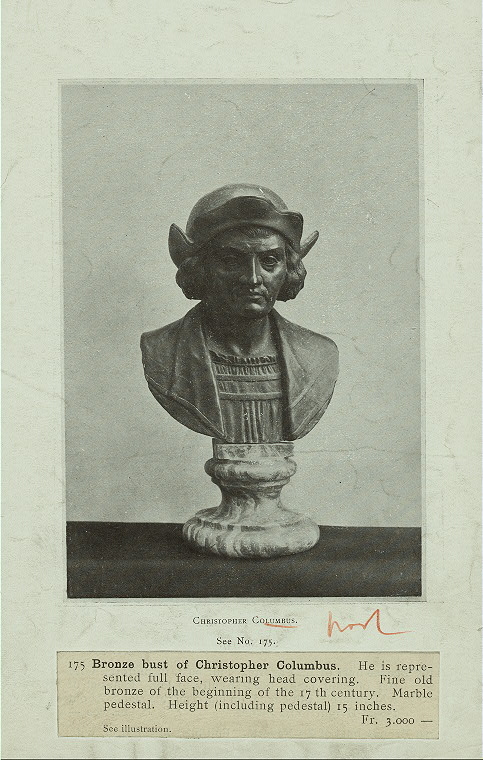 public—I’ve been listening to James Loewen’s lecture series, The Modern Scholar: Rethinking Our Past. Like Lies My Teacher Told Me, (my thoughts on that book here), the lectures focus on bad history taught to high school students, and how we could do it better. Columbus, Civil War & Reconstruction, and the racial “nadir” of the 1890s-1920s are again central, as is Loewen’s critique of “heroification.”
Heroification, Loewen says, is the rendering of pivotal figures in American history (Columbus, Washington, Lincoln, Wilson) as two-dimensional icons rather than as complicated humans. This process not only decontextualizes their achievements, it renders them useless as role models. And it feeds a myth-building process that is not only ethnocentric, but that stifles initiative and participation in civic life. At the moment, these are the parts that fascinate me: myth and participation.
The myths supported by mainstream high school texts include American exceptionalism and a subtler, but possibly more problematic, commitment to “Progress.” Loewen demonstrates that both myths are historically inaccurate with dramatic, fact-based counter-narratives. But I wonder whether myths can be defeated with facts? Maybe what is needed is a powerful counter-myth.
When I began thinking seriously about writing, a few years ago, I had the opportunity to work with Terry Davis, author of the classic young adult novel Vision Quest. As the thousands who studied with Terry during his career at Mankato State can attest, Terry is not only a great writing coach, he’s a tireless advocate of serious writing for young adults. “You won’t have to condescend,” Terry said when he invited me to join his YA fiction workshop. So I tried not to, when I wrote Outside the Box. I tried to project myself back, and think about teen alienation from the inside, as I had experienced it myself.
I think it’s significant that Harry Potter never has to kill anybody. But what type of myth—what type of worldview—does this give to a generation growing up in a nation at war? Like the myth of Progress hidden in our high school histories, does it make the real world more or less comprehensible for young adults? Loewen says students are bored by history and sense that they’re being lied to. Unlike Harry Potter, their history teachers are not supposed to be presenting escapist fiction. But if Loewen is right, it’s not at the level of facts, but at the level of myth that high school history really operates. So what about alienation?
Young adults are expected to rebel, for a little while, from the society of their parents. But typically, they’re then expected to accept the authority of the people and institutions they had rebelled against. Their ultimate reward is that they will inherit that authority, and the cycle will be complete. This myth of cyclical youth rebellion is based on the myth of progress. What happens to it, if we admit there are limits to growth? If society’s current behaviors are unsustainable, should we be reassuring ourselves and our children that their alienation is just a phase that they’ll outgrow?
What does this imply for those of us who want to write history for young adults? Are there counter-myths that can be useful? The myth of “the little guy against faceless power” resonates in our culture, from the Terminator movies to internet conspiracy theories. Historians on the right and the left have built their narratives on this structure—it’s no accident that Glenn Beck hides his “let the corporate overlords do what they want” message in a swirl of populist rhetoric. Can this counter-myth be used to make space for young Americans to challenge authority on something more than a generational-hormonal basis?
All myths leave out detail and complexity. Can a historian work at the mythic level, without betraying history? America is said to be exceptional in the great distance between what our professional historians understand about our past, and what the general public believes. Is this because—unlike other cultures whose myths reside in shared ethnicity or religion or some other institution—Americans are held together by their mythical history? Should we distinguish even more than we do, between historians and people who write for the public?


 Posts
Posts


