Showing posts with label Corn. Show all posts

Friday, January 7, 2011

Rural History Suggests Our Food Problems Aren’t New

Dan Allosso

In 1976, John L. Shover traced the rapid change of American agriculture and rural life in the three decades following World War II, in First Majority, Last Minority: The Transforming of Rural Life in America. He called this change the “Great Disjuncture,” and although his name for it didn’t stick, his observations have become widely-accepted truisms. And yet, thirty-five years after its publication, many of the issues Shover calls our attention to in First Majority are farther from resolution than ever.

Shover begins by observing that “emigration from country to city in the years following the Great Depression has been greater in numbers than the entire immigration from foreign shores to the United States in the 100 years between 1820 and 1920.” (xvi) The rural exodus was enabled—actually forced—by increases in productivity. In 1820, Shover says “one farm worker was required to supply subsistence for four people; in 1945 the ratio was 1 for 14.6; in 1969 the estimate was 1 for 45.3.” (5) The first improvement was brought about by tractors and nitrogen fertilizers, Shover says; the second by pesticides, herbicides, and hybrid crops and livestock. Along with these productivity increases went “consolidation. Nine-hundred thousand fewer farms operated in 1970 than in 1960, but virtually all the land except that diverted by government policy, remained in production.” (6)

A lot of the information Shover provides will be well-known to the contemporary reader of agricultural or rural history. But it’s interesting to see how much of the material publicized by others in the last few decades was already being discussed in the 1960s. Shover notes, for example, that “rural America has traditionally been on the move,” (38) and he notes that “surprisingly few studies of American farms and villages have given attention to their ethnic makeup. This lack has produced a myopic view of rural politics, overlooking often intense and deep-seated ethnic and religious rivalries.” (48) Both these observations are still quite relevant for historians and sociologists. Shover also notes that “the major market for motor vehicles shifted between 1905 and 1908, from the big city to the country town.” (116)

Perhaps the most interesting aspect of First Majority, which is fascinating precisely because the book is a generation old, is Shover’s coverage of agribusiness. Recent bestsellers like Michael Pollan’s Omnivore’s Dilemma, documentaries like Food, Inc. and King Corn, and the recent Justice Department/USDA probes of Walmart’s “stranglehold” on rural communities, have sensitized us to problems facing food producers and rural Americans, but may also have created an impression that these issues and crises are recent. (See also, Heather's post from early November, "Corn in the USA.") In fact, Shover was calling attention to the same problems 35 years ago. In 1968, he says, “the 1 percent of the feedlots that have a capacity greater than 1,000 fed 47 percent of the cattle marketed.” (160) Poultry consumption, which had been stable at about 16 pounds per person in the first half of the twentieth century, rose to 50 pounds per person in the early 1970s. (146) And even then, the industry was already dominated by “producer corporations” that paid the “farmer-caretaker in 1972 . . . fifty dollars for every 1,000 chickens he raised.” (146)

By 1970, the declining power of farm operators relative to their corporate overlords was already apparent. In a 1970 report, the USDA declared that “poultry growers were working at an average wage of minus fourteen cents hourly.” (My emphasis, 147) “Us folks in the chicken business are the only slaves left in the country,” Shover quotes an Alabama striker saying. “They call all the shots—they give you a contract for as many or as few chickens as they want and then they pay you whatever they want.” (147) Shover also called attention to the environmental cost of agribusiness. “In 1969,” he says, “the nation’s 107 million cattle, 57 million hogs, 21 million sheep, and 2.1 billion chickens produced approximately ten times more biological waste than the entire human population.” (161) And the factory farms were just getting going!

While the producer’s share of the food dollar “pie” wasn’t as low in the 1960s as it has become, the growing slice taken by manufacturers and marketers was already a concern. “Thus in 1969,” Shover says, “farmers received 67c of every consumer dollar spent on eggs . . . 50c for milk; 22c for fresh oranges; 14c for two loaves of bread . . . Producers of wheat and cotton could give away their entire crop free without creating more than a minor effect on the price of bread or shirts.” (177) The fact that these problems have been known for decades, and during that time the situation has only gotten worse, should concern today’s activists. Shover shows some of the changes rural historians were beginning to explore in the mid-1970s, in the last few years before the election of Ronald Reagan and the political sea-change it brought about or reflected.

Friday, November 5, 2010

Corn in the USA

Heather Cox Richardson

Five hundred and eighteen years ago today, on November 5, 1492, two of Christopher Columbus’s men reported back to their captain from a journey to explore the interior of Cuba. Columbus recorded in his journal that the men had found the land planted with “a sort of grain they call Maize, which is very well tasted when boiled, roasted, or made into porridge.”*

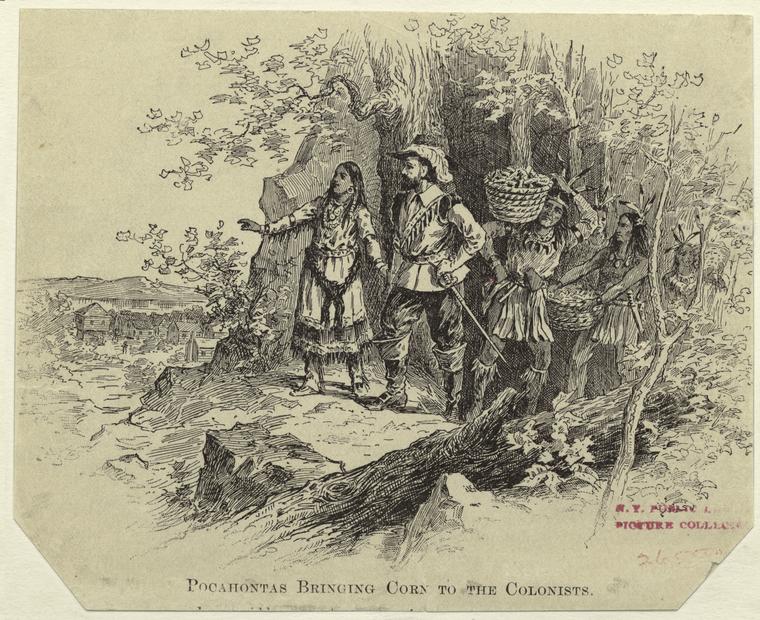
The story of corn and the early Americas is well-known. We know that the corn John Smith and Jamestown colonists stole from Indian caches helped them to stave off hunger; we know that the Whiskey Rebels cared about liquor less for drinking than as a way to get their fragile corn crop to distant markets. We know that the Ohio Valley, with its corn and hogs and whiskey, was a buffer between the North and South in the antebellum years, and how westward migration undercut the Ohio Valley Region’s political power until it could no longer stave off war.

But few of us pay much attention to the later history of corn, although there is no food in America that has a bigger effect on our lives. It is the country’s biggest crop. The USDA reports that in 2009, the nation produced a record corn crop of 13.2 billion bushels. Only China comes close to the U.S. production of corn, but its production has not kept up with its growing population, and it has been importing US corn (at least until last week, when it rejected a US cargo ship full of corn because the ship contained a strain of genetically modified corn outside of trade agreements.)

The rise of corn started in the late-nineteenth century, when impoverished western farmers agitated for a system in which they could store crops, rather than sell them in a weak market. This idea grew until the Depression, when, under FDR, the government began to regulate production, paying farmers to keep land fallow and offering loans to tide farmers over bad market periods. The restriction of corn production managed to keep prices high enough to keep farmers from starving, but it did make food prices susceptible to sudden rises, a volatility that could be a terrible political liability for presidents.

Federal regulation of production managed the corn crop until 1972, when the sale of 30 million tons of corn to Russia combined with a bad harvest to make domestic corn prices spike. This meant that animal feed prices rose, too, and higher prices found their way to the supermarket. By 1973, food prices were so high that meat became a luxury and middle-class mothers worried about feeding their children. President Nixon well understood the political power of a restive middle class, and he launched a new program to make sure that food prices fell quickly.

Nixon’s second Secretary of Agriculture, Earl Butz, dramatically changed government support for corn. No longer would the government support prices by managing the crop. After the carefully-named Agricultural and Consumer Protection Act of 1973 (aka the Farm Act of 1973), the government urged as much production as possible, and guaranteed farmers a target price for their corn. Rather than limiting production, the government made direct payments to farmers for every bushel of corn they produced. Under the new system, production climbed into billions of bushels.

Production got another boost after 2005, when that year’s Energy Policy Act required increasing amounts of ethanol—made from corn—to be mixed with gasoline. Two years later, President George W. Bush launched an initiative to turn even more dramatically to ethanol to reduce the nation’s dependence on oil by 20% by 2017. The scientific journal Nature immediately warned that this initiative would actually move the development of biofuels backward, rather than forward, since corn is inefficient as fuel, but corn farmers loved the proposal. Corn production leaped even higher. Today more than a quarter of that production goes to produce ethanol.

The flood of cheap corn had a number of dramatic effects.

It has involved the government deeply in agricultural production. As the price of corn dropped, the only way for farmers to survive was to plant more and more, so they could collect more subsidy money. Farm subsidies now run over $12 billion a year. Government statistics don’t easily reveal how much of that money goes to corn growers, but, according to the USDA, 97% of the farms that grow grain collect subsidies, and 90% of grain growers produce corn.

It has cemented the power of agribusiness. More than 60% of subsidy money goes to big growers. The push for production favors agribusiness, which can exercise huge economies of scale. (Nixon and Butz not only foresaw this move, but encouraged it because they believed it would keep prices down.)

Cheap corn has also changed the way we eat. It finds its way into most of the foods in American supermarkets, as high fructose corn syrup (HFCS) into soda and processed foods, of course, but also into less obvious places like beef, since corn was so cheap cattle growers began to use it to feed animals that had always fattened on grass. The raft of organizations concerned about America’s obesity epidemic have pointed to the ubiquity of cheap corn as a key ingredient in our increasing health problems.

It has also most likely changed recent demographics. Researchers speculate that heavily subsidized US corn has combined with NAFTA to disrupt rural Mexico, where small farmers can’t compete with cheap US corn. They have left rural regions to move to cities in Mexico, and while no research has been conducted on cross-border migration, it seems likely that displaced farmers are making their way to US farm operations to find work.

And it will soon become a factor in politics. The Great Plains states that decry big government and demand a smaller federal budget depend on agricultural subsidies. According to the Department of Commerce, subsidies provide up to 40% of personal income in counties across the Great Plains. In the current drive to slash the budget, it’s hard to see how the $12 billion price tag of agricultural subsidies cannot be on the table for cuts, but it’s also hard to believe that Plains voters will support such cuts. How this will play out is anyone’s guess, but it will certainly be a factor in the political debates of the next few years.

Five hundred and eighteen years ago today, Columbus thought he was hearing about a curious plant. He was really learning of a special kind of New World gold.