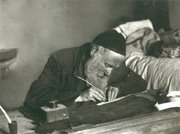












Rabbi Meir’s Text
The Torah says that “all the souls of the House of Yaakov coming to Egypt were 70” (Bereishis 46:27), but the Midrash says that if we count them, we find only 69 (Bereishis Rabah, 94:9). The Torah, though, reckons 70 because Yocheved was born at the gates of Egypt, and by the time the Israelites passed through the walls, they numbered 70. Alternatively, Chushim is counted as two since he would eventually beget many offspring, as the Torah says: “…the sons of Dan: Chushim” (see Tosfos, s.v. Shehayu). Still, the Midrash adds that Rabbi Meir had a sefer Torah whose text read “the son of Dan: Chushim”; this statement is altogether perplexing.
According to the commentary Avnei Shoham (on Bereishis 46:23), the above two explanations depend on the difference of opinions as to if a fetus is regarded as a limb of its mother, or is the unborn child a separate entity. If like the latter, we can count Yocheved separately and include her in the total of 70. If a fetus is a part of its mother’s body, we cannot count Yocheved and must rather count Chushim as two. Rabbi Meir holds that a fetus is not part of its mother’s body. He therefore reckoned Yocheved as an individual, though she had not yet been born as they approached Egypt, and his sefer Torah said “the son of Dan…,” counting Chushim as only one.
Is a Disqualified Esrog always Inferior?
by: Meoros HaDaf HaYomi
The owner of an esrog orchard separated the required terumah and tithes, including ma’aser rishon which he gave to a Levite. The latter was glad to get such a large amount of esrogim and thought he would find at least one of them to be a choice specimen for the mitzvah of arba’ah minim. After a thorough search, however, he discovered that all the fruit were unfit for the mitzvah and he came to the owner of the orchard in resentment. “You took great care to separate ma’aser rishon,” he asserted, “but you separated inferior fruit from the superior – esrogim unfit for their mitzvah as ma’aser for those kosher for their mitzvah – and the Gemora says that someone who uses bad fruit to separate the required gifts for good fruit is a sinner.” The owner of the orchard asked Rav Yitzchak Silberstein to decide the question and the latter referred him to his brother-in-law HaGaon Rav Chayim Kanievski. Rav Kanievski ruled that the ma’aser had been properly separated as “good” and “bad” refer only to the fruit’s edibility. In that sense one should prefer using a big, ripe esrog for tithing rather than an esrog considered choice for its mitzvah, even if the former is disqualified for the mitzvah of arba’ah minim.
HALACHOS FROM THE DAF
"My Dear Sons" - Who is Included?
By: Reb Avraham Klein
A father of five is overseas on a business trip, and decides to send his children a present. He shops around for a nice gift for his beloved children, and sends it off with UPS. The next day his children receive the package, tear off the wrapping paper, and out comes a note from their father. “My dear sons, just a little present from Daddy. I miss you tons! Love, Daddy.” The children are nonplussed. “Sons”? asked Rachel. “We only have one brother.” The four sisters as one stare at Chaim. “What is the meaning of this, Chaim?” they ask the bewildered young man.
We learned that when a father calls his children - sons, he means to include his daughters as well. That doesn’t mean that the four sisters in the above story will automatically get their present. First we have to analyze a number of factors. a) The type of gift. b) Are the children married? The son? The daughters? c) What would be the halachah if the father didn’t write sons, rather just wrote, “A present from Daddy” without specifying any of his children? d) What would the halachah have to say in the same exact story, but with one difference? Instead of on an overseas trip, the father is deathly ill!?
A) The Shulchan Aruch (Choshen Mishpat Siman 247 Seif 1) rules that both the sons and daughters receive the gift, only when the presents clearly indicate that some are for boys (walkie talkie) and some are for girls (dollhouse). However, if it can be used by both the sons and daughters (for example, money), then, only the son would get it. The rationale (as explained by the Kessef Mishnah and Aruch Hashulchan) is that the father does normally refer to his daughters by calling them “my sons,” and therefore, she receives a gift too when it is obviously meant for her. But if the present can be for both, logic dictates that “sons” means sons - even if there is only one son.
B) All of this is true whether the sons and daughters are both not married, only the sons are married or only the daughters are married (S’ma). There is a dispute in a case where they are both married. S’ma rules that the daughters-in-law receive the gift, but not the daughters. K’tzos cites the Bach that the daughters are the ones that receive the gift, and not the daughters-in-law.
C) In a case where the father didn’t specify “sons,” the Mechaber records two opinions. 1) If it’s a type of gift that is clearly meant for his daughters, then they receive it, and if they are married, then the daughters in law get it. This is true even according to the Bach, because the daughters-in-law are part of his household. 2) If the father has a wife, then she is the one that receives the gift, and not the daughters. But in the above case where the father wrote “sons,” she is obviously not included.
D) Regarding a deathly ill person that wrote “my sons,” his daughters are not included, even if the present is clearly for them. The reason is, that when it comes to a deathly ill person, he is essentially dividing his inheritance, and there we assume his language is following the Torah’s directive that the daughters do not inherit when there is a son.
The Torah says that “all the souls of the House of Yaakov coming to Egypt were 70” (Bereishis 46:27), but the Midrash says that if we count them, we find only 69 (Bereishis Rabah, 94:9). The Torah, though, reckons 70 because Yocheved was born at the gates of Egypt, and by the time the Israelites passed through the walls, they numbered 70. Alternatively, Chushim is counted as two since he would eventually beget many offspring, as the Torah says: “…the sons of Dan: Chushim” (see Tosfos, s.v. Shehayu). Still, the Midrash adds that Rabbi Meir had a sefer Torah whose text read “the son of Dan: Chushim”; this statement is altogether perplexing.
According to the commentary Avnei Shoham (on Bereishis 46:23), the above two explanations depend on the difference of opinions as to if a fetus is regarded as a limb of its mother, or is the unborn child a separate entity. If like the latter, we can count Yocheved separately and include her in the total of 70. If a fetus is a part of its mother’s body, we cannot count Yocheved and must rather count Chushim as two. Rabbi Meir holds that a fetus is not part of its mother’s body. He therefore reckoned Yocheved as an individual, though she had not yet been born as they approached Egypt, and his sefer Torah said “the son of Dan…,” counting Chushim as only one.
Is a Disqualified Esrog always Inferior?
by: Meoros HaDaf HaYomi
The owner of an esrog orchard separated the required terumah and tithes, including ma’aser rishon which he gave to a Levite. The latter was glad to get such a large amount of esrogim and thought he would find at least one of them to be a choice specimen for the mitzvah of arba’ah minim. After a thorough search, however, he discovered that all the fruit were unfit for the mitzvah and he came to the owner of the orchard in resentment. “You took great care to separate ma’aser rishon,” he asserted, “but you separated inferior fruit from the superior – esrogim unfit for their mitzvah as ma’aser for those kosher for their mitzvah – and the Gemora says that someone who uses bad fruit to separate the required gifts for good fruit is a sinner.” The owner of the orchard asked Rav Yitzchak Silberstein to decide the question and the latter referred him to his brother-in-law HaGaon Rav Chayim Kanievski. Rav Kanievski ruled that the ma’aser had been properly separated as “good” and “bad” refer only to the fruit’s edibility. In that sense one should prefer using a big, ripe esrog for tithing rather than an esrog considered choice for its mitzvah, even if the former is disqualified for the mitzvah of arba’ah minim.
HALACHOS FROM THE DAF
"My Dear Sons" - Who is Included?
By: Reb Avraham Klein
A father of five is overseas on a business trip, and decides to send his children a present. He shops around for a nice gift for his beloved children, and sends it off with UPS. The next day his children receive the package, tear off the wrapping paper, and out comes a note from their father. “My dear sons, just a little present from Daddy. I miss you tons! Love, Daddy.” The children are nonplussed. “Sons”? asked Rachel. “We only have one brother.” The four sisters as one stare at Chaim. “What is the meaning of this, Chaim?” they ask the bewildered young man.
We learned that when a father calls his children - sons, he means to include his daughters as well. That doesn’t mean that the four sisters in the above story will automatically get their present. First we have to analyze a number of factors. a) The type of gift. b) Are the children married? The son? The daughters? c) What would be the halachah if the father didn’t write sons, rather just wrote, “A present from Daddy” without specifying any of his children? d) What would the halachah have to say in the same exact story, but with one difference? Instead of on an overseas trip, the father is deathly ill!?
A) The Shulchan Aruch (Choshen Mishpat Siman 247 Seif 1) rules that both the sons and daughters receive the gift, only when the presents clearly indicate that some are for boys (walkie talkie) and some are for girls (dollhouse). However, if it can be used by both the sons and daughters (for example, money), then, only the son would get it. The rationale (as explained by the Kessef Mishnah and Aruch Hashulchan) is that the father does normally refer to his daughters by calling them “my sons,” and therefore, she receives a gift too when it is obviously meant for her. But if the present can be for both, logic dictates that “sons” means sons - even if there is only one son.
B) All of this is true whether the sons and daughters are both not married, only the sons are married or only the daughters are married (S’ma). There is a dispute in a case where they are both married. S’ma rules that the daughters-in-law receive the gift, but not the daughters. K’tzos cites the Bach that the daughters are the ones that receive the gift, and not the daughters-in-law.
C) In a case where the father didn’t specify “sons,” the Mechaber records two opinions. 1) If it’s a type of gift that is clearly meant for his daughters, then they receive it, and if they are married, then the daughters in law get it. This is true even according to the Bach, because the daughters-in-law are part of his household. 2) If the father has a wife, then she is the one that receives the gift, and not the daughters. But in the above case where the father wrote “sons,” she is obviously not included.
D) Regarding a deathly ill person that wrote “my sons,” his daughters are not included, even if the present is clearly for them. The reason is, that when it comes to a deathly ill person, he is essentially dividing his inheritance, and there we assume his language is following the Torah’s directive that the daughters do not inherit when there is a son.
 Read more!