The View component is the fundamental building block used to create layouts in React Native. It acts as a container that supports styling, layout, and nesting of other components.
- It represents a container, similar to <div> in web development.
- It can contain other components, including nested Views and UI elements.
- It supports layout, styling, and Flexbox properties for designing the interface.
Approach
To center a View component on the screen, we can use two approaches:
- Using flexbox: This most common method to center components in React Native. It provides a responsive layout without using float or positioning.
- Using CSS position property: Th is another way to center components in React Native. It uses absolute positioning to place the component relative to its parent.
Centering components involves using justifyContent and alignItems properties within a View container. Achieving pixel-perfect alignment requires careful attention to layout properties.
Step-by-Step Implementation
Step 1: Create a React Native Project
Now, create a project with the following command.
npx create-expo-app app-name --templateNote: Replace the app-name with your app name for example : react-native-demo-app
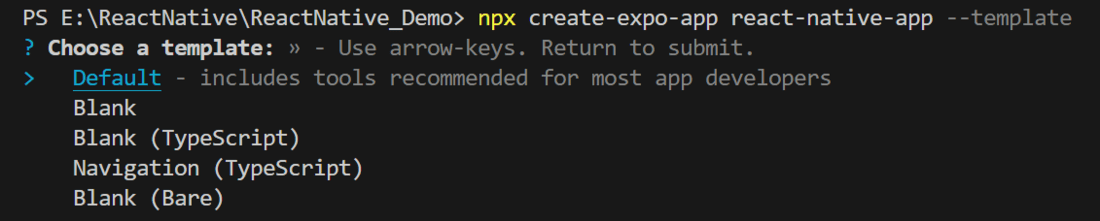
Next, you might be asked to choose a template. Select one based on your preference as shown in the image below. I am selecting the blank template because it will generate a minimal app, as clean as an empty canvas in JavaScript.
It completes the project creation and displays a message: "Your Project is ready!" as shown in the image below.
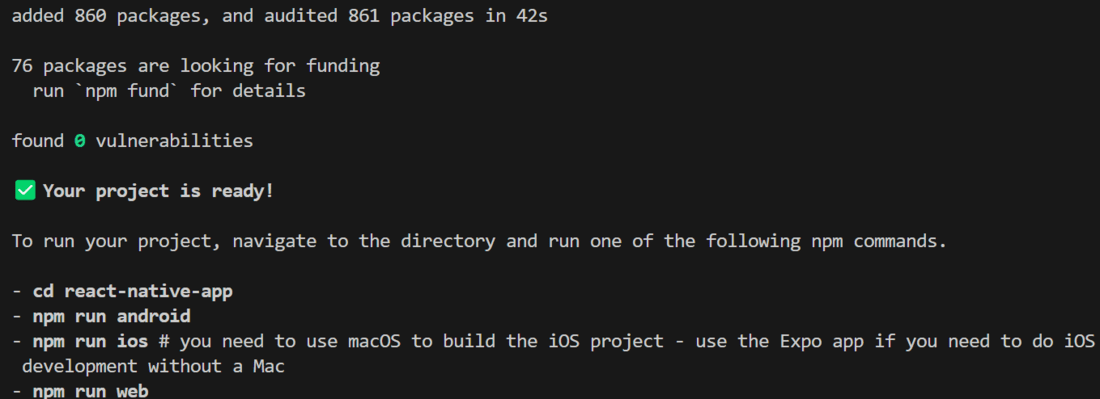
Now go into your project folder, i.e., react-native-demo
cd app-nameProject Structure
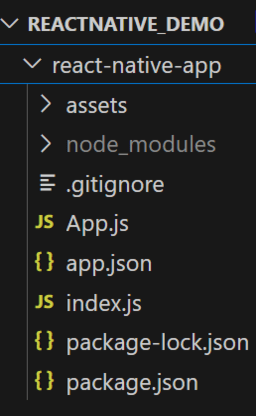
Step 2: Run Application
Start the server by using the following command.
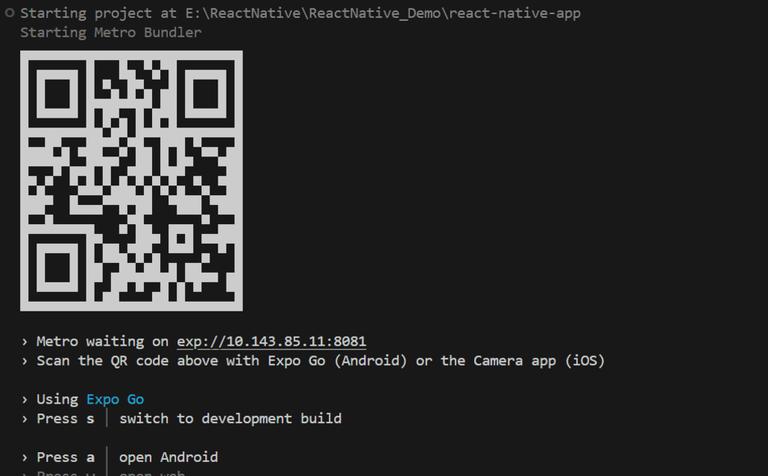
npx expo startThen, the application will display a QR code.
1. For the Android users,
- For the Android Emulator, press "a" as mentioned in the image below.
- For the Physical Device, download the "Expo Go" app from the Play Store. Open the app, and you will see a button labeled "Scan QR Code." Click that button and scan the QR code; it will automatically build the Android app on your device.
2. For iOS users, simply scan the QR code using the Camera app.
3. If you're using a web browser, it will provide a local host link that you can use as mentioned in the image below.
Step 3: Start Coding
Example 1: Using flexbox
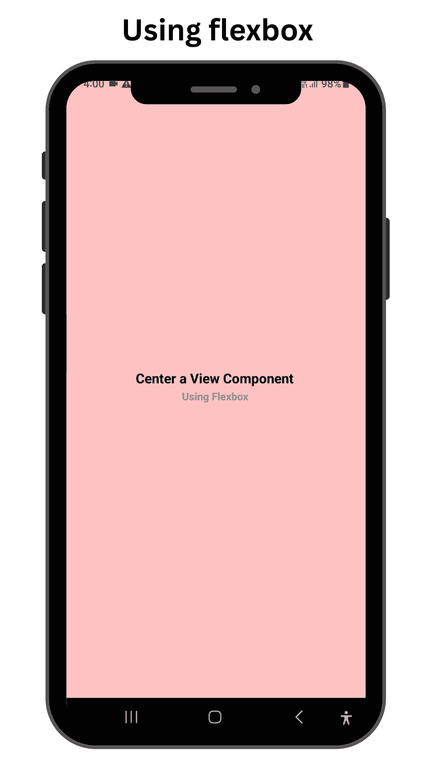
We will use a single View Component with nested Text components as its children. To center our View component, we will use the flex property, which is set to 1, along with the justifyAlign and alignItems properties (both set to center since the View component is required to be centered on the screen).
import React from "react"; // Import React library
import {
  View,       // Import View component for layout
  Text,       // Import Text component for displaying text
  StyleSheet  // Import StyleSheet for styling components
 } from "react-native"; // Import components from React Native

// Define the main App component
export default function App() {
  return (
    <View style={styles.centered}> {/* Create a container View with centered styles */}
      <Text style={styles.title}>Center a View Component</Text> {/* Display the title text */}
      <Text style={styles.subtitle}>Using Flexbox</Text> {/* Display the subtitle text */}
    </View>
  );
}

// Define styles for the components
const styles = StyleSheet.create({
  centered: {
    flex: 1, // Take up the full height of the screen
    justifyContent: "center", // Center content vertically
    alignItems: "center", // Center content horizontally
    backgroundColor: "#ffc2c2", // Set background color to light pink
  },
  title: {
    fontSize: 18, // Set font size for the title
    marginVertical: 2, // Add vertical margin around the title
  },
  subtitle: {
    fontSize: 14, // Set font size for the subtitle
    color: "#888", // Set text color to gray
  },
});
Output
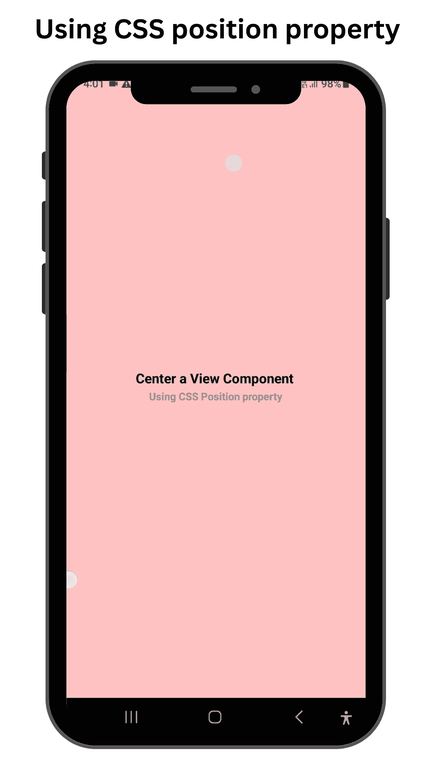
Example 2: Using the CSS position property
We will use a single View Component with nested Text components as its children. To center our View component, we will use the position property, which is set to absolute. We will also use the top, bottom, left and right values and set them to 0 (since the View component is required to be centered on the screen). As before, we will also require the justifyAlign and alignItems properties with their values set as center.
import React from "react"; // Import React library for building UI components
import {
  View,      // Import View component for layout
  Text,      // Import Text component for displaying text
  StyleSheet // Import StyleSheet for creating styles
} from "react-native"; // Import from react-native library

// Define the main App component
export default function App() {
  return (
    <View style={styles.centered}> {/* Center the content using styles */}
      <Text style={styles.title}>Center a View Component</Text> {/* Display the title text */}
      <Text style={styles.subtitle}>Using CSS Position property</Text> {/* Display the subtitle text */}
    </View>
  );
}

// Define styles for the components
const styles = StyleSheet.create({
  centered: {
    position: "absolute", // Position the View absolutely within its parent
    top: 0, // Set the top position to 0
    left: 0, // Set the left position to 0
    right: 0, // Set the right position to 0
    bottom: 0, // Set the bottom position to 0
    justifyContent: "center", // Center content vertically
    alignItems: "center", // Center content horizontally
    backgroundColor: "#ffc2c2", // Set background color to light pink
  },
  title: {
    fontSize: 18, // Set font size for the title
    marginVertical: 2, // Add vertical margin to the title
  },
  subtitle: {
    fontSize: 14, // Set font size for the subtitle
    color: "#888", // Set text color to gray
  },
});
Output