
The Navigator taintEnabled() method was best avoided in JavaScript version 1.2, and has been deprecated since then to prevent run-time errors in the future. Data Tainting was a security feature to destroy or remove the highly infectious data used by JavaScript 1.2. It has been completely discarded by now; this method only available for maintaining compatibility with very old scripts with imited browser support. It returns a Boolean value that shows whether the browser has data tainting method enabled.
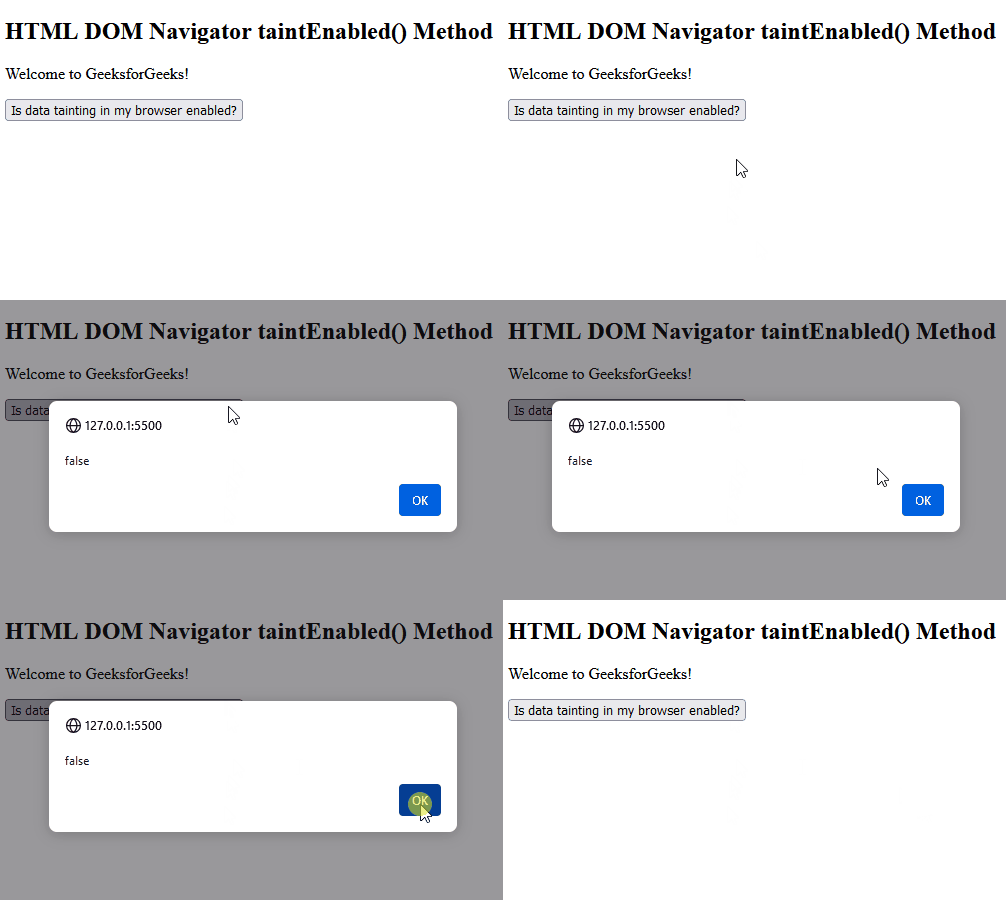
The NavigatorID.taintEnabled() method would always returns Boolean false value.
Syntax:
window.navigator.taintEnabled()Return Value: It returns a Boolean value, specifying whether the browser has data tainting feature enabled.
Example:
It would return true if data tainting is supported and enabled, and it returns false if the feature is disabled.
<!DOCTYPE html>
<html>

<head>
    <title>
        HTML DOM Navigator taintEnabled() Method
    </title>
</head>

<body>
    <h2>
      HTML DOM Navigator taintEnabled() Method
    </h2>

    <p id="geeks" onclick="functionGFG()">
        Welcome to GeeksforGeeks!
    </p>
    <input type="button"
           value="Is data tainting in my browser enabled?"
           onClick="functionGFG()">

    <script language="JavaScript">
        function functionGFG() {

            // data tainting is enabled or not.
            let temp = navigator.taintEnabled();
            alert(window.navigator.taintEnabled());
        }
    </script>
</body>

</html>
Output:
Supported Browsers:
This method has long been deprecated and beware before using it because at anytime it may be withdrawn. Despite being removed it is supported by the following browsers:
- Opera 3.5