
The difference between secretion and excretion lies in their purpose within the body. Secretion is the process of releasing substances produced by cells into the surrounding environment or body fluids for specific physiological functions. Excretion, on the other hand, is the removal of waste products and metabolic byproducts from the body, primarily through organs like the kidneys, lungs, and skin.
In this article, we will study the differences between secretion and excretion.
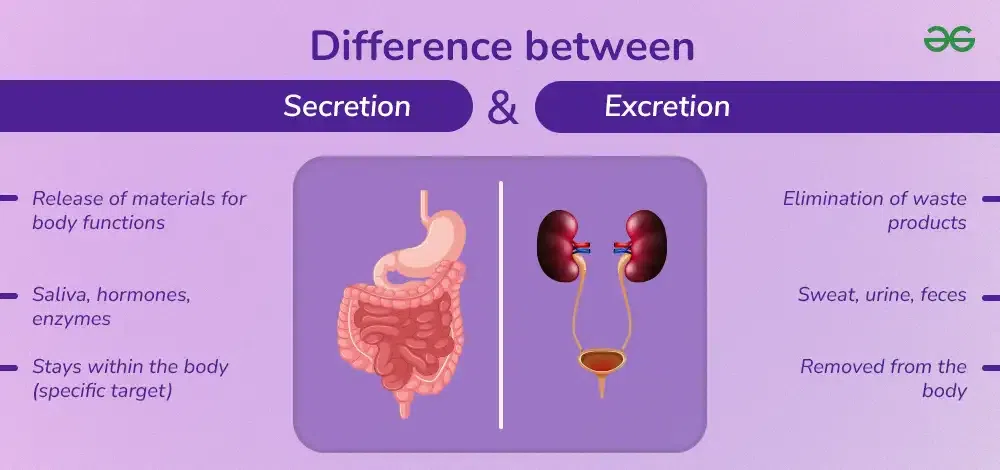
Table of Content
What is Secretion?
Secretion is a process in biology where cells, tissues, or organs release substances they produce into their surroundings or body fluids. These substances, called secretions, serve various functions in the organism's physiology, including communication, digestion, defense, and regulation.
Secretions can be classified based on their composition and function:
- Endocrine Secretion: Involves the release of hormones directly into the bloodstream by specialized endocrine glands. Hormones are chemical messengers that regulate various physiological processes such as metabolism, growth, and reproduction.
- Exocrine Secretion: Involves the release of substances through ducts onto body surfaces or into cavities. Examples include digestive enzymes secreted into the gastrointestinal tract and sweat secreted onto the skin.
- Autocrine and Paracrine Secretion: Autocrine secretion occurs when cells release signaling molecules that act on themselves, influencing their own behavior. Paracrine secretion involves the release of molecules that act on nearby cells, affecting their function.
Secretion can occur in various organs and tissues throughout the body, including glands (e.g., salivary glands, pancreas, adrenal glands), epithelial cells (lining body surfaces and cavities), and specialized cells (e.g., neurons, immune cells).
What is Excretion?
Excretion is a biological process by which waste products and metabolic byproducts are removed from an organism's body to maintain internal balance and homeostasis. These waste substances, if allowed to accumulate, can be toxic and disrupt normal physiological functions. Excretion is essential for the proper functioning and health of organisms across all levels of complexity, from single-celled organisms to complex multicellular organisms like humans.
Characteristics of Excretion
Characteristics of excretion include:
- Types of Waste: Excretory processes eliminate various types of waste, including metabolic wastes (e.g., carbon dioxide, urea, ammonia), excess salts, toxins, and harmful substances absorbed from the environment.
- Organs of Excretion: In multicellular organisms, excretion primarily occurs through specialized excretory organs such as the kidneys, lungs, liver, skin, and intestines. Each organ plays a specific role in eliminating particular types of waste products from the body.
- Excretory Mechanisms: Different organs use distinct mechanisms to remove waste from the body. For example, the kidneys filter metabolic waste and excess ions from the blood, while the lungs expel carbon dioxide during respiration. The liver processes toxins and metabolic byproducts for elimination, while the skin excretes sweat containing water, salts, and urea.
- Regulation of Water and Ion Balance: Excretion also plays an important role in regulating water and ion balance in the body. Excretory organs help maintain proper hydration levels and electrolyte concentrations, which are essential for various physiological processes.
- Importance for Homeostasis: By removing waste products and regulating internal conditions, excretion contributes to maintaining homeostasis, the stable internal environment necessary for the survival of cells and organisms.
Also Read: Various Modes of Excretion: Functions and Importance
Difference Between Secretion And Excretion
Following are the differences between Excretion and Secretion:
| Aspect | Secretion | Excretion |
| Definition | The process of releasing substances from cells or glands into the body's internal environment for various functions. | The removal of metabolic waste products and toxins from the body to maintain internal balance and homeostasis. |
| Location | Primarily occurs in glands, such as salivary glands, sweat glands, and digestive glands. | Mainly occurs in organs responsible for waste elimination, such as the kidneys, liver, and lungs. |
| Function | Secretions serve various purposes, including lubrication, digestion, protection, and communication. | Excretion eliminates metabolic waste, excess substances (e.g., water, salts), and toxins from the body. |
| Nature of Substance | Secretions may include enzymes, hormones, mucus, saliva, and digestive juices. | Excreted substances consist mainly of metabolic waste products, such as urea, carbon dioxide, ammonia, and excess ions. |
| Process | Secretion involves the active transport of substances from cells or glands into the surrounding fluid or ducts. | Excretion involves the filtration, reabsorption, and secretion processes in specialized excretory organs to remove waste from the blood and body fluids. |
| Regulatory Mechanisms | Secretion is often regulated by neural, hormonal, or local chemical signals to meet physiological needs. | Excretion is regulated by complex feedback mechanisms involving hormones, renal function, and overall body homeostasis. |
Similarities Between Secretion and Excretion
Similarities between secretion and excretion are:
- Both secretion and excretion are vital biological processes necessary for the proper functioning and maintenance of organisms.
- Both processes involve the removal of substances from the body for different purposes and from different locations.
- Secretion and excretion contribute to the regulation of internal environment and homeostasis, ensuring optimal conditions for cellular function.
- While secretion primarily involves releasing useful substances (e.g., hormones, enzymes, mucus) into body fluids, excretion focuses on eliminating waste products and toxins.
- Both processes play an important roles in various organ systems, contributing to overall physiological balance and health.
- Secretion and excretion are regulated by complex feedback mechanisms involving neural, hormonal, and local chemical signals to maintain equilibrium and meet physiological needs
Conclusion - Difference Between Secretion And Excretion
In conclusion, secretion involves releasing substances for various bodily functions from glands, while excretion eliminates metabolic waste from the body. Secretion primarily occurs in glands, serving diverse purposes such as digestion and communication. Excretion takes place in specialized organs like the kidneys, ensuring removal of waste products to maintain internal balance. Both processes contribute to physiological regulation, but differ in their functions and locations within the body.
Other Related Articles on Difference
Difference Between Homeostasis and Equilibrium | |
Also Read: