
Homeostasis is the process by which living organisms maintain a stable internal environment despite changes in the external environment.
In simple words, Homeostasis keeps the body's internal conditions (like temperature, water level, blood sugar, pH, etc.) balanced and constant so the organism can function properly.
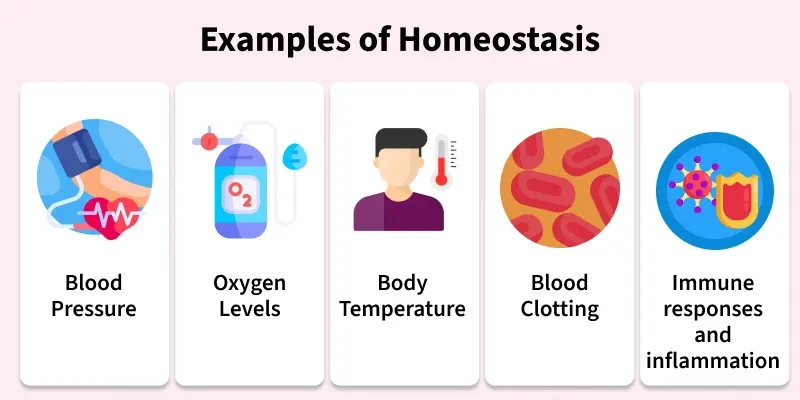
A well-known example of homeostasis is the regulation of body temperature in humans. The average temperature is around 37°C, but it can change due to illness, hormones, metabolic activity, or environmental conditions. The body uses different mechanisms to bring the temperature back to normal when it becomes too high or too low.
Characteristics of Homeostasis
Here are a few Characteristics of Homeostasis:
1. Maintains Internal Balance: Keeps the body’s internal environment stable even when the outside environment changes.
2. Self-Regulating: Works automatically through built-in control systems.
3. Uses Feedback Mechanisms: Mainly depends on negative feedback to correct any imbalance (such as temperature or blood sugar changes).
4. Dynamic Process: Conditions stay within a normal range, not at one fixed value.
5. Involves Multiple Body Systems: Different organs, hormones, and processes work together to maintain stability.
6. Quick Response to Disturbances: Detects changes and adjusts body functions to restore balance.
7. Necessary for Life: Proper homeostasis is essential for cells and organs to function correctly.
Mechanism of Homeostasis
The mechanism of homeostasis involves a series of feedback loops, where changes in the internal environment are detected by sensors, which then trigger appropriate responses to bring the system back to its normal state. These responses can be either negative feedback, where the system acts to reverse the change, or positive feedback, where the system amplifies the change.
The process involves the following steps:
1. Stimulus: A change occurs in the internal environment. For example, a rise in body temperature or a drop in blood sugar.
2. Receptor (Sensor): Specialized cells detect this change and send the information to the control center.
3. Control Center: Usually the brain, It is also known as an integration centre. It receives the information for the receptor and processes it.
4. Effector: These work according to the control centre, giving commands to the effector cell. According to the command, carry out the corrective action.
5. Response: The effector’s action brings the internal condition back to its normal state, restoring homeostasis.
Homeostasis Breakdown
Various homeostatic processes operate continuously in the human body to keep activities under control. But occasionally, the mechanisms fail. When they do, the body's toxic wastes may build up, or cells may not receive everything they require. An imbalance can cause illness or even death if homeostasis is not restored. Genetic, behavioural, environmental, or a combination of the three factors can all contribute to homeostatic breakdown.
Body System and Homeostasis
The human body is made up of several systems that work together to maintain homeostasis. Each system like the nervous, endocrine, circulatory, respiratory, and digestive has a specific role in keeping factors such as temperature, pH, and fluid levels stable. By coordinating their actions, these systems help the body adapt to changes and function smoothly. All mechanisms of homeostatic regulation must be in good working order for an organism to be healthy.
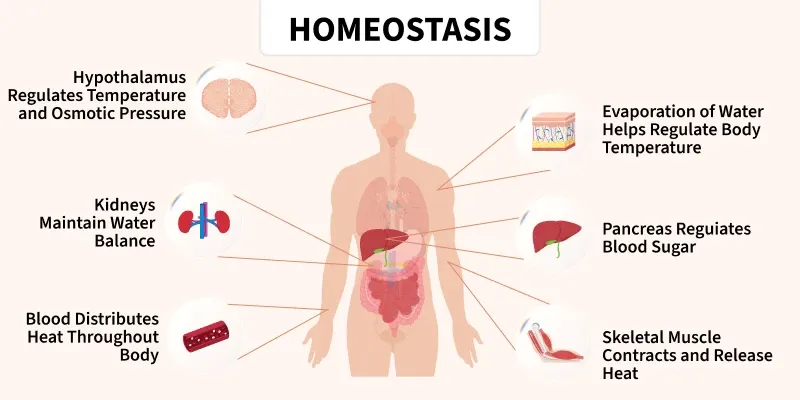
The body systems that contribute to overall homeostasis are described below:
Nervous System: The nervous system keeps the body in a state of homeostasis by directing various body systems. The hypothalamus in the brain plays the biggest role it regulates body temperature, hunger, thirst, hormones, and many automatic functions like breathing and heartbeat.
Endocrine System: This system uses hormones to maintain balance in the body. Hormones help control blood pressure, fluid levels, energy production, metabolism, bone growth, inflammation, and the formation of red blood cells.
Integumentary System (Skin): The sweat glands, blood vessel dilation, and shivering of the skin all contribute to the body's ability to regulate temperature. Through its surface, it also controls the equilibrium of water and other solutes.
Skeletal System: Bones store minerals like calcium and phosphorus, protect vital organs, and help with movement. Bone marrow makes blood cells, which are important for carrying oxygen and fighting infections.
Muscular System: Muscles help you breathe, digest food, and move. They also produce heat when they contract, which helps maintain body temperature. The heart, a special type of muscle, pumps blood and supports all homeostatic processes.
Lymphatic System: This system is essential for preserving homeostasis because it regulates tissue fluids and blood volume. The lymphatic system collaborates with the circulatory system's capillaries to eliminate extra fluid that might accumulate and cause swelling and oedema.
Respiratory System: The respiratory system controls the levels of oxygen and carbon dioxide in the body. Maintaining the right pH of the blood depends on this. The brain lowers breathing to raise the amount of bicarbonate ions (carbon dioxide) in the blood if the blood is too acidic.
Digestive System: By removing waste products and toxins from the body and delivering nutrients, the digestive system aids in the maintenance of homeostasis. Also, it performs the vital immune system duty of eliminating germs and viruses that enter the body through the consumption of food and water.
Urinary System: Urination is the body's method of removing nitrogenous waste, which is essential for preserving homeostasis within the body. By managing the body's fluid and ion levels, the urinary system also aids in blood pressure management.