

SUBSCRIBE TO OUR FREE NEWSLETTER
Daily news & progressive opinion—funded by the people, not the corporations—delivered straight to your inbox.
5
#000000
#FFFFFF
To donate by check, phone, or other method, see our More Ways to Give page.
Daily news & progressive opinion—funded by the people, not the corporations—delivered straight to your inbox.
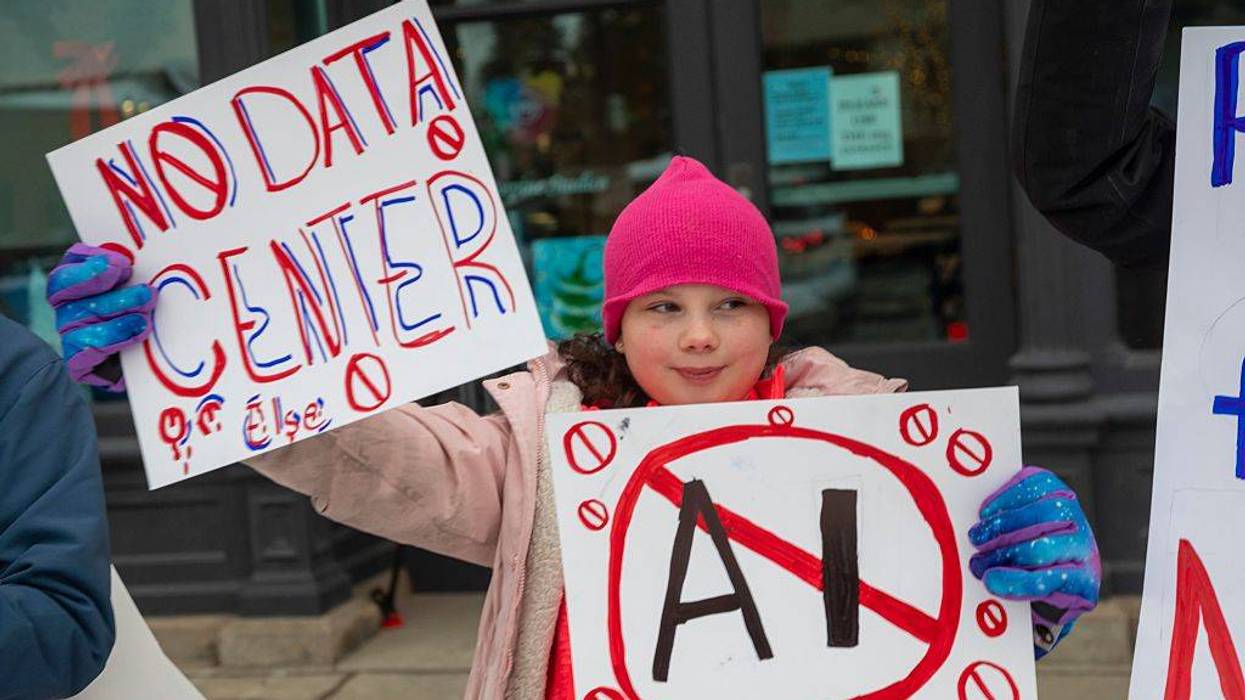
We need to keep listening—and we need to keep speaking. For we don’t know whose “yopp” or “yapp” or any other utterance will break through the racket of the Big Tech buildout.
When my son was three years old, he insisted upon hearing Horton Hears a Who! every night. Twice. As this lasted for several months, I got pretty good at reading quickly, tearing through the opening page in one breath—"On the 15th of May, in the Jungle of Nool, In the heat of the day, in the cool of the pool"—so that the words ran together, like a kind of Dr. Seuss verbal soup. Horton is a sweet story about a keen-eared elephant determined, against all odds,to save the diminutive Whos, despite being ridiculed because no one else could hear them.
Given all the great picture books around, this restrictive reading diet left me perplexed. Was its appeal that it was set on May 15, the day before my son’s birthday? (To this day we all mark “Horton’s Day” with a round of silly texts.) Or that it was the teensiest Who whose off-hand “yopp” finally nudged Whoville past the aural threshold? Perhaps it was Horton’s stalwart conviction that "a person’s a person, no matter how small," a sentiment that must have enchanted a small boy stuck in a land of grownups. I venture it’s all three.
The feeling the story evokes so well—that of being invisible, and, in this case, inaudible—is universal. Everyone who was once a child has been there. Despite writing a bunch of books and giving all sorts of talks, this feeling now resonates far more than when I was a young mom speed-reading to my toddler. For you don’t need to live on a speck of dust to know that today, more than ever, little people aren’t seen and their concerns rarely get heard.
We are all Whos now.
There is indeed a crescendo of voices railing against the spoilage and surrender of nature for tech.
One scenario that really makes me feel like a Who—pounding brass pans so that someone, anyone, listens—is the way new technology buildouts are harming the natural world. Here in New England, forests and once-productive farms are being cleared for solar, while water-hungry data centers claim chunks of land in areas vulnerable to drought. Around the globe—from India to Mexico, Papua New Guinea to Mongolia—entire areas are rendered toxic due to mining the metals that animate our devices. In several places, most notoriously Congo’s cobalt mines, children as young as six spend their days in tunnels plying ores with their bare hands.
In the book, Horton is repeatedly mocked for tending the particle upon which the Whos live. The mama kangaroo and her joey say, "Humpf!" and the gang of monkeys calls the existence of Whos “nonsense”—before conspiring to drop the speck in a sea of clover. Here in our jungle equivalent, hostility to tech infrastructure is derided as “NIMBYISM” and those opposed to it scorned as Luddites. Expanding computation and energy capacity is vital for progress, even marquee environmentalists tell us. As for the ecological and human cost, well, we can’t achieve a “green energy transition” without making a bit of a mess.
We also hear from our political reps, many of whom stand to benefit handily from AI expansion, that the spread of resource-intensive computational apparatus is “unstoppable” and “not going away.” Really? The truth is: People don’t want this. At college commencements, tech titans called in to inspire new graduates about AI’s rosy future have been met with boos. But you have to listen hard, past the din of machines and the money—a bunch of zeros on a screen—that feeds them. It seems the plan is to ram all this development through so that a critical mass are dependent on the technology and the rest of us have no choice but to use it. “Inevitable,” indeed.
We need to keep listening—and we need to keep speaking. For we don’t know whose “yopp” or “yapp” or any other utterance will break through the racket. It could be the cries of juvenile sea turtles that drift about the Blake Plateau, a biodiverse undersea basin now eyed for mining nodules rich in rare metals. Or the weeping of Gullah-Geechee ancestors, thousands of whom died here during the Middle Passage en route to Charleston. Or the plaint of hundreds of villagers in a 1,000-year-old Scottish village gathered to call bullshit on claims that a massive new “hyperscale” data center would serve the community. Or the high-pitched cackle of the Andean Flamingo: outrageously pink on stick-thin legs—Dr. Seuss would have had fun drawing them. The birds are lamenting that their wetland habitat in the Atacama Desert highlands is being pumped to produce the lithium essential for energy storage.
There is indeed a crescendo of voices railing against the spoilage and surrender of nature for tech. Just like the townsfolk of Whoville, we need all of us to exclaim, "We are here! We are here! We are here!"
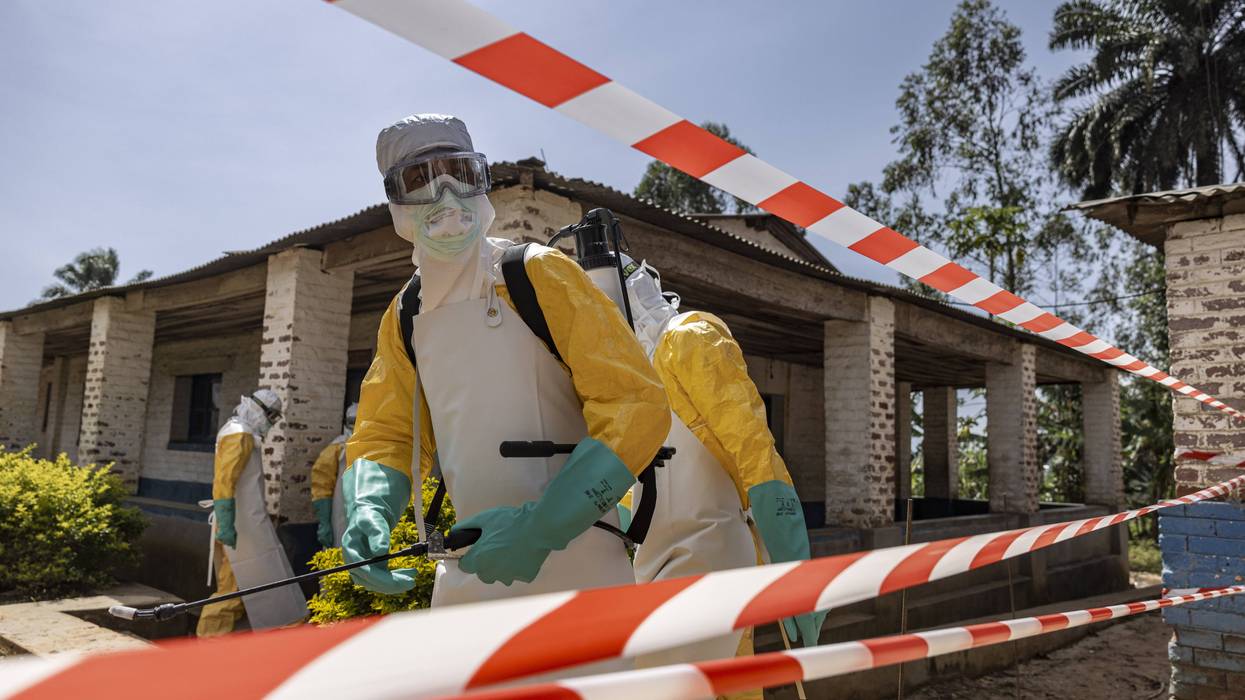
While we should all fear and work to stop this outbreak, we should also be willing to fear and confront the conditions that enabled its devastation.
As Congo faces the world’s third-largest Ebola outbreak, treatment centers have been attacked, masks and boots are running out, and entire communities are left vulnerable amid ongoing conflict and international neglect. This disaster is possible due to centuries of exploitation that amplifies the spread. The trail of inhumanity and structural violence is very scary and needs to end.
History shows that this country has been ravaged by colonial violence and foreign profiteering. Under King Leopold II of Belgium, an estimated 10 million Congolese people were murdered, mutilated, and terrorized as rubber and ivory were extracted for enormous profit. As a matter of policy and to enforce quotas, colonizers cut off limbs and heads.
Congo was also plundered by the transatlantic slave trade, which kidnapped, displaced, and enslaved millions of Congolese people.
Later, global demand for diamonds, gold, coltan, and other conflict minerals remade the region into a site of ongoing wars and labor exploitation. Much of this extraction still occurs through artisanal mining, a form of labor whereby individuals risk their lives to extract these valuable and raw natural resources under dangerous conditions.
The extreme situation in Congo did not develop in a vacuum; rather, it has formed from centuries of cruel and callous structural-based and enduring violence.
Cobalt, a rare and toxic metal essential to smartphones, electric vehicles, AI, and other technologies, reveals this contradiction at the center of our global economy. Our demand for these goods relies on the same brutal dynamics that have played out for centuries in this land: environmental harm, contamination of land and water, child labor, gender and sexual-based violence, and the exploitation of class under-resourced people of color in Congo. Wealthier people get the goods while the output biases in our systems of production allow us distance and plausible deniability in the face of untold suffering. When we look at our own commodity chains, the often hidden trails of our batteries and other electronic products in time and space before they got into our hands, we can trace many of our products to Congo. We are materially connected, whether we acknowledge it or not.
Congo has an estimated $24 trillion in untapped natural reserves. It is one of the most inherently valuable places on Earth. Yet, due to these longstanding and asymmetrical power relations, it is simultaneously extremely vulnerable. In 2020, 85.3% of the population in Congo lived on less than $3 a day. By 2026, projections estimate that fully 94.9% of the population will be at or below this international poverty threshold.
But, it doesn't have to be this way. We can do more than express fear and enforce travel bans and restrictions.
We can understand the Ebola outbreak as a medical crisis shaped by structural violence in which we are all complicit.
If we can recognize how we are connected to these systems, then we can take responsibility and action to change them. We can reinvest in funding the United Nations and support long-term healthcare infrastructure. We can become more socially and environmentally sustainable by holding corporations and governments accountable for exploitative labor and harmful environmental practices. We can demand more ethical and transparent supply chains. We can recognize that racism and environmental racism enable this disproportionate harm and take steps to do better. We can vote for people who have a world systems view, who understand that global trade, politics, and public health are connected. Leaders of this era need to understand that what we do, and how we do it, matter in life-and-death ways for people beyond our local contexts.
The extreme situation in Congo did not develop in a vacuum; rather, it has formed from centuries of cruel and callous structural-based and enduring violence. This cycle can end, if only we can align our shared values of more sustainable and equitable practices with our political will.
A virus with a potential mortality rate of 90% should concern us all. We should all fear and work to stop this outbreak. We should also be willing to fear and confront the conditions that enabled its devastation. And, we need to engage in the transformative justice required to facilitate sustainable social and environmental ways rather than those of depravity.
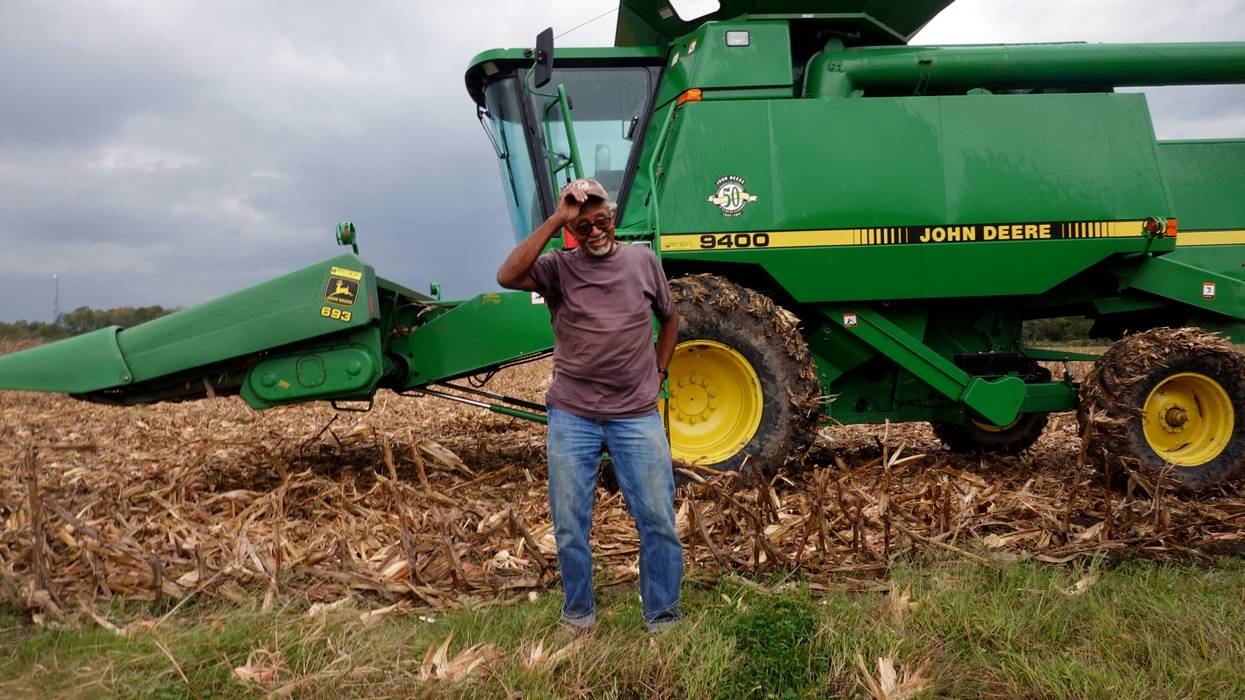
Price floors and supply management programs seem common sense to policymakers when it comes to oil and minerals, but what about US farmers and our overall food system?
The race to obtain critical minerals and the war in Iran have not only exposed a dangerous dependence on fossil fuels and mining, but they have also uncovered something more surprising—Republicans in Congress actually understand progressive agriculture policy. They just don’t want to admit it.
In February, Vice President JD Vance announced at the State Department that the administration must institute a price floor to protect the US critical mineral market. “This morning, the Trump administration is proposing a concrete mechanism to return the global critical minerals market to a healthier, more competitive state: a preferential trade zone for critical minerals protected from external disruptions through enforceable price floors,” Vance explained. Meanwhile, the US—and other countries around the world—are deploying oil reserves to buffer price shocks caused by the Israel-US attacks on Iran. Price floors and supply management programs seem common sense to these policymakers when it comes to oil and minerals, but what about US farmers and our overall food system?
Like oil and critical minerals, food and agriculture supply chains, such as corn, soy, and dairy, are vulnerable to global shocks, including extreme weather events, wars, and other supply disruptions. The public also needs to understand that without inflation-adjusted price floors, agricultural commodity prices may sink to disastrously low levels, leaving farmers no choice but to increase production with more chemicals and GMO seeds at the expense of our land and water. Congress and the US Department of Agriculture can avoid low prices by creating reserves accumulated during large harvests and, just like the federal petroleum reserve, bringing them back on the market to stabilize prices in times of shortage. We can all agree that food shortages would be disastrous, so guaranteeing its citizens food security should be imperative for any democratic government.
So while Republicans can recognize the importance of price floors and supply management during this administration, Democrats should look at history to understand how the same instruments were developed for agriculture during the Great Depression under the Democratic Party’s New Deal. The twin crises of farm bankruptcies and the Dust Bowl spurred militant farm organizations to demand a response from the federal government. The response was parity farm bills that stopped farm bankruptcies and stabilized the farm economy so that conservation measures and preservation of diversified farming could lead to food security and a balanced economy. Federal leadership in the White House and Congress recognized that price and supply management benefited both farmers and society as a whole. The policy was simple and transparent: The farm bill would ensure that during years of good harvests, public grain reserves would purchase the surplus at the parity rate (price floor adjusted for inflation) and store it to protect consumers in future times of shortage.
A productive agricultural economy that conserves our resources, challenges agricultural consolidation, and offers economic opportunity in rural communities should be a top priority for all our citizens.
However, both parties abandoned this common-sense approach to farm policy in the early 1950s, so that costs of farming have totally outpaced commodity prices. Subsequently, headlines warning of a farm crisis in 2026, like during the Great Depression and the 1980s, are not uncommon. The prices paid to farmers for commodities such as corn, soybeans, wheat, and dairy have dropped to record lows in real dollars. Over the years, this imbalance has led to the loss of family farms, the consolidation of agribusiness and food processing monopolies, along with their profits benefiting handsomely. Stabilizing the ratio of farm prices to farm costs (the correct goal of any Farm Bill) is the key to a sustainable agriculture that avoids soil loss, water pollution, and the decline of rural communities.
A supply management program would not only help revive family operations and rural economies but would also be essential to combat the expansion of confined animal feeding operations (CAFOs) and lower costs for taxpayers. As reported by Food & Water Watch, CAFOs are a disaster for our climate, air, and water, especially for nearby communities. CAFOs are among the most egregious features of today’s low-price, commodity-based industrial agriculture. Thousands of livestock (owned or vertically integrated with large food processors) are confined in small facilities without fresh air or sunlight and fed cheap corn and soy.
CAFOs have been replacing conscientious family farmers who are stewards of the soil and their animals. When family farmers are forced out of livestock production, they face the dilemma of “get big or get out” and often have no farming alternatives other than to tear up their pastures to grow corn and soybeans that will end up feeding animals in CAFOs.
The Trump administration is applying often-forgotten policy instruments to sustain our fossil fuel dependence and our high-tech future, rather than prioritizing a resilient, sustainable economy. Managing a price floor and creating federal food reserves in the agriculture sector are necessary to combat the adverse effects of food processor monopolization, farm consolidation, soil and water degradation, and external shocks, such as wars.
A productive agricultural economy that conserves our resources, challenges agricultural consolidation, and offers economic opportunity in rural communities should be a top priority for all our citizens. “We love farmers” and “We put America’s farmers first” are just political slogans to get votes with no substance behind them. These slogans lead to the usual sleight of hand to send taxpayer dollars to get some farmers through the next planting season. This policy leaves the disastrous cheap commodity regime in place—encouraging CAFO production and exporting commodities at a loss.
The administration’s discovery of the logical policy of price floors and reserves for oil and minerals must open new doors to applying these logical and transparent mechanisms to agriculture to restore the security of family farmers and conservation of our precious resources—after all, we can’t eat petroleum or precious minerals.
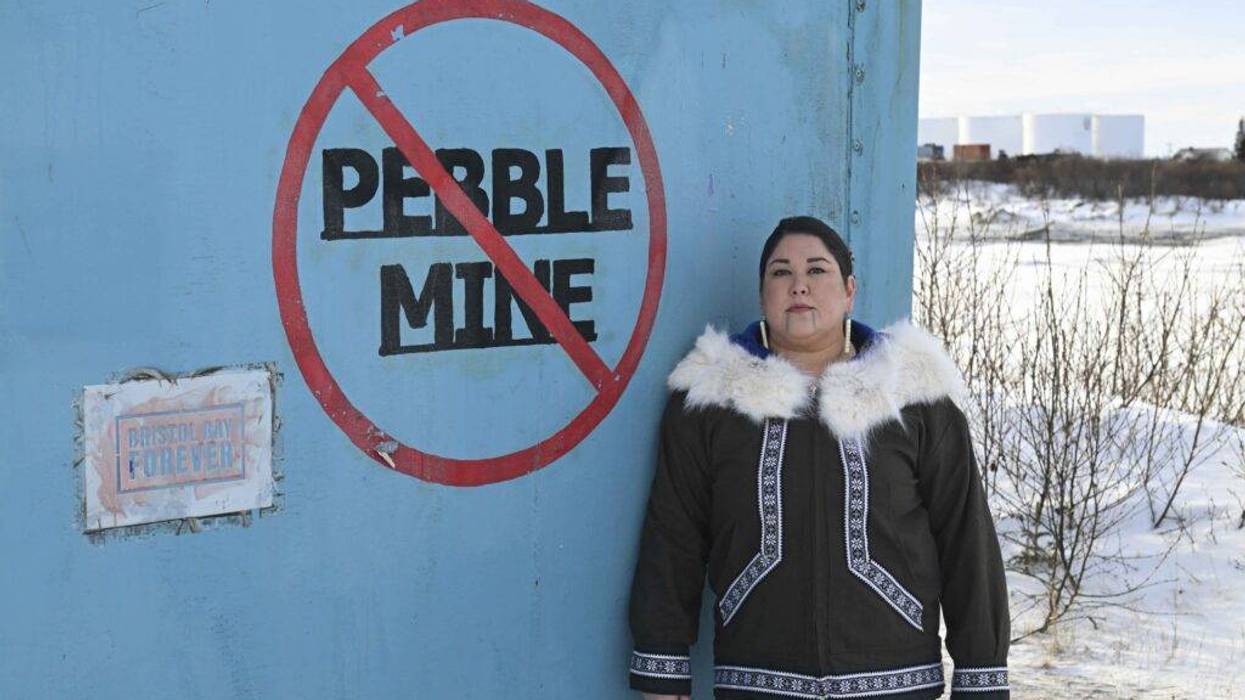
“The 2026 prize winners are proof positive that courage, hard work, and hope go a long way toward creating meaningful progress," one foundation leader said.
The Goldman Environmental Foundation announced the six winners of the 2026 Goldman Environmental Prize on Monday, honoring an all-female slate of advocates who protected wildlife, took on extractive industries, and won important legal victories in the movement to halt the climate crisis.
The announcement comes as world leaders have failed to make progress in addressing environmental challenges, and President Donald Trump, leader of the world's largest historical climate polluter, has withdrawn the US from the Paris Agreement, rolled back climate and environmental regulations domestically, and made efforts to supercharge the extraction and use of fossil fuels.
“While we continue to fight uphill to protect the environment and implement lifesaving climate policies—in the US and globally—it is clear that true leaders can be found all around us,” John Goldman, vice president of the Goldman Environmental Foundation, said in a statement. “The 2026 prize winners are proof positive that courage, hard work, and hope go a long way toward creating meaningful progress."
The 2026 prize is notable because it marks the first time that all of the winners—Iroro Tanshi of Nigeria, Borim Kim of South Korea, Sarah Finch of the United Kingdom, Theonila Roka Matbob of Papau New Guinea, Alannah Acaq Hurley of the US, and Yuvelis Morales Blanco of Colombia—are women.
'There's lots of people doing really good things and, together, we are going to make the world a better place than it would otherwise have been."
"I am especially thrilled to honor our first-ever cohort of six women, as this is a powerful reflection of the absolutely central role that women play in the environmental community globally,” Goldman said.
The winners also exemplify the prize's 2026 theme "Change Starts Where You Stand," as each of them began with a fight to protect a local community or ecosystem that has global implications for the climate, biodiversity, and environmental justice.
As US-based winner Alannah Acaq Hurley said, "At the end of the day, this is a fight for humanity, and, honestly, our ability to continue as humans on this planet."
Here is how six remarkable women waged this fight and won.
Iroro Tanshi is a Nigerian conservation ecologist who has worked successfully with local communities to protect endangered bats and their rainforest habitat from wildfires.
Tanshi was elated in 2016 when she discovered the short-tailed roundleaf bat, previously believed to be extinct in the area, living in Nigeria's Afi Mountain Wildlife Sanctuary. However, two weeks later, a devastating wildfire ignited, forcing Tanshi to evacuate and ultimately impacting around half of the park.
Tanshi then turned her attention to preventing wildfires, which are sparked by traditional farming practices rubbing against the climate crisis.
"The way people manage these farms is they use fire to clean the farms every year, but climate change has completely toppled the pattern of rainfall and people can no longer predict when to burn safely," she explained in a video.
Tanshi and her team worked with local communities on a Zero Wildfire Campaign, which includes educating farmers on when it is safe to burn and forming a team of "forest guardians" to patrol and fight fires on high-risk days. Due to her efforts, these guardians put out 74 fires between 2022 and 2025, preventing any of them from becoming major blazes.
"My hope for the future is that people would take these small-scale projects as signals for what the future should look like," she said. "Let's stay nimble. Let's try to work in our small communities and solve those problems there on the ground."
Borim Kim helped win Asia's first successful youth climate lawsuit, inspiring people across the region to demand government action on climate.
Kim was first motivated to take collective action when a heatwave baked Seoul in 2018, killing 48 people including a woman near her mother's age, who died in her home.
"I realized that even home wasn't safe from the climate crisis," she said in a video. "I started looking for what I could do."
Inspired by the international youth climate movement, she founded Youth 4 Climate Action (Y4CA) and helped organize school strikes and walkouts. After her activism led to meetings with policymakers, she realized that national leaders had no real plans to address the climate crisis. In 2020, she and Y4CA mobilized 19 young people to sue the South Korean government for violating the constitutional rights of future generations. Once the case was launched, she also continued to build a social movement for climate action.
In August 2024, the country's Constitutional Court ruled in favor of the young people, mandating that South Korea reduce its emissions in line with the scientific consensus, a decision the environmental minister accepted. The ruling is projected to prevent between 1.6-2.1 billion tons of carbon dioxide from reaching the atmosphere.
"Youth may be seen as having a lower position in society, but now this decision has affirmed our right to live safely and the state's duty to protect us," Kim said.
On the other side of the world, Sarah Finch also secured a precedent-setting legal climate victory.
Finch lives in a part of southeastern England called the Weald. While it is currently a rural area, it hosts oil and gas reserves that were eyed for exploitation during the fracking boom of the 2010s. Finch helped form the Weald Action Group to push back against many potential wells, but they were not able to stop the Surrey County Council from approving the operation and expansion of a drilling site called Horse Hill in 2018.
In gearing up to challenge the decision, Finch discovered that the council's environmental impact statement had only considered emissions from direct drilling at the site, but not the emissions generated from the burning of the fuel once it was extracted, also known as Scope 3 emissions, which make up around 90% of oil and gas' contribution to the climate emergency.
"It became apparent that it was actually the norm that Scope 3 emissions were being emitted from these kinds of decisions, and we realized that actually it was happening everywhere and in much bigger developments than Horse Hill," Finch said in a video.
She and her team challenged the environmental impact statement over its failure to consider Scope 3 emissions, losing multiple times before finally securing a groundbreaking victory from the UK Supreme Court in 2024, which has come to be known as "the Finch ruling."
The UK government cited the "Finch ruling" when it revoked its backing of two North Sea oil developments. Overall, the projects canceled or delayed in 2024 due to the ruling would have generated enough Scope 3 emissions to equal the UK's domestic greenhouse gas emissions that year.
"It wasn't just a win on Horse Hill," Finch said. "It wasn't even just a win on a handful of sites. It was a win on the whole future of the UK oil and gas industry. And I feel like, there's lots of people doing really good things and, together, we are going to make the world a better place than it would otherwise have been."
Theonila Roka Matbob was born into an environmental disaster. Rio Tinto's Panguna Mine had devastated the ecosystem of Bougainville in Papua New Guinea’s (PNG) Autonomous Region of Bougainville (ARB), destabilized its society, and led to a civil war that killed 15,000-20,000 Bougainvilleans, including her father.
"Our environment was tortured, and then the land was tortured, and the third party that was tortured were my people," Roka Matbob said in a video.
Rio Tinto closed its copper, silver, and gold mine in 1989 due to the war, but had done nothing to clean up the 150,000 tons of tailings it had dumped into local rivers or take responsibility for the havoc the mine had caused. As an adult, Roka Matbob began to wonder why justice had not been done and to gather testimony from people impacted by the mine.
This led to a successful campaign that persuaded Rio Tinto first to fund an assessment of the mine's impacts and then to sign a memorandum of understanding in 2024 to act on the assessment's findings and develop a plan with local communities to remediate the area.
"It doesn't mean we will restore everything as it was, but at least the story that my grandchildren and my great-grandchildren can remember [is] that our grandparents fought," she said.
As Theonila Roka Matbob secured justice for the impacts of one major mine, Alannah Acaq Hurley helped prevent another one from being dug in the first place.
Hurley grew up as a member of the Yup’ik Indigenous group in Alaska's Bristol Bay, a haven of biodiversity that also hosts the world's largest wild sockeye salmon run. But in 2001 a new danger emerged: Canadian company Northern Dynasty Minerals announced plans to construct the Pebble Mine, the largest open-pit mine in North America.
"The pit would be so big, you could literally see it from the moon," Hurley said in a video. "It didn't take long for us to understand the level of threat that this mine posed—acid mine drainage, toxic tailings left in perpetuity. It was not a matter of if something goes wrong, it was a matter of when."
Chosen to lead the United Tribes of Bristol Bay in 2013, Hurley built a coalition to oppose the mine, uniting tribes, commercial fishers, and environmentalists to make their cause to the US Environmental Protection Agency and push back against the company's multiple attempts to move forward with the copper-and-gold mining project. Finally, in 2023, the EPA canceled the project via its rarely used veto power.
"It's just really a testament to the power of the people," she said. "We just never stopped until we were heard."
Yuvelis Morales Blanco also defended her community from an extractive industry.
Blanco was born to subsistence fishers on Colombia's Magdalena River in the Afro-Colombian community of Puerto Wilches.
“We had nothing but the river—she was like a mother who took care of me," she said in a statement.
However, even as a child she saw the river was threatened by oil spills from Ecopetrol, Colombia's leading oil company headquartered nearby. The potential threat level was raised even further when she learned while attending college in 2019 that Ecopetrol planned to build two pilot fracking projects near Puerto Wilches.
"Man, I'm like, 'They're going to do that in Wilches?' No sir!'" she recalled in a video.
Blanco joined the Colombia Free from Fracking Alliance and began to raise awareness in her community about the plans. As the campaign's momentum grew, so did her reputation as a spokesperson. This ultimately led to threats of violence against her that forced her to seek asylum in France in 2022, yet she continued to mobilize against the fracking plans from abroad.
She and the alliance saw success in 2022, as a local court halted the permitting process, newly elected President Gustavo Petro pledged there would be no fracking during his administration, and Ecopetrol suspended its contracts. In 2024, the Colombian Constitutional Court further ruled that the fracking projects had violated the Afro-Colombian community of Puerto Wilches' right to free, prior, and informed consent.
Blanco continues to fight for a ban on fracking and for legal protections for environmental defenders—over 140 of whom were reported missing or killed in 2024, the most recent year for which Global Witness has a full tally. Colombia was also the most dangerous countries for defenders that year, with 48 deaths.
"I am very hopeful because I have a river that always accompanies me, and I know we're going to win," she said.
The Goldman Environmental Prize was founded in 1989 by Rhoda and Richard Goldman, and has since honored 239 winners in 37 years. The 2026 awards will be presented live in San Francisco on Monday evening at 8:30 pm ET. Watch it on YouTube here.
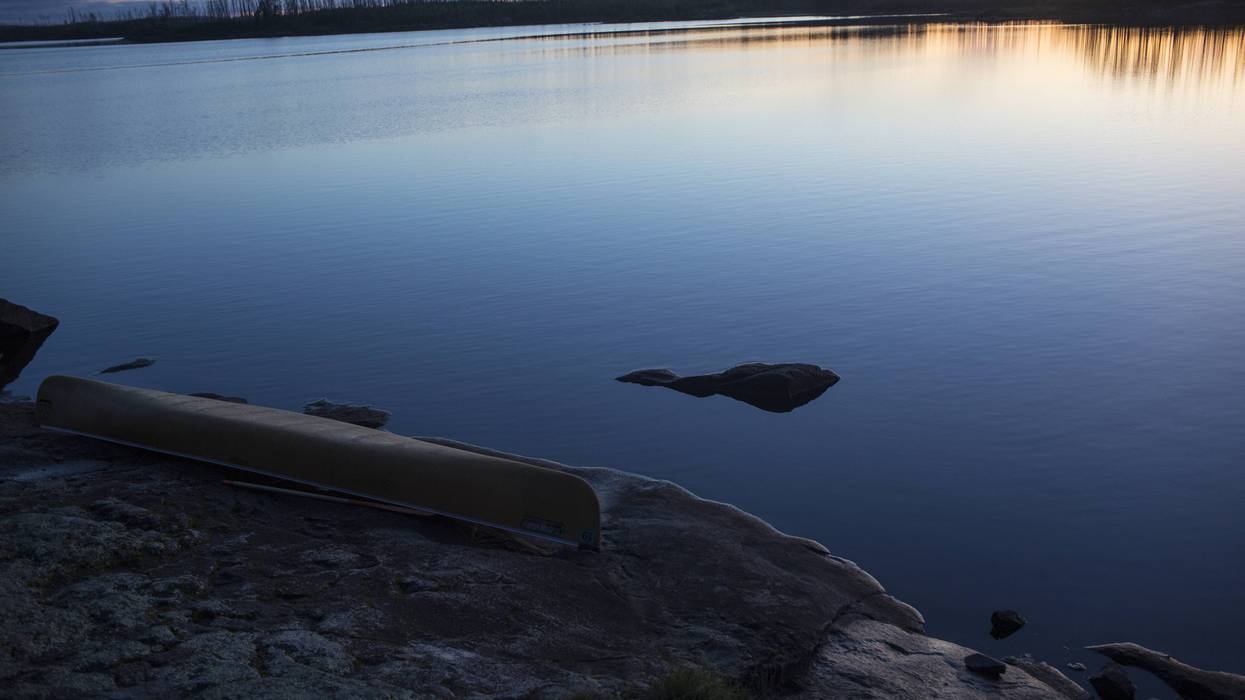
"We don’t allow mining in Yellowstone, Yosemite, Zion, Acadia, Glacier, or any of our nation’s revered national parks—and we shouldn’t allow it in the watershed of the Boundary Waters, either," said one congresswoman.
Democratic lawmakers and environmental protection groups condemned Senate Republicans on Thursday for their "heartbreaking" passage of a House resolution to overturn a 20-year moratorium on mining in the watershed of Minnesota's Boundary Waters Canoe Area Wilderness, the nation's most visited wilderness area—a vote that critics said was the result of years of lobbying by a foreign-owned mining firm.
House Joint Resolution 140 now heads to President Donald Trump's desk, nearly a decade after Chilean conglomerate Antofagasta, the owner of Twin Metals Minnesota, began discussing with Trump's first administration its desire to build a copper mine over the pristine area.
"Because of this extremely short-sighted vote, our nation’s most-visited wilderness area faces the threat of permanent toxic pollution," said Rep. Betty McCollum (D-Minn.). "Why? So Antofagasta, a Chilean corporation that owns Twin Metals, can mine American copper and ship it to China to be smelted and sold on the global market. Twin Metals has been lobbying President Trump and Republicans in Congress for over ten years to remove the protections from this watershed and renew their mine plans to extract American minerals at the expense of freshwater for future generations."
The 50-49 vote in the Senate, said Environment America, puts the 1.1 million-acre wilderness area for heavy metals leaching into the soil and water through acid mine drainage.
Toxic runoff from copper mining, said the group, "ultimately poisons the land and water surrounding a mine, making the ecosystem unlivable for wildlife."
Leda Huta, vice president of government relations for American Rivers, called the vote "a betrayal of the public trust."
“We share in the deep disappointment of millions of Americans who expect our elected leaders to protect our clean water, our abundant wildlife, and access for all to unmatched outdoor recreation spaces," said Huta. "This is a heartbreaking moment.”
Amanda Hefner, manager of Save the Boundary Waters Action Fund, wrote in a column in Minnesota Reformer last October that "in a water-rich environment like the Boundary Waters, with its low buffering capacity, pollution would spread quickly through interconnected lakes and streams." She also wrote that it was "reckless" to risk the preserve's 17,000 jobs and over $1 billion in annual revenue "for a foreign-owned mine that would pollute and leave toxic waste for generations."
According to Jacobin, Antofagasta spent $200,000 on lobbying in the final quarter of 2024 and $230,000 in the first quarter of 2025 "on issues including federal leases for Twin Metals." The Chilean company is owned by billionaire Andrónico Luksic, who rented out his $5.5 million mansion in Washington, DC to Trump's daughter Ivanka and her husband, then-White House adviser Jared Kushner, from 2017-21.
The Sierra Club noted that to pass the mining ban reversal, Senate Republicans "utilized a baseless interpretation of the Congressional Review Act (CRA)."
"The CRA only allows Congress to disapprove of administrative rules," said the group. "No previous administration has considered mineral withdrawals to be 'rules' that are subject to the CRA."
Athan Manuel, director of the Sierra Club's Lands Protection Program, said that "allowing a foreign company to open a toxic mine on its doorstep puts a fragile ecosystem at risk and shows the Trump Administration will always act to benefit corporations over the American people.”
“The Boundary Waters is one of the country’s most iconic wilderness areas, visited by thousands every year. It should be a place for recreation and conservation, not for pollution and exploitation," said Manuel.
Despite Trump's refrain, "America First," Rep. Ilhan Omar (D-Minn.) said the vote made clear that "for the GOP, it’s foreign billionaires first, America last."
McCollum warned that the mining moratorium was "the only way to protect this wilderness, which is home to some of the cleanest water in the entire world.
"We don’t allow mining in Yellowstone, Yosemite, Zion, Acadia, Glacier, or any of our nation’s revered national parks—and we shouldn’t allow it in the watershed of the Boundary Waters, either," said the congresswoman. "One hundred percent of copper mines have failed, leading to polluted waters. This case will be no different."

This legal challenge in the Congo highlights the stakes for millions of people around the world, including many Indigenous communities, who find their lands targeted by big powers for mineral extraction.
President Donald Trump hailed "historic" the agreement signed in Washington on December 4, 2025, between President Félix Tshisekedi of Congo and Rwanda's President Paul Kagame. Brokered by the US administration, this Washington Accord was supposed to end the devastating conflict in Congo that has taken millions of lives over the past three decades.
Alongside this deal, a Strategic Partnership Agreement was signed between the US and Congo. The agreement gives the US preferential access to Congolese mineral reserves, requires Congo to amend its laws and potentially its Constitution, and gives Washington a level of control over the management of mining resources through the establishment of a joint mechanism involving the two governments.
In October 2025, analyzing the pre-accord signed in June 2025 and a Regional Economic Integration Framework between Rwanda and Congo negotiated in the following months, the Oakland Institute released Shafted: The Scramble for Critical Minerals in the DRC. The report raised serious concerns about US maneuvers to control Congolese critical minerals under the guise of bringing peace to the region.
The Partnership Agreement signed in December makes these concerns legitimate. The Congolese people have been sidelined, with an agreement focused on extraction and exploitation of critical minerals and a peace deal that shockingly overlooks the need for justice and for holding perpetrators accountable. Soon after the signing of the deal, the US mining firms were already striking deals, while promises of peace and security remain wishful thinking with Rwanda and its proxy M23 continuing to occupy large swaths of land in mineral-rich eastern Congo. As a matter of fact, fighting has continued to rage with a fresh offensive launched by Rwanda and M23 in the days that followed the agreement, resulting in thousands of people killed and the capture of the strategic city of Uvira.
The lawyers and human rights defenders who have filed the case are urging the mobilization of Congolese people to preserve the sovereignty of their nation and calling on the international community to support their action and defend international law at a time it is under unprecedented threat.
While the prospect of peace remains uncertain, the government of Congo has not waited to take significant steps in the implementation of the agreement. Mid-January, it provided Washington with a shortlist of state-owned assets—including manganese, copper-cobalt, gold, and lithium projects—available to US investors. A major deal was announced soon after with US government-backed Orion Critical Mineral Consortium acquiring 40% of Glencore’s DRC copper and cobalt.
Congolese may legitimately wonder whether they are being fooled by the deal, seeing their mineral resources offered to the “peacemaker” whereas Rwanda, undeterred, continues its aggression and the extraction of Congolese minerals in Eastern Congo. This has led some to act.
On January 21, 2026, a collective of Congolese lawyers and human rights defenders filed a petition at the Constitutional Court of the Congo to challenge the constitutionality of the agreement. The lawyers argue that the partnership violates the Constitution since amendment of laws or the Constitution requires a democratic review and approval by the Congolese parliament or citizens through referendum. Specifically, it contravenes Article 214 of the Congo's Constitution, which sets out the ratification process for international agreements that involve amending national laws. The petition also contends that the agreement violates Articles 9 and 217, which uphold the principle of Congo’s sovereignty over natural resources, and Article 12, which upholds the principle of equality before the law.
According to Attorney Jean-Marie Kalonji, one of the plaintiffs: "By filing this case with the Constitutional Court, we are assuming our responsibility as Congolese citizens to protect the sovereignty of our country and safeguard our patrimony for future generations." The lawyers and human rights defenders who have filed the case are urging the mobilization of Congolese people to preserve the sovereignty of their nation and calling on the international community to support their action and defend international law at a time it is under unprecedented threat.
This legal challenge has major significance for Congo, a country that has large reserves of several critical minerals, such as copper and cobalt, and a long history of mineral extraction plagued by corruption, embezzlement, and predatory wars. The country’s mineral wealth has hardly benefited its people—still lagging behind most countries in terms of human development indicators such as access to health, education, and other standards of living. It is therefore totally legitimate for citizens to stand up for their basic rights and ensure that mining operations actually benefit the population.
Beyond Congo, this legal action has implications for other mineral-rich countries as global competition for the control of critical minerals intensifies and projections indicate steep increases in demand as well as shortfalls to be expected for some key minerals such as copper and lithium as early as the 2030s. Whereas China dominates both extraction and refinery activites, the US and other industrialized countries have set the supply of critical minerals as a vital priority for so-called green technologies as well as defense.
The 2022 Intergovernmental Panel on Climate Change report warned that mining has “severe environmental impacts” with “often […] few if any redistributive benefits for communities in regions where extraction takes place,” and instead of local development, the extraction of strategic minerals is often linked to violence, human rights abuses, and conflict. This legal challenge in the Congo highlights the stakes for millions of people around the world, including many Indigenous communities, who find their lands targeted by big powers for mineral extraction. It is essential that their rights are recognized and that they have a say in the future of their land—which is intertwined with their own future.
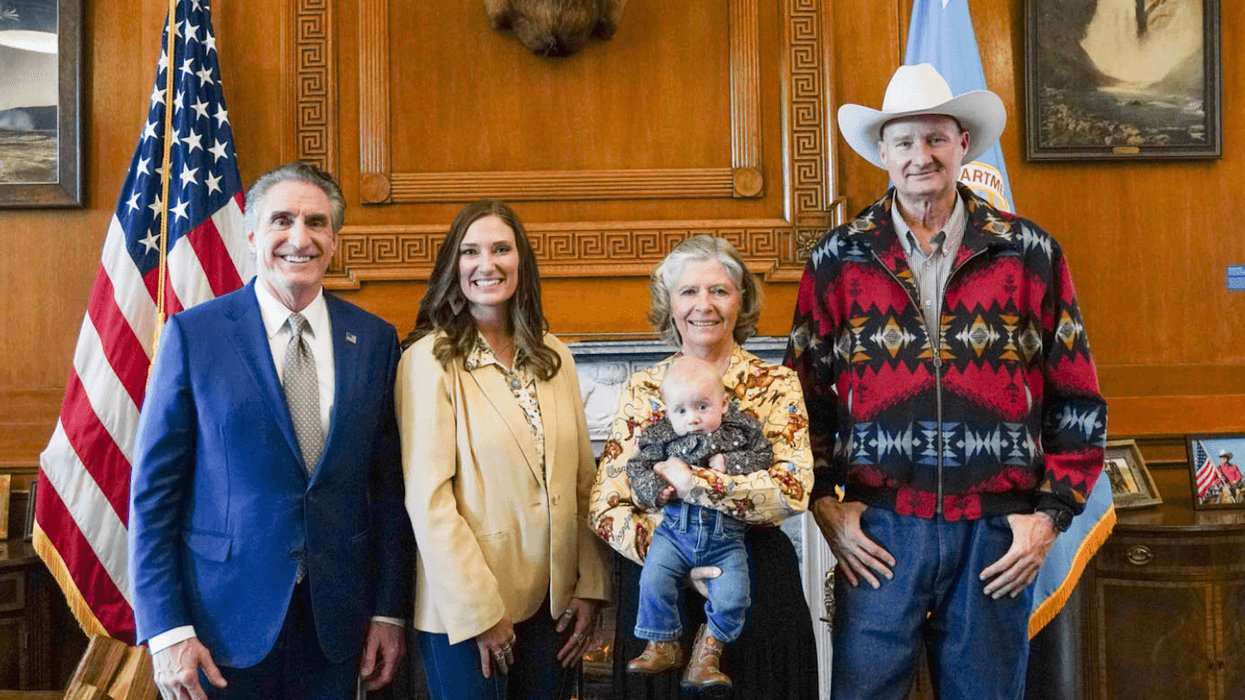
"Congress must say enough is enough and immediately open an investigation into just how deep the rot at Burgum’s Interior goes," said one critic.
Ethics experts this week raised red flags over a senior US Interior Department official's failure to disclose her family's financial interest in the nation's largest lithium mine, which opponents say was illegally approved by the Trump administration.
In 2018, Frank Falen, husband and former law partner of current Associate Deputy Interior Secretary Karen Budd-Falen—the third-highest ranking Department of Interior (DOI) official—sold the water rights from a family ranch in Humboldt County, Nevada to a subsidiary of Lithium Americas for $3.5 million.
The subsidiary, Lithium Nevada, wanted to build a highly controversial $2.2 billion open-pit lithium mine—Thacker Pass—that required both massive amounts of water and approval from the DOI. Falen's water rights sale also hinged upon DOI approving the mine.
At the time, Budd-Falen worked as the DOI's deputy solicitor for wildlife. In 2019, she sat down for a lunch meeting with Lithium Americas executives in the DOI cafeteria.
“They just happened to mention to me they were going to DC, and I was like, ‘Well, my wife is back there,’” Falen said of the Lithium Americas executives in a New York Times interview. “It was my fault because I just said, ‘Yeah, you should stop by and say hi to my wife.’"
The US Bureau of Land Management (BLM), part of DOI, approved the mine during the final days of Trump's first administration via an expedited process to circumvent lengthy environmental review. Indigenous and conservation groups, working together in the Protect Thacker Pass coalition, subsequently sued over what they argued was the mine's illegal approval.
A Lithium Americas spokesperson told the Times: "We haven’t worked directly with Karen Budd-Falen related to Lithium Americas, nor have we ever met with her in a formal capacity regarding our project.”
However, ethics experts question the financial ties between Falen and Thacker Pass and why Budd-Falen did not publicly disclose her husband's $3.5 million water deal.
“Did she have any oversight of the environmental review process regarding Thacker Pass?" Kyle Roerink, executive director of the Great Basin Water Network, a Nevada conservation group, said during an interview last week with High Country News. “If she didn’t recuse herself, it would fly in the face of the impartial decision-making that Americans expect from government officials.”
Doug Burgum’s third-in-command Karen Budd-Falen made millions after the Trump administration fast-tracked what’s now the nation’s biggest lithium mine. Illegal, conflict of interest, corruption, or whatever you want to call it, there’s a rot in our Interior Department. https://nyti.ms/3LfBVWM
[image or embed]
— Save Our Parks (@saveourparks.us) January 5, 2026 at 1:00 PM
Robert Weissman, co-president of the watchdog group Public Citizen, told the Times: "It’s not clear that Karen Budd-Falen knew she had a conflict, but it’s clear she should have known, and that the public should have known. It’s also clear that she should not have met with Lithium Nevada."
Green groups and Indigenous peoples—including the the Reno-Sparks Indian Colony, Burns Paiute Tribe, and Summit Lake Paiute Tribe—fiercely oppose the mine. Opponents argue the project lacks consent, had a rushed environmental review, and that the mine would threaten wildlife and water and desecrate sacred Indigenous sites.
Thacker Pass, whose name means "rotten moon" to all three tribes, is also the site of an 1865 massacre of dozens and perhaps scores of Northern Paiute men, women, and children by US Cavalry troops. The tribes want it listed on the National Register of Historic Places.
In September, the Trump administration and Lithium Americas reached a deal under which the government will take a 5% equity stake in both the company and the Thacker Pass mine in return for Department of Energy loan money as demand for lithium—a key component of electric vehicle batteries, cellphones, and laptops—is surging worldwide.
The apparent conflict of interest involving Budd-Falen continues a history of corruption at Trump's DOI in both the president's first and current terms. First-term Interior Secretary Ryan Zinke's tenure was plagued by ethics violations and abuse of office. Federal investigators found that Zinke lied to them about his involvement in private land deals while in office, had improper relationships with developers, and improperly used taxpayer funds to pay for chartered aircraft and helicopter flights.
Zinke resigned in 2019. His eventual successor, David Bernhardt, was called a "walking conflict of interest" and "as corrupt as it gets" due to his prior work as a fossil fuel lobbyist.
Budd-Falen could also benefit from the Trump administration's invasion of Venezuela. According to reporting from Public Domain's Jimmy Tobias and Chris D'Angelo, Budd-Falen or her husband hold tens of thousands of dollars worth of stock in fossil fuel companies including ExxonMobil and pipeline firm Enterprise Products Partners.
Responding to Budd-Falen's failure to disclose her family's interest in the Thacker Pass mine, Save Our Parks spokesperson Jayson O’Neill said Monday:
This raises substantial questions about the lack of transparency, clear conflicts of interest, and potential illegal self-dealing at the Interior Department under [Interior Secretary] Doug Burgum. It wasn’t enough for Burgum’s top lieutenant, Karen Budd-Falen, to hold tens of thousands of dollars in Big Oil stocks while advancing their interests at Interior. Now we find out that she worked behind the scenes with Lithium Americas’ representatives and lobbyists, which received fast-track approval, making her and her husband millions.
"This naked corruption and self-dealing is par for the course at Doug Burgum’s Interior Department, which is more focused on self-serving and special interests than the American people and our outdoor heritage," O'Neill added. "Congress must say enough is enough and immediately open an investigation into just how deep the rot at Burgum’s Interior goes.”
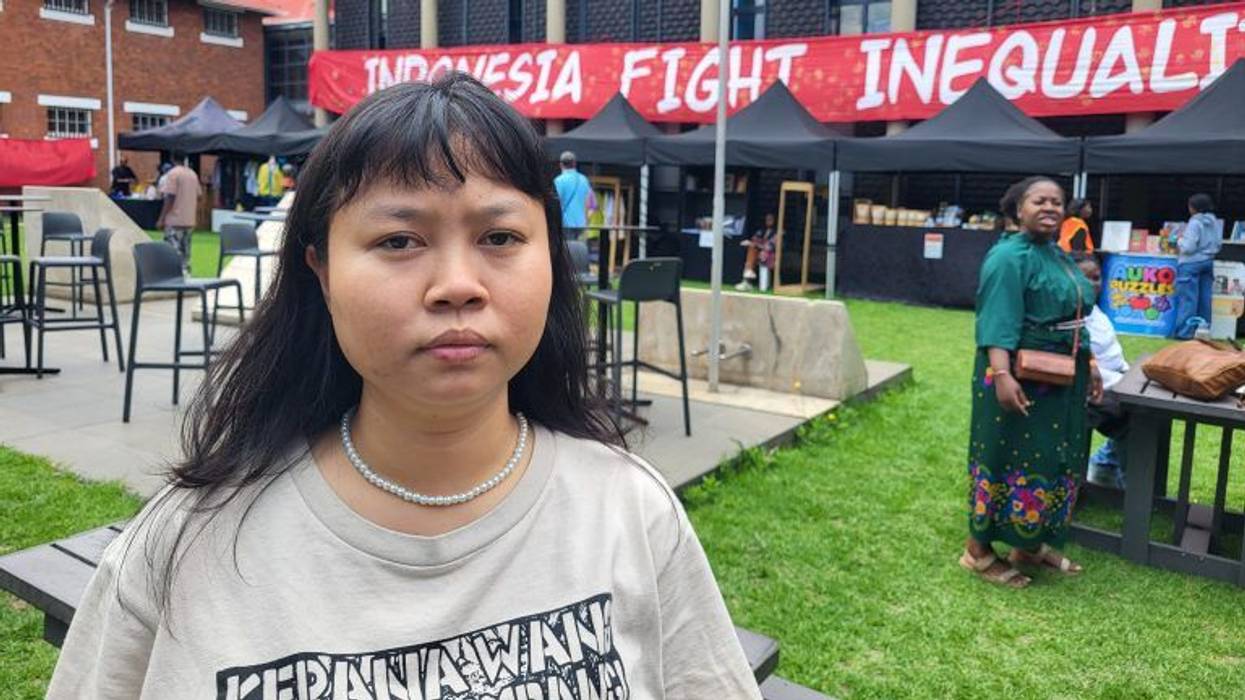
Labor activist Raraa Rahmawati argues that the hazards in her country’s nickel industry are part of the broader problem of a global economy rigged to favor the wealthy
Electric vehicle sales are rising rapidly around the world. But few people who purchase these cars know anything about the workers who produce them.
Labor activist Raraa Rahmawati is trying to change that for one group of e-vehicle supply chain workers: the more than 230,000 Indonesians who toil in the nickel mining and processing industry. Recently, she reported on the reality of these workers’ lives at an international “People’s Summit” held parallel to the G20 leaders meeting in Johannesburg, South Africa.
Indonesia boasts the world’s largest reserves of nickel, a key component of the lithium batteries that power electric vehicles. To capture more of the value of this essential mineral, the national government banned raw nickel exports in 2020. This has triggered a boom in domestic nickel processing.
Who’s benefiting most from this boom? The Chinese firm Tsingshan ranks as the top investor in Indonesia’s nickel processing operations. The company has contracts to supply carmakers around the world, including a $5 billion deal with Tesla.
“People who buy electric cars think they’re contributing to a ‘just transition’ away from fossil fuels,” she told the international crowd in Johannesburg. “But they should know this is really just another form of extractivism."
Tsingshan’s founder and chairman, Xiang Guangda, has accumulated a fortune worth an estimated $3.7 billion. Known as the “Nickel King,” the Chinese tycoon closely guards his privacy. But Bloomberg last year spilled one revealing tidbit: that Xiang had purchased a $62 million mansion for his daughter in Singapore.
The contrast between the living and working conditions for Xiang’s family and his employees could not be more extreme. Rahmawati works with an organization, Sembada Bersama, that is documenting the severe workplace hazards in this industry.
In a new report, Sembada Bersama reveals disturbing information about the Indonesia Weda Bay Industrial Park, a massive nickel mining and smelting complex in a former rainforest in the northern part of the Maluku Islands. Tsingshan owns the largest share of the project.
The most disturbing finding: an apparent pattern of “sudden deaths” among the plant’s workers, who are mostly 25 to 35 years old. Nearly every worker Sembada Bersama interviewed was aware of these tragic incidents. Rahmawati said that while lack of transparency and oversight make it impossible to prove, these deaths are likely the result of cardiac arrests related to grueling working conditions.
Smelter operators typically work two 12-hour shifts over two days, often having to rotate between day and night shifts, with a third day off. To document additional hazards, Sembada Bersama collaborated with workers to take meter readings inside the smelters. The data they collected reveal workplace heat temperatures of as high as 108.5°F, excessive levels of inhalable dust particles that can cause respiratory disease and cancer, and noise levels high enough to cause permanent hearing loss.
These occupational health risks come on top of the Indonesian nickel industry’s devastating environmental costs and high accident rates. Two years ago, an explosion at a Tsingshan plant left 21 workers dead.
Tsingshan recently signed an agreement with the United Nations Industrial Development Organization to improve ecological practices and industrial skills training at its Indonesia operations. This suggests the firm is feeling some pressure. But with few alternative job opportunities, local communities and workers remain vulnerable to the enormous power of Tsingshan and other nickel corporations.
The Sembada Bersama report ends with detailed recommendations for the Indonesian government and corporations. Rahmawati also argues that the hazards in her country’s nickel industry are part of the broader problem of a global economy rigged to favor the wealthy. International solidarity and cooperation, she feels, will be key to unrigging the system.
“People who buy electric cars think they’re contributing to a ‘just transition’ away from fossil fuels,” she told the international crowd in Johannesburg. “But they should know this is really just another form of extractivism. We need a cross-border movement. It’s time for us to be united.”
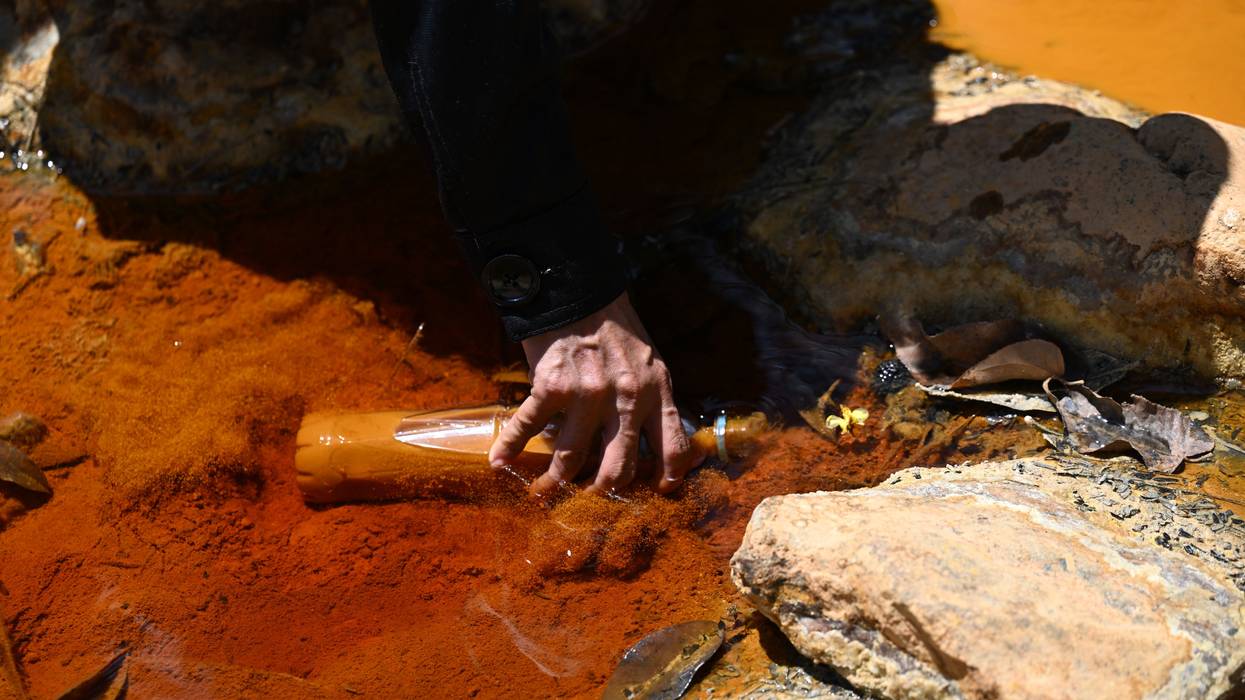
A joint letter expresses "steadfast support for the people of El Salvador and their religious institutions and leaders who are struggling to maintain their country’s historic ban on metal mining... so all Salvadorans can enjoy their God-given right to clean water."
More than 150 faith-based organizations from 25 countries launched an open letter on Monday supporting an El Salvadoran ban on metals mining that was overturned by right-wing President Nayib Bukele in 2024.
The original ban was passed by the country’s legislature in 2017 following years of study and the advocacy of El Salvador’s religious communities. The letter signatories, which include 153 global and regional groups from a wide range of traditions, stood with faith groups in El Salvador in calling both for no new mining and for an end to the political persecution of land and water defenders.
"We, the undersigned, from a diversity of church structures (representing local, regional, and national expressions of churches and related agencies), express our steadfast support for the people of El Salvador and their religious institutions and leaders who are struggling to maintain their country’s historic ban on metal mining—in place from 2017 to 2024—so all Salvadorans can enjoy their God-given right to clean water," the letter begins. "We stand in solidarity with civic and religious leaders who are being persecuted and imprisoned for working against injustices, including the devastation that metals mining would cause their communities."
The faith leaders also released a video reading sections of the letter aloud.
“This letter is a hope-filled expression of solidarity and humanism."
“Through this declaration, faith communities from around the world have affirmed their solidarity with faith leaders in El Salvador as they carry out their duty to protect water as a sacred inherited trust, a human right meant to be shared by all,” Rev. Dr. Japhet Ndhlovu, executive minister for the Church in the Mission Unit of The United Church of Canada, said in a statement.
El Salvadorans already struggle to gain access to clean and plentiful water. The water of 90% of Salvadorans is contaminated, half of all Salvadorans have "intermittent access to water,” and one-half of those with water access report it is poor quality, said Gordon Whitman, managing director for international organizing at letter-signatory Faith in Action, at a Monday press briefing anouncing the letter.
"Restarting mining would be catastrophic," Whitman said.
The mining ban was already hard won.
A 2012 study commissioned by the government affirmed that mining would endanger the nation’s rivers and watersheds with cyanide, arsenic, and other toxins and found widespread public opposition to mining. Before the ban was passed in March of 2017, the archbishop of San Salvador mobilized support for it by leading a march to deliver a draft of the ban to the National Assembly. After it passed unanimously, he called it a "miracle," according to John Cavanagh, a senior adviser at the Institute for Policy Studies.
The law made El Salvador "the first nation on Earth to ban mining to save its rivers," Cavanagh said at the press briefing.
“The Salvadoran precautionary approach banning metal mining is essential to protect drinking water and aquatic ecosystems, given the irreparable damage that has been done by irresponsible mining around the world,” Willamette University professor emeritus Susan Lea Smith of the Ecumenical Water Network of the World Council of Churches said in a statement. “El Salvador had made a difficult but wise choice in banning metal mining. Clean water is a gift from God, and so, for the sake of clean water and the rest of Creation, we work together for the common good."
"It is a sin to render water undrinkable.”
However, in December 2024, Bukele's government passed a new law that allows mining once again without environmental oversight or community consultation.
“It’s a law that has become one of the main threats for the Salvadorans' right to clean water," Pedro Cabezas of International Allies Against Mining in El Salvador said in the press conference.
Cabezas also said the new law was a "symptom of what El Salvador has been going through over the last five years” as Bukele concentrates all power within the executive and his own party.
While the Salvadoran public and civil society groups remain opposed to mining—a December 2024 poll found that 3 in 5 are against the practice in the country—the Bukele government has ramped up its criminalization of dissent.
In this context, the Catholic, protestant, and evangelical churches in El Salvador are among the remaining institutions "with space to speak out" against mining, Christie Neufeldt of the United Church of Canada explained at the briefing.
For example, in March, Mons. José Luis Escobar Alas, the archbishop of San Salvador, presented an anti-mining petition signed by 150,000 people.
International faith groups wanted to stand in solidarity with their Salvadoran counterparts.
“This letter is a hope-filled expression of solidarity and humanism in the face of forces that would degrade” the Earth, human rights, and democracy, Neufeldt said.
Salvadoran faith groups "remind us that access to water is a fundamental human right and that clean water is not a commodity, but a shared inheritance entrusted to all people by God. And they remind us that ending the mining ban is fueling egregious rights violations against those organizing to protect their water and land from destruction," the letter says.
Whitman spoke about the importance of water to several religious traditions.
“All of our faith traditions teach that water is a sacred gift of God,” Whitman said, adding, "It is a sin to render water undrinkable.”
In the press briefing, speakers acknowledged the link between rising authoritarianism and environmental deregulation, in El Salvador and beyond.
Cavanagh noted that, as the energy transition increases demand for rare earth minerals and global instability makes gold more attractive, "oligarchs linked to extractivism" have begun "pumping money into elections” to boost candidates who will allow them to exploit resources.
“It’s not at all surprising that the opposition to mining comes from the people, and so it’s absolutely natural that the oligarchs, that the transnational corporations are going to want to crack down on public dissent," Smith said, adding there was an "intimate connection between authoritarianism and any extractive industry, including mining."
In the end, however, the letter signatories expressed faith for a greener, freer future.
"We pray for the Salvadoran people and their government, that they protect the sacred gift of creation, uphold human rights, and ensure every family clean water—now and for generations to come," they concluded.
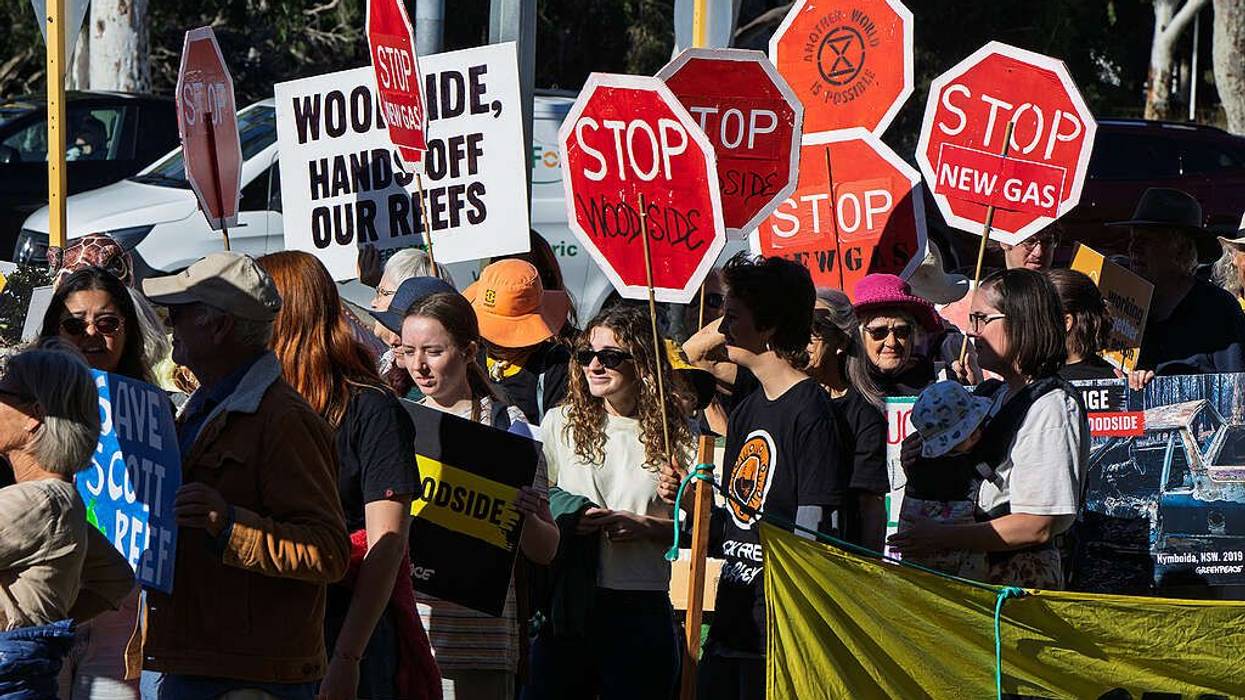
It's been a winter in which our elected representatives still give primacy to commercial interests and the economy over the environment and cultural heritage of Western Australia.
“This year was a year of change, a year when secret fears come into the open, when discontent stops being dormant and changes gradually to anger. It wasn’t only in me… And it wasn’t only in the nation; the whole world stirred with restlessness and uneasiness as discontent moved to anger and anger tried to find an outlet in action, …” (John Steinbeck, The Winter of Our Discontent, 1961)
1 June
Winter 2025 begins with a still, sunny 23°C day in Perth, Western Australia (WA). It’s a reprieve from disgruntlement, discontent, and alarm about the state of the world, especially the genocide in Gaza and long war in Ukraine and, closer to home, the Australian environment minister’s "carbon bomb."
Four days earlier, and only two weeks after being sworn in as Australia’s new Environment Minister, Murray Watt announced his snap decision in favour of Woodside Energy’s bid to keep burning gas until 2070 at its North West Shelf (NWS) plant on the Burrup Peninsula in WA.
I’m still hoarse from chanting “Dis-rupt Bur-rup Hub!” to the rhythmic beat of Drummers for Climate Action at the dusk snap rally outside Parliament House the night before Watt gives conditional approval to Woodside’s "carbon bomb"—a fossil fuel project that will emit more than 1 billion tonnes of carbon pollution.
At home, it’s been a winter in which we witness the wanton destruction wrought upon WA’s native jarrah forests, endangered black cockatoos, fragile coral reefs, and ancient Indigenous rock art by rapacious mining companies.
Never mind the 500,000+ signatories to Greenpeace Australia’s petition to stop Woodside’s Burrup Hub expansion, the hundreds who called Watt’s office, and the thousands who emailed him to voice their objections in the week before his decision. Elections and environment ministers come and go, but none will stop the Woodside Energy juggernaut—Australia and WA’s second worst fossil fuels polluter, headed by American “Methane Meg” O’Neill, formerly of ExxonMobil.
3 June
Federal Cabinet meets in Perth, for the first time since the government was reelected in a landslide and since the March State election returned a Labor Government. Prime Minister (PM) Anthony Albanese responds to journalists’ questions about the NWS extension by emphasising the Government has a target for net-zero emissions (as if approving one of the top 10 fossil fuel polluting projects in the world will help us reach net zero by 2050). The PM sidesteps a question on community anxiety about the environmental impacts by saying he and the people of Karratha “support jobs and economic activities.” The NWS employs 900 people; 280 live locally in Karratha.
4 June
Conservation Council of WA holds another snap rally to protest Watt’s decision, coinciding with Cabinet’s visit. The invitation stipulates BYO “pots and pans and something to hit them with” (the pots and pans, that is, not the Cabinet ministers).
6 June
Three climate activists are fined $10,000 each for trying to take a “stink bomb” into Woodside’s 2023 AGM.
8 June
Premier Roger Cook defends WA’s rising greenhouse gas emissions since 2005, and the NWS extension, with the dubious claim that gas exports from the NWS help other countries decarbonise; spinning Woodside’s line.
20 June
I walk along the grassy banks of the Derbarl Yerrigan-Swan River between the new Boorloo (Perth) Bridge at the causeway and Matagarup (one-leg or knee deep) Bridge at the Optus Stadium, two kilometres upriver. The Whadjuk Noongar people know this place as Joorolup, from the time when there were jarrah forests here.
The Indigenous names for these new bridges co-exist with the naming rights of on-the-nose corporate giants that predominate our public infrastructure in this mining State. The Optus (Yes!) Stadium precinct includes the Chevron Parkland and BHP Boardwalk and Amphitheatre; Chevron and BHP are ranked, respectively, first and fifth of Australia’s "Dirty Dozen" carbon polluting companies.
29 June
For one week of winter, my husband and I go "down south." We’re 400 kilometres away in Walpole walking on the Bibbulmun Track through the tall Karri and Tingle forest—wilderness preserved by the WA Labor government’s decision 25 years ago to cease logging in old-growth forests.
1 July
Flinders Bay, Augusta: There’s a newborn Southern right whale calf with its mother. The marine biologist on the boat says it is unusual to see a calf so early in the whale migration season and a calf born in these cold waters is unlikely to survive to adulthood. It’s a bittersweet reminder of the fragility of our endangered species.
2 July
Driving home from the southwest to Perth on the Wilma Wadandi highway, we cross the Preston River and see the billowing smokestack of Alcoa’s 40 years old Wagerup Alumina Refinery to the east.
WA’s third largest greenhouse gas emitter, Alcoa, like Woodside, has a voracious appetite for expansion. It wants to clear another 7,500 hectares of endemic jarrah-marri forest for bauxite mining—3,500 times the size of the 60,000-seat Optus Stadium.
Alcoa’s expansion would destroy up to 144,500 potential nesting trees for endangered black cockatoos—trees that can take up to 150 years to grow suitable hollows for cockatoos’ breeding, according to Birdlife Australia. Cockatoos’ foraging habitat will be lost for up to 11 years, at a time when starving Carnaby’s cockatoos are already being admitted to Perth Zoo for treatment.
The State’s Environmental Protection Authority received a record 59,000 public submissions on Alcoa’s proposal. So, will WA’s new environment minister halt the destruction of our native forests and endangered cockatoos’ habitat and food sources or will he enable their extinction, accelerated by an American-owned aluminium company?
10 July
A Disrupt Burrup Hub activist is fined for blocking access to Woodside’s NWS gas plant; the judge rejects her “climate emergency” defence.
12 July
News from Paris: Last night UNESCO approved Murujuga for World Heritage listing in recognition of its cultural value. Emissions are already damaging the ancient Indigenous rock engravings at Murujuga, adjacent to the NWS, according to eyewitness and measured evidence by local and eminent archaeologists. Minister Watt says he’s put the onus on Woodside to protect the one million Murujuga engravings, but how?
World Heritage listing should force the Government to protect the rock art to a higher standard, but will it?
12 August
World Heritage listed Ningaloo Reef and other reefs along the WA coastline are casualties of the worst marine heatwave ever recorded. It’s sad to see the extensive coral bleaching, caused by heat stress, and a “raging fever” in the case of Ningaloo which experienced temperatures up to 4°C warmer than usual. The Australian Institute of Marine Science attributes the damage to carbon-emissions induced climate change.
Obviously, World Heritage listing does not protect reefs (or rock art) from fossil fuels. That requires governments to stop recklessly approving new coal and gas developments. Will feverish and bleached corals on a possibly terminally-ill Ningaloo Reef give our governments pause for thought about Woodside’s plan to sink 50 gas wells near Scott Reef off the Kimberley coast?
17 August
Requiem for the Reefs held outside the Maritime Museum in Fremantle, which has an Open Day sponsored by Woodside the Reef-Wrecker! About 100 of us, including 3 of the 4 Greens members who now hold the balance of power in the WA Parliament, gather to mourn the bleaching of our once-colourful reefs. Voices for Climate sing; a violinist plays a lament at the edge of a mock reef; we hold up placards and chant, “Save Ningaloo. Save Scott Reef.”
22 August
In a fitting end to our Woodside winter of discontent, another court case goes Woodside’s way. Doctors for the Environment Australia loses its Federal Court case against the approval of Woodside’s Environment Plan for its Scarborough gas project—a floating platform from which to drill 21 wells 375 kilometres off the coast of the Pilbara with a pipeline to bring the gas onshore. Back in 2021, Woodside wanted to dump a 2,500-tonne mooring from a decommissioned floating oil rig next to Ningaloo.
31 August
Winter ends as it began with a deceptively sunny warm 22°C day in Perth.
A winter in which the world’s woes worsened. Israel continues bombing Gaza, and famine sets in. A winter in which Israel bombed Iran, Syria, and Lebanon. A winter in which America bombed Iran’s nuclear facilities, and Iran fired missiles at the US military base in Qatar. A winter in which Russia continues its military invasion of Ukraine and still refuses peace talks. A dark violent winter.
At home, it’s been a winter in which we witness the wanton destruction wrought upon WA’s native jarrah forests, endangered black cockatoos, fragile coral reefs, and ancient Indigenous rock art by rapacious mining companies. A winter in which our elected representatives still give primacy to commercial interests and the economy over the environment and cultural heritage.
12 September
Wildflowers bloom on the banks of the Derbarl Yerrigan, and cygnets bob on its choppy waters on this windy spring day.
Australia’s environment minister confirms approval of Woodside’s NWS extension.
Winter is over, but our discontent lingers and deepens into anger.