

SUBSCRIBE TO OUR FREE NEWSLETTER
Daily news & progressive opinion—funded by the people, not the corporations—delivered straight to your inbox.
5
#000000
#FFFFFF
To donate by check, phone, or other method, see our More Ways to Give page.
Daily news & progressive opinion—funded by the people, not the corporations—delivered straight to your inbox.
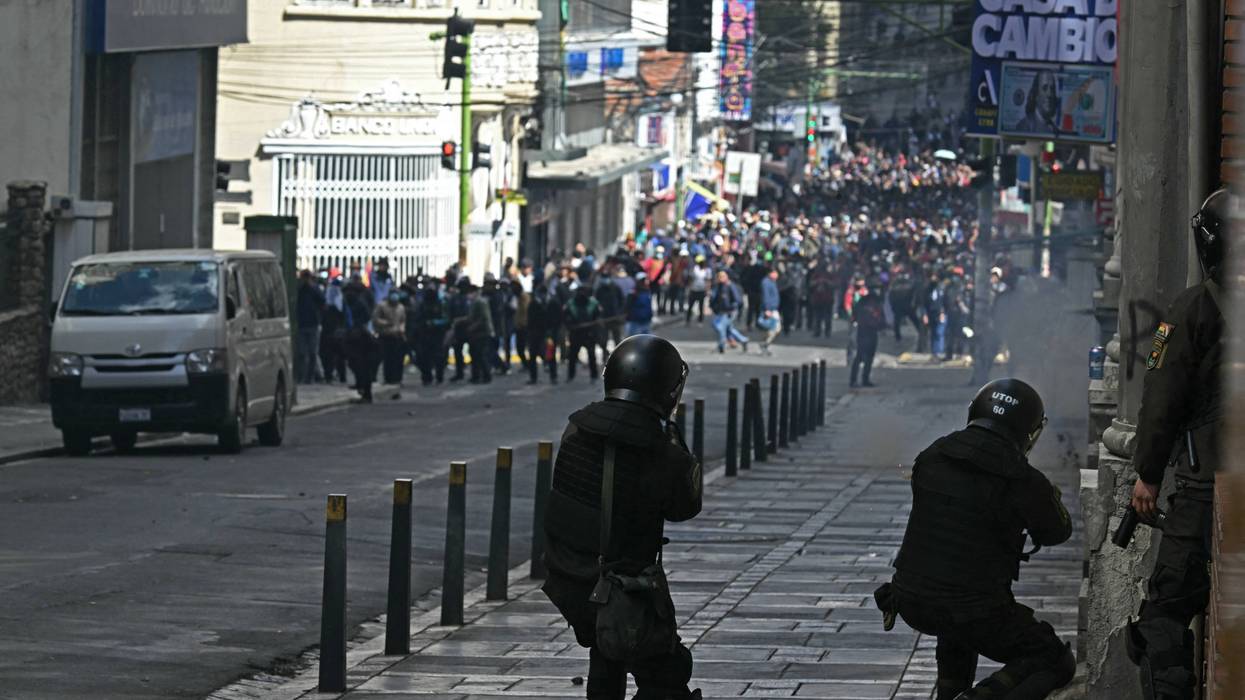
To understand why Bolivia is on the brink, we must understand a fundamental betrayal of the people by their political representatives.
For over six weeks now, Bolivia has been engulfed in a national revolt. What started as sectoral demands over public employee salaries, fuel subsidies, and land rights has metastasized into a full-throated cry for the resignation of Trump-aligned President Rodrigo Paz. The country is paralyzed by more than 100 road blockades that have severed the capital, La Paz, from the rest of the nation, cutting off food, fuel, and medicine. Ten people are dead, dozens more injured, and over 300 have been arrested. Journalists and activists have also been caught in the violence.
The government’s response has been a schizophrenic mix of hollow calls for peaceful dialogue and negotiation, and brutal repression. Paz has signed deals with some social sectors, and organized a Social Economic Council, while jailing the leaders of the groups he’s “negotiating” with.
Thousands of militarized police have been deployed, using tear gas, rubber bullets, and, according to persistent rumors the government denies, live ammunition. Leaders of various protest groups, including the Bolivian Workers’ Central (COB), the largest trade union in the country, and radical Aymara defense force Ponchos Rojos, have been jailed. The Wiphala, the sacred flag of Bolivia’s Indigenous majority, has been burned in public squares by counterprotesters while the state itself no longer displays it publicly.
As Argentinian President Javier Milei’s expatriated adviser Fernando Cerimedo put it, this government is fighting against “dirty leftists.” Cerimedo was reportedly crucial in deporting a human rights mission from Argentina this week. Protest leaders and politicians have been kidnapped in broad daylight, including one senator with the Movement Toward Socialism, taken by police in plain clothes.
When a government disregards the voting blocs that got it into office, blocks every avenue for democratic change, criminalizes dissent, and rules on behalf of a foreign-aligned racist elite, it leaves the people few political options for engagement and representation.
Far-right groups and “The Resistance” have re-popularized the slogan, “Make the homeland, kill an indian,” which had become a popular rallying cry in the 2019 coup. Those same far-right groups were also seen in San Julian, near Santa Cruz, using illegal weapons and explosives against protesters, alongside state security forces. The Paz government has not rebuked any of these figures, statements, or actions, and instead cracked down further on the left.
Internationally, the reaction maps perfectly onto the new ideological conflict dividing Latin America. The right-wing autocrats, from Argentina’s Milei and Venezuela’s Maria Corina Machado to the Trump administration, have been unequivocal. They have labeled the protesters “narco-terrorists” threatening democracy itself, with the government applauding their solidarity.
US Secretary of War Pete Hegseth declared that the US “will reject all attempts to overthrow the legitimate government.” President Donald Trump himself expressed solidarity for Paz at the Shield of the Americas, held at his very own Trump Resort in Miami. This support has emboldened the Bolivian far-right, which is openly pushing for a full “state of exception,” a euphemism for martial law that has been developed by various autocrats including Ecuador’s Daniel Noboa and El Salvador’s Nayib Bukele, to crush democracy and opposition in the name of a “war on drugs.”
That scenario is likely for Bolivia, too, where protesters labeled “narco-terrorists” would be the subject of that war on drugs. Paz and the government coalition in the Plurinational Assembly have already passed and signed a law modifying the state of exception law. The old law was passed in 2020, after the pro-US unelected government of Jeanine Anez committed multiple massacres against opposition in that state of exception, to try to tamper state abuses.
Now, many safeguards have been removed, with the law giving carte blanche to state agents to kill, seize property, shut down telecommunications, and suspend political rights. The president has also declared a 90-day humanitarian emergency, which allowed for the deployment of militarized forces in El Alto, leading to the death of one protester and multiple injuries.
To understand why Bolivia is on the brink, we must understand a fundamental betrayal of the people by their political representatives. Rodrigo Paz ran under the banner of the Christian Democratic Party (PDC), a big-tent coalition with Indigenous currents previously aligned with the left, populist anti-corruption crusaders, and hard-right figures from the Santa Cruz elite. Voters, exhausted by the chronic crises of the Luis Arce administration and facing a nightmare choice against the far-right former president Jorge “Tuto” Quiroga (who was vice president to former pro-US dictator, Hugo Banzer), held their noses and voted for what they believed was the least destructive option.
They were promised “Capitalism for Everyone,” a softer, more competent alternative that would see public programs and social rights protected while opening up the country further.
Instead, Paz’s first months have been a masterclass in neoliberal shock therapy, looking to privatize energy, cutting public services and subsidies, restructuring debt with American financial institutions, and proposing to reform Indigenous land tenure, which communities correctly interpreted as a prelude to opening communal lands to private extraction. Key subsidies ensuring many citizens’ very survival, including fuel and food subsidies, have also been cut, jump kicking the cost of living for the most vulnerable.
The result is the political destitution of the Bolivian left, which represents the vast majority of the country. The old vehicle, Evo Morales’ MAS, is decapitated and adrift. Evo himself is practically in exile with an arrest warrant hanging over his head. His protege, Andronico Rodriguez, has been a ghost in public life, and his Alianza Popular has not been able to build much momentum.
Former President Luis Arce, Evo’s former minister and now sworn enemy, is in prison, in preventive detention. Other socialist leaders, politicians, and activists have been jailed, while the cabinet has ironically vowed to continue crackdowns “against lawfare.”
The Paz government has been jailing the key leaders of the socialist era while releasing convicted terrorists and far-right racists linked to the 2019 coup government and its subsequent massacres, like Jeanine Áñez, Luis Fernando Camacho, and leaders of far-right youth groups deemed the equivalent of the Proud Boys. It has also brought back the Drug Enforcement Administration, which had been kicked out by the Morales government over alleged election interference.
Despite running as the left’s only option, and as the counter to the right, since taking office, Paz’s policy proposals, rhetoric, and platform have mostly been directed at the white, Christian, conservative elite in the tropics, rather than to the Indigenous majority in the Altiplano.
This betrayal is creating a crisis of representation in a country where trust in institutions and democracy is already very low—and in the poorest country in South America. Most of the activists in the streets voted for Paz, while many unions endorsed the PDC, but are now expressing their discontent at their interests being disregarded. One protester in La Paz told me, “We have to remind these oligarchs who the Casa Grande del Pueblo is for, and reclaim it.”
The government and its allies have worked overtime to criminalize the rage that has come from this betrayal. In the face of this repression, some groups have decided to fight fire with fire, arguing Paz’s repression has made negotiation unviable. The COB itself said it would be willing to do anything, “as in a war,” and has vowed to “increase radical pressure measures.”
As Quya Reyna, a writer, activist, and social leader argued in a manifesto for the protest movements, repression will only bring further suffering, and, if the government refuses to negotiate, this is the social cost it will bring. Another manifesto signed by some indigeneist protest groups now explicitly endorses armed resistance.
When a government disregards the voting blocs that got it into office, blocks every avenue for democratic change, criminalizes dissent, and rules on behalf of a foreign-aligned racist elite, it leaves the people few political options for engagement and representation.
The state is using its monopoly on force not to protect its citizens, but to protect the privileges of the few against the many. It cannot, then, be surprised at the rage it engenders by doing so. As Reyna added, “if you want peace, listen to the people and negotiate, don’t repress.”
Faced with this brick wall, the social movements are left with little choice but to play outside the system. In the long term, this is a terrible development for peaceful, stable, social democracy, as it may create a vicious cycle between faith in political institutions, and political violence. As one piece of graffiti scrawled in La Paz by protesters declares, “Let there be no peace for the oligarchies if there is no bread for the majority.”
Vice President Edmand Lara, a populist former police officer who was crucial to Paz’s election, has broken dramatically with the president, condemning the repression and inviting the Inter-American Commission on Human Rights to monitor the country.
The vice president has also denounced the cabinet’s own links to drug trafficking, though he has called for further crackdowns on crime, and Evo Morales. On the right, former president Tuto Quiroga, billionaire Marcelo Claure, Áñez allies, and others have pushed for Paz to step aside and allow security forces to rule, through a state of exception (essentially, martial law), while continuing economic “liberalization.”
Some reports have also indicated the military is interested in pushing Paz out, while embracing further right-wing figures. To satisfy them, Paz has given even more power to the hardliners like Ernesto Justiniano, the anti-drug czar, now minister of defense, while further alienating social sectors and moderate progressives within his cabinet, like José Luis Lupo, Lara, and billionaire Samuel Doria Medina, all of whom have urged for dialogue over repression.
This government is eating itself, while Bolivian democracy has perhaps never looked weaker.
The hard-fought promise of the Plurinational State, a multiracial social democracy with strong rights and constitutional protections, has been hollowed out by a new form of external rule for the elites, far-right racists, foreign states, and the security state. The majorities, meanwhile, have felt betrayed, and are using every means at their disposal to regain representation.
That popular movement now believes the only way forward is a fresh start—calling for Paz to resign, and for fresh elections. Until then, they will continue blocking the country, and forcing the government’s hands, to remind them of their power. Though, the right will continue blaming “dirty leftists” and “indians” for “destroying the country” and “stopping progress,” instead of blaming themselves.
To move forward, the country's leaders will have to realize that, whether in a democracy or dictatorship, they will have to govern with, and for, the Indigenous majorities, not without and against them.
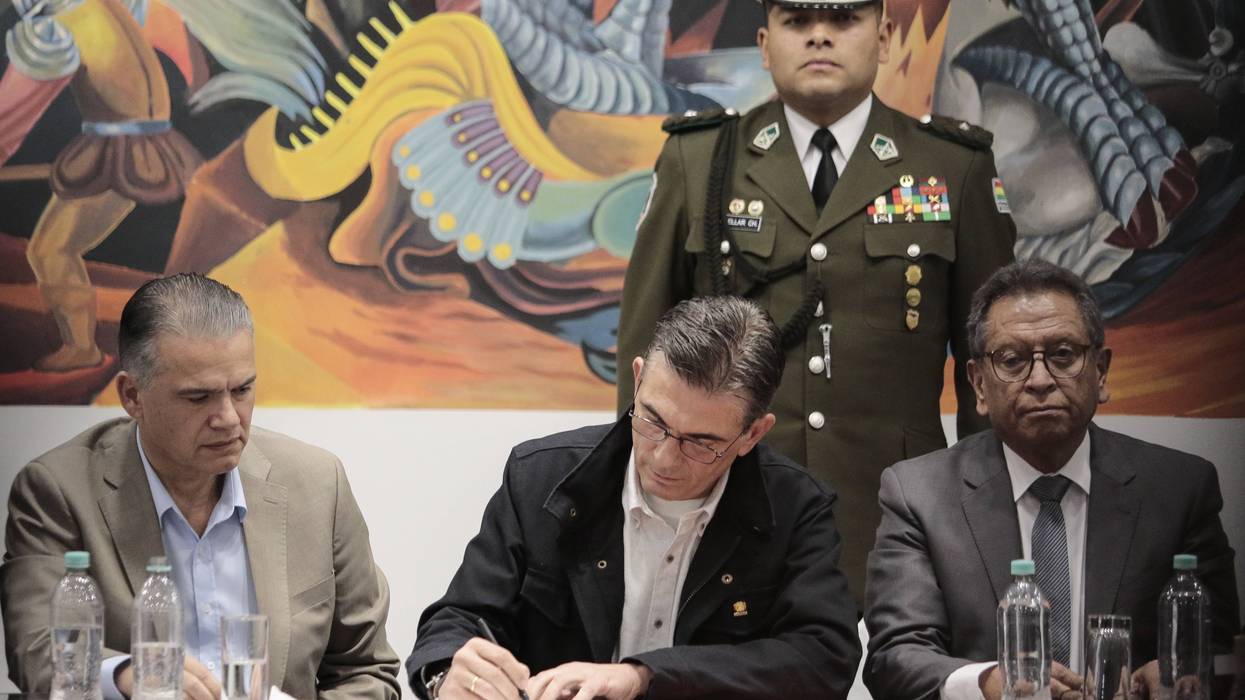
US Secretary of Defense Pete Hegseth linked "narco-terrorism," a top target of the Trump administration, to Bolivia's ongoing protests last week.
Days after the Trump administration blamed "narco-terrorists" for ongoing anti-government protests in Bolivia, US-backed President Rodrigo Paz adopted the term in a statement Monday as he signed legislation that could clear the way for his administration to impose a state of emergency—allowing the military to take action against the demonstrations and suspending constitutional rights across the South American country.
"Our security is put at risk when narco‑terrorism, and the priorities of certain actors, are not aligned with our democracy, our Constitution," Paz said at a signing ceremony. "They put their own interests above those of Bolivian society."
The president warned that the protest organizers' "days are numbered."
Local journalist Joseph Bouchard noted that Paz did not provide any evidence that the dozens of roadblocks that have been erected in Bolivia and the marches and other protests that have been held in cities including La Paz and El Alto are in any way connected to drug trafficking or "narco-terrorism." The government of the Santa Cruz department, the largest of nine constituent departments in Bolivia, also used the term "narcoguerrillas" to describe protest organizers.
Paz signed the legislation into law weeks after the Bolivian Chamber of Senators overturned a law that imposed strict limits on how the government can declare a state of emergency in the country. The limitations included ensuring that certain rights could not be suspended under a state of exception and making the president criminally liable for exceeding the law’s parameters.
On Sunday the legislature passed a new law clearing the way for Paz to declare a state of emergency and allow the military to deploy to clear about 90 blockades and other protests.
The demonstrations have included a 683-mile march in May from the northern territories to La Paz, with Indigenous representatives, teachers, mining unions, and other labor federations among those protesting low wages, privatization, and Paz's decision to end a fuel subsidy after he became president last November. The subsidy had been crucial for working people, organizers say. Some groups are calling for Paz's resignation.
According to The Associated Press and other outlets, the road blockades have disrupted deliveries of food, fuel, and medical supplies.
Before Paz signed the law on Monday, the country's public prosecutor charged a leader of the main labor federation with "terrorism" for his role in leading the demonstrations.
The independent public ombudsman said over the weekend that 10 people have died as a result of the blockades, 37 people have been injured, and 365 arrests have been made from May 1-June 2. The government has said seven of the deaths resulted from a lack of medical attention, but they are still being investigated.
Last week, US Secretary of Defense Pete Hegseth said on social media that the US government and military would “reject all attempts to overthrow the legitimate government” of Paz.
“The United States is watching. Bolivia must not allow itself to fall prey to the old status quo of narco-terrorist dominance in the region,” Hegseth added.
The Trump administration has also claimed to be fighting "narco-terrorism" as it has killed more than 200 people in boat bombings in the Caribbean and eastern Pacific Ocean, and charged Venezuelan President Nicolás Maduro with drug trafficking after the US military invaded Venezuela and abducted the president in January.
In March, residents of a farming town in Ecuador described an "ambush" by Ecuadorian and American forces who had attacked the area in what the country's right-wing president, Daniel Noboa, called an operation to take down “a training ground for drug traffickers."
The farmers said the town was a "livestock area" with no drug trafficking activity taking place.
Bouchard noted that before signing the law regarding the declaration of a state of emergency, Paz thanked Hegseth for his "support for democracy."
"I really don't know how anyone could take any of this seriously," said Bouchard, "after reading for three seconds about the Trump administration and the history of the US in Bolivia/Latin America."
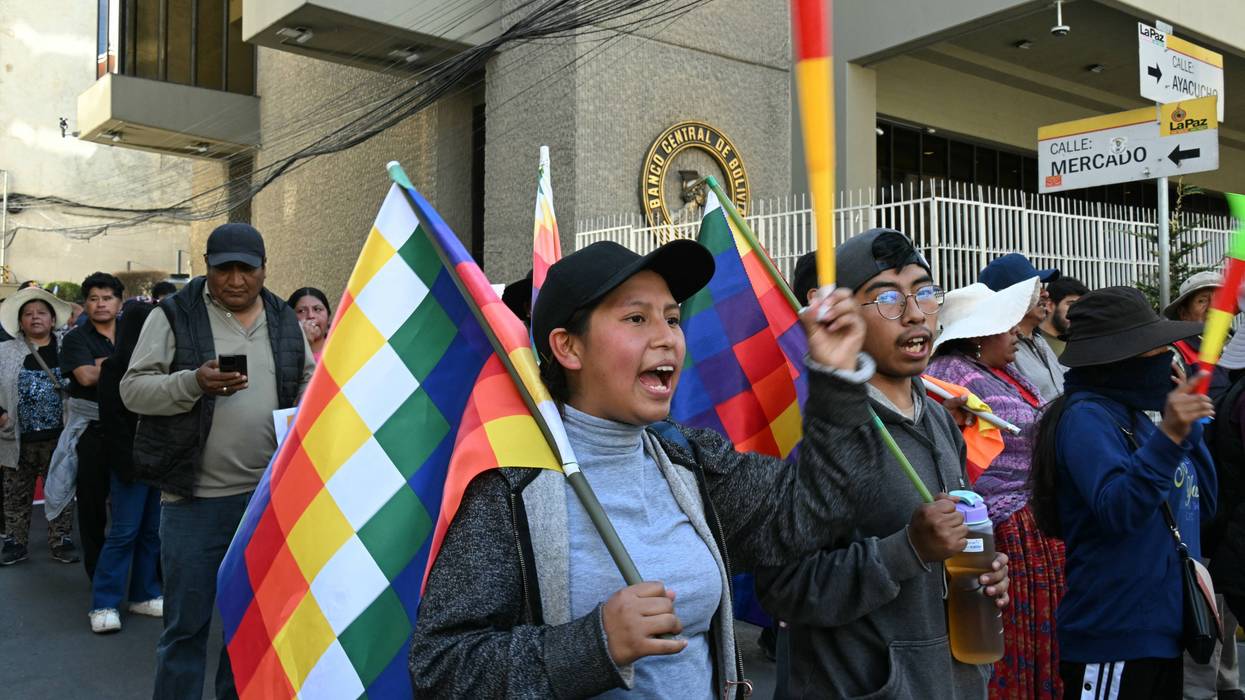
"They call us all bandits and thugs," said protesters, who have been met with a police crackdown. "We are democracy."
Bolivian President Rodrigo Paz, who is facing calls for his resignation as Indigenous and labor organizers lead protests across the country, could declare a "state of exception"—described by local reporters as "essentially martial law"—as soon as Monday night after the country's Senate overwhelmingly voted to overturn a law regulating the government's ability to crack down on protests.
According to Bolivian reports, the Chamber of Senators on Sunday overturned Law 1341, which since 2020 had imposed strict time limits on emergency measures, ensured certain violable rights could not be suspended under a state of exception, required legislative oversight, and made the president criminally liable for exceeding the law's perimeters.
"Abrogating Law 1341 does not remove the state of exception from Bolivia’s legal architecture," according to The Rio Times. "It removes the apparatus that prevented that constitutional clause from being exercised at the executive’s sole discretion."
Joseph Bouchard, who has reported for Drop Site News and The Intercept from Latin America, said far-right groups linked to the 2019 coup in Bolivia have demanded "a return to martial law, to use lethal force against opposition with impunity, and crack down on opposition as much as possible."
"Many of these groups are openly fascist and white supremacist," said Bouchard.
The law was overturned about three weeks into nationwide protests against Paz, who took office about six months ago. Protesters allied with former President Evo Morales have expressed anger over the administration's decision to end a fuel subsidy that was essential for working people amid an economic crisis. The demonstrators—comprised of a broad coalition which includes Indigenous groups, labor unions, and farmworkers—have demanded higher wages and an end to privatization and the broader neoliberal project under Paz.
The protests have been met with a crackdown by police, in La Paz and at the sites of dozens of road blockades around the country.
Last week, the country's public prosecutor issued arrest warrants for at least two organizers, including Mario Argollo, executive secretary of the top Bolivian labor union, Central Obrera Boliviana (COB).
On Monday, TeleSUR reported that COB refused to engage in talks with Paz's government until the charges against Argollo are dropped.
Bouchard reported that if Paz's government implements a state of exception, "the measures would mean security forces could arrest anyone, for any reason, and use extraordinary measures against all opposition."
The overturning of Law 1341 struck down limits on "the use of lethal force by the security forces," he said.
Only three senators aligned with Vice President Edmand Lara voted against repealing the law.
According to The Rio Times, Lara "has been politically distancing himself from Paz almost since inauguration."
"No measure can stand above human life," said Lara, expressing "profound concern and indignation" over the Senate vote.

The leader of the country's main labor federation said officials were responding to protesters who have marched hundreds of miles in recent days with "militarization and repression instead of listening to the people."
A leader of Bolivia's main labor federation, the Bolivian Workers' Union, said late Monday that the country's public prosecutor is "trying to silence" mass protests that have included Indigenous communities, miners, peasants, and teachers in recent days, as the government issued arrest warrants for labor and grassroots organizers.
TeleSUR reported that State Attorney General Roger Mariaca confirmed his office was charging Mario Argollo, executive secretary of the union, known in Spanish as Central Obrera Boliviana (COB), with public instigation to commit crimes and terrorism.
“They will not subdue us in the struggle we have undertaken," Argollo said in a statement. "They are trying to silence us as leaders with popular actions and criminal charges."
Drop Site News also reported that the public prosecutor issued an arrest order targeting Justino Apaza Callisaya, a leader of the Federation of Neighborhood Councils of La Paz (FEJUVE), "an influential grassroots organization tied to urban protest movements and labor mobilizations."
The office is also reportedly investigating "several individuals" following COB's declaration of a general strike on May 1.
"The accused are being investigated for extremely serious offenses including: public incitement to commit crimes, criminal association, terrorism, financing terrorism, attacks on transportation security, [and] attacks on public services," reported Drop Site.
The mass mobilization has included dozens of road blockades across the country as the union and other groups have demanded the resignation of President Rodrigo Paz, whose administration ended a fuel subsidy amid an economic crisis; higher wages; and an end to privatization, including through Law 1720, which opponents say would allow the transfer of Indigenous and peasant land to corporations.
Protesters have spent days marching from their communities to La Paz, where thousands were met by riot police armed with tear gas canisters on Monday.
Al Jazeera reported that some protesters brandished "dynamite sticks and slingshots" as they arrived in the capital city.
An unspecified number of protesters were injured Monday as the government deployed the police and the military to try to break the road blockades, Al Jazeera reported. TeleSUR said that at least four demonstrators were reportedly killed. About 90 arrests were made.
The US State Department said Sunday that it supported Paz's efforts to "restore order for the peace, security, and stability of the Bolivian people."
COB said the government was responding with "militarization and repression instead of listening to the people."
"History will remember who defended the citizenry and who turned their backs. No force should be above the people or their rights," said COB.
The arrest documents and government investigations, said Drop Site, showed that "the Bolivian government is escalating its response to the protests by describing parts of the strike movement not simply as civil unrest, but as potential terrorism and organized criminal activity."
A student leader at the Public University of El Alto told Drop Site, "No matter what the Paz government attempts to do, repress the protesters or sanction us as terrorists... we will continue to uphold the sovereignty and rights of our peoples."
A former Altiplano mayor and Aymara social leader was direct about the betrayal: "This government was clearly elected with a mandate from the social movements and from indigenous peoples — who have been stabbed in the back the minute they entered office. They have attempted to… pic.twitter.com/tS80WqG1Zi
— Drop Site (@DropSiteNews) May 18, 2026
An Indigenous leader told the outlet that Paz's government "was clearly elected with a mandate from the social movements and from indigenous peoples—who have been stabbed in the back the minute they entered office. They have attempted to use the state to go after the very forces that got them to power."
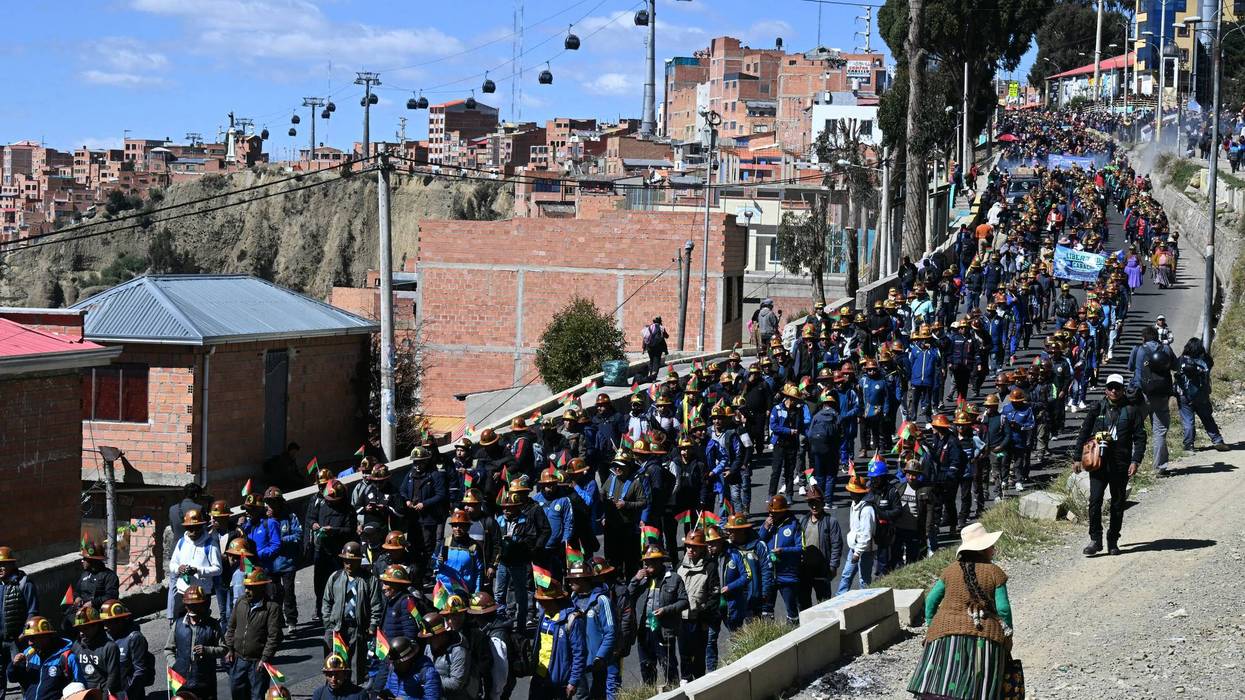
Peasants' unions and other groups are protesting a law that they say would allow corporate control of small farmers' land, as well as fuel shortages and a low minimum wage.
An economic crisis and the repeal of a crucial gas subsidy, fuel shortages, and a law that opponents say will allow the encroachment of corporate interests on Indigenous and peasant lands are among the central concerns of thousands of miners and other workers who have joined a march from Bolivia's northern Amazon territories to La Paz, with a major miners union in the capital joining the protest on Wednesday.
The Federation of Mining Cooperatives of La Paz and an influential peasant union met land workers and Indigenous representatives this week as they arrived in the capital after having marched 1,100 kilometers (683 miles) "for over 20 days from the tropics into freezing high-altitude terrain, many wearing nothing more substantial on their feet than plastic sandals," as Olivia Arigho-Stiles reported at Jacobin.
At least 50 marchers required medical treatment last week for exhaustion, dehydration, and other ailments, but the unions are showing no sign of ending the general strike that was begun by Bolivian Workers’ Central (COB), with the mass mobilization also including at least 70 road blockades around the country, according to the Bolivia Highway Association.
TeleSUR reported that the entry of the miners union signified "a substantial increase in pressure" on right-wing President Rodrigo Paz, whose resignation some workers' organizations are calling for.
The Federation of Mining Cooperatives joined the ongoing marches and protests after Paz failed to attend a scheduled dialogue. Miners have been alarmed by the scarcity of fuel, "a dire shortage of essential explosive material, and significant delays in the liberation of new areas designated for mining exploitation," reported TeleSUR.
The broader protests began in response to stagnant, low wages as well as Law 1720, which the government has claimed will benefit small-scale farmers by allowing them to obtain mortgages after converting their smallholdings into "medium-size" businesses.
But Roger Adan Chambi, an Aymara lawyer and specialist in Indigenous land law, told Jacobin that the measure was passed "without consulting the sectors it was supposed to benefit (peasants and small producers), jeopardizing legal security and constitutional guarantees regarding land ownership."
“Far from being an opportunity for small producers to access credit, this law weakens the property rights of peasants and Indigenous communities, especially those resisting on the agricultural frontier,” Chambi said. “Structural insecurity and the lack of basic services will, in the future, force them to mortgage or sell their plots, facilitating dispossession and the transfer of land to corporations.”
Oscar Cardoza, a peasant union leader and a representative of the marchers, declared at a public gathering in La Paz this week: “Our life is collective, not individual. The land must be respected; it’s not for sale.”
Al Jazeera reported that the end of a fuel subsidy, which was cut after Paz took office last year during what he called an "economic, financial, energy, and social emergency," also pushed COB to issue the call for a general strike.
The subsidy had been crucial for working Bolivians, and the cut has made quality fuel increasingly inaccessible.
"Starting today, a general, indefinite, and active strike is declared, until the government understands the people’s demands,” COB secretary-general Mario Argollo told a group of 1,000 supporters on May 1.
The union is also calling for a 20% increase to the nation’s minimum wage, which currently sits at 3,300 bolivianos ($477.71) per month.
There is now a coordinated, well-funded network, backed by big capital, big business, and international financial institutions, working to bring in a new conservative government in Bolivia.
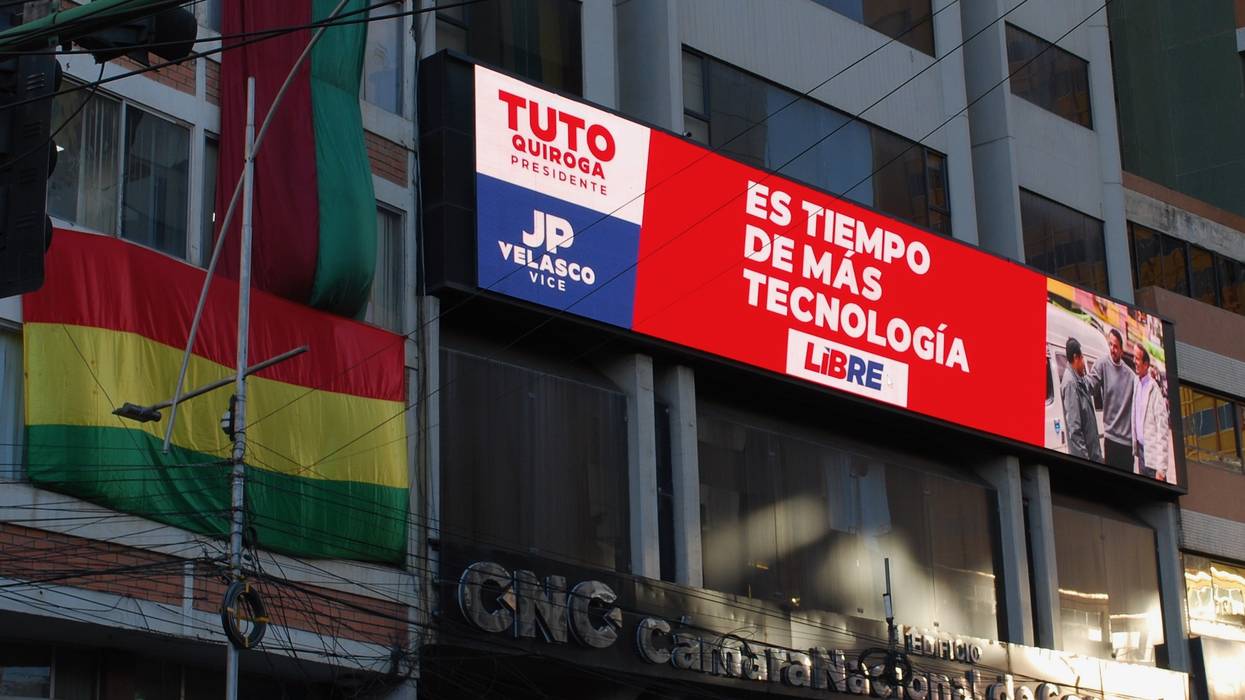
Ahead of this Sunday’s presidential election in Bolivia, the latest polling from Ipsos Ciesmori, released last weekend, reveals a close horserace in Bolivia’s presidential race between perennial centrist candidate and business magnate Samuel Doria Medina (21.2%), former conservative and Banzerite President Tuto Quiroga (20%), as well as Manfred Reyes Villa, Cochabamba mayor, retired Army captain, and pro-Banzer right-winger, at 7.7%.
The two left-wing MAS-affiliated candidates, Senate Leader Andrónico Rodríguez and Government Minister Eduardo del Castillo, both poll below 10% despite the MAS leading in voting intentions early on in the cycle. Current President Luis Arce is not running due to his administration being marred by continuous crises, scandals, and unpopularity.
The unpopularity facing the MAS and the left, particularly amid various crises—inflationary, political, judicial, energy, and financial—has created the possibility that the right could win an election for the first time in more than 20 years. The “nill-blank-undecided” camp stands at 33%, with most of them being disaffected leftist voters; most prominently, supporters of Evo Morales, who has been barred from running and wanted on pedophilia charges.
The race is likely to head to a second round in late October if no candidate secures 40% of the vote and a 10% lead over the next competitor. As things stand, two right-of-center candidates, Doria Medina and Quiroga, are likely to advance, a blow to the left’s progressive agenda. It would be the first second-round runoff in Bolivia’s history.
A right-wing government today would mean more poverty, more austerity, more militarism (and a likely return to heavy US influence), and less representation for Indigenous peoples and women.
The socialist movement’s downfall has been the right’s elation, and they have not been able to contain it, perhaps even overplaying their hand right before Sunday’s election.
Marcelo Claure, Bolivia’s richest man and loud financial backer of multi-millionaire Samuel Doria Medina, has declared Bolivia will soon be “free from socialism and communism” and says he looks forward to returning to the country under a “new government.” Claure, who lives between New York and Miami, backs a neoliberal, private-sector-focused corporate economic plan that suspiciously mirrors Doria Medina’s, calling for the privatization of key industries, inviting international financial institutions like the International Monetary Fund, and relying on “public-private partnerships.” Much of Doria Medina’s financing has also come from his personal fortune, ironically earned through state contracts.
Jaime Dunn, the right-wing libertarian Wall Street tycoon who dropped out of the race after claiming to be the “most talked about politician in Bolivia,” has also been actively lobbying for a right-wing government. Dunn has said that “Bolivia is a country of owners, not proletarians,” claiming both Doria Medina and Quiroga have “copied [his] economic plans.” He has celebrated what he calls “an end to socialism and authoritarianism” while proposing to dismantle all government industries, shut down the tax service, cut taxes for the wealthy, and end fuel and other subsidies, policies that would trigger a tsunami of chaos and suffering across the country.
Dunn openly praises Argentine President Javier Milei’s “chainsaw” cuts, which have already pushed more than half of Argentines into poverty; left thousands more living on the street; and sold the country off to crypto scammers, big exporters, and foreign investors.
The financier class has made its preferences crystal clear. In a Reuters piece, foreign investors expressed elation at the prospect of a new right-wing government, saying the election was “fueled by investors’ hopes that a political U-turn could help shore up the country’s fragile economy and pave the way for an IMF program.”
Carlos de Sousa, a debt strategist at Vontobel, said a change in government would be “quite positive for the economy.” Ajata Mediratta, a partner at Greylock Capital, described a non-leftist government as one that would bring about “liberalizing reforms” which “will eventually allow the economy to flourish” and “unshackle the economy.”
That’s a hell of a way to say people are going to suffer immensely under austerity and policies designed to enrich the wealthy and foreign capital.
Mainstream media, particularly in the US, has lavished coverage on the right-wing frontrunners, presenting their ideas and personalities in a vacuum of “neutrality” without acknowledging their history. This includes their roles in the Banzer dictatorship, their role in selling Bolivia’s energy and commercial sectors to foreign interests in the 1990s and early 2000s (leading to the Cochabamba Water War and the rise of the MAS), and their track record with IMF-backed austerity programs that brought very mixed results despite the costs.
A right-wing government today would mean more poverty, more austerity, more militarism (and a likely return to heavy US influence), and less representation for Indigenous peoples and women.
Inside Bolivia, the corporate media ecosystem has spent years boosting conservative candidates. Most outlets in the country are private, running cover, and buying skewed polls for their preferred right-wing hopefuls. These include Red Uno, Bolivia TV, Unitel, ERBOL, El Deber, the two Catholic Fides networks, and La Brújula Digital. Página Siete, Bolivia’s only independent media outlet, was closed through government pressure, and has left a wide hole in the country’s press freedom.
Affiliated TikTok, X, and Facebook accounts have also been busy spreading misinformation in their favor, publishing manipulated or outright false polls bought by candidates and running disproportionate favorable coverage of conservatives. Negative coverage of MAS and the left, with overwhelmingly positive or neutral coverage of the right, dominates their reporting.
Even Evo Morales has been running fake polls to claim the election is rigged against him.
There is now a coordinated, well-funded network, backed by big capital, big business, and international financial institutions, working to bring in a new conservative government in Bolivia. That would mean dismantling much of the progress achieved by the MAS and the left over the past 20 years.
The MAS, though highly imperfect (we can talk about crisis mismanagement, corruption, embracing of dictators, and centralization of power forever), has made significant progress on various and significant fronts. That includes drastically reducing poverty and extreme poverty by more than half; cutting child hunger; expanding access to public education; creating new public universities; defending water rights; more than quadrupling gross domestic product per capita after decades of stagnation; getting Bolivia to a low and stable unemployment rate; successfully nationalizing key industries; expanding public healthcare through SUS; and giving Indigenous peoples, women, and other marginalized groups meaningful political representation under a Plurinational government.
If the polls are right, that legacy could soon be gone, making way for austerity and widespread suffering amid historic crises.
This revolutionary legal framework moves beyond traditional environmental laws and acknowledges that Nature itself has inherent rights, much like human beings and corporations.
For centuries, legal systems around the world have treated Nature as property—something to be owned, exploited, and managed for human benefit. This anthropocentric perspective has led to widespread environmental degradation, climate change, and biodiversity loss.
However, a revolutionary legal framework is emerging: the recognition of the Rights of Nature. This paradigm shift moves beyond traditional environmental laws and acknowledges that Nature itself has inherent rights, much like human beings and corporations.
The Rights of Nature concept is based on the idea that ecosystems and species are not mere objects but living entities with their own inherent rights to exist, thrive, and evolve. This legal framework challenges the prevailing notion that Nature is merely a resource for human use and instead recognizes its intrinsic value. By granting legal personhood to rivers, forests, and other natural entities, governments and courts can ensure that these ecosystems have standing in legal proceedings.
By shifting from an exploitative to a respectful relationship with the natural world, humanity can ensure a healthier planet for future generations.
The movement gained global attention when Ecuador became the first country to enshrine the Rights of Nature in its Constitution in 2008. The document states that Nature, or "Pachamama," has the right to exist and regenerate. Similarly, Bolivia passed the Law of Mother Earth in 2010, reinforcing Indigenous worldviews that see Nature as a living system with rights. Since then, countries such as New Zealand, Panama, India, and Colombia have also granted legal rights to specific ecosystems, setting legal precedents that continue to inspire the global community.
Why should we grant rights to Nature, you might ask? Traditional environmental laws often fail to prevent ecological destruction because they are based on regulation rather than protection. Corporations and governments can exploit loopholes, pay fines, or simply weigh the financial cost of pollution against profit margins. The Rights of Nature framework, however, fundamentally shifts the legal system from one of ownership to one of stewardship.
One of the most compelling cases for this approach is the Whanganui River in New Zealand. In 2017, the New Zealand government recognized the river as a legal entity, granting it the same rights and responsibilities as a person. This decision was made in collaboration with the Whanganui iwi, the Indigenous Māori people who have long regarded the river as an ancestor. Now, legal guardians, including representatives from both the government and the Māori community, speak on behalf of the river in legal matters. This recognition has already influenced policy decisions related to conservation and sustainable water management. Similarly, in 2017, the High Court of Uttarakhand in India granted legal rights to the Ganges and Yamuna rivers, acknowledging their sacred and ecological importance. Although this ruling faced legal challenges, it sparked important discussions about environmental governance and the need for stronger protections for vital ecosystems.
Despite these victories, the implementation of the Rights of Nature faces legal, political, and economic challenges. Many governments and corporations resist this shift, fearing restrictions on industrial activities. Additionally, enforcement mechanisms vary widely, and some legal rulings remain symbolic without proper institutional backing. However, the movement continues to gain momentum. Local communities, Indigenous groups, and environmental activists are advocating for the recognition of Nature's rights as a crucial tool for fighting climate change and biodiversity loss. In the United States, cities such as Pittsburgh and Toledo have passed local ordinances recognizing the rights of ecosystems, empowering communities to challenge environmental destruction more effectively.
Ecuador has witnessed several groundbreaking legal victories that affirm Nature's rights. Among these, the 2021 Constitutional Court ruling on Los Cedros Reserve was historic: The court halted mining exploration in this biodiversity hotspot, recognizing that the rights of the forest and its species, including endangered monkeys and orchids, outweighed extractive interests. Similarly, in Intag, a region long defended by local communities, legal actions based on behalf of endangered frogs and the Rights of Nature have helped suspend mining operations that threatened primary cloud forests and rivers vital to both people and ecosystems.
Another notable case is Estrellita, a woolly monkey rescued from illegal trafficking. When authorities attempted to relocate her to a zoo, a judge ruled in favor of her individual rights as part of Nature—marking the first time an animal in Ecuador was granted such recognition. These cases underscore the growing power of constitutional rights when applied to real-life conflicts between conservation and exploitation. They also reflect the tireless advocacy of Indigenous peoples, environmental defenders, and legal experts who are reshaping the legal landscape to center ecological integrity and the interconnectedness of all life.
The Rights of Nature framework is more than just a legal concept—it is a cultural and ethical transformation. By shifting from an exploitative to a respectful relationship with the natural world, humanity can ensure a healthier planet for future generations. As this movement grows, it is essential for policymakers, legal scholars, and citizens alike to support and advance this revolutionary approach to environmental protection.
The Global Alliance for the Rights of Nature (GARN) is a global network that has been at the forefront of the Earth Jurisprudence and Rights of Nature movement for the last 15 years, educating, upholding, and supporting its growth. With over 6,000 allies worldwide, GARN serves as a movement hub, connecting Indigenous leaders, civil society, lawyers, and advocates reshaping environmental governance.
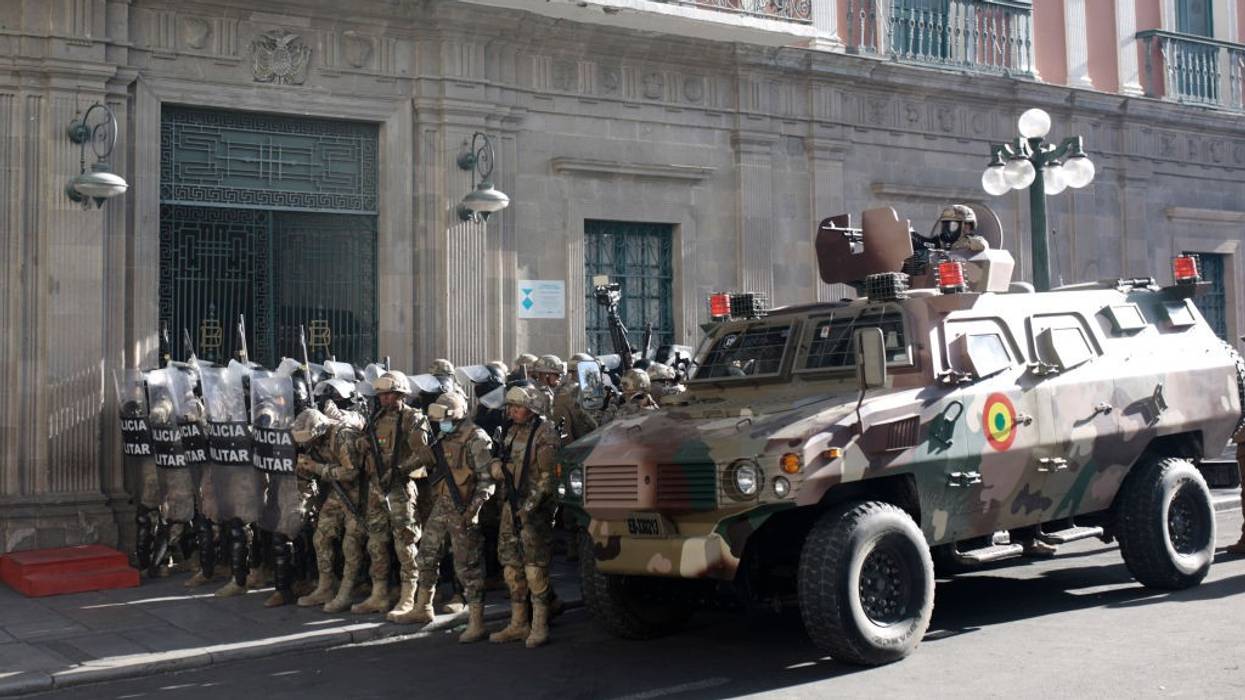
Leftists and political leaders around the world slammed the coup effort as Bolivia's trade union federation called for an emergency mass mobilization and a general strike.
This is a developing story… Please check back for possible updates...
Bolivian President Luis Arce replaced top military leaders on Wednesday in response to an attempted coup d'état in which troops took over Plaza Murillo in La Paz and rammed an armored vehicle into the doors of the presidential palace so soldiers could storm the building.
"We denounce irregular mobilizations of some units of the Bolivian army," Arce, a member of the Movement for Socialism (MAS) party,
said on social media. "Democracy must be respected."
As
The Associated Press reported:
In a video of Arce surrounded by ministers in the palace, he said: "The country is facing an attempted coup d'état. Here we are, firm in Casa Grande, to confront any coup attempt. We need the Bolivian people to organize."
Arce confronted the general commander of the army—Juan José Zúñiga, who appeared to be leading the rebellion—in the palace hallway, as shown on video on Bolivian television. "I am your captain, and I order you to withdraw your soldiers, and I will not allow this insubordination," Arce said.
Zúñiga told local media that "the three chiefs of the armed forces have come to express our dismay. There will be a new Cabinet of ministers, surely things will change, but our country cannot continue like this any longer."
Sharing his demands, Zúñiga said, "Stop destroying, stop impoverishing our country, stop humiliating our army."
The general claimed that the air force, army, and navy were "mobilized" and "the police force is also with us."
Meanwhile, "Arce swore in three new leaders of the armed forces," according to Buenos Aires Herald managing editor Amy Booth. "At the ceremony, army Commander in Chief Wilson Sánchez ordered the forces back to their barracks and at the moment they seem to be listening."
Despite the rift between former Bolivian President Evo Morales, who remains head of MAS, and Arce, who was his finance minister, Bolivia's ex-leader also spoke out against the military action on Wednesday, declaring that "the coup d'état is brewing."
"At this time, personnel from the armed forces and tanks are deployed in Plaza Murillo," Morales said. "They called an emergency meeting at the army general staff in Miraflores at 3:00 pm in combat uniforms. Call on the social movements of the countryside and the city to defend democracy."
After the change in military leaders, Morales—who has denounced his own 2019 ouster as a coup—demanded that "a criminal process" targeting "Zúñiga and his accomplices" begin immediately.
Wednesday evening, Bolivia's attorney general ordered "all legal actions that correspond to the initiation of the criminal investigation against Gen. Juan José Zúñiga and all other participants in the events that occurred," according to Kawsachun News.
The Bolivian Workers' Center (COB), the South American country's trade union federation, had "called for an emergency mass mobilization and a general strike in response to the ongoing coup attempt," Progressive International highlighted on social media.
Progressive International also urged "international attention to these grave violations of Bolivian democracy."
Condemnation of the coup attempt and expressions of solidarity with those opposing it were shared around the world.
"We condemn the attempted coup in Bolivia and send our solidarity to President Luis Arce and his democratically elected government," declared the Peace & Justice Project, founded by Jeremy Corbyn, a member of the U.K. Parliament who used to lead the Labour Party.
European Commission President Ursula von der Leyen said that "I firmly condemn the attempts to overthrow the democratically elected government of Bolivia. The European Union stands by democracies. We express our strong support for the constitutional order and rule of law in Bolivia."
U.S. Congresswoman Ilhan Omar (D-Minn.) emphasized that she is "standing in solidarity with the Bolivian people as they fight to preserve their democracy," and "the coup attempt must be unequivocally condemned."
The Democratic Socialists of America's International Committee wrote on social media that "we extend our solidarity to the Bolivian people during this imminent emergency."
Morales said later Wednesday that "we appreciate all the expressions of solidarity and support for Bolivian democracy expressed by presidents, political and social leaders of the world. We are convinced that democracy is the only way to resolve any difference and that institutions and the rule of law must be respected. We reiterate the call for all those involved in this riot to be arrested and tried."
They can see with fresh eyes the deeper democratic possibilities that many are seeking, an able government, a more responsive government.
When Americans think about Latin American politics the cliché images that may come to mind are of military coups, tanks rolling, and generals in sunglasses. If Americans hear news about current Latin American politics it usually will deal with democracies that have died or are under assault, as is the case in Venezuela, Nicaragua, and El Salvador. So informed, many Americans would find the idea that Latin America could teach the U.S. anything positive about democracy to be downright laughable.
But things have changed. Although there remain serious issues for Latin American democracies, it is nonetheless fair to say that most of Latin America is governed by emerging democracies these days.
Think of most democracies around the world as falling basically into one of two categories: old, tight, democracies and young, loose democracies.
Old democracies, especially like that in the United States, have institutions and rules that can make them hardy and more likely to endure, but this very resilience can function to make old democracies highly resistant to much-needed change.
Citizens of old democracies often confuse the elements of their own political system as the very essence and singular definition of democracy. In the U.S. that can mean concluding that a proper democracy must have a house and a senate, four-year presidential terms, a nine-member Supreme Court, along with all the other long-standing aspects of the American political system. To this view, any attempt to modify or update any of the time-honored institutions or customs would mean threating the very foundations of democracy itself.
The implication of this, however, is that old, tight democracies can become burdened with recalcitrant institutions and increasingly problematic political habits. Together these can render old, tight democracies incapable of reforming themselves, powerless to revitalize their democracy. Democracy can become buried under the rumble of centuries-old political deal-making, long-ago compromises of expediency that had only been intended to solve the impasses of those moments in time. In the U.S. this nearly always meant yielding to the demands of slave-holders, and after the Civil War, yielding to the demands of white southern racists seeking to keep Blacks disenfranchised, segregated, and threatened.
The resulting political system in old, tight democracies can become one that is permanently stuck, unable to carry out even the most basic political chores, such as passing a national budget. In this manner, old democracies can be slowly transformed into a democracy in name only, succeeding only in obstructing the democratic will of the majority of the electorate.
In the U.S. ossified institutions and practices–the electoral college; the filibuster rule in the senate; the allocation of senate seats favoring scant rural populations while grossly under-representing urban populations, especially people of color; the lifetime appointments to the Supreme Court without a mandatory retirement age–are not the very definition of democracy. Rather, they are the nation’s greatest hindrances to the realization of full democracy. Exasperated citizens look at this situation and may just opt out, the act of voting seen as at best, a waste of time, at worst, a tacit endorsement of a deeply dysfunctional and undemocratic political system.
But young loose democracies, like those found across Latin America, nearly all dating from the 1980s, are not so encumbered. No weight of long-established traditions stands in the way of change. Young, loose democracies are not nearly as hindered from making the changes that voters seek, steps to make their nation more democratic and governed more ably. These newer democracies are more fluid, the rules of governance more readily malleable. It is realistic in young, loose democracies to think of setting aside a constitution that is just not working and writing a new one, as happened in Ecuador in 2008 or in Bolivia in 2009. Significantly, the rules for approval of these new constitutions were established on the fly, just as they were in the case of the U.S. when it was once a young, loose democracy and was adopting its first and only constitution.
So it is today that these young democracies that can teach old democracies.
They can see with fresh eyes the deeper democratic possibilities that many are seeking, an able government, a more responsive government. What young, loose democracies can most remind us all is that democracy is perhaps our greatest human experiment, but one that must be continually recreated to reflect changing social realities, clearing away the wreckage from the past that can continually frustrate our current democratic aspirations.
Old tight democracies can come unglued in trying to meet the challenge of a novel and serious criminal challenge to the basic survival of democracy. Such a development seemed unthinkable in the U.S. until the coup attempt led by President Trump on January 6th after he lost the 2020 election. As he and others are now being called before the courts to face criminal trials for their actions, some supporters of the former president have seen these steps as illegitimate, the “weaponization of the criminal justice system,” the actions of a “banana republic.” This is a slur that most Latin Americans would have no trouble recognizing.
But Latin America’s democracies today actually provide examples of how to best meet the challenge of effectively holding former and current law-breaking leaders accountable. Former Brazilian president Jair Bolsonaro is now barred from running for office for seven years due to his gross misuse of his official powers, including, among many alleged crimes, fomenting insurrection.
Odebrecht, the giant multinational construction firm, in 2016 admitted in U.S. court to paying out millions in hefty bribes to lawmakers all over the Americas. Nearly all of the many current and former Latin American leaders who took Odebrecht bribes are now either in prison or will soon be. It is precisely because these young democracies are more flexible in their rules, less burdened by the weight of tradition in their democracies, that they able to handle with greater adaptability and success the political stress test that has come up all around the Americas, dealing with a law-breaking current or former leader.
In bringing criminal charges against law-breaking leaders, Latin America is at long last honoring the rule of law, the principle of equality before the courts without exception. Indeed, the presence of an ongoing criminal case of a current or recent political leader should not be seen as evidence of the undermining of democracy, but instead provides proof that a nation is taking necessary if difficult steps to help assure democracy.
In calling former president Trump to account the U.S. is becoming more like Latin America, moving into alignment with hopeful hemispheric political trends. This is a good thing. If the United States is no longer the best example of and inspiration for democracy in the hemisphere, it still could be. One important way to do this would be unafraid to bring an ex-leader to justice.
Latin American nations will think no worse of us for this. In fact, they are getting very good at doing this themselves. The U.S. should look to their example.
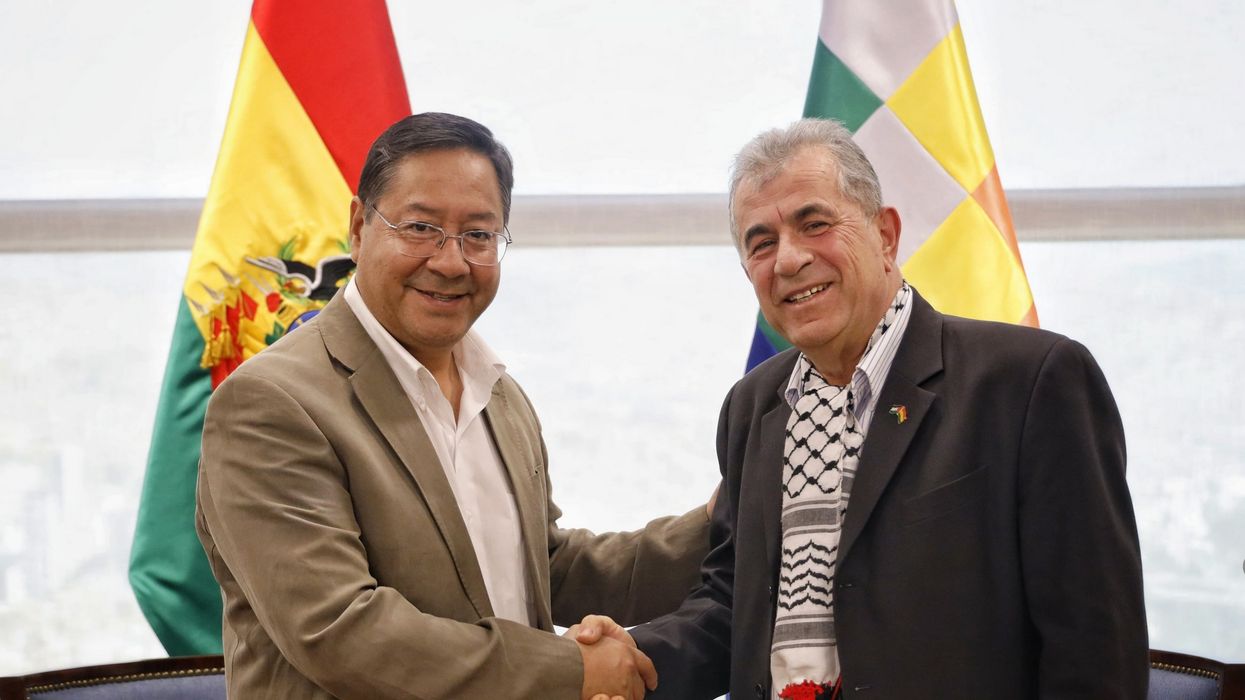
Meanwhile, the leftist leaders of Colombia and Chile and the kingdom of Jordan have recalled their ambassadors to Israel.
Citing "crimes against humanity," Bolivia's socialist administration on Tuesday became the first in the world to completely sever diplomatic relations with Israel over its war on Gaza, while the leftist governments of Chile and Colombia and Jordan's monarchy recalled their ambassadors from Tel Aviv.
"We are sending this official communication to the state of Israel in which, as stated, we make known our decision as the Plurinational State of Bolivia to break diplomatic relations with Israel," Bolivian Minister of the Presidency María Nela Prada told reporters at a Tuesday afternoon press conference.
"We also demand an end to the attacks in the Gaza Strip, which have so far caused thousands of civilian deaths and the forced displacement of Palestinians," she continued.
Prada said the decision by Bolivian President Luis Arce "is consistent with our pacifist policy," adding that her government will pursue "sanctions against those responsible for the war crimes that are being committed against the Palestinian people—not only now, but since many years."
The minister also vowed that Bolivia "will send humanitarian aid to those affected in the Gaza Strip, who are going through a serious health crisis," while calling on "brotherly nations" to "produce collective action" to "avoid genocide" in Gaza.
Speaking after Prada at Tuesday's press conference, Bolivian Deputy Foreign Minister Freddy Mamani said that "within the framework of its principled position of respect for life, Bolivia has decided to break diplomatic relations with Israel, in repudiation and condemnation of the aggressive and disproportionate Israeli military offensive being carried out in the Gaza Strip."
On Monday, Arce urged the United Nations Security Council to "prevent the genocide of the Palestinian people and pave a definitive solution for Palestine to exercise its right to self-determination, to have its own territory without illegal occupations, and fully enjoy the attributes of a free, sovereign, and independent state."
Bolivia's U.N. ambassador, Diego Pary, said Tuesday that his country "will be on the right side of history."
"The only formula that can truly guarantee peace and security in the region is the full recognition of state of Palestine in internationally recognized pre-1967 borders with East Jerusalem as its capital," he informed the U.N. General Assembly.
"Free Palestine is not just a cause of the Palestinian people, but rather a question of global justice and peace," Pary—a Quecha Indigenous leader—continued. "The liberty and dignity of human beings must be respected in all corners of this planet and it is our duty to work together to achieve a future in which Palestine can once and for all be free."
"To our brothers and sisters in Palestine, I reiterate, you are not alone," he added. "Bolivia stands with you, and the peoples of the world are with you."
In 2009, then-Bolivian President Evo Morales—who, like Arce, is a member of the Movement for Socialism party—joined leftist former Venezuelan President Hugo Chávez in breaking off diplomatic relations with Israel over its Operation Cast Lead invasion of Gaza, in which more than 1,400 Palestinians—most of them civilians—and 13 Israelis, almost all soldiers, were killed.
Bolivia and Israel restored relations in 2019 during the administration of right-wing former President Jeanine Áñez, who took power after a U.S.-backed coup.
Israel responded to Bolivia's move with a Foreign Ministry statement condemning "Bolivia's support of terrorism and its submission to the Iranian regime, which attest to the values the government of Bolivia represents."
Leftist Chilean President Gabriel Boric on Tuesday recalled Jorge Carvajal, his country's ambassador to Israel, "given the unacceptable violations of international humanitarian law that Israel has incurred in the Gaza Strip."
"Chile strongly condemns and observes with great concern that these military operations—which at this point in their development entail collective punishment of the Palestinian civilian population in Gaza—do not respect fundamental norms of international law," he added.
Boric cited the more than 8,000 Palestinians, "mostly women and children," killed by Israeli forces since October 7, when Hamas-led attacks on southern Israel left more than 1,400 people dead and over 200 kidnapped.
The Gaza Health Ministry said Wednesday that at least 8,796 Palestinians—including nearly 2,300 women and over 3,600 children—have been killed in Israeli attacks, while another 23,000 suffered injuries.
Last year, Boric put off accepting new Israeli Ambassador Gil Artzyeli's credentials in response to Israeli occupation forces' killing of Odai Trad Salah, a 17-year-old Palestinian boy, in the West Bank.
Boric also angered many Israeli officials last year by announcing that Chile would open an embassy in the illegally occupied West Bank.
Also on Tuesday, Colombia recalled its ambassador to Israel, Isaac Gilinski Sragowicz, with left-wing Colombian President Gustavo Petro writing on social media that "if Israel does not stop the massacre of the Palestinian people we cannot be there."
Petro's recall is the latest move in a diplomatic fracas between Colombia and Israel that erupted after Petro likened Israeli leaders' dehumanizing and genocidal statements about Palestinians to "what the Nazis said about the Jews" and called Gaza—often described as the "world's largest open-air prison"—a "concentration camp."
After Israel accused Petro of "hostile and antisemitic statements" and "support for the horrific acts of Hamas terrorists," the Colombian president hit back, saying Israel's war on Gaza is "genocide."
"They do it to remove the Palestinian people from Gaza and take it over," Petro wrote on social media after an Israeli bombardment of the Jabalia refugee camp killed and wounded at least scores and possibly hundreds of Palestinians—one of at least three massacres reportedly carried out by Israeli forces on Tuesday.
"The head of the state who carries out this genocide is a criminal against humanity," Petro added, referring to far-right Israeli Prime Minister Benjamin Netanyahu. "Their allies cannot talk about democracy."
On Wednesday, Jordan became the first Arab country having normalized relations with Israel to recall its ambassador over the war. Jordanian Foreign Minister Ayman Al-Safadi directed Rasan al-Majali, the Hashemite kingdom's ambassador to Israel, to return to Amman "as an expression of Jordan's position of rejection and condemnation of the raging Israeli war on Gaza, which is killing innocent people and causing an unprecedented humanitarian catastrophe."
Jordan—which in 1994 became the second Arab nation to officially recognize Israel—previously withheld its ambassador to Tel Aviv during Cast Lead, and recalled al-Majali in 2019 to protest Israel's imprisonment of Jordanian citizens Hiba al-Labadi and Abdulrahman Miri without charge or trial.
Al-Safadi said al-Majali's return is conditioned upon Israel stopping its war on Gaza and ending the "humanitarian crisis it has caused."