Showing posts with label touts. Show all posts

Saturday, November 16, 2013

Scalper turns asshat when challenged

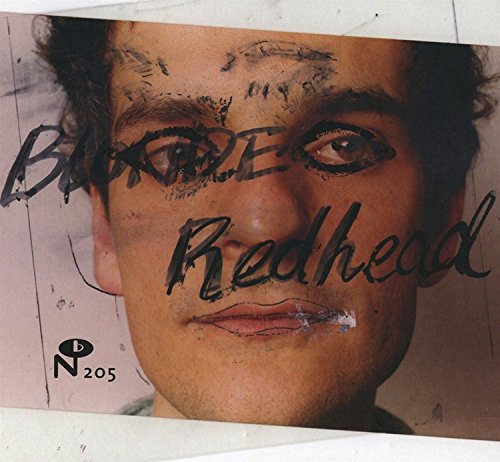
So, Brand New are doing some dates in the States, and their popularity, unfathomable though it may be, has brought out the scalpers.

One disgruntled fan contacted one of the profiteers and took issue with the size of the mark up.

The scalpers response? He created a Craigslist advert with the complainant's details on, apparently offering tickets for sale.

Oddly, the victim seems more pissed off with the band than the person who orchestrated the stunt, which is akin to blaming Tony The Tiger if you got sick eating an out-of-date box of Frosties.

Wednesday, May 16, 2012

String Cheese Incident outplays Ticketmaster

String Cheese Incident have a long history of battling Ticketmaster, having taken legal action against the company back in 2003 when the corporation tried to stop the band selling tickets direct to their fans.

That case had lead to a truce, but one which expired in 2009; now, once again, Ticketmaster is trying to force a claim that it has sole rights to sell tickets to events at some venues.

So what did The String Cheese Incident do?

They came up with an elegant workaround. The New York Times reports:

One Friday afternoon recently, about 50 fans and friends of the band String Cheese Incident took $20,000 in cash to the Greek Theater in Los Angeles to take a small stand against the system — in this case, Ticketmaster.

With money advanced by the band, each person had enough to buy eight tickets at $49.95 apiece for the group’s show in July. Once all tickets were in hand, almost 400 of them, they were carried back to String Cheese headquarters in Colorado and put on sale again through the group’s Web site — for $49.95.
Yes, the band are scalping their own tickets, at a loss. They're taking a hit, but making a rather elegant point in the process.

Friday, March 23, 2012

Radiohead: Can't keep touts out

Radiohead were pretty clear: they didn't want electrotouts ViaGoGo selling their tickets on at a profit. Indeed, they even did a deal with Ticket Trust to make mark-uped selling-on pointless.

It hasn't stopped ViaGoGo from grabbing tickets and whacking them on sale at a massive mark-up - you'd need about £1,600 to be able to purchase from them.

It's odd, ViaGoGo don't seem to understand why they're seen as fundamentally more evil than old-style touts who stood in the rain and would cut you a deal. They really don't understand.

[Thanks to @Pedro_Dee]


Thursday, March 01, 2012

Viagogo explain why their tout-alike business isn't actually touting

This week's Music Week catches up with Ed Parkinson. Ed is UK director of Viagogo, who last week Channel 4 made one of the focuses of their Dispatches investigation into the secondary ticket market.

Ed is keen to reassure the world that everything is fine and above board.

But what of that massive pile of credit cards sitting about in your offices, Ed, asks Music Week. He can explain that:

"That practice was really misrepresented by the programme," he said. "We have historically purchased a number of tickets [this way].

"Predominantly, we offer customers a guarantee that if a seller [fails to] get them a ticket, we'll give them their money back or provide a replacement.

"Having a small number of tickets in stock helps us fulfil that guarantee. If they're not used they do get sold on - sometimes at a profit, sometimes at a discount."
Is that clear, then?

It's not that ViaGoGo pretends to be individual buyers in order to purchase tickets which they can then sell on at a hefty mark-up.

It's simply that ViaGoGo pretend to be individual buyers in order to purchase tickets which they will then seel on at a hefty mark-up if nobody else provides them with tickets to sell on at a hefty mark-up.

And how can that be in any way questionable, because the company have done this "historically". And, besides, they have a "guarantee" which they have to fulfil. Which makes it okay, yeah?

[Cheers to @Pedro_Dee for the tip]

Saturday, February 25, 2012

Bums on Seatwave

Although Viagogo was the official tout company which went to court to try and stop Channel 4's investigation into the industry, Seatwave were also singled out for criticism.

Their approach was somewhat different, with CEO Joe Cohen sending a letter to their marks - sorry, customers - and doing interviews, such as the one with The Next Web.

Part of the problem with Seatwave was the impression it gave that you were buying unwanted tickets held by fans - their slogan had been "fan-to-fan" - but that wasn't the case. Cohen attempts to play this down:

In 2011, 35% of the tickets sold on our platform came from brokers or professional sellers. No matter who sellers are, it’s their right to make a profit on tickets they are selling.
You'd have to suggest that the 35% figure is likely to be just the ones Seatwave know about - and what is the difference between a "professional seller" and someone who buys a dozen One Direction tickets to resell on the side?

And I'm not sure about this "right" to make a profit on tickets they're selling. In the abstract, they have taken a risk in buying them, and could lose their money, so strictly speaking economically you'd let them make a profit.

But the profits are dependent upon supply and demand - and they're soaking up tickets from a limited supply, at the same time creating a false demand. If these guys hadn't been buying tickets, they'd have gone to fans; because the fans couldn't get them in the original sale, it creates demand which pushes up the prices and create the profit. It obeys the laws of economics and the strict law of the land, but doesn't feel like a societal good.

And amongst the fans and scalpers, also on Seatwave are, erm, Seatwave employees. Cohen is quite bullish about this:
We have a very clear employee policy that has been in place for several years. Our employees need to understand our platform, so it’s important for them to use it, but there are very clear limits to what they can and cannot do.

So in practical terms, they can’t have multiple accounts, they can’t buy and sell during working hours, from the company’s premises or using our equipments – and they can never work from home on Fridays, which is often the day tickets go on sale.
I've read this a couple of times now, and still can't see anything other than "yeah, it reeks, but we take care to spray a few cans of air freshener around."

Sharon Hodgson had introduced a bill in Parliament to try and sort out the secondary ticket industry; it got talked out. Amongst those objecting to regulationwas Jacob Rees-Mogg, who took the line that if a charity gig had £46 tickets which someone else sold on for £106, the fault was with the charity for not charging £106 in the first place. Apparently he didn't feel the risk of charity events that were only ever going to attract a Rees-Moggeseque audience wa a bad one.

Friday, May 13, 2011

Gordon in the "morning": Tickets at all prices

There's a little curiosity as Gordon Smart writes a football story involving Noel Gallagher:

IT looks like NOEL GALLAGHER will miss his beloved Manchester City play Stoke in the FA Cup final tomorrow - he's stuck recording his new tunes in LA.
So far, so normal. But - having established that Noel Gallagher won't be going to the FA Cup, Gordon then adds this surprising thought:
But I know a bloke called Jonathan at abctickets.co.uk will pay £200 a pop for tickets.
Or £1,000 cash for the Champions League final.
Bargain.
The fact that some random bloke is trying to buy tickets on a website doesn't actually relate to Noel Gallagher not going to the Cup Final. It's almost as if Gordon was trying to use his column to advertise a slightly odd-looking secondary ticket buyer and seller.

Even more curiously, abctickets.co.uk says on its front page that it's looking to buy and sell tickets for "Olympics London 2012" - something which is illegal under the insanely-heavy laws the UK government passed to please the IOC.

Bit rum for The Sun to be busily promoting a website which is encouraging users to break the law, isn't it?

INSTANT UPDATE: Because Blogger's been down, I posted this on a floating ghost ship page earlier today, and @readyartbrut responded with a tweet:
http://www.legislation.gov.uk/ukpga/1994/33/section/166 Section 166, illegal to resell football match tickets.
So even the story itself seems to be be directly encouraging illegal activity.

Sunday, February 13, 2011

LCD Soundsystem: Scratching the scalp

James Murphy has got the hump with scalpers who bought up the entire allocation of tickets for the LCD Soundsystem at Madison Square Gardens in seconds. (Although, as Bob Lefsetz points out, the "allocation" was probably around 1,000 tickets per show.)

Murphy has announced five extra New York shows to try and compensate, while railing at those who swooped down to mop up the tickets:

we tried calling our lawyer about the ticket scalping. “it’s legal”. no joke. it’s fucking legal. i tramped around with friends and band getting insane. i wanted to buy some expensive tickets and then track the seller down to BEAT him. i acted stupid. i did some classic, shakespearean vain “fist shaking”, etc. i made angry tweets. (i’m wondering now what on earth could be less effective and more of a first-world spoiled idiotic move than “angry tweets”? jesus.)
Impressively, Murphy wants the fans to be able to buy the tickets, at face prices, and not be ripped off.

And he seems genuine.

There is one small question, though: if Murphy was interested in fans being able to get hold of the tickets, why was priority given not to, say, Facebook followers or people on an LCD Soundsystem mailing list, but, erm, people who happened to have an American Express card? Shouldn't at least some of our rage be directed at this new habit of hiving off tickets to be part of some brand's market USP?

Friday, May 01, 2009

Green Day, grey minutes

Thanks to @Electroweb for news of how quickly the Green Day ticket sale turned in to a tout payday:

wow, touts are quick! Green Day tix on GetMeIn 10 mins after sale starts for mere 3 x value... good old Ticketmaster...

Of course, it helps when the official sales outlet are also the official home of touting, doesn't it?

Sunday, April 12, 2009

StubHub have trouble with "sent" and "receive"

StubHub, eBay's US scalping operation, are subject of a minor roasting on Consumerist - albeit from one side of the story. A Consumerist reader complained to the company that the tickets he paid handsomely for never arrived; StubHub's response was that they sent them, so they must have arrived:

And again I re-iterated that I did not receive them and StubHub should refund my money. She said they cannot do so. After a few minutes of this, I asked her if she can trace the email. She says, "No". At this point, I asked for a supervisor, hoping that maybe there is some recourse. Felica, at this point, tells me that I can't speak to a supervisor because there is nothing a supervisor can do to help. I ask again, stating that I'd still like to speak to one and again she refuses this time adding that no supervisors are available for these types of issues.

Aren't these services - much admired by the official music industry - meant to be protecting us from scalpers and being ripped off? Now, it might be that the complainant has no complaint to make. But if I'm going to have someone laugh in my face and say "there's nobody to complain to, kid", I'd much rather it be a smelly bloke in a raincoat outside the venue - at least you know you're taking a punt.

Monday, March 30, 2009

NME sticks up for the fans

There's a nice piece on NME.com by Mark Beaumont attacking those big online sales of gig tickets and the effect they have on 'real' fans' chances of getting hold of a chance to see their heroes:

I heard the promoter of the gigs claiming that, of the 2 million pre-sales registrations [for Jackson tickets] logged that week, 1 million had been from touting companies’ ‘bots’; it’s these programs designed to snap up the big show tickets the instant they go on sale that crash the websites and keep you bashing away at the ‘refresh’ button like the proverbial wanking gibbon. And keep desperate fans risking an early death from hypothermia to get a whiff of a face-value ticket.

A few years ago the average tout on the Clapham Omnibus was bemoaning the threat to their ‘layvleyood’ from honest punters selling their spares on eBay. Now they’ve net-savvy’d up and, as the Jacko fiasco illustrated, they’ve got a technological stranglehold on the arena ticket industry.

It's a heartfelt, and genuine, plea for people-who-actually-want-to-go to get a better deal from ticket sellers. And only slightly undermined by having a big advert slapped on the top right of the page:
Reading and Leeds Festivals 2009 Reading and Leeds Festivals 2009

Exclusive NME Ticket allocation on sale 7pm today

Monday, February 23, 2009

Semi-professional touting

The Concert Promoters Association are anti-touts. They don't think you should be able to sell on tickets you've come into legitimately. And the wanted the government to crack down and stop people making money out of flogging tickets on.

The government said no, so the CPA have suddenly decided they're going to make money from flogging tickets on.

They've launched a website which will allow purchase of second-hand tickets with a degree of confidence. It's called OfficialBoxOffice.com, and if you want to sell a ticket, you'll be called upon to provide enough details to allow the concert promoter to say "that's fine". And, if things do go wrong, the CPA have some vague promise about recompense:

In the event that a buyer is let down by a seller, the CPA says attempts will be made to get the fan into the gig anyway or offer a 100 per cent refund.

And you can see what makes it attractive to the CPA - offering a safe, guaranteed space for ticket resale will presumably make it harder for the bad guys to thrive. A site with guarantees - what possible disincentive could there be for honest chaps to sell their tickets through it, making it clear that any other sites offering tickets must be slightly dodgy?
The new website, called OfficialBoxOffice.com, will operate "at cost" rather than "for profit" and will charge a 12.5 per cent booking fee to the buyer - whilst it's free for the seller.

Ah, a massive mark-up. "If you want to sell your tickets here, they'll appear to be massively inflated compared with other sites." That's quite a pitch.

How, incidentally, have the CPA come up with this hefty mark-up as being "at cost"? And how can a percentage amount dumped on top of the ticket be costs-based? Surely the cost of processing a £10 ticket is the same as the cost of processing a £100 ticket? Or does the extra key stroke really put that much strain on the system?

Presumably an element of this money must be getting earmarked to provide refunds - but that seems morally questionable, in the sense that the money is coming explicitly from the purchaser and not the seller: in effect, it's forcing customers to insure the guarantee that CPA is providing. And not costing the seller a bean, despite the seller being the weak link in the chain.

Not quite sure how the CPA plans to make this sort-of-legitimate system work with photo ids and mobile phone tickets and all the other paraphernalia of proposals floating about.

Or, indeed, how the CPA can continue to offer a resale service while printing "not transferable" on gig tickets - isn't that a little like the US government selling peanuts and cocktail napkins during prohibition.

Friday, February 20, 2009

Government plans for rout for touts

Ticket touting - which, apparently, is a bit of capitalist, free-market economy we're not meant to applaud - is coming under government pressure again, as a consultation is launched by the Department For Culture, Media and Sport to try and remove any chance you might ever have of unloading that ticket you bought to take your now-ex girlfriend to go and see the Wedding Present.

It's not just a consultation process, though - there's this, too:

new advice from Consumer Direct with tips on how to safely shop for tickets online.

The DCMS links to the front of ConsumerDirect, which offers no obvious link to this advice (perhaps they feel the advice is so obvious they don't need to point to it.

They do have this on the front of Consumer Direct, though:

It's not entirely clear why "women in push-up bras" are considered the obvious illustration for a story about holiday brochures - presumably someone thought they were bikinis. But even then, you do wonder if they couldn't have found an image that wasn't reliant on underwiring. Still, that's the agency who will be offering advice to keep you safe buying tickets online.

The full consultation is available as a PDF and a rich text format document; we've just published a version through Google Docs to make it easier to read in a browser.

So, what's in it?

Firstly, the DCMS has rejected the calls from promoters that they should get a slice of any money made when a ticket is sold on:
The Government does not generally accept such a moral case, which it feels is outweighed by consumer benefit.

I guess you're not going to get the government actually saying "the greedy, greedy bastards" in an official document. Not unless it's Mandelson's department.

The document suggests that what it's really concerned with is access for the consumer, and does suggest that the DCMS doesn't want to see the system of ticket distribution become too complicated. It's fairly cool on the idea of mobile phones being used as tickets, for example, noting success but - presumably - worrying that you have to have a mobile phone for that to work.

It also stresses that it doesn't really want to legislate:
The Government is not going to dictate how tickets best reach fans, but wants to see a set of clear principles that could underpin how this market works, given the ongoing concerns around consumer awareness and countering illegal activity.

... well, not more than it already has.

This all sounds generally positive - and a suggested measure that you shouldn't be allowed to sell a ticket for a free event makes sense.

As is a proposal that the decent, honest ticket resellers have some sort of code of conduct, and presumably a little symbol, to show that they're not touts, they're resellers.

Of course, that idea is slightly undermined by assuming that a bloke selling tickets he doesn't have would have qualms about displaying a logo to which he wasn't entitled, but it's a starting point.

The consultation also suggests that ticket distributors consider making more use of ballots for popular events - something I've thought would work well for the festivals (at least back when they used to sell out) and seems to be commonsense.

Another sensible observation is that putting the tickets on sale in one big lump, months and months before the event - causing an unpleasant world of "This website is inaccessible" pain for everyone - only fosters an ecosystem where people are going to be looking for resellers both honest and shady. Trading off the value of "Oasis sell out in ten seconds a year in advance" headlines for satisfied customers could be an idea.

Mimicking the list of events that have to be made available on free-to-air television for years, there's a plan to create a list of "nationally significant" events. This is surprising:
The Government is concerned that, for such events, tickets should be distributed on an equal basis enabling access at all levels and not restricted through prohibitive price levels, excessive corporate allocation or inadequacies in distribution or control.

Hang about... did Gordon Brown's government just suggest it's going to take some of the "corporate jollies" share of the tickets away? Actually, given the current economy, the accounts departments of the big companies are probably offering up little prayers of thanks right now - "sorry, Sir Oswald, but you can't take fifty people to Glyndebourne this year... DCMS rules, you know. No, even if we do sack the rest of the invoicing team to raise the cash..."

It's not actually a bad starting point for consultation at all - indeed, despite the headlines suggesting this is all about putting photo IDs on tickets, the suggestion that tickets bear the faces of the bearer is only mentioned the once, and in the context of what is being done now, rather than suggested as the way forward.

It is a consultation process: you can feed your views in directly.

Friday, January 09, 2009

Avoid U2 tickets, says U2


Incoming news from the Bonophone:

U2 have warned fans not to buy tickets from touts for a rumoured summer tour, because they are fake.

Oh, don't be so hard on yourself, U2. You might not be authentic and gritty any more, but it's not fair to call yourselves fak... oh, you mean the tickets are fake.

Helpfully, the NME provides links to tickets at the bottom of the story. (Although, admittedly, not actually U2 tickets.)

Tuesday, October 21, 2008

Ticket 'fraud' site closed by the cops

The police. They're not just there to run around making sure you're not putting a 1979 live recording of The Selector online, you know. They've just done a raid to close allegedly dodgy ticket agency Paperticket.co.uk down. The NME weighs the implications:

A secondary ticket website has been shut down amid fears of fraud, leaving thousands of fans potentially out of pocket.

- although if the company was behaving fraudulently, surely the ticket holders will be, at worse, no further out of pocket because the company has been closed than they would have been had they simply not got the tickets they had requested?

Wednesday, October 01, 2008

Phish market

Phish - yes, yes, they're coming back. But this time they're mad as hell and aren't going to take any scalping nonsense:

Phish Tickets has a zero tolerance for scalping and insists that all patrons of our service abide by our policy stated herein. Tickets made available through this site are intended only for fans who are actually planning on attending the shows requested. It is strictly prohibited to resell any tickets obtained through Phish Tickets for more than the purchase price. If you are found to be reselling, trading or brokering tickets that you purchased through our site for profit, Phish Tickets may at its discretion cancel your ticket order and all other pending orders in your name. This cancellation will result in a refund of the total price for the tickets minus a $7.00 per ticket processing fee and any shipping fees that have been incurred with respect to the order. We reserve the right to investigate all orders suspected to be in violation of this policy.

This is so strictly worded, I'd be a little worried at the "only for fans" command there - woe betide you if you've bought a ticket because your girlfriend wants to go and, while you're not fond of the band, you want to keep her company. They'll know, and you won't get in.

Tuesday, August 26, 2008

Ticketmaster won't like it

It's currently (it looks like) only live in the Americas but LiveStub is offering a new approach to the secondary ticketing problem.

It reckons that it's going to build a transparent ticket marketplace, offering people the opportunity to see the best-value tickets on offer for whichever event. So you can still get scalped, but only to the level of a grey-market scalping. Hypebot is quite impressed:

The internet has created an expectation of free - from music and movies via P2P to Google's latest application or service. Free, however, did not extend to the re-sale of concert tickets; the so called secondary ticket market. Sites like StubHub tacked on as much as 20% for the privilege of reselling your extra seats.

Concert_ticket LiveStub.com's goal is to change ticket resales with a free online service that also makes the transaction more transparent; and Morten Lund, the Dane whose early investment helped propel Skype, is putting his financial muscle behind it.

The problem is that primary ticket sellers aren't really bothered about secondary markets being bear pits, anarchy-dens or fraud-beacons. They just don't like the idea of people extracting value from something they've sold for less money. So don't expect to see Ticketmaster embracing this service any time soon... unless they decided to buy the company and add the technology to their site. In which case: don't expect it to remain free for long.

Friday, July 18, 2008

The wrong paper

For reasons we can't quite fathom, people who've bought tickets for the Coldplay gig in Glasgow have been asked to send their tickets back in order to get new ones. On, erm, different paper:

Ticket distribution company Ticketmaster has asked fans to send back tickets bought through them for the shows on December 5 and 6 as soon as possible.

All customers affected by the mistake have been sent out freepost envelopes to return the tickets in, with Ticketmaster saying that they will refund all service charges.

We're at a total loss as to understand why it matters if the tickets are on the 'wrong' paper - obviously, it's a bit of a slip but since the tickets are good enough to swap for new tickets, why aren't they good enough for gaining entry to the actual gig? And what happens if someone doesn't swap out the tickets? Will they still be able to get in?

The faintest air of something dodgy hangs over the affair:
A spokesperson for promoter DF Concerts said that while all tickets bought direct from Ticketmaster would be exchanged in time, fans with tickets bought from secondary sources such as Ebay might end up disappointed.

"It will be more difficult to replace tickets originally purchased through Ticketmaster and then sold on through the secondary ticket market," the spokesperson said.

He added: "In this case, ticket holders should contact their point of purchase. We urge these secondary sources to look after their customers at this time."

This isn't an attempt to try and fight touting by creating a "but what if you bought your tickets from eBay and they needed to recall them" worry, is it?

Also: if Ticketmaster has the names and addresses of ticketholders to be able to send them an envelope for them to return the tickets, why didn't it just send them new tickets and cancel the old ones? Wouldn't that have been simpler?

If it really is a genuine mistake, it makes Ticketmaster look something of a shambles. If it's all a stunt, it makes Ticketmaster look like a shambles being run by knaves.

Thursday, July 10, 2008

Bon Jovi hates the touts... but not very much

Bon Jovi, out of The Bon Jovis, discovered that tickets to the forthcoming free gig in Central Park were changing hands on eBay, like common shoes or unwanted kidneys. Someone talking with the authoritative voice of the band blogged about their disappointment:

“There are reports in the media about tickets being scalped for... the free concert. I for one am not surprised, but our organisation is sorely disappointed.”

The strange twist, though? the post disappeared from the site as quickly as it appeared. Did BJ suddenly remember he loved ticket scalpers after all?

Thursday, January 10, 2008

Select Committee report: Selling on tickets isn't bad

Disappointingly, the actual report of the Culture Media and Sport Select Committee into secondary ticket sales - although published - isn't online yet, but the BBC has a copy. Perhaps unsurprisingly, the recommendations look like a bit of a messy compromise. Which is a polite way of saying "fudge", of course.

The MPs recommend that there's no reason for legislation stopping the practice:

Committee chairman John Whittingdale said it was "neither practical nor in the interests of consumers" to ban ticket sales through the secondary market - where tickets are sold on.

Which is good news; the committee also blames promoters and venues for creating the problem in the first place by having a rubbish, or sometimes non-existent, returns and refund systems in place.

However:
Mr Whittingdale said giving event organisers a share in profits from resold tickets was the "middle way".

So: the promoters have more-or-less dropped the ball by making selling on the only way you can get any value from a ticket for an event you can no longer attend, and yet Whittingdale and his committee think they should be rewarded as a result?

The committee suggests that there should be an outright ban on the resale of tickets given for free to children and the disabled, which seems fair enough, but then:
There should be an "across-the-board commitment" that the "distasteful" sale of tickets for free events and charity events - such as Concert for Diana - will be stopped.

But on what principle? And who is define what "distasteful" is - okay, an event like the Diana concert where all the profits go to charity would count; but would Live Earth? And how about if half the profits are going to charity? What about ten per cent? Could a promoter make such a rule work to their favour if they offered a slither of one per cent of the ticket sales go to a charity? How about if the event is, say, raising funds for something that isn't a registered charity - perhaps to raise awareness of something, or to help out a band whose equipment has been stolen? Does that count as distasteful?

Perhaps what actually counts as distasteful will be cleaned up when we're able to read the full report. But the appearance of the phrase "the middle way" means we're not holding out much hope.

[Earlier:
Oral evidence to the committee
Evidence given in advance]

Tuesday, January 08, 2008

Goldsmith fails

Harvey Goldsmith's attempts to block a secondary market in Led Zep reunion tickets seems to have failed somewhat; although there's no indication of how many they flogged, Seatwave claims they pocketed an average of £7,425 for second-hand Led Zeppelin passes.