Showing posts with label CNB. Show all posts

Saturday, September 29, 2012

Sex and corruption in medicine


The recent sex and corruption case at the Central Narcotics Bureau has certainly woken many people up. But there is really nothing new here other than the titillating stories of trysts  and late night sexting between two very gatal (itchy) people. Sex sells. And all through history women have used their wiles to charm their way into position, power and wealth. So was this corruption, or just two very gatal people acting out their fantasies? We won't know for some time, and Gigamole will not speculate.

Nonetheless, Gigamole is reminded that the medical and health industry is not immune to such sex and corruption issues. Just that many do not get flagged out.

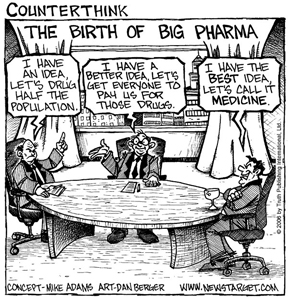
The WHO has estimated that the about US$4.1 trillion is spent globally on health services and of this, US$750 billion was on pharmaceuticals. It is a massive industry. The pharma companies aggressively compete for this market, and many (if not all) resort to unsavoury methods to market their wares.

Recently GSK was fined US3 billion for illegal marketing of its products. Part of these charges relate to providing junkets for doctors and various other kickbacks. J&J also had to pay up US78 million to settle charges of bribery and kickbacks it had provided.

Does this happen in Singapore? For sure. But perhaps not so obvious, because of our CPIB. But bribery and kickbacks in some form definitely occurs. Our doctors (especially)  go on junkets all the time. Not to mention kickbacks of various sorts. These are supposed to be regulated and notified to senior management, but nobody really scrutinizes anything, and consultants regard these as the perks of their practices. Medicines Australia reported that the annual spending by Pharma companies in wining and dining doctors and healthcare workers amounted to about A$24 million. How much "hospitality" spending in Singapore? Gigamole doesn't know. In fact the authorities don't really want to know.The public should insist that this be reported and made known publicly.

Any sex involved? Gigamole cannot prove anything. But suffice to point out that the industry is much bigger than selling the odd IT systems. Anybody stopping to point out that the sales reps for pharma companies are invariably attractive young ladies in short skirts?

This is not a problem that affects just pharmaceuticals. Medical devices suffer the same corruptibility. The susceptibility also extends up all levels of the health care chain....all the way from the prescriber, procurer and possibly even the regulator. Can we trust that we have only the best medical information, drugs and devices? Possibly not.

We need to look at this more carefully. The trouble is that the medical industry is seems rather "protected" and few want to stir the pot to root out these problems within the industry.

Friday, February 3, 2012

Turning a blind eye.....

Partial blindness presents an interesting physiological problem. This is because the nerve fibres on the way from the eyes to the brain partially cross over. At about where the pituitary gland is, the nerve fibres from the inner side of the each eyeball switch sides. This creates a situation where, depending on where the damage is, you may have very different kinds of blindness.

For example, if you lose an eyeball, because of the overlapping of the visual fields of each eye, you do not lose half of your vision. The actual amount of loss of the total visual field is only about 25-30%. What is most disturbing about loss of an eye is the loss of binocular perception and consequently, loss of depth perception.

If on the other hand, if there is complete damage to the optic fibres after the crossing has occurred, there will be potentially greater loss of the visual field, up to 50%.

Intuitively however, we are misled to think a person with an eyepatch is more blind (loss ofvisual field) than a person who may appear normal externally but has a lesion of one of the optic tracts or has damage to the visual cortex of the brain.

So there are times the eyes see but the brain is unable to process the information, while at other times, the eye appears not to see but the brain is actually visually aware. There are social equivalents to these kinds of blindness. For example, data and information is available but the brain is quite blind in not being able to perceive the real signals. The recent discordant interpretations of rainfall patterns show a bit of this hemianopsia. The brain has been conditioned to only see no change despite the signals it received. Likewise, the Central Narcotics Bureau last year was caught in the embarrassing situation of having to 'fess up to misreading the data it had collected. Instead of a downward trend in drug addiction, the numbers had actually been trending upwards.

By contrast, there is the other kind of blindness where people can actually see but pretend to be more blind than they actually are. Such was the case with the famous British naval hero Lord Horatio Nelson. He was well known to be blind in one eye. Now we now know that losing one eye only loses about 25-30% of your visual field, but when he was given a visual signal to withdraw during a battle, he famously quipped, "You know, Foley, I have only one eye - and I have a right to be blind sometimes... I really do not see the signal." So thanks to Lord Nelson, we now have the expression, "turning a blind eye", when we choose not to see something very obvious.

Our vice squad appear to be somewhat guilty of this, when they appear to be blind to the numbers of streetwalkers lined up along the roadside in Geylang. Sometimes the policeman does this when you complain of something illegal happening. The Lord Nelson in him tells you that it never happened unless someone made a official report. Sounds a bit like our Singapore Medical Council. Medical wrong-doings never happened unless someone had officially made a report, even when things were as evident as day.

There are many Lord Nelsons ruling in biomedical research nowadays apparently. Despite detailed evidences of unethical and fraudulent behaviour flagged up in a number of websites such as Retraction Watch and Abnormal Science, journal editors, research institutes and universities continue to feign ignorance while professing to hold high standards of ethical practices. Just ignore the reports from blogs.

Lord Horatio Nelson will be proud.

Thursday, January 26, 2012

The SCDF and CNB done in by a local Matahari?

Slowly the story begins to unfold, and the public awaits the sordid details about the dramatic falls from grace of the SCDF and CNB Chiefs. Much has been made of the fact that no money may have changed hands and that they had been done in by booze, makan and a local Matahari.

But I think we might be missing the point here.

Fact is two very big guns from the Ministry of Home Affairs had been so easily snared by the wiles of one woman. A pretty mysterious one at that. So much for our national security. I mean, these were no less than two major units with the Home Ministry! The Mas Selamat debacle pales by comparison.

Methinks our Minister of Home Affairs need to give us a bit more reassurance than to tell us the guilty will be punished.


Tuesday, January 24, 2012

High salaries discourages corruption? A reality check.

Singaporeans woke up this morning to the alarming news that the Chiefs of both the Singapore Civil Defence Force (SCDF) and the Central Narcotics Bureau (CNB) have been relieved of their position pending investigations by the Corrupt Practices Investigation Bureau (CPIB).

This must have shaken the civil services to the core.

Without presuming guilt of these two guys, but if the suspicions are true that they have engaged in corrupt practices, it must surely raise serious concerns about the validity of the logic that corruption is prevented by paying high salaries. These guys have certainly not been paid peanuts.

To my reckoning, if we use money as the main lure into public service, surely that must attract only those for whom money and more money becomes the driving force for their ambitions. Corruption is fueled by greed, and there is never enough to assuage that thirst.

The most effective way to stem corruption is to have an independent, transparent and effective CPIB, and a vigilant public who is prepared to whistleblow. Our CPIB has done an excellent job so far, thankfully. But if we want our politicians to be free from corruption, then the CPIB must have the freedom to investigate all officials including the cabinet and even the Prime Minister. That the CPIB reports to the Prime Minister's Office does not give it a freehand in performing this critical function. Perhaps this line of reporting should be reviewed? Since we have an elected Presidency, should not the CPIB report to the President, rather than to the Prime Minister?