.

Showing posts with label relocating. Show all posts

Friday, September 13, 2019

Relocation: Living near a military base?


Hi, Ferfal—
First, thank you so much for sharing your knowledge and experience all these years. I've learned a tremendous amount from you, and it's literally changed my life.
I've just finished reading your book "Bugging Out and Relocating", which is excellent. As I was reading about U.S. states for relocation, I had a question: You recommend Nebraska, and mention specifically Bellevue and Papillion, two towns near Omaha. I grew up in a town just outside Omaha (not either of those), and as a child we were always told that having the Strategic Air Command (SAC) headquarters in Bellevue meant that we were a prime target for nuclear attack. Although SAC has been reorganized since then, I wonder if living near a military installation would be safer, or less safe? Is the proximity of a military base something people should consider when choosing a place for relocation?
Thank you for considering my question.
Sincerely yours,
-Bronco

Hello Bronco, thank you for your kind words.
About Nebraska I wrote:
“Nebraska ranks very well in important categories such as quality of life, cost of living and good economy. Papillion and Bellevue have low crime, affordable property prices, good healthcare and are just 15 minutes away from Omaha.”
The first thing to note is that if Omaha was a bad place to live in, Warren Buffett wouldn’t live there. :-)
I think that you have several advantages in the places I mentioned, especially the cost of living/quality of living and safety ratio.
As for the military bases, I know that some people don’t like the idea of being close them and worry about these being targeted during war. Let’s be honest though, how likely is such a thing to happen? How many bases are there across USA? As unlikely a nuclear war is, how likely is your specific base to be targeted, compared to larger coastal cities? But more important than all of this, how much of a concern and priority is nuclear war or US being invaded by a foreign force compared to all the other very real variables, far more probable scenarios or statistics and facts that are guaranteed to affect your quality of life every day?
Having a military base near has its pro and cons. I’d actually would be concerned more about the noise of jets flying by in the case of air bases and how much of a bother that may be. I usually get along well with military folks, usually I find the more like-minded than the average person.


Tuesday, November 27, 2018

Moving to Latin America


Tuesday, September 18, 2018

Politically Incorrect Preparedness: Immigrants and choosing where to live

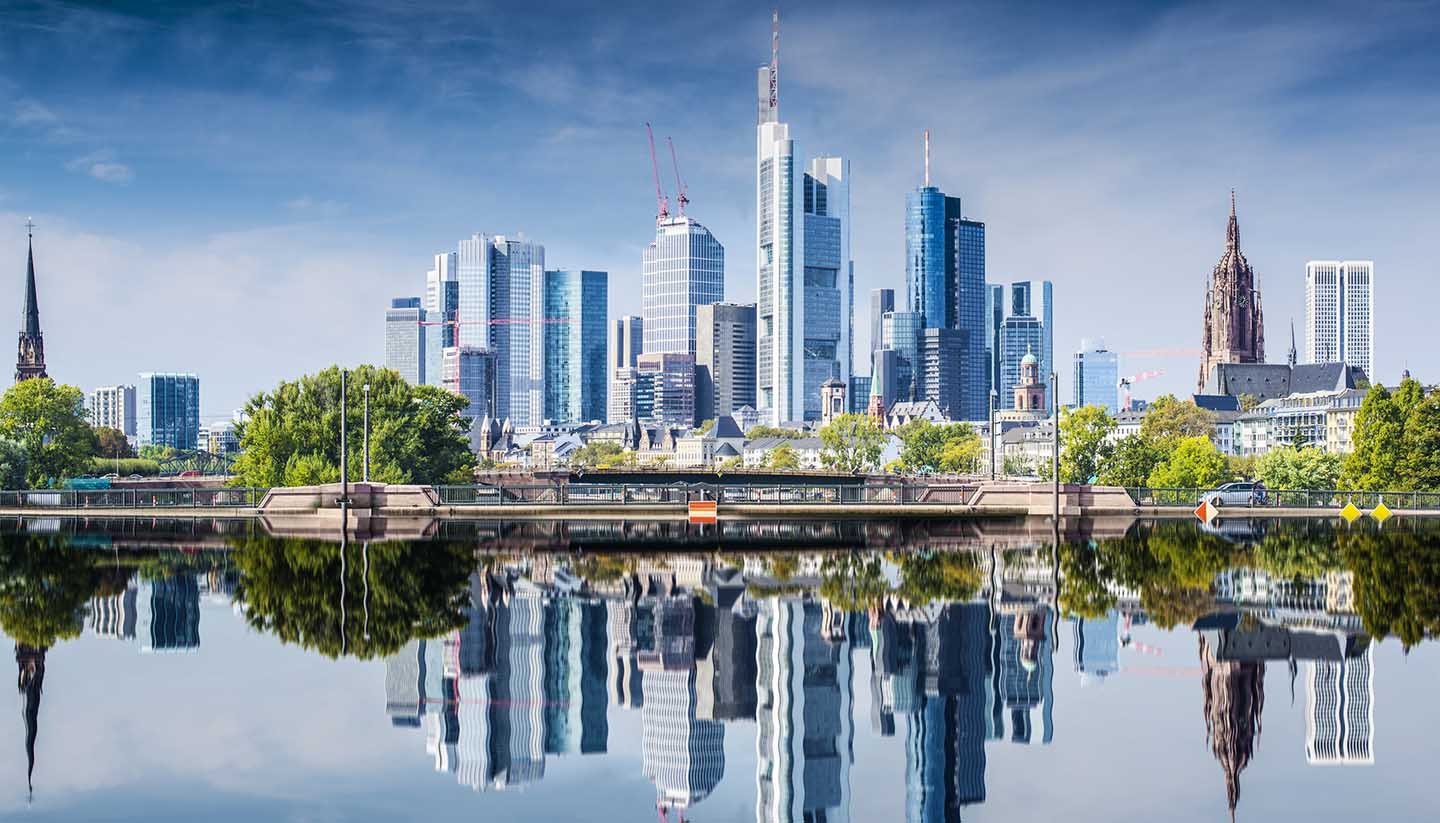
Image result for frankfurt
Dear Fernando,
As I don't know how much time you spend reading reader's emails,
therefore, here's the TLDR version:
Which factors to consider in a city A vs city B decision, with a focus
on the implications of the percentage of immigrants.
Now my actual email:
I've read your first book about three years ago and all your blog posts
since then. Thanks a lot for all the thought-provoking stuff and the
triggers based on your real-world experience. I've read several other
books on the topic, but yours finally got me to stock up on water (just
to give one example).
However, there is one topic I'm grappling with for which I couldn't find
your opinion and would like to know it. I saw the chapters/many posts
about city vs. country side. But not much regarding city A vs city B and
any related metrics for such a decision.
With my wife and daughter, we life in Frankfurt, Germany. Its
population is around 750,000, lies in the center of the country, is the
traffic center and thus offers many jobs in a good economic situation.
But my wife was born in Dresden (Eastern Germany) and she would love to
relocate back to her home town.
Population-wise it is sort of comparable: ~550,000. And being an IT guy,
I probably wouldn't have problems to find a job there. But the eastern
part of Germany in general is still much weaker in terms of economy.
What good is my own job if much around us in terms of infrastructure and
general social prosperity level would be lower?
Then there's the geopolitical question. In a general European decline,
what would it mean to be geographically much closer to the even poorer
economies of Poland, Hungary, Czech Republic, etc.?
And probably the most sensitive and politically incorrect question is
about the implications of the percentage of immigrants in each city.
Frankfurt is really multicultural and has one of the highest percentages
of immigrants in Germany. Dresden is the opposite, having far less
immigrants. And you might have heard that still the hatred of foreigners
in eastern Germany is far higher than the western part. And to be clear:
I'm not talking about well integrated and/or well educated individuals
who make an effort to be part of and useful for society. I'm rather
thinking of the lower end of the skill spectrum. And be it that its just
"low" due to the fact that the local language is not there to apply any
skill.
Of course there are many more related factors. Where do we want to have
our kid in school? Let her go through the "school of hards knocks" with
many kids from families where even speaking the local language is an
issue, or rather some place else? And all the other "normal" factors,
like where are more relatives, closeness to nature, costs of living, etc.
But now let me formulate my main question(s) related to the survival topic:
- Do you have an opinion about the implications of the percentage of
immigrants in a SHTF scenario?
- Would you consider this aspect when choosing a city to live in?
- What other SHTF-factors do you see and would you consider in
comparison "city A vs city B"?
If you already answered this in your 2nd book, please let me know, as
this is still on my someday/maybe pile.
If you want to publicly answer my email despite the politically
incorrect aspects, please make it anonymous.
My last question is: Do you "need" further questions to fuel future
posts? I've gathered a laundry list of small questions for which I at
least didn't stumble upon answers from guys with real-world experience
during my survival studies. But as I don't want to ask for too much of
your time, I've just sent the question which is most on our minds these
days.
Thanks again for your valuable contribution and for considering our
concerns,
F
.

Hello F,

Thank you for your email. Sorry for the delay in replying. Its been pretty busy around here lately with the holidays and all, hope you understand.
Yes, this is the kind of topic I addressed in detail in my second book “Bugging Out & Relocating”, especially on the second part of the book regarding relocating and choosing wisely taking the most important factors into consideration.

I understand that based on your email immigration is a big concern, and it well should be, but then there’s also everything else to consider. A lot of it will have a great impact on not only your strategic position from a preparedness point of view but also on practical, everyday life quality.
I actually know a couple friend of ours, he’s Argentine, she’s from eastern Germany. I talked with her a lot and I get this impression that people from the east that suffered communism at one point seem more, “hardy”. It’s as if they still remember what tough times and adversity is like.  I’m sure one can’t generalize but it seemed to me that’s the most common mindset in the area. As you say you have more jobs in your current city, that’s also a factor to consider. Not that relocating within the same country to yet another large city would be that big a change.

Preparedness-wise I would say that people from the east are more prepared for adversity having endured it in the past. Then again, a weaker economy is still likely to suffer more during tough times. If such a thing does happen you could move back, although I doubt the German economy will get THAT bad any time soon.

The way I see it its more about what your wife wants than what you need from a practical point of view, and of course that’s important as well. As the saying goes, happy wife, happy life, right?
But also ask yourself, what do YOU want? Do you care much either way? If you don’t then why not make her happy. Maybe she also has a better support network of friends and family back home and that I can assure you is critical for preparedness, and for quality of life in good times as well.
I wouldn’t worry that much about being closer to Poland and other countries that could go through tough times. If anything most immigrants are likely to go right past you and straight to Berlin looking for work. Its all EU anyway, so movement is very much fluid all over the place.
Some of the eastern Europe countries do have rather hardcore criminal elements that are a concern. They are usually involved in some of the more violent crimes and home invasions. Being close to them could increase the risk factor although that has to be taken into account with the other pros and cons of moving there.

Is crime in Dresden particularly worse? Doesn’t seem to be the case.
https://www.numbeo.com/crime/compare_cities.jsp?country1=Germany&city1=Frankfurt&country2=Germany&city2=Dresden
If anything it seems that Dresden is considerably safer than Frankfurt, that’s very good.
Regarding your questions.

- Do you have an opinion about the implications of the percentage of immigrants in a SHTF scenario?

Yes, I do. I’ve been an immigrant myself and I know what its like to have someone look at you funny because you speak a foreign language, not realizing that you probably speak and write better than him! But I also understand that’s not the case with most immigrants.
Don’t get me wrong. I’m probably the least political correct person you’ll come across but I also believe that the majority of those people washing ashore lately are indeed desperate people that just want to survive and have good lives. But I also admit that there are evil people among them, and even among the “good” ones they are essentially very different people, with very different core values of what’s right and wrong compared to Christian/Western civilization cultures.
So yes, I do take it into account and I wouldn’t want to be stuck in a city with a large percentage of “refugees”, no matter how much I may sympathize with the suffering they have endured.

- Would you consider this aspect when choosing a city to live in?

I would. Both for safety, quality of life, even your kids in school. I wouldn’t want my kids going to a school where there’s a lot of people with such different values. One or two I can live with, but I don’t want a pack of them my kids school.

My oldest son had a classmate of muslim/middle eastern background and the kid was problematic, the kind that can only be addressed with violence. Fortunately my son took care of it without getting into too much trouble with the school (his teacher turned a blind eye). But I wouldnt want that kind of people around my kids, especially since you have a daughter that would be at a physical disadvantage. These people have a very different idea regarding the treatment of women.

-What other SHTF-factors do you see and would you consider in comparison "city A vs city B"?

Crime is certainly a big point to keep in mind, but also jobs, unemployment, income, education (how good are schools there?) infrastructure, even pollution. I also look into floods and other potential natural disasters. Being your wife’s home town adds several benefits and that must be considered. She has lived in both places and knows well why she wants to go back.

Hope that helps and by all means feel free to ask any other questions you may have. I’ll do my best to answer them (even if at times it takes a few days :-)  )

Kind regards and good luck!

FerFAL

Fernando “FerFAL” Aguirre is the author of “The Modern Survival Manual: Surviving the Economic Collapse” and “Bugging Out and Relocating: When Staying is not an Option”

Thursday, April 5, 2018

5 Common (wrong) assumptions about living in the country


  • Living in the country increases your chances of survival.
People actually live longer in urban areas compared to rural ones and the gap between the two is actually growing.
http://www.cfah.org/hbns/2014/gap-in-life-expectancy-between-rural-and-urban-residents-is-growing
This is mostly related to the distance to general hospitals where emergency care is available and how survival rates drop every minute (10% survival per minute) during strokes and cardiovascular disease.
Obesity is also more of a problem in rural areas, even if people typically assume the opposite to be true.
https://www.ncbi.nlm.nih.gov/pmc/articles/PMC3481194/
Contrary to common belief death due to traffic accidents are higher in rural areas (greater speed) compared to urban areas.
As for crime it does not always translate into more people meaning more crime. Across America (and the same goes for most developed countries) it is fairly common to find low population areas with higher crime rates than more heavily populated ones. This tends to be related more to income level and demographics rather than strictly population size.
As for worse case scenarios, I know for a fact you certainly don’t want to be isolated and on your own to fend for yourself during long periods of civil unrest when the gov. fails and society breaks down. Just google White African farmers to know how such situations go down and what outcome you can expect, even when well-armed.
  • Food distribution is more fragile in the city than in the country
The food production and distribution system is just as fragile in rural or metro areas because its basically all the same. In fact farmers markets will usually be held in town where more people can buy their produce. If you are thinking of food distribution during disasters it’s the same thing, you distribute it (or make sure it reaches stores for people to buy) in populated area because you try to reach and provide for the most people.
If you’re thinking of growing your own food that’s fantastic, by all means do that. But it is naïve  to think that in a long term socioeconomic collapse you will be farming away in your farm while the world crumbles around you. It just doesn’t work that way. Venezuela today (the gov. takes your farm, ruins the economy so that you cant produce anything even if you want) , Holdemor in 1932 (gov. shoots you and steals your produce) or South Africa right this moment. If the gov. comes after you kicking your door there’s no getting around that.
  • There’s less drugs
This one is a bit more tricky, but certainly there’s more than enough problems no matter where you live. People seem to abuse alcohol more in rural areas and there’s more abuse of prescription drugs in urban ones. More meth in the country, more cocaine in the city, either place you chose to live drugs are certainly a concern and its not as if living in the country guarantees a wholesome lifestyle.
https://www.ruralhealthinfo.org/topics/substance-abuse
  • Its more “green”, better for the environment.
Cant say I’m the type of person that cares about such things, but if you do, nope, your “carbon footprint” isnt smaller living in the country. You actually require to burn more fuel and consume more energy to heat and illuminate houses than smaller apartments where maybe hundreds of people live all piled up in one building. You also need to use your car more to get around rather than walk to your destination or use public transportation as you would in the city.
https://www.livescience.com/13772-city-slicker-country-bumpkin-smaller-carbon-footprint.html

  • Cities are full of welfare type people.
Federal spending on “income security” (Social Security and various kinds income support) per person is much higher in rural America than in the cities.
Poverty has also been dropping in urban areas while it has been increasing in rural ones.
http://www.dailyyonder.com/busting-rural-subsidy-myth/2014/01/07/7099/

Now, I don’t want to come across as some country hating city slicker. I’m certainly not. In fact I LIKE living away from large population centers and enjoy more privacy, peace and quiet. But I do objectively see that many things that seem logical simply don’t occur as you would expect when you look at the facts.
This is important so as to understand and prepare for the shortcomings no matter where we chose to live.
Personally, I’ve always tried to go for a good balance, living out of the city yet close enough to a small town that is still big enough to have most of what I need.

FerFAL

Fernando “FerFAL” Aguirre is the author of “The Modern Survival Manual: Surviving the Economic Collapse” and “Bugging Out and Relocating: When Staying is not an Option”

Friday, August 4, 2017

Trump’s right: Adaptability is Key


I was reading the news today and read something President Trump said about people not moving to where jobs are available.
Trump is right about this: Americans need to move where the jobs are
August 3 at 3:57 PM
Vehicles sit in rush hour traffic at the interchange between the Interstate 405 and 10 freeways in this aerial photograph taken over Los Angeles, California. (Patrick T. Fallon/Bloomberg).
President Trump said something last week that deserves a lot more attention. Americans “are going to have to start moving,” Trump said in his interview with The Wall Street Journal (Politico leaked the full transcript of the exchange this week).
He’s right.
Americans aren’t packing up and moving as they used to. Mobility is at an all-time low, according to the Census Bureau, which has tracked how many Americans change addresses since World War II. About 10 percent of Americans moved in the past year, the Census Bureau found. That’s way down from the 1950s, '60s, '70s and early '80s, when more than 20 percent of the nation was on the go.
(continue reading https://www.washingtonpost.com/....)
 /
Making ends meet is a key factor when it comes to finances, a rather important aspect of preparedness. I read all the time about people not finding jobs, or not finding good ones or jobs that pay well. Well… sometimes there aren’t any around and you need to move.
Especially in smaller communities this can be an issue, even more so if the specific town or general area is going through a depression.
In general people don’t like moving. It’s a very natural instinct to feel safe in the environment you know and avoid changes but sometimes they are necessary. It’s also true that once you do it a couple times it gets easier and moving when needed or when you feel like it isn’t scary any more. Like with everything else in life, we adapt, we get used to it. And when you get used to adapting to new places, new people and new surroundings you don’t stress over doing it again if you have to.
Now I’m not saying move around all the time. Sometimes though, it is worth the effort, especially if the economic stability will allow greater peace of mind, security and overall a better quality of life in general.
FerFAL
Fernando “FerFAL” Aguirre is the author of “The Modern Survival Manual: Surviving the Economic Collapse” and “Bugging Out and Relocating: When Staying is not an Option”

Tuesday, May 30, 2017

Advice for expats moving to Uruguay (or anywhere else)

... 13 km de Punta del Este, muy cerca de la largada de GFNY URUGUAY 2016
Casapueblo, Uruguay
Hi Fernando,
I just came upon your blog in my search about Uruguay. Did you and
your family eventually move there? We live in the US and are
considering a move to Uruguay and have no idea where to start. I
wanted to ask you some questions if you are living there or if you
know someone who does.

Thanks,
Tiffany
.
Hello Tiffany. I’m not in Uruguay and not planning to move there any time soon. We never planned to do so really. In fact the last person from Uruguay I talked with already emigrated and is now happily living in Ireland. She left with her family looking for the kind of stability and opportunities Uruguay simply couldn’t provide. Still, Uruguay is the country I have recommended in my book “Bugging Out and Relocating” for those looking to move to South America.

So as to contact people there my suggestion would be to start with the obvious “expats in Uruguay” search and go from there. Participate in forums, get to know people. Keep in mind though that one man’s paradise is another man’s hell.
If you want my opinion, basically what I said in this video is still very much true.
Uruguay can be a great place for you. Or Argentina. Or Colombia. Or Thailand. Or Canada. Or India.
Pobreza en Uruguay bajó levemente el año pasado – El Politico
Also Uruguay
But since you ask me and I’m not a magazine or website editor trying to hook you up with anything here’s some honesty/tough love: While you may be happy in any of those places, there’s some facts you can’t avoid. Canada is simply better as a place to live in than India. Or Colombia. Or Thailand. This is not me expressing an opinion, but a simple observation of pretty conclusive data.  Indicators of quality of life, healthcare, crime, life expectancy, GDP, education, infrastructure, employment, transportation, cost of living, and a long etcetera points in a certain direction. Uruguay is nice. Its relatively peaceful and simple living. Millions live there happily and wouldn’t trade it for anything else… just like millions of people in other countries.

My point is be honest with what you want to find in Uruguay, or anywhere else. This is one of the main points I focus on in “Bugging out and Relocating” when it comes to moving abroad. Expectations. Crime in Uruguay will be much better if you’re from Chicago, but it will be much worse if you come from Maine. Either way you’ll experience a clash of cultures. People all over Latin America are mostly used to getting by with less. Less of everything. Computers, cars, cell phones, many of these will be luxuries for you. Organization and overall bureaucracy is a lot worse, and I know this drives many people from developed countries nuts.

Now, if you want a friendly, family oriented culture you will find it in Uruguay. Family and friends, the importance of relationships between people is stronger and simply more of a priority all over Latin America compared to most of the developed world. Friends hug one another more, people greet each other with a kiss in the cheek, it just seems overall more “touchy” which some people aren’t comfortable with but it’s not meant to be sensual in any way, its just a more expressive culture in the way they interact with one another. For example people in Uruguay don’t doubt a second about sharing mate, where everyone drinks form the same straw. It’s the same in Argentina. An American more worried about personal space and worried about sharing a glass let alone a metal straw is hardly the kind of person that would integrate well in Uruguay. Then again you could focus more on being among expats from your same country, most of which went there with the same ideas and expectations, maybe even more important LEFT your country for the same reason and you just get along great with them, sticking among like-minded people in somewhat of an enclave.
My advice is be honest with yourself. The expectations you have and what you are likely to encounter there. There’s a tremendous difference between the developed and developing world. Everything sounds fantastic until you realize that other than some honourable exceptions pretty much everything is more expensive in Uruguay than in USA.

Once you are certain you want to give it a go, don’t make any permanent decision. Give it a year. Don’t sell your home in USA, rent it out and rent in Uruguay. The first year is usually the “honeymoon” period where everything looks great. The second and third year will be more down to earth but a year minimum is the time you should give it before making any permanent decisions you may later regret.
Best of luck and as the Irish saying goes, May the sun shine warm upon your face and the rain fall softly on your fields.
FerFAL
Fernando “FerFAL” Aguirre is the author of “The Modern Survival Manual: Surviving the Economic Collapse” and “Bugging Out and Relocating: When Staying is not an Option”

Thursday, May 11, 2017

Buenos Aires more expensive than New York, London and Paris


Anonymous Anonymous said...

    Hey Derrick, I'm a North American who's been living in Buenos Aires for 5 years now, and I've stayed for exactly the reasons you mentioned. I won't lie, the last year has been rough with insane inflation, but even now, I have a nice apartment to myself in Capital and get by on a fraction of $5000 USD/month (no offense Fernando, don't mean to contradict you -- also, I'm pretty frugal). My burn rate is about $1500/month, and I live quite comfortably. I'd say go for it. Good luck getting your residency though -- they hate us yanquis in Migrations! If you have any questions, feel free to drop me a mail at jeroextran (at) hotmail (dot) com. Best of luck! Chris


Oh don’t worry. If I was single, lived in a small place, sure. The thing is, Argentina is expensive, especially Buenos Aires.
If you find an affordable place to live, go frugal as you say then sure. But if you need a bigger place for a family, if you want maybe a house in a safe, upper class neighbourhood, rather than an apartment, you want to have a car, have good medical care and send your kids to a good school (which therefore needs to be private, 500 to 1000 USD each for a good one) then the price is very different.
Groceries, food, toiletries and electronics in Buenos Aires are significantly more expensive than New York, London and Paris.

 I buy Argentine products in Spain, made in Argentina, such as yerba matte and cookies, that are sold cheaper in Spain than in Argentina where they are made. Makes no sense? Of course it doesn’t. Its not just the terrible inflation, but also the speculation. The same company that is happy enough selling abroad at 10 knows it can get away with charging 15 locally and they do so. Why? Simple. The European Union bargains a good price and gets it, while locally in Argentina no one protects the consumer and they get robbed, plain and simple. There’s no explanation, no logic for most products available to be cheaper in Spain than in Argentina which not only is the country in which its is made, it happens to be at the other end of the world.
Oh, and don’t worry about Migrations. Its not that they hate you, all public sector workers in Argentina hate life in general and are awful at their job. Its not personal.
FerFAL