William Shatner performs Sarah Palin's farewell speech as a Beat nature poem: here.
 Rod Blagojevich, in a speech for the annals of political bluster, quoted a dozen or so lines from Rudyard Kipling's ubiquitous, stalwart, quoted-on-all-occasions "If." About a half dozen bloggers and journalists asked me to comment on this. Not sure why. I assume it's this: I've been on the web so long (since '94) posting pages and writing commentary on poetry that I tend to come up early in web searches. I'm not a Kipling guy, for sure. Am interested in but finally indifferent to the fiction, and am absolutely tired of "If," recited either as evidence of personal triumph or as pep talk for bedraggled groups (employees, students, summer campers). Bill Lucey of The Morning Delivery quotes me in today's entry: here. There are minor inaccuracies in the quote but he gets the gist of my view.


 A while back Bruce Andrews went on Bill O'Reilly's conservative TV talk/news show and went toe to toe with Bill. Mike Hennessey links the YouTube recording of the encounter and has a few good words to say about it.

 After a while, Allen Ginsberg enjoyed doing just about everything else but cigarette smoking. And he had the politics to support this one eventual self-prohibition, best expressed in his song called "Don't Smoke (Put Down Your Cigarette Rag)." Here is a RealAudio version of the recording. It's a 9 billion dollar capitalist joke.


 "I teach horizontally, meaning that while I might begin with a fixed idea of what I'm going to teach that day, I let it drift rhizomatically way off topic, often pulling it back when it gets too far. I rely on non-fixed materials to teach this way; the whole world is at my fingertips. Should I go off on a tangent about John and Rauschenberg and their love relationship as expressed in Rauschenberg's bed, an image of that bed is always a click away. From there, we can head anywhere into the non-fixed universe, be it film, text or sound. And of course, that always takes us elsewhere. As Cage says, 'We are getting nowhere fast.'" MORE...

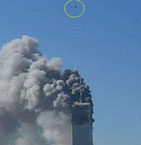 that anyone has yet got the imaginative measure of that terrifying day six years ago. Certainly our Tolstoy has not crawled out of the rubble. The closest we have, Don DeLillo, succeeded as an essayist-journalist ("In the Ruins of the Future: Reflections on Terror and Loss in the Shadow of September,” Harper’s, December 2001) but, to my mind, failed as a novelist ("Falling Man"). One reason, perhaps, is that the remembered emotion was instantly buried under a pile of cultural junk.' - Tod Gitlin in his review of Susan Faludi's The Terror Dream (written for Truthdig.com). MORE...