Showing posts with label Penn. Show all posts

Friday, February 25, 2011

Jacket2, "pretty much the most robust place"

In the new issue of the Pennsylvania Gazette, we find a nice article about Jacket2 by Sam Hughes. Here's an excerpt, quoting me:

“The poetry world is huge, vibrant, full of odd and interesting and brilliant people all over the world—and they follow everything in the field. So while it might seem like the announcement of a change in a magazine is not going to rock anybody’s world, it did. There was a big response to it, and almost all of it positive.”

Jacket2 is going to be “pretty much the most robust place where you can look and find stuff about poetry—modern, contemporary; particularly contemporary,” he adds. Including, of course, poems. He describes it as a “fully integrated site” that will play off the raw material of spoken poetry provided by PennSound. “Between the two, we’ll have a whole lot covered.”

And here is a link to the whole article.

Tuesday, October 19, 2010

Writers House 15th featured

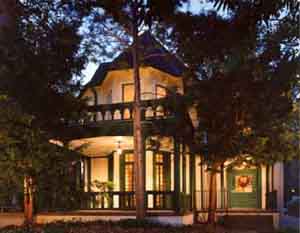
The University of Pennsylvania home page today (and presumably for a few days) features the Kelly Writers House - helping us mark our fifteenth year. (October 1995 to October 2010.) Now go here and watch a fabulous slide show: some wonderful photos of Writers House people in action. Here's the text:

- - -

Spotlight: Kelly Writers House Celebrates 15 Years of Success

Fifteen years ago a band of forward-thinkers believed there should be a place on campus where people could gather to appreciate, create, study and participate in every aspect of the writing process. The place, they believed, should exist outside the conventional classroom, be open to everyone in the community and be run by those who would use it.

That vision became the Kelly Writers House (KWH) at 3805 Locust Walk, which is celebrating its 15th anniversary on Oct. 30.

Al Filreis, the Kelly professor of English and one of the house's original founders recalls that KWH was established in 1995 on the idea that students at Penn deserved a place on campus where they could find a rich intellectual experience that had nothing to do with the curriculum.

Today, the house stands as a shining example of the power of artistic and educational collaboration put into practice. It's a place where novelists, poets, journalists, screenplay writers, humorists, food writers and others meet, work, dine and mingle.

In the early days, the house was known simply as the Writers House. But about a year into the Writers House initiative, Penn alumnus and Chairman of the China Ceramics Company Paul K. Kelly dropped by to see what was going on in the shabby Tudor-style cottage on Locust Walk.

“He met with me and the house's first director, and it just happened that on that day there was a jazz band playing in the front room and cookies and cakes were baking in the kitchen,” Filreis says. “He absolutely loved the place, and within 20 minutes he pledged $1 million to help fix it up.” Kelly's gift allowed for a complete renovation of the site that included new plumbing, restoration of the fireplaces, an updated kitchen and the painting of the exterior of the house with its original colors of tan and Fairmount green. Its new name was the Kelly Writers House.

Over the past 15 years, Kelly Writers House has welcomed world-class authors such as Joan Didion, Richard Ford, Ian Frazier, Joyce Carol Oates, Jamaica Kincaid, Grace Paley, Gay Talese, John Edgar Wideman and others. This year, Marjorie Perloff, Susan Cheever and Edward Albee will work with students through the Kelly Writers House Fellows program.

“It's more than just a venue for readings and events,” says Lily Applebaum, a junior in The College. “There is a real emphasis on community-building here, anybody can come in and make the space their own.”

Text by Tanya Barrientos
Photos courtesy of the Kelly Writers House & Steven Minicola

Wednesday, October 06, 2010

recruiting young writers

Penn's student newspaper, The Daily Pennsylvanian, ran a story in this morning's paper about our efforts at the Writers House to find talented writers among high-school student candidates for admission to the university.

Thursday, August 19, 2010

featured podcast

Today the University of Pennsylvania's main news page features a program in the Kelly Writers House Podcast series. This is a conversation I hosted with Jessica Lowenthal and Jamie-Lee Josselyn about the book Jamie-Lee has been writing about her mother's death. The direct link to the podcast is here.

Monday, May 31, 2010

we're in Betty Friedan country here


Dean of Penn's College for Women in 1960. Oh, the problems of separatism. Click here for more.

Thursday, May 20, 2010

down the line from Williams and Pound

The Pennsylvania Current is now running a story about the legacy of poetry at Penn: "Penn’s rich poetry legacy," by Tanya Barrientos. It features a nice mention of the Kelly Writers House and of PennSound.

Friday, May 07, 2010

short film about Second Life

Some innovative IT colleagues of mine here at Penn have made a short film about our use of the virtual world "Second Life" here. They interviewed me for it, but I'm not nearly the most lucid proponent of experimenting in SL. Watch for others.

Thursday, January 28, 2010

Anthony DeCurtis

Listen to Anthony DeCurtis read from his writing. He teaches three courses each year through the Center for Programs in Contemporary Writing (CPCW) and the Kelly Writers House at Penn. He's a contributing editor at Rolling Stone, where he has written for nearly thirty years, and his work has also appeared in The New York Times and many other publications. He is the author of In Other Words: Artists Talk About Life and Work (Hal Leonard, 2005) and Rocking My Life Away: Writing About Music and Other Matters (Duke University Press, 1998). In addition, he coedited the third editions of The Rolling Stone Illustrated History of Rock & Roll and The Rolling Stone Album Guide (both published by Random House, 1992), and edited Present Tense: Rock & Roll and Culture (Duke, 1992). Most recently he edited Blues & Chaos: The Music Writing of Robert Palmer (Scribner, 2009). His awards include a 1988 Grammy Award in the "Best Album Notes" category for his essay accompanying the Eric Clapton box set "Crossroads," and three ASCAP Deems Taylor Awards for excellence in writing about music. Anthony holds a Ph.D. in American literature from Indiana University and lives in New York City.

At the Kelly Writers House Anthony has hosted our annual Blutt Singer-songwriter Symposium: Roseanne Cash, Suzanne Vega, Steve Earle - and next, Rufus Wainwright. And he is co-director of the RealArts@PENN project. His course the "The Arts and Popular Culture" has become a must-take seminar for young Penn writers interested in criticism, reviews, profiles, interviews and other forms of cultural journalism.

Wednesday, December 09, 2009

creative spirit

Jimmy DePreist (Penn undergrad, class of 1958) receives the first "Creative Spirit Award" to be given annually at Penn.

Tuesday, August 25, 2009

writing a community, as always

Click on the image for a closer view, and click here for more.

Tuesday, July 28, 2009

Writers House on the agenda

Penn made its "Agenda for Excellence" video a few years ago (during the Judith Rodin administration) and the Writers House had its 30-second segment. Go here to watch the whole video. To see the KWH segment, click anywhere on the video image to open up a QuickTime video window. Then set your counter to 2:40.

Tuesday, May 19, 2009

digress 10% and you too can become a verb

Google CEO Eric Schmidt gave a nice but predictable talk at Penn's commencement yesterday. I was on hand, having a soft spot for pomp and circumstance (more the latter than the former, but still...) At something like half the commencements I've attended, the College of Arts & Science students send up lusty boos upon hearing the business school students (Wharton) announced and touted. I thought I had a good barometer for this, and yesterday--given the apparently fallen status of the figure of the businessperson in America--I expected the boos. But they didn't come. Not a one. Is it that the Classics and Art History majors know that they are just as lost in the world of prospective employment as the 22-year-old now-former student of finance or management? Or that today's college student is too smart and nuanced and individualistic to draw generalizations about what people choose to study from the media's recent second thoughts about business?

Was Schmidt's talk going to be about better management? I doubted it. I thought it would be about innovation and the ethics of the workplace.

But Schmidt's messages were Google's oft-repeated twin messages: (1) don't be evil; and (2) "70-20-10." Spend 70% of your time on the basic expected activities of what you do; 20% on innovation (new projects); and 10% doing whatever digressive, miscellaneous thing you feel like doing ("side projects"). Most of the good new stuff comes from that final 10%. But all that depends on leisure, on other deadlines being met, and--for most businesses--a currently profitable or at least growing core (70%) business. So some of this fell into the "easy for you to say" bin of graduation-speaker platitudes. Perhaps what struck me as more remarkable than any of this (above) was his absolute assumption that technological change is always for the good. Where once we did this, now, lookee here!, we can do this (faster, better, sooner). It's all good. Just a few years ago such statements would always rhetorically require some acknowledgment of the doubts, the counterargument that technological innovation without ethics and good content was empty progress and indeed alienating. None of that yesterday on Franklin Field. To be sure, the Google CEO would ever truly have conceded the legitimacy of such doubts; no, but my point is he didn't feel the need even to acknowledge their existence. And I suppose most of the 10,000 of us there didn't feel that lack pass us by: we were (I too) playing with our phones, texting friends not there, checking the weather to see if it would rain before the end of the ceremony, sending pics to friends and family who didn't have the close-up view of the stage, live-Twittering condensations of the speaker's points, watching the new email pile up.

This is what I'm doing for my 10% today: I'm casting about for things I've achieved or made that might someday become a verb.

Tuesday, April 28, 2009

poetic sweep

Proudly, I pass along part of a note we received from Sandy Van Doren, a member of the Board of the West Chester University Poetry Center:

ALL FOUR IRIS SPENCER UNDERGRADUATE POETRY AWARDS, sponsored by the West Chester University Poetry Center, were won by University of Pennsylvania students! Congratulations, and wow! The biggest award is for the Iris Spencer formal poem, with a prize of $500.00. That is going to Molly O'Neill. The second award for a formal poem is being given to Frances Wright, with a prize of $250.00. The two haiku winners are David Doyle, for $300.00, and Victoria Lee. As you may remember all four students will be honoured at the international West Chester Poetry Conference on Wednesday, June 10, with a panel discussion at West Chester University's Sykes Union Theater from 3:00-4:00 and then are invited to attend the reception and banquet that follow. The keynote speaker that evening after the banquet will be poet, Donald Hall.

Sunday, April 19, 2009

choosing


I'm pleased to see that a New York Times education blog, responding to a high-school senior's choice among Barnard, Tufts and Penn, mentions that a reason to choose Penn is the Kelly Writers House. Okay, then...

Friday, March 20, 2009

choosing to live in the city

From the Daily Pennsylvanian, March 20, 2009. Click on the image above for a larger view. Oh, yes, and I'm also the quote of the day. Back in July '07 I wrote a little bit about how I got to West Philly in '98 and provided a link to a Philadelphia Business News article about it.

Monday, March 09, 2009

live-blogging from mega-churches

Four of our students are live-blogging from southern mega-churches this week. The photo above was taken during set-up for yesterday's gathering at a church in Virginia. Follow them as they go.

Friday, February 20, 2009

Rimbaud

We've just uploaded a recording of Wyatt Mason talking about Rimbaud. The event took place in November 2005, and the audio is here.

Wyatt is a contributing editor of Harper's where his essays regularly appear. He also writes for the New Yorker, the New Republic, and the London Review of Books. Modern Library has published, in three volumes, his translations of the complete works of Arthur Rimbaud. Translations of Dante's Vita Nuova and Montaigne's essays are in progress, as is his book of essays about American fiction.

Oh, yes, and I'm proud to say that Wyatt was once my student here at Penn.

(Here too the beginning of the recording is over-run by the intro music we used to use at the Writers House before programs began. Sorry about that. Be patient.)

Sunday, January 25, 2009

what makes a poem a poem

Charles Bernstein once gave a 60-second lecture on what makes a poem a poem. Set your watch, and watch.

Friday, November 07, 2008

when computing was news

A few of us created the project (one of the first of its kind in the U.S.) through which undergraduates received "front-line" computing support in their residences. House calls, as it were. It was, at the time, a revolutionary approach: after all, think, circa 1994-96, of how "computing support" was conceived. You have a problem with your computer, you pick up and carry it to a centrally located "Help Desk." But by '95 and '96 the first issues were those of connectivity - not something well done away from the connection! And then of course, after a while, students need less strictly technical help - and more in the way of guidance about using software, connecting with academic materials on this newish thing called the web, and playing, sandbox-like, with the new tools. We needed people who wouldn't mind getting sand on their hands and knees. Thus: the ITA, Information Technology Advisor. At some point KYW Radio (all news all the time) got wind of this and did a super-quickie little radio story about it. Very slight and barely broke the surface. I recently found the cassette they sent me after airing the story and now have converted it digitally, so here it is.

Saturday, October 25, 2008

execs deal with upside-down urinal

For about a decade I've been teaching in the executive education program of the Wharton School here. For three hours the execs--here for five weeks of intensive courses--and I talk about modern poetry. We do some Dickinson, some Williams, occasionally a little imagist Pound, often some McKay and Cullen, and Wallace Stevens' "Gray Room" (a poem about desire unperceived by the diffident poet-speaker). We also discuss Duchamp's "Fountain" (the readymade that is an turned-upside-down urinal). That's hilarious and, I think, edifying. Perhaps someday I'll write at length about my experience with these businesspeople, but for now I only want to point out that when the Wall Street Journal ran a round-up on unusual Executive Education Program pedagogy, I made the story. Quite astonishing, really. Here's a link to the article. (WSJ 9/30/08, p. R2.)