Welcome to the United Nations
    • العربية
    • 中文
    • Nederlands
    • English
    • Français
    • Deutsch
    • Kreyòl
    • हिन्दी
    • Bahasa Indonesia
    • Italiano
    • Polski
    • Português
    • Русский
    • Español
    • Kiswahili
    • Türkçe
    • Українська
UN logo Peace, dignity and equality
on a healthy planet

Search the United Nations

A-Z Site Index
  • About Us »
    • About Us
    • Member States
    • Main Bodies
    • Secretary-General
    • Secretariat
    • UN System
    • History
    • Emblem and Flag
    • UN Charter
    • UDHR
    • ICJ Statute
    • Nobel Peace Prize
  • Our Work »
    • Our Work
    • Peace and Security
    • Human Rights
    • Humanitarian Aid
    • Sustainable Development and Climate
    • International Law
    • Global Issues
    • Documents
    • Official Languages
    • Observances
  • Events and News
  • Get Involved
  • The UN Pulse

About Us

One place where the world's nations can
gather together, discuss common problems
and find shared solutions.


The United Nations is an international organization founded in 1945. Currently made up of 193 Member States, the UN and its work are guided by the purposes and principles contained in its founding Charter.

The UN has evolved over the years to keep pace with a rapidly changing world.

But one thing has stayed the same: it remains the one place on Earth where all the world’s nations can gather together, discuss common problems, and find shared solutions that benefit all of humanity.


The most impossible job on Earth. So far only 9 people have held the top leadership position in the world’s largest multilateral organization. What does it mean to be UN Secretary-General?

Member
States

The UN’s Membership has grown from the original 51 Member States in 1945 to the current 193 Member States.

All UN Member States are members of the General Assembly.  States are admitted to membership by a decision of the General Assembly upon the recommendation of the Security Council.

Photo of António Guterres, UN Secretary-General

Secretary-General

In the end, it comes down to values [...] We want the world our children inherit to be defined by the values enshrined in the UN Charter: peace, justice, respect, human rights, tolerance and solidarity.

António Guterres
United Nations Secretary-General
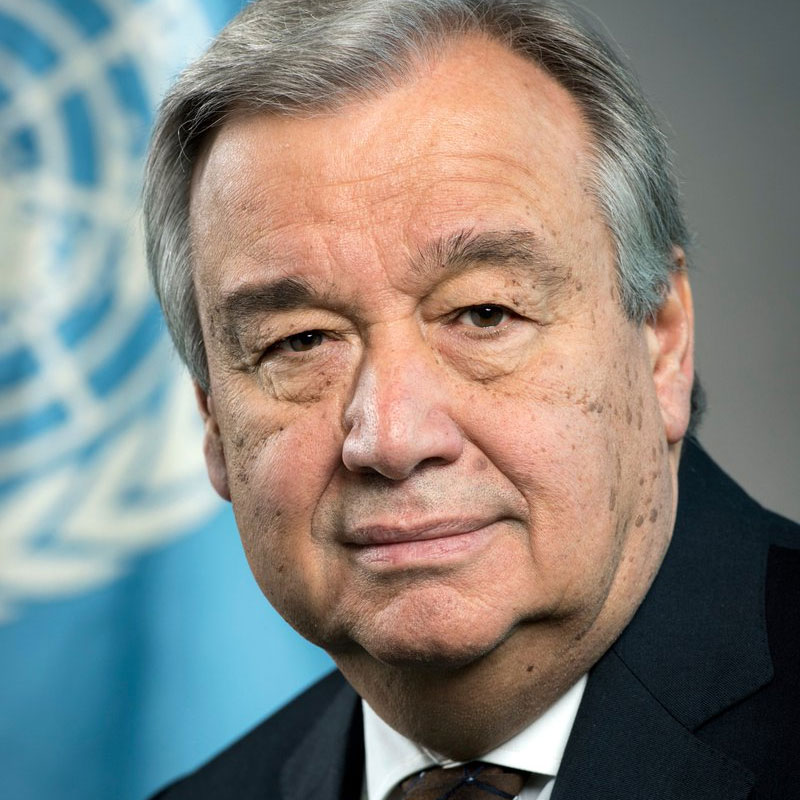
The Secretary-General is Chief Administrative Officer of the UN – and is also a symbol of the Organization's ideals and an advocate for all the world's peoples, especially the poor and vulnerable.

The Secretary-General is appointed by the General Assembly on the recommendation of the Security Council for a 5-year, renewable term.

The current Secretary-General, and the 9th occupant of the post, is António Guterres of Portugal, who took office on 1 January 2017.

On the 18th of June, 2021, Guterres was re-appointed to a second term, pledging as his priority to continue helping the world chart a course out of the COVID-19 pandemic.

Secretary-General's website

Main Bodies

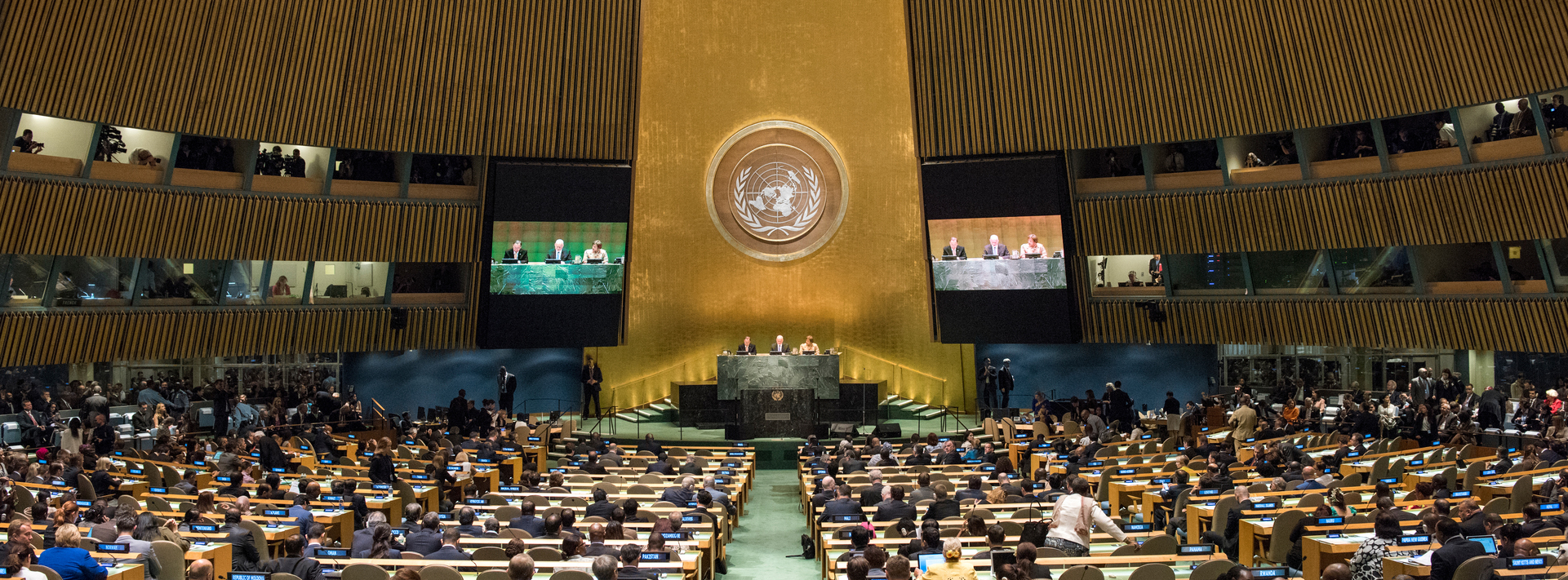
Wide view of the General Assembly Hall at an event in 2016.

©UN Photo/Cia Pak

The main bodies of the UN are the General Assembly, the Security Council, the Economic and Social Council, the Trusteeship Council, the International Court of Justice, and the UN Secretariat.

All were established in 1945 when the UN was founded.

UN Main Bodies


Secretariat

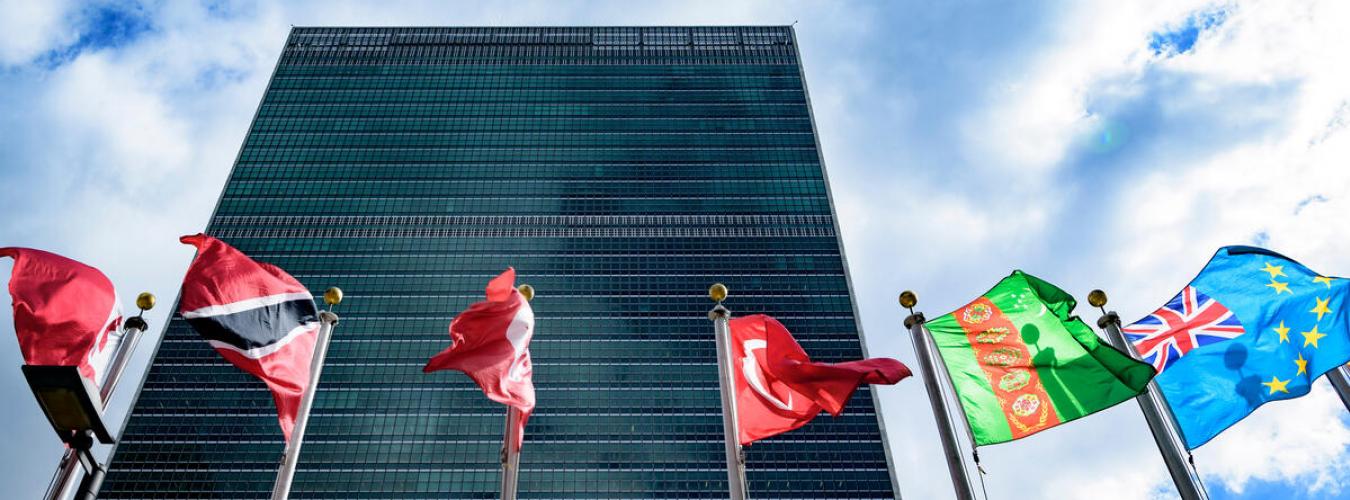
A view of the UN Secretariat building with flags of UN Member States flying in the foreground.

©UN Photo/Manuel Elías

The Secretariat carries out the day-to-day work of the UN as mandated by the General Assembly and the Organization's other main bodies.

The Secretary-General is the head of the Secretariat, which has tens of thousands of international UN staff members working at duty stations all over the world. 

UN Secretariat


UN System

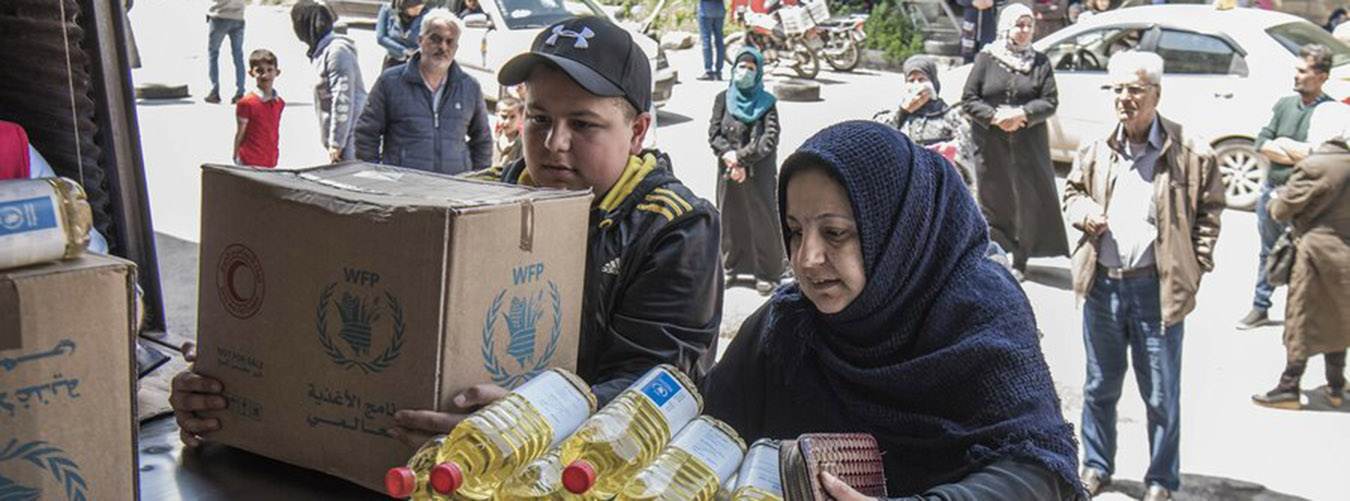
 A family picking up food from World Food Programme distribution center in Syria.

©WFP/Ali Habib

The United Nations is part of the UN system, which, in addition to the UN itself, comprises many programmes, funds and specialized agencies, each of which have their own area of work, leadership and budget.

The UN coordinates its work with these separate UN system entities, all of which cooperate with the Organization to help it achieve its goals.
UN System


UN Emblem

UN Emblem and Flag

The UN’s symbol — who designed it? what does it mean?

More on the UN emblem and flag
 

UN History

  • Overview
  • Milestones in UN History

    Timeline from 1941 to the present

  • The San Francisco Conference

    51 countries sign the UN Charter creating a new organization

  • Preparatory Years: UN Charter History

    Events which led to the UN’s creation

  • Predecessor: The League of Nations

    The League of Nations and the first international organizations


UN Charter
UN Charter cover image in blue


The Charter that our founding 51 Member States signed 75 years ago to create the UN

Full text
Individual chapters and more


UDHR
Universal Declaration of Human Rights - 6 languages edition, cover image


Universal Declaration of Human Rights (UDHR) — widely recognized as having inspired the adoption of more than 70 human rights treaties

Full text
History of, drafters, and more


The ICJ Statute
ICJ emblem


Statute of the International Court of Justice (ICJ) — How is the Court constituted? How does it function?

Full text
The ICJ is the main judicial organ of the UN
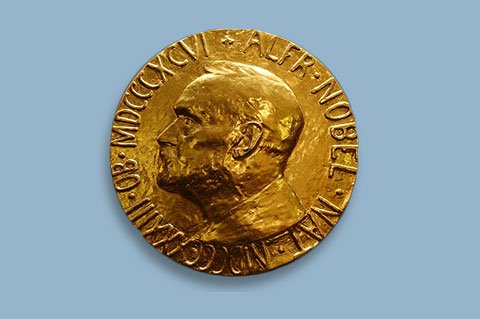


Nobel Peacee Prize Emblem
 

Nobel Peace Prize

The UN, UN system entities, and staff have been awarded the Nobel Peace Prize more than ten times.

The UN's Nobel Peace Prize awards

Main Bodies

  • General Assembly
  • Security Council
  • Economic and Social Council
  • Trusteeship Council
  • International Court of Justice
  • Secretariat

Departments / Offices

  • New York
  • Geneva
  • Nairobi
  • Vienna
  • UN System Directory
  • UN System Chart
  • Global Leadership
  • UN Information Centres

Resources / Services

  • Emergency information
  • Reporting Wrongdoing
  • UN Journal
  • Documents
  • Guidelines for gender-inclusive language
  • Databases
  • Library
  • UN iLibrary
  • UN Chronicle
  • UN Yearbook
  • Bookshop
  • Publications for sale
  • Maps
  • Media Accreditation
  • NGO accreditation at ECOSOC
  • NGO accreditation at DGC
  • Visitors’ services
  • Exhibits
  • Procurement
  • Employment
  • Internships
  • Model UN
  • Academic Impact
  • UN Archives
  • UN Audiovisual Library
  • How to donate to the UN System
  • Information on COVID-19 (Coronavirus)
  • Africa Renewal
  • Ten ways the UN makes a difference
  • GA High-level Week 2025

Key Documents

  • UN Charter
  • Universal Declaration of Human Rights
  • Convention on the Rights of the Child
  • Statute of the International Court of Justice
  • Annual Report of the Secretary-General on the Work of the Organization

News and Media

  • News
  • Press Releases
  • Briefings
  • Spokesperson
  • Photos
  • UNIfeed
  • UN Web TV
  • UN Video
  • Social Media
  • The Essential UN
  • Awake at Night podcast
  • The United Nations Pulse

Issues / Campaigns

  • Global Issues
  • Observances
  • Sustainable Development Goals
  • Our Common Agenda
  • The Summit of the Future
  • Pact for the Future
  • Climate Action
  • Peace and Security
  • Action for Peacekeeping (A4P)
  • Global Crisis Response Group
  • Call to Action for Human Rights
  • Disability Inclusion Strategy
  • Fight Racism
  • Hate Speech
  • LGBTIQ+ People
  • Safety of Journalists
  • Rule of Law
  • Action to Counter Terrorism
  • Victims of Terrorism
  • Children and Armed Conflict
  • Violence Against Children (SRSG)
  • Sexual Violence in Conflict
  • Refugees and Migrants
  • Action Agenda on Internal Displacement
  • Spotlight Initiative
  • Preventing Sexual Exploitation and Abuse
  • Prevention of Genocide and the Responsibility to Protect
  • 1994 Genocide against the Tutsi in Rwanda
  • The Holocaust
  • The Question of Palestine
  • The Transatlantic Slave Trade
  • Decolonization
  • Messengers of Peace
  • Roadmap for Digital Cooperation
  • Digital Financing Task Force
  • Data Strategy
  • Information Integrity
  • Countering Disinformation
  • UN80 Initiative
United Nations
Donate
  • facebook
  • twitter
  • youtube
  • flickr
  • instagram
  • A-Z Site Index
  • Contact
  • Copyright
  • FAQ
  • Fraud Alert
  • Privacy Notice
  • Terms of Use