Thank you for visiting nature.com. You are using a browser version with limited support for CSS. To obtain
the best experience, we recommend you use a more up to date browser (or turn off compatibility mode in
Internet Explorer). In the meantime, to ensure continued support, we are displaying the site without styles
and JavaScript.
Most workers spend a large proportion of their waking lives doing their job. The activities required can have both psychological and physical impacts. Healthcare workers often have to interact with people during crises, and helping others navigate these changes can have a psychological impact. In addition, healthcare workers can be exposed to potential physical dangers, such as infectious agents, toxins and radioactivity. Healthcare workers must also adapt to changes in medical practice that are required to appropriately implement ongoing advances in diagnosis and treatment of disease or as a consequence of the changing economics or policy within the countries in which they work. They can also benefit from both improvements in medicine and increased understanding of potential psychological and physical disruptors.
We welcome submissions that evaluate the mental and physical impact on healthcare workers of their work, and strategies to improve their health and wellbeing. We are particularly interested in studies that evaluate changes over time or as a consequence of particular events. These can be a consequence of planned changes or improvements to working conditions that are either preventative or introduced to address identified issues. Studies that compare different countries or healthcare systems are also encouraged.
This is a joint Collection across Nature Mental Health, Nature Communications, Communications Medicine, Communications Psychology and Scientific Reports. Before deciding which journal to submit to, please see the relevant journal webpages to check the scope of each journal, as each journal will only publish Articles that also align with their usual scope. Also note that Nature Communications and Scientific Reports will only consider original research Articles, whilst Nature Mental Health, Communications Medicine and Communications Psychology welcome submissions of original Articles, Reviews and opinion content. Each participating journal will apply its standard editorial criteria, including for scope and advance, to the submissions received within the Collection. Authors can choose which journal to submit to based on their own preference. The targeted journal will evaluate the submission for suitability for peer-review at the journal and, where submissions are out of scope but likely suitable for another participating journal, express a recommendation to the authors.
This Collection supports and amplifies research related to SDG 3.
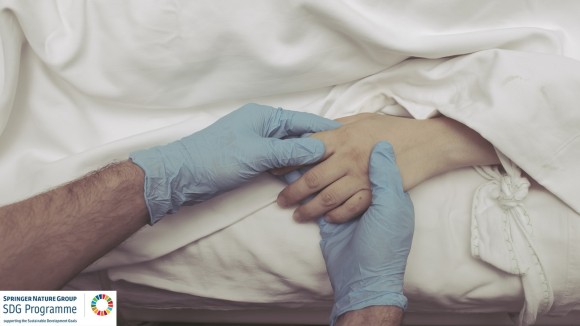
McNeil et al. discuss the need to proactively protect and promote the wellbeing of frontline healthcare staff within the everyday practices of health organizations and in health emergency planning and response. They highlight how health crises add to the routine stresses facing health systems, explore challenges facing staff, and suggest next steps and potential solutions as well as the potential risks of inaction
Asrar et al. discuss the steps that the space sector is taking towards promoting equity, diversity, inclusion and accessibility, such as the world’s first parastronaut program. They propose that healthcare can learn from the space sector in enhancing disability inclusion and support for people, including healthcare workers, with disabilities.
Tuazon et al. highlight the mental health challenges facing physician-scientist trainees, who have a dual commitment to advancing clinical care and undertaking research. The authors outline the critical gaps in mental health support structures available to this unique trainee population and provide recommendations to redress the concerns discussed.
Patients with cost-constrained or delayed healthcare had worse electronic health record reliability for 73% of medical conditions, according to an analysis of 205,186 participants in the All of Us Research Program—a data bias with implications for AI-based disease prediction tools.
Using a statistical model that incorporates transmission intensity and stratum-specific rates of severe outcomes, either associated with disease or vaccination, a framework is proposed to compare the risks and benefits of deploying new vaccines, using early epidemiological data.
Digital surveillance at the national scale, coupled with a spatial model that extends the data to a more granular scale, reveals gaps in MMR vaccination coverage that align with recent measles outbreaks.
A prospective nationwide genomic screening pilot for ten genes in young adults in Australia detected pathogenic variants in 2% of the population, most of whom were ineligible for government-funded genomic testing.
Georgia-Nektaria et al. investigate the levels of optimism and mental resilience among healthcare professionals in one of the largest hospitals in Greece. They find moderate overall levels of optimism and resilience, with older participants exhibiting greater levels of resilience and paramedics showing greater levels of optimism.
Stress resilience is the maintenance of mental health despite adversity. Here, the authors show that how we typically evaluate adverse events is a key resilience factor and that improving it goes along with improved resilience.
Meine, McPherson et al. assess risk and resilience factors in Swiss medical interns predicting skills improvement, burnout, wellbeing and career motivation. Based on quantitative and qualitative analyses, three important factors emerge: work dissatisfaction, social and team factors and degree of practical involvement.
Audet et al. systematically review the literature aimed at identifying validated self-reported questionnaires designed to assess clinician well-being and its influencing factors. While several tools exist, few have undergone comprehensive validation.
Ma, Wang, Meng et al. conducted a retrospective study to investigate the impact of using smart watches in intensive care units (ICU) on alarm response and the impact on the work efficiency of nursing staff. Response times shortened leading to fewer high-level and fatal alarms and reduced durations of mechanical ventilation and ICU stays.
Dörr, Lacy et al. evaluate the association between SARS-CoV-2 vaccination status and influenza-like illness and sick leave among 1745 Swiss healthcare workers. SARS CoV-2 vaccination is associated with increased illness symptoms and more days of sick leave, while influenza vaccination is associated with a decreased risk of both outcomes.