
A product roadmap is a visual and strategic plan that communicates the product’s vision, goals, and milestones over a defined timeline. Whether you’re a start-up or an established company, a roadmap ensures your team, stakeholders, and customers are aligned toward the same objectives.
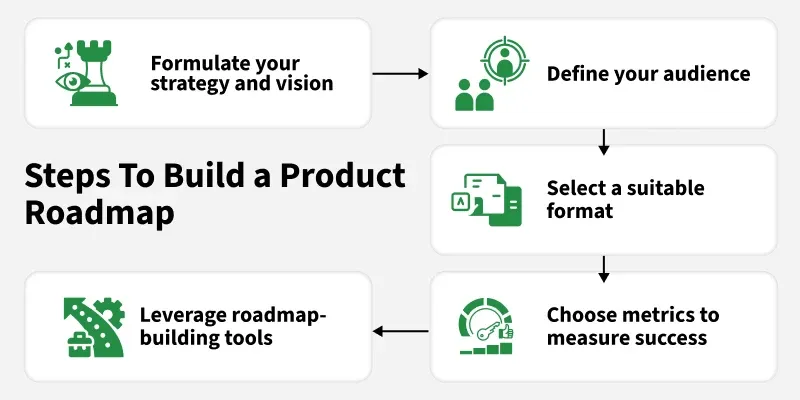
A Good Product Roadmap
A good product roadmap is a useful instrument for leading product development, holding the team together, and portraying a strategic vision to stakeholders.
- Clear Vision & Objectives: Define a compelling product vision aligned with company goals and measurable objectives.
- Audience-Centric Focus: Prioritize features based on customer needs, feedback, and preferences.
- Strategic Alignment: Align the roadmap with business goals, market positioning, and competitive landscape.
- Prioritization & Focus: Rank features and tasks by impact to avoid wasted effort and maintain focus.
- Realistic Timeline: Set achievable deadlines, accounting for dependencies and potential challenges.
- Cross-Functional Collaboration: Ensure alignment across product, engineering, design, and marketing teams.
What to Include in a Product Roadmap
To build an effective product roadmap, make sure to include these essential elements:
- High-Level Overview: Start with a brief summary that conveys the overall vision and purpose of the product, providing context for the roadmap.
- Goals and Objectives: Clearly articulate the product’s goals and objectives, ensuring they align with the broader organizational strategy.
- Timeline: Include a visual timeline highlighting key milestones, releases, and deadlines to show the product’s development progress.
- Features and Enhancements: List the primary features, functionalities, and improvements planned for each release, prioritized by their contribution to achieving product goals.
- Dependencies: Identify relationships between tasks or features to clarify workflow and highlight potential bottlenecks.
- Risks and Mitigations: Outline potential risks that could impact the roadmap and propose mitigation strategies to set realistic expectations.
Steps for Creating a Product Roadmap
Step 1: Determine Your Audience:
Understanding your target market is crucial for creating a successful product roadmap. Different stakeholders have varied interests, needs, and expectations, all of which must be considered to ensure the roadmap addresses the priorities of every group effectively.
Here are key stakeholders to consider when determining your audience for a product roadmap:
- Executive Leadership: Focus on how the product aligns with company strategy and drives growth.
- Product Management: Centered on features, capabilities, and competitive positioning.
- Development & Engineering Teams: Need clarity on technical requirements, timelines, and dependencies.
- Design Teams: Prioritize user experience and interface, aligning visuals with product concepts.
- Marketing Teams: Require insights on target markets, product highlights, and competitive landscape for campaigns.
- Sales Teams: Understand features, value propositions, and release plans to communicate effectively with customers.
- Customer Support & Service: Stay updated on new features to provide effective client assistance.
Step 2: Identify the Roadmap Timeline:
Creating a timeline is a crucial part of the product roadmap, providing a visual guide for feature releases, milestones, and overall product development. Here's How to structure the roadmap timeline:
- Define Milestones and Key Deliverables: Identify major milestones such as product launches, significant updates, or new feature releases. Ensure each milestone aligns with overall product objectives.
- Break Down Work into Phases: Divide the development process into phases or sprints based on functionality, complexity, or other relevant criteria. This enables a clear and manageable timeline.
- Consider Dependencies: Map out task relationships, noting which activities rely on the completion of others to ensure a realistic schedule.
- Estimate Time for Each Task: Collaborate with development and project teams to estimate timelines, factoring in complexity, resources, and potential risks.
- Use Timeframes and Gantt Charts: Assign timeframes for milestones and phases. Utilize Gantt charts to visually represent schedules and dependencies.
- Prioritize High-Impact Features: Schedule critical features that directly impact product goals first to ensure essential functionality is delivered early.
- Account for Market Factors: Include external influences such as market trends, seasonal demands, or competitor actions, allowing the roadmap to adapt to changing conditions.
Step 3: Assembling Additional Components for Product Development Plan:
A complete product development roadmap goes beyond timelines—it integrates key components that ensure the product’s success. Essential components to include are :
- Market Research: Conduct thorough research to understand industry trends, competitors, and user needs. Use these insights to make data-driven product decisions.
- SWOT Analysis: Evaluate Strengths, Weaknesses, Opportunities, and Threats to identify internal and external factors impacting product success. Inform strategy and risk mitigation.
- Define Success Metrics: Establish clear KPIs such as user engagement, revenue growth, or customer satisfaction to measure product performance.
- Budget & Resource Allocation: Plan financial and human resources effectively, including technology, tools, and external services. Ensure efficient resource utilization.
- Risk Management: Identify potential risks, assess their likelihood and impact, and define strategies to mitigate or avoid them.
- Prototyping & MVP Development: Create mock-ups or Minimum Viable Products to test concepts and gather early user feedback for iterative improvements.
- Documentation: Prepare comprehensive materials including technical documentation and user guides to ensure clarity and usability.
- Customer Support & Training: Develop a support and training plan to help users adopt the product effectively, enhancing overall user experience.
How to Choose the Right Product Tool for Roadmap
There are lots of tools, each of them with their own characteristics and advantages. Here are some key factors to consider when selecting a product roadmap tool:
- Ease of Use: Look for a tool that is a breeze to use and can be easily grasped. Your team must be capable of adapting easily to the tool without the need for the prolonged training.
- Collaboration Features: Ensure that there are possibilities for collaborative tools that support communication and work in teams. Applying features of commenting, real-time editing, and @mentions to collaboration can help to improve it.
- Customization Options: In a nutshell, a good roadmap tool must enable you to personalize it in accordance with your precise wants. Consider availability of flexibility in design of layout, colours and fields.
- Integration Capabilities: Make sure the tool meshes with the other tools your team uses, e.g. project management software, issue trackers, and version control systems.
- Timeline and Planning Views: Judge different timeline and planning views made available through the tool. Select the one that matches the style of communication and scheduling you favour the most, be it a Gantt chart, Kanban board, or the traditional timeline option.
- Prioritization Features: The capacity to arrange tasks and features according to their importance is a must. Check for the characteristics such as drag and drop prioritization, colour highlighting, or rating systems.
- Accessibility and Portability: Test if the tool can be used on different devices and systems. This is crucial for teams at a distance or people who could need an access to the roadmap from any location.
- Scalability: Mind the scalability of the tool make sure it is able to scale to your team, handle more projects and users over time.
- Reporting and Analytics: Search tools that come with reporting and analytics facilities. It makes it possible for you to follow progress, reveal bottlenecks, and take data-driven decisions.