
Advanced Persistent Threat (APT) is a prolonged and targeted cyber attack where hackers gain unauthorized access to a network and remain undetected for an extended period. Advanced Persistent Threat (APT) is like a stealthy thief who breaks into a house and stays hidden for a long time, carefully stealing valuable items without being noticed.
These Advanced Persistent Threats (APT) are sophisticated, using stealthy methods to avoid detection while continuously gathering sensitive information. APTs often target high-value organizations, aiming to steal valuable data or disrupt operations. Unlike common cyber-attacks APTs are patient and methodical, making them especially dangerous and hard to eliminate. The advanced techniques used in Advanced Persistent Threats (APT) make them a significant threat in cybersecurity, requiring robust defense strategies to protect against these persistent and evolving dangers.
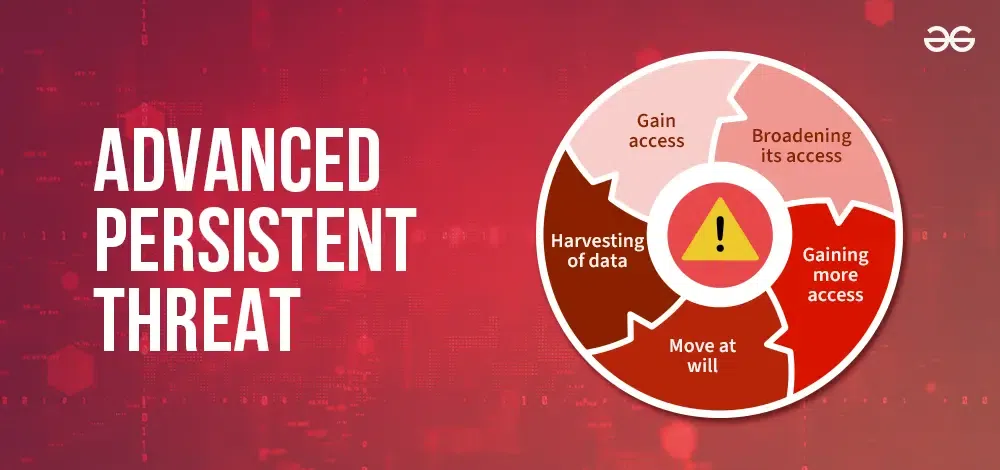
Table of Content
Characteristics of the Advanced Persistent Threat
The main focus of Advanced Persistent Threat (APT) cyber-attack is to gain unauthorized access to a computer network and stay there undetected for a long time.
- Advanced Techniques : Advanced Persistent Threat (APTs) often use sophisticated techniques such as social engineering, zero-day exploits, and custom malware to gain access and maintain persistence in a network.
- Persistence : Advanced Persistent Threat (APTs) are designed to remain undetected for long periods of time, allowing hackers to maintain access and continue to steal data or perform other malicious activities.
- Targeted : Advanced Persistent Threat (APTs) are targeted attacks, with attackers carefully selecting their targets based on their value and potential for success.
- Data Exfiltration : Advanced Persistent Threat (APTs) are designed to steal sensitive data, which is then exfiltrated out of the targeted network to the attacker's system.
Working of an Advanced Persistent Threat
These are steps that the attacker performs in Advanced Persistent Threat(APT) to gain unauthorized access and maintain access on the network which are as follows :
- Gain access : The attackers can gain access through the network. This is done through spear-phishing email or other methods where the attacker's main intention is to insert the malicious software into the target network.
- Broadening its access : When the access part is done by the attacker, they start exploiting the malware. This exploiting of malware makes the attacker move around without even getting detected.
- Gaining more access : When the attacker has gained access to the network, they may use some ways like password cracking to get the administrative rights. This will allow the attacker to get more control of the system and get access at a deeper level.
- Move at will : When the attacker has breached all the system and got the administrative rights they can move around.
- Harvesting of data : When the attackers are in the system, they start harvesting the data and store those data on their own system. They can remain in the system for a longer period of time until they are detected.
How to detect the Advanced Persistent Threat?
Detecting an Advanced Persistent Threat (APT) is an extensive task that require carefully monitoring the system. Here are some simple steps to detect an APT:
- Unusual Activity: Look for strange behavior on your computer or network, like files being accessed at odd times or unusual data transfers.
- System Slowdowns: Notice if your computer or network is slower than usual, which could mean an APT is using resources secretly.
- Unknown Programs: Check for any unfamiliar programs or software running on your devices that you didn’t install.
- Login Alerts: Set up alerts for unusual login attempts, especially from unknown locations or at odd hours.
- Regular Scans: Use security software to regularly scan for and identify any malicious activities or software.
- Monitor Changes: Keep an eye on changes to important files and settings that you didn’t make, as these could be signs of tampering.
How to be protected from Advanced Persistent threat?
Protecting your system from an Advanced Persistent Threat (APT) is like securing your home with strong locks and alarms. Here are some easy steps to keep your computer safe:
- Use Strong Passwords: Create strong, unique passwords for each account and change them often.
- Enable Two-Factor Authentication: Add extra security by using two-factor authentication (2FA), which requires a second verification step, like a text code.
- Keep Software Updated: Regularly update your operating system, apps, and security software to fix weaknesses.
- Install Antivirus: Use good antivirus software to detect and block threats.
- Use Firewalls: Set up firewalls to block unauthorized access to your network.
- Back Up Data: Regularly back up important files to an external drive or cloud storage to prevent data loss.
- Monitor Activity: Keep an eye on your network for any unusual activity.
- Limit Access: Only give access to sensitive information to those who need it and restrict administrative rights.
- Secure Remote Access: Use secure methods like VPNs when accessing your network remotely.
Some Famous Advanced Persistent Threat (APT) attacks
- Stuxnet (2010): This attack targeted Iran's nuclear facilities, specifically the Natanz uranium enrichment plant, causing significant damage to centrifuges. It is believed to have been a joint operation by the United States and Israel.
- APT1 (2006-2013): A cyber-espionage group linked to the Chinese military, which targeted over 141 companies worldwide across various industries, stealing vast amounts of data and intellectual property.
- Operation Aurora (2009): A series of cyber attacks originating from China, targeting major corporations such as Google, Adobe, and other high-profile firms to steal intellectual property and gain access to internal networks.
- DarkHotel (2007-present): An ongoing campaign that targets business executives staying at luxury hotels, using hotel Wi-Fi networks to deliver malware and steal sensitive information.
- Operation Shady RAT (2006-2011): A widespread cyber-espionage campaign that targeted more than 70 organizations, including government agencies, corporations, and non-profits, stealing sensitive data and intellectual property.
- APT28 (Fancy Bear, 2007-present): A Russian cyber-espionage group known for targeting government, military, security organizations, and media, including interference in the 2016 US presidential election.
- Operation Night Dragon (2009-2011): A series of cyber attacks targeting global oil, energy, and petrochemical companies, aimed at stealing sensitive information and intellectual property. The attacks were traced back to China.
- APT33 (2013-present): An Iranian cyber-espionage group that has targeted aerospace, defense, and energy sectors, primarily in the United States and Saudi Arabia, using sophisticated malware to steal data and disrupt operations.
Conclusion
Advanced Persistent Threats (APTs) represent a significant and ongoing challenge in the realm of cybersecurity. These Advanced Persistent Threats are not only sophisticated but also persistent, making them difficult to detect and mitigate. Organizations must remain vigilant and implement robust security measures to defend against these persistent threats. Understanding the nature of Advanced Persistent Threats and staying updated on the latest defense strategies are crucial for safeguarding sensitive information and ensuring the resilience of high-value systems against these relentless cyberattacks