
Moving to the cloud allows organizations to transform their technical operations into strategic business advantages through the following four pillars:
- Cost Efficiency and Flexibility: Organizations transition from heavy upfront capital expenditures to a variable "pay-as-you-go" model, ensuring they only pay for the resources they actually consume.
- Operational Automation: Cloud services like AWS RDS and AWS Backup handle "undifferentiated heavy lifting" such as hardware provisioning, patching, and backups, allowing teams to focus on core application development.
- Elastic Scalability: The cloud provides resizable capacity that can scale virtually infinitely, enabling businesses to meet fluctuating demand without the need for manual hardware upgrades.
- Enhanced Resilience and Security: Managed services provide built-in tools for disaster recovery, continuous vulnerability scanning, and automated compliance, which are often more robust than traditional on-premises infrastructures.
Financial Impact
Cost Considerations: Balancing CapEx and OpEx
Capital Expenditure (CapEx) and Operational Expenditure (OpEx) are two key financial terms that businesses use to categorize their spending. Understanding the difference between these two categories is crucial for making informed financial decisions and optimizing your resources.
Capital Expenditure (CapEx)
CapEx refers to the funds used to acquire or upgrade long-term assets that are expected to benefit the company beyond the current year. These assets are tangible, meaning they have a physical presence, and they depreciate over time.
Examples of CapEx: Purchasing fixed assets: buildings, machinery, equipment, vehicles, etc.
1. Upfront Investments:
- Traditional on-premises solutions often involve significant upfront investments in hardware, software licenses, and infrastructure.
- CapEx is associated with long-term assets and is typically incurred at the beginning of a project or initiative.
2. Transition to Operational Expenditure:
- Cloud adoption, particularly the "Rehosting" strategy, allows organizations to shift from a CapEx model to an OpEx model.
- Instead of investing in and maintaining physical infrastructure, organizations pay for cloud services on a pay-as-you-go basis.
3. Predictable Budgeting:
- AWS provides various pricing models, such as Reserved Instances, allowing organizations to plan and budget more predictably.
- CapEx is transformed into more flexible, predictable OpEx, aligning expenses with actual resource consumption.
Operational Expenditure (OpEx)
OpEx, on the other hand, covers the ongoing expenses required to run a business day-to-day. These expenses are typically recurring and necessary for maintaining the company's operations.
Examples of OpEx: Salaries and wages for employees, Rent and utilities, Maintenance and repairs, Marketing and advertising, Office supplies and other consumables.
1. Scalability and Flexibility:
- OpEx provides flexibility, allowing organizations to scale resources up or down based on demand.
- This elasticity aligns with the dynamic nature of business operations and prevents overprovisioning.
2. Managed Services:
- Leveraging managed services on AWS reduces the need for extensive in-house management and maintenance.
- OpEx includes the costs associated with using these services, freeing up internal resources for more strategic activities.
AWS Cloud Adoption Framework (AWS CAF) & Management of Financial Transformation
The AWS Cloud Adoption Framework (AWS CAF) is a comprehensive system designed to help organizations successfully adopt and scale cloud technologies while ensuring measurable business outcomes.
- Strategic Transformation: AWS CAF is a comprehensive framework that helps organizations adopt and scale cloud technologies by prioritizing measurable business outcomes over simple technical shifts.
- Perspective Alignment: It provides structured guidance to align business, people, and technology perspectives throughout the entire cloud adoption journey.
- Secure Migration Path: The framework assists in moving from legacy or on-premises environments to the cloud in a secure, scalable, and well-governed manner.
- Risk and Value Management: It is designed to reduce organizational risk while accelerating value realization during the transition to cloud-based operations.
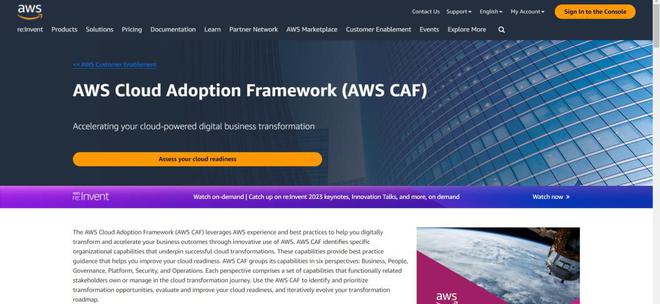
The Assessment Phase: Preparing for Cloud Adoption
Before migrating workloads, organizations must understand their current state and readiness for the cloud. AWS recommends an assessment phase, which helps identify gaps, risks, and opportunities. Two key methodologies used during this phase are the Cloud Adoption Readiness Tool (CART) and the Migration Readiness Assessment (MRA).
-660.jpg)
Cloud Adoption Readiness Tool (CART)
The Cloud Adoption Readiness Tool (CART) is a comprehensive assessment tool developed by Amazon Web Services (AWS), designed to evaluate an organization's readiness for cloud adoption. Developed by industry experts, CART assists businesses in assessing various aspects critical to a successful cloud migration. The tool takes into account factors such as technology, people, processes, and governance, providing a holistic view of an organization's preparedness to embrace the cloud (online test and consist of 46 questions and it's free).
1. Evaluation of Organizational Readiness:
- CART assesses the organization's readiness for cloud adoption across various dimensions, including business, people, governance, platform, security, and operations.
- It provides a structured framework to identify strengths, weaknesses, and areas that require attention.
2. Business Perspective:
- CART assists in aligning cloud adoption initiatives with business goals.
-660.jpg)
Fig. 3 - It evaluates the organization's ability to integrate cloud strategies with overarching business strategies.
3. People Perspective:
- Assessing the skills, roles, and cultural aspects required for a successful cloud adoption journey.
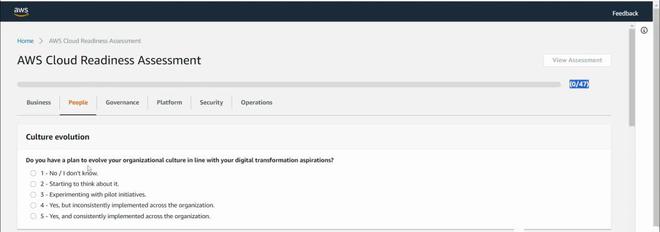
Fig. 4 - CART highlights potential skill gaps and areas for training and upskilling.
4. Governance Perspective:
- Analyzing the existing governance framework and identifying areas for improvement.
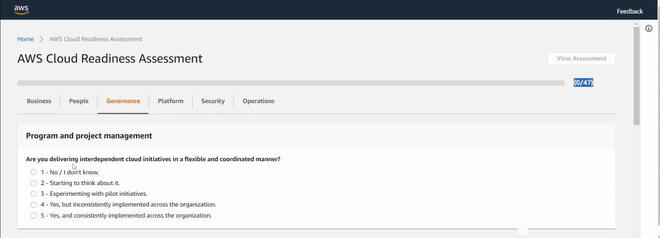
Fig. 5 - It ensures that policies, compliance, and risk management are addressed in the context of the cloud.
5. Platform Perspective:
- Evaluating the current infrastructure and architecture to determine its compatibility with cloud services.
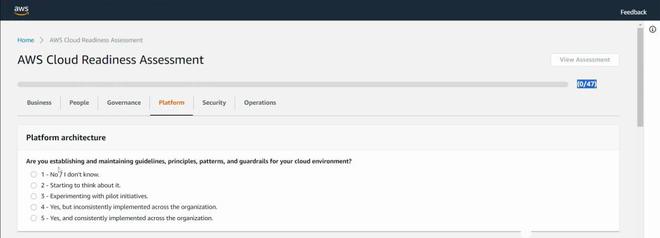
Fig. 6 - Identifying opportunities for optimization and scalability.
6. Security Perspective:
- Assessing the security measures in place and recommending enhancements for a robust cloud security posture.
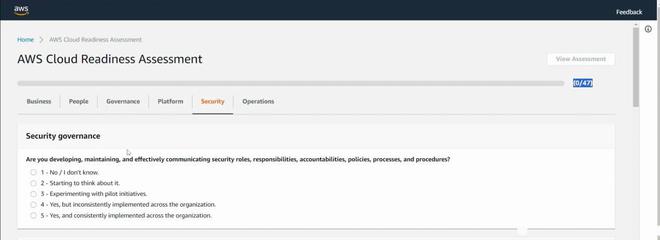
Fig. 7 - Highlighting potential vulnerabilities and proposing mitigation strategies.
7. Operations Perspective:
- Examining existing operational processes and procedures to ensure they align with cloud best practices.
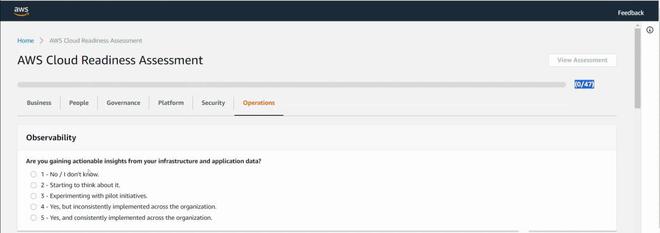
Fig. 8 - Identifying opportunities for automation and efficiency gains.
Migration Readiness Assessment (MRA)
Migration Readiness Assessment focuses on evaluating an organization's preparedness specifically for the migration phase of adopting cloud services. MRA goes beyond the initial readiness assessment provided by CART, delving deeper into the technical and operational aspects of the migration process (Total 76 question and it's paid).
1. Workload Analysis:
- MRA involves a detailed analysis of the existing workloads and applications.
- It categorizes workloads based on their complexity, dependencies, and criticality.
2. Risk Assessment:
- Evaluating the risks associated with migration, including technical challenges, potential disruptions, and compliance considerations.
- Identifying mitigation strategies to address these risks.
3. Resource Mapping:
- Mapping existing resources to suitable AWS services and determining the optimal deployment model (e.g., Infrastructure as a Service, Platform as a Service, Serverless).
- Ensuring that the chosen AWS services align with business requirements.
4. Cost Estimation:
- Estimating the costs associated with the migration, including one-time costs and ongoing operational expenses.
- Providing insights into potential cost savings and optimization opportunities.
5. Timeline and Roadmap:
- Developing a migration timeline and roadmap, outlining key milestones and dependencies.
- Ensuring a phased approach that minimizes disruptions to business operations.
6. Skill and Training Needs:
- Identifying the skills required for successful migration and recommending training programs.
- Ensuring that the team is equipped to manage and optimize cloud resources effectively.
Integration of Assessment Phase with AWS CAF and Migration Strategies
1. Informed Decision-Making:
- The insights gained from CART and MRA inform decision-making throughout the AWS Cloud Adoption Framework perspectives.
- Organizations can align their strategies with the findings from the assessment phase.
2. Prioritization of Migration Strategies:
- CART and MRA assist in prioritizing migration strategies based on organizational readiness, risk tolerance, and business priorities.
- This ensures a well-considered and phased approach to migration.
3. Alignment with Financial Considerations:
- The assessment phase helps organizations conduct a thorough Total Cost of Ownership (TCO) analysis, aligning with financial considerations and the balance between CapEx and OpEx.
4. Continuous Improvement:
- The assessment phase is not a one-time activity; it sets the stage for continuous improvement.
- Organizations can revisit assessments periodically to adapt to evolving business needs and technological advancements.
Migration Strategies
Migrating to the cloud involves moving applications, data, and workloads from on-premises environments to the cloud. AWS offers a range of migration strategies, allowing organizations to choose the approach that best suits their specific needs. Some common migration strategies include:
- Rehosting (Lift and Shift): This strategy involves moving applications and workloads to the cloud without making significant changes. It is a quick and straightforward approach, suitable for applications with minimal dependencies on the underlying infrastructure.
- Replatforming (Lift, Tinker, and Shift): In this strategy, organizations make minor adjustments to their applications to optimize performance and take advantage of cloud-native features. This approach offers a balance between speed and optimization.
- Refactoring (Re-architecting): Organizations redesign or redevelop applications to fully leverage cloud-native capabilities. This strategy can result in improved performance, scalability, and cost efficiency but requires more time and resources.
- Rearchitecting for Resilience: This strategy involves designing applications to be resilient in the cloud, minimizing downtime and disruptions. It often includes the use of managed services and serverless architectures.
- Retiring: Identifying and decommissioning applications or services that are no longer necessary. This simplifies the migration process and reduces ongoing operational costs.
- Retaining: Some applications may remain on-premises for various reasons, such as regulatory requirements or specific hardware dependencies. This strategy involves keeping certain workloads in the existing environment.
Best Practices for Successful Cloud Adoption and Migration
- Executive Support: Ensure leadership commitment and support for the cloud adoption journey to drive organizational change effectively.
- Skill Development: Invest in training and upskilling teams to equip them with the necessary skills for managing cloud resources.
- Start Small, Scale Fast: Begin with a pilot project or a smaller workload to gain experience and confidence before scaling up cloud adoption efforts.
- Security First: Prioritize security from the outset, integrating security measures into the entire cloud adoption lifecycle.
- Cost Optimization: Continuously monitor and optimize costs by leveraging AWS cost management tools and best practices.
- Automate Everything: Embrace automation to streamline processes, enhance efficiency, and reduce the risk of human errors.
- Performance Monitoring: Implement robust monitoring and analytics to ensure optimal performance and to proactively address any issues.
- Iterative Improvement: Adopt an iterative approach to cloud adoption, learning from experiences and continuously refining strategies.