
Cybersecurity is the process of protecting networks, systems, applications and digital assets from unauthorized access, cyberattacks, malware and data breaches. It ensures the confidentiality, integrity and availability (CIA) of information while supporting secure and sustainable digital infrastructure.
- Protects sensitive data using encryption, authentication and access control.
- Secures networks and systems against malware, ransomware and cyber threats.
- Supports safe digital transformation through secure cloud and IT infrastructure.
- Reduces downtime, resource misuse and operational risks caused by attacks.
- Enhances the reliability and resilience of modern digital technologies.
Core Pillars of Cybersecurity
Cybersecurity is based on three core principles that help protect information and systems.
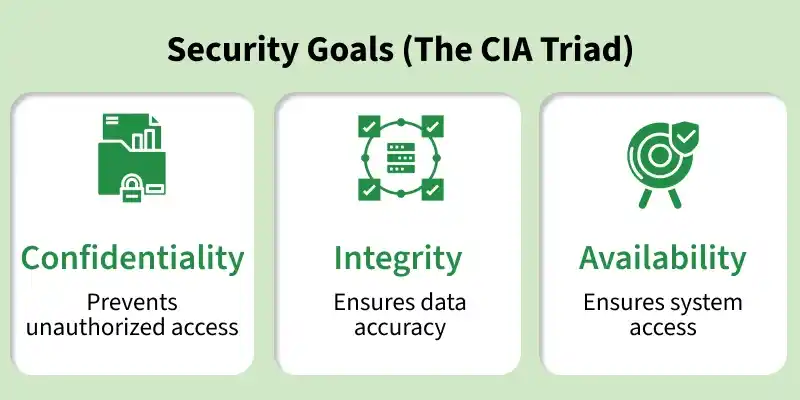
- Confidentiality: Ensures that sensitive information is accessible only to authorized users.
- Integrity: Protects data from unauthorized modification and maintains its accuracy.
- Availability: Ensures systems, services and data remain accessible whenever needed.
Types of Cybersecurity
There are seven types of cybersecurity, each explained below in detail with uses and functions:
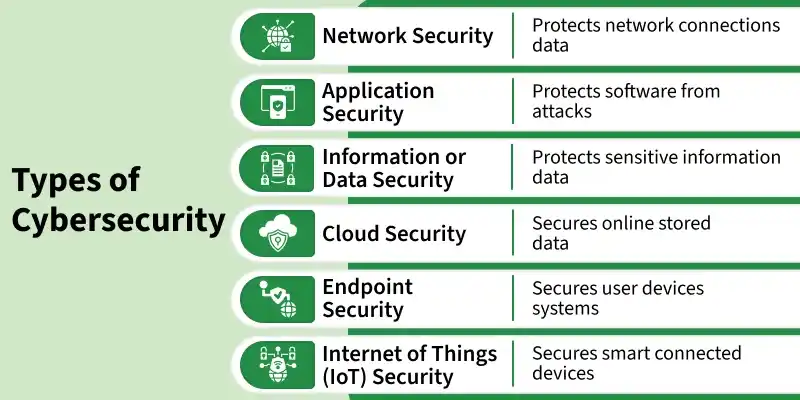
- Network Security: Protects computer networks from unauthorized access, malware and cyberattacks using firewalls, VPNs, intrusion detection systems and network monitoring tools.
- Application Security: Focuses on securing software and mobile applications through secure coding practices, regular updates, vulnerability testing and security patches.
- Information or Data Security: Protects sensitive data from unauthorized access, modification or loss using encryption, access controls, data classification and backup strategies.
- Cloud Security: Secures cloud-based data, applications and infrastructure through identity management, encryption, compliance controls and secure configurations.
- Endpoint Security: Protects devices such as computers, smartphones, servers and IoT devices using antivirus software, device encryption and regular system updates.
- Operational Security: Includes security policies, access management, risk assessment, employee awareness programs and incident response procedures to protect organizational assets.
- Internet of Things (IoT) Security: Protects connected devices such as smart home systems, wearable devices and industrial sensors through authentication, encryption and regular firmware updates.
Major Cybersecurity Threats & Attacks
Cybersecurity threats target systems, networks and data using various attack techniques. Some of the most common threats include:

- Malware Attacks: Malware is harmful software such as viruses, trojans, ransomware and spyware that can damage systems or steal data
- Phishing & Spear Phishing: These attacks use fake emails, messages or websites to trick users into revealing sensitive information.
- Ransomware Attacks: Ransomware encrypts files and demands payment to restore access, often targeting businesses and organizations.
- DDoS Attacks: Distributed Denial-of-Service (DDoS) attacks overwhelm servers with excessive traffic, making services unavailable.
Emerging Trends in Cybersecurity
Cybersecurity is constantly evolving to address new threats and technologies. Some key trends include:
- Rise of AI and Machine Learning: AI-powered tools help detect, analyze and respond to cyber threats more quickly and accurately.
- Rising Ransomware Attacks: Ransomware attacks continue to grow, making regular backups and strong security measures essential.
- Cloud Security: As cloud adoption increases, organizations focus on securing cloud data and applications.
- IoT Security Challenges: Connected devices create new security risks, requiring stronger protection and regular updates.
- Zero Trust Security: Zero Trust verifies every user and device before granting access, reducing security risks.
Challenges of Cybersecurity
- Evolving Threats: Attackers constantly create new methods. Keep systems updated and monitor regularly.
- Limited Budgets: Security tools are costly. Prioritize critical assets and use cost-effective solutions.
- Insider Threats: Misuse of access. Enforce strict access controls and monitor user activity.
- Complex Technology: Cloud, IoT and hybrid systems increase complexity. Simplify systems and conduct regular security audits.