
AWS East feels left out.
NaibofTabr
- 20 Posts
- 5.63K Comments
Joined 3 years ago
Cake day: June 18th, 2023
You are not logged in. If you use a Fediverse account that is able to follow users, you can follow this user.

 1·16 hours ago
Yeah if you’re down to put the effort into fault tracing, you’ll need an oscope. Something like this: https://ebay.io/m/PDLGdu will work fine.
It will take some time, but if you’re lucky you’ll find it’s just a capacitor that you can replace cheaply. If you’re unlucky you might find that it’s a faulty IC, in which case you might have to replace an entire circuit board from a donor unit anyway.

 1073·1 day ago
totally not a cult

 4·2 days ago
bonk you with the corny bat
 9·2 days ago
Stahlin is a protected class, you know.

Maybe Polymarket can predict it?
 17·2 days ago
How long do you figure before they get the Flock AI declared a police officer, therefore any damage to an AI-enabled device counts as assaulting an officer?
Sure, but there’s no reason they couldn’t be built into an enclosure that looks like other security cameras.
Alternatively, you just build a little box that has that extra stuff and plugs into a normal security camera, and you bury the box in the ground or put it inside a locked utility cabinet or something.
The next stage of this is going to be models of Flock cameras that look like other common security cameras, or a Flock module that plugs into existing security cameras and adds them to the network.
 11·2 days ago
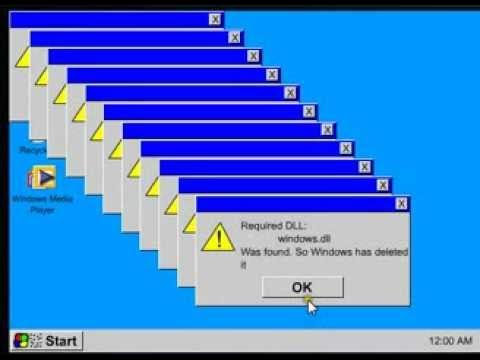
Oh good, we can still call it BSoD.
 114·2 days ago
Well, there’s no accounting for taste, I guess.
For those who are not already lost, here’s a better option: https://somafm.com/home.html
Don’t be a clanker lover.
 17·2 days ago
Yeah there’s probably a lot more people reporting them recently.
This time last year there wasn’t nearly as much public awareness.
You’re going to have a hard time pinning this down to a specific component without a circuit diagram. I did find that there’s a service manual for this unit: https://elektrotanya.com/marantz_nr1501_ver.5.pdf/download.html
Seems to be legitimate and has diagrams.
I would recommend starting on the output side - is the popping present on every speaker output? Both left and right? Use a very simple speaker for this, one that doesn’t require its own power source, just a red and black wire. Also, is the popping present with no input audio?
If you can narrow it to a certain output you can backtrack it to a specific section of the circuit that feeds that output. Alternatively, if it’s present on all outputs then it must be a component that is common to all, and therefore behind the area that splits to the different outputs.
An oscilloscope would be handy - you could identify the faulty signal at the speaker output, then check points along the path backward. Half-splitting is your friend. You don’t have to buy an expensive piece of lab equipment, a cheap $30-40 digital oscope will be good enough.
Another option would be to throw parts at it. I see units listed for parts on eBay for ~$80. You could try swapping out circuit boards one at a time.
Two-legged walk cycles are very complicated and unstable.





















Oh, I disagree. The GNU GPL, which is one of the most widely used open source licenses, is a copyleft license. In practice, this means that any software which uses GPL code (a derivative work) also falls under the GPL and must abide by its terms.
https://en.wikipedia.org/wiki/GNU_General_Public_License
Therefore, if a code generating model uses any code derived from GPL projects, the generated code is also GPL and must be made available if the code is to be distributed. The GPL specifically obligates release of the source code.
Considering how widely and indiscriminately the scraping has been done to feed training data into the bots, the burden should be on Microsoft to prove that any generated code they use is not derived from any GPL code.