

2·
12 days agoJ’ai du mal à croire à cette possibilité.
Il y a un environnement d’essai qui est extrêmement fiable, c’est simplement de ne pas avoir accès à Internet. Les gens qui font de la sécurité sérieusement font comme ça depuis un moment.
J’ai du mal à croire à cette possibilité.
Il y a un environnement d’essai qui est extrêmement fiable, c’est simplement de ne pas avoir accès à Internet. Les gens qui font de la sécurité sérieusement font comme ça depuis un moment.
On notera que c’était pour tricher à des benchmarks, si j’ai bien compris l’histoire.
Le titre dans cette histoire, ça pourrait être « OpenAI s’est fait prendre à pirater des benchmarks, ils accusent leur agent ».
Ils se sont fait poursuivre en justice aussi. Anthropic vient d’accepter un settlement à 1,5 milliards.

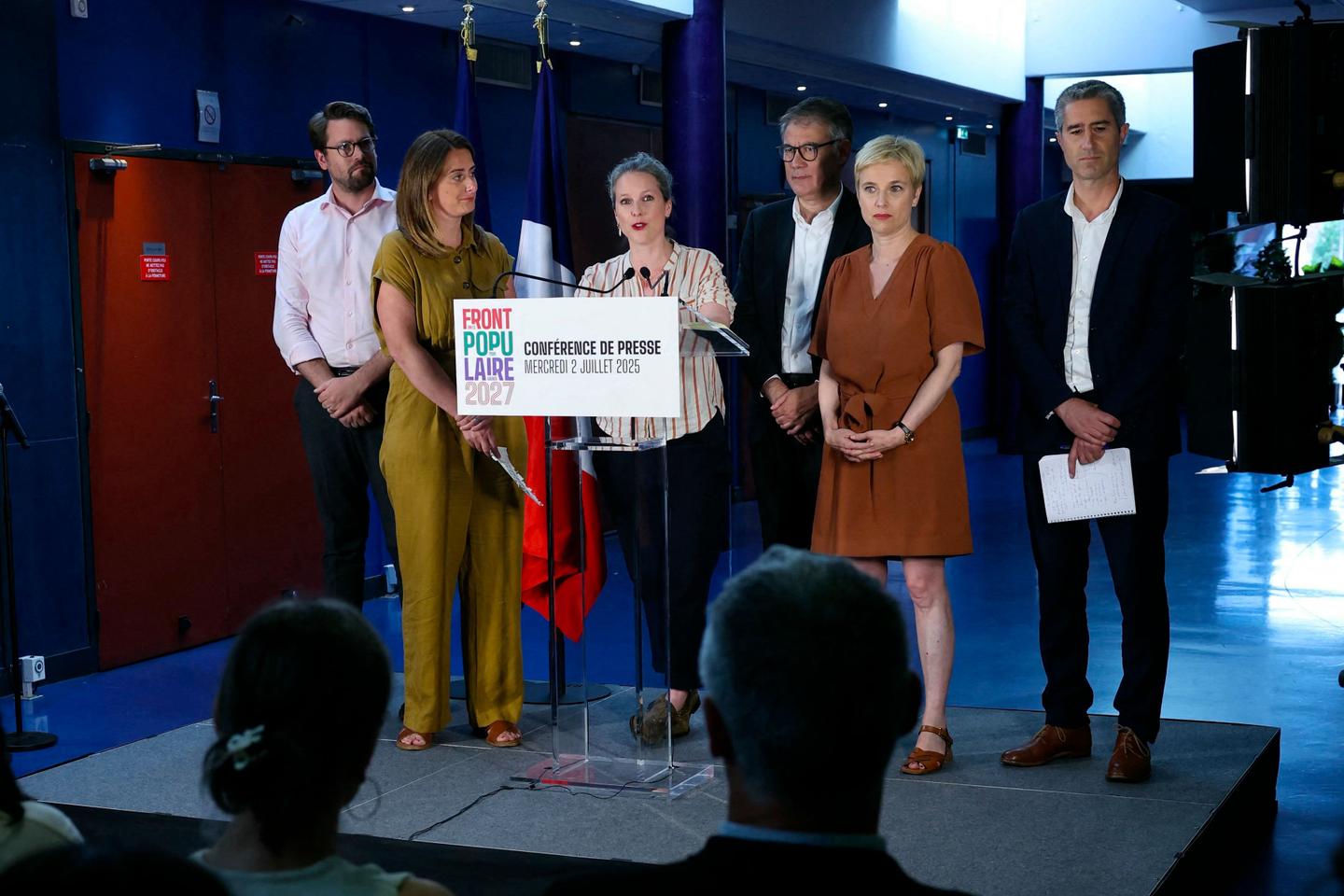
Ce n’est pas non plus totalement impossible qu’ils choisissent un autre candidat que Glucksmann et que ce dernier implose parce que c’est essentiellement le PS qui le soutient pour l’instant.
Les jeux ne sont pas encore faits et c’est probablement un événement à suivre pour les gens de gauche.
Parce que ces conneries, ça risque de nous faire perdre. Si le PS a un ‘bon’ candidat, je veux dire un candidat qui arrive à attirer suffisamment de voix, Il y aura une division et on perd la présidentielle.
Il faut que le PS nomme un très mauvais candidat pour que Mélenchon ait une chance de passer le deuxième tour. (et perde contre le RN selon un peu toutes les projetctions, mais bon, je suppose qu’on aura un prix de consolation)
Bien sûr, eux espèrent trouver le candidat qui arrivera à unir à la fois des macronistes et la base de Mélenchon. Mais pour ça, je pense qu’ils auraient dû faire une primaire un peu plus ouverte qu’avec juste leurs amis.
Confiscation en valeur au titre du produit de l’infraction de la somme de 1 000 000 euros
T’es sur que ça fait pas partie des 2.8 millions à rendre ça?
Sad but interesting.
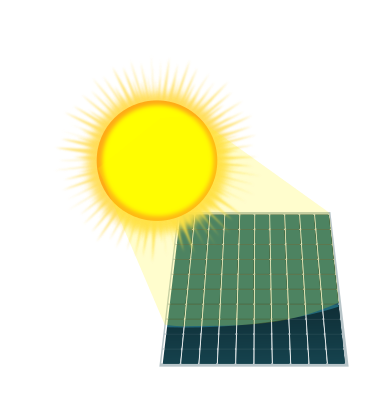
When the infrastructure for big power plants exists, it’s usually more convenient and profitable to use them. But when they don’t, solar panels make so much sense. It is nice to see that it’s more about solar panel than diesel generators.
Perso je suis vachement pour ce genre de truc et je pense que c’est l’avenir. Par contre là en tant que personne potentiellement intéressée par ça je vois strictement rien dans ce projet qui me donnerait envie de partir de ce qu’ils ont fait plutôt que de commencer de zéro. Il y a pas de plateforme il y a pas de proto il y a pas de pièces il y a quelques vagues liste de pieces mais qu’ils ont pas du tout testé.

deleted by creator
Check regularly and do not hesitate to register yourself as an interested individual. I know two places that started organically like that. Once you have 4-5 people sick that no local hackerspaces exist, one quickly pops up :-)
Les bébés ne sont pas tous des fascistes néo-nazis.
Musk prouve à l’Europe à quel point c’est dangereux de dépendre de ses entreprises.
C’est un Let’s Encrypt basique sans aucune info en plus. Le WHOIS en apprend pas plus
En général, ces trucs-là, c’est maintenu par un des candidats. Alors, c’est lequel cette fois?

What is it with all these random questions?
Why aren’t you participating in any of the conversation you started?
Rebel, anti-authorian, no-future, good-for-nothing-except-kicking-nazi-ass ‘youth’ (who reach their 60s nowadays).
Ha ha no, I never went as far as needing embeddings for a language model. MNIST is actually, you know, the very simple classification model. It’s a bit the ‘Hello World’ of machine learning. It’s a dataset of handwritten digits that you have to classify in 0, 1, 2, 3, 4, 5, 6, 7, 8, 9.
It is a good test because you can train it in minutes if not seconds even on crappy hardware and unoptimized code.
So when I’m talking about negative numbers, I am talking about negative numbers. I am talking about weights that are needed to be negative to have negative influence on the output. Like “this pixel in the center is white, so the likelihood of the number being zero decreases.”
I still don’t understand gradient descent fully, but can you explain why you think it should be replaced and with what?
Honestly, I’m just talking about it because we are being silly, but I am not sure that’s an idea I actually want to defend.
I just have this feeling that gradient descent is a good mathematical construction for what we try to achieve, but that mathematical purity maybe, just maybe, gets in the way of efficient computing. Of course, there are thousands of very competent, highly paid people who already explored that venue, so I’m pretty sure that if something better was possible and within the reach of one person, it would already have been discovered.
(Counterpoint: we routinely rediscover things that were invented in the 90s that are now good ideas now that we have very good computing)
The thing is gradient descent is used to tell you in which direction you’re supposed to move a weight to lower the loss of your results. In other words, to minimize the error of your network.
Gradient or partial derivatives are like an ideal mathematical tool to do that. We are able to derive it for a lot of functions, linear or not, and it is a well-studied mathematical object, so it really makes sense to use that.
The direction of the gradient will tell you the direction in which the parameters need to move. More precisely, the partial derivative of a given parameter will tell you if you need to increase it or lower it in order for the loss to improve.
Thing is we use the sign that’s clear but the intensity I am not sure it is that relevant because we keep fighting against things like gradient vanishing problem where very deep networks tend to have very low gradients and we compensate a lot of its problem through optimizers, choices and tricks.
I wonder if there would not be a pure computer science way of just keeping track of the direction in which you want the parameter to change.
I don’t know, maybe triple all the calculations by one tick in both directions? or just use gradients on one bit when it makes sense? Or find a function that’s very fast to compute but that just approximate gradients and that is just better than randomness at finding the sign.
Like I said, that’s just an itch to scratch. That’s not a strong conviction that there is something. But if you were to give me two weeks salary to just work on that, I would be very happy to.
At one point I had a weird obsession in making neural networks train only on uint_8. I tried:
0 to 255 is all you get. You know, “Real Programmers scorn floating point arithmetic.”
You want 16 bits? Make it a 8 bits overflow counter.
We don’t need divisions or multiplications when we have bit shifts.
My end goal was language models (probably not “large”) but I barely got to make an acceptable MNIST after begrudgingly accepting that I should sully my 8 bits purity with negative numbers.
I still have that itch to scratch that I feel the process of gradient descent could be replaced by something better designed for the type of information we want to flow back (“move that thingie in that direction for the loss to go down”)
Basically I liked the idea of easy visualization and forcing myself to not use any sort of layer normalization (that I secretly suspect I never fully understood)
Du coup, ça donne plutôt l’impression que l’IFOP est complaisante vis-à-vis des étiquettes que les différents partis s’auto-attribuent à un peu toutes les positions du spectre?
Je dois avouer que je ne sais pas trop comment EELV s’autopositionne.
Alors chez les LFI et les écolos (pas trop EELV il est vrai) que je connais “soc-dem” est plutôt une insulte… Y a des gens à gauche du PS qui se revendiquent de ce terme?
Après oui, “droite radicale” pour un parti de nazillons, c’est abusé.










Curieux, la gauche et les verts en faveur? Et la plus grande opposition vient des centristes?