Hi, I'm currently working on an assignment regarding p-hacking. I want to make the point that p-hacking can have real-life consequences, as the data being put out there could be applied in the wrong way. I already have an example of how p-hacking led to the WHO canceling their distribution of malaria medication.

 PieFed.zip








Requiem for a Tweet – Is there a future for the academic social capital held on the platform? (blogs.lse.ac.uk)
U.S. Indicts Two Russians for Running the 'Z-Library' Piracy Ring. Two masterminds have been arrested in Argentina and domains seized. The site is still running in the dark web. (torrentfreak.com)
Preprint as a Way to Universal Open Access. In eight drawings by Dasapta Erwin Irawan. (upstream.force11.org)
"More than 2000 journals share price and service data through Plan S’s Journal Comparison Service." Narrator: many large legacy publishers are missing. (coalition-s.org)
The Open Access Tracking Project is now also on Mastodon (fediscience.org)
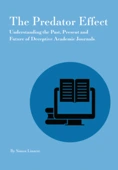
Open Access Monograph: "The Predator Effect: Understanding the Past, Present and Future of Deceptive Academic Journals" (fulcrum.org)
Looking for examples of p-hacking in psychology (reddit.com)
Hi, I'm currently working on an assignment regarding p-hacking. I want to make the point that p-hacking can have real-life consequences, as the data being put out there could be applied in the wrong way. I already have an example of how p-hacking led to the WHO canceling their distribution of malaria medication.
Analysing Elsevier Journal Metadata with a New Specialized Workbench inside ICSR Lab. #OpenData #PeerReview (papers.ssrn.com)
"CORE to become an independent Open Access service from August 2023." Public funding for the Open Access search engine will be cut. (blog.core.ac.uk)
eLife won’t reject papers once they are under review — what researchers think (nature.com)
"Help Shape the Transition to Open." What libraries can do. (commonplace.knowledgefutures.org)
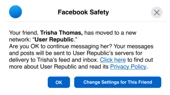
Science Magazine reports on the stampede: "As Musk reshapes Twitter, academics ponder taking flight. Many researchers are setting up profiles on social media site Mastodon." (science.org)
Introducing the p-hacker app: Train your expert p-hacking skills (nicebread.de)
Mastodon enables community autonomy, is a social enterprise in and of itself and shifts the site’s scaling focus from sheer number of users to quality engagement and niche communities. (nextcloud.robertwgehl.org)
COAR Announces first recommendation for supporting multilingual and non-English content in repositories (coar-repositories.org)
Dealing With Being Exposed: Setting Boundaries While Being Open (icietla.hypotheses.org)
FediScience and other Mastodon communities are growing fast. This is good for #OpenScience, this is our kind of system. So worth reading is: "How to Leave Dying Social Media Platforms". (doctorow.medium.com)
The Open Access journal Nature Communications to publish all review reports in future. (nature.com)
Scientific Publishing: Peer review without gatekeeping. "eLife will now ... [publish] every paper we review, along with our reviews and an assessment as a Reviewed Preprint" (elifesciences.org)
How to build, grow, and sustain reproducibility or open science initiatives: A virtual brainstorming event (bihealth.org)