

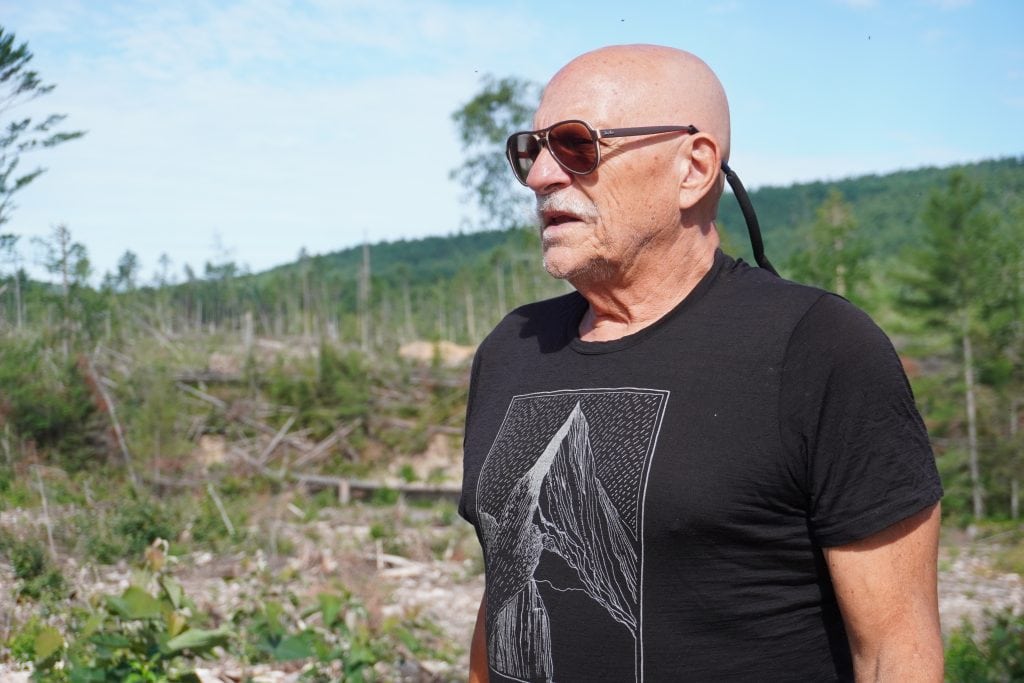
- In 2025, a powerful storm crashed down on Samuel de Champlain Provincial Park outside North Bay, Ont., dropping trees on tents, trailers and an environmental education centre.
- Since then, park staff and Forests Canada have been working to replant some of the trees that were lost and clean up the park to allow visitors in again this season.
- Extreme weather is becoming more common and severe as the climate warms. At the same time, global warming means the type of trees that will thrive in northern environments like Samuel de Champlain is also changing, and the restoration work has to account for that.
…
Alongside immediate efforts to restore buildings and roads, thousands of trees are being planted using climate projections to meet a moment where global warming is expected to alter the distribution of tree species in Canada, “adding a level of uncertainty to forest management and planning,” according to the federal government.
…
Ontario Parks superintendent Warren Verina told The Narwhal in an email that forests “take generations to regrow, and even then, it will be impossible to replicate what we had before.” But, he added, that can be a good thing.
“Honestly, I don’t think we want to replicate what was,” Verina said, explaining that the forest hit with the downburst was predominantly red pine. “While this was stunning to walk through, it wasn’t very diverse … This is an opportunity to make the campground better.”
Ontario Parks has taken “lessons learned from the downburst,” Verina said, to be better equipped. During the rebuild, for example, hydro lines within the park were buried as part of the repairs, rather than restrung on poles, so the park hopefully experiences fewer power outages from falling trees. As they resurfaced roads in 2026, the new designs included an eco-passage, turtle fencing, artificial nesting sites and escape ramps to protect animal species.
Bill Steer [who founded the Canadian Ecology Centre in the park] is also optimistic.
“We’re in a new regreening phase. The park is going to look different in 10, 20, 50 years. I won’t be here, but it will grow back in the way it wants to grow back,” Steer said.
…
[Ze’ev Gedalof, an associate professor at the University of Guelph who studies forest ecosystem dynamics and climate variability] said it’s some of the same trees downed in the storm that will actually be some of the most important generators of biodiversity in the years to come. The dead trees left on the ground in areas not frequented by visitors are “really important habitat structures for all kinds of organisms” living in and under them.
“They’re also reservoirs of nutrients, and as they’re rotting, they become reservoirs of water that can help lifeboat some of that regenerating plant and animal material,” Gedalof said.
It will be a long recovery, but campers experiencing a radically different Samuel de Champlain than they have on trips in years past will see parts of the forest grow back, even if slowly.
“Some of those big red pine trees will take 70 or 100 years to get to that kind of magnitude again,” Gedalof said. “But it’ll be a walkable forest within a few decades.”
…