• 2 Posts
  • 356 Comments
Joined 3 years ago
Aquileo | cake
Cake day: September 24th, 2023

Aquileo | help-circle
  • MrEfftoPolitical MemesCentrist bullshit
    Aquileo | link
    Aquileo | fedilink
    Aquileo | arrow-up
    6
    ·
    7 days ago

    I would argue that Mamdani, AOC, Sanders, and any others who follow that same path are all parts of a different party that is simply forced to run on the Democrat ballot. Meanwhile the true Democrats and Republicans are two wings of the same Corprocrat party who is there to progress the interests of corporations and the only divide is on what to do with the ‘remaining’ population.


  • The 4 minute window is also a fun one. With the LEO altitude listed as between 600 and 650 Km, and if we call it 625 km, that gives it a period of about 96 minutes. This gives it 3.75 passes during out twilight window. But we don’t know when those windows will start or or end. As in, the first window might happen .5 hours onto twilight or the last window might be 1.5 hours before twilight ends, both scenarios wasting the remaining time, but we have a guaranteed 3 passes, and at least half the nights a bonus 4th pass either at the start or the end.

    If each pass is 4 minutes, we get a total ‘illumination’ time of 14 minutes per night.

    At $40/MW/hr we can also call it $0.6666/MW/min. Or, with out 150 MW farm this comes out to a clean $100/minute. And at 14 minutes per night we are making $1400.

    To pay off the OG solar sat it will take about 1428.5 nights, or just under 4 years. To pay off the cheap sat it will take about 214.25 nights


  • I know you aren’t serious, but I am now curious how much night time solar relaying it would take to pay off launching one of those satellites. I need to find numbers…

    Edit- Here it is- with updated math

    Looking around I first needed to see how much energy generation nets. This is time and location dependant. I am in Texas. Out grid is run by ERCOT and they have their wholesale grid prices listed.

    If I were to be buying reflected solar, it would obviously be at night, during the unfortunately lower priced off peak times. Looking at the grid avg we get about $40 per MWh.

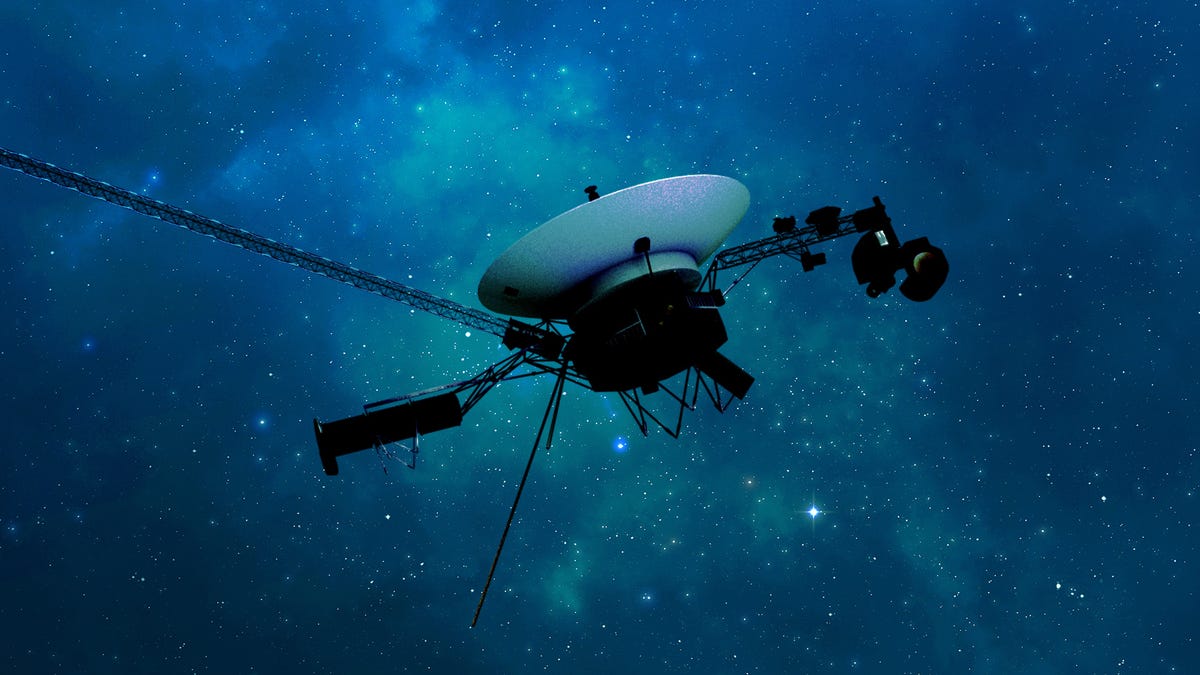
    But we now have the question of how big is the solar farm? And this size is now limited to the reflected beam size. According to reflect orbital their first satellite, Eärendil-1, has a beam diameter of approximately 5 square Km. But we have to factor in some beam dissipation near the edges, so let’s be safe and call it a circle with a diameter of 4 square Km of usable reflected solar. This number also easily convers to about 1000 acres of land.

    Utility Scale solar farms output 1 MW per 5-10 acres. Of we took the middle (7.5 acres per MW) our hypothetical reflected beam sized solar farm would output 150 MW.

    At $40 per MW and 150 MW we are generating $6000 per hour. And with our twilight window of 6 hours we can generate $36,000 per night.

    But how much does the satellite cost? The rented cost is one thing, but only peasants rent the sun. We are talking about owning it. The satellite is Reported to cost $2 million. But the mass produced they are claiming will cost closer to $300k. Let’s pretend this becomes a viable buisness strategy to own these satellites and beam them to a reflected solar farm and use the $300k.

    So our cheap satellite should take about 8.3 nights to pay off. The expensive one should take about 55.5 nights to pay off.

    This also does not factor in lower luminosity, night time clouds, solar build cost, or launch cost. This is also factoring in today’s energy prices that continue to trend downward with the adoption of more renewables. This also ignores the giant issue of their orbital height only giving 4 minutes of sun per pass per satellite. I don’t even want to know how many centuries it would then take to pay off a $2 million satellite in 4 minute increments…


  • MrEfftomemesThat's real 😂😂😂😂
    Aquileo | link
    Aquileo | fedilink
    Aquileo | arrow-up
    1
    ·
    11 days ago

    I am the same way. For me I just memorized 2 C to F conversions and work it as a relativity from there. 22C is about 72F, the perfect inside temp to me. Then because I live in a hot place my other anchor is 40C being 104F. To me that is the threshold going from “fuck this is hot” to “shitty hot, avoid outside”.

    I would recommend just memorizing some key anchor points that are normal for your climate and learning from those.


  • MrEfftomemesThat's real 😂😂😂😂
    Aquileo | link
    Aquileo | fedilink
    Aquileo | arrow-up
    2
    Aquileo | arrow-down
    1
    ·
    11 days ago

    I am in the sciences. I support measuring in C and accept its rational design. But being American I also understand the appeal of F. Of the two scales it best describes the human experience. When we are talking about the weather and how it will impact my very human day, I want F. When I an measuring my whatever-the-fuck-else for science I want it in C.


  • MrEfftomemesThat's real 😂😂😂😂
    Aquileo | link
    Aquileo | fedilink
    Aquileo | arrow-up
    4
    ·
    11 days ago

    I grew up in Texas. I am peak millennial (dead center of the generation). I remember growing up in Houston and seeing dallas would get light snow most winters and “artic blasts” were never a thing. Heat waves never got above 104. It was a record just hitting it, and was unheard to go above it before that.

    Now? Ever year it is all but guaranteed it will get above 104. Normal snow in dallas? Nope. Ice storms from polar vortex collapse only.

    This is what climate change looks like. These temps are absolutely abnormal when you look at the hundred plus years of recorded climate data. Our adaption as a species is our technology. AC.


  • MrEfftomemesThat's real 😂😂😂😂
    Aquileo | link
    Aquileo | fedilink
    Aquileo | arrow-up
    2
    ·
    11 days ago

    What’s funny is that I used to live in Phoenix for a year. I would happily take the higher dry heat over the almost as high wet heat. When I lived there it was like walking into an oven and you could feel your sweat pours opening. But the sweating evaporated quickly and provided cooling as long as you stayed hydrated. Shade works and you can see how the natives protected themselves from the sun and had passive cooling that worked. In the wet heat it is more like Satan is pissing on you and you have no hope. Your body is dumping sweat and it does nothing because the humidity is too high to evaporate. Shade? Worthless beyond the immediate sun protection. A few degrees at most. Without AC you will only cool with high winds or a fan.

    Fun fact I never knew until living there: when it hits 112 (and it does) the airport has to partially shut down and divert all non-high-temp aircraft. The tarmac is so hot it will pop normal tires at a high rate. So unless you have the expensive higher temp rated tires for planes based out of high temp areas, then you can’t land there when it is too hot.


  • MrEfftomemesThat's real 😂😂😂😂
    Aquileo | link
    Aquileo | fedilink
    Aquileo | arrow-up
    4
    Aquileo | arrow-down
    1
    ·
    11 days ago

    Oh shit. Honestly I feel more for you guys than me. We have infrastructure built for it. Everything has AC. I even just put a window unit in my bedroom to take some load off the older main unit that has been struggling to keep up. But over there you were never built for that kind of heat. I wish you all the best with climate change.