7·
13 hours ago

That’s treating people as existing solely for your own benefit, to be exploited.
What do you mean by that in this context? I don’t think Medicaid pays for people’s healthcare in order that they might work (at least not in this context). It is rather more like a charity program, with the associated reasoning being that people who could work instead of accepting charity should.
The same place you do for people without a terminal diagnosis - you have to have a system for doing that anyway.
I have to say, that doesn’t seem unreasonable. My understanding is that one can get a terminal diagnosis long before one becomes too sick to work.
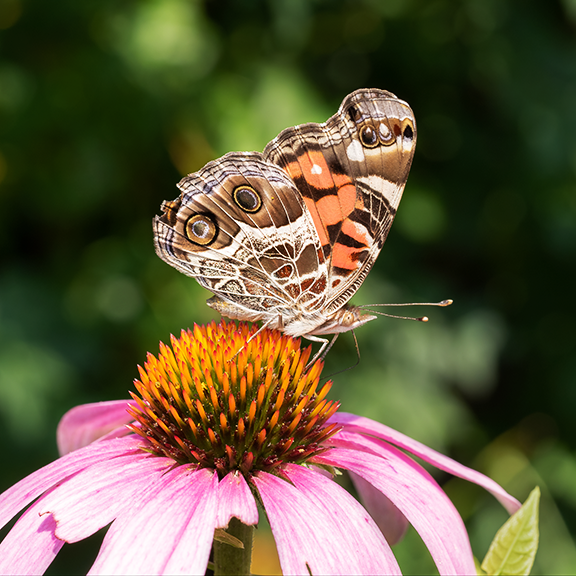
Until I was given one to eat by a hobbyist who has a tree in his yard on Long Island, I assumed they were an Indian plant because of the Disney movie.
I’d say that this actually illustrates one of the strengths of the American system. In a context of bitter partisan division, the delegation of authority to individual states prevents an all-or-nothing national outcome and gives people places to go where the government is aligned with their needs and their values. Obviously relocating is expensive and disruptive, but the most powerful right a citizen can have is his exit right.

I think of respect for free speech as a commons. Every time some group invokes free speech to say something controversial, they’re drawing from the commons – which is fine, that’s what the commons is there for. Presumably the commons self-replenishes at some slow rate as people learn philosophy or get into situations where free speech protects them and their allies.
But if you draw from the commons too quickly, then the commons disappears. When trolls say the most outrageous things possible, then retreat to “oh, but free speech”, they’re burning the commons for no reason, to the detriment of everybody else who needs it.
But I think that saying or doing controversial things can also strengthen free speech norms in some cases, by establishing awareness that people can say or do those things without being punished. Without knowing more about the particular phenomenon you’re describing (I’ve never come across it myself) I don’t know which is the dominant factor here.

I think to me it would depend on what that work was and the person’s attitude towards it. I dated a doctor who complained a lot about how her hospital was making her see too many patients, how the patients were rude to her, and how she had to spend her “free time” at home on paperwork she didn’t have time to do while at work. I was not happy feeling like I was less important to her than a job she didn’t even enjoy. I might have felt otherwise if she absolutely loved her job. (She did see being a doctor as an important duty, and when we talked about this she was hurt that I saw it as a negative because from her point of view it was an example of how she was loyal and dedicated.)

It was a 250 foot fall tower
It’s still there.

There’s a coherent, objective, and interesting interpretation of “historically accurate” that I would like to see, that being what the Greeks at the time that the poem was written imagined the poem to be describing.
(But maybe there would be too much moral dissonance for that to be a fun movie.)
They don’t have a majority in the Senate for it even if the Senate accepts it as a budget bill, which is not guaranteed.

There’s a finite amount of it, but we won’t ever use it all up. Oil deposits differ in how easy (and therefore cheap) they are to extract. As the easy deposits run out, we switch to more difficult deposits, the price goes up, and eventually the price will be higher than it is for other energy sources despite there being plenty of hard-to-extract oil still left in the ground.
Not safe in what sense?

Is there information out there about the extent of the damage to these ships?
Is this a drone armed with guns or missiles, or does it simply ram things?
What’s funny to me is that people have no problem appreciating the beauty of a sunset or a wildflower although no human intent went into creating those. Objections to AI art expose an unreasonable double standard.

Presumably if you’re shaped like a human rather than a bee and you’re not going for aerodynamics then you’d fly with a standing posture. Some characters (Magneto, for example) do.
In science fiction robots were almost universally portrayed as struggling to understand human emotions, but it has turned out that AI has no problem at all understanding them and generally acts friendly, caring, and likeable. It’s still possible that we’ll end up in a scenario where a more sophisticated future AI turns out to be deceptive and only pretends to share human values, but at least my expectation was that AI would be inhuman from the start and that has already been disproven.
Regularly initiating social interactions with my co-workers. It’s hard because I’m anxious about rejection.