Global warming appears to have shifted into a faster gear. After removing the effects of El Niño, volcanic eruptions, and solar cycles, researchers found that the planet has warmed at roughly 0.35°C per decade over the past ten years, compared with just under 0.2°C per decade from 1970 to 2015. The acceleration, which becomes visible around 2013 to 2015, appeared across five major global temperature datasets with more than 98% statistical certainty.


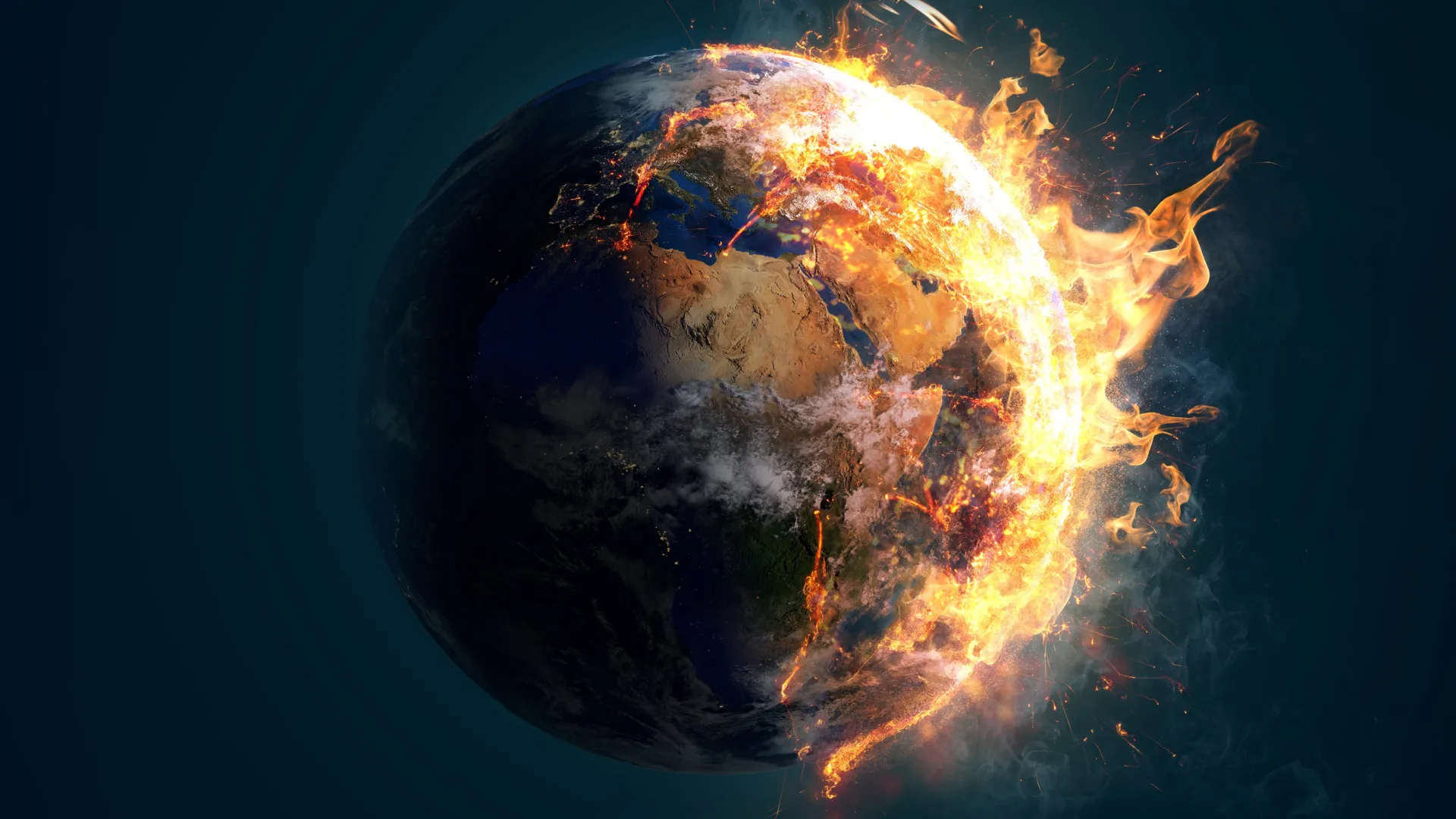
"If all human emissions of heat-trapping gases were to stop today, Earth’s temperature would continue to rise for a few decades as ocean currents bring excess heat stored in the deep ocean back to the surface. Once this excess heat radiated out to space, Earth’s temperature would stabilize. Experts think the additional warming from this “hidden” heat is unlikely to exceed 0.9° Fahrenheit (0.5°Celsius). With no further human influence, natural processes would begin to slowly remove the excess carbon dioxide from the atmosphere, and global temperatures would gradually begin to decline.
It’s true that without dramatic action in the next couple of decades, we are unlikely to keep global warming in this century below 2.7° Fahrenheit (1.5° Celsius) compared to pre-industrial temperatures—a threshold that experts say offers a lower risk of serious negative impacts. But the more we overshoot that threshold, the more serious and widespread the negative impacts will be, which means that it is never “too late” to take action."
Source: https://www.climate.gov/news-features/understanding-climate/global-warming-frequently-asked-questions#hide28
And you trust an American government website… Why?