
`; document.body.appendChild(el); return el; } const bubble = ensureBubble(); const elH = bubble.querySelector("#tt-title"); const elB = bubble.querySelector("#tt-body"); const elClose = bubble.querySelector(".tt-close"); // ---------------- Parse [[term|heading|body]] anywhere ---------------- const TOKEN_RE = /\[\[([^|\]]+)\|([^|\]]+)\|([^\]]+)\]\]/g; const BLOCK_SKIP = new Set(["SCRIPT","STYLE","NOSCRIPT","TEXTAREA","INPUT","SELECT","CODE","PRE","TEMPLATE","IFRAME"]); function shouldSkipTextNode(n){ let el = n.parentElement; while (el){ if (BLOCK_SKIP.has(el.tagName) || el.isContentEditable) return true; el = el.parentElement; } return false; } const walker = document.createTreeWalker(document.body, NodeFilter.SHOW_TEXT); const textNodes = []; while (walker.nextNode()){ const n = walker.currentNode; if (!n.nodeValue || shouldSkipTextNode(n)) continue; if (TOKEN_RE.test(n.nodeValue)) textNodes.push(n); TOKEN_RE.lastIndex = 0; } textNodes.forEach(node => { const frag = document.createDocumentFragment(); const insideLink = !!node.parentElement.closest("a"); let text = node.nodeValue, last = 0; TOKEN_RE.lastIndex = 0; let m; while ((m = TOKEN_RE.exec(text))){ if (m.index > last) frag.appendChild(document.createTextNode(text.slice(last, m.index))); const term=m[1].trim(), heading=m[2].trim(), body=m[3].trim(); const t = insideLink ? document.createElement("span") : document.createElement("button"); if (insideLink){ t.setAttribute("role","button"); t.setAttribute("tabindex","0"); } else { t.type="button"; } t.className="tt-trigger"; t.textContent=term; t.setAttribute("data-tt-h", heading); t.setAttribute("data-tt-b", body); t.setAttribute("aria-haspopup","dialog"); t.setAttribute("aria-expanded","false"); frag.appendChild(t); last = TOKEN_RE.lastIndex; } if (last = 2) return el; el = el.parentElement; } // Fallback: nearest non-inline container el = trigger.parentElement || document.body; while (el && el !== document.body){ const d = getComputedStyle(el).display; if (d !== "inline" && d !== "contents") return el; el = el.parentElement; } return document.body; } // Utility: child of `ancestor` that contains `target` (direct child) function directChildContaining(ancestor, target){ for (const ch of ancestor.children){ if (ch === target || ch.contains(target)) return ch; } return null; } function getElementTarget(e) { // If target is already an Element, use it if (e.target instanceof Element) return e.target; // Otherwise, walk the composed/path for the first Element const path = (typeof e.composedPath === 'function') ? e.composedPath() : []; for (const n of path) if (n instanceof Element) return n; return null; } // ---------------- Dim everything except the trigger branch (sibling branches only) ---------------- function dimAllOtherBranches(container, trigger){ undim(); // clear previous const dimEls = []; const wrappedTexts = []; const pathEls = []; // Build ELEMENT-only path [container -> ... -> trigger] const path = []; for (let el = trigger; el && el !== container; el = el.parentElement) path.push(el); path.push(container); path.reverse(); // At each ancestor level, find the *direct* child that leads to the trigger for (let i = 0; i { if (node.nodeType !== 3) return; // text only if (!node.nodeValue || !node.nodeValue.trim()) return; // If this text node sits inside branchChild, skip if (branchChild && branchChild.contains && branchChild.contains(node)) return; const span = document.createElement("span"); span.style.transition = `opacity ${DIM_EASE_MS}ms ease`; span.style.opacity = String(DIM_OPACITY); span.textContent = node.nodeValue; node.parentNode.replaceChild(span, node); wrappedTexts.push(span); }); // Keep a reference to the path elements (so we can explicitly restore opacity if needed) if (anc && anc.nodeType === 1) pathEls.push(anc); } // Hard-guard: explicitly set opacity:1 on the entire path to neutralize any inherited fade pathEls.forEach(el => { el.style.opacity = "1"; }); dimCtx = { container, dimEls, wrappedTexts, pathEls }; } function undim(){ if (!dimCtx) return; const { dimEls, wrappedTexts, pathEls } = dimCtx; // Animate back dimEls.forEach(el => { el.style.transition = `opacity ${DIM_EASE_MS}ms ease`; el.style.opacity = "1"; // remove inline style after the animation so we don't override site CSS setTimeout(() => { if (el) el.style.opacity = ""; }, DIM_EASE_MS + 50); }); wrappedTexts.forEach(span => { span.style.transition = `opacity ${DIM_EASE_MS}ms ease`; span.style.opacity = "1"; span.addEventListener("transitionend", () => { if (!span.parentNode) return; span.parentNode.replaceChild(document.createTextNode(span.textContent || ""), span); }, { once:true }); }); // Clear hard-guard on path pathEls.forEach(el => { if (el) el.style.opacity = ""; }); dimCtx = null; } // ---------------- Positioning (centered, edge-aware, flip) ---------------- function clamp(v,min,max){ return Math.max(min,Math.min(max,v)); } function measureBubbleForPlacement(){ const wasOpen = bubble.classList.contains("is-open"); if (!wasOpen){ bubble.style.visibility="hidden"; bubble.classList.add("is-open"); } const rect = bubble.getBoundingClientRect(); if (!wasOpen){ bubble.classList.remove("is-open"); bubble.style.visibility=""; } return { w: rect.width, h: rect.height }; } function placeAnchored(trigger){ const vw=innerWidth, vh=innerHeight; const r = trigger.getBoundingClientRect(); const { w, h } = measureBubbleForPlacement(); let left = r.left + (r.width/2) - (w/2); left = clamp(left, EDGE_PADDING, Math.max(EDGE_PADDING, vw - EDGE_PADDING - w)); const topBelow = r.bottom + OFFSET_Y; const spaceBelow = vh - topBelow - EDGE_PADDING; const placeBelow = spaceBelow >= h; let top = placeBelow ? topBelow : (r.top - h - OFFSET_Y); top = clamp(top, EDGE_PADDING, Math.max(EDGE_PADDING, vh - EDGE_PADDING - h)); bubble.style.left = left + "px"; bubble.style.top = top + "px"; const br = bubble.getBoundingClientRect(); if (br.bottom > vh - EDGE_PADDING){ bubble.style.maxHeight = (vh - 2*EDGE_PADDING) + "px"; bubble.style.overflowY = "auto"; } else { bubble.style.maxHeight = "none"; bubble.style.overflowY = "visible"; } } // ---------------- Open / Close (place → fade/scale) ---------------- function animateIn(){ bubble.style.transition = "none"; bubble.style.opacity = "0"; bubble.style.transform = "scale(0.95)"; void bubble.offsetWidth; bubble.style.transition = "opacity .18s ease, transform .18s ease"; bubble.style.opacity = "1"; bubble.style.transform = "scale(1)"; } function animateOut(done){ bubble.style.transition = "opacity .16s ease, transform .16s ease"; bubble.style.opacity = "0"; bubble.style.transform = "scale(0.95)"; const end = () => { bubble.removeEventListener("transitionend", end); done && done(); }; bubble.addEventListener("transitionend", end); setTimeout(end, 260); } function openFromTrigger(trigger){ if (current && current !== trigger) forceClose(); current = trigger; trigger.setAttribute("aria-expanded","true"); elH.textContent = trigger.getAttribute("data-tt-h") || ""; elB.textContent = trigger.getAttribute("data-tt-b") || ""; bubble.classList.add("is-open"); bubble.setAttribute("aria-hidden","false"); placeAnchored(trigger); animateIn(); const container = findTextContainer(trigger); dimAllOtherBranches(container, trigger); hoverCount = 0; cancelCloseTimer(); } function forceClose(){ if (!current) return; bubble.classList.remove("is-open"); bubble.setAttribute("aria-hidden","true"); current.setAttribute("aria-expanded","false"); current = null; undim(); hoverCount = 0; cancelCloseTimer(); } function closeWithAnim(){ if (!current) return; const t = current; animateOut(() => { bubble.classList.remove("is-open"); bubble.setAttribute("aria-hidden","true"); t.setAttribute("aria-expanded","false"); current = null; undim(); }); } function scheduleClose(){ cancelCloseTimer(); closeTimer = setTimeout(() => { if (hoverCount { if (isCoarse()) return; const target = getElementTarget(e); if (!target) return; const t = target.closest(".tt-trigger"); if (!t) return; onZoneEnter(); if (!current || current !== t) openFromTrigger(t); }; const handleLeave = (e) => { if (isCoarse()) return; const target = getElementTarget(e); if (!target) return; const t = target.closest(".tt-trigger"); if (!t) return; onZoneLeave(); }; document.addEventListener("pointerenter", handleEnter, true); document.addEventListener("mouseenter", handleEnter, true); document.addEventListener("pointerleave", handleLeave, true); document.addEventListener("mouseleave", handleLeave, true); // ---------------- Keyboard ---------------- document.addEventListener("focusin", (e) => { if (!e.target) return; const t = e.target.closest(".tt-trigger"); if (t) openFromTrigger(t); }); document.addEventListener("focusout", (e) => { if (!e.target) return; const t = e.target.closest(".tt-trigger"); if (t && current === t) closeWithAnim(); }); // ---------------- Mobile / coarse ---------------- document.addEventListener("pointerdown", (e) => { if (!isCoarse()) return; const t = e.target.closest(".tt-trigger"); if (!t) return; e.preventDefault(); e.stopPropagation(); if (current === t && bubble.classList.contains("is-open")) { closeWithAnim(); return; } openFromTrigger(t); }, true); document.addEventListener("click", (e) => { if (!isCoarse()) return; if (!bubble.classList.contains("is-open")) return; const inBubble = !!e.target.closest(".tt-bubble"); const onTrigger = !!e.target.closest(".tt-trigger"); if (!inBubble && !onTrigger) closeWithAnim(); }, true); // Close button + ESC elClose.addEventListener("click", closeWithAnim); document.addEventListener("keydown", (e) => { if (e.key === "Escape") closeWithAnim(); }); // Reposition on resize/scroll while open const reposition = () => { if (!current) return; placeAnchored(current); }; addEventListener("resize", reposition, { passive: true }); addEventListener("scroll", reposition, { passive: true }); });

Legora helps lawyers work more efficiently with Claude

Try Claude
Contact sales
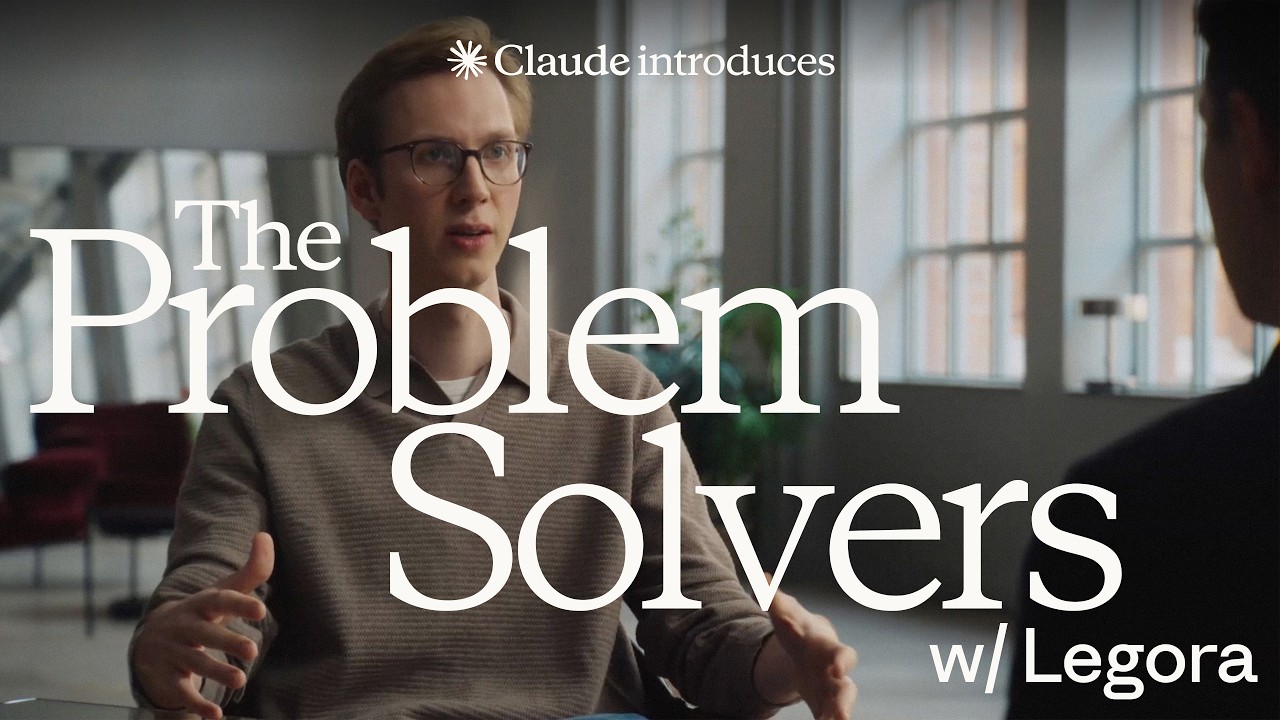
Play video
Industry:
Legal
Company size:
Small
Product:
Claude Platform
Location:
Europe
18% higher
performance on large legal evaluation set
Enterprise-grade
reliability and consistency in legal workflows

Read more
Next

Video caption
Next

Read more
Next

Video caption
Next

Prev
Next

Legora builds AI-powered legal technology that helps law firms and in-house legal teams work more efficiently. Legora uses Claude throughout their platform to power assistant tools, document review, and intelligent workflows.

With Claude, Legora:

  • Offers flexible agentic workflows across their entire legal platform
  • Accelerates development speed using Claude Code
  • Enables lawyers to focus on quality and efficiency rather than routine tasks

Legal teams need AI that keeps pace with their evolving practice

Legal work demands precision that most AI models can't deliver. While law firms race to adopt AI, they often discover that general-purpose models struggle with specialized legal terminology, miss critical nuances in contracts, and fail to adapt when regulations change. For legal technology companies, this creates a clear challenge: finding AI models sophisticated enough to handle the complexity of legal practice.

"AI is becoming fundamental to how legal work gets done and will reshape how law firms and in-house teams operate," said Max Junestrand, CEO of Legora. Building effective legal AI means finding models that can match the exacting standards of legal professionals—understanding context across hundreds of pages, catching details that determine case outcomes, and maintaining absolute accuracy.

Selecting Claude for superior instruction following and flexibility

When evaluating AI models, Legora prioritized intelligence and adaptability. Their platform required an AI model that could handle complex legal workflows while maintaining the flexibility to evolve with changing client needs.

"We have found Claude to be brilliant at instruction following, and at building agents and agentic workflows," said Junestrand. "Claude's exceptional intelligence is what truly sets it apart for us."

Claude Sonnet 4 scored 18% higher on Legora’s proprietary large legal evaluation set across big complex tasks, with the biggest source of gains being in consistency over large tasks and documents and accurately following complex instructions.

This intelligence translates directly into Legora's ability to build more sophisticated features. Unlike rigid AI solutions that force companies into predefined patterns, Claude's flexibility enables Legora users to create custom workflows tailored to specific legal practices and client requirements.

Claude powers collaborative AI across the Legora platform

Legora has integrated Claude throughout their entire legal technology stack, creating a comprehensive AI system that adapts to how lawyers actually work:

  • Assistant tools that help lawyers quickly find relevant information and draft documents
  • Tabular review capabilities for analyzing structured legal data
  • Agentic workflows that adapt to different practice areas and case types

Legora's deep expertise in AI meant they could move quickly with their Claude implementation. "We are very familiar with AI implementation, so we were up and running with Claude in no time at all," Junestrand noted. This rapid deployment allowed them to start enhancing their platform immediately, getting new capabilities into lawyers' hands faster.

Empowering lawyers to focus on what matters most

The integration of Claude has transformed how Legora serves their legal clients. Rather than simply automating tasks, Claude enables Legora to build systems that enhance lawyers' capabilities while preserving their central role in legal practice.

"We're helping lawyers reduce the workload attached to some specific tasks, enabling them to review and research with precision, draft smarter, and collaborate seamlessly," Junestrand explained. This approach reflects a deeper understanding of how AI should support legal professionals—not by replacing judgment, but by eliminating friction in routine tasks so lawyers can focus on strategy and client advocacy.

The benefits reach beyond individual productivity gains. "Claude gives us the flexibility to build more diverse solutions faster," Junestrand explained. This matters in legal tech, where every practice area and jurisdiction has different requirements.

Building the future of collaborative legal AI

Looking ahead, Legora sees AI transforming legal practice—with humans at the center. "At Legora, we have a strong belief that humans alongside AI will outperform even the very best AI tools alone, and outperform humans without AI," Junestrand shared.

This philosophy drives their expanding collaboration with Anthropic. Beyond their current platform, Legora now uses Claude Code to accelerate development. "Technology doesn't stand still—you have to stay at the forefront of innovation to deliver the best services to clients," Junestrand emphasized. "We are a company that continues to innovate and evolve our solutions, and we require partners that enable us to do this."

With Claude at their foundation, Legora is building the future of legal technology—where AI enhances rather than replaces the essential human elements of legal work.

Next

Video caption
Next

Prev
Next