Welcome to the United Nations
    • العربية
    • 中文
    • English
    • Français
    • Deutsch
    • Kreyòl
    • Bahasa Indonesia
    • Italiano
    • Polski
    • Русский
    • Español
UN logo Peace, dignity and equality
on a healthy planet

Search the United Nations

A-Z Site Index
Live now
  • About Us »
    • About Us
    • Member States
    • Main Bodies
    • Secretary-General
    • Secretariat
    • UN System
    • History
    • Emblem and Flag
    • UN Charter
    • UDHR
    • ICJ Statute
    • Nobel Peace Prize
  • Our Work »
    • Our Work
    • Peace and Security
    • Human Rights
    • Humanitarian Aid
    • Sustainable Development and Climate
    • International Law
    • Global Issues
    • Documents
    • Official Languages
    • Observances
  • Events and News
  • Get Involved
  • The UN Pulse
A polar bear walking on the ice in the Arctic.
Global Issues, Climate Change

11 years of record heat: How are we doing on climate?

The past 11 years have been the hottest on record, a clear warning that climate change is no longer a distant threat. While there is still hope, urgent action is needed to accelerate progress. What is driving this crisis? Why do greenhouse gases and fossil fuels matter? What does the 1.5°C limit mean for our future? What are the consequences of inaction? And what can we do, both individually and collectively, to make a difference? Explore these questions in our Climate Change global issue, learn more on the UN Climate Action website, and create your own plan for action through the ActNow campaign.

Sea ice extent is a useful indicator of climate change, particularly given the rapid pace of change in the Arctic.
Photo:Ocean Image Bank/Lars von Ritter Zahony
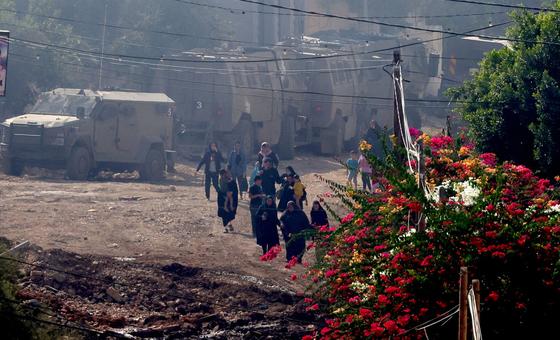
Palestinian families and children walk past destroyed buildings and parked military vehicles in the Jenin refugee camp.

Occupied West Bank: Settler siege of Palestinians marks a new low

13 August 2026 — In the occupied West Bank, the UN human rights office, OHCHR, appealed on Thursday to Israeli authorities to help Palestinian families trapped in their homes by settlers for days...

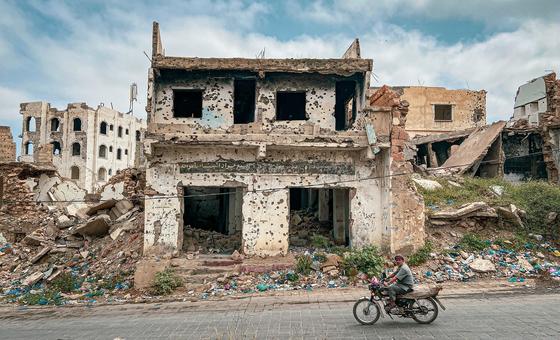
Destroyed buildings in the Al Gahmalyya neighbourhood of Taiz, Yemen, with a man on a motorcycle in the foreground.

Security Council LIVE: Escalating attacks threaten peace in Yemen

13 August 2026 — As tensions triggered by the US-Iran war continue to ripple across the Middle East, the Security Council held an open debate Thursday on Yemen, where escalating deadly military...

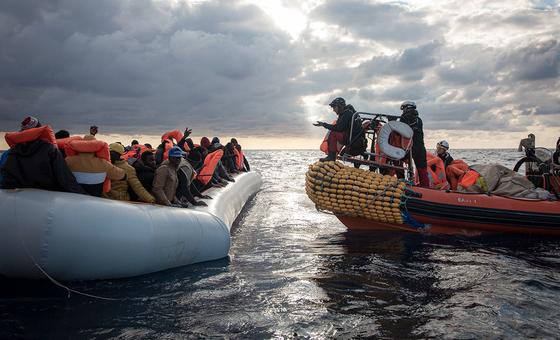
SOS MEDITERRANEE team members on the Ocean Viking assist migrants from a crowded inflatable boat in the Mediterranean Sea.

Migrant deaths climb sharply in 2026, new UN data shows

12 August 2026 — Severe weather, war, economic pressure and shifting policies reshaped migration journeys across multiple regions in the first four months of 2026, driving a surge in deaths,...

UN Sustainable Development Goals

17 Goals to transform our world

The Sustainable Development Goals are a call for action by all countries — poor, rich and middle-income — to promote prosperity while protecting the planet.

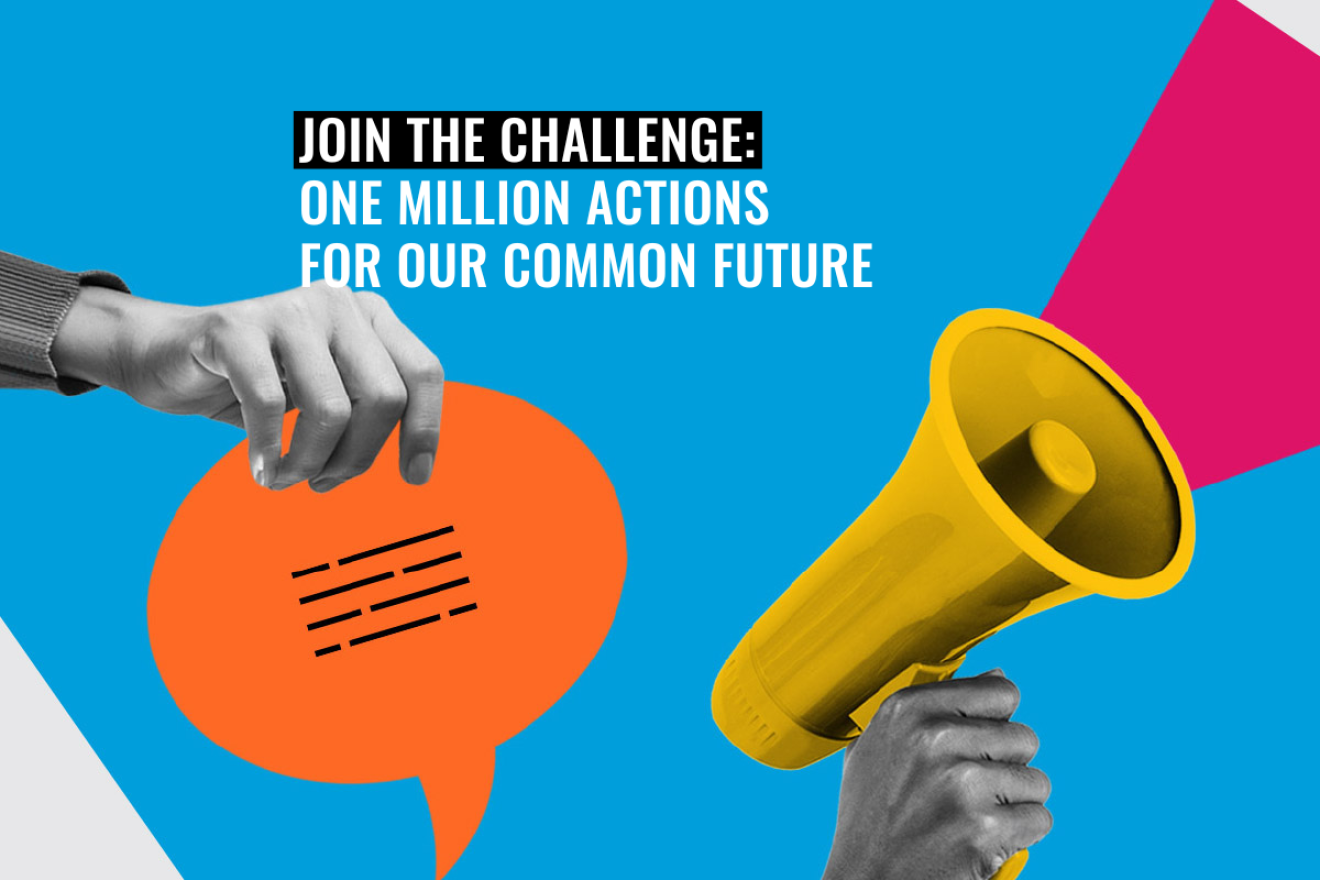
hands holding megaphone and speech bubble

ActNow Campaign

The Goals can improve life for all of us. Cleaner air. Safer cities. Equality. Better jobs. These issues matter to everyone. But progress is too slow. We have to act, urgently, to accelerate changes that add up to better lives on a healthier planet. Find new inspiring actions on the app and at un.org/actnow.

Act Now for a Peaceful World

Today, half the world is under 30, and this generation is a powerful force for peace. The UN "Hear Us. Act Now for a Peaceful World" campaign, launched on the International Day of Peace, aims to include, invest in, and partner with young people to build lasting peace. 

Thomas the Tank engine

Student Resources on the SDGs

Learn more about the Sustainable Development Goals! On our student resources page you will find plenty of materials for young people and adults alike. Share with your family and friends to help achieve a better world for all.

SDG 10: Reduced Inequalities

Goal of the month


Goal 10: Reduced Inequalities

Reduce inequality within and among countries


More about the UN Sustainable Development Goals

More from the
United Nations

Featured stories from across the United Nations and our world-wide family of agencies, funds, and programmes.

smiling young women Employment, ILO

A tougher road to work for young people

Young people are facing a tougher start in the world of work as youth unemployment rises and access to decent jobs becomes increasingly uncertain. Weakening labour markets, economic uncertainty and rapid technological change are making the transition from education to employment more difficult, with disadvantaged youth particularly at risk of being left behind. Early unemployment and underemployment can have lasting consequences, from lower wages and weaker career prospects to reduced productivity and economic growth. Expanding access to skills, training and quality employment opportunities will be essential to ensure young people can build secure, productive futures.

group photo of indigenous women Indigenous Peoples, Health

Honouring Guatemala’s Indigenous midwives

For Indigenous midwives in Guatemala, bringing new life into the world is more than a profession—it is a calling rooted in ancestral knowledge passed down through generations. The women featured have spent decades accompanying mothers through pregnancy and childbirth, often serving communities where formal healthcare remains difficult to access. Their stories reveal the trust, experience and cultural knowledge behind their work, as well as their long struggle for recognition and respect. As Guatemala creates more space for Indigenous health systems, these midwives are helping ensure that traditions that have cared for women and families for generations can continue into the future.

peanuts next to a can with contents label Agriculture and Food, FAO

No more going nuts on food allergen labelling

Millions of people with food allergies rely on labels such as “may contain nuts” to make safe choices, but these warnings are often used inconsistently or unnecessarily. New guidelines adopted by the Codex Alimentarius Commission introduce the first risk- and science-based thresholds for precautionary allergen labelling. Developed from years of FAO and WHO expert research, the guidance aims to ensure warnings are used only when cross-contact cannot be adequately controlled and allergen levels pose a genuine risk. The approach could make labels more reliable for consumers while allowing more food products to be safely available and supporting consistent standards in international trade.

woman in hijab looking out window
Women and Gender Equality, UN Women

Five years of exclusion

Five years after the Taliban takeover, Afghan women and girls face increasingly institutionalized exclusion from education, employment and public life. UN Women warns against normalizing these restrictions.

young man at a chicken coop
Agriculture and Food, Youth, IFAD

Jobs that last

With nearly half of the world’s young people living in rural areas, IFAD highlights how combining skills, finance, entrepreneurship and access to markets can help young people build lasting careers and businesses while strengthening rural economies.

young woman with baby
Youth, UNFPA

Removing barriers for Maldives youth

Young people in the Maldives are struggling with rising living costs, limited housing and insecure employment, making it harder to pursue careers, independence and family life. UNFPA is calling for more family-friendly workplaces and better opportunities.

young woman in traditional dress with arms raised and hand holding a bow
Intellectual and Cultural Property, WIPO

Protecting nomadic heritage

The World Nomad Games celebrate traditional sports, music, crafts and customs while drawing attention to the need to protect the cultural heritage behind them. Intellectual property tools can help Indigenous Peoples safeguard traditional cultural expressions.

More from the United Nations

What we do

Due to the powers vested in its Charter and its unique international character, the United Nations can take action on the issues confronting humanity in the 21st century, including:

  • Maintain international peace and security
  • Protect human rights
  • Deliver humanitarian aid
  • Promote sustainable development
  • Uphold international law
A UNIFIL peacekeeper from Spain on a regular patrol in the vicinity of Al Wazzani, south-eastern Lebanon as the sun sets in the horizon. Since 1948, more than a million women and men have served as UN peacekeepers.

Maintain International Peace and Security

The United Nations came into being in 1945, following the devastation of the Second World War, with one central mission: the maintenance of international peace and security. The UN does this by working to prevent conflict; helping parties in conflict make peace; peacekeeping; and creating the conditions to allow peace to hold and flourish. These activities often overlap and should reinforce one another, to be effective. The UN Security Council has the primary responsibility for international peace and security. The General Assembly and the Secretary-General play major, important, and complementary roles, along with other UN offices and bodies.

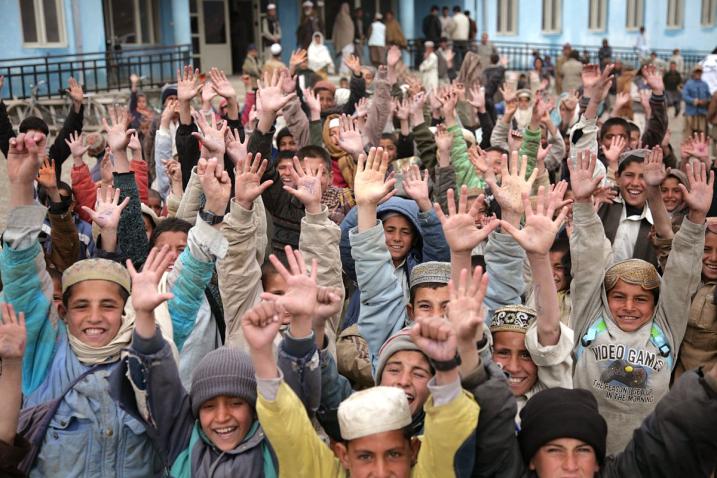
Students at Butkhak High School in Kabul, Afghanistan, cheer in unison on the last day of Global Action Week, an international campaign advocating free, quality education for all.

Protect Human Rights

The term “human rights” was mentioned seven times in the UN's founding Charter, making the promotion and protection of human rights a key purpose and guiding principle of the Organization.  In 1948, the Universal Declaration of Human Rights brought human rights into the realm of international law.  Since then, the Organization has diligently protected human rights through legal instruments and on-the-ground activities.

A child has a meal at a food distribution centre in the Rwanda camp for internally displaced persons (IDPs), near Tawila, North Darfur. More than 8,000 women and children living in the camp benefit from nutrition programmes run by the World Food Programme

Deliver Humanitarian Aid

One of the purposes of the United Nations, as stated in its Charter, is "to achieve international co-operation in solving international problems of an economic, social, cultural, or humanitarian character."  The UN first did this in the aftermath of the Second World War on the devastated continent of Europe, which it helped to rebuild.  The Organization is now relied upon by the international community to coordinate humanitarian relief operations due to natural and man-made disasters in areas beyond the relief capacity of national authorities alone.

Grace, a farmer from Kipilat village, and a leading member of the forest community in Ainabkoi, Kenya, planting a tree in 2012.

Promote Sustainable Development

From the start in 1945, one of the main priorities of the United Nations was to “achieve international co-operation in solving international problems of an economic, social, cultural, or humanitarian character and in promoting and encouraging respect for human rights and for fundamental freedoms for all without distinction as to race, sex, language, or religion.”  Improving people’s well-being continues to be one of the main focuses of the UN. The global understanding of development has changed over the years, and countries now have agreed that sustainable development offers the best path forward for improving the lives of people everywhere.

The International Court of Justice (ICJ) delivers its order on the request for the indication of provisional measures filed by Nicaragua on 11 October 2013 in the case concerning Construction of a Road in Costa Rica along the San Juan River.

Uphold International Law

The UN Charter, in its Preamble, set an objective: "to establish conditions under which justice and respect for the obligations arising from treaties and other sources of international law can be maintained."  Ever since, the development of, and respect for international law has been a key part of the work of the Organization.  This work is carried out in many ways - by courts, tribunals, multilateral treaties - and by the Security Council, which can approve peacekeeping missions, impose sanctions, or authorize the use of force when there is a threat to international peace and security, if it deems this necessary.  These powers are given to it by the UN Charter, which is considered an international treaty.  As such, it is an instrument of international law, and UN Member States are bound by it.  The UN Charter codifies the major principles of international relations, from sovereign equality of States to the prohibition of the use of force in international relations.

Structure of the
United Nations

The main parts of the UN structure are the General Assembly, the
Security Council, the Economic and Social Council, the Trusteeship Council, the International Court of Justice, and the UN Secretariat. All were established in 1945 when the UN was founded.

General Assembly

The General Assembly is the main deliberative, policymaking and representative organ of the UN. All 193 Member States of the UN are represented in the General Assembly, making it the only UN body with universal representation.

Security Council

The Security Council has primary responsibility, under the UN Charter, for the maintenance of international peace and security. It has 15 Members (5 permanent and 10 non-permanent members). Each Member has one vote. Under the Charter, all Member States are obligated to comply with Council decisions.

Economic and Social Council

The Economic and Social Council is the principal body for coordination, policy review, policy dialogue and recommendations on economic, social and environmental issues, as well as implementation of internationally agreed development goals.

Trusteeship Council

The Trusteeship Council was established in 1945 by the UN Charter, under Chapter XIII, to provide international supervision for 11 Trust Territories that had been placed under the administration of seven Member States, and ensure that adequate steps were taken to prepare the Territories for self-government and independence.

International Court of Justice

The International Court of Justice is the principal judicial organ of the United Nations. Its seat is at the Peace Palace in the Hague (Netherlands). It is the only one of the six principal organs of the United Nations not located in New York (United States of America).

Secretariat

The Secretariat comprises the Secretary-General and tens of thousands of international UN staff members who carry out the day-to-day work of the UN as mandated by the General Assembly and the Organization's other principal organs.

More about the structure of the United Nations

Learn more

Podium of the General Assembly Hall seen from below with the gold wall and the golden UN logo behind

Selecting the next Secretary-General

The United Nations process to appoint the next Secretary‑General continues with interactive dialogues guided by the principles of transparency and inclusivity. Watch the dialogues with the candidates: Michelle Bachelet Jeria (21 April), Rafael Mariano Grossi (21 April), Rebeca Grynspan Mayufis (22 April), Macky Sall (22 April), María Fernanda Espinosa Garcés (15 June) and Carolyn Rodrigues Birkett (18 June).

.

A group of people carrying their few belongings, walking in front of buildings in ruins, at sunset.

The Spotlight series

This series shines a light on communities facing conflict, displacement, public health emergencies and other humanitarian challenges around the world. Drawing on reporting from across the UN system, it amplifies voices from countries including Haiti, Gaza, DR Congo, Yemen, Afghanistan and Myanmar, to foster understanding, encourage engagement, and help mobilize support, assistance, and protection for the most vulnerable people.

Climate Change

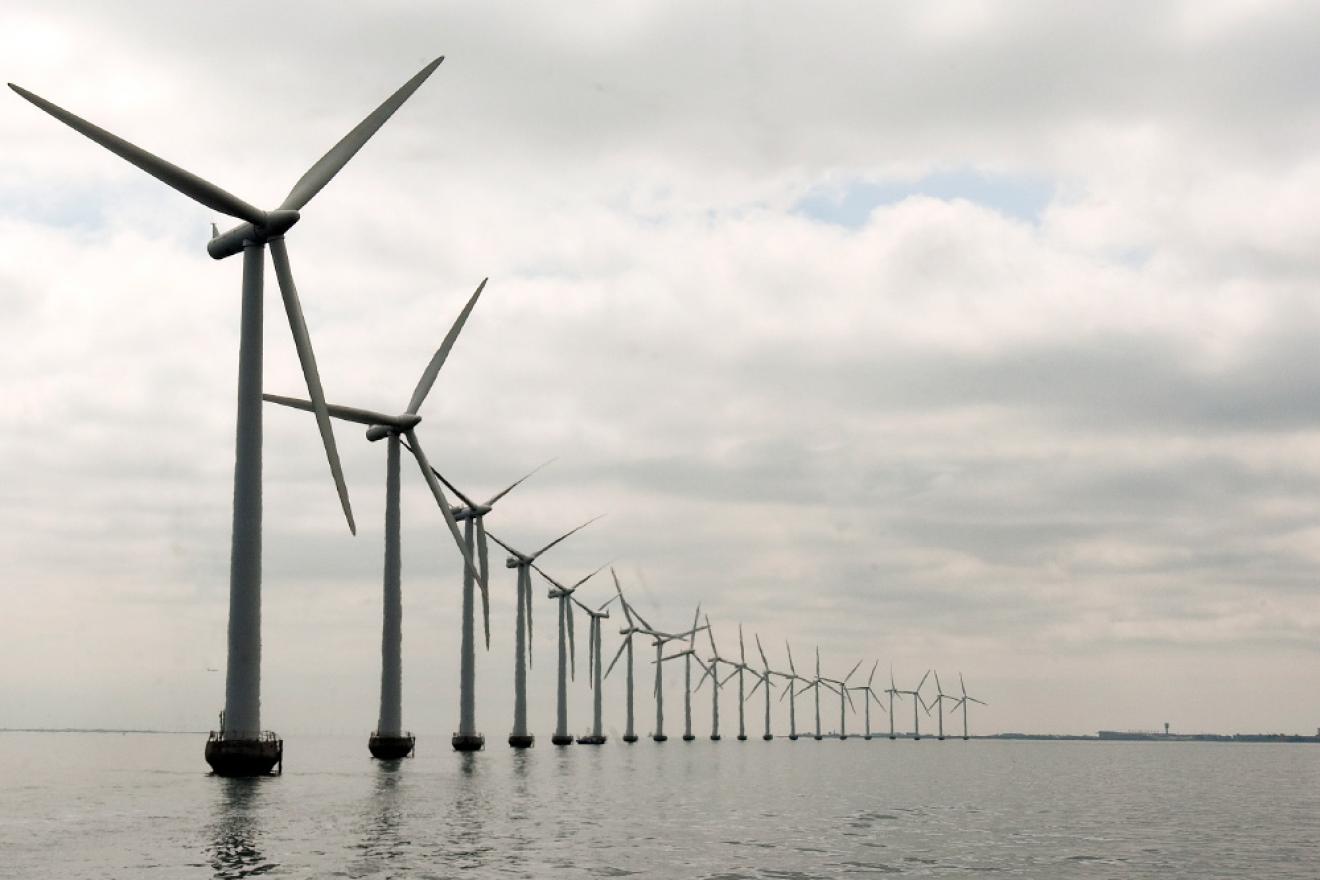
Climate Change is one of the defining issues of our time and we are at a pivotal moment. From shifting weather patterns that threaten food production, to rising sea levels that increase the risk of catastrophic flooding, the impacts of climate change are global in scope and unprecedented in scale. Taking decisive action today will make adapting to these impacts in the future more effective and less costly.

General Assembly hall with the Secretary-General at the podium

The Essential UN

The United Nations is the only place on Earth where all the world's nations come together to discuss common problems and find shared solutions that benefit all of humanity. Learn about the main areas of the UN’s activities; how it makes a difference to the world’s people; and how every citizen can get involved and make a contribution. 

Did you know?

As the world’s only truly universal global organization, the United Nations has become the foremost forum to address issues that transcend national boundaries and cannot be resolved by any one country acting alone.

2015-2025 have been the hottest 11 years on record.

Find out more in

Global Issues:
Climate Change

One in 70 people globally were forcibly displaced at the end of 2025.

Find out more in

Global Issues:
Refugees

New HIV infections remain over 3 times higher than the 2025 global target.

Find out more in

Global Issues:
AIDS

Over two-thirds of the ocean lies beyond national borders; a UN treaty aims to protect these unregulated international waters.

Find out more in

Global Issues: Oceans /
The Law of the Sea

Watch and Listen

Video and audio from across the United Nations and our world-wide family of agencies, funds, and programmes.

You can help a child who has lost their family in Gaza

Today, more than 55,000 children in Gaza have lost one or both parents, while thousands more have been separated from their families. Many are now being cared for by relatives or foster families. Through cash assistance, psychosocial support, and access to essential services, UNRWA helps children and their caregivers. With your support, children and the people caring for them can begin to rebuild their lives together. Give today.

Can artificial intelligence help create jobs for the next generation?

The World Bank’s World Development Report 2026 finds that artificial intelligence could help meet the jobs needs of 1.2 billion young people in developing countries by boosting productivity and services, but warns that without deliberate action, it could deepen inequality and exclusion.

Strengthening the fight against money laundering through trade

The UNODC-World Bank Trade-Based Money Laundering Risk Assessment Tool helps countries identify and assess money-laundering risks linked to cross-border trade, enabling authorities to strengthen oversight, improve coordination and target resources where risks are greatest.

UN Podcasts

Ozonnia walks along a narrow pathway in a forest with people following behind

Surviving war to fight for peace (AAN S13-E9)

“That mental image of surviving the war has stayed with me all of my life and has shaped who I've become... when I've the opportunity to talk to young people, I tell them my story, and I say if ...[after going through that I am] standing before you as head of the United Nations team in your country, imagine what you could become.”

As a child Ozonnia Ojielo survived a brutal civil war in his native Nigeria in which starvation was used as a weapon. After training as a lawyer, an encounter with fellow survivors gave him new purpose and propelled him to his current role as the United Nations Resident and Humanitarian Coordinator in Ethiopia.

“She started crying. All the other guests started crying. I started crying as well. There I was, a very successful lawyer making a lot of money. But I said to myself, this is much more valuable. Trying to change people's lives, or at least be there as a voice for them.”

From Rwanda to Sierra Leone to Ethiopia, Ozonnia Ojielo has supported communities around the world as they navigate difficult journeys from violence to peace. In this episode, he reflects on the long shadow of genocide, on the delicate work of reintegrating both perpetrators and victims, and shares why the biggest currency the world can offer young people is hope.

Photo: ©UN Rwanda

Your browser does not support the audio element.
Latest Audio from UN News
More live and on-demand videos from the UN

The United Nations in Pictures

Images from across the United Nations and our world-wide family of agencies, funds, and programmes.

woman holding kid goat and man holding shorn wool
Photo:© Beniamino Pisati

Threads of change

For Enkhjin Gereldash and her family, cashmere is both a way of life and a vital source of income. Born into a herding family in Mongolia, Enkhjin grew up helping her parents manage their livestock and sustainably harvest cashmere from hundreds of goats each year. Their story reflects a sector that supports around 190,000 herder households but faces mounting pressure from land degradation and climate change. Through partnerships connecting herders, processors and international markets, efforts are underway to build a more sustainable cashmere supply chain. Enkhjin now works for a Mongolian processing company, pursuing her ambition to help make Mongolian cashmere a globally recognized brand.

smiling young woman in a communal space with studying youth
Photo:UNOPS

AI to robotics: Argentina’s youth prepare for a digital-first future

In Buenos Aires, thousands of young people are gaining hands-on experience with the technologies and creative skills shaping the future of work. Three TUMO learning centres give students aged 12 to 18 free access to subjects including artificial intelligence, robotics, programming, animation, music and video game development. Designed to complement formal schooling, the centres emphasize self-directed learning and exploration. Around 20,000 students are expected to use the facilities each year, helping broaden access to digital education. For students like Lourdes, the programme is already helping them discover new interests, develop creative projects and consider future careers.

See more UN photos

Main Bodies

  • General Assembly
  • GA President
  • Security Council
  • SC President
  • Economic and Social Council
  • ECOSOC President
  • Trusteeship Council
  • International Court of Justice
  • Secretariat
  • Secretary-General

Departments / Offices

  • New York
  • Geneva
  • Nairobi
  • Vienna
  • UN System Directory
  • UN System Chart
  • Global Leadership
  • UN Information Centres

Resources / Services

  • Emergency information
  • Reporting Wrongdoing
  • UN Journal
  • Documents
  • Guidelines for gender-inclusive language
  • Databases
  • Library
  • UN iLibrary
  • UN Chronicle
  • UN Yearbook
  • Publications for sale
  • Maps
  • Media Accreditation
  • NGO accreditation at ECOSOC
  • NGO accreditation at DGC
  • Visitors’ services
  • Exhibits
  • Procurement
  • Employment
  • Internships
  • Model UN
  • Academic Impact
  • UN Archives
  • UN Audiovisual Library
  • How to donate to the UN System
  • Information on COVID-19 (Coronavirus)
  • Africa Renewal
  • Ten ways the UN makes a difference
  • GA High-level Week 2026

Key Documents

  • UN Charter
  • Universal Declaration of Human Rights
  • Convention on the Rights of the Child
  • Statute of the International Court of Justice
  • Annual Report of the Secretary-General on the Work of the Organization

News and Media

  • News
  • Press Releases
  • Briefings
  • Spokesperson
  • Photos
  • UNIfeed
  • UN Web TV
  • UN Video
  • Social Media
  • The Essential UN
  • Awake at Night podcast
  • The United Nations Pulse

Issues / Campaigns

  • Global Issues
  • Observances
  • Sustainable Development Goals
  • Our Common Agenda
  • The Summit of the Future
  • Pact for the Future
  • Climate Action
  • Peace and Security
  • Action for Peacekeeping (A4P)
  • Global Crisis Response Group
  • Call to Action for Human Rights
  • Global Alliance for Human Rights
  • Disability Inclusion Strategy
  • Fight Racism
  • Hate Speech
  • LGBTIQ+ People
  • Safety of Journalists
  • Rule of Law
  • Action to Counter Terrorism
  • Victims of Terrorism
  • Children and Armed Conflict
  • Violence Against Children (SRSG)
  • Sexual Violence in Conflict
  • Refugees and Migrants
  • Action Agenda on Internal Displacement
  • Spotlight Initiative
  • Preventing Sexual Exploitation and Abuse
  • Prevention of Genocide and the Responsibility to Protect
  • 1994 Genocide against the Tutsi in Rwanda
  • The Holocaust
  • The Question of Palestine
  • The Transatlantic Slave Trade
  • Decolonization
  • Messengers of Peace
  • Roadmap for Digital Cooperation
  • Digital Financing Task Force
  • Data Strategy
  • Information Integrity
  • Countering Disinformation
  • UN80 Initiative
  • Spotlight series
United Nations
Donate
  • facebook
  • twitter
  • youtube
  • flickr
  • instagram
  • A-Z Site Index
  • Contact
  • Copyright
  • FAQ
  • Fraud Alert
  • Privacy Notice
  • Terms of Use