Showing posts with label Threads. Show all posts

Wednesday, December 17, 2008

How To Thread a Novel

So much detail to put in just the right places. How does anyone ever write a novel? There are tricks, of course, passed along from writer to writer. Not to over simplify -- or over promise as per our header here, but here are our best suggestions in a nutshell.

Q: I've written my first draft and there are sizeable clumps of information that need to be threaded throughout. What's the best way to do this? I started an outline, but got sick of it. I read Anne Lamott's Bird by Bird about plot treatment--summarize chapter by chapter what happens. I'm thinking this might be the best way to go. I know the chronological thread of my MC's life, but I want to start when she's an adult, then go back and insert background on her past, her relationship with her mother, her job, her relationship with her boss, how she met certain friends, all while keeping the main story moving forward. Without it all becoming a huge mess. How have you done it? Hannah's Thread Obsessed and Millefeuille post were helpful, but maybe a little more nuts and bolts about how to work those threads? And Lynne's post on journals hit home. I had one character as an ex-Marine, then realized it didn't really fit his personality! Exactly what does a thread consist of--subplots or just the chronology of each character?

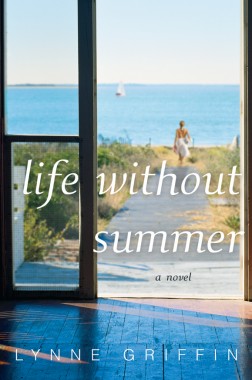
Lynne Griffin
Like Amy, my storytelling process is more organic than plotted or outlined. I don't choose jobs or homes or life circumstances for my characters, these come to me over time. And the time I spend thinking about my characters--listening to their story, wondering about their predicaments-- far exceeds the time I spend putting words on the page. That said, as you mentioned above, I keep a journal for each novel. Not only do I jot down plot points as they come to me, but I note what threads I'll need to go back and tighten in revision. Writing fiction, for me, is equal parts art and science. I strive to write for the story, then I go back to be sure I've been true to craft. As my dear friend Michael Lowenthal once said, "Let readers dismiss the work on taste, not talent."

Amy MacKinnon
Outlines? Plot treatments? Chapter summaries? It all sounds so technical. I'm afraid I can't help you with this one because my process is more organic and very simple. In terms of threads, I introduce them the way I'm introduced to other people's stories in real life: in bits and pieces. When I'm getting to know someone, they don't tell me everything of their past and present right away, and they almost always hedge the truth. Time teases out the story, trust, circumstances, a shared experience. It's a gradual process. And then, finally, there's the big revelation and you realize the clues were there all along. It's simply a matter of identifying each story in your novel, and ensuring each is told as fully, as richly as possible, and all sharing a common thread.

Hannah Roveto
I always do a chapter-by-chapter synopsis, for my own work and when I read for others. Hallie Ephron teaches a High-Low Revision process; she explains it in her Writing and Selling Your Mystery Novel, which is perfect for any kind of novel. Whether or not you're an outliner, and I'm not, you do need to see your first draft from higher ground and follow each character through. The draft is very organic for me, messy even. Once it's complete, then comes the work to make sure it doesn't stay that way! I do synopses on a couple of sheets of lined paper, with 3-4 lines per chapter. Line one is the synopsis, with the date in the left margin and setting, then a quick description of key points. When I've got them all down I go back and make little notes -- one or two words -- thread by thread, character by character, on what info gets revealed to whom when ("R 2 K, dad issue"). Leaving yourself little space makes you focus. What really does happen here that is important to the reader/story? Best to do this with a cup of hot tea to one side, in the comfiest office chair you own. The few hours it takes are well spent!

Thursday, April 17, 2008

Journals


Posted by Lynne Griffin

I have a thing for journals. I love quality stationery, mechanical pencils and pens that glide across the page. Right now if you were to go into my office closet or peek in a desk drawer, you'd find more cloth bound books and brightly colored pads of paper than I'll need for some time. These are my tools, and I can't write without them.

The stationery is for charming notes, the pens and pencils to enhance the writing experience. The journals are my most versatile tool used to capture the journey toward completing a novel. I don't use my journal in the traditional sense, a daily entry highlighting the day's activities and feelings associated with my life. I keep one for each book I write and in each I keep tidbits of ideas for my work-in-progress. In it I have vital information that will never find its way directly into the novel, but details that are essential to a tight, well-crafted work.

Here are a few of things I write down.

  • Each character's age and the month of their birthday, along with their relationships with other characters. (For example, I don't want a character to be an older sister at the beginning of the novel, and later claim she's the younger of the two.)
  • The names of all my minor characters and where they fit into the story (Boy can these people get lost in the shuffle.)
  • The book's timeline (If it's Tuesday in Chapter one, what day is it in Chapter twenty? I fear I'll write a story where it's always Friday. Keep in mind, readers love to find these glitches in a novel, but they remove the reader from the story and thus interrupt flow.)
  • Page counts of chapters (While it's fine to have chapters of varying length, I like to know how my story's structure is falling into place. Later I can decide to combine or expand certain chapters to fit the overall structure.)
  • Lists of resources--print, web, and people-- that I can go to for story details (Authenticity of details is a post in and of itself)
  • Interviews completed (For my work-in-progress, I've completed several interviews that have added incredible information I'm using to inform plot, character and setting. I don't know when I need this info until I'm writing and suddenly I need it, and I want to have it handy.)
  • Notes related to revisions that will need to be layered into a subsequent draft (While I revise the writing from the day before each morning before I write again, I don't go back to the beginning, even if something is revealed to me in say the middle of the novel. I capture the notes in my journal and then in revision I'll know to add details or make changes. For example, a minor character in my work-in-progress had children in chapter three, but by chapter twenty-eight it was clear it was better if he didn't. Note to self--remove his children from chapter three)
The most significant use of my journal is during writers' group. During critique of my pages, sitting quiet, unable to speak, I write. I write down the positive things Amy, Lisa and Hannah say, as well as the constructive feedback. I do this for many reasons. For practical reasons, I have to know what's working and what's not. If I don't have the feedback to review later, I won't recall specifically what was discussed. I might think I'll remember, but likely I'll miss something. It also provides me with the ability to review the notes for themes. Is one character inconsistently relating to another character? Do a number of chapter beginnings overdue exposition? Is a particular subplot missing the mark in places? Taking accountability for the things that consistently emerge, absolutely makes for a stronger novel. Thanks to my journal, I won't miss any of these.

The process of capturing feedback is in itself a means of making positive change. Remember I'm a teacher, and teachers know that the act of writing down what you need to change is the first step toward embracing the change. The process of writing it down raises awareness and centers new thinking in a place of conscious thought. And it doesn't hurt to have the details that made your writers' group gasp, cry, or smile written down either. The positive feedback is a source of comfort on days when the writing is hard.

So how do you capture the nuances and tidbits for pulling together a strong work? We've written a number of entries about the art of writing, but I strongly believe in the science of it too. Work habits can either enhance or interfere with the process of writing a novel. Care to share some of the habits that work for you?

Wednesday, March 19, 2008

Thread Obsessed

by Hannah Roveto

The other evening, my husband and I found ourselves home without children and did what any rational couple would do: ran out for Chinese take-out and an R-rated movie. We rented The Good Shepherd, with a cast that merely begins with the likes of Matt Damon, Angelina Jolie, Robert De Niro and William Hurt. Directed by De Niro. A spy movie that follows the creation of the CIA and turns on the Bay of Pigs. Two thumbs up from its reviewers. We settled in with our soups.

A full 167 minutes later, we stared at each other. "Wow, that was long." "I was confused; did this happen first or later?" "Did he do that or did someone else?"

After rehashing the movie another several minutes, we decided to check any deleted scenes, thinking they might provide missing answers. What was fascinating was that the deleted scenes represented an entire thread cut from throughout the movie. In the official version, a particular character is killed off; yet there he was, again and again. His scenes still didn't answer our questions about the movie, but in watching them, I knew what was wrong with the film. It was, yes, the threads.

There weren't necessarily too many, we decided after further discussion, and De Niro was right to cut that particular one. The problem came in how the remaining threads were woven together. Whether it was the writing or editing (Everyone needs a good editor!), I don't know. Time was jumbled and while dates were provided at the start of scenes, the viewer might not realize how critically important they were until it was too late. Threads became snippets, difficult if not impossible to follow smoothly from start to finish.

Being thread-obsessed myself, I actually plan to rent it again, in part to better understand the story, mostly to track each thread from start to finish. I want to see how De Niro and the editors thought it through, to see whether it could have been done differently. Sometimes we learn more when we can see what's missing than when it is done perfectly.

Thread obsession? It's what delivers the richness of Michael Chabon's The Amazing Adventures of Kavalier & Clay. Glen David Gold's Carter Beats the Devil. And so on. You know it when you see it, the palpable texture that comes from beautifully crafted threads.