Showing posts with label Lovecraft. Show all posts

Wednesday, January 11, 2012

"When we are Lovecraftian, we are ourselves - utterly."

I have read that Lovecraft is a mask I wear, that as an author I am not myself. What wondrous idiocy. I am never more "myself" than when I am Lovecraftian, for he has molded what is best within me. I came to him as a child, wide-eyed and ignorant. I am wide-eyed still (but hopefull a wee bit wiser). Through my Lovecraftian vision I have seen the verdant Sesqua Valley, that sequestered place of wonder that exists only as a symbol of Lovecraftian passion. To have found it was a rich reward. At the end of lonely day, I drift in dream to the valley, and there I find the freedom to be myself absolutely. - from "The Saprophytic Fungi" (The Fungal Stain and Other Dreams)

Wilum Hopfrog Pugmire (1951-) is an author of poetry and short stories set in the world of the Cthulhu Mythos. He began writing fiction while serving as a Mormon missionary in Ireland, encouraged by his correspondence with Robert Bloch, creator of Psycho and fellow Lovecraft protege. Today, Pugmire, the self-proclaimed "Queen of Eldritch Horror," is widely considered the finest Lovecraftian writer of the modern era. He is published primarily by small presses and has appeared in many anthologies.

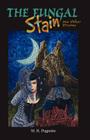
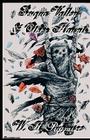
Thus far I have read two Pugmire books. The first one is Sesqua Valley and Other Haunts (2008), which I received for Christmas. I opened it on Christmas Eve and enjoyed it so much that I immediately ordered The Fungal Stain and Other Dreams (2006) the next day with the B&N giftcard I received. Many aspects of the Cthulhu Mythos are so iconic that it's easy to fall into the trap of pastiche, but I found Pugmire's works to be very much his own. His primary contribution to the Mythos is Sesqua Valley, a hidden region on the West Coast accessible only to individuals of sufficient aesthetic persuasion. Its native denizens are born out of the mist at the base of Mount Selta, where they eventually return after venturing into the greater world to "locate those rare souls who have tasted the dark secrets." Sesequa resembles Innsmouth somewhat in its isolated, magical locale and its people's unique "Sesqua Look," which calls to mind a wolf or toad. Their progenitor is the charismatic Simon Gregory Williams, a skilled sorcerer and player of the enchanted flute. He is grotesque and seductive, a lover of mischief and adventure reminiscent of Anne Rice's Lestat. Altogether the most memorable character I have encountered in some time.

As his nuanced portrayal of Williams indicates, Pugmire's approach to Lovecraft is one of subversion. The staid world of academia and New England aristocracy is largely absent. Our protagonists are the monsters and outcasts the Gentleman from Providence so disdained: Goths, witches, drug addicts, struggling artists, zombies, and the inhuman spawn of the Valley itself. Strong women abound too, something sorely needed in the Cthulhu Mythos, and sexuality tends to be fluid. Instead of simply cosmic terror - although there certainly is that - Pugmire evokes rich, textured atmospheres of pagan mysticism that recall the best of Arthur Machen. While the dread Old Ones dream beyond the reach of three-dimensional space, there is fear and wonder in crumbling books of arcane lore and in dances at midnight in the deep forest. Calling it "magic realism" feels trite but there is very much an openness and acceptance towards the terrible beauty of the universe where Lovecraft only saw madness, horror, and doom. Sesqua Valley is not a cesspool like Innsmouth or Dunwich but a sanctuary for visionaries and lonely creative people who stumble upon it by chance.

In the works of W.H. Pugmire I have experienced that rare sensation of kinship with an author. I drank in eagerly his haunted settings and journeyed into other realms alongside his many enraptured humans. I'm afraid I simply cannot pick and choose any individual pieces to discuss, as is properly done in reviews of short story anthologies. Instead I can only say that I look forward to reading more, particularly those Innsmouth and Dunwich stories he says he is currently writing. (Guess what my two favorite Lovecraft tales are.) There are several additional Pugmire stories available online courtesy of the Lovecraft eZine (here and here) and I strongly recommend them all. Metal fan I am, I will end by dedicating to Sesqua Valley this song by Satyrian.


Shop Indie Bookstores


Shop Indie Bookstores

Monday, December 19, 2011

Winter/Holiday Musical Grab-Bag


See also: last year's selection!

Friday, October 21, 2011

Cthulhurotica

The movie began to play. . . It was a procession. Men held torches to light the way. One could glimpse men and women copulating in the background, behind the rows of slaves with the torches. If you looked carefully, you might see that some of the people writhing on the floor were not making love to anything human. - from "Flash Frame" by Silvia Moreno-Garcia


So Emily did this post recently on sex scenes in literature and got a record number of comments. Most of my comment was concerned with trigger warnings vs. pearl-clutchers but just for the hell of it, I also brought up the Cthulhurotica anthology. Yes, it is indeed an anthology of Lovecraftian erotica. This thing exists and I have read it. Since it is nearing Halloween I have decided to review this thing which I have read.

Before we begin, I would like to dispense with a particular concern the fair reader may have. Specifically, that genre which is called tentacle hentai which involves tentacles, as does Lovecraft, who has tentacles but not love. Cthulhurotica contains exactly three instances of girl-meets-cephalopod and one guy-meets-octogirl but the action either happens offscreen, is vaguely implied, or briefly glimpsed by a third party who is then rendered unconscious. If you are a fan of such action, this is not the book for you.

So anyway, Cthulhurotica was published last year and edited by Carrie Cuinn, who had long wondered at the near-complete lack of any sort of romance, sexuality, or even female characters in the works of H.P. Lovecraft. His heroes are invariably chaste, bookish Anglo-Saxon men from New England who stumble upon nameless horrors in the pages of ancient Latin texts in musty libraries. Women, when they appear, are background characters who get taken out of the story pretty quickly - think "The Colour Out of Space" or "The Case of Charles Dexter Ward." Two important exceptions occur in "The Dunwich Horror" and "The Thing on the Doorstep," semi-sequel to "The Shadow Over Innsmouth." Those three stories are also the only ones Lovecraft wrote (other than "Facts Concerning the Late Arthur Jermyn and His Family," which I haven't read) concerned with marriage, children, and reproduction, which he portrays as harbingers of degeneracy and doom. Lavinia Whateley has twins (somehow) by the alien god Yog-Sothoth who plot to open a gateway to extradimensional horror. Asenath Waite turns out not to be a woman at all but a man inhabiting the body of his daughter in a body-surfing attempt at immortality. Her family is from Innsmouth, a town ruined by interbreeding with a race of grotesque fish-frogs who worship Cthulhu. "The Shadow Over Innsmouth" is generally accepted by critics to be an allegory for miscegenation.

In reading his stories, it is easy to see Lovecraft as a repressed and neurotic individual with complexes upon complexes. He had original ideas that have influenced the entire scope of twentieth-century horror but for all his alien geometries and mad revelations, he's either neglected or twisted one vital part of the human experience. As Emily puts it,
. . .The way I see it, sex is an integral and enjoyable component of human existence. There is no reason a scene depicting sex can't be just as subtle and revealing of human character as a scene in which characters prepare a meal together, or get ready for a party, or fight in a war. Furthermore, it seems to me that to exclude sexual activity from the literary scene in any kind of systematic way would be to restrict unnecessarily the palette with which we paint our own existence. Most people, at some point in their lives, have sex. Shouldn't it therefore be a valid literary subject? Peoples' sexual lives can sometimes reveal aspects of their psyches difficult to depict in any other way: after all, many people are at their most vulnerable during sex, and some expose aspects of themselves which they hide away at all other times. . .
Jennifer Brozek in her essay "The Sexual Attraction of the Lovecraftian Universe" agrees, pointing to common elements of Lovecraft's fiction that welcome an erotic interpretation. The most obvious is the attraction of the forbidden and the powerful and the myriad ways such power dynamics can be explored, subverted, and deconstructed. Atmosphere is also important: Lovecraft is known for his lush descriptions of decaying towns, dark forests, and arcane ruins that become veritable Scenery Porn. "''Food porn' and 'woodworking porn,'" Emily points out, ". . . can get as gratuitous as they want: there is no cultural stigma around watching cooking shows or looking at craft magazines, so we don't feel we need to apologize." Hell, there's even a site called Bookshelf Porn. "In my case I think this gets a NSFW designation," said one of my post's comments.

Thus, Cthulhurotica was envisioned not so much as a collection of sex stories but as an exploration of a possible human responses to Cosmic Horror left untouched by the traditional Cthulhu Mythos. In fact, quite a few of the stories are pretty PG-13 and I don't think any of them qualify as all-out X. They're a diverse bunch, some directly inspired by specific Lovecraft works (such as "The Whisperer in Darkness" and "The Silver Key") while others are more subtle in their influence. The book is divided into three sections but there doesn't seem to be any sort of theme uniting each one. The opening piece, Gabrielle Harbowy's "Descent of the Wayward Sister," does a great job setting the tone for the rest, turning Lovecraft on his head by centering on a bold female character who greets the monstrous with open arms (literally). An unapologetic thief and prostitute, she's a rule-breaker on the margins of Victorian society already, as opposed to some stuffy New England aristocrat. Don Pizarro's "The C-Word," on the other hand, is a quiet modern tale of two lovers, a young man and a woman seventeen years his senior. Except she lives in Innsmouth, which adds another layer to the issues of aging and physical change that have caused her to push him away.

Richard Baron's "The Cry in Darkness" is a semi-sequel to "The Dunwich Horror" featuring secondary character Mamie Bishop, whose new husband is perplexed at her obsession with pregnancy and sleepwalking episodes that routinely take her into the dark rural night. The ending is one of those wham! conclusions, similar to that of the great escape in "The Shadow Over Innsmouth," that fades to black and assumes the unreal quality of a dream. "Transfigured Night" by K.V. Taylor had a potentially silly "castaway on a deserted island" premise but quickly redeemed itself with its mood of sinister expectancy and a truly disturbing instance of the "last man on earth hears a knock at the door" variety. It also subverts Lovecraft's favored motif of intellectual seduction through crumbling tomes and hidden history. Leon J. West's "Amid Disquieting Dreams" was a deeply disturbing study of addiction and masochism, while "Le Ciél Ouvert" by Kirsten Brown ends the book with a rapturous blend of cosmic revelation, sexual transcendence, and all-out reality-warping.

My favorite story by far was "Flash Frame" by Silvia Moreno-Garcia, publisher at the Innsmouth Free Press. As I mentioned at Emily's post, "Flash Frame" is best described as a cross between The Ring and The King in Yellow. Creepy, creepy, creepy and just perfect for Halloween. I won't spoil it for you but suffice to say, this one is exactly what Lovecraft (or Chambers) plus erotica should look like. Unnerving, commingled disgust and perverse fascination, hints of an uncanny wrongness and secret malignant forces at work. (A lot like Roberto Bolaño, come to think of it.) Moreno-Garcia has just become one of my favorite people working in the Cthulhu Mythos today. Do check out the Innsmouth Free Press if you haven't already.

The rest of the book didn't do much for me, unfortunately, although I did come away from Cthulhurotica with the feeling that Carrie Cuinn had accomplished what she had set out to. I've read a few Lovecraft anthologies over the past year, mostly from Chaosium's Call of Cthulhu fiction line, and after awhile they do tend to blend together and become predictable. There's only so much you can do in following Lovecraft too closely and writing about mind-shattering discoveries and towering monsters and lurking doom in the family tree. There's also the risk of merely perpetuating Lovecraft's many, many Unfortunate Implications by failing to do any deconstruction, alternate interpretations, or exploration of new angles. I also applaud Cuinn for selecting a large number of female authors and authors from different culture backgrounds, both sorely needed in the Lovecraftverse.

Cthulhurotica also includes a few illustrations by various artists and three essays: "Cthulhu's Polymorphous Perversity" by Kenneth Hite, "Cthulhurotica, Female Empowerment, and the New Weird" by Justin Everett (discussed in my Arthur Machen post), and Brozek's "The Sexual Attraction of the Lovecraftian Universe." All of them quite thought-provoking and a great way to round out the book. According to its website, Cthulhurotica, despite the initial squick reaction it doubtlessly inspires in many, has received such a successful and positive reaction that plans for a second volume are in the work. Submissions will be open later this year. *thumbs up* I support this endeavor.

Sunday, July 24, 2011

More on Machen and Women

From Arthur Machen's short story "The White People," written sometime in the 1890s:
"But shouldn't we experience a certain horror - a terror such as you hinted we would experience if a rose tree sang - in the mere presence of an evil man?"

"We should if we were natural: children and women feel this horror you speak of, even animals experience it. But with most of us convention and civilization and education have blinded and deafened and obscured the natural reason."
Women are like children and animals and lack proper civilization. Riiiiight. Again, this type of shit is why I'm actually glad Lovecraft had so few female characters.

Wednesday, June 29, 2011

Arthur Machen, Monstrous Matrons, and Other Eldritch Things Man Was Not Meant to Know


"No, I think not, even if the worst happened. As you know, I rescued Mary from the gutter, and from almost certain starvation, when she was a child; I think her life is mine, to use as I see fit. Come, it's getting late; we had better go in."

"Yes, I married, Villiers. I met a girl, a girl of the most wonderful and most strange beauty, at the house of some people whom I knew. . . My friends had come to know her at Florence; she told them she was an orphan, the child of an English father and an Italian mother, and she charmed them as she charmed me. The first time I saw her was at an evening party. I was standing by the door talking to a friend, when suddenly above the hum and babble of conversation I heard a voice which seemed to thrill to my heart. She was singing an Italian song. I was introduced to her that evening, and in three months I married Helen. Villiers, that woman, if I can call her woman, corrupted my soul."

"Everyone who saw her at the police court said she was at once the most beautiful woman and the most repulsive they had ever set eyes on. I have spoken to a man who saw her, and I assure you he positively shuddered as he tried to describe the woman, but he couldn't tell why."


Arthur Machen (1863-1947) was born in Wales to a poor vicar. He left for London to seek his literary fortune but found mixed success, although a surprise inheritance sustained him comfortably for a time. He took up acting and associated briefly with the Aleister Crowley circle, though mostly out of curiosity. After a brief period of popularity in the 1920s, Machen's fortunes faded, but on the event of his eightieth birthday a literary appeal was made to formally recognize him as a distinguished man of letters. Signers included T.S. Eliot, Bernard Shaw, Walter de la Mare, Algernon Blackwood, and John Masefield. Its success gave Machen's final years a long-sought security.*

Much more so than Robert W. Chambers, Machen was an enormous influence on H.P. Lovecraft. In his essay "Supernatural Horror in Literature," Lovecraft praised "The Novel of the Black Seal" and "The Novel of the White Powder" (from the episodic novel The Three Imposters) as "perhaps represent the highwater mark of Machen's skill as a terror-weaver" and used them as the basis for his own stories "Cool Air" and "The Colour Out of Space." Machen's most famous work, the 1894 novella The Great God Pan, inspired Lovecraft's "The Dunwich Horror," which shares many significant plot points and even gives its predecessor a shout-out. ("Great God, what simpletons! Show them Arthur Machen's Great God Pan and they'll think it a common Dunwich scandal!") More recently The Great God Pan has been said by Stephen King to be "Maybe the best [horror story] in the English language" that cost him several sleepless nights and deeply influenced his 2008 novella N.

As part of my Year of Lovecraft I purchased a copy of the anthology The Three Imposters and Other Stories:Vol. 1 of the Best Weird Tales of Arthur Machen from Chaosium's Call of Cthulhu fiction line. It contains The Great God Pan, "The Inmost Light," "The Shining Pyramid," and The Three Imposters; or, The Transmutations. According to editor S.T. Joshi (a leading Lovecraft scholar and editor of the Chambers collection as well), Machen was a "religious mystic, [for whom] the triumphs of nineteenth-century science were anything but victories; instead, it seemed to him that science was coming to rule all aspects of life, even those aspects - the spiritual life and its corollary, art - where it had no place." In his 1902 treatise Hieroglyphics: A Note upon Ecstasy in Literature Machen criticizes "such writers as Jane Austen and William Makepeace Thackery for work that is too much under the control of the conscious reason and not sufficiently open to the wonder, mystery, and 'ecstasy' of life." Machen can perhaps be called a Dark Romantic for whom nature was a chaotic, untrammeled force of creation and destruction, of joy and madness.

Machen's concept of nature is basically horror's original Eldritch Abomination, a special type of Cosmic Horror made famous by such Lovecraftian entities as Cthulhu and Yog-Sothoth. In fact, the latter is best known for its role in "The Dunwich Horror," in which the godlike entity impregnates a human woman and brings forth a monstrous half-human hybrid. The key trait of the Eldritch Abomination is that it is above and beyond our comprehension - even to see one is enough to shatter the human mind. They are rarely actively evil; rather, the havoc they wreak is indirect, akin to a human accidentally crushing some bugs while performing a mundane task. Encounters with an Eldritch Abomination are often the result of meddling in things Humanity Was Not Meant To Know, such as Dr. Raymond's experiment on Mary in The Great God Pan which would enable her to "see Pan." Originally the Greek God of Nature, Machen's Pan is the true formless form of the universe.
"We know what happened to those who chanced to meet the Great God Pan, and those who are wise know that all symbols are symbols of something, not of nothing. It was, indeed, an exquisite symbol beneath which men long ago veiled their knowledge of the most awful, most secret forces which lie at the heart of all things; forces before which the souls of men must wither and die and blacken, as their bodies blacken under the electric current. Such forces cannot be named, cannot be spoken, cannot be imagined except under a veil and a symbol, a symbol to the most of us appearing a quaint, poetic fancy, to some a foolish tale. But you and I, at all events, have known something of the terror that may dwell in the secret place of life, manifested under human flesh; that which is without form taking to itself a form."
Her single glimpse of Pan drives Mary insane and, as with Lovecraft's Lavinia Whateley later on, somehow results in a pregnancy. While Wilbur Whateley was a repulsive man with tentacles, Machen's Helen Vaughan is a beautiful but sinister woman who seduces prominent men and drives them to suicide. The misogyny is blazingingly obvious: Helen, under her alias "Mrs. Beaumont," is a single, independent woman with no authoritative male attachments - no husband, father, or brother. Machen may have been racy for his time, but his portrayal of liberated female sexuality only reinforces the Victorian status quo. As Harry Markov puts it in his review of the Cthulhurotica anthology:
Sex is strength for women in “Cthulhurotica.” Their sensuality is a tool. What Everett doesn’t explain, however, is why the women in the Lovecraftian universe are ready to transition from the ‘uninitiated’ – sexually and in the sense of knowing the world – to ‘initiated’ – accepting the layers hidden within our world and coming back stronger from meeting the horrors. Well, historically speaking women were demonized because of their sexuality. Lilith supposedly slept with demons and Succubi are sex-starved demons that drain men of their life force after sex. Sirens lured men to their death with an irresistible song. Circe tried to seduce Odysseus to his death. Witches were rumored to copulate with Satan himself. In the long run, myths and legends – told by men – stigmatized women’s sexuality as sin and demonized them to a point where it’s ingrained in our subconscious collective mind. It’s why women in the Lovecraftian universe can transition and accept, whereas men fail to and become insane.
The "monstrous female," Markov argues, achieves dominance through sexual destruction. In this respect, Machen's vision of the Pan mythos seems to draw heavily on that of Bacchus/Dionysus, whose wild female followers, the maenads, tore powerful men like Pentheus to shreds with their bare hands. Women in Classical myth, I remember my professor telling us, are always associated with hysteria and madness, even in ostensibly positive portrayals such as Sophocles's Antigone, in which the titular heroine is irrationally fixated on properly burying her dead brother in defiance of all danger and dire consequence. Dido in The Aeneid is another good example. And these associations are hardly a dead trope: the second season of True Blood featured a maenad named Maryann Forrester who fed off primal emotions and was said to have been known in ancient times as Lilith, Isis, and Gaia, a Greek goddess of earth. Here once again we have a connection between a "monstrous female" and destruction, raw nature, and crazed emotional states. Maryann driving all of Bon Temps to ecstatic madness further positions her as a literal threat to civilization.**

If women are intrinsically linked to an eldritch vision of nature, then men represent restraint and civility. The characters opposing Helen Vaughan and trying to stop her (by killing her) are all male. The other Machen stories included in the anthology center on English gentlemen stumbling into various occult mysteries, ranging from arcane rituals to a particularly nightmarish version of the Fair Folk. There is a vivid contrast between "the darkness of the thicket, the dance on the mountain-top, the scenes by lonely shores, in green vineyards, by rocks and desert places" and the urbane London flat, where a man of letters and a scientist converse about cryptic encounters with the strange people of the streets. For all their emerging awareness of the dark corners of the earth, however, Machen's heroes - such as Dyson, the recurring amateur detective - maintain their cultivated aristocracy. No one even Goes Mad from the Revelation, as usually happens in Lovecraft, although they may be shaken.

Which is not to say that only women in Machen are villainous. Dr. Lipsius in The Three Imposters is a truly diabolical figure that may remind modern readers of Senator Palpatine. But even then, his victim was seduced intellectually (as opposed to sexually or emotionally) by promises of ultimate knowledge. Where women are victims, this simply transforms them into infernal gateways. Both Mary and Mrs. Cradock ("The Novel of the Black Seal") bring forth monstrous children of rape. Mrs. Black from "The Inmost Light" obediently submits to the experimentation of yet another mad doctor, this one her husband, and is turned into something no longer human which must be destroyed. A possible exception to both villainy and victimization could be Miss Lally ("Black Seal"), who is rationally skeptical of Professor Gregg's obsession with the Fair Folk. But given the twist ending of The Three Imposters that dramatically alters our perception of the preceding stories, both her example and that of Mrs. Cradock are probably nullified.

Despite my complaints, though, I really did enjoy Arthur Machen, even more so than H.P. Lovecraft! Compared to Machen's subtlety and elegance, Lovecraft comes across as little more than the pulp writer he was. The big issue I have here is one most marginalized bodies (i.e. women, people of color, the GLBTQ community) face when reading fiction: that of how to enjoy literature, especially older literature, when you're likely to encounter stereotypes and prejudicial beliefs. I agree with one gay blogger who argues that it's usually better to be erased than to see yourself portrayed in an offensive manner. Given the sheer amount of FAIL Lovecraft displayed towards minority groups, I'm actually glad female characters are practically nonexistent in his works. It comes down to how many bumps you're willing to tolerate, I suppose. Along with Chambers, Machen could use more love, though not without a critical eye.

The Great God Pan can be read here. For "The Dunwich Horror," click here.

* Yes, I wrote the TV Tropes page for Arthur Machen and supplied most of the tropes. I did the same for "The Shadow Over Innsmouth." LOL I am such a dork.
** And on the Wild Mass Guessing page for True Blood, I even argued that Maryann Forrester was Helen Vaughan. TV Tropes will ruin your life.

Shop Indie Bookstores

Monday, June 13, 2011

"Lovecraft. . ."

. . . it's bizarre that the guy had the word 'love' in his name, yet he was never a specialist on the subject . . . a failed marriage, a hermit's life . . . It's said that his best friends were his cats . . . strange. . . ("Found in a Trunk from Extremadura")


The Innsmouth Free Press is a Canadian micro-publisher of dark/supernatural fiction and horror, with a focus (as their name implies) on the Cthulhu Mythos of H.P. Lovecraft. They also have a wonderful website that includes a fictional Innsmouth newspaper online edition, articles and reviews, and a free triannual literary magazine. Historical Lovecraft, released in May, is their second book following the novel Fraterfamilias in 2010.

The submissions page for this short story anthology called for "Historical fiction with a Lovecraftian twist" (up to 1937, the year of Lovecraft's death) with an emphasis on multiculturalism. That last part especially caught my interest. His ideas may have been original, but Lovecraft was mired in deep racism that was excessive even by the standards of his own day. Most notably, the various cults and cosmic horrors they worship are associated with marginalized communities such as immigrants, the poor, the disabled and mentally ill, and racial and ethnic minorities. The deformed mutants and "blasphemous fish-frogs" of "The Shadow Over Innsmouth" represent the dangers of miscegenation and the foreign pollution of Anglo-America, with a final revelation that recalls the infamous "one-drop rule." The sanity-shattering monstrousness of an Eldrtich Abominations comes from its sheer alienness rather than any special ability. At its core, Lovecraftian horror is about fear of the unknown and unfamiliar (and not to mention sex and seafood).

Historical Lovecraft, on the other hand, takes the Lovecraft out of New England and sets him down in Africa, Europe, China, Indonesia, Latin America, and the Middle East, where a Byzantine bishop, a Javanese medicine man, Laotian guides, Stalinist officials, and a Moche priestess face terrors from the stars above and from the earth and waters below. It's like that moment of recognition between the Polynesian medicine man and the Yankee sailors in Pierre Comtois's "The Old Ones' Signs" from Tales Out of Innsmouth: "He says he knew we would come around to see him sooner or later. That any normal man, even sickly looking white men, would be repulsed by what had happened to his own people and be compelled to seek out their own kind. . . We white men always think ourselves the superior of other races, and now we can see just how closely related we really are to them." It is no longer a threat of foreign freaks and their arcane gods threatening Massachusetts but a diverse array of humans dealing with powerful beings and dark forces in a variety of culturally-prescribed manners. Though not quite a deconstruction - scary things are still pretty scary - Historical Lovecraft explores how people from different backgrounds might deal with the reality of Cosmic Horror.

Despite the global setting, the stories together reveal a general procession from a "primitive" acceptance of the fantastic to the modern outlook that interprets the supernatural as unnatural violations of scientific law. The "Ancient History" and "Middle Ages" sections tend to place Cthulhu & Co. in the context of established practices and beliefs. Y.W. Purnomosidhi's "Pralaya: The Disaster" is unusual in that nothing Lovecraftian actually happens, but the primeval force of the Mount Merapi volcano is subtly likened to a sleeping monster (such as Cthulhu) that brings destruction upon its awakening. This pagan idea of nature as something alive and active in its own right is ironically revisited in Orrin Gray's "Black Hill," set in the oil fields of the American Midwest in the early 1900s. Possibly the most modern piece is Bradley H. Sinor's "The Second Theft of Alhazred's Manuscript," which follows Sherlock Holmes and Watson on the trail of a missing edition of the Necronomicon. Holmes's faith in science and logic simply does not allow room for old-fashioned superstition and other such nonsense. Even the extraordinary events of the case are blamed on a "hallucinogenic of some sort pumped into the room via the gas outlets."

Although most of the stories were unique and entertaining in their own ways, the crown jewel of the collection isn't until the very end. "Found in a Trunk from Extremadura" by Meddy Ligner (a French translation!) is a circular, non-linear narrative that it begins and ends with that trademark Lovecraftian madness. (It is also the only Mythos work I've ever read besides Lovecraft is Missing that includes the Master himself as a character without being hokey about it.) Also of note is Sarah Hans's "Shadows of the Darkest Jade," which inverts the old "Mighty Whitey vs. Savage Cultists" trope by putting a pair of Tibetan Buddhist monks in the role of civilized outsiders who stumble upon something too horrible to describe. Really the only story I disliked was "The Infernal History of the Ivybridge Twins" by Molly Tanzer, which seemed intent on outdoing itself in shock value. Along with the "antiquated" prose it was more eye-rolling than anything else.

Historical Lovecraft is the first book from the Innsmouth Free Press that I've read and I was not disappointed. They are a great publisher with a commitment to increasing the visibility of women and people of color in speculative fiction and I salute them for it. Even if you don't get to one of their books, the website is still well worth a visit. Right now they are seeking submissions for another anthology called Future Lovecraft that sounds very exciting. Candle in the Window, a collection of Gothic tales, comes out in September.

Shop Indie Bookstores

Everyone already has a Cthulhu plushie!
Buy cool Innsmouth stuff!

Thursday, January 20, 2011

Along the shore the cloud waves break, . . .

The twin suns sink beneath the lake,
The shadows lengthen
&nbsp &nbsp &nbsp &nbsp &nbsp &nbsp &nbsp &nbsp &nbsp &nbsp &nbsp &nbsp &nbsp &nbsp &nbsp &nbsp &nbsp In Carcosa.

Strange is the night where black stars rise,
And strange moons circle through the skies,
But stranger still is
&nbsp &nbsp &nbsp &nbsp &nbsp &nbsp &nbsp &nbsp &nbsp &nbsp &nbsp &nbsp &nbsp &nbsp &nbsp &nbsp &nbsp Lost Carcosa.

Songs that the Hyades shall sing,
Where flap the tatters of the King,
Must die unheard in
&nbsp &nbsp &nbsp &nbsp &nbsp &nbsp &nbsp &nbsp &nbsp &nbsp &nbsp &nbsp &nbsp &nbsp &nbsp &nbsp &nbsp Dim Carcosa.

Song of my soul, my voice is dead,
Die thou, unsung, as tears unshed
Shall dry and die in
&nbsp &nbsp &nbsp &nbsp &nbsp &nbsp &nbsp &nbsp &nbsp &nbsp &nbsp &nbsp &nbsp &nbsp &nbsp &nbsp &nbsp Lost Carcosa.


The ancient city first appeared in Ambrose Bierce's short story "An Inhabitant of Carcosa." Published in the San Francisco Newsletter in 1891, it tells of a man wandering through an unfamiliar wilderness until he comes across a graveyard and finds a stone with his name and date of death. He realizes he is a ghost and the forest has overgrown the ruins of the city where he lived, called Carcosa.

Thanks to the Cthulhu Mythos, most horror fans know of Carcosa as the setting for an imaginary play called The King in Yellow, which drives its readers mad and is connected somehow to a supernatural entity of the same name. There is also a symbol known as the "Yellow Sign," which leaves the viewer susceptible to some sort of mind control. According to the works of H.P. Lovecraft's successor August Derleth, the actual performance of The King in Yellow is a summoning ritual for the Great Old One Hastur, although most audience members would be dead by the last act.

Lovecraft and Derleth may have given it a prominent place in their fictional universe, but The King in Yellow is actually the invention of Robert W. Chambers (1865-1933) and the title of a book of his short stories. Since becoming a Lovecraft fan I have been curious about the influences on his pioneering of the Cosmic Horror genre and was inspired to purchase a copy of The Yellow Sign and Other Stories: The Complete Weird Tales of Robert W. Chambers from Chaosium's Call of Cthulhu Fiction line. According to editor S.T. Joshi's Introduction, Chambers was a brilliant writer but his extensive oeuvre consists largely of sentimental, formulaic romances published for a quick buck. In fact, Lovecraft's initial opinion of Chambers, after discovering him in 1927, was that he "is like Robert Hughes and a few other fallen Titans - equipped with the right brains and education, but wholly out of the habit of using them." Having nearly finished this selection of his horror and fantasy works, I come away with the impression that Chambers may have written "a plethora of trash appalling in its scope" (as Joshi says, Lovecraftingly) but he was also capable of much, much more.

The Chaosium collection begins, appropriately, with The King in Yellow, which is made up of "The Repairer of Reputations," "The Mask," "The Court of the Dragon," "The Yellow Sign," "The Demoiselle d'Ys," and "The Prophets' Paradise." There were originally four additional stories which apparently deal with the Franco-Prussian War and were left out of this edition. According to the Wikipedia article, these do not continue with the macabre themes of the first four and reflect the romantic style characteristic of Chambers's later (and much-maligned) output. There is always going to be controversy surrounding abridged v. unabridged, but in this case I feel that Joshi made the right choice. The result is tighter and more intense.

"The Repairer of Reputations" makes for a strong opening and it is here that we learn most of the history of The King in Yellow, including some of its characters, the presence of the Pallid Mask, the power of the Yellow Sign, and the havoc the play wreaked in Europe, where it was denounced even by the most radical advocates of literary freedom. The setting is then-future 1920 in New York City, which has achieved a near-utopian splendor reminiscent of Edward Bellamy's Looking Backward. Until you realize the impossible perfection ("after the colossal Congress of Religions, bigotry and intolerance were laid in their graves and kindness and charity began to draw warring sects together. . .") tinged with menace (the grand opening of the "Lethal Chamber" for suicides) seems to better reflect a disturbed mental state, in the manner of Edgar Allen Poe's "The Haunted Palace."

Although Chambers lacks Lovecraft and Poe's overwrought half-hysteria, Hildred Castaigne is clearly a madman and established from the start as an unreliable narrator. (Poe was another of Lovecraft's favorite writers.) Hildred believes himself to be a direct descendant of Carcosa's royal family and is plotting a coup along with Mr. Wilde, a malformed recluse with artificial ears who claims the loyalty of many prominent men whose reputations he successfully salvaged. But what parts of this improbable scenario are actually real is uncertain. Nearly all the characters in all the stories agree on the existence of a dangerous play called The King in Yellow but beyond that, dream and reality are indistinguishable. "In the Court of the Dragon" begins and ends in pure subjectivity: from the narrator sitting in church, then leaving to escape the dissonant organ and its sinister player (both of which only he seems to notice, leading him to doubt his own perceptions), only to find himself back in the same place as though he never went anywhere. The painter and his model in "The Yellow Sign," meanwhile, are plagued by prophetic nightmares of their doom at the hands of the very figure they dreamed of.

In both The King in Yellow and elsewhere, Robert Chambers seems to draw from the contemporary movement of Symbolism in art and literature, which emphasized spirituality, obscure and intensely personal allusions, and the use of metaphor over direct communication. (This eventually evolved into Surrealism.) With that in mind, I wonder how much of The King in Yellow stories are meant to be read as straightforward horror narratives. "The Demoiselle d'Ys" and "The Prophets' Paradise" appear to entirely unrelated to the rest of the book. The former is a romantic tale of a man who has either traveled back to medieval France and fallen in love or dreamed the whole thing after he fell asleep in the wilds of Breton's moorlands. The only link there is one of the demoiselle's servants being named Hastur, whom "The Yellow Sign" also mentioned in connection with the The King in Yellow play. "The Prophets' Paradise" is even more mysterious, consisting entirely of prose poems such as "The Phantom":
The Phantom of the Past would go no further.

"If it is true," she sighed, "that you find in me a friend, let us turn back together. You will forget, here, under the summer sky."

I held her close, pleading, caressing; I seized her, white with anger, but she resisted.

"If it is true," she sighed, "that you find in me a friend, let us turn back together."

The Phantom of the Past would go no further.
"The Green Room" likely recalls the Pallid Mask but the others are just ambiguous. Their inclusion in The King in Yellow suggests an intuitive association left to the individual reader to discern. If that is the case, then Chambers may also be asking us to take dream-perception into consideration, whether in the form of delusion or hallucination (particularly in "The Repairer of Reputations," which could link it to "The Demoiselle d'Ys" as another fantasy taken for material reality) or as another way to understand and engage the events of our lives.

This proto-Surreal, otherworldly quality is reinforced by Chambers's skillful evocation of atmosphere. The stories of The King in Yellow unfold with the languid, decadent air of opulent mansions, Parisian antiquity, and the seclusion and creative freedom of the artist's studio. With the exception of the comical "In Search of the Unknown" series, the majority of the stories are resplendent with similarly rich, sensuous images of art, nature, and beauty.
The twilight deepened; out of the city the music of bells floated over wood and meadow; faint mellow whistles sounded from the river craft along the north shore, and the distant thunder of a gun announced the close of a June day.

The end of my cigarette began to glimmer with a redder light; shepherd and flock were blotted out in the dusk, and I only knew they were still moving when the sheep bells tinkled faintly.

The suddenly that strange uneasiness that all have known - that half-awakened sense of having seen it all before, of having been through it all, came over me, and I raised my head and slowly turned. ("The Maker of Moons: A Pleasant Evening")
It is Art Nouveau in literary form, with its signature curves and organic forms and holistic emphasis on the pervasiveness of art in everyday living. Combined with the speculative aspect of Chambers's fiction, the result, at its very best, is a haunting, mystical piece like "The Mystery of Choice: The White-Shadow," about a young man laying in a coma and dreaming of an idyllic life in the French countryside, all the while knowing that this bliss will soon draw to an end:
All the high specters are stooping from the clouds, bending above me to watch. I know them and their eyes of shadow – I know them now; Hârpen that was to Chaské what Hárpstinâ shall be to Hapéda; and Hârka shall come after all with the voice of winter winds:

"Aké u, aké u, aké u!"

But the magic half second shall never return.

"Mâ cânté maséca!"
What that means is anyone's guess, although it's expanded further in "The Mystery of Choice: The Key to Grief," about a castaway who may or may not have dreamed of his year-long marriage to an enigmatic island native.

Robert Chambers's stories are strange all right. But they are also gorgeous.

Unfortunately, S.T. Joshi claims that the influence of Robert W. Chambers on ensuing generations of writers does not seem to extend beyond a borrowing of names. Lovecraft's cosmic outlook, Joshi argues, and not to mention his interest in dreams and use of the Brown Note concept (with the Necronomicon), were already well-established before he read Chambers in 1927. Indeed, Lovecraft's reliance on overheated prose, mind-bending monsters, and hints of sanity-shattering horror is far removed from the dark elegance that infuses Chambers's best speculative works. The King in Yellow stories are still of quite worthwhile for any Lovecraft fan intrigued by the allusions made to Hastur and the Yellow Sign in "The Whisperer in Darkness" and Lovecraft's essay "Supernatural Horror in Literature." But Chambers's appeal goes well beyond a single niche. While scholarship on Chambers may be frustrated by his mountains of maudlin madness, I believe this Chaosium edition will engage anyone looking for something wonderful and unusual and in need of a wider readership. Strongly recommended.


"Carcosa" by gutterball (DeviantArt)


It should be noted that, unlike H.P. Lovecraft, Robert W. Chambers actually includes female characters! Many of them! Alas, that doesn't mean he's particularly good at it. For all his talent elsewhere, every single last woman in every single last Chambers story has the exact same sweet, ethereal personality that contrasts jarringly with the diversity of the male casts. In other words, women are like decorative pieces and objets d'art, of which Nouveau was very fond. Basically, they're symbols of beauty, which does not good characterization make. From "In Search of the Unknown (The Ux-Skin)":
I looked at her guiltily, already ashamed of myself for encouraging her to her destruction. How lovely and innocent she appeared, standing there reading her notes in a low, clear voice, fresh as a child's, with now and then a delicious upward sweep of her long, dark lashes.

With a start I came to my senses and bestowed a pinch on myself. This was neither the time nor the place to sentimentalize over a girlish beauty whose small, Parisian head was crammed full of foolish, brave theories concerning an imposition which her aged sovereign had been unable to detect.
The woman in question is the sole female representative on an elite scientific panel of leading international ornithologists. But I found these passages more amusing than anything else. All the works are well over a century old, so what can we expect? The depiction of the Chinese in "The Maker of Moons" is also quite racist ("a horrible human face, yellow and drawn with high-boned cheeks and narrow eyes") but still not as bad as anything Lovecraft put out.

Thursday, May 6, 2010

Love for Lovecraft

Possibly Gilman ought not to have studied so hard. Non-Euclidean calculus and quantum physics are enough to stretch any brain, and when one mixes them with folklore, and tries to trace a strange background of multi-dimensional reality behind the ghoulish hints of the Gothic tales and the wild whispers of the chimney-corner, one can hardly expect to be wholly free from mental tension. ~ from "The Dreams in the Witch House"

The Internet is notorious for causing vast amounts of time to go to waste. From LOLcats to Cracked.com to Oddee, legions of blogs and websites exist solely to capture the attention of the generation with a famously short attention span. Most of them, of course, are pure brain candy. But every once in a while you find something worthwhile, something that actually nourishes your mind while keeping it properly entertained.

Behold: the complete works of H.P. Lovecraft, courtesy of Project Gutenberg Australia.

Fizzy Thoughts was (un)lucky enough to score an interview with the Great Old One, the dread Cthulhu who waits dreaming in the horrible sunken city of R'lyeh. Apparently he's a pretty decent guy and Lovecraft ruined his reputation. But then again, that's what they tried to convince us about the Mi-go too, and then I found out they stole Professor Akeley's brain. In all fairness, however, I do think that Cthulhu, being concerned about his public image and all, should be informed of Bentley Little's shameless pilfering of his legend for that godawful piece of trash The Return. Or is the Mogollon Monster more of a Yog-Sothoth ripoff? Oh well, either way, I think Dean Koontz's copyright lawyer is an even more terrifying prospect.

So anyway, I've wasted ungodly amounts of time reading Lovecraft nonstop. Is it really obvious?

OMG, cute, cuddly Cthulhu toys! WANT!
Related Posts with Thumbnails