Friday, December 23, 2011
O Emmanuel
December 23
O Emmanuel, our King and our Law-giver, Longing of the Gentiles, yea, and salvation thereof, come to save us, O Lord our God!
Latin version:
O Emmanuel, Rex et legifer noster, exspectatio gentium, et Salvator earum: veni ad salvandum nos Domine Deus noster.
From Godzdogz:
O Emmanuel, our King and our Law-giver, Longing of the Gentiles, yea, and salvation thereof, come to save us, O Lord our God!
Latin version:
O Emmanuel, Rex et legifer noster, exspectatio gentium, et Salvator earum: veni ad salvandum nos Domine Deus noster.
From Godzdogz:
Labels: Advent
Thursday, December 22, 2011
O Rex Gentium
December 22
O King of the Gentiles, yea, and desire thereof! O Corner-stone, that makest of two one, come to save man, whom Thou hast made out of the dust of the earth!
Latin version:
O Rex Gentium, et desideratus earum, lapisque angularis, qui facis utraque unum: veni, et salva hominem, quem de limo formasti.
O King of the Gentiles, yea, and desire thereof! O Corner-stone, that makest of two one, come to save man, whom Thou hast made out of the dust of the earth!
Latin version:
O Rex Gentium, et desideratus earum, lapisque angularis, qui facis utraque unum: veni, et salva hominem, quem de limo formasti.
Labels: Advent
Wednesday, December 21, 2011
O Oriens
December 21
O Dayspring, Brightness of the everlasting light, Son of justice, come to give light to them that sit in darkness and in the shadow of death!
Latin version:
O Oriens, splendor lucis æternæ, et sol justitiæ: veni, et illumina sedentes in tenebris, et umbra mortis.
O Dayspring, Brightness of the everlasting light, Son of justice, come to give light to them that sit in darkness and in the shadow of death!
Latin version:
O Oriens, splendor lucis æternæ, et sol justitiæ: veni, et illumina sedentes in tenebris, et umbra mortis.
Labels: Advent
Tuesday, December 20, 2011
O Clavis David
December 20
O Key of David, and Sceptre of the house of Israel, that openeth and no man shutteth, and shutteth and no man openeth, come to liberate the prisoner from the prison, and them that sit in darkness, and in the shadow of death.
Latin version:
O Clavis David, et sceptrum domus Israel; qui aperis, et nemo claudit; claudis, et nemo aperit: veni, et educ vinctum de domo carceris, sedentem in tenebris, et umbra mortis.
O Key of David, and Sceptre of the house of Israel, that openeth and no man shutteth, and shutteth and no man openeth, come to liberate the prisoner from the prison, and them that sit in darkness, and in the shadow of death.
Latin version:
O Clavis David, et sceptrum domus Israel; qui aperis, et nemo claudit; claudis, et nemo aperit: veni, et educ vinctum de domo carceris, sedentem in tenebris, et umbra mortis.
Labels: Advent
Monday, December 19, 2011
O Radix Jesse
December 19
O Root of Jesse, which standest for an ensign of the people, at Whom the kings shall shut their mouths, Whom the Gentiles shall seek, come to deliver us, do not tarry.
Latin version:
O Radix Jesse, qui stas in signum populorum, super quem continebunt reges os suum, quem Gentes deprecabuntur: veni ad liberandum nos, jam noli tardare.
O Root of Jesse, which standest for an ensign of the people, at Whom the kings shall shut their mouths, Whom the Gentiles shall seek, come to deliver us, do not tarry.
Latin version:
O Radix Jesse, qui stas in signum populorum, super quem continebunt reges os suum, quem Gentes deprecabuntur: veni ad liberandum nos, jam noli tardare.
Labels: Advent
Sunday, December 18, 2011
O Adonai
December 18
O Adonai, and Ruler of the house of Israel, Who didst appear unto Moses in the burning bush, and gavest him the law in Sinai, come to redeem us with an outstretched arm!
Latin version:
O Adonai, et Dux domus Israel, qui Moysi in igne flammæ rubi apparuisti, et ei in Sina legem dedisti: veni ad redimendum nos in brachio extento.
From Godzdogz:
O Adonai, and Ruler of the house of Israel, Who didst appear unto Moses in the burning bush, and gavest him the law in Sinai, come to redeem us with an outstretched arm!
Latin version:
O Adonai, et Dux domus Israel, qui Moysi in igne flammæ rubi apparuisti, et ei in Sina legem dedisti: veni ad redimendum nos in brachio extento.
From Godzdogz:
Labels: Advent
The Fourth Sunday Of Advent

From The Liturgical Year, by Abbot Prosper Gueranger, OSB:
(If this Sunday fall on December 24, it is omitted, and in its
place is said the Office of Christmas Eve)
We have now entered into the week which immediately precedes the
birth of the Messias. That long-desired coming might be even
tomorrow; and at furthest, that is, when Advent is as long as it
can be, the beautiful feast is only seven days from us. So that
the Church now counts the hours; she watches day and night, and
since December 17 her Offices have assumed an unusual solemnity.
At Lauds, she varies the antiphons each day; and at Vespers, in
order to express the impatience of her desires for her Jesus, she
makes use of the most vehement exclamations to the Messias, in
which she each day gives Him a magnificent title, borrowed from
the language of the prophets.
Today, she makes a last effort to stir up the devotion of her
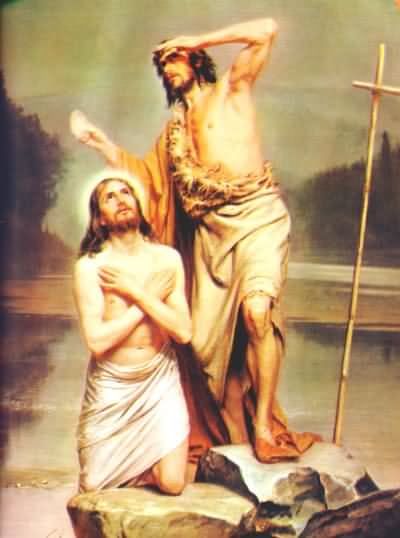
children. She leads them to the desert; she shows them John the
Baptist, upon whose mission she instructed them on the third
Sunday. The voice of the austere Precursor resounds through the
wilderness, and penetrates even into the cities. It preaches
penance, and the obligation men are under of preparing by self-
purification for the coming of Christ. Let us retire from the
world during these next few days; or if that may not be by reason
of our external duties, let us retire into the quiet of our own
hearts and confess our iniquities, as did those true Israelites,
who came, full of compunction and of faith in the Messias, to the
Baptist, there to make perfect their preparation for worthily
receiving the Redeemer on the day of His appearing to the world.
See, then, with what redoubled earnestness the Church, before
opening the book of her great prophet, repeats her invitatory:
The Lord is now nigh; come, let us adore.
From the Prophet Isaias.
Ch. xxxv.
The land that was desolate and impassable shall be glad, and the
wilderness shall rejoice, and shall flourish like the lily. It
shall bud forth and blossom, and shall rejoice with joy and
praise; the glory of Libanus is given to it, the beauty of Carmel
and Saron. They shall see the glory of the Lord, and the beauty of
our God. Strengthen ye the feeble hands, and confirm the weak
knees. Say to the fainthearted: Take courage, and fear not. Behold
your God will bring the revenge of recompense: God himself will
come and will save you. Then shall the eyes of the blind be
opened, and the ears of the deaf shall be unstopped. Then shall
the lame man leap as a hart, and the tongue of the dumb shall be
free: for waters are broken out in the desert, and streams in the
wilderness. And that which was dry land, shall become a pool, and
the thirsty land springs of water. In the dens where dragons dwelt
before shall rise up the verdure of the reed and the bulrush. And
a path and a way shall be there, and it shall be called the holy
way: the 1melean shall not pass over it and this shall be unto you
a straight way, so that fools shall not err therein. No lion shall
be there, nor shall any mischievous beast go up by it, nor be
found there: but they shall walk there, that shall be delivered.
And the redeemed of the Lord shall return, and shall come into
Sion with praise, and everlasting joy shall be upon their heads:
they shall obtain joy and gladness, and sorrow and mourning shall
flee away.
Oh, the joy of Thy coming, dear Jesus! How great it must needs be,
when the prophecy says it shall be like an everlasting crown upon
our heads. And could it be otherwise? The very desert is to
flourish as a lily, and living waters are to gush forth out of the
parched land, because their God is coming. Come, O Jesus, come
quickly, and give us of that water, which flows from Thy sacred
Heart, and which the Samaritan woman, the type of us sinners,
asked of Thee with such earnest entreaty. This water is Thy grace;
let it rain upon our parched souls, and they too will flourish;
let it quench our thirst, and we will run in the way of Thy
precepts and examples. Thou, O Jesus, art our way, our path, to
God; and Thou art Thyself God; Thou art, therefore, both our way
and the term to which our way leads us. We had lost our way; we
had gone astray as lost sheep: how great Thy love to come thus in
search of us! To teach us the way to heaven, Thou hast deigned to
come down from heaven, and then tread with us the road which leads
to it. No! there shall be no more weak hands, nor feeble knees,
nor faint hearts; for we know that it is in love that Thou art
coming to us. There is but one thing which makes us sad: our
preparation is not complete. We have some ties still to break;
help us to do it, O Saviour of mankind! We desire to obey the
voice of Thy Precursor, and make plain those rugged paths, which
would prevent Thy coming into our hearts, O divine Infant! Give us
to be baptized in the Baptism of the waters of penance; Thou wilt
soon follow, baptizing us in the Holy Ghost and love.
Labels: Advent, The Liturgical Year
Saturday, December 17, 2011
O Sapientia
December 17
O Wisdom that comest out of the mouth of the Most High, that reachest from one end to another, and orderest all things mightily and sweetly, come to teach us the way of prudence!
O Sapientia, quæ ex ore Altissimi prodiisti, attingens a fine usque ad finem, fortiter suaviterque disponens omnia: veni ad docendum nos viam prudentiæ.
From Godzdogz:
O Wisdom that comest out of the mouth of the Most High, that reachest from one end to another, and orderest all things mightily and sweetly, come to teach us the way of prudence!
O Sapientia, quæ ex ore Altissimi prodiisti, attingens a fine usque ad finem, fortiter suaviterque disponens omnia: veni ad docendum nos viam prudentiæ.
From Godzdogz:
Labels: Advent
Wednesday, December 14, 2011
Wednesday In the Advent Embertide
Today is the beginning of the Advent Embertide, as the Church marks the passing of Autumn and coming oif Winter, and intensifies its preparation for the great feast of Christmas with days of specially intense prayer, almsgiving, fasting, and abstinence.
Labels: Advent, Remember It's Ember
Mid-Week Mix, Third Week Of Advent, O Antiphons
Advent Edition Part 3: The O Antiphons by the Dominican Friars of Blackfriars, England via their YouTube channel, Godzdogz.
O Sapientia, December 17th
O Adonai, December 18th
O Radix Jesse, December 19th
O Clavis David, December 20th
O Oriens, December 21st
O Rex Gentium, December 22nd
O Emmanuel, December 23rd
O Sapientia, December 17th
O Adonai, December 18th
O Radix Jesse, December 19th
O Clavis David, December 20th
O Oriens, December 21st
O Rex Gentium, December 22nd
O Emmanuel, December 23rd
Labels: Advent, Pleasing Tunes
Sunday, December 11, 2011
Gaudete Sunday, or The Third Sunday Of Advent

From The Liturgical Year, by Abbot Prosper Gueranger, OSB:
Today, again, the Church is full of joy, and the joy is greater
than it was. It is true that her Lord has not come; but she feels
that He is nearer than before, and therefore she thinks it just to
lessen somewhat the austerity of this penitential season by the
innocent cheerfulness of her sacred rites. And first this Sunday
has had the name of
the Introit; it also is honoured with those impressive exceptions
which belong to the fourth Sunday of Lent, called
organ is played at the Mass; the vestments are rose-colour; the
deacon resumes the dalmatic, and the subdeacon the tunic; and in
cathedral churches the bishop assists with the precious mitre. How
touching are all these usages, and how admirable this
condescension of the Church, wherewith she so beautifully blends
together the unalterable strictness of the dogmas of faith and the
graceful poetry of the formulae of her liturgy! Let us enter into
her spirit, and be glad on this third Sunday of her Advent,
because our Lord is now so near unto us. Tomorrow we will resume
our attitude of servants mourning for the absence of their Lord
and waiting for Him; for every delay, however short, is painful
and makes love sad.
The Station is kept in the basilica of St. Peter, at the Vatican.
This august temple, which contains the tomb of the prince of the
apostles, is the home and refuge of all the faithful of the world;
it is but natural that it should be chosen to witness both the joy
and the sadness of the Church.
The night Office commences with a new Invitatory. The voice of the
Church no longer invites the faithful to come and adore in fear
and trembling
assumes another character; her tone is one of gladness; and now,
every day, until the vigil of Christmas, she begins her nocturns
with these grand words:
The Lord is now nigh; come, let us adore.
Now let us take the book of the Prophet, and read with the Church:
From the Prophet Isaias. Ch. xxvi.
In that day shall this canticle be sung in the land of Juda. Sion
the city of our strength: a Saviour, a wall, and a bulwark shall
be set therein. Open ye the gates and let the just nation, that
keepeth the truth, enter in. The old error is passed away, thou
wilt keep peace: peace, because we have hoped in thee. You have
hoped in the Lord forevermore: in the Lord God mighty for ever.
For he shall bring down them that dwell on high, the high city he
shall lay low. He shall bring it down even to the ground,
he shall pull it; down even to the dust. The foot shall tread it
down; the feet of the poor, the steps of the needy. The way of the
just is right, the path of the just is right to walk in. And in
the way of thy judgements, O Lord, we have patiently waited for
thee: thy name and thy remembrance are the desire of the soul. My
soul hath desired thee in the night: yea, and with my spirit
within me in the morning early I will watch to thee.
O holy Roman Church, city of our strength / behold us thy
children assembled within thy walls, around the tomb of the
fisherman, the prince of the apostles, whose sacred relics protect
thee from their earthly shrine, and whose unchanging teaching
enlightens thee from heaven. Yet, O city of strength: it is by
the Saviour, who is coming, that thou art strong. He is thy
thy children; He is thy bulwark, for it is by Him that thou art
invincible, and that all the powers of hell are powerless to
prevail against thee. Open wide thy gates, that all nations may
enter thee; for thou art mistress of holiness and the guardian of
truth. May the old error, which sets itself against the faith,
soon disappear, and peace reign over the whole fold! O holy Roman
Church! thou hast forever put thy trust in the Lord; and He,
faithful to His promise, has humbled before thee the haughty ones
that defied thee, and the proud cities that were against thee.
Where now are the Caesars, who boasted that they had drowned thee
in shine own blood? where the emperors, who would ravish the
inviolate virginity of thy faith? where the heretics, who, during
the past centuries of shine existence, have assailed every article
of thy teaching, and denied what they listed? where the ungrateful
princes, who would fain make a slave of thee, who hadst made them
what they were? where that empire of Mahomet, which has so many
times raged against thee, for that thou, the defenceless State,
didst arrest the pride of its conquests? where the reformers, who
were bent on giving the world a Christianity, in which thou west
to have no part? where the more modern sophists, in whose
philosophy thou west set down as a system that had been tried, and
was a failure, and is now a ruin? and those kings who are acting
the tyrant over thee, and those people that will have liberty
independently and at the risk of truth, where will they be in
another hundred years? Gone and forgotten as the noisy anger of a
torrent; whilst thou, O holy Church of Rome, built on the
immovable rock, wilt be as calm, as young, as unwrinkled as ever.
Thy path through all the ages of this world's duration, will be
right as that of the just man; thou wilt ever be the same
unchanging Church, as thou hast been during the eighteen hundred
years past, whilst everything else under the sun has been but
change. Whence this thy stability, but from Him who is very truth
and justice? Glory be to Him in thee! Each year, He visits thee;
each year, He brings thee new gifts, wherewith thou mayst go
happily through thy pilgrimage; and to the end of time, He will
visit thee, and renew thee, not only with the power of that look
wherewith Peter was renewed, but by filling thee with Himself, as
He did the ever glorious Virgin, who is the object of thy most
tender love, after that which thou bearest to Jesus Himself. We
pray with thee, O Church, our mother, and here is our prayer:
'Come, Lord Jesus! Thy name and Thy remembrance are the desire of
our souls: they have desired Thee in the night, yea, and early in
the morning have they watched for Thee.'
Labels: Advent, The Liturgical Year
Wednesday, December 07, 2011
Mid-Week Mix, Second Week Of Advent
Advent Edition Part 2
Pia Skibdahl, Benedictus Es Domine
Schola Cantorum Riga, Veni Redemptor Gentium
Lorena McKennitt, Veni, Veni Emannuel
John Williams, Wachet Auf
Te Lucis Ante Terminum
Introit For the Second Sunday Of Advent
Choir Of King's College Cambridge, The Cherry Tree Carol
Introit For the Third Sunday Of Advent
Next week: All the O Antiphons (though I will still publish one each day while they are being prayed).
Pia Skibdahl, Benedictus Es Domine
Schola Cantorum Riga, Veni Redemptor Gentium
Lorena McKennitt, Veni, Veni Emannuel
John Williams, Wachet Auf
Te Lucis Ante Terminum
Introit For the Second Sunday Of Advent
Choir Of King's College Cambridge, The Cherry Tree Carol
Introit For the Third Sunday Of Advent
Next week: All the O Antiphons (though I will still publish one each day while they are being prayed).
Labels: Advent, Pleasing Tunes
Sunday, December 04, 2011
The Second Sunday Of Advent

From The Liturgical Year, by Abbot Prosper Gueranger, OSB:
The History Of Advent
The name Advent (From the Latin word Adventus, which signifies a coming) is applied, in the Latin Church, to that period of the year, during which the Church requires the faithful to prepare for the celebration of the feast of Christmas, the anniversary of the birth of Jesus Christ. The mystery of that great day had every right to the honour of being prepared for by prayer and works of penance; and, in fact, it is impossible to state, with any certainty, when this season of preparation (which had long been observed before receiving its present name of Advent) was first instituted. It would seem, however, that its observance first began in the west, since it is evident that Advent could not have been looked on as a preparation for the feast of Christmas, until that feast was definitively fixed to the twenty-fifth of December; which was done in the east only towards the close of the fourth century; whereas it is certain that the Church of Rome kept the feast on that day at a much earlier period.
We must look upon Advent in two different lights: first, as a time of preparation, properly so called, for the birth of our Saviour, by works of penance: and secondly, as a series of ecclesiastical Offices drawn up for the same purpose. We find, as far back as the fifth century, the custom of giving exhortations to the people in order to prepare them for the feast of Christmas. We have two sermons of Saint Maximus of Turin on this subject, not to speak of several others which were formerly attributed to St. Ambrose and St. Augustine, but which were probably written by St. Cesarius of Aries. If these documents do not tell us what was the duration and what the exercises of this holy season, they at least show us how ancient was the practice of distinguishing the time of Advent by special sermons. Saint Ivo of Chartres, St. Bernard, and several other doctors of the eleventh and twelfth centuries, have left us set sermons de Adventu Domini, quite distinct from their Sunday homilies on the Gospels of that season. In the capitularia of Charles the Bald, in 846, the bishops admonish that prince not to call them away from their Churches during Lent or Advent, under pretext of affairs of the State or the necessities of war, seeing that they have special duties to fulfil, and particularly that of preaching during those sacred times.
The oldest document in which we find the length and exercises of Advent mentioned with anything like clearness, is a passage in the second book of the History of the Franks by St. Gregory of Tours, where he says that St. Perpetuus, one of his predecessors, who held that see about the year 480, had decreed a fast three times a week, from the feast of St. Martin until Christmas. It would be impossible to decide whether St. Perpetuus, by his regulations, established a new custom, or merely enforced an already existing law. Let us, however, note this interval of forty, or rather of forty-three days, so expressly mentioned, and consecrated to penance, as though it were a second Lent, though less strict and severe than that which precedes Easter.
Later on, we find the ninth canon of the first Council of Macon, held in 582, ordaining that during the same interval between St. Martin's day and Christmas, the Mondays, Wednesdays, and Fridays, should be fasting days, and that the Sacrifice should be celebrated according to the lenten rite. Not many years before that, namely in 567, the second Council of Tours had enjoined the monks to fast from the beginning of December till Christmas. This practice of penance soon extended to the whole forty days, even for the laity: and it was commonly called St. Martin's Lent. The capitularia of Charlemagne, in the sixth book, leave us no doubt on the matter; and Rabanus Maurus, in the second book of his Institution of clerics, bears testimony to this observance. There were even special rejoicings made on St. Martin's feast, just as we see them practised now at the approach of Lent and Easter.
The obligation of observing this Lent, which, though introduced so imperceptibly, had by degrees acquired the force of a sacred law, began to be relaxed, and the forty days from St. Martin's day to Christmas were reduced to four weeks. We have seen that this fast began to be observed first in France; but thence it spread into England, as we find from Venerable Bede's history; into Italy, as appears from a diploma of Astolphus, king of the Lombards, dated 753; into Germany, Spain, &c., of which the proofs may be seen in the learned work of Dom Martene, On the ancient rites of the Church. The first allusion to Advent's being reduced to four weeks is to be found in the ninth century, in a letter of Pope St. Nicholas I to the Bulgarians. The testimony of Ratherius of Verona, and of Abbo of Fleury, both writers of the tenth century, goes also to prove that, even then, the question of reducing the duration of the Advent fast by one-third was seriously entertained. It is true that St. Peter Damian, in the eleventh century, speaks of the Advent fast as still being for forty days; and that St. Louis, two centuries later, kept it for that length of time; but as far as this holy king is concerned, it is probable that it was only his own devotion which prompted him to this practice.
The discipline of the Churches of the west, after having reduced the time of the Advent fast, so far relented, in a few years, as to change the fast into a simple abstinence; and we even find Councils of the twelfth century, for instance Selingstadt in 1122, and Avranches in 1172, which seem to require only the clergy to observe this abstinence. The Council of Salisbury, held in 1281, would seem to expect none but monks to keep it. On the other hand (for the whole subject is very confused, owing, no doubt, to there never having been any uniformity of discipline regarding it in the western Church), we find Pope Innocent III, in his letter to the bishop of Braga, mentioning the custom of fasting during the whole of Advent, as being at that time observed in Rome; and Durandus, in the same thirteenth century, in his Rational on the Divine Offices, tells us that, in France, fasting was uninterruptedly observed during the whole of that holy time.
This much is certain, that, by degrees, the custom of fasting so far fell into disuse, that when, in 1362, Pope Urban V endeavoured to prevent the total decay of the Advent penance, all he insisted upon was that all the clerics of his court should keep abstinence during Advent, without in any way including others, either clergy or laity, in this law. St. Charles Borromeo also strove to bring back his people of Milan to the spirit, if not to the letter, of ancient times. In his fourth Council, he enjoins the parish priests to exhort the faithful to go to Communion on the Sundays, at least, of Lent and Advent; and afterwards addressed to the faithful themselves a pastoral letter, in which, after having reminded them of the dispositions wherewith they ought to spend this holy time, he strongly urges them to fast on the Mondays, Wednesdays, and Fridays, at least, of each week in Advent. Finally, Pope Benedict XIV, when archbishop of Bologna, following these illustrious examples) wrote his eleventh Ecclesiastical Institution for the purpose of exciting in the minds of his diocesans the exalted idea which the Christians of former times had of the holy season of Advent, and of removing an erroneous opinion which prevailed in those parts, namely, that Advent concerned religious only and not the laity. He shows them that such an opinion, unless it be limited to the two practices of fasting and abstinence, is, strictly speaking, rash and scandalous, since it cannot be denied that, in the laws and usages of the universal Church, there exist special practices, having for their end to prepare the faithful for the great feast of the birth of Jesus Christ.
The Greek Church still continues to observe the fast of Advent, though with much less rigour than that of Lent. It consists of forty days, beginning with November 14, the day on which this Church keeps the feast of the apostle St. Philip. During this entire period, the people abstain from flesh-meat, butter, milk, and eggs; but they are allowed, which they are not during Lent, fish, oil, and wine. Fasting, in its strict sense, is binding only on seven out of the forty days; and the whole period goes under the name of St. Philip's Lent. The Greeks justify these relaxations by this distinction: that the Lent before Christmas is, so they say, only an institution of the monks, whereas the Lent before Easter is of apostolic institution.
But, if the exterior practices of penance which formerly sanctified the season of Advent, have been, in the western Church, so gradually relaxed as to have become now quite obsolete except in monasteries, the general character of the liturgy of this holy time has not changed; and it is by their zeal in following its spirit, that the faithful will prove their earnestness in preparing for Christmas.
The liturgical form of Advent as it now exists in the Roman Church, has gone through certain modifications. St. Gregory seems to have been the first to draw up the Office for this season, which originally included five Sundays, as is evident from the most ancient sacramentaries of this great Pope. It even appears probable, and the opinion has been adopted by Amalarius of Metz, Berno of Reichnau, Dom Martene, and Benedict XIV, that St. Gregory originated the ecclesiastical precept of Advent, although the custom of devoting a longer or shorter period to a preparation for Christmas has been observed from time immemorial, and the abstinence and fast of this holy season first began in France. St. Gregory therefore fixed, for the Churches of the Latin rite, the form of the Office for this Lent-like season, and sanctioned the fast which had been established, granting a certain latitude to the several Churches as to the manner of its observance.
The sacramentary of St. Gelasius has neither Mass nor Office of preparation for Christmas; the first we meet with are in the Gregorian sacramentary, and, as we just observed, these Masses are five in number. It is remarkable that these Sundays were then counted inversely, that is, the nearest to Christmas was called the first Sunday, and so on with the rest. So far back as the ninth and tenth centuries, these Sundays were reduced to four, as we learn from Amalarius St. Nicholas I, Berno of Reichnau, Ratherius of Verona, &c., and such also is their number in the Gregorian sacramentary of Pamelius, which appears to have been transcribed about this same period. From that time, the Roman Church has always observed this arrangement of Advent, which gives it four weeks, the fourth being that in which Christmas day falls, unless December 25 be a Sunday. We may therefore consider the present discipline of the observance of Advent as having lasted a thousand years, at least as far as the Church of Rome is concerned; for some of the Churches in France kept up the number of five Sundays as late as the thirteenth century.
The Ambrosian liturgy, even to this day, has six weeks of Advent; so has the Gothic or Mozarabic missal. As regards the Gallican liturgy, the fragments collected by Dom Mabillon give us no information; but it is natural to suppose with this learned man, whose opinion has been confirmed by Dom Martene, that the Church of Gaul adopted, in this as in so many other points, the usages of the Gothic Church, that is to say, that its Advent consisted of six Sundays and six weeks.
With regard to the Greeks, their rubrics for Advent are given in the Menaea, immediately after the Office for November 14. They have no proper Office for Advent, neither do they celebrate during this time the Mass of the Presanctified, as they do in Lent. There are only in the Offices for the saints, whose feasts occur between November 14 and the Sunday nearest Christmas, frequent allusions to the birth of the Saviour, to the maternity of Mary, to the cave of Bethlehem, &c. On the Sunday preceding Christmas, in order to celebrate the expected coming of the Messias, they keep what they call the feast of the holy fathers, that is the commemoration of the saints of the old Law. They give the name of Ante-Feast of the Nativity to December 20, 21, 22, and 23; and although they say the Office of several saints on these four days, yet the mystery of the birth of Jesus pervades the whole liturgy.
Labels: Advent, The Liturgical Year
Wednesday, November 30, 2011
Mid-Week Mix, First Week Of Advent
Advent Edition 1
Giovanni Vianini, Creator Alme Siderum
Alma Redemptopris Mater
Choir Of Litchfield Cathedral, Lo, He Comes With Clouds Descending
Rorate Caeli De Super
Brother Alphonsus Mary, On Jordan's Bank
Choir Of King's College, Cambridge, Gabriel's Message
Giovanni Vianini, En Clara Vox
Consortium, Let All Mortal Flesh Keep Silence
Giovanni Vianini, Creator Alme Siderum
Alma Redemptopris Mater
Choir Of Litchfield Cathedral, Lo, He Comes With Clouds Descending
Rorate Caeli De Super
Brother Alphonsus Mary, On Jordan's Bank
Choir Of King's College, Cambridge, Gabriel's Message
Giovanni Vianini, En Clara Vox
Consortium, Let All Mortal Flesh Keep Silence
Labels: Advent, Pleasing Tunes
Sunday, November 27, 2011
The First Sunday Of Advent

From The Liturgical Year, by Abbot Prosper Gueranger, OSB:
Act Of Communion During Advent
It is true that everything in Advent is so arranged as to be a preparation for the coming of the Saviour at the feast of Christmas, and that the spirit of the faithful should be one of earnest expectation of this same Saviour; and yet, such is the happy lot of the children of the new Law, that they can, if they wish it, really, and at once, receive this God whom the Church is expecting; and thus, this familiar visit of Jesus will become itself one of the preparations for His great and solemn visit. Let those, then, who are living the life of grace, and to whom the glorious day of the Nativity of our Lord Jesus Christ will bring an increase of spiritual life, not omit to prepare, by Communion, for the reception they intend to give to the heavenly Spouse on the sacred night of His coming. These Communions will be interviews with their divine Lord, giving them confidence, and love, and all those interior dispositions wherewith they would welcome Him who comes to load them with fresh grace, for this Jesus is full of grace and truth.
They will understand this better by reflecting on the sentiments which the august Mother of Jesus had in her blessed soul during the time which preceded the divine birth. This birth is to be an event of more importance, both to the salvation of mankind and to Mary's own glory, than even that of the first accomplishment of the Incarnation; for the Word was made Flesh in order that He might be born. The immense happiness of holding in her arms her Son and her God, would make the sacred hour of Jesus' birth dearer and happier to Mary, than even that in which she was overshadowed by the Holy Ghost, and received from Him the divine fruit of her womb.
During those nine months, when she knew that her Jesus was so undividedly hers, what must have been the happiness which filled her heart! It was a bliss which was a worthy preparation for that more blissful night of Bethlehem.
Christians! your Communions during Advent are to prepare you for your Christmas joy, by giving you something of the delight which Mary felt before the birth of Jesus.
ACT OF FAITH
Knowing that thou art about to enter under my roof, O eternal God, Jesus Son of the Father, I have need of all my faith. Yes, it is thou who art coming to me, thou who didst enter into Mary's virginal womb, making it the sanctuary of thy Majesty. Thou didst send thine angel to her, and she believed his word, when he said: 'Nothing is impossible to God: the Holy Ghost shall come upon thee, and the power of the Most High shall overshadow thee.' She believed, and then conceived in her chaste womb him who had created her. Thou hast not sent an angel to me, O my Saviour, to tell me thou art coming into my heart. Thou hast spoken thyself, and thou hast said: 'I am the living Bread come down from heaven: he that eateth my Flesh and drinketh my Blood, abideth in me and I in him.' Thou hast willed that these words of thine, spoken so many hundred years ago, should reach me by thy Church, that thus I might have both the certainty that they are thine, and the merit of bowing down my reason to the deepest of mysteries. I believe then, O Jesus! Help the weakness of my faith. Enable me to submit, as Mary did, to thy infinite wisdom; and since thou desirest to enter under my roof, I bow down my whole being before thee, using her blessed words: 'May it be done to me according to thy word;' for how dare I, who am but nothingness, resist thee, who art all wisdom and power!
Labels: Advent, The Liturgical Year
Thursday, December 23, 2010
O Emmanuel
December 23
O Emmanuel, our King and our Law-giver, Longing of the Gentiles, yea, and salvation thereof, come to save us, O Lord our God!
Latin version:
O Emmanuel, Rex et legifer noster, exspectatio gentium, et Salvator earum: veni ad salvandum nos Domine Deus noster.
From Godzdogz:
O Emmanuel, our King and our Law-giver, Longing of the Gentiles, yea, and salvation thereof, come to save us, O Lord our God!
Latin version:
O Emmanuel, Rex et legifer noster, exspectatio gentium, et Salvator earum: veni ad salvandum nos Domine Deus noster.
From Godzdogz:
Labels: Advent
Wednesday, December 22, 2010
O Rex Gentium
December 22
O King of the Gentiles, yea, and desire thereof! O Corner-stone, that makest of two one, come to save man, whom Thou hast made out of the dust of the earth!
Latin version:
O Rex Gentium, et desideratus earum, lapisque angularis, qui facis utraque unum: veni, et salva hominem, quem de limo formasti.
O King of the Gentiles, yea, and desire thereof! O Corner-stone, that makest of two one, come to save man, whom Thou hast made out of the dust of the earth!
Latin version:
O Rex Gentium, et desideratus earum, lapisque angularis, qui facis utraque unum: veni, et salva hominem, quem de limo formasti.
Labels: Advent
Tuesday, December 21, 2010
O Oriens
December 21
O Dayspring, Brightness of the everlasting light, Son of justice, come to give light to them that sit in darkness and in the shadow of death!
Latin version:
O Oriens, splendor lucis æternæ, et sol justitiæ: veni, et illumina sedentes in tenebris, et umbra mortis.
O Dayspring, Brightness of the everlasting light, Son of justice, come to give light to them that sit in darkness and in the shadow of death!
Latin version:
O Oriens, splendor lucis æternæ, et sol justitiæ: veni, et illumina sedentes in tenebris, et umbra mortis.
Labels: Advent
Monday, December 20, 2010
O Clavis David
December 20
O Key of David, and Sceptre of the house of Israel, that openeth and no man shutteth, and shutteth and no man openeth, come to liberate the prisoner from the prison, and them that sit in darkness, and in the shadow of death.
Latin version:
O Clavis David, et sceptrum domus Israel; qui aperis, et nemo claudit; claudis, et nemo aperit: veni, et educ vinctum de domo carceris, sedentem in tenebris, et umbra mortis.
O Key of David, and Sceptre of the house of Israel, that openeth and no man shutteth, and shutteth and no man openeth, come to liberate the prisoner from the prison, and them that sit in darkness, and in the shadow of death.
Latin version:
O Clavis David, et sceptrum domus Israel; qui aperis, et nemo claudit; claudis, et nemo aperit: veni, et educ vinctum de domo carceris, sedentem in tenebris, et umbra mortis.
Labels: Advent
Sunday, December 19, 2010
O Radix Jesse
December 19
O Root of Jesse, which standest for an ensign of the people, at Whom the kings shall shut their mouths, Whom the Gentiles shall seek, come to deliver us, do not tarry.
Latin version:
O Radix Jesse, qui stas in signum populorum, super quem continebunt reges os suum, quem Gentes deprecabuntur: veni ad liberandum nos, jam noli tardare.
O Root of Jesse, which standest for an ensign of the people, at Whom the kings shall shut their mouths, Whom the Gentiles shall seek, come to deliver us, do not tarry.
Latin version:
O Radix Jesse, qui stas in signum populorum, super quem continebunt reges os suum, quem Gentes deprecabuntur: veni ad liberandum nos, jam noli tardare.
Labels: Advent