Showing posts with label avoidance. Show all posts

Sunday, April 25, 2010

Does Guilt and Disillusionment Play a Role in Combat PTSD?

Yes.

A recent study confirms the role of guilt and the need to resolve meaning-of-life issues in those attempting to move beyond PTSD:

Combat veterans commonly report guilt and depression following stressful military experiences. More depressed veterans often report higher levels of posttraumatic stress disorder (PTSD; Dohrenwend et al., 2006). Guilt also appears to be a distress-related response, potentially increasing both avoidant coping and PTSD (Henning & Frueh, 1997; Street, Gibson, & Holohan, 2005), potentially worsening prognosis and treatment response (Kubany et al., 1995; Owens, Chard, & Cox, 2008). Understanding the multiple influences on PTSD is a pressing priority, particularly with current military deployments.

Cognitive restructuring models of coping (e.g., Park & Ai, 2006) may explain why PTSD develops in some trauma survivors and not others. Posttraumatic stress disorder is believed to result when a traumatic event shatters core beliefs that enable people to establish meaning in life (Janoff-Bulman, 1992). If people cannot cognitively restructure traumatic events, regain meaning in life, and rebuild core beliefs, depression and guilt may develop. ...

Veterans of various service eras (N =174) completed an Internet survey about combat exposure, posttraumatic stress disorder (PTSD) symptoms, depression, guilt, and meaning in life. Results of a hierarchical regression indicated that younger age; higher levels of combat exposure, depression, and guilt; and lower meaning in life predicted greater PTSD severity. The interaction between meaning in life and depression also was significant, with a stronger inverse relation between meaning and PTSD at lower levels of depression. Meaning in life may be an important treatment concern for veterans with PTSD symptoms, particularly at higher levels of functioning.

Source: "Posttraumatic stress disorder, guilt, depression, and meaning in life among military veterans," Journal of Traumatic Stress, Volume 22 Issue 6, Pages 654-657

Saturday, October 31, 2009

A Real Fright: The Psychological Scars of Combat

It's a standard American ritual. Today, you'll probably be booed at by scary tricksters knocking on your door, demanding sugary treats.

Perhaps you'll see a chainsaw-wielding demon on the street and laugh. Or maybe you'll dress in scary costumes and get a kick out of reveling in and even poking fun at Halloween's fantasy of fear and death and danger.

Of course, some of us don't have to rely on the eve of All Saints Day to be immersed in dark times and emotions.

Those who've been to war have tapped fear and death and danger on the shoulder. They've lived the more difficult side of life. And many, when they return from the pit of hell, struggle to find the inner and outer security and confidence long since lost to them on some dusty combat trail. Getting their life back isn't as easy as peeling off a costume, wiping off the fake blood or putting away a candy dish.

I wonder what they think about Halloween?

Below the fold, a few recent articles that reveal how the daily fear, anxiety and solitude of PTSD affects some of our recently returned troops. Read as many of them as you can find time for.


Thursday, April 03, 2008

Unknown Allies: School Shooting Victims and Combat Veterans

Back in September, I sat down with Diane Strand, a reporter for DeKalb's MidWeek News, to discuss combat PTSD and other issues covered in my book, Moving a Nation to Care.

Those of you who read PTSD Combat regularly know I'm currently a student at Northern Illinois University and shared my experiences the day of the shooting and beyond.

Just this past Wednesday, I posted here on my column that ran in the Northern Star, relfecting on the fact that veterans are a dazed school shooting student's natural ally; they understand the pain and trauma of being in danger and in the vicinity of extreme violence (on an entirely different level than those of us on campus that day, however). Another commonality is an increased risk for post-traumatic stress disorder.


Tuesday, April 01, 2008

Military OneSource Offers Complimentary Combat PTSD Comic Book

Jackie Eckhart of the Virginian-Pilot is one of the lucky few to have had the opportunity to review a copy of a free comic book, "Coming Home: What to Expect, How to Deal When You Return from Combat," now being offered to service members at Military OneSource. Well, the way she tells it, the men in her life understood the value of the magazine better than she did at first:

"Coming Home: What to expect, how to deal when you return from combat" is a new project by Military OneSource. Created by comic book masters Sid Jacobson and Ernie Colon, who formerly worked at Harvey and Marvel comics, it is aimed at service members who have worn combat gear every day for a year. It's aimed at people who see potential IEDs at every intersection. It is aimed at guys who come back to the States to feel fury at traffic, and women who find that half the world thinks they're bad mothers because they had to serve overseas, and family members who can't understand why their returning soldier or Marine is drinking so darned much.

This comic is aimed to help folks who need to learn about post-traumatic stress disorder. Because I wasn't one of those people, and I wasn't sure how I felt about treating a subject as serious as combat and operational stress response in a comic book, I threw "Coming Home" into a stack of reading material to look at later.

Not a minute later my 14-year-old picked it up. Then the kindergartner. Then our houseguest, a 48-year-old former Navy helicopter pilot. "What kind of aircraft is that?" he asked, holding the cover up to the light from the sliding glass doors. Then he read the whole thing.

Friday, March 14, 2008

PTSD Sculpture Therapy: One Woman's Clay Journal

Recently, a sculptor pointed me in the direction of her series of figurative pieces created while she was in therapy for PTSD. At the Tri State Sculptors website, Kim Marchesseault (who blogs at Spackel) says of her work:

My work is about relationships among people, with self, with the universe. It’s a study of why we are here, what makes us who we are and how each one of us affect everyone and everything around us. I move shapes and lines until they work together to soothe and heal.

Kim, who in the past has practiced a wide variety of art expression including bronze casting and mural painting, was kind enough to answer a few of my questions regarding her ethereal ceramic sculptures. I believe her creations and answers offer us a glimpse into the heart of someone processing their PTSD. Her impressions are deep, funny at times, and always thought-provoking.

A heartfelt thanks to Kim for sharing so much with us.

Tuesday, February 19, 2008

Comforting, Yet Discomfiting, New Clue Found in Florida Missing Iraq Veteran Case

From ABC News:

The discovery of a military-style "spider hole" that may have been used by a missing ex-Marine who is likely suffering from post-traumatic stress disorder has restored hope for the combat veteran's family that he is alive.

Eric Hall, 24, disappeared on Feb. 3 in Port Charlotte, Fla. He was staying with his grandmother when he experienced what his family and authorities have described as a "combat flashback." The Marine, who was left with a permanent limp from a 2005 bomb blast in Iraq, began walking around the house shooting an imaginary gun at imaginary enemies.

Hall then took off on his motorcycle, which later was found with engine running lying in the middle of a road in Deep Creek, near Fort Myers, on Florida's west coast.

The local sheriff's office called off its search more than a week ago, but Hall's mother, Becky, and a cadre of volunteers led in part by retired members of the military continue to look for the former Marine in an area densely covered with trees and shrubs. [pictures of the search and the spider hole they found]

Wednesday, December 19, 2007

WWII, Korean, Vietnam, Desert Storm and OEF/OIF Vets Chime in on Combat

An interesting look at the experiences of war veterans over the decades ran earlier this month and is still well worth a reading.

From the Kansas City Star:

Q. Did you have any problems readjusting after you returned from war?

Joseph L. Dickerson (Korean War): I was in several pretty strong firefights, and I was wounded — shrapnel from mortar fire at night in left chest. It’s still there, close, by my heart. They see it every time they take an X-ray. I had a hard time adjusting because I saw a whole lot of dead bodies in the short time I was there. And blood. Head blown off, arm blown off.

When I got discharged I never did talk too much to anyone about it. I kept it to myself. But I knew something was wrong, because I had problems holding jobs. I think I was 21 when I got out. Battle fatigue, that’s what they called it then. I had dreams, and you become touchy sometimes.

I went in at 17, and I used to be a happy-go-lucky guy. When I got out I was a little different. I wouldn’t go to work as I was supposed to. I couldn’t take orders till after about three or four years. And dreams. I still have the dreams. I sleep with a weapon. I always have slept with a weapon after I came out of the service. You just feel safer.

Maj. Jason “Tank” Sherman (Iraq and Afghanistan): I came back, still in the reserves, and didn’t really go through anything. I didn’t see what some other people have seen.

Gary Shepard (Vietnam War): I’m still not adjusted. I mostly stay with my friends. I’m still not comfortable in restaurants, and my kids still know they don’t let me get my back to the wall, and they watch out for me. I try not to let that bother me so much anymore, but sometimes it does. I still go to sleep with a loaded pistol most of the time.

Thursday, November 29, 2007

20/20: ABC News Uncovers Soldiers and Drugs Story

Mental health experts say that a correlation -- a comorbidity -- exists between PTSD and drug abuse. In that vein, tomorrow night on ABC News, 20/20 covers the issue of some of today's soldiers turning to drugs, as some had in the Vietnam, to ease the experience of war. Throughout the week, the network's chief investigative correspondent, Brian Ross, and his counterparts have begun sharing some of the data and stories they collected over the past few months:

In the third year of a joint project with the nonprofit Carnegie Corporation, six leading graduate school journalism students were again selected to spend the summer working with the ABC News investigative unit.

This year's project involved an examination of whether, as happened in the wake of the Vietnam War, Iraqi war veterans were turning to drugs as a result of the trauma and pain of war. The U.S. military maintains the percentage of soldiers abusing drugs is extremely small and has not increased as a result of Iraq.

The students' assignment was to get the unofficial side of the story from soldiers, young men of their own generation.

Friday, November 23, 2007

Another Georgia Family Searches for Missing Iraq Veteran Son

[UPDATE December 1, 2007]: The female Oregon soldier, Sgt. Julie Stendahl, mentioned below has turned herself in to military authorities; she was, in fact, planning to stage her own disappearance. Additionally, another soldier, Raymond Roussel of Augusta, Maine has gone missing as well since this post was published. Details in extended.

It's Thanksgiving weekend, and at least one military family marks another year since their recently-returning Iraq veteran loved one has gone missing without a trace. Jason Roark, who I wrote about last year, is still missing following his November 9, 2006, disappearance.

Meanwhile, in Georgia again, another veteran, Gary Chronister, has gone missing. And in Oregon, a female soldier who was to deploy to Iraq at the end of October has gone missing, although one local newsroom has apparently gotten a reply to an inquiry they made to her MySpace page believe to have been made by her.

Please take a moment to pass along the details I've added in extended (compiled from press accounts as linked) to others in online and offline communities you frequent; perhaps something can be turned up to help these families during a time of what must be much anxiety.

Wednesday, November 21, 2007

Poem: PTSD -- 1st Person

Recently, I came across the following poem by a blogger who goes by the name of Universal. The lines were written after talking with a friend coping with combat PTSD, and the links are the original ones created by the author. Thank you for letting me reprint and share it here with others, Universal.

I can't sleep, can't feel
Anything.
Time passes in chunks now --
A month passes for me
Like someone else's day.

Zombies don't have rhythms;
I go wherever my trance
Takes me.
Today I panic in a store,
Where danger doesn't lurk.

Friday, October 05, 2007

A Look at the Unease of Transitioning to Homefront Living Following Combat

Last week, the New York Times examined concerns some of the 3,300 soldiers of the 10th Mountain Division’s Second Brigade have after winding up their 15-month combat tour. It's a good window into the anxious feelings many troops have at homecoming.

On bases big and small south of Baghdad, the scrambled reality of war has become routine: an unending loop of anxious driving in armored Humvees, gallons of Gatorade, laughter at the absurd and 4 a.m. raids into intimate Iraqi bedrooms.

This is Iraq for the 3,300 soldiers of the 10th Mountain Division’s Second Brigade, and many have come to the unfortunate realization that it now feels more like home than home.

No brigade in the Army has spent more days deployed since Sept. 11, 2001, and with only a few weeks to go before ending their 15-month tour, the soldiers here are eager to go. But they are also nervous about what their minds will carry back, given the psychic toll of war day after day and the prospect of additional tours.

Thursday, June 28, 2007

A Discussion on PTSD

WPSU-FM's "To the Best of My Knowledge" discussed PTSD w/guests Thomas Uhde, chair of the Department of Psychiatry at Penn State College of Medicine and Philip Bressler, a psychologist with the James E. Van Zandt Veterans Affair Medical Center in Altoona this past Tuesday. The program is now available in WPSU's archives. Listen now. Details:

Exposure to a severely traumatic event can cause nightmares, flashbacks and difficulty sleeping. For most people, these post-traumatic symptoms disappear over time. For others, the symptoms become chronic and lead to PTSD.

More audio discussions on PTSD.

Tuesday, May 29, 2007

What Is It About Combat PTSD?

More discussion going on here on this post.

When I did my research last year for Moving a Nation to Care, one day it occurred to me that, depending upon the volume I had in my hands, what we call post-traumatic stress disorder never seemed to settle on one name. It's had at least 80 at last count, in fact (all are in Moving's Chapter Notes, p. 161-162).

But never one that sticks. What is it about PTSD?

I've been opening my book events by listing a few of these 80 out loud, asking what people think about having so many confusing names for the same thing (the second installment of Gen. Wes Clark Community Network's Troops & Vets series on 'Society and the Soldier' begins in the same way):

Traumatic neurasthenia. Railway spine. War syndrome. Gross stress reaction. Old sergeant syndrome. Neurocirculatory asthenia. Vietnam disease. Cerebro-medullary shock. Simple continued fever. Disordered action of the heart. Buck fever. Swiss disease...

When we speak of post-traumatic stress disorder, or PTSD, most of us are familiar with a handful of the labels given the after-effects of war. We’ve probably heard that it used to be called ‘nostalgia’ or ‘irritable heart’ during the Civil War. During World War I it became ‘shell shock’ in reaction to the arrival of powerful industrial weapons of war like the quick firing artillery piece, the machine gun and the magazine rifle. By World War II it became ‘combat fatigue’ or ‘battle fatigue.’ The second-to-last stop before arriving at the definition we use today was ‘post-Vietnam syndrome.’

While these are the more well-known of labels given to modern post-traumatic stress disorder, by merely repeating these more familiar terms, we lose sight of an important aspect of the history of PTSD: the human resistance to acceptance of the condition – no matter what it’s called. The fact that one generation after another has to ‘rediscover’ PTSD and give it its own name offers a glimpse into society’s desire not to have to own up to it, not to have to dig too deeply into the dark recesses of it, not to expand on our understanding of it, perhaps not even to believe it exists.

By this I mean to ask, why is that we have so many (80, and easily many more if we actually made it a point to look) different labels used througout the centuries for the same general malady? Do we have as many altering labels for other conditions, too? If not, why does nostalgia, or irritable heart, or battle fatigue, or PVS or now again PTSD never seem to 'stick'?

Continuing in the Troops & Vets piece:

Indeed, even today there is a rejection bubbling under the surface surrounding the use of post-traumatic stress disorder. Many doctors and counselors and soldiers believe the term falls short of the mark, saying that ‘psychological injury’ or ‘deployment-related stress’ or ‘combat-related stressors’ more accurately describe what’s going on here; others don’t like the term because it’s become ‘too political.’ Of course, whatever you call the aftereffects of war, it’s always been political, with a fixation on labels instead of the issue.

No surprise, then, that House VA Affairs Chairman Bob Filner made these comments at the open of last week's symposium on PTSD:


Description:

The House Veterans' Affairs Committee held a PTSD Health Care Symposium to discuss improved ways to provide mental health care services to veterans. Mental health care providers, medical doctors and researchers discussed how families, school systems, business owners, law enforcement and the community are affected and what every American should know about PTSD. Chairman Bob Filner gives opening remarks.

So, it's obvious we are still not at peace with the latest label for war trauma, PTSD. What is it about PTSD?

Friday, March 16, 2007

Montana Iraq Vet Suicide Reflects VA, Military System Failure

From a guest opinion column in the Billings Gazette:

My step-brother Chris Dana committed suicide last week. Chris was a combat veteran and truly one of Montana's heroes. Chris was seriously injured during his combat tour in Iraq with the Montana Army National Guard and we ended up losing him to the effects of this injury.

Tell-tale signs of PTSD

Chris's injury wasn't obvious, but it is common. He suffered from post traumatic stress disorder (PTSD). The statistics vary, but PTSD likely affects at least one out of every five service members returning from combat in Iraq or Afghanistan. There is no excuse for the state of Montana's failure to provide its service members and their families with an effective treatment program for this common and devastating injury.

Click on 'Article Link' below tags for more...

Continuing:

Nothing more clearly demonstrates the failure of the current system than the fact that Chris had to die for the state of Montana to recognize him as an injured hero. Before Chris' death, his unit was in the process of serving him with a dishonorable discharge. Chris was receiving this dishonorable discharge because he demonstrated tell-tale signs of PTSD, withdrawal from society and an inability to participate in military functions. Four days after Chris' death, the state of Montana buried him as a hero, with Lt. Gov. Bohlinger and Maj. Gen. Mosley in attendance. The irony could not be any more appalling.

Montana's current system for caring for its service members with PTSD relies on the injured service members to reach out to the military for help. The combination of the self-reliant nature of men and women that are brave enough to volunteer for combat missions and an injury that forces victims into self-seclusion doom the voluntary counseling system to failure.

The failure of this system led the state of Montana to begin prosecuting my stepbrother for displaying the symptoms of his injury. They were prosecuting him in the name of every citizen of the state of Montana and that ridiculous prosecution undoubtedly contributed to Chris's death.

We need a massive cultural mind shift in both military and society. Rather than leaving service members to drown in their experience, demanding that they make the transition home from war on their own (or leaving it to their families to pick up the pieces), we must push for proactive and holistic care for every veteran returning to our society.

Certainly all troops should be allowed a certain period of time to return to their families following deployment; but all returning troops should have to attend some form of structured decompression and war cleansing program a month or so following their return to the states. What about troops that feel they don't need this type of transitional training? Should they be forced to take part? Yes, say many military family members. Perhaps those who are doing better can serve different roles in such a program, extending themselves to and helping those having a harder transition period.

It should be the responsibility of our military -- and our society -- to ensure such a safety net becomes a reality. This family member is demanding no less of Montana (see rest of the piece); we should demand no less of our country.


&nbspRelated Posts


Monday, August 28, 2006

Former Sen. Max Cleland Treated for PTSD

Heartbreaking. From WSBTV News - Atlanta:

[Former Senator Max] Cleland has revealed that he's suffering from Post Traumatic Stress Disorder and getting help from those same counseling programs he helped create. Cleland, who lost three limbs in the war, said he didn't get much help for his own psychological wounds when he returned from battle.

The former U.S. Senator from Georgia described his symptoms to Channel 2 Action News reporter Alison Burns. He said he feels depressed, has developed a sense of hyper-vigilance about his security and has difficulty sleeping. He believes the Iraq war has, in part, triggered his condition.

"I realize my symptoms are avoidance, not wanting to connect with anything dealing with the [Iraq] war, tremendous sadness over the casualties that are taken, a real identification with that.....I've tried to disconnect and disassociate from the media. I don't watch it as much. I'm not engrossed in it like I was," he said.

Wishing him peace and better days ahead.

Click on 'Article Link' below tags for related posts...


Related Posts


Friday, May 12, 2006

First Aid for Combat PTSD

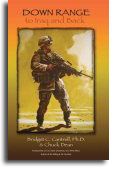
Bridget C. Cantrell, Ph.D. is a leading clinical psychologist specializing in the area of combat-related PTSD, Chuck Dean is a veteran of the Vietnam War. Together they've created a vital little resource for PTSD survival: Down Range to Iraq and Back. I'll share a few helpful tips from Chapter 5 with you tonight.


Monday, May 01, 2006

New Combat PTSD Cases May Total 15,000 in 2006

From yesterday's Kansas City Star:

The number of troops back this year from Iraq and Afghanistan with post-traumatic stress disorder could be five times higher than the Department of Veterans Affairs predicted. Instead of 2,900 new cases that it reported in February to a veterans advocate in Congress, the increase could be 15,000 or more, according to the VA. [emphasis mine]

Just as this figure suggests, the article continues with more sobering information for us to examine, digest -- and act on.

Click on 'Article Link' below tags for more...

Continuing from the Kansas City Star:

At the Kansas City VA Medical Center, only nine vets from current combat were diagnosed with PTSD in 2004. Last year, it was 58. In just the first three months of fiscal 2006, the hospital saw 72. “It’s absolutely incredible,” said Kathy Lee, at the Missouri Veterans of Foreign Wars.

A former Army nurse in Vietnam who works at the hospital, Lee said, “Every single Iraq vet who comes in, I give them a list and say, ‘How many of these (PTSD) symptoms do you have?’ It’s almost nine out of 10.”

Compared to the Vietnam era, the VA is doing a better job in treating the natural psychological wounds some of our veterans return home with. Yesterday, AP reported:

The VA says it is more prepared to deal with returning veterans than it was after Vietnam, when an estimated 17.5 percent of veterans returned with mental or emotional problems. The agency has more than 160 programs for the treatment of PTSD and a $29 million dollar budget to provide services for military men and women returning from Iraq and Afghanistan. "If we don't get intervention within the first five years, the veteran is set up for a lifetime of problems," John Wilson, a psychology professor at Cleveland State University, told The (Cleveland) Plain Dealer for story published Sunday.

Wilson helped the VA design its first counseling program in the late 1970s. Now all veterans undergo a required post-deployment screening program, including a mental health assessment.

Although these programs are a step in the right direction, they are far from the magic bullet to cure all reintegration ills.

Despite expanded services and better post-deployment screening, some critics still wonder if the VA is prepared to deal with an influx of veterans coming home after multiple deployments in the Middle East. Larry Scott, who founded a Web site scrutinizing the VA, said that while the system has improved greatly, he worries the VA is still too understaffed and underfunded.

Wilson agreed there is cause for concern since repeated deployments can take an even greater mental toll on soldiers. "Iraq is a nonstop, 24-seven, hostile environment, so what happens is that these guys are incredibly wired all the time," he said. "One of the things we learned from Vietnam is that once that hyper arousal response develops, it doesn't go off."

Back to the Kansas City Star piece, we find a cautionary warning:

John Baugh, who attends a PTSD support group at the Kansas City VA Medical Center, said many soldiers still in combat zones are suffering from the disorder. “They think that the numbers are high right now,” said Baugh, 31, a former driver for an Army construction battalion in Iraq. “Wait until those guys get out and try to start functioning in the civilian world. There’s going to be hell to pay.”

The miscalculation on PTSD echoes last year’s underestimation by the Bush administration of how many Iraq and Afghanistan veterans would need medical treatment. It had underfunded VA health care by $1 billion, despite assurances to Congress that the department had enough money. Congress subsequently added $1.5 billion to the VA’s budget, but money problems still loom.

“They’re going to be short and they’re going to be playing catch-up,” Cathy Wiblemo, deputy director for health care at the American Legion, said of the VA’s PTSD treatment. “They’re not going to have the money, and the waiting list will grow.”

As the VA budget last year needed an infusion of $1.5 billion to meet its needs, many say the President's 2007 VA budget as it currently stands is insufficient to meet the needs of our returning veterans.

The White House asked for $80.6 billion in 2007 for the VA, including $3.2 billion for mental health programs. But Rep. Michael Michaud, a Maine Democrat on the House Committee on Veterans Affairs, said the VA would need more, sooner. “What’s going to happen is unless we give added resources, they’re going to have to start rationing care,” Michaud said. “It’s going to have to start pitting veterans against veterans.”

Jeff Schrade, a spokesman for Sen. Larry Craig, an Idaho Republican and chairman of the Senate Veterans Affairs Committee, said Craig was unhappy over the VA’s botched estimates on health care last year. Congress now requires quarterly budget reports, which Schrade said show that VA’s budgeting appears to be on track. “What concerns us is they’re seeing a lot more patients than they anticipated,” he said.

The VA’s contradictory estimates on PTSD surfaced in February. Prior to a Capitol Hill budget hearing, the agency replied to written questions from Rep. Lane Evans of Illinois, ranking Democrat on the House VA panel.

Asked about the need for mental health services, the VA told Evans that it expected to see 2,900 new cases in fiscal 2006, which began Oct. 1 and ends Sept. 30. A week later, the agency issued its latest quarterly report on use of the VA by Iraq and Afghanistan veterans. The numbers indicated it had diagnosed 4,711 possible cases just from October through December — more in the first three months than it told Evans to expect over the entire fiscal year.

VA spokesman Jim Benson said the estimate of 2,900 cases was based on earlier data. The latest quarterly numbers were still in the draft stage at the time of the hearing, he said, and VA officials stuck with the earlier data because trying to explain “would be more challenging and perhaps more confusing.”

The unnerving news continues:

VA officials also had at the time of the February budget hearing a report from the department’s Special Committee on Post-Traumatic Stress Disorder. It warned that the VA was unable handle services to new combat veterans as well as survivors of past wars, saying: “We can’t do both jobs at once within current resources.” Most of the PTSD cases the VA sees involve veterans from earlier conflicts, primarily Vietnam.

Baugh of Kansas City won’t talk much about his Iraq deployment because it triggers bad memories. But when he returned home in 2004, he couldn’t escape them. “I was jumpy, angry, irritated, sleeping one-two hours a night,” Baugh said. “I was totally worn out. I’d drink and drink and drink just to shut the memories down and the nightmares.” His wife pushed him to get help. Baugh said he’ll “jump through the ceiling” if she drops a frying pan. The clattering of kids skateboarding down his street sounds just like “gunfire in the distance: kack-kack-kack-kack.”

Joshua Lansdale knows about nightmares and noises, too. A 23-year-old veteran from Kansas City, North, he spent 11 months in the Sunni Triangle as a firefighter and emergency medical technician with the Army Reserve’s 487th Engineer Detachment. “It was a pretty hot zone,” he said. “We took a lot of mortar fire, IEDs, car bombs, saw a lot of helicopter crashes and worked the UN embassy bombing. I dragged a lot of people out of burning buildings, cars, motorcycle wrecks and explosions.” Back home, Lansdale was diagnosed with PTSD and joined a support group at the VA hospital. He predicted that returning troops would overrun the VA.

“A third of all soldiers are seeking help,” he said. “Do we have the capability of treating all those soldiers? I don’t think we do.”

The better informed we are, the more we can achieve.

As halting as these figures and assessments may be, we mustn't let them paralyze us; rather, we must use this data to energize us and our fight to get our returning troops and their families the support they need. They -- and our nation -- deserve nothing less.


&nbspRelated Posts


Wednesday, April 05, 2006

MSNBC's Hardball Reports on Combat PTSD

Posttraumatic stress disorder continues to get some much-needed national media attention. Monday's Hardball is the latest example. Host Chris Matthews opened the the segment with the story of Marine Lance Corporal Blake Miller, an Iraq veteran who received international notoriety when a photograph snapped of him in Fallujah was printed far and wide. He's now returned to the states, and is coping with PTSD.

Click on 'Article Link' below tags for more...

From the Hardball transcript (scroll down 2/3 of the page):

MATTHEWS: Welcome back to HARDBALL. For many American troops fighting in Iraq and Afghanistan, getting home is only half the battle. Once back with their family and friends, they face the new challenge of coping with their sometimes traumatizing memories of war, the condition known as post traumatic stress disorder or PTSD. MSNBC‘s Norah O‘Donnell has more. (BEGIN VIDEOTAPE)

NORAH O‘DONNELL, MSNBC CHIEF WASHINGTON CORRESPONDENT (voice-over):

Remember this picture? It is one of the most iconic images from the Iraq war. Marine Lance Corporal Blake Miller went from Fallujah to the front pages of newspapers and was called The Marlboro Man. Now, almost two years later, Miller is at home in Kentucky a changed man.

BLAKE MILLER, ‘MARLBORO MARINE‘: You can put something aside, but as far as trying to forget it, it doesn‘t work.

O‘DONNELL: Miller now suffers from post traumatic stress disorder or PTSD.

Miller is 21, honorably discharged, and can't find employment. He's having trouble sleeping, he's bogged down by nervous ticks and an aversion to crowds. The video piece closed with comments made by Charles Engle, a Walter Reed psychiatrist, and Jay Nicholson, Secretary of Veterans Affairs stating that the VA is taking care of the needs of our returning veterans.

Following O'Donnell's opening report, Chris Matthews introduces his guests: Gordon Mansfield, deputy secretary for Veterans Affairs, and General Barry McCaffrey. Before he begins the debate in the studio, he asks O'Donnell the following question:

MATTHEWS: Norah, is there any deniers out there who say there‘s no such thing as PTSD?

O‘DONNELL: I did not speak to any who believe there is, because in every war from the Civil War, it was called soldier‘s heart, after Vietnam, it was called shell shock, and now we have this more clinical term called post traumatic stress disorder. So we know many our soldiers throughout America‘s history have suffered from some sort of mental illness, but of course all mental illness has been difficult to talk about until recently.

Blake Miller spoke to us, this very heroic soldier, because he says that by speaking out he hopes that other troops will feel more comfortable talking about some of the problems they‘re experiencing and there is help available from Veterans Affairs.

He asks the same question of his guests:

MATTHEWS: Mr. Secretary, thank you for joining us. Just to repeat the question, there‘s no doubt this exists?

GORDON MANSFIELD, DEPUTY SECRETARY OF VETERANS AFFAIRS: There‘s no doubt in my mind or in the V.A.‘s mind that it does exist.

Perhaps someone needs to tell Oliver North, or Sally Satel, MD, or Christina Hoff Sommers, or Mackubin T. Owens, or George F. Will, or...oh, you get the picture. PTSD is a political and financial liability, so there are a lot of people who might rather gloss over it.

Back to Hardball:

MATTHEWS: General McCaffrey, I was struck by the difficulty that soldier had, The Marlboro Man they called him, who appeared with the cigarette in that famous picture, talking about the casualties he inflicted. You‘ve been in a lot of combat. Is that something you‘ve seen from your fellow troops?

GEN. BARRY MCCAFFREY, U.S. ARMY (RET): Well, you know, first of all, let me start off by saying, there‘s no question that this PTSD is real. We‘ve always known you can take soldiers, Marines, push them over the edge.

A lot of artillery mortar fire, extreme cold, malnutrition, extreme heat. Don‘t tell them when they‘re going to come home from combat. There‘s all sorts of reasons why any combat soldier can reach his limit.

This young Marine obviously saw a lot of heavy combat. Having said that, Chris, let me just offer a balancing viewpoint. Most young soldiers and Marines that fought in heavy combat like Fallujah, as much fighting as we‘ve done since for God‘s sakes Aurora Pocket. That was high intensity battle. Most of them come home strengthened by it, not weakened. They‘re grateful for the comradeship, the valor of their fellow soldiers and Marines. They are grateful for hot water at night, grateful for freedom and safety here in America. Most of them aren‘t damaged by this experience.

MATTHEWS: Mr. Secretary, can you be that positive?

MANSFIELD: I would...

MATTHEWS: That combat doesn‘t generally hurt a person‘s psyche.

GORDON: Well, combat is not the ordinary way of life. It‘s an uncommon situation. So the question is what happens in that uncommon situation? What happens with the camaraderie of the unit that person serves in? And how that person is returned to the United States and how they can adapt to being back in the United States.

MATTHEWS: But all the guys that came back from World War II—you know, you talk about Tom Brokaw and the greatest generation. All of these guys came back, and I grew up with them as friends of mine—or father‘s of friends of mine. You know, Knights of Columbus guys, regular guys. And only later did I realize that these guys had been to hell and back, so many of them.

And they seem to be totally normal. They had a beer and a cigarette. They raised a family. They seemed to enjoy life, turned on the tube at night, watch Phil Silvers. You know, they seem to enjoy life, so many of them.

MANSFIELD: Your correspondent referred though to the term of shell shock and combat fatigue, and those two terms come out of basically World War I and World War II. And really I think they mean almost the same thing as PTSD means.

MATTHEWS: But they‘re the odd case or the familiar case?

MANSFIELD: Well, right now if you look at the total number of troops that have been in Iraq, that total is around 500,000. Out of that 500,000, we in the V.A. have seen about 145,000.

MATTHEWS: A third.

MANSFIELD: And out of those, 20,638 are being treated right now for PTSD or mental health problems. So that‘s 14 percent or 15 percent of the lesser number.

The Deputy Secretary, who was entirely sympathetic in my view, went on to explain some of what the VA is doing to help these thousands who are in need of help. Mental health assessments of all troops when they return home, as well as 6 months later (this new review, the PDHRA, has only recently been implemented), etc.

Now, it's nitpicking time. The problem I had with the Hardball segment was the choice of guests:

  • We had an official advocating for the VA.
  • We had an official advocating the hardline military 'rah-rah' view.
  • We had the pro-Bush administration host.
  • Anyone missing from this picture?
Why was there not a chair at the table for a representative from Veterans for Common Sense or any other veterans organization -- even someone from the more traditional/conservative AMVETS or American Legion?

Could the producers of Hardball not find anyone who directly represents and advocates solely for the veterans to sit at the table?


Related Posts


Saturday, March 25, 2006

Lifelines Online PTSD Video Series for Military Families

As our troops continue to stream home to us, families are having to deal with a variety of adjustment issues. Soldiers, sailors, airmen, and Marines are likely coping with combat stress or post-traumatic stress disorder; and so, Navy hospitals have been reaching out to help their service members and families via traditional counseling and online videos to assist families in understanding some of the reintegration issues they'll be facing.

Click on 'Article Link' below tags for more...

[UPDATE Apr 09 2007]: View videos below.

From AP:

Sgt. Milton Caples made it home to his wife and daughter after a year as a security convoy driver in Iraq, but thoughts of suicide bombers and mortar attacks haunted him, nearly costing him his former life. Driving on the rural roads near his home, he would flashback to the streets of Balad and Tikrit, speed up and try to out run other drivers. "I would know I was doing crazy stuff. It would seem like I was driving but I wasn't there. I was looking at myself doing stuff in a video game or something," he said. "In some cases, I'm glad the police didn't see me because they would have taken my license away."

He spent his nights doing security patrols of the family home - repeatedly checking to see if doors and windows were locked, if anyone was prowling around outside. His anger ate away his relationship with his wife and daughter, who struggled to reach the fun-loving man they once knew.

Three years into the Iraq war and almost five years after the invasion of Afghanistan, American families like the Capleses are increasingly becoming part of its collateral damage. Learning from the mistakes of Vietnam, the military has long encouraged returning soldiers to seek counseling. Now its leaders are trying something different - reaching out to the soldiers' families.

Although treatment and medication have evolved since Vietnam, the warrior mentality still prevents most returning soldiers from getting the help they need, said Rick Weidman of Vietnam Veterans of America. "Real men don't eat quiche and they don't have problems like this - hooah," he said, giving the shout soldiers make.

To counteract this attitude, Navy hospitals have begun advertising their counseling programs as well as pointing families to their online PTSD video series.

The videos were designed not for service members, but their families. "The goal was to bring in the family in hopes that if the individual wouldn't come in on their own, we would reach them through the family. We made thousands of copies and distributed them to all kinds of places," said retired Navy Capt. Jennifer Morse, the San Diego Naval Hospital psychiatrist featured on the videos. The Navy began producing the videos in 2004 and is releasing a re-edited version of the project in the coming months.

"The intent is to get people help, not to fix them over the Internet. (To tell them that) they shouldn't be ashamed of their feelings after they have served in these situations," said Bill Hendrix the Navy's Pentagon-based coordinator of the Lifelines video project. The videos have been so successful that the Air Force and the Army are also using them to encourage families to seek counseling for veterans of both Iraq and Afghanistan, Hendrix said.

Weidman, of the Washington-based Vietnam veterans group, applauded the efforts to reach troops by reaching out to families. "The military, under significant pressure, has made some significant efforts," he said. Vietnam Veterans of America has long pushed the Department of Defense to develop such programs, he said.

But Capt. Jeffrey Weyeneth, a psychiatrist at Pensacola Naval Hospital, estimates continued counseling programs still reach only 10 percent of troops returning from Iraq and Afghanistan. "A lot of guys, they see it as a nick in their armor, 'If I want to do 20 (years) or more, I don't want to be seen as a nut case'. And confidentiality is difficult with the military because mental health can affect your ability to function in the military so confidentiality is not as absolute as it is in the civilian world," he said.

Returning soldiers who go without treatment often hide their stress from co-workers to avoid ruining their careers and instead take their problems out on their families, Weyeneth said. "A lot of these guys come back from war but never get out of the combat, the enemy just changes. They direct their anger at other people," he said.

You may access the full Lifelines video series online.

[One technical note: For some reason, this link wouldn't open the video page in my Firefox browser; Internet Explorer, however, downloaded it just fine, making the programs available for viewing.]


The videos have been made available on YouTube:

#1


#2


#3


#4


&nbspRelated Posts


Friday, March 17, 2006

MN Community Reaches Out to its Troops

Little Cloquet, MN -- population 11,201 -- is making a name for itself. Last month, it began an outreach program to help 120 Iraq vets from the local Guard unit transition successfully back into the community. The local newspaper, the Pine Journal, got involved by publishing the first in a series of PTSD eduction articles that rival anything being done by the national media. Part I introduced the program and some of the veterans who'd served in Iraq; Part II reveals some of the barriers to a quick and easy transition into civilian life for these service members.

Click on 'Article Link' below tags for more...

I'll quote extensively from the Pine Journal:

“We want the community to come out healthy – and the soldiers to come out alive.” That was the straightforward statement made to local employers, business owners, law enforcement officials and members of the clergy last Tuesday by National Guard Chaplain John Morris. Morris went on to say that the jump from common citizen to “warrior” is a dramatic one – and one that takes months to learn.

“Our government takes our citizens and transforms them into warriors to execute the mission of the United States,” said Morris. “It took six months to flip the switch to transform some 2,700 Minnesota National Guard soldiers into warriors, but the question is, when they return, how do you flip that switch back? The road home is much longer, steeper and tougher.” ...

First, he pointed out, the community needs to understand how the “road to war” works. “We take our young men and women from citizens, to soldiers, to warriors,” Morris said, “from security to insecurity, from safety to danger, from comfort to discomfort, from order to chaos, from trust to mistrust, from ‘us’ to ‘me.’ They have to learn the hard way that nothing is predictable, and everything they once trusted in is turned upside down. Along the way, they become very self-centered. That doesn’t mean they’ve become evil people but that there’s been a transformation. And so, how can we help them go from that mistrust to trust once again? How can we convince them that the dead dog on the side of the road doesn’t have a homemade explosive device inside it?”

The Chaplain, a two-time veteran, went on to give an example of how behavior that works to protect on the battlefield quickly can create problems off. Standing in line one day at the airport, someone cut in front of him. He said, "This immediately threatened my sense of order," and a strong over-reaction to his frustration resulted in him directing strong words towards this person. A security guard quickly got involved to break it up.

This 'kinetic energy' -- a sense that they are in a commanding position, no matter where they are -- is one that is often misunderstood by the public.

The article continues:

National Guard Reserve units tend to have a tougher time making the transition back into society following an active combat assignment because, after their return, the unit splits up and its members go back into civilian life. “They are no longer with their comrades, their ‘battle buddies,’” said Morris, pointing out how the unit has become a support system that is often sorely lacking out in the community. “What they really need,” he said, “are employers, pastors, social workers and others who will take the time to try to understand them and support them.” In doing so, he stressed that community members must understand the challenges the soldiers face in that reintegration process.

First, they must strive to overcome alienation – from family, friends, co-workers and the community. He asked audience members to visualize going on a five-star vacation somewhere in the Caribbean where all they do is eat, drink, sleep and experience fun and excitement for an entire week, free from stress and responsibility.

“When you get home and go back to the office, the sudden return to routine, stress, and responsibility is hard enough to cope with,” he said. “And chances are, you’re also brimming over with stories to tell and photos to show off, but you can just about imagine how long your co-workers are going to be interested – about a minute and a half! You begin to realize that you have had an experience that you can’t share with anyone except those you were there with.”

Returning veterans have to cope with feelings of alienation, and worry they'll always feel different. These are the same factors that have driven many Vietnam veterans to homelessness and unsuccessfully coping with their mental health issues.

Solid suggestions for the community:

[S]ome 18 percent of the 82nd Airborne and 101st Airborne National Guard units are showing signs of mental health issues after returning from combat, and 30 percent of the soldiers still exhibit signs of mental health issues four to five months after demobilization. “We can’t afford to lose these people,” he stated. “As employers, you can help. Be respectful, welcoming and show hospitality to them until they get their feet on the ground.”

Secondly, the community must help returning soldiers move from simplicity to complexity once again, from letting others think for them to accepting responsibility. “In civilian life,” Morris said, “we live complex lives. We often make some 15,000 choices a day, compared to only about 800 a day in the military. The fact of the matter is that most soldiers are not responsible for much, and it feels good. They no longer have to balance the checkbook, or change the oil in the car or cut the grass. When they come home and are suddenly faced with all those choices and responsibilities once again, they often feel grouchy and overwhelmed.”

Thirdly, returning soldiers are faced with the challenge of how to replace war with some sort of other “high.” “War is an adventure, and nothing in civilian life matches the intensity,” Morris admitted. “When it comes right down to it, most soldiers who train with the National Guard actually want to go to war to put into practice what they’ve learned to do, and statistics show that some 72 percent admit they are glad they did it.” The “high” of war is often replaced by a need for speed and reckless driving, resulting in traffic tickets, accidents and, in some cases, death. Others turn to drugs, alcohol and gambling.

Many returning troops never find the same 'rush' in civilian life; this may be one explanation for the National Guards' record reenlistments -- these veterans want to get back into the war zone.

The real challenge, of course, is for returning soldiers to learn how to accept life as it is, because for them, everything else pales in comparison to what they have experienced in combat.

Fourthly, the returning troops are faced with rediscovering who and what they are outside of their military role. “They have to find meaning and purpose outside of combat,” Morris said. “They have to realize that they were someone before war – and that they can be someone afterward as well, or they will be stuck in Iraq forever. If they can learn to draw from their combat experience and apply it to their lives, they can actually be better off than they were before.” Morris went on to say that combat veterans who have successfully made it through the first 10 years following their return often become among the most productive members of the community.

Finally, returning soldiers must learn to make peace with themselves, God and others in the community. “They may have done, or not done, things that violate their moral code,” Morris explained. “They may have participated in the killing of other human beings, or they may be plagued with thoughts of whether they really did their part after a fellow soldier gets killed right next to them, or if they remain in a non-combat position in the Forward Operating Base while the others are out there fighting. After they return, where do they go in the community for confession and absolution? Someone needs to help them in the process.”

Families and employers can play a strong role in helping the returning soldier. First, they need to learn to understand what they've been through, what combat stress looks and sounds like. Second, they need to let the troop talk about their expieriences at their own pace. Finally, they need to be sympathetic and patient in allowing the soldier to ajust to the changes that have taken place at home since their absence.

Sadly, however, nine times out of 10, many returning soldiers end up going to bars, where alcohol breaks down their inhibitions and they are able to confess their “sins” to whoever will listen.

More and more, local media is pummeling the national outlets when it comes to PTSD reporting. If you'd like, email the Pine Journal a quick thank you for their coverage; being a small paper, they'll probably really appreciate hearing that their efforts are being recognized. Perhaps consider contacting your local officials to ask if your community has any plans to organize something like this, too (especially if you live near a base).


Related Resources

Department of Veterans Affairs (VA) - Seamless Transition
Hearts Toward Home - Turning Your Heart Toward Home Workbook
National Center for PTSD - A Guide for Military Personnel and Families
THRIVEnet - Guide to Listening to War Veterans for Family Members


&nbspRelated Posts


Previous/Older Posts Return Home

Archives
2011: Jan Feb
2010: Jan Feb Mar Apr May Jun Jul Aug Sept Oct Nov Dec
2009: Jan Feb Mar Apr May Jun Jul Aug Sept Oct Nov Dec
2008: Jan Feb Mar Apr May Jun Jul Aug Sept Oct Nov Dec
2007: Jan Feb Mar Apr May Jun Jul Aug Sept Oct Nov Dec
2006: Jan Feb Mar Apr May Jun Jul Aug Sept Oct Nov Dec
2005: Sept Oct Nov Dec

Legal Notice

The information presented on this web site is based on news reports, medical and government documents, and personal analysis. It does NOT represent therapeutic prescription or recommendation. For specific advice and information, consult your health care provider.

Comments at PTSD Combat do not necessarily represent the editor's views. Illegal or inappropriate material will be removed when brought to our attention. The existence of such does not reflect an endorsement.


This site contains at times large portions of copyrighted material not specifically authorized by the copyright owner. This material is used for educational purposes, to forward understanding of issues that concern veterans and military families. In accordance with U.S. Copyright Law Title 17 U.S.C. Section 107, the material on this site is distributed without profit. More information.