Monday, August 10, 2026

ZXMoto leads China’s charge to dominate the global motorbike market

AFP
August 9, 2026
A worker assembles a motorcycle at the ZXMoto factory in Chongqing, southwestern China – Copyright AFP/File WANG Zhao

Zhang Xue wept with joy and furiously waved a Chinese flag as he watched his company’s superbike scream across the finish line four seconds ahead of competitors in only its third world championship race.

That victory at the Supersport World Championship in March saw orders for ZXMoto’s two-wheelers skyrocket and provided a boost for the firm as it battles for an edge in the highly competitive Chinese motorbike market.

The company was founded just two years ago but already rivals leading manufacturers such as Europe’s Ducati and Japanese giants Yamaha and Honda with a bike retailing for a fraction of their prices.

“You have this dream you’ve been thinking about for many years, and when it finally comes true… I was so happy,” Zhang, 39, told AFP at his company’s headquarters in Chongqing.

ZXMoto has doubled its workforce since March and its factory runs 24-hours a day to meet demand, but customers still wait months for orders.

“Chinese brands are very clear about where our future lies,” said Zhang, a former mechanic who claims he can assemble an engine with his eyes closed.

“It has to be global.”

The firm’s flagship 133-horsepower 820RR motorbike — which accelerates from zero to 100 kilometres an hour in 2.8 seconds — sells for around 43,000 yuan ($6,370) in China, at least 30 percent cheaper than foreign rivals.

“Compared to imported ones like Kawasaki, it’s very good value,” said 28-year-old rider Yang, who owns an 820RR.

“First off, we support domestic production, and second, if the product is truly good, we’ll choose it.”

Sales have soared from 25,000 bikes in 2025 to a projected 100,000 this year, with plans to double that figure by 2027 -– a target on par with BMW’s scope.

However, it faces a shrinking domestic market, vicious competition and squeezed profits.


– Fan loyalty –


“Twenty years ago, as long as you produced a motorcycle, even if it didn’t start, people would line up to give you money,” Zhang said.

“Now… If you don’t get serious, you will be eliminated by the market.”

China’s motorbike sales fell 3.4 percent in 2025, and slid again this year as consumers increasingly favour cars or less regulated electric bikes.

In China, Zhang can rely on loyal fans who see him as a symbol of the country’s manufacturing prowess, drawn by his rags-to-riches background.

“Zhang Xue has brought glory to China, so I want to support him,” said Hu Zhaomeng, picking up his gleaming red 500 model from a Chongqing dealership.

But weakening domestic sales are pushing manufacturers like Zhang to seek fatter margins abroad, where consumers have more purchasing power.

Half of the 22 million motorcycles produced in China last year were exported, and nearly all brands are looking overseas.

Zhang hopes to export 40,000 bikes to Europe in 2027, while rival manufacturer Shineray sells 90 percent of its low-end models to South America, Southeast Asia, and Africa.

“The domestic market situation is very ‘juan’,” said Shineray’s overseas marketing head Nie Jianwei, using a Chinese buzzword for extreme competition.

“We are constantly reducing the price of our products to make them more competitive.”

In Chongqing, more than 50 manufacturers and hundreds of component suppliers are able to leverage the booming industry of China’s “motorbike capital”.

“Companies like ZXMoto are emerging from one of the world’s most competitive industrial ecosystems, where rapid iteration, integrated supply chains, and relentless competition yield world-class products rapidly,” said Bill Russo, an expert in China’s automotive industry.


– Prestige and heritage –


Zhang told AFP the city’s cheaper production costs offer Chinese brands “a greater advantage” over Japanese or European rivals.

“They have reached a (technological) ceiling, so they can only wait for me there… the speed of their progress is limited.”

For Russo, “the motorcycle industry today reminds me of where China’s passenger car industry stood roughly a decade ago”.

Chinese auto giants like BYD and Geely eventually out-competed established foreign rivals on price and are increasingly at the industry’s technological forefront.

However, two-wheelers may prove a more resilient market to break into.

“Motorcycles remain more emotionally driven purchases than cars. Heritage, racing history and brand prestige still matter much more, giving established Japanese and European manufacturers a stronger defensive position,” Russo said.

“The gap is closing, but it won’t close overnight.”

Still, momentum is building, and ZXMoto expects to sell most of its production overseas within five years.

Russo expects Chinese brands to establish a larger global footprint through local investments and partnerships rather than exports alone.

With an 800-million-yuan factory opening in late 2027, ZXMoto is on track to become one of the world’s top 10 motorcycle brands by 2034.

“When Japanese products first entered Europe, there was the same reaction, there were many questions,” Zhang said, over the roar of engines being tested.

“But as long as the products are good, one day people will accept and enjoy them.”
China’s Electric Mobility Strategy In South Asia: Opportunities, Dependence And Challenges For India – Analysis

An XPeng electric car showroom at the Taikoo Li Sanlitun shopping center in Beijing, China.
Photo Credit: Raysonho, Wikipedia Commons


August 10, 2026


Key Takeaways:

China has built global EV dominance through massive state investment and now exports an integrated ecosystem (vehicles, batteries, charging and software) that is rapidly penetrating South Asian markets where demand for affordable clean mobility is rising.

Competitive pricing, local assembly arrangements and favourable policy environments in Nepal, Bangladesh, Sri Lanka, Pakistan and others are creating long-term dependence on Chinese technology, standards and supply chains.

For India, this expansion poses both economic and strategic challenges by reducing regional market opportunities and increasing Chinese technological and political influence in its neighbourhood, requiring stronger domestic capabilities and alternative partnerships.

China has rapidly emerged as the global leader in the electric vehicle (EV) industry, and its growing presence in South Asia reflects a broader geopolitical and economic strategy. As of April 2026, Asia became the largest importer of Chinese EVs following a significant increase in Chinese vehicle exports. South Asian countries such as Nepal, Bangladesh, Sri Lanka, Pakistan, Bhutan, and the Maldives have become increasingly important destinations for these exports.

Rather than exporting only vehicles, China is introducing an integrated EV ecosystem that includes batteries, charging infrastructure, software platforms, and digital technologies. This strategy is creating long-term dependence on Chinese standards, technologies, and supply chains, raising concerns over economic vulnerability, technological dependence, and regional security. It also poses strategic challenges to India’s economic and geopolitical influence in its immediate neighbourhood.

China’s dominance in the EV sector is the result of decades of deliberate industrial planning and substantial state support. Between 2009 and 2023, the Chinese government invested more than US$230 billion in developing the EV industry. Public funding, tax incentives, purchase subsidies, scrappage schemes, and performance-linked incentives have accelerated both production and domestic adoption of electric vehicles. China has also invested heavily in charging infrastructure, accounting for approximately 80 percent of the world’s installed charging stations. These measures have enabled China to become the world’s largest EV market, selling around 13 million electric vehicles in 2025, representing nearly two-thirds of global EV sales. This figure is expected to continue rising. Chinese automobile manufacturers such as BYD, SAIC, Geely, Changan, NIO, and Xpeng have expanded their global footprint, while battery manufacturers like Contemporary Amperex Technology Co. Limited (CATL) dominate the international battery market through vertically integrated production systems.


South Asia has become an attractive destination for China’s EV expansion due to a combination of market demand, policy support, and geopolitical circumstances. Unlike Western markets, which have imposed tariffs and regulatory restrictions on Chinese electric vehicles, South Asian countries generally provide more favourable conditions for Chinese investment and exports. Governments across the region are promoting cleaner transportation to reduce fuel imports, lower carbon emissions, and meet climate commitments. Nepal has set ambitious carbon neutrality goals, Sri Lanka aims to achieve net-zero emissions by 2050, Bhutan continues to prioritise environmental sustainability, and Bangladesh has established targets for increasing electric vehicle adoption. These national strategies, combined with rising fuel costs and economic pressures following the COVID-19 pandemic, have accelerated the demand for affordable electric mobility solutions. China has successfully positioned itself as the leading supplier capable of meeting these requirements.

Competitive pricing has been one of China’s strongest advantages in expanding its presence across South Asia. Chinese electric vehicles are generally more affordable than competing models because of economies of scale, lower production costs, integrated supply chains, and cheaper battery manufacturing. In countries such as Nepal, Chinese brands dominate new EV sales largely because consumers find them more affordable and dealers receive higher profit margins. Low battery prices further enhance China’s competitiveness, making electric vehicles more accessible to price-sensitive markets.


Chinese firms are also establishing a local industrial presence in selected South Asian countries through assembly plants, distribution networks, and investment proposals. Pakistan hosts a BYD assembly facility, although local manufacturing remains limited and largely dependent on imported Chinese components. Bangladesh has similarly attracted Chinese interest through its National Electric Mobility Action Plan, with companies exploring battery assembly and distribution operations. However, most activities remain focused on assembly rather than developing indigenous manufacturing capabilities, research, or technological innovation. Existing economic ties and dependence on Chinese investment across various sectors provide Chinese firms with relatively easier market access than many international competitors. Local partnerships also facilitate the integration of software systems, connected charging infrastructure, and digital mobility platforms that reinforce China’s technological ecosystem.

Trade trends indicate that China’s influence in the South Asian EV market has expanded significantly over recent years. Since 2019, both the value and volume of Chinese EV exports to South Asia have grown substantially. Countries such as Nepal and Bhutan import a particularly high proportion of electric vehicles from China, while Sri Lanka has experienced especially rapid growth in Chinese EV imports. Pakistan, Bangladesh, and the Maldives have also recorded steady increases, although Bangladesh’s progress has historically been slower due to limited policy support and lower public demand. Nevertheless, recent policy reforms suggest that Bangladesh is likely to become a larger market for Chinese EVs in the future.

Chinese electric vehicles now account for a dominant share of the EV market in several South Asian countries. Nepal has emerged as one of the strongest examples of Chinese market penetration, while Bhutan has also embraced Chinese electric mobility as part of its environmental strategy. The Maldives remains relatively different because Japanese vehicles and two-wheelers continue to dominate its transport sector, although Chinese participation is gradually increasing. Bangladesh, despite initially lagging behind due to weaker policy incentives and consumer awareness, is beginning to experience stronger demand as government support for electric mobility expands.

For India, China’s expanding EV presence in neighbouring countries carries important strategic implications. Economically, it weakens India’s opportunities to develop regional manufacturing and export markets for electric vehicles and related technologies. Strategically, China’s growing technological footprint strengthens its influence across South Asia and deepens economic linkages that may translate into greater political leverage. The spread of Chinese digital platforms and connected mobility systems may also raise cybersecurity and data governance concerns, particularly as vehicles become increasingly software-driven and digitally connected. Consequently, China’s EV expansion represents not only an economic challenge but also a broader geopolitical development that could reshape regional technological standards, supply chains, and patterns of influence. India will therefore need to strengthen its own EV manufacturing capabilities, expand regional partnerships, and offer competitive technological alternatives if it aims to preserve its strategic position in South Asia.


About Dr. Sharanpreet Kaur
Dr. Sharanpreet Kaur is an Assistant Professor of International Relations at School of Social Sciences, Guru Nanak Dev University, Amritsar (Punjab) and her thrust area of research is India’s Foreign Policy with specialisation in Indo-US Nuclear and Defence Cooperation. She is the author of the book “India’s Soft Power Diplomacy: Prospects, Challenges and Way Forward”. She is also a columnist for The Daily Guardian and has written on issues related to India's Foreign Policy. She has also been the Subject Expert for 5 Social Impact Assessment projects for Land acquisition under Punjab Government and has contributed chapters for Reports regarding the same. She has been actively involved with the Observer Research Foundation (ORF) and Institute for Defence Studies and Analysis (IDSA) and think tanks like Centre for Civil Society and Students for Liberty. Dr. Kaur's research and writing modules include Diplomacy, India's Foreign Policy, Politics of South Asia, Central Asia and West Asia. She has been awarded the Young Researcher Award 2023 by Institute of Scholars (InSc), an ISO certified and registered body under Ministry of MSME and Corporate Affairs. She has also been awarded for her Contribution to Education Community by Women Leaders Forum. She has also been featured among 100 Inspiring Women 2023 by Fox Story India.
View all posts by Dr. Sharanpreet Kaur →
Delhi’s EV Policy Changes The Engine, Not The System – Analysis


August 10, 2026
 360info
By Soumyajit Bhar


Key Takeaways:

Delhi’s new EV policy combines purchase incentives with phased registration bans on conventional two- and three-wheelers and light goods vehicles, prioritising the most intensively used categories that contribute heavily to local air pollution.


Electrification alone is insufficient for a just mobility transition: it risks displacing pollution and resource harms elsewhere, leaving car dependence, congestion and social inequalities intact while placing conversion costs disproportionately on lower-income workers.

A more complete approach would pair cleaner vehicles with reduced private-car dependence, stronger public and shared transport, worker protections, reliable and equitable charging, and attention to the full energy and material supply chain.


At a traffic signal in New Delhi, an electric SUV can wait beside an e-rickshaw and a delivery worker on an electric scooter. All three may be counted as evidence of the same green transition, although they embody very different relationships to mobility.

The SUV offers private comfort and status; the e-rickshaw provides shared transport; the scooter is often inseparable from a worker’s livelihood. To see only three electric vehicles here is to miss the differences in power and vulnerability. This is what technological optimism does: treats a change in the machine as if it were automatically a transformation of the system.


Delhi’s new Electric Vehicles Policy, notified on June 30, and effective from July 1, 2026, is nevertheless a serious intervention. From January 2027, only electric three-wheelers and N1-category light goods vehicles can be newly registered; from April 2028, the mandate extends to new two-wheelers. First-year purchase incentives reach ₹30,000 for electric two-wheelers, and ₹50,000 for e-autos. Electric cars priced up to ₹3 million receive road-tax and registration-fee exemptions, while eligible owners who scrap older cars can receive ₹100,000. The policy also supports charging, battery recycling and government electric buses.

Unlike India’s national PM E-DRIVE scheme, though, the Delhi policy combines incentives with mandatory deadlines.

The policy identifies vehicles as contributing 23 percent of Delhi’s winter air pollution and notes that two-wheelers constitute about 67 percent of its vehicle stock. Prioritising intensively used two- and three-wheelers, goods vehicles and buses is sensible. EVs eliminate tailpipe exhaust, use energy more efficiently and generally produce lower lifecycle emissions than comparable petrol or diesel vehicles.

An India-specific review by the International Council on Clean Transportation and IIT Roorkee supports the immediate adoption of battery-electric vehicles, while showing how strongly the gains depend on the electricity mix and real-world energy use.


The policy is therefore a necessary beginning, but not a mobility transition. Unless Delhi also reduces car dependence, expands accessible public and shared transport, and distributes the costs of electrification more justly, it will remove pollution from the tailpipe while preserving the unequal and resource-intensive system around it.
Disappearing from the tailpipe, not from the system

An electric vehicle has no exhaust pipe, but it remains connected to an energy and material chain. According to the Central Electricity Authority, coal supplied roughly seven-tenths of India’s electricity during 2025–26 up to January. As the grid becomes cleaner, the climate advantage of EVs will grow. Until then, some of the pollution and environmental harm removed from Delhi’s streets is displaced towards coal-mining regions and settlements near power plants.

Similarly, batteries connect clean vehicles to landscapes marked by water depletion, land conflict and unsafe work. The International Energy Agency estimates that over half of current lithium and copper production is concentrated in areas facing high water stress, including lithium-producing regions in Australia and South America and much of Chile’s copper-mining belt. Delhi’s provisions for collection, reuse and recycling are welcome, but end-of-life management cannot guarantee justice at the beginning of the supply chain.

Electrification also leaves the structure of car-dependent mobility largely untouched. An electric SUV occupies the same road and parking space as a petrol SUV, creates the same congestion and can be equally threatening to pedestrians and cyclists. Tyres, brakes and road surfaces continue to generate particulate pollution.

For heavier, longer-range EVs, the OECD estimates that non-exhaust PM2.5 emissions can be 3–8 percent higher than those of comparable conventional vehicles, even though regenerative braking—which captures the energy lost during braking to recharge the EV battery—reduces brake wear. Vehicle weight and total travel therefore matter alongside the drivetrain.


EV registrations can rise even as the total number of vehicles and kilometres travelled rises with them. Delhi registered 709,024 new vehicles in 2024, up from 657,954 in 2023; two-wheelers alone accounted for 448,767 of the 2024 total.

But is dependence on private vehicles falling? Is affordable mobility becoming more widely available? These questions are inseparable from inequality. A tax exemption for a car costing up to ₹3 million benefits households that already possess the income, parking space and charging access required for car ownership. Delivery workers and auto drivers, by contrast, face debt, high interest rates, uncertain resale values, charging queues and earnings lost during charging or repairs.

The government has presented the policy as especially attentive to Delhi’s gig economy, emphasising the lower fuel and maintenance costs of EVs. Yet most of the immediate burden will be placed on individual workers and their families.

Delhi’s Gig Workers Association has asked for interest-free loans, adequate subsidies, affordable charging and battery swapping, social protection and financial responsibility from platform companies. It has also argued that no worker should suffer wage or income losses because of the policy.

Charging infrastructure illustrates the same divide between provision and access. More charging points will not help if they are unreliable, unaffordable or distant from workers and low-income residents. The Institute for Energy Economics and Financial Analysis found that nearly 84 percent of the public chargers examined in its representative Delhi sample were not functioning, primarily because of theft and inadequate maintenance. The policy does ask Delhi Transco Limited to develop service standards, but implementation must measure uptime, affordability and neighbourhood access, not merely installations.

There is also a cultural question that the policy leaves unaddressed. In India, the private vehicle has become a symbol of arrival, autonomy, safety, masculinity and class mobility. An electric SUV can carry the same aspirations and hierarchies as a petrol SUV, now accompanied by the reassurance of being green.

A policy that subsidises electric vehicles while leaving the prestige of private automobility intact, risks decarbonising aspiration without reducing the demand for energy, materials and urban space.
From electric vehicles to just mobility

A more adequate policy would locate EVs within the established “avoid, shift and improve” framework.

Delhi concentrates on improvement: replacing conventional vehicles with cleaner ones. A transition must also avoid unnecessary motorised travel through compact, mixed-use planning, and shift journeys towards buses, the Metro, walking, cycling and genuinely shared mobility.

The Intergovernmental Panel on Climate Change finds that shifting journeys from cars to buses or rail can reduce emissions and costs together. Delhi’s electric-bus commitment is valuable, but electrifying buses is not the same as ensuring that enough frequent, reliable and affordable services reach where working people live. Public expenditure must prioritise access to mobility over private vehicle ownership.


That means linking assistance to income and livelihood needs; providing concessional finance and social protection for workers; requiring platforms to share conversion costs; and ensuring reliable charging beyond gated housing. It also means favouring smaller vehicles, expanding walking and cycling infrastructure, applying parking and congestion measures to electric cars, and accelerating grid decarbonisation.

Delhi can draw on the ambitions of the European Union’s 2023 battery regulation, which moves beyond tailpipe emissions towards carbon disclosure, recycled content, mineral recovery and supply-chain due diligence. However, the EU has postponed the application of its battery due-diligence obligations until August 2027. Evaluation should track not only registrations, but vehicle kilometres travelled, mode share, vehicle weight, charging reliability, subsidy distribution and worker outcomes.

Delhi’s policy is a serious beginning, but its danger lies in allowing technological achievement to substitute for harder choices about public transport, urban space, labour and justice.

A just mobility system would be one in which fewer people are compelled to buy private vehicles, workers do not have to finance change with precarious incomes, and clean air in Delhi is not secured through hidden harm elsewhere.

Unless we also change the system organising mobility, aspiration and inequality, we will have replaced the engine without changing the direction of travel.


About the author and editor:

Soumyajit Bhar is Senior Assistant Professor and Director of the Community Transitions Research Centre at the School of Liberal Studies, BML Munjal University. His work examines consumption, inequality, developmental aspiration, and the social and psychological dimensions of environmental transitions.

Namita Kohli, Commissioning Editor, 360info


About 360info
360info provides an independent public information service that helps better explain the world, its challenges, and suggests practical solutions. Their content is sourced entirely from the international university and research community and then edited and curated by professional editors to ensure maximum readability. Editors are responsible for ensuring authors have a current affiliation with a university and are writing in their area of expertise.
View all posts by 360info →
Satellite Imagery Shows Work Underway On Laos’ Latest Large Mekong River Dam – Analysis


An artist’s rendering of the Pak Beng Dam (www.pakbengpower.com)


August 10, 2026
RFA
By Noh Jung Min


Key Takeaways:

Satellite imagery shows early construction of Laos’ Pak Beng hydropower dam, the country’s most upstream Mekong mainstream project, a Chinese-Thai joint venture expected to generate power mainly for export starting around 2033.

The dam forms part of Laos’ broader “Battery of Southeast Asia” strategy of building numerous large hydropower projects, often foreign-owned for decades under concession agreements that raise debt and sovereignty concerns.

Experts warn of accumulating downstream costs—disrupted fisheries, sediment trapping, altered flows, flooding and community relocation—while local residents near the dams typically bear the burdens and distant power buyers capture most of the benefits.


Construction is underway on Laos’ latest large-scale Mekong River dam, satellite imagery analyzed by Radio Free Asia shows. Experts told RFA that the Pak Beng hydropower project will be like the other mainstream Mekong River dams, with Vientiane hopeful that sacrificing riparian ecosystems and relocating nearby villages will be worth the expected benefits to the economy.

With dozens of hydropower dams either built or under construction on the Mekong River and its tributaries, Laos has gone all-in on its controversial economic strategy to become the “Battery of Southeast Asia” in hopes of selling electricity to neighboring countries.


Pak Beng, when complete, will be the most upstream dam on the Mekong in Laos. It is a joint venture between a Chinese investment company and a Thai energy firm, it will have a generating capacity of 912 megawatts and is expected to produce an average of 4,775 gigawatt-hours annually—enough to power a mid-sized U.S. city for a year.

“The construction has quietly begun,” Brian Eyler, director of the Southeast Asia program at the Washington-based Stimson Center, told RFA. “On paper, hydropower dams provide income for Laos by selling power to Thailand, Vietnam and Cambodia,” he said. “This brings foreign currency into the country, which is more resilient than the kip, Laos’ currency.”

Satellite imagery taken on July 29 shows a large earthen and rock embankment built across a bend in the river, creating a dry work area shielded from the river’s flow. Within the diverted section, workers appear to be excavating and laying the foundation for the dam’s main structure.

Numerous dump trucks and excavators are visible cutting into bedrock and sediment on the riverbed and leveling the surface to prepare a foundation base for the dam, Bruce Songhak Chung, a senior researcher at the Seoul-based Korea Institute for Security Strategy, told RFA.

“Satellite imagery shows what appear to be the early stages of a powerhouse building, a spillway, and foundational work for a ship lock and fish passage intended to allow vessel and aquatic movement past the dam once completed,” Chung said.

So far, only preparatory work has started and the main construction on the dam will begin in October 2026 after the wet season, Chandaly Mao, a communications officer with the Mekong River Commission, told RFA.

The commission is an intergovernmental organization that works with the governments of the four Mekong basin countries to jointly manage the shared water resources and the sustainable development of the Mekong.

“Work will start with the construction of the first-stage cofferdam,” Mao said, adding that the developer expects commercial operations to begin in 2033.
One of many

Meanwhile, further downstream, the Luang Prabang large-scale dam is more than 70% complete and will begin commercial operation in 2030 according to the commission. There are currently two operational dams and 9 others in various stages of completion according to the Stimson Center.

Eyler said there are more than 100 dams in Laos on Mekong tributaries, including the Xayaburi dam, the largest currently in operation. Additionally, Myanmar and Laos signed a joint agreement to develop a new 2,790-megawatt Mekong mainstream dam on July 5.

Little information has been released, but it is expected to sit in a canyon section of the Mekong along the Laos–Myanmar border and it would be one of the largest dams planned on the Mekong, he added.

“All these dams are built by foreign construction companies,” Eyler said. “Laos has the capability to build small dams but not large dams.”


Under this arrangement, the foreign construction company owns the dam for a set period — typically 20 to 30 years — collecting the income it generates, while the Lao government receives taxes and royalties, Eyler said. Once the contract ends, ownership transfers back to the Lao government.

Many of the foreign players involved are Chinese firms or have Chinese backing, and critics are concerned that the arrangement ensnares Laos in a debt trap, making Vientiane increasingly malleable to Chinese creditors.

“This is a sovereign decision of the Government of Lao PDR,” Mao told RFA. “A further consideration is that operating patterns are shaped by concession and power purchase agreements. It is therefore important that these agreements allow operating rules to be adapted for environmental purposes.”
Local economics

Experts also warn the dams affect the livelihoods of the local communities and carry significant environmental and social impact downstream with effects that accumulate as more dams are built along the river.

The dams generate electricity that is mostly sold to Thailand, which is beneficial to the country’s bottom line, but local communities near the dams see little benefit.

The Mekong River Commission has raised four concerns: sediment trapping, fish passage, changes to the flow regime, and socioeconomic impacts on communities that depend on fisheries. Fish passage is a particular concern, both for adults migrating upstream and for eggs and larvae drifting downstream through slow moving impoundments, Mao told RFA.

“Even though some of these dams have fish ladders built into them, the fish ladders don’t work very well,” Eyler said. “So the fisheries are in a dire situation, and people rely on those fisheries for their food and for income as well.”

According to the Stimson Center’s Mekong Dam Monitor project, fisheries are depleting and declining for local people along the entire run of the Mekong in Laos. In a section of the river where the borders of Laos, Myanmar and Thailand meet, entire villages have become ghost towns as fish stocks have collapsed.

Chung said dams also trap sediment and nutrients that would otherwise flow downstream, potentially accelerating erosion in Vietnam’s Mekong Delta and contributing to farmland loss and declining agricultural productivity.

“Dams can also release large amounts of water suddenly, causing flooding downstream,” Chung said, “Residents of villages affected by flooding and construction could be forced to relocate, losing their homes and livelihoods.”

“It’s very rare that people that live around dams benefit from those dams,” Eyler said. “Typically they bear the costs and then people far away get the benefits.”


About RFA
Radio Free Asia’s mission is to provide accurate and timely news and information to Asian countries whose governments prohibit access to a free press. Content used with the permission of Radio Free Asia, 2025 M St. NW, Suite 300, Washington DC 20036.
View all posts by RFA →


MP eggs Kosovo's PM in parliament as political crisis worsens


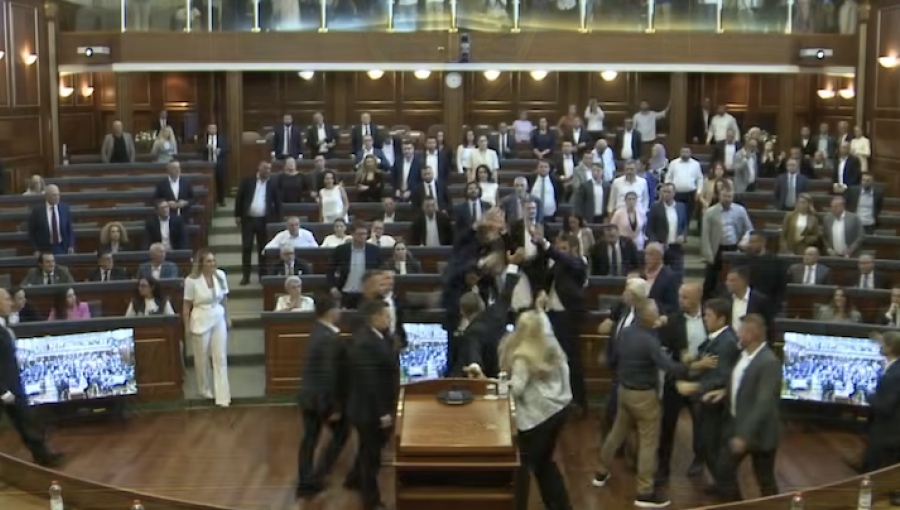
Live footage from the Kosovo Assembly shows MP Time Kadrijaj hurl eggs at acting PM Albin Kurti. / Kosovo Assembly via YouTube

By Valentina Dimitrievska in Skopje August 9, 2026


Kosovo's political crisis has entered another, increasingly bizarre chapter: MPs throwing eggs, parliament sessions being repeatedly postponed, political leaders meeting without reaching an agreement, and the August 7 constitutional deadline passing without the country's new legislature being constituted.

On August 8, the Kosovo Assembly once again failed to complete the constitution of its 11th legislature, following the June 7 snap general election, after Vetëvendosje leader and acting Prime Minister Albin Kurti asked for more time to negotiate with other political parties over the formation of institutions.

Assembly acting chairman Avni Dehari approved Kurti's request and called on the parties to continue negotiations. But the decision immediately triggered a confrontation in parliament.

MP from the Alliance for the Future of Kosovo, Time Kadrijaj, threw eggs at Kurti, prompting intervention by other MPs and security personnel. The session was interrupted as chaos erupted in the chamber.

The dramatic scene was only the latest manifestation of a political crisis that has dragged on for more than a year and a half.

MP from the Democratic Party of Kosovo (PDK), Arian Tahiri, accused Kurti of repeatedly abusing Kosovo's institutions and failing to take responsibility towards citizens.

"It is regrettable that Albin Kurti has been abusing Kosovo institutions for 18 months now," Tahiri said after the session was postponed again.

According to Tahiri, the political scenarios keep changing, but the underlying crisis remains the same.

PDK MP Enver Hoxhaj called Saturday a "session of shame", accusing Vetëvendosje of blocking democracy by failing to propose a candidate for Assembly speaker. He described the adjournment, after Kurti again requested more time for talks with other parties, as one of Kosovo's hardest days and urged citizens to condemn the situation.

Another election, another deadlock

Kosovo has been trapped in a cycle of elections and institutional deadlock since the February 2025 parliamentary elections, when Vetëvendosje, led by Albin Kurti, won 48 seats, short of the 61 needed for a majority. PDK and AAK ruled out joining an LVV-led government, while LDK proposed a transitional government that Vetëvendosje rejected.

The deadlock delayed the formation of institutions for months, with the Assembly failing to elect a speaker until August 2025. Two attempts to form a Vetëvendosje government subsequently failed, leading to the Assembly's dissolution and further elections at the end of December 2025.

A new constitutional crisis followed in early 2026 after MPs failed to elect a president. The Assembly was eventually dissolved and snap parliamentary elections were held on June 7. Vetëvendosje won the most seats again, but fell short of a parliamentary majority, leaving Kosovo facing another institutional stalemate and a fresh struggle to constitute parliament.

The election of the next president, who is chosen by parliament, has once again emerged as a stumbling block, with the parties unable to reach an agreement on the issue.

Kurti and Abdixhiku fail to find common ground

A meeting on August 7 between Kurti and Democratic League of Kosovo (LDK) leader Lumir Abdixhiku ended without an agreement, Koha.net reported.

Abdixhiku said afterwards that the two sides remained "very, very, very far" from reaching a deal.

The LDK's position is that it should propose the candidate for president, arguing that institutional balance is necessary for an agreement.

"For the LDK, institutional balance is necessary and until there is balance, there can be no agreement. If the same positions as in December remain, the outcome is the same as now," Abdixhiku said.

Kurti, meanwhile, rejected the LDK's demands, pointing to what he described as a major discrepancy between the party's demands and the results of the June 7 election.

The disagreement has become particularly important because Kosovo's president is elected by the Assembly, meaning that the failure to constitute parliament risks creating problems far beyond the current dispute over its speaker.

"A dangerous situation"

Former Alliance for the Future of Kosovo leader Ramush Haradinaj went further, accusing Vetëvendosje of deliberately allowing the constitutional deadline to pass.

He warned that Kosovo had entered a "dangerous situation" and said future political actions must focus on preserving the country's constitutional order.

"What is worse is that Kurti, Albulena and others have deliberately blown Kosovo's constitutional deadline to elect institutions," Haradinaj said before entering the Assembly.

He added that the Alliance would participate in the constitutive session despite the deadline having been exceeded.

"What has happened has constitutional consequences. Future actions must help preserve constitutionality," Haradinaj said.

The dispute now raises a bigger question than who will become speaker of parliament: how long can Kosovo continue functioning through temporary arrangements and political improvisation?

 Russia’s War Against Ukraine: Diplomatic Talks And U.S. Policy – Analysis


Map of Ukraine. Source: CRS, using data from the Institute for the Study of War and the American Enterprise Institute Critical Threats Project, Global Administrative Areas


August 10, 2026
the Congressional Research Service (CRS).
By Andrew S. Bowen and Cory Welt


Key Takeaways:

More than four years into Russia’s full-scale invasion, neither side appears close to a decisive military victory; formal U.S.-mediated peace talks have stalled since February 2026 amid the Iran conflict, with limited prospects for an immediate resumption.

The Trump Administration continues security assistance to Ukraine at reduced levels, largely through NATO-funded procurement of U.S. equipment, while maintaining most sanctions on Russia (with temporary oil-related relief earlier in 2026) and exploring limited defense-industrial cooperation.

Congress is weighing continued support, potential new sanctions legislation, and the costs and benefits of further U.S. mediation, including implications for NATO relations and long-term European security guarantees for Ukraine.


The Russian Federation (Russia) launched a full-scale invasion of Ukraine in February 2022. More than four years later, Russia and Ukraine remain engaged in Europe’s largest war since World War II. With estimates of up to 2 million or more killed or wounded, and with Russia controlling about 20% of Ukraine’s territory, neither side appears poised to achieve a decisive military victory. In 2026, Ukrainian forces have limited—and in some cases reversed—Russian gains and markedly expanded a campaign of long-range attacks against Russian oil facilities and logistics infrastructure.

The second Trump Administration has engaged in efforts to facilitate an end to the Russia-Ukraine war. Formal negotiations were last held in February 2026; whether negotiations will resume—and, if so, when—is uncertain. Members of Congress may evaluate the prospects for, and potential costs and benefits of, continued U.S. mediation between Russia and Ukraine, including implications for U.S. strategic interests.

Aspects of Negotiations

Building on discussions in 2025, Russian, Ukrainian, and U.S. officials met for the first time in a trilateral format in Abu Dhabi, United Arab Emirates, in January 2026. Two rounds of U.S.-mediated talks followed, but formal peace talks have not resumed since U.S.-Israeli military operations against Iran began in late February 2026.

In an August 2025 meeting with President Trump in Anchorage, AK, Russian President Vladimir Putin reportedly proposed a ceasefire along the line of contact in two of Ukraine’s southern regions, if Ukraine transferred populated areas of its eastern Donetsk region to Russia. This proposal appeared to be included as an element of subsequent talks, but Ukrainian authorities rejected it, maintaining (among other reasons) that the transfer of this heavily fortified “fortress belt” would greatly diminish Ukraine’s ability to defend itself from further Russian aggression.

In May 2026 remarks to the press, Secretary of State Marco Rubio said Russia-Ukraine talks had not been “fruitful” and the Trump Administration was “not interested in getting involved in an endless cycle of meetings that lead to nothing.” In July 2026, Secretary Rubio referred to the “failed” efforts that began in Anchorage but said “if the opportunity presents itself and the conditions are right,” the United States was “prepared to offer some [new ideas] in the right setting and forum.”

In June 2026, Ukrainian President Volodymyr Zelensky proposed meeting with President Putin in a neutral country to kickstart negotiations and called for “a full ceasefire for the duration of the negotiations.” President Putin reportedly rejected the proposal and suggested Russia would continue fighting until it achieved its stated goals.

Security Cooperation. The Trump Administration has announced new security assistance for Ukraine, at levels lower than from FY2022 to FY2024, while continuing to provide certain previously committed assistance. In 2025, the United States and NATO allies launched the Prioritized Ukraine Requirements List (PURL) initiative, whereby NATO allies fund procurement of U.S. defense articles for Ukraine. As of July 2026, NATO allies and partners had contributed more than $6 billion in PURL-related assistance. Some NATO and European officials reportedly have expressed concern that U.S. military operations against Iran could lead to procurement shortages and delays that may affect assistance to Ukraine. Ukrainian officials state they are running low on air defense munitions to intercept Russian ballistic and hypersonic missiles.

Ukraine has concluded some, and is seeking more, joint production and defense agreements and has removed barriers to exporting surplus defense production. Some reports indicate U.S. and Ukrainian officials are exploring ways to improve defense industry cooperation. In July 2026, President Trump indicated the United States was considering options to allow Ukraine to coproduce Patriot missiles but subsequently noted this would be a “big step” and “we have to be very careful.”

Ukrainian officials have sought guarantees against further Russian aggression, including through the deployment of Western peacekeeping forces and closer integration with NATO and the European Union. President Trump and other Administration officials have expressed the view that NATO membership for Ukraine is unrealistic while indicating support for the provision of some kind of European-led security guarantees, potentially with U.S. involvement.

U.S. Sanctions Against Russia. The Trump Administration generally has maintained previously established U.S. sanctions on Russia. The U.S. Department of the Treasury listed some new entities for sanctions, most notably two of Russia’s largest oil companies, Rosneft and Lukoil, and several subsidiaries. After the start of U.S.-Israeli military operations against Iran, the Treasury Department, to help stabilize oil markets, issued a series of general licenses temporarily relaxing sanctions on certain Russian oil exports. The last of these licenses expired on June 17, 2026, and was not renewed.


Prisoners, Detainees, and Forcibly Transferred Populations. Talks have addressed the exchange of prisoners of war, the remains of deceased persons, and the release of Ukrainian civilian detainees and forcibly transferred populations, including children.


Potential Considerations for Congress

Members of Congress may assess the costs and benefits of potential outcomes of U.S.-mediated negotiations and the likelihood of a sustainable ceasefire or peace agreement. Members may evaluate the potential impact of negotiations on other U.S. policy interests, including relations with NATO allies.

The Trump Administration and Congress may assess whether and on what terms to provide continued support to Ukraine alongside U.S. allies. For FY2026 and FY2027, Congress authorized $400 million annually in security assistance for Ukraine (P.L. 119-60, §1243); for FY2026, Congress appropriated $400 million in European capacity building, to include Ukraine (P.L. 119-75, Division A). On June 4, 2026, the House of Representatives passed the Ukraine Support Act (H.R. 2913), by a vote of 226-195, following a discharge process on a special rule that provided for the bill’s consideration.

On August 7, 2026, the Senate passed (by a vote of 86-11) a revised version of a sanctions bill first introduced in 2025, now titled the Lindsey O. Graham Sanctioning Russia and Iran Act of 2026 (S.Amdt. 6711 to H.R. 5334). This bill would reinforce existing sanctions authorities, authorize tariffs against Russia and third countries that import certain Russian products, and expand congressional oversight of most Russia sanctions imposed since 2022.

About the authors:

Andrew S. Bowen, Analyst in Russian and European Affairs

Cory Welt, Specialist in Russian and European Affairs

Source: This article was published by the Congressional Research Service (CRS).


About CRS

The Congressional Research Service (CRS) works exclusively for the United States Congress, providing policy and legal analysis to committees and Members of both the House and Senate, regardless of party affiliation. As a legislative branch agency within the Library of Congress, CRS has been a valued and respected resource on Capitol Hill for nearly a century.

View all posts by CRS →


By Magnus Lund Nielsen

Key Takeaways:

  • Poland’s government has rejected as “absurd” and populist an opposition PiS proposal to deport military-age Ukrainian men who are not legally employed, noting that more than 90% of them already work and that many others are wounded soldiers or carers.
  • PiS has pledged to create deportation centres and a central register of foreigners if it returns to power, framing the policy as enabling these men to “fight for their homeland.”
  • The party is simultaneously dealing with internal splits, including former Prime Minister Mateusz Morawiecki’s departure to form a new movement, amid declining poll numbers.

(EurActiv) — Poland’s government has dismissed as unworkable an opposition proposal to deport military-age Ukrainian men who are not legally employed, describing it as an attempt to win over far-right voters.

“These plans are pure absurdity and populism,” an interior ministry spokesperson said on Saturday.

Deputy Interior Minister Maciej Duszczyk said on Friday that more than 90% of military-age Ukrainian men living in Poland were employed. Those outside the labour market include wounded Ukrainian soldiers receiving rehabilitation and parents caring for disabled children, he said.

On Thursday, Poland’s right-wing Law and Justice party (PiS) pledged to deport Ukrainian men of military age who are not legally employed if it returns to government after next year’s parliamentary election.

One of PiS’ first major decisions would be to deport Ukrainian men aged 25-60 who lack legal employment in Poland, deputy leader and MEP Tobiasz Bocheński announced at a party conference on Thursday.

“They will have the opportunity to fight for their homeland,” Bocheński said, according to local news media, Polsat News. 

PiS is proposing dedicated deportation centres and a central register of foreign nationals, under which failure to meet administrative obligations could initiate deportation proceedings. The proposal would also cover Ukrainians working in the informal economy.

Separately, the EU plans to deny temporary protection to newly arriving military-age Ukrainian men (who are barred from leaving Ukraine under Ukrainian law), while extending the scheme for other Ukrainians until March 2028.

A party divided

PiS – part of the European Conservatives and Reformists (ECR) group in the European Parliament, which also includes Giorgia Meloni’s Brothers of Italy – has been shaken by internal divisions in recent months.

In late July, Mateusz Morawiecki, former Polish prime minster during the last PiS-government, splitfrom the party to create his own movement, Rozwój Plus.

Tensions escalated after the PiS leadership named a eurosceptic candidate for prime minister in next year’s election.

“Of course, we have to confront Brussels’ bureaucratic excesses and absurdities, but Poland’s membership of the European Union brings many benefits,” he said.

Recent polling puts Rozwój Plus at around 8% support in a parliamentary election. PiS is polling at 18%, down from 35% at the 2023 parliamentary election.

Only ‘About 15 Percent’ Of Orthodox Priests In Russia Support Putin’s War – OpEd


August 10, 2026
By Paul Goble


Many assume that Moscow Patriarch Kirill’s regular statements of support for Putin’s war in Ukraine set t
he weather for Orthodox priests and laiety in the Russain Federation, Nikolay Mitrokhin says; but that is not the case: Indeed, “only about 15 percent” of Orthodox priests there actively support the expanded Russian invasion.

Kirill’s delarations, the scholar at the University of Bremen says, are not so much directed at the priests and believers to get them to accept his position – in Orthodoxy, even a patriarch doesn’t have that right – as a sign to the Kremlin that the Patriarchate as such is loyal to Putin (vot-tak.tv/94741767/rpc-voyna).

Mitrokhin notes that “Patriarch Kirill is often perceived by analogy with the Pope or Ayatollah Khomeini – as a figure whose words automatically encourage believers to act. However, in Orthodoxy in general and in the ROC in particular, there is no direct connection between the rhetoric of the top leadership and the behavior of ordinary laity.”

Kirill’s words, he points out, “are addressed primarily to the state power, as a demonstration of loyalty. Their practice influence ends at the church pulpit where the speech was made and the real administrative powers of the patriarch are limited to the boundaries of the Moscow diocese alone,” where Kirill is bishop.

Most priests avoid talking about the war to avoid sparking conflicts within their parishes, and the Patriarchate does not encourage them to travel to Ukraine or to serve in the ranks of the Russian army. It decided on that course when priests who did early in the expanded war began to die, forcing the Patriarchate to take a public position it preferred not do so, Mitrokhin says.

Few Russian parishes are enthusiastic about the war or actively involved in getting people to serve there either from their own faithful or more generally, although many more are quite prepared to collect money and goods for humanitarian assistance, something they see as a Christian duty but not an indication of support for Putin’s political goals.


Russia could use nuclear weapons as “last option” in face of expanding Ukraine war, warns Turkish foreign minister

Russia could use nuclear weapons as “last option” in face of expanding Ukraine war, warns Turkish foreign minister
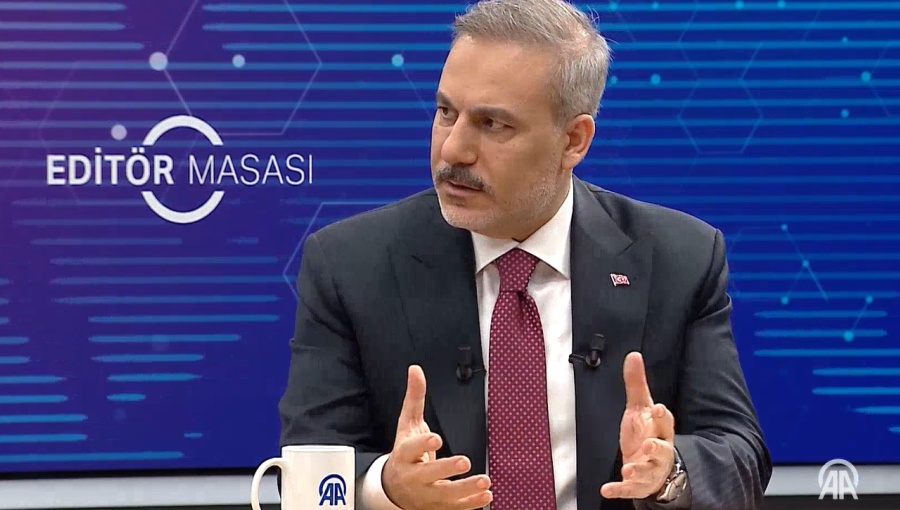
“Everything that it was said could not happen is happening,” warned Fidan, reflecting on the course the war has taken since it ignited four and a half years ago. / Screenshot, Anadolu AgencyFacebook
By IntelliNews Turkey desk August 9, 2026

Turkey’s foreign minister has warned that an “expanding war of destruction” could cause Russia to use nuclear weapons as “the last option available to it”.

Hakan Fidan said that during a recent visit to Moscow, the Turkish delegation was close to raising the issue in talks with their counterparts because  the “public is now demanding such a thing.”

“We also told the Westerners of this [concern over nuclear use], and the Westerners know it,” Fidan added in an August 8 appearance on the Anadolu Editor’s Desk programme of Turkish official news service Anadolu Agency.

Warning that “everything that it was said could not happen [in the Russo-Ukrainian conflict] is happening”, Fidan observed that the war, which ignited in February 2022, had spread beyond the battlefield and was now having severe impacts inside Russia. It was, he said, expanding geographically and becoming more extensive in terms of targets and methods, and the international community must step in to stop the fighting.

“But where no one makes concessions, the war continues with growing violence until it creates its own area for concessions. Unfortunately, this is what we are witnessing,” he said.

Call for Black Sea attacks "moratorium"

During the discussion on the show, Fidan called for a “moratorium” on attacks by Russia and Ukraine in the Black Sea following a series of strikes on civilian ships there. “The conflict has spread across the whole Black Sea,” he said. “To begin with, they targeted the ports and the military ships. Now, they are attacking all commercial shipping without distinction,” he added, noting vessels belonging to Turkey or flying the Turkish flag were among those targeted.

Fidan added that it seemed the two sides in the war seem to be waiting until they have completely exhausted each other before embracing the mentality of “now let’s sit around a table and make peace”, and with another reference to Russia’s nuclear arsenal, he cautioned: “When this destruction, this attrition on the front, turns into attrition behind the front, the issue is no longer about whether you win or lose a war or a battle on a front; it becomes an issue of whether you exist as a nation. Then you use whatever last means you have at your disposal.”

Fidan also referred to how some parties believe ending the conflict under current conditions would cost them more than allowing it to continue. This, he said, was among the reasons they remain unwilling to bring the war to an end.

In June, Reuters reported that prominent Russian nationalist figures had publicly urged President Vladimir Putin to abandon diplomacy with the US and consider more drastic military measures, including the possible use of tactical nuclear weapons. Their calls came after a series of successful Ukrainian long-range strikes inside Russia.

Though a Nato member, Turkey, as a Black Sea neighbour of both Ukraine and Russia, attempts to largely steer a path of neutrality in the conflict, with President Recep Tayyip Erdogan periodically offering to revive his previous role as an active mediator hosting peace talks attended by Kyiv and Moscow. However, Turkey does sometimes go ahead with notable arms sales to Ukraine and this weekend caused some surprise by agreeing a weapons deal that will see 70 M39 ATACMS tactical ballistic missiles, 12 M270 multiple-launch rocket systems and tens of thousands of cluster munitions from Turkish stockpiles sold to the Ukrainians. 

At the end of June, IntelliNews published a comment piece, headlined "Steadily but surely, Erdogan has broken with Putin."