
Saturday, November 28, 2009


Tuesday, November 10, 2009
pam's big adventure

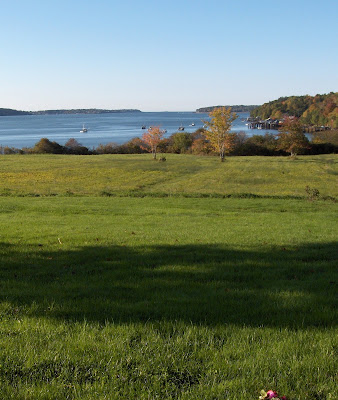
yet to be titled digital image pfarrell 2009
I've been meaning to see Roxy Paine's Maelstrom, installed on the Metropolitan Museum of Art roof sculpture garden. But as with many things in my life, these days, I am relying instead on the 'net (and Joanne Mattera and her blog) to provide a vicarious experience. Thanks Joanne!
Perhaps somewhat inspired by Maelstrom, the image above is the latest in a series of digital pieces I began early last spring and posted on my photo art blog. I've been alternating between trees and water, water and trees.I've been preparing several images from this series to have printed in a large format, and I'm heading to Philly's Silicon Gallery this week to avail myself of their 60" printers and digital printing expertise. Also along for this adventure will be my friend Randy Carone, who provides me invaluable technical advice and assistance. He also plays a mean slide guitar.
While I have a fair amount of printmaking experience from back in the day, this is my first foray into large format digital printing. Very exciting. I'm trying to suspend my expectations and just go with whatever happens. As my friend photographer John Carlano counseled, these larger images will be "different pictures." So, I'm off with that in mind...
Sunday, November 1, 2009
Sue Katz: What's the Big Idea?
I met Sue Katz at the 3rd Annual Montserrat Encaustic Painting Conference in June, when I attended her presentation "What's the Big Idea?", which discussed content in art--her own, and that of a number of other artists. Sue is presenting "What's the Big Idea?" in an open forum that is part of her show with Jozan Treston at Gallery A3 in Amherst, Massachusetts. One of Sue's pieces from the show is below with a short statement. Check out the gallery link for more info.


SPIRALING OUT, 36"x66", encaustic on wood and metal, 2009, Sue Katz
Basically every found object in this piece is old and worn except for the panel with cream white and copper-colored encaustic - proportions aren't exactly two squares in a rectangle now - one member of my family's generations has died and another is declining - so out and into new directions - and so it goes - life keeps happening!
Monday, October 19, 2009
west prize painting faves
Here are my fave paintings from this year's West Prize applicants. I have thus far only searched through the paintings category. I don't know if it's me or if the thumbnails are especially small this year, but my eyes were rather fatigued after the painting category. I might just come back in a few days with picks from other media.I've chosen pretty much at random, and these appear in alphabetical order, though I admit to including the work of a few buddies.
henry bermudez
jaq chartier
cora jane glasser
cynthia ona innes
michelle mackey
michelle marcuse
govinda sah
stephanie serpick
vilma vissers
jesse whittle
henry bermudez
jaq chartier
cora jane glasser
cynthia ona innes
michelle mackey
michelle marcuse
govinda sah
stephanie serpick
vilma vissers
jesse whittle
Wednesday, October 14, 2009
Carl Plansky 1951-2009
Carl Plansky, visionary paintmaker, founder of Williamsburg Oil Paints, and artist, died Saturday, October 10, 2009, from a heart attack. His good friend Richard Frumess of R F Handmade Paints offers a tribute to him on his blog.
I did not know Carl Plansky, but I've used his paints for years. I've always thought of them as paints made with artistry. His inspired contributions will live on in the works of countless artists.
I did not know Carl Plansky, but I've used his paints for years. I've always thought of them as paints made with artistry. His inspired contributions will live on in the works of countless artists.
Thursday, September 17, 2009
THE REAL - THE ABSTRACT - THE ART OF HUNTERDON
A group invitational exhibition presented by the
Hunterdon County Cultural and Heritage Commission featuring work by:
Malcolm Bray, Susan Blubaugh, Sheila Coutin, Alexander Farnham,
Pamela Farrell, Penny Gagne, Barbara Osterman, Bruce Rigby, Rhoda Yanow
I'll be at the reception Friday, October 2, 5-8 pm
Hope to see you there

October 2-30, 2009
Prallsville Mills
In the newly renovated Sawmill
Rt. 29, Stockton, NJ
on the Delaware River 3 miles north of Lambertville
Exhibition open Tuesdays-Sundays 12-5 pm
image: Ophelia (grey) 2009
36 x 36" encaustic on panel
Prallsville Mills
In the newly renovated Sawmill
Rt. 29, Stockton, NJ
on the Delaware River 3 miles north of Lambertville
Exhibition open Tuesdays-Sundays 12-5 pm
image: Ophelia (grey) 2009
36 x 36" encaustic on panel
Friday, September 4, 2009
nice post on Joanne mattera's blog...and good folk
Joanne Mattera, as part of her What I Did This Summer series of blog posts, has pics and text about her visit to my studio in NJ and Steven Alexander's studio in PA. Quite the contrast between the two in space, style, work, and uh, neatness. Thanks Joanne! It was a pleasure to have you.

This is a pic of the studio in its current state, with a roof added to the front and french doors replacing the wood ones. The roof allows me to have the doors open when it rains, adds indirect light, and keeps some of the direct sun from heating the building too much in summer. Oh yeah--and it's a really nice place to sit for cocktail time in the evenings.
I just have to add a few thoughts about the goodness of folk. Our neighbors, Ken and Nan Yard, and their two sons, Forrest and Clinton, have been friends from the beginning. We've been here 16 years, and were greeted on moving day by 2 little boys bearing a bag of veggies from their garden. (I know now their mother sent them to "check out the new neighbors.") Well, the two little boys have now completed college and grad school and have become wonderful young men.
Ken, a class A carpenter and cabinetmaker builds my painting panels. He also did the finish work in the studio. One day, he surprised me by offering to build the roof onto the studio and install the french doors. All I had to do was supply some additional labor (Rocky, my husband) and cover the materials. Quite an offer!!! A couple of months later, and I have my completed studio, and Ken and Nan have some very happy neighbors and friends, and a large, colorful, encaustic waterscape hanging near their spa room.
All that's left is to finish the landscaping in the front, which will be tended to in the spring. Thanks, guys!

This is a pic of the studio in its current state, with a roof added to the front and french doors replacing the wood ones. The roof allows me to have the doors open when it rains, adds indirect light, and keeps some of the direct sun from heating the building too much in summer. Oh yeah--and it's a really nice place to sit for cocktail time in the evenings.
I just have to add a few thoughts about the goodness of folk. Our neighbors, Ken and Nan Yard, and their two sons, Forrest and Clinton, have been friends from the beginning. We've been here 16 years, and were greeted on moving day by 2 little boys bearing a bag of veggies from their garden. (I know now their mother sent them to "check out the new neighbors.") Well, the two little boys have now completed college and grad school and have become wonderful young men.
Ken, a class A carpenter and cabinetmaker builds my painting panels. He also did the finish work in the studio. One day, he surprised me by offering to build the roof onto the studio and install the french doors. All I had to do was supply some additional labor (Rocky, my husband) and cover the materials. Quite an offer!!! A couple of months later, and I have my completed studio, and Ken and Nan have some very happy neighbors and friends, and a large, colorful, encaustic waterscape hanging near their spa room.
All that's left is to finish the landscaping in the front, which will be tended to in the spring. Thanks, guys!
Sunday, August 23, 2009
THE (DARK) SHOW
Today, Michelle Marcuse, Rob Solomon, and I hung The (Dark) Show at StrataSphere Gallery in Philadelphia. This collaborative effort came about some months ago when the three of us jokingly commented that since we all had a tendency to use a dark palette in our work, that we should show together; hence, The (Dark) Show. As collaborative efforts go, this has been a very positive one--negotiations for hanging space in a relatively small exhibition space went smoothly, with all of us contributing our thoughts about what goes where. No easy feat considering how group dynamics can go with three individuals interacting. A short essay below discusses the ideas behind the show.


Foreign Soil No. 5 18 x 18"
encaustic on panel 2009
The (Dark) Show
In The (Dark) Show, Pam Farrell, Michelle Marcuse, and Rob Solomon address the dark with a grain of salt, or perhaps a broad brush. Art history abounds with references to dark as a theme. For some, the dark suggests the unspeakable, the unknown, evil, the sinister, gloomy, and ominous. For these three artists, choice of palette represents more than a proclivity for dark thoughts. Light emerging from dark, shining a light in the dark, a playful interaction of opposites, and an exploration of space and time all offer the viewer an open-ended experience to explore individual ideas about the dark, to see beyond the expected.
Pam Farrell’s work references natural phenomena and elements such as water, weather, and geographic formations to explore concepts of lacunae in terms of loss, memory, and identity. Using layers of pigmented beeswax built up and scraped back, the process allows the obscured and indeterminate to surface. Mark making is the experience; the mark is the trace. Remains, vestiges, scars, memories, clues, and the barely discernable are revealed; traces of memory and experience that cannot be expressed with words become more evident.
Michelle Marcuse uses monochromatic coloring to suggest a subdued, sometimes anxious atmosphere, one that at times appears veiled and mysterious. At first glance there may seem to be an identifiable space where specific elements are in a state of isolated flux. But Marcuse invites the viewer to explore more closely her fields of concentrated, quiet energy. Existing within silence, the fields are slow in time, with the energy moving in from the outside. The impressions suggest a distanced level of reality…seen as uncategorized extracts from a space that runs counter to our own.
Rob Solomon's current work blurs the line between painting and drawing: paintings of drawings or diagrams; diagramming paintings with collaged canvas insets; drawings embedded into painting, and paper supporting canvas overlays. The work integrates multiple processes and materials, including dyed and bleached paper, graphite on raw canvas, mars black pigmented beeswax, and black ink-based photographs. The work explores opposing elements within a theme: patterns and patterns breaking, order and destruction, making and breaking symmetry, framing and re-framing within the canvas, and delight and despair.
August 29-October 3 2009
Reception: Saturday, August 29 2-5 pm
For more information: The StrataSphere Gallery
Friday, August 14, 2009
siesta....

Well it's not like I post all that much, but I think it's time for a little end-o-summer break. I'll be back after Labor Day with new stuff...
Saturday, August 1, 2009
A nice treat...
During a break from the studio (that's a euphemism for procrastination) I read Brent Hallard's interview of Tim McFarlane on Visual Discrepancies, his artist-interview blog. Definitely makes my procrastinating easier to rationalize. It's always interesting to be invited into an artists' head, so to speak, to be able to gain some insight into the process, the approach, the inspiration. I find the reading especially rewarding when both artist and interviewer are literate, informed, and best, able to clearly communicate, as is the case with Visual Discrepancies.
Friday, July 24, 2009
The (Dark) Show
The (Dark) Show is a collaborative curatorial effort I'm involved in with Philadelphia artists Michelle Marcuse and Rob Solomon. At a show held at the StrataSphere Gallery in Philly, we will be showing work that addresses the dark, with a grain of salt, or perhaps a broad brush.
Art history abounds with references to dark as a theme. For some, the dark suggests the unspeakable, the unknown, evil, the sinister, gloomy, and ominous. For these three artists, choice of palette represents more than a proclivity for dark thoughts. Light emerging from dark, shining a light in the dark, a playful interaction of opposites, and an exploration of space and time all offer the viewer an open-ended experience to explore individual ideas about the dark, to see beyond the expected.
 half seas over 2009 encaustic on panel 24 x 24
Sunday, June 21, 2009
line
Line. Until recently, line did not figure prominently in my work.
I was all about the form. In the field.
I was all about the form. In the field.
 hard rain (prototype) 2004
12 x 12 encaustic on panel
collection of Ruth Morpeth
Sometimes a horizon line was called for.
But I don't really think there is a line
so much as there is a juxtapostion of forms.
In the field.
 untitled landscape 2006
24 x 24 encaustic on panel
collection of the artist
More form in the field. Maybe a few drips.
 Lacuna (red cassandra 1 & 2) 2008
24 x 24 encaustic on panel (each)
Then came the drips. Big time. Lines as drips.
Drips as lines. Lines caused by drips.
 ophelia red 2009
36 x 36 encaustic on panel
private collection
And then, the horizon line became insinuated into the work.
A little obsessively, I think. But not aggressively. It's lurking in the background.
 false walls (umber) 2009
24 x 24 encaustic on panel
Line takes front and center and
pushes form and field to the background.

from the sea 1 2009
6" x 6" digital photo
Tuesday, May 19, 2009
Update: I'm No. 29
I've completed my postcard for A Book About Death and the image appears on the project's blog site. I hope you'll consider participating in this interesting project. I'll be looking forward to watching the project grow online and to meet other participating artists in September at the opening reception. You can see the image here.
Also on the blog are links for more information about the Emily Harvey Foundation. Emily Harvey (1941-2004) was a pioneering gallerist (Emily Harvey Gallery at 537 Broadway) and champion of Fluxus artists as well as artists who made mail art, concept art, and performance pieces.
Here is an example of one of the postcards, this one by Cecil Touchon
![[bookaboutdeath.ceciltouchon.jpg]](https://blogger.googleusercontent.com/img/b/R29vZ2xl/AVvXsEjw3fKmSbUtsZG0CSzKmedbsgWIbXJlVQ39PgvTYCCh1UTyGzxtz_PB244ARGILNiGmB1_pF9_Af0J_xd3BRanz36z1m-pboeKjLOsS46dX3o2QeP7gi6Go2UuVUua5NBl3uTTx_ZbGGw/s1600/bookaboutdeath.ceciltouchon.jpg)
Also on the blog are links for more information about the Emily Harvey Foundation. Emily Harvey (1941-2004) was a pioneering gallerist (Emily Harvey Gallery at 537 Broadway) and champion of Fluxus artists as well as artists who made mail art, concept art, and performance pieces.
Here is an example of one of the postcards, this one by Cecil Touchon
Sunday, May 17, 2009
new blog...
 OK...so it's not like I don't already have plenty to keep me busy, but I've launched another blog, p farrell photo art blog, this one for my digital images.
I've been spending quite a bit of time using my new digital slr. Because I don't know any better, I've been taking pics outside at night using my flash and auto settings, then using Photoshop Elements to play with the images. I'm no tech person, so much of this is trial and error. I've been amassing images and have printed them out with my non-archival ink jet printer just to use for reference/source material for paintings. I'm having fun as well as feeling productive, and I've put together another blog to house some of the images I'm wanting to share as I develop my photo skills. At some point I plan to upgrade my printer to one that uses archival inks so I can produce archival images.
I hope you'll visit and take a look. I don't expect to include much text, just images and a blog roll as I find relevant websites. Feel free to comment about the images, ask questions, or make suggestions.
Tuesday, May 5, 2009
Lisa Pressman Art Blog
Hey All Y'all... Happy Cinco de Mayo!!!!
Take a look at my buddy Lisa Pressman's new artblog...
Here's one of her works on paper. Lisa, welcome to the world of blogging!
![[Between+The+Lines+12+copy.jpg]](https://blogger.googleusercontent.com/img/b/R29vZ2xl/AVvXsEhSeEDI0gtVWprcNS8Pikq3WuY6SZsSh0fK-Vbccih1cEOpJf0qYJA3W3OE3w88cT7eI6T2rmqlqEyTAj2lb2Gm1gfNzyW9nfvn-Q-ldMdW8wqu1DxSeTk5_HbA35a4pIKQ_ljc2ESfC04/s1600/Between+The+Lines+12+copy.jpg)
Take a look at my buddy Lisa Pressman's new artblog...
Here's one of her works on paper. Lisa, welcome to the world of blogging!
Between the Lines #12 encaustic on paper
Friday, April 10, 2009
Kathryn Pannepacker at Museum of Arts and Design

from the press release:
In Print/In Process: Artist Talk with Kathryn Pannepacker
Thursday April 16, 6:30 pm
Free with Thursday evening pay-as-you-wish-admission
The Museum of Arts and Design and American Craft magazine present: In Print/In Process – A new series of artist talks and studio demonstrations featuring today’s most innovative makers. Every two months, MAD and American Craft team up to bring the articles in the magazine to life at the Museum. Visitors and readers will hear directly from the artists, and experience their materials and processes first-hand in the MAD Open Studios.
Weaver and painter Kathryn Pannepacker’s urban interventions are featured in the April/May issue of American Craft. Trained in the French tapestry tradition, Pannepacker has melded her love of traditional weaving and textile work with gritty public art – creating murals in West and North Philadelphia that integrate textile designs from around the world with the industrial architecture of her neighborhood. Pannepacker’s work is subtly political, inherently social, and deeply invested in the art-making process. In part one of this two-part program, Pannepacker will provide an overview of her 20-year career and discuss her recent projects, including her guerilla weaving “tags” that are stealthily appearing in cities across the USA.
About the artist:
Kathryn Pannepacker is a textile/visual artist living in Philadelphia. She graduated from Penn State University with a major in English and a minor in art, and apprenticed with 3rd generation French tapestry weaver, Jean Pierre Larochette and his partner, Yael Lurie, a painter and designer for tapestry. In Aubusson, France Pannepacker continued weaving as an artist-in-resident. Though still weaving pictorial tapestry, she also weaves with unusual materials. Through the Mural Arts Program in Philadelphia, Pannepacker painted a 7' x 500ft wide mural called Wall of Rugs: the global language of textiles at Girard and Belmont Avenues featuring the textiles of 43 countries. Pannepacker exhibits locally, nationally and internationally, and has work in private and public collections. She is committed to the transformative power of art in people's lives and the sustainability of such transformation by involving the community.
Read American Craft's cover feature on Kathryn Pannepacker: A Local Take on Global Textiles.
Thursday, March 12, 2009

Sunday, March 8, 2009
ISBP installment no. 18: Rebecca Crowell
Rebecca Crowell gives a glimpse, inside and out, of her rural Wisconsin studio, as well as her work, which was inspired by her residency in Catalonia. See more on her website and blog.


 Remembering Catalunya
74 x 30 oil on board
Rebecca writes:
My studio is in a separate building behind the house, on 40 acres in west-central Wisconsin, a beautiful natural setting. I like the fact that I have to leave the house to go to the studio, as it always feels like moving into a different world. The building is a simple metal outbuilding with a foot of insulation in the walls, and part of the south-facing wall is made of cinder block to provide some solar gain. It is a large, utilitarian space that I have occupied for over 20 years, and inside it's quite messy and chaotic, with paint on the floors, walls, and other surfaces, and piles of stuff that are far from neat or organized.

In my house I keep reasonable order and cleanliness, so I sometimes wonder why the studio mess doesn't bother me. But being neat is not what comes naturally, and I guess for me it is a matter of where to put my energy. Nothing about the studio space is pristine or precious, which allows me to relax and focus on the work and feel free to muck around. And I rather enjoy the studio clutter--the accumulated stuff, piles of old paintings, sketchbooks, art books, journals, tools, materials, rocks and shells, and forgotten, half-finished work. The whole place feels intensely mine, full of my personal history, my art history--yet not in an oppressive way, it's just there in the background when I paint.

In the photo is the large wall on which I do most of my oil painting, hanging the panels up with push pins or small nails. There are always a lot of panels in various states of completion leaning around. I also have another wall that is cleaner, where I can view finished pieces with less visual distraction. My painting table is elevated to a comfortable height so I don't have to bend over it--a great relief for my back--and I have a couch by the wood stove, a table and counter area for doing mixed media work, and an air-to air heat exchanger for ventilation. About a year ago I got some excellent daylight fixtures, and there are high, north windows too. So it is a very functional space. Just outside my door is a rock garden set into a steep bank (the studio is at the bottom of a small hill, accessed by stairs) and that is a beautiful, secluded spot to sit in warmer weather.
 Remembering Catalunya
74 x 30 oil on board
Saturday, February 21, 2009
interactive studio blog project installment no. 17: kate beck
I have tremendous respect for Kate and her work. I've learned much from her wonderful blog and how she speaks about her process.

Untitled Graphite on Arches Printmaking Paper
42 x 72, 2009 © Kate Beck 2009

Untitled Graphite on Arches Printmaking Paper
42 x 72, 2009 © Kate Beck 2009
My words:We moved into a new house last year and I consequently moved my studio, as well. I now live and work “… in a field, on a beach, on a pile of rocks in the Atlantic...”. We’re building it out, so it’s a challenge to be working in the same space I’m renovating, but it's coming along. All together, it is about 950 sq. ft., the entire bottom level of the house, which opens up into the field, looking out to sea. Quiet, and nice. The largest space is for painting, and I have a room for drawing – the clean room – and another for storage. The light is mostly artificial but the studio faces south and I do get natural light for drawing, especially. I’ve never had a studio in my living space before but it is working out well.

My drawings and paintings are created as an intuitive response to materials placed within a given space: graphite on paper, paint on substrate, objects within a room. I consider them as objects, concrete elements of structure. I believe white to be the most inherently beautiful color as it carries with it the potential to simultaneously expose and negate space. I believe black to be the most innately powerful color as it is defined by the presence of light as well as by the absence of light.

The mind’s natural inclination is to identify a problem and work it out, a process of thinking and re-thinking. My aesthetic is founded in formal principles and methodologies of drawing, which I consider the most visual equivalent to thought.
I named my house and my studio White Spot.
Kate Beck


Sunday, February 15, 2009
isbp installment no. 16: diane mcgregor
Diane McGregor gives us a look at her New Mexico studio and work. I am especially impressed that Diane's studio looks this clean even when she's working in it. Oh yeah, and I really like her work.

Diane writes:
Attached in a photo of a corner of my studio with some finished paintings on the walls and one in progress on the easel. This is pretty much how my studio looks all the time -- I didn't clean it up or anything. I'm a fairly tidy painter. I have fantastic light (although not northern light), from south, east and west windows. This studio is the largest room in my house, what would have been the master bedroom, but it is quickly getting very cramped and I'm considering renting a studio in town, if I can stand the commute. (I live outside of Santa Fe in a little farming village, and it's about a half-hour drive into town).

Rising 2009
oil on canvas 40x40
Monday, February 9, 2009
isbp installment no. 15: lisa pressman
Lisa Pressman, who lives and works in West Orange, NJ, and I met--once, for about 5 minutes--at the opening reception for Material Color at the Hunterdon Art Museum last October, but we've kept in touch via the magic of the web. I love her thoughts about her studio to the work. Not gibberish at all, Lisa!

Lisa writes:
I actually took this photo a while ago as I was finishing up some work; I wasn't happy with it (the studio looked so clean or composed). But looking at it now I was struck by how the image begins to "read" like one of my paintings.In the foreground you have the red heat gun shape with the graphic red line of the wire that then leads to the touches of red on the table in the mid ground and then to the fire extinguisher red and then to the touch of the red in that canvas in the way back. and so on and so forth- with colors, shapes, lines, stops and starts of bundles of energy (the brushes, the scrambled papers,the repeating rectangles, etc.). The eye meanders through to read the story.

I may be speaking gibberish with only my first cup of coffee, but seems so clear to me this morning: the studio is the bridge from the unconscious and conscious to the work.

I Know That 1 & 2 2009 encaustic on panel each 24 x 24
Monday, February 2, 2009
Interactive Studio Blog Project Installment No. 14: Marco Paltrinieri
Marco Paltrinieri lives in London, but is native to Italy. When he's not working on his psychology dissertation, Marco is focused on photography, and just had an exhibit in Italy.

Marco writes:
I'm a photographer. Or even better, I'm a psychologist who loves to play with photography.In the last two years I have lived in 3 different flat so I've got nothing more than a sort of "portable" studio. All I need are my laptop and my notebooks, a few drawings to hang up on the wall and a small collection of found objects. Leaves, stones, shells, each object represents an exact moment in time, a personal and intimate memory that I decided to hide from the camera's eye...

Untitled C Print
from the series "Borders and Gates of 66 Poplar Court"
...Gerhard Richter says that images are "unachievable" and are to be doubted. I do agree. That's why I love photography. It gives me the opportunity to explore the space existing between reality and the mind, between certainty and confusion. A space where the meaning of reality is constantly challenged, negotiated and redefined.
Sunday, February 1, 2009
A TECH REQUEST
Greetings:
I have recently switched from pc to mac, and I'm experiencing a bit of a learning curve when it comes to blogging, particularly uploading photos to the blog. I've done a bit of looking around to see what others recommend for photos/images. Many mention Ecto, but I've not been able to download it successfully. So...I'm asking readers to comment on solutions that work for you when it comes to uploading photos and images onto your Blogger blog. Thanks in advance!
I have recently switched from pc to mac, and I'm experiencing a bit of a learning curve when it comes to blogging, particularly uploading photos to the blog. I've done a bit of looking around to see what others recommend for photos/images. Many mention Ecto, but I've not been able to download it successfully. So...I'm asking readers to comment on solutions that work for you when it comes to uploading photos and images onto your Blogger blog. Thanks in advance!
Tuesday, January 27, 2009
ISBP Installment No. 13: Joanne Mattera
I'll consider this post lucky number 13. With Joanne Mattera's images and statement, it feels like this little project has come full circle. Joanne's visit to my studio prompted me to put my thoughts about the ISBP into words. (She was the one walking around snapping pix of my studio while I was thinking what a mess it was.)
 Vicolo 52 2008
encaustic on panel 36 x 36 inches
Joanne writes:
I shot this picture of my studio, a former auto repair shop, in 2004. I had just finished two large paintings—capstones for two solo shows that would take place shortly—and, still in high gear, prepared a number of smaller panels for the next body of work. As is my wont, after a period of intense activity leading up to a show, I crash for a few days and then clean up the studio. There’s something cathartic about the process. (I wrote about that interim in a post called Post-Partum Abstraction.)

So you’re seeing the space in an unnaturally pristine way. It’s the physical embodiment of a Zen moment. When I’m sitting in this ordered, empty space, I can see the next body of work. It’s not a process I can describe; I just need to start with a clean slate.
You’ll notice that the brushes are not clean, however. I work primarily in encaustic. Wax paint never polymerizes, so when it’s heated, it’s workable again. I can melt off what’s there, wipe the brush clean, and dip it into the new palette—though I keep the brushes within color families. I have hundreds more brushes now, but they all look like this.
I’m not a north light purist. I’m perfectly happy to work with incandescent illumination, but I do like the diffused southern light that comes through the translucent overheads I had installed. I call them my “Gagosian doors.” (They are the only thing Larry and I have in common.)
The studio is in
 Vicolo 52 2008
encaustic on panel 36 x 36 inches
Thursday, January 22, 2009
Interactive Studio Blog Project Installment No. 12: Nancy Natale
This installation of the ISBP brings us to Nancy Natale's studio and work. She provides us with images of her old studio and bright spanking new studio, as well as one of her encaustic pieces. Nancy has recently launched a blog, Art In the Studio where you can see more pics of her studio and work.


The Maze (below) is a 20 x 32 joined diptych of encaustic and embedded materials on top of sanded acrylic paintings on paper mounted on wooden panels.


Nancy writes:
My studio is in a big old mill building (formerly a factory for Stanley Home Products) in Easthampton, Mass., in the western side of the state near Northampton and Amherst, almost to the Berkshires. The photo is a shot of the way it looks while I'm working - not neat.

The Maze (below) is a 20 x 32 joined diptych of encaustic and embedded materials on top of sanded acrylic paintings on paper mounted on wooden panels.

Tuesday, January 13, 2009
IMPORTANT INFORMATION FOR PHILADELPHIA AREA ARTISTS
Thought this could be helpful for Philly area artists...
LINC Philadelphia is pleased to announce the publication of "An Artist's Guide to Accessing Health Care in the Philadelphia Area" and a series of free information sessions to learn more about your rights and options for health care in the region.
The Artist's Guide is available at www.artistlincphiladelphia.org/insurance
and will be distributed in printed form at the following information
sessions:
Monday, February 2, 4:00-6:00 pm
at the Pew Center for Arts and Heritage, 1608 Walnut Street, Philadelphia
Wednesday, February 4, 5:30-7:30
Fleisher Art Memorial, 719 Catherine Street, Philadelphia
Monday, February 9, 6:30-8:30
Main Line Art Center, Lancaster Avenue and Old Buck Lane, Haverford
The sessions are free but registration is required. For more information and to register, go to www.artistlincphiladelphia.org/insurance
Please forward this email to anyone who might benefit from this information.
Sunday, January 11, 2009
ISBP installment no. 11: John Tallman
John Tallman's work makes me smile. And I like his wonderful blog, Color Chunks. And I like this excerpt from his statement:
Here's what I'm interested in:
I’m interested in that point where the illusion breaks down.
I’m interested in answers that are both true and false.
I’m interested in lying your way to the truth.
I’m interested in the fragility of the art object.
I’m interested in the theoretical possibility of
creating endless compositions.
I’m interested in the study of sloppy craft.
I’m interested in joy.
Here are two of John's pieces with a shot from his studio sandwiched in between:


Thursday, January 8, 2009
ISBP installment no. 10: Mary Klein
Mary Klein is a Minneapolis-based artist--visit her blog still lifes, which records real-time progress of her work, which I find quiet and contemplative. Here is a look at her studio.

 Turning 2008
oil on canvas 20 x 16

 Turning 2008
 oil on canvas 20 x 16
Saturday, January 3, 2009
ISBP installment no. 9: Steven Alexander

With this installation of the Interactive Studio Blog Project, we get a nice peek into Steven Alexander's studio, which is up in Dalton, PA, somewhere north of Scranton. Steven teaches at my alma mater, Marywood University. Make sure to visit Steven's wonderful Studio Journal blog, where he generously shares his work, process, and impressions and observations of other art and artists, such as the work of Brazilian painter Goncalo Ivo. I highlight this because as you'll see in the post, Steven has included a photo of Ivo's studio. The space is mighty impressive with a huge array of paints and brushes laid out with precision, like a surgeon's tools. This precision is very evident in Ivo's intensely colored geometric abstractions.
Now, back to Stephen and his work. After writing the above, I became aware that there is a real connection between Steven's workspace, which I've had the chance to see through his blog posts, and his work. I see an openness, an expansiveness that is present in both, and experience a sense of place in many of Steven's paintings. Of course, it's not at all that simple. Please see Steven's statement below...
 Meteor Beach 2008
 96 x 96 acrylic on 4 canvases
My work is an exploration of relations that reside in the constant flux of sensory events. I am interested in the interaction between the painting and the viewer's imagination and experience; in the painting's catalytic potency - it's potential to generate unspecified mobile meaning.Color operates in this work and in the world as a kind of pure energy, dynamic, capricious, evocative. The surfaces emphasize the sensual rather than analytical nature of the process, and attest to the pervasive presence of time. Within the structure of the paintings, archetypal dualities of male/female, earth/sky, internal/external are inevitably implied; not as opposing forces, but as interdependent aspects of an animate whole. In this sense, these paintings might be regarded as open-ended cosmologies, or as chunks of unencumbered raw reality, or to use John Cage's words, "like Nature in her manner of operation".
I am trying to build, out of color and substance, a place for the viewer's consciousness - where unexpected associations and resonances may occur, where history merges with the present moment, and the stuff of life, love and desire has corporeal presence - states of being, embodied in paint.
Subscribe to:
Posts (Atom)