Showing posts with label pluto. Show all posts

Blow-out at well fuels concerns over coal seam gas  

Posted by Big Gav in , , , , ,

The SMH reports the coal seam gas industry has hit a spot of turbulence after a well blow out in Queensland - Blow-out at well fuels concerns over coal seam gas.

THE safety reputation of the gas sector has taken a battering after a well blew out in Queensland and a dangerous ''planking'' act was carried out on top of a 60-metre gas flare tower in South Australia.

The sacking of two Santos workers who carried out the prank on top of the Whyalla flare tower was overshadowed yesterday when a gas well operated by Shell and PetroChina blew out for reasons that are uncertain. The blow-out was triggered when workers tried to install a pump and created a pressurised spout of water and gas which spewed for more than 24 hours until it was plugged.

The farmer who owns the land around the well said it was the fourth gas-related incident on the property in five years, denting efforts by the gas sector to build confidence in the controversial practice of tapping coal seam gas.

Rival coal seam gas operators were seething over the potential damage to the sector's image and the Queensland Premier, Anna Bligh, said the joint venture company - Arrow Energy - would be subject to a ''thorough investigation''.

Coal seam gas has prompted concern among farmers over land access and water quality issues and environmentalists are worried about the pumping of chemicals into wells and aquifers. A theatre company in Queensland has been subjected to a boycott campaign because it accepted sponsorship from the gas company QGC.

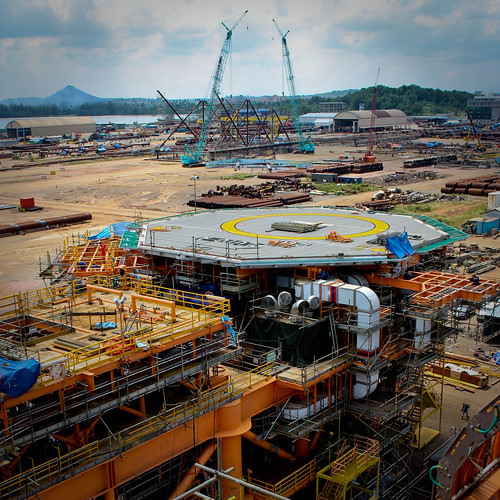
Over on the west coast Woodside are slowly creeping towards approval of the expansion of the Pluto natural gas LNG plant - Pluto expansion moves step closer.
OIL and gas producer Woodside Petroleum is a step closer to its goal of expanding the $14 billion Pluto project, after discovering more gas off Western Australia.

Analysts were speculating last night that Woodside may now have enough gas to push ahead with a second processing train at Pluto, after it announced success in its Xeres well in the Carnarvon Basin. The Xeres well and the nearby Martin well have long been touted as holding the key to Woodside's expansion hopes, and yesterday's announcement revealed the company had intersected 51 metres of gross gas within the triassic target at Xeres.

The well depth exceeded three kilometres and the discovery had been confirmed by several methods, including with the recovery of gas samples to the surface. The discovery is the seventh in the region and comes after 100 metres of gross gas was discovered at the Martin field in March.

Citi analyst Mark Greenwood said the Xeres find was relatively small, but might be enough to get the second stage of Pluto over the line. ''I think they've probably got enough gas,'' he said. ''They've been aiming to get about 3 trillion cubic feet of gas or more. ''They've made seven discoveries, so each of these discoveries have been pretty small and this one might get them to the threshold or slightly above the threshold.''

Australian LNG Projects to Face ‘Serious Challenges’  

Posted by Big Gav in , , , , ,

Bloomberg reports that Moody's are bearish about Australian natural gas and coal seam gas LNG projects following the recent cost blowout at Woodside's Pluto project - Australian LNG Projects to Face ‘Serious Challenges’.

Australia’s liquefied natural gas industry faces “serious challenges” such as labor shortages that may force energy companies to delay, merge or cancel their projects, Moody’s Investors Service said.

Moody’s cited Woodside Petroleum Ltd.’s announcement on Nov. 30 that its Pluto LNG venture would cost A$900 million ($889 million) more and start about six months later than previously forecast. The increased cost “is symptomatic of Australia’s resource boom,” Saranga Ranasinghe and Ian Lewis, analysts at Moody’s, wrote in a report dated yesterday.

“While credit negative for Woodside, the cost overruns at Pluto also hold negative implications for the rest of Australia’s energy industry,” and its A$150 billion of proposed investments, the Sydney-based Moody’s analysts said. ...

“These are serious challenges,” the report said. “While we have a favorable view of the long-term LNG demand, these operating challenges will mean that some of Australia’s planned LNG projects will not proceed as currently anticipated. Whether that will lead to the merger of some projects, or to their outright cancellation, remains to be seen,” it said.

Pluto delayed as costs soar: Woodside  

Posted by Big Gav in , , , ,

While coal seam gas operators on the east coast are finding resistance growing from farmers wanting to protect their land, The Australian reports that Woodside is hitting headwinds on the west coast as well, with labour costs for their Pluto natural gas project rising rapidly - Pluto delayed as costs soar: Woodside.

The company's new $14 billion cost estimate is $900m to $1.3bn higher than its November estimate last year of $12.7bn to $13.1bn. ...

Tapping fields containing 5 trillion cubic feet of natural gas, Pluto is Woodside's most important development project.

Related sales to Asian utilities stand to boost its revenue considerably and it is one of few LNG developments to come on line globally in 2011.

Construction of Pluto has been delayed by industrial action from construction workers over their accommodation arrangements and crane drivers over pay, as Australia's resource-driven economy continues its robust growth.

Woodside in November hiked its cost estimate for Pluto by 6 per cent to 10 per cent after experiencing a shortage of skilled workers.

The company today stuck to its 2010 annual production forecast of 70 million-75 million barrels of oil equivalent, adding production is expected in the middle of that range.

Production in 2011 is expected at 63 million-66 million BOE plus 5 million-9 million BOE from Pluto, creating a wide target of 68 million-75 million BOE.

Woodside gas find may spur Pluto plan  

Posted by Big Gav in , , ,

The SMH reports that Woodside have discovered more natural gas on Australia's north west shelf - Woodside gas find may spur Pluto plan.

Many analysts had expected Woodside would miss its target timeline of sanctioning the second-train expansion of the Pluto liquefied natural gas (LNG) project by the end of 2010, as mixed exploration success raised doubts it would find the required gas reserves to underpin the expansion.

The latest gas discovery could put Pluto's swift expansion plans back on the table and Woodside shares rose as much as 2 per cent in early trade, outperforming a broader market that was down 1.1 percent.

"Initial analysis of drilling fluids suggests the gas could be comparatively liquids rich, but this requires confirmation by further analysis," Woodside said of its Alaric-1 well, which intersected about 185 metres of gas.

It will proceed to conduct further testing to confirm the full depth of the gas column and the quality of the gas.

Woodside, which is due to report first-half earnings on Wednesday, is rushing to complete Pluto's first train, which is expected to cost A13 billion and scheduled to start LNG production of 4.3 million tonnes per annum (mtpa) in late 2010.

The addition of a second train, which will have an output of about 4 mtpa, would greatly improve Pluto's economics and allow Woodside to roll over its current workforce, which is expected to be in shortage over the coming years amid a raft of other LNG projects.

Woodside launches $2.5bn equity raising  

Posted by Big Gav in , , , , ,

The Business Spectator has an article on cost blow outs at Woodside and Exxon LNG plants - Woodside launches $2.5bn equity raising.

Woodside's decision to tap investors comes after a cost blow-out of up to $1.1 billion at its Pluto LNG project because of slower construction work. ...

Woodside said in November that it would cover the Pluto budget blow-out via the debt markets, asset sales and underwriting of its dividends. The company also said at the time that it may boost its stake in the joint venture Browse project if it could not agree on a development plan with its partners.

The project is currently 82 per cent complete and on track to deliver first LNG shipments in 2011, with a production capacity of 4.3 million tonnes per year.

Pluto is now the second LNG project in the Asia-Pacific region to see costs rise – a trend that could also haunt the other Australian LNG projects. ExxonMobil Corp, which approved its LNG project in Papua New Guinea last week, has raised the forecast cost for the project by about 15 per cent to $15 billion.

Woodside to triple size of Pluto  

Posted by Big Gav in , , , ,

While most of the media attention in the Australian energy sector was focussed on the big deals done by the Gorgon consortium, Woodside also got some press after announcing plans to triple the size of the Pluto LNG plant by 2014, beating both Gorgon and Chevron's proposed Wheatstone plant into production (The Australian - Woodside steps on gas to triple size of Pluto).

The two new Pluto LNG trains will boost production from the project from 4.3 million tonnes a year to 12.9 million tonnes. At this point Woodside doesn't have sufficient gas reserves to supply these, but CEO Don Voelte is claiming the gas will come from a mix of third-party gas, existing discoveries and a new 20-well Carnarvon Basin drilling program the company will start in the coming months.


Voelte is also pushing the line that gas is a "transition fuel" on the way from coal to renewables - something we are seeing a lot of lately. “LNG is going to be a great transition fuel as we all stride to get to renewable alternatives. China along with Taiwan, Korea, Japan -- all are increasing their LNG demands over the coming years.” (Bloomberg - Woodside’s World-Record LNG Targets ‘Not a Stretch’ ).

Alan Kohler at The Business Spectator has also been arguing for gas as a transition fuel, suggesting that our worst carbon emitters - Victorian power stations using brown coal - should be converted to burn gas instead (Business Spectator - Gas is the natural choice for Latrobe Valley).
The intensifying race to build mass-market electric cars means the Rudd government will have to rethink its carbon pollution reduction scheme.

All the modelling that shows electricity demand declining as the price rises due to carbon emissions trading will have to be thrown out. Power demand is going surge again, as it did with the rapid take-up of household air conditioning.

It means, in my view, that the government will have to find a way to convert Victoria’s Latrobe Valley power industry from brown coal to gas.

Tesla Motors, which is shipping more than 100 lithium-battery-powered cars a month out of its factory in California, claims to get mileage of 12.7 kilowatt hours per 100 kilometres. That means your standard 15,000 km a year per car will add 2 megawatt hours to household power consumption – a 33 per cent increase on the household average. Two cars will double most family’s power consumption.

Don’t think it won’t happen, and fast. Bruce Mountain of Carbon Market Economics says that at current prices it will cost around $300 a year to power an electric car, compared to $2,300 a year for a standard 6-cylinder petrol-driven family car. And what’s more the Tesla is supposed to go faster than a Porsche, so with the latest technology there will be no reasons not to make the switch.

Nissan has just unveiled the Leaf, Chevrolet has the Volt, Mitsubishi the MiEV and BYD Co of China is also making electric cars. In Australia, Evan Thornley has jumped out of politics into Shai Agassi’s business, Better Place, which calls itself the world’s leading electric vehicle services provider, and will be pushing hard to encourage take-up here.

Last night the German government became the latest to jump on board the electric bandwagon, announcing a plan to put a million electric cars on the road by 2020. It is planning to spend $US1 billion on battery research over the next three years so Germany doesn’t have to replace oil imports with battery imports.

While all this may be excellent news for the planet, it’s an awkward development for the Rudd government.

Australia’s greatest carbon reduction problem is that we have the world’s greatest reliance on coal-fired power generation, and in particular on brown coal – the worst possible fuel for carbon emissions.

This country’s carbon reduction challenge really boils down to this: how do we make the transition from brown coal in the Latrobe Valley to gas base-load power. ...

In the meantime the renewable energy target legislation – decoupled from the CPRS and passed by the Senate this week – is supposed to kick start the building of wind and gas turbine generators.

But this will not cut it – the RET scheme is really just another rent-seekers’ cash shower, and won’t work much anyway because most of the RET certificates will come from households buying solar hot water and heat pumps.

It’s all about how to close down the Latrobe Valley mines and replace them with gas. Even black coal generation would do.

The simplest way for Australia to meet its entire commitment to greenhouse gas reduction under any scheme that might be devised in Copenhagen would be simply to convert the Latrobe Valley generators to gas.

It would, in fact, be the most efficient thing to do in many ways, since they already have the rotors, switching, transformers, transmission lines out, access to water and plentiful labour from people who will otherwise be out of work as a result of the CPRS.

Kohler touches on the same subject in an interview with Origin Energy CEO Grant King (Business Spectator - KGB INTERROGATION: Grant King).
AK: I mean there’s another element to it which is also political, which is the regional development issues concerning the Latrobe Valley, which I presume the Victorian government is extremely worried about.

GK: But the reality is the Latrobe Valley, in our view, will be generating power in 2020. The total megawatts of output in the Latrobe Valley may be less, should be less in order to reduce carbon. Most of the power stations will still be running. Most of the people working the power stations will still be working there. The average cost of generation will go up for a coal-fired generator and as Karen says they will therefore bid a different price into the market and they will be dispatched according to their competitiveness against all other forms of generation.

AK: Well do you think they could be using gas instead of brown coal?

GK: To give you a different example, it’s just an exercise in logic. If brown coal power stations operate as they do at 0.8 emissions intensity, simply because of the lower carbon intensity of black coal. The interesting and simple puzzle is that Victoria ought to import black coal into Latrobe Valley, right, because they’ve nearly halved their carbon emissions, ok, and you’re not going to find that as a realistic option preferred because Victorians will not be overly enthused about importing New South Wales or Queensland black coal, right, but if you really just think about it as an economic and technical problem, then you would simply substitute less carbon-intensive fuels for more carbon-intensive fuels.

It’s important to remember that black coal is far less carbon-intensive than brown coal and if you substituted black for brown, you would have an enormous reduction in carbon emissions in Victoria. Now, the other way of getting there is these coal-drying projects, where the aim is to make brown coal like black coal and so it’s very important and when you go back to the compensation arguments, it’s very important to understand that what the brown coal generators own is two assets; a brown coal resource and a power station built to run on brown coal. If coal-drying works, then that reduces brown coal’s carbon. The carbon in terms of our brown coal begins to look more like black coal and there is still substantial value in the resource that’s owned by those generators and therefore why should they be compensated for it.

AK: Well, why do you think parliament is blocking the ETS and passing the RET?

GK: Look, my view – and I guess I’ll rely on you guys to understand the difference between a kind of a personal view and a logical, reasoned view, not that there’s a difference – but I think the community intuitively believes that renewable energy is good, that irrespective of carbon our fossil fuel resources are finite and therefore intuitively no matter what the cost and I’m not sure people really do understand the cost, but intuitively no matter what the cost, it is a good and worthy thing to increase our understanding, knowledge, pricing and competitiveness of renewable energy. I think that that is gaining momentum to the point where the if you like the concern particularly by business around the impact of the CPRS has brought complexity to that debate to the point that the community is less clear about the benefits of making that change and particularly when that change is expressed in the consequence or in terms of job losses which clearly quite now is a matter of great concern to the community.

Now, I think it’s fair to say that we in the gas industry see a change for our fuel type from coal to gas as job-creating, but that certainly people have been much more willing to buy the argument that the CPRS is a job destroying initiative and for those that have wanted to advance that argument I think it’s created some momentum. I mean it’s created some traction in the community. Now, I don’t know whether that is the true reason and that is my opinion, but that almost always political alignment occurs when community alignment occurs and, you know, political division exists when community division exists.

On the subject of the RET, Crikey's Bernard Keane isn't particularly impressed with how the lobbyists have been handled by the government (Crikey - Sucking the RENT out of RET).
The capacity of the Australian Parliament to bastardise good policy and turn it into a feeding trough for rentseekers and other parasites is truly remarkable.

You can’t move in this place or open a paper without the bottom-feeding filth of the political economy springing out, hands extended, threatening disaster unless they can fasten tightly onto the public teat. And it’s getting worse, as more and more sectors heed the example of lowlifes like the Minerals Council of Australia and come in for their chop.

The Coalition and the Government managed a deal yesterday on the Renewable Energy Target, or what’s left of it. Just in the nick of time before a Question Time in which the Government would assuredly have contrasted its success in facilitating the Gorgon deal with the inability of the Coalition to even agree amongst themselves on a bill they had committed to support.

In the event, Western Australian backbenchers — Mal Washer and Judi Moylan honourably excepted — found another way to ruin Malcolm Turnbull’s afternoon, but the Coalition demonstrating it is a rabble is now so common as to no longer be newsworthy.

Bear in mind that the RET is a dud idea improved only by the fact that the Government’s ETS is even worse. As Ross Garnaut noted, a renewable energy target should be wholly unnecessary and in fact counter-productive if you have a proper emissions trading scheme that will allow the market to effectively respond to the price of carbon emissions.

But now that’s the counterfactual. The Government’s ETS will be almost completely ineffectual (and may be rendered entirely ineffectual in negotiations between the Government and Opposition over the next couple of months) and that means the RET is now the only game in town in terms of driving any sort of move to a lower-carbon economy.

It already had flaws, like the bizarre solar multiplier component, in which solar panel power will generate five times more credits than it should generate, artificially bumping up the scheme.

But the RET, like the Government’s emissions trading scheme, has been further degraded by rentseekers and whingeing industries demanding a free kick. As Lenore Taylor notes this morning in a great little piece, the industries eligible for “interim assistance” under the RET bill were initially only a small number with an electricity intensity above a certain threshold of megawatt‑hours per $million revenue. That, as the Government’s own explanatory memorandum made clear, was expected to include only the aluminium smelting, silicon production and newsprint manufacturing sectors.

Well, scratch that, because under the deal with the Coalition everyone who is getting a handout of free CPRS permits will now be getting assistance under the RET bill, at the same thresholds, for the cost of Renewable Energy Certificates. And if the price of price of RECs goes above $40, there’ll be additional assistance for big electricity users for complying not just with the RET but with the current renewable energy target of 5%. At least the CPRS debacle hasn’t yet led to the softening of existing greenhouse reduction schemes.

Now, bear in mind that those big electricity users are going to enjoy a fall in the cost of wholesale electricity as a consequence of the RET, because it will bring renewable energy sources online that big users won’t have to pay for, increasing overall generation capacity. That will go straight onto the bottom line of big electricity users, at everyone else’s expense. ...

There are a number of reasons why we now have a political system apparently structured to reward the basest instincts of our business sector. The proliferation of lobbyists — frequently former politicians and staffers — is one. The rise of economics consultancies who will “model” any outcome clients want — and the unwillingness or inability of journalists to call bullshit on such modelling — is another. The finely-balanced nature of the Senate also plays a role, especially when unpredictable dropkicks like Steve Fielding hold a swing vote. But ultimately it’s because we don’t have politicians — on either side, but this is primarily a fault of the Government  — apparently capable of resisting rentseeking. At least John Howard knew a try-on when he saw one, and refused to let the GST be ruined by concessions until he absolutely had to when confronted with Meg Lees. Paul Keating sent rentseekers of any kind away with a black eye and a warning not to come back. Bob Hawke was adept at crafting outcomes that looked after those genuinely affected by reforms without undermining what he was trying to achieve.

Oh for a small part, just a lousy bloody fraction, of that sort of political courage now.

Woodside Proceeding With Pluto Development  

Posted by Big Gav in , , ,

Alan Kohler at the ABC has an interview with Woodside's CEO about the Pluto LNG project - Don Voelte on Inside Business.

ALAN KOHLER, PRESENTER: Despite talk of debt markets being in lockdown, Woodside Petroleum this week confidently said it would be borrowing billions of dollars to finish one of the biggest, most ambitious Capex budgets ever seen on Australia. No equity issue for Woodside apparently. To deliver the $12 billion Pluto LNG project of the WA coast the company will be cutting costs, selling assets and talking to Banks.

The company also turned in a solid set of results with its full year profit up 73 per cent to $1.8 billion. I spoke to Woodside boss Don Volte.

Well Don Volte perhaps we can start with just clarifying how much do you have to left to spend developing the Pluto field in Western Australia?

DON VOLTE, WOODSIDE PETROLEUM CEO: Our major portion of the big spend will be in 2009. In 2010 we go into a commission mode but the major portion of construction will be finished by that time. All the components have been purchased at this point and all the major contracts in place. So getting through 2009 is the main funding hurdle.

ALAN KOHLER: So what's the total you have to spend this year? Is it $7.5 billion, something like that?

DON VOLTE: It comes down to $7.2 billion I believe is the actual number that was committed to. We've, with the A dollar exchange, in other words with the A dollar weakness versus the US the budget actually increased a bit and then we brought that back down through funding reductions and deferrals. So we have about a $7 billion spend this year, yes.

ALAN KOHLER: And you reckon you've got a one to $1.7 billion gap at this stage.

DON VOLTE: At this stage...

ALAN KOHLER: And that includes selling what you call non core assets and reducing costs by 500 million?

DON VOLTE: Yeah, we've committed to the cost reductions, we have more to come there. We have not committed to any sale of any asset. What we said was we may test the market place. So we believe that we have alternatives...

ALAN KOHLER: The market place is not very good.

DON VOLTE: Well I don't know about that. You take a look at the coal seam methane sales recently and gas is valuable in that respect.

ALAN KOHLER: They all went crazy.

DON VOLTE: I don't think I'll make too many comments about that. The market place is what the market place is and people felt they were worth that and more than one company put those big dollars up.

ALAN KOHLER: So do you cross your heart and hope to die no capital raising this year, no equity raising share issue?

DON VOLTE: It's not the intention to do a capital raise this year. What we're doing is basically trying to fill the gap funding until we get Pluto on stream first thing in 2011. At that point with those contracts we believe that the spending crisis, as you might call it, is over. It's our full intent to reach the debt markets and fill the gap that way.

A Gas To Liquids Plant For the North West Shelf ?  

Posted by Big Gav in , , , , , , , ,

Chevron Australia has been in the news this week after announcing plans to develop a new LNG plant on the WA mainland to process gas from its Wheatstone discovery on the north west shelf. Interestingly, as well as feeding gas into the domestic network, they are considering developing a gas-to-liquids facility as part of the plant - which may slightly reassure those who look at both our trade deficit (in which imported liquid fuels are a major factor) and the possible impacts implied by the export land model.

Gas To Liquids

GTL projects have frequently been discussed over the years but there don't seem to be a lot of concrete examples, outside of some pioneering plants in South Africa and Malaysia and some large projects being developed by Shell and Sasol/Chevron in Qatar (which Qantas is apparently considering as a source of jet fuel). The Energy Blog has a good description of the GTL process and the players in the industry, for those interested in the technical details, and Robert Rapier has previously at TOD on the "Promise and the peril of GTL", quoting an estimate from Syntroleum that there is enough stranded natural gas to produce 300 billion barrels of fuel.

Wheatstone

The Wheatstone gas field is about 85 kilometres southwest of the Goodwyn platform of the North West Shelf project (180km offshore), with the two permits it encompasses containing an estimated 4.5 trillion cubic feet of natural gas. Chevron is talking about a single LNG production train producing five million tonnes of LNG per year (around a third of the size of Woodside's production at the nearby North West Shelf project) but has not given any indication of the volumes under consideration for the GTL option.

Nigel Wilson at The Australian has the most in-depth report on the development (and a shorter follow up article) - noting that while there has been speculation since 2004 that Wheatstone would be used for a gas-to-liquids plant, helping to offset Australia's ever-increasing dependence on imports, "few in the oil and gas sector believe Chevron will actually build an LNG plant based on Wheatstone".

The article goes on to speculate that it might make more economic sense to process Wheatstone gas at the North West Shelf facility as part of the development of Woodside's Pluto project, which would make a GTL facility highly unlikely, but that Chevron could be more interested in developing a standalone GTL plant than a small new LNG plant or sending the gas to the new Pluto LNG trains.

Chevron's LNG interests in Australia were seen as being its 50 per cent stake in the Gorgon project, which for more than a decade has been trying to commercialise Australia's biggest gas fields on the North West Shelf. In presentations to both the federal and West Australian governments recently, Chevron has been short on detail on what it wants to do with Wheatstone even though it has resolutely argued the reservoir will not be part of the supply for Woodside's $12 billion Pluto LNG development now under construction. ...

Chevron and its Gorgon partners, ExxonMobil and Shell, are in a bind. They want to commercialise some of Australia's best gas assets - ExxonMobil's contribution is the Jansz field, reputedly Australia's largest with an estimated 22 trillion cubic feet of gas - but the costs of the Gorgon LNG proposal are out of all scale to potential returns.

Gorgon is in the WA Government's books at $11 billion but that's a figure from several years ago. Now substitute a figure three times that for a plant that has a production licence for 10 million tonnes a year and the economics look more than a little shaky. Admittedly, Chevron has said it wants to know what environmental approval hoops it will have to go through to lift Gorgon from two trains to three and output up to 15 million tonnes a year, yet there seems little urgency in presenting the formal request to the WA Government.

And that's probably part of the problem concerning Wheatstone. For several years Chevron has talked expansively of its plans and has yet to deliver. That's why few in the oil and gas sector believe Chevron will actually build an LNG plant based on Wheatstone, even though that's what it is telling government it plans to do.

Wheatstone is about 85km southwest of the Goodwyn platform of the NW Shelf project but more than double that distance from the coast. As such, it looks logical that it should be tied into the gas reserves for the Shelf project, of which Chevron is one of the six joint venture partners, or tied to Pluto, which is only slightly further to the west.

For some years it has been reported that the gas available to the Shelf partners has been exhausted by their success in rolling over contracts with foundation customers in Japan, the $25 billion Guangdong deal in China and smaller commitments to Korea. This claim does not appear to take account of a number of small gas fields that are currently stranded on the Shelf. Having said that, any further expansion of the NW Shelf project would appear to be more commercially attractive than investing in a greenfield LNG operation virtually next door.

A similar argument evolves for Pluto where Wheatstone is regarded within the gas industry, if not within Chevron, as a possible supplier to the Pluto 2 plan, which Woodside's Don Voelte says is well into the planning stage. Pluto 2 would be located on the same site as Pluto 1 which Woodside is promoting as the Burrup LNG Park that Woodside says is being designed to process gas from Pluto as well as other regional fields.

There is also the view, not a million miles from Chevron's Perth headquarters, that that company does have to get some operational runs on the board. But why not gas to liquids or even domestic gas rather than the problematic returns from a small, stand-alone LNG plant?

At this point it is difficult to determine how much (if any) liquid fuel we could see flowing from Australia's offshore gas reserves, but the surge in LNG developments does raise the question, how long will Australia's gas reserves last and where will the gas go ? I hope to have a post up on this shortly.

Woodside Mission To Pluto Launched  

Posted by Big Gav in , , , , , ,

Woodside has managed to get their Pluto LNG project kicked off in record time, with development costs already looking much higher than originally anticipated due to labour and equipment shortages. The LNG train(s) will be at the Burrup (presumably close to the North West Shelf facility) and there is speculation that both the Gorgon and Browse developments may end up linking into this plant (though the Gorgon people are still resisting the idea).

More at egoli, The Age, Bloomberg, The West Australian, News.com and Oil Voice.

WOODSIDE Petroleum has committed itself to building one of the most expensive developments in the history of the Australian resources sector after its board gave the go-ahead for its $12 billion Pluto liquefied natural gas project on Friday. The final capital cost figure - on par with the original North-West Shelf development in the 1980s - was significantly higher than Woodside's earlier estimate of $6 billion to $10 million. "The costs are an eye-opener," Woodside chief executive Don Voelte admitted.

Woodside will initially build one production train based on a resource of 5 trillion cubic feet of gas in its Pluto and Xena fields. But it eventually plans to build up to two more trains and possibly a domestic gas facility to help improve the project's returns.

Some analysts questioned whether the first train would deliver a high return on the huge investment, but Mr Voelte said: "I don't spend $11 billion unless I get a damn good return on it." He was referring to the $11.2 billion investment announced on Friday in addition to $800 million that has already been spent on the project. Mr Voelte attributed the capital cost rise to a shortage of skilled labour and the rising cost of offshore equipment.

The first train will produce 4.3 million tonnes a year starting in late 2010, although it has a capacity to produce up to 4.8 million tonnes. Up to 3.75 million tonnes a year have already been contracted to Tokyo Gas and Kansai Electric on 15-year sales agreements. Mr Voelte said the remaining gas might be sold on the spot market. "We're already getting people knocking on our doors," he said. "Although we don't plan to sell [the uncontracted gas] beforehand, you never know what happens in this crazy world."

Woodside noted the proximity of other uncommercialised gasfields in the same region offshore Western Australia. The company plans to operate its onshore plant as an open-access facility for Woodside and third-party gas.

IAG Asset Management portfolio manager Alan Martin said Pluto could be another North-West Shelf in the making. "They're not going to stop with just this one phase," he said. "You can be assured of that. There's a lot of gas in adjacent blocks that needs a processing centre."

Mr Voelte said there was also potential for Woodside to make more discoveries on its own exploration blocks adjacent to the Pluto and Xena fields. "Pluto opens up a whole suite of opportunities out there," he said. He added Woodside was still conducting earlier-stage work on its other LNG projects, including Browse and Sunrise.

TreeHugger has a post on a huge new magnetic levitation wind turbine being touted by an Arizona company that can potentially generate one gigawatt of power at low cost.
It's a vision of a magnetically levitated wind turbine that can generate one gigawatt of energy (enough to power 750,000 homes). This is the device proposed by a new Arizona-based company, MagLev Wind Turbine Technologies. The company claims that it can deliver clean power for less than cent per kilowatt hour using this wind turbine.

Magnetic levitation is a very efficient method of capturing wind energy. The blades of the turbine are suspended on a cushion of air, and the energy is directed to linear generators with minimal fiction losses. But the big advantage with maglev is that it reduces maintenance costs, and increases the lifespan of the generator.

The company also points out that building a single huge turbine like this reduces construction and maintenance costs, and it requires less land space than hundreds of conventional turbines. The company is headed by Ed Mazur, a researcher of variable renewable energy sources since 1981 and inventor of the magnetic levitation wind turbine.

China already has Maglev wind turbines in operation, see: The World's First "Magnetic Levitation" Wind Turbines Unveiled in China.

This article by WorldChanging goes into the technical details of using maglev in wind turbines.


Over at TOD, commenter Step Back made an interesting comment about my review of Children Of Men, noting that the movie had a Christmas release and there is a religious aspect I'd overlooked - which is blindingly obvious in retrospect, although I guess its unsurprising an atheist like me watching well out of the Christmas season wouldn't notice it. COM is a nativity tale...

The Guardian has a post on some very low impact English hobbit style dwellings called "The green green grass of home".
Nearly 10 years ago, Tony Wrench stretched a rubber pond lining over a circle of timber posts and made himself a round home. By a field full of meadowsweet in a peaceful Welsh valley, Wrench and his partner, Jane Faith, live as unobtrusively as humanly possible. Were it not for a lazy trail of wood smoke, you could walk past the Roundhouse and not realise it was there.

And, as luck would have it, the 30ft diameter hobbit-style home has found itself in the midst of a radical experiment: last year Pembrokeshire county council and the Pembrokeshire Coast national park authority agreed to grant planning permission for low-impact developments (LIDs) in the council area - and even in the national park - if they met stringent criteria. It is an unusual policy that could encourage other planning authorities across Britain to rethink sustainable development: after all, these homes are affordable, carbon-neutral and can be built on green fields without environmental degradation.

But the pioneers of zero-carbon living have long been derided as hippies and denied legitimacy by the planning system, from the celebrated Tinker's Bubble in Somerset to Steward Wood in Devon. Wrench is typical, forced to fight his eviction from the moment council officers spotted the glint of his bus-window skylight during an aerial inspection. "An unsightly and incongruous appearance," sniffed the first inspector to clap eyes on the Roundhouse. And to Wrench's dismay, in the new policy's first test, his retrospective application for the Roundhouse was rejected last week.

Grapes are trained over the eaves of the green roof of his home, built on neglected farmland owned by a friend at Brithdir Mawr. Freshly dug potatoes sit in a bucket by the door and, after nearly 10 years, the bracken still sprouts through the kitchen's earth floor every spring. Three small solar panels and a tiny wind turbine provide power. Sometimes Wrench has to choose between his laptop or a lightbulb, but it is not a life of deprivation. ...



The CSM has a "smart grids" style story about the need to introduce smart metering to help reduce (and shift) power consumption - "Juicing down for global warming".
Many power utilities are gearing up to install "smart" meters in kitchens or living rooms to show customers the cost of their electricity use – per minute and perhaps per appliance. During times of peak usage, utilities may even remotely adjust your home thermostat.

Having an instant electric bill on the wall, with dollar signs rolling like a gasoline pump, is designed to create sticker shock – and then, perhaps, a conservation ethic to help curb climate change. People might cut back their use of power-hungry devices, from clothes dryers to the TV "sleep mode." They might, for instance, turn on dishwashers only after 10 p.m.

Some utilities hope to install "intelligent sockets" that communicate between appliances and the electricity provider. On hot summer days, when electric rates would be raised through "dynamic pricing," those customers who voluntarily give up control of their usage – and it would have be voluntary – would be given rebates.

But can such watt-saving steps help save the planet? Yes, if they keep utilities from building more carbon-spewing power plants – especially the expensive kind that rev up only during peak hours. By many estimates, fossil-fuel power plants are likely to be the preferred source of electricity for years to come.

As it is, utilities can't keep up with rising demand. One projection shows a 19 percent rise in peak-time electricity usage over the next decade while only a 6 percent growth in power capacity.

Something's got to give. And it may be consumer lifestyles.

A three-year experiment in California with 2,500 customers showed they reduced their average electricity demand by 13 percent during peak summer hours when they had to pay five times the normal cost. Users with the kind of "smart" thermostats that adjust appliance use cut back by 27 percent. ...

Links:

* Giamag - Mercedes-Benz unveils DiesOtto - the “future of the gasoline engine”

* Reuters - Mexico, Venezuela oil slumps could hit U.S. supply

* Prensa Latina - Mexican Company Predicts End of Oil

* Voice Of America - Bombing of Mexican Pipelines Puzzles Security Experts

* McClatchy - Attacks on Mexico pipelines show extensive knowledge of energy infrastructure, officials say. Does anyone know what the Mexican press (obliquely referenced in the article) is saying ? Jeff - what is your interpretation ?

* Reuters - World Bank panel probing Chevron West Africa gas pipeline

* Reuters - Canada to face oil pipeline shortage: regulator. Tar sands oil production outpaces pipeline volume growth.

* CFR - Reading Oil’s Tea Leaves

* The Clean Slate Report - Lights Out Reviewed in the WSJ

* James Hansen (New Scientist) - Huge sea level rises are coming – unless we act now

* Grist - Life, Liberty, and the Pursuit of Crappiness: Navajo nation at odds over coal-plant plan

* Paul Krugman (NYT) - The Sum of Some Fears (via EB).

* The Guardian - Yes, we can shop our way to a cleaner Earth

* Grist - Review: The Upside Of Down

Statistics

Total Pageviews

Ads

Books

Followers

Blog Archive

Labels

australia (619) global warming (423) solar power (397) peak oil (355) renewable energy (302) electric vehicles (250) wind power (194) ocean energy (165) csp (159) solar thermal power (145) geothermal energy (144) energy storage (142) smart grids (140) oil (139) solar pv (138) tidal power (137) coal seam gas (131) nuclear power (129) china (120) lng (117) iraq (113) geothermal power (112) green buildings (110) natural gas (110) agriculture (91) oil price (80) biofuel (78) wave power (73) smart meters (72) coal (70) uk (69) electricity grid (67) energy efficiency (64) google (58) internet (50) surveillance (50) bicycle (49) big brother (49) shale gas (49) food prices (48) tesla (46) thin film solar (42) biomimicry (40) canada (40) scotland (38) ocean power (37) politics (37) shale oil (37) new zealand (35) air transport (34) algae (34) water (34) arctic ice (33) concentrating solar power (33) saudi arabia (33) queensland (32) california (31) credit crunch (31) bioplastic (30) offshore wind power (30) population (30) cogeneration (28) geoengineering (28) batteries (26) drought (26) resource wars (26) woodside (26) censorship (25) cleantech (25) bruce sterling (24) ctl (23) limits to growth (23) carbon tax (22) economics (22) exxon (22) lithium (22) buckminster fuller (21) distributed manufacturing (21) iraq oil law (21) coal to liquids (20) indonesia (20) origin energy (20) brightsource (19) rail transport (19) ultracapacitor (19) santos (18) ausra (17) collapse (17) electric bikes (17) michael klare (17) atlantis (16) cellulosic ethanol (16) iceland (16) lithium ion batteries (16) mapping (16) ucg (16) bees (15) concentrating solar thermal power (15) ethanol (15) geodynamics (15) psychology (15) al gore (14) brazil (14) bucky fuller (14) carbon emissions (14) fertiliser (14) matthew simmons (14) ambient energy (13) biodiesel (13) investment (13) kenya (13) public transport (13) big oil (12) biochar (12) chile (12) cities (12) desertec (12) internet of things (12) otec (12) texas (12) victoria (12) antarctica (11) cradle to cradle (11) energy policy (11) hybrid car (11) terra preta (11) tinfoil (11) toyota (11) amory lovins (10) fabber (10) gazprom (10) goldman sachs (10) gtl (10) severn estuary (10) volt (10) afghanistan (9) alaska (9) biomass (9) carbon trading (9) distributed generation (9) esolar (9) four day week (9) fuel cells (9) jeremy leggett (9) methane hydrates (9) pge (9) sweden (9) arrow energy (8) bolivia (8) eroei (8) fish (8) floating offshore wind power (8) guerilla gardening (8) linc energy (8) methane (8) nanosolar (8) natural gas pipelines (8) pentland firth (8) saul griffith (8) stirling engine (8) us elections (8) western australia (8) airborne wind turbines (7) bloom energy (7) boeing (7) chp (7) climategate (7) copenhagen (7) scenario planning (7) vinod khosla (7) apocaphilia (6) ceramic fuel cells (6) cigs (6) futurism (6) jatropha (6) nigeria (6) ocean acidification (6) relocalisation (6) somalia (6) t boone pickens (6) local currencies (5) space based solar power (5) varanus island (5) garbage (4) global energy grid (4) kevin kelly (4) low temperature geothermal power (4) oled (4) tim flannery (4) v2g (4) club of rome (3) norman borlaug (2) peak oil portfolio (1)