Posted
by Big Gav
in
geothermal energy,
geothermal power,
hydro,
renewable energy
The Christian Science Monitor has the second article by Robert Rapier in a series on this year's BP Statistical Review of Energy, this one looking at hydropower and geothermal power - Hydropower: the unsung hero of renewable energy. he also uses data from the latest REN21 Renewables Global Status Report.
Hydropower accounts for more electricity production than solar PV, wind, and geothermal combined. In 2012, hydropower accounted for 16% of the world’s electricity production. However, hydropower gets far less press because it is a mature technology with a much lower annual growth rate than most renewables. While solar PV increased capacity by an average of 60% per year over the past 5 years, new hydropower capacity increased at a much more modest annual rate of 3.3%. ...
Despite hydropower’s current dominant position among renewables, growth in consumption of hydroelectricity will likely continue to be modest, because many of the best sites for hydroelectric dams have already been developed. The exception to this is in the Asia Pacific region, where hydroelectric consumption more than doubled over the past decade. The region currently accounts for 35% of global hydroelectric consumption, and that percentage is likely to increase as countries continue to develop hydroelectric power plants. ...
In 2012, at least 78 countries used geothermal directly for energy. Over two-thirds of the geothermal energy for direct use was through geothermal heat pumps. 24 countries operated geothermal plants for electricity production. Total geothermal electricity capacity was 11.7 GW at the end of 2012. Capacity was led by the U.S. with 3.4 GW of capacity, followed by the Philippines at 1.9 GW, Indonesia at 1.3 GW, Mexico at 1.0 GW, and Italy at 0.9 GW. On a per capita basis, Iceland leads the world with 0.7 GW of capacity, which accounted for 30% of the country’s electricity in 2012.


Posted
by Big Gav
in
hydro,
laos
Renewable Energy World has an article on a new hydro power project in Laos - Laos Inaugurates 1,070-MW Nam Theun 2 Hydro Project .
Laos has officially inaugurated the 1,070-MW Nam Theun 2 hydroelectric power project, the largest hydro project in Laos.
The $1.45 billion project is co-owned by Electricite de France, the Lao government, the Electricity Generating Public Co. of Thailand and Italian-Thai Development.
After five years of construction and development costs of more than 1.4 billion dollars, the plant began supplying neighboring Thailand with power in March. Initially, the plant was expected to begin commercial operations by the end of 2009. Engineering problems delayed the project's opening.
The project on the Nam Theun River, a tributary of the Mekong, will contribute two billion dollars to the Lao treasury over its first 25 years of operation, reports indicate.
Posted
by Big Gav
in
free flow power,
hydro,
hydro-kinetic,
mississippi
Technology Review has a look at a proposal to tap the Mississippi river for hydro power - Turbines Could Tap the Mississippi's Power.
Tens of thousands of turbines anchored to the bottom of the Mississippi River could someday provide more than a gigawatt of renewable energy, enough to power a quarter of a million homes. That's the vision of Free Flow Power, a startup based in Gloucester, Massachusetts, that recently received preliminary permits from the U.S. Federal Energy Regulatory Commission (FERC) granting it the right to explore energy production at dozens of sites along the lower Mississippi over the next three years.
The proposed development is one of a number of "hydrokinetic" projects in the works. Such projects seek to generate electricity from wave movement, tidal flows, or river currents, without the use of dams.
The ambitious Mississippi project, however, relies on relatively unproven technology. The only commercial hydrokinetic river-power system operating in the U.S. is a single turbine deployed by Hydro Green Energy close to a conventional hydropower dam on the Mississippi River in Hastings, Minnesota.
Free Flow hopes to deploy hydrokinetic power on an unprecedented scale: hundreds of 40-kilowatt turbines, each the size and shape of a large jet engine and attached to pylons jutting out from the riverbed at 88 locations along the Mississippi.
Advertisement
Although most companies developing hydrokinetic technology have focused on tidal or wave energy, Free Flow's chief financial officer, Henry Dormitzer, argues that river power has distinct advantages. "The water flows in one direction, it doesn't have salt in it, and, in the case of the Mississippi, people have spent 100 years tracking water flows and velocities," he says. ...
A 2007 study by the Electric Power Research Institute in Palo Alto, California, predicted that the U.S. could develop three gigawatts of hydrokinetic power from rivers by 2025. That's the equivalent of roughly two new nuclear power plants. "There is no question the potential for hydrokinetic river power is huge, but this industry is so young, it's very hard to say how economically viable it will be," says Andrea Copping, a senior program manager at Pacific Northwest National Laboratory in Sequim, Washington.

Posted
by Big Gav
in
hydro,
norway,
nuclear power
Reuters reports that Norway is concerned about a shortfall of hydro power and unreliable nuclear power from Sweden - Norway concerned by power supply ahead of winter.
Norway's oil and energy minister said he was concerned about electricity supply this winter due to lingering troubles at Swedish nuclear reactors and low reservoir levels at hydro power plants.
Last year spot power prices reached all-time highs in the Nordic countries due to lower-than-usual temperatures and unexpected outages at some of Sweden's nuclear reactors.
Terje Riis-Johansen acknowledged that it was a concern that some outages at Swedish reactors occurred unexpectedly or were longer than anticipated. ...
"The Swedish authorities are impatient on the situation around Swedish power stations," he said. "There is a lot of activity at a political level in Sweden about this, so that things happen as quickly as possible."
He added, "It is a real challenge with the coming winter; it is a situation that should be different than it is."
Posted
by Big Gav
in
australia,
electricity grid,
hydro,
origin energy,
png
The SMH has an article on plans to link a large scale hydro power project in Papua New Guinea to the Australian electricity grid - Origin resurrects plan for PNG hydro.
Origin Energy says it will sign an agreement with the governments of Papua New Guinea and Queensland to potentially support development of a large hydro-electricity project.
The 50:50 joint venture between Origin and PNG Sustainable Development Program Ltd could ultimately see the hydro plant built at PNG's Purari River, the nation's third largest waterway.
Under the plan, electricity from the project would be used to power villages in PNG and would be transmitted to Australia via Weipa to join the national electricity grid at Townsville.
Plans for such a project have been in existence since the 1970s, a company spokesman said, but have now been updated.
The governments of PNG and Queensland will on Wednesday sign a Memorandum of Cooperation with the joint venture company, PNG Energy Developments Ltd (PNG EDL) concerning the plans.
"Capturing the power of the existing river flows, the development under consideration would have the capacity to generate approximately 1800 MW (megawatts) of renewable baseload electricity," Origin said.
PNG EDL is currently evaluating the hydro-electric potential of Purari at Wabo, in the Gulf Province of PNG and about 350 km from Port Moresby.
By itself the run-off from the Wabo delta is about equal to one quarter of the run-off from all Australia’s waterways, and PNG’s highlands receive eight to 11 metres of rainfall each year, an Origin spokesman said.
If the project was completed it would supply into Queensland about five times more renewable power than currently generated in the state.Origin chief executive Grant King said in a statement that the ongoing assessment of the project was consistent with his company’s pursuit of renewable energy opportunities.
‘‘This would be the first project to deliver year-round baseload renewable energy into mainland Australia,’’ Mr King said in a statement.
Posted
by Big Gav
in
brazil,
hydro
The Age has an article on an Avatar style confrontation between natives and an energy company in Brazil - Brazil tribes seize plant.
HUNDREDS of Amazon tribesmen in warpaint have taken over a hydroelectric power plant in Brazil with 100 employees inside, demanding more than $A6 million for the burial and hunting grounds they lost to the dam.
Talks between 300 members of at least six different Amazon tribes and the Aguas da Pedra power company broke down recently, triggering the takeover on Sunday of the Dardanelos power plant and 100 employees working there at the time, Brazil's Globo News television said.
The protesters want to talk with the company and representatives of the energy and environmental ministries, as well as the National Indian Foundation (Funai) and Brazil's Environmental Institute.
In full warpaint, tribal leaders demanded compensation for cultural and social losses stemming from the destruction of an indigenous burial ground and a tract of hunting grounds since the hydroelectric dam went up nearly three years ago.
Posted
by Big Gav
in
hydro,
paris,
seine
The Guardian has a look at a French experiment generating run-of-river hydro power in the Seine - Paris looks for power from turbines beneath the Seine.
The river Seine, the historical "sacred river" running through Paris, inspired Monet, Matisse and even the British painter Turner, who sat on its banks to capture the scenery.
Now the landscape is to undergo a subtle change, with a plan to install eight turbines underneath the city's celebrated bridges to raise energy from river currents.
Paris city hall is to launch an appeal this week for power companies to come up with suitable projects to install the turbines, or hydroliennes.
"After a study by our urban ecology service and the French waterways, four potential sites have already been identified," Denis Baupin, the deputy mayor, told Le Parisien newspaper. One is to the west of the city, at the Pont du Garigliano, while the others are in central Paris, at the Pont de la Tournelle, Pont Marie and Pont au Change. Two energy-harnessing machines will be placed at each spot.
"At these places the current speeds up a little," said Baupin. "The idea is to locate all the natural power sources that we have in Paris and that we might be able to exploit."
French energy company EDF has already declared the idea "interesting".
The companies interested in the project have until the autumn to submit proposals. The winner will be chosen next January and the first turbines or propellers installed by next spring.
While the bulk of the machinery to harness the currents of the Seine will be hidden under water, part of the structure of many modern hydro-mill prototypes sits above the water.
Paris authorities — already experimenting with the heating of buildings with water from underground springs, and installing mini-windmills on buildings — say the project is aimed more at raising public awareness of renewable energy than powering the city.

Posted
by Big Gav
in
hydro
The Oil Drum has a post on expanding hydro-electric power in the US - A North American Energy Plan for 2030: Hydro-electricity the forgotten renewable energy resource.
While their are no shortages of plans for the US to reduce its reliance on oil imported from overseas or replace fossil fuels with renewable resources, their is little consideration of a continental plan for future economic growth in a fossil fuel constrained world.
The North American economy, including NAFTA partners Canada, US and Mexico, accounts for 25% of the worlds oil consumption and 25% of the worlds carbon dioxide emissions. Together, these three countries produce 4,800 TWh of electric power per year and share the world’s largest and most extensive electricity grid.
Presently 38% of this electricity is produced from carbon free sources (nuclear 19%, hydro 18% and wind energy 1.7%). N America has substantial oil, natural gas and coal reserves, exceptional potential solar and wind resources, a large hydro electric capacity, and unique natural hydro storage lakes that can be used for short and long term energy storage.
Conventional oil production, however, has been declining in all 3 countries and overseas imports from politically unstable regions have been increasing at a time when world oil production is near or past peak. While N American coal reserves are large, coal used for producing electricity is the major source of GHG emissions and will need to be dramatically reduced by 85-90% before 2050.
Both problems require urgent attention now, as changes will take decades to implement, and long term plans will need to involve all 3 of the NAFTA economies.
Most proposals to reduce oil imports, such as the Pickens plan, the Al Gore "RePower America plan, Lester Brown's "Plan B 3.0", Greenpeace's "Global energy[r]evolution" and the Obama-Biden plan call for gasoline and diesel fuelled cars and trucks to be replaced by vehicles, using either electricity, flex fuels or compressed natural gas (CNG).
Either directly or indirectly these plans would require >20% increase in electricity production to replace both oil based transport by electric vehicles, and to replace NG and oil used for heating with electric heat pumps, and additional increases due to increasing population and incomes. Off-setting some of these increases could be savings in electricity consumption by reducing the “electric productivity gap” (pdf), by improved insulation, and improvements in energy efficiency of appliances.
Replacing coal fired electricity would require an even larger 45% increase of today’s 556 GWa electricity production by alternative low carbon energy.
Proposals for expanding carbon free electricity production generally consider expanding nuclear, wind and solar energy, but do not emphasise expanding hydro, although hydro electricity accounts for almost half of N America’s present carbon free electricity production.
Hydro energy’s potential may be overlooked because; it is “old” renewable energy, or because like nuclear energy, some hydro electric schemes have been criticized by environmental groups, but most importantly a perception by many, that most hydro electric potential in North America has already been exploited. Hydro electricity deserves more scrutiny because;
1) North America has significant undeveloped potential,
2) the technology is well understood, although technical improvements continue to be made, especially for low head and small hydro,
3) hydro has a very high energy return on energy investment (ERoEI),
4) additional hydro can enable more wind and solar energy capacity to be absorbed by the grid,
5) hydro potential is more geographically dispersed than wind and solar, and finally,
6) the cost of developing additional hydro capacity is moderately low and has very low technical and financial risk.
Posted
by Big Gav
in
hydro,
microhydro,
new zealand
 AlwaysOn has a post by Lee Bruno on an innovative Kiwi idea for recycling old washing machines and turning them into micro-hydro generation devices - Hydropower from Old Washing Machines.
OK. It’s New Zealand, not Australia. But this company called EcoInnovation still reminds you a little bit of Road Warrior. Founder and chief engineer Michael Lawley has built his “renewable energy store” on the ingenious redeployment of everyday household appliances.
Among other things, the company recycles SmartDrive motors from salvaged washing machines to generate hydropower. Of course, you need to be near a river or stream.
Yes, micro-hydro turbines that can tap into the movement of medium flowing streams and turn a turbine that can deliver most of the electrical requirements of a small home.
Lawley says the company has been able to recycle the motors from salvaged domestic washing machines – aka Whirlpool. The company claims its already made 1,000 successful installations of its micro-hydro device as well as wind and solar power systems.
EcoInnovation also prides itself on using recycled materials and renewable energy to manufacture renewable energy products.
But if you are, Lawley promises great results. He says his own home and company have been “power-bill free” for 11 years. It’s about time to put Kiwi innovation to work for U.S. homes bordering streams and rivers.
Micro hydropower systems have also gained greater attention recently in other parts of the world like Canada, India and Norway. Researchers at Dalhousie University in Halifax, Nova Scotia, Canada. published a paper in the journal Energy Sources last year. The paper pointed out that 85 percent of Nepalese people live in remote areas with limited access to energy sources, such as wood and other biomass products. The researchers found that micro hydropower has great applicability as a sustainable energy technology, especially in consideration of the socioeconomic conditions of the country.
In fact, the paper outlined the benefits of micro hydro operations in remote areas offering one of the most feasible options for energy development. It is demonstrated that micro-hydropower can bring energy services to the rural areas of the country as well as social changes through decentralization and community participation. The researchers reported in their finding that micro-hydro projects fulfil the technological, environmental, economic, and social sustainability criteria.
And just last week, Norway’s minister of Petroleum and Energy Terje Riis-Johansen commented on micro hydropower stations as offering a way to boost the country’s electrical capacity to 18 TWh of new power. He said the country hopes that 100 applications can be processed each year. Last year, 42 power stations with a total production of 0.5 TWh received concessions.
Posted
by Big Gav
in
global warming,
himalayas,
hydro
TreeHugger has a post on some of the issues surrounding hydro power in the Himalayas - Scientist's Hunger Strike Halts Work on Himalayan Dam.
The near-death of one of India’s most distinguished scientists has halted work on a major hydroelectric dam in the Himalayas. Professor AD Agarwal, 77, former dean of the Indian Institute of Technology Delhi at Kanpur, has been on hunger strike for 38 days in protest against a project that would dam the waters of a Ganges tributary.
"The water ... is not ordinary water to a Hindu. It is a matter of the life and death of Hindu faith," Agarwal said, before beginning his fast in January.
This is his second fast in the past year, which he called off last week only after the Indian government agreed that it would look into electricity generation that would not impede the flow of the holy Ganges. The river must run free in order to maintain its sacred status.
However, this dam project is only one of the hundreds planned to for the Himalayan foothill regions of India, Nepal, Bhutan and Pakistan. The power needs of these nations are rising, but according to a recent report by the NGO International Rivers, many are being carried out with little environmental assessment.
"If all the planned capacity expansion materializes, the Himalayan region could have the highest concentration of dams in the world. The dams' reservoirs, tunnels, transmission lines and related works will destroy thousands of houses, rivers, forests, spiritual sites and even parts of the highest highway in the world, the Karakoram highway," says Shripad Dharmadhikary, one of South Asia's leading water and energy experts and authors of the report, titled "Mountains of Concrete".
"Damming and diversion of [Himalayan] rivers will severely disrupt downstream flows, impacting agriculture and fisheries and threatening livelihoods of entire populations," warned Dharmadhikary.
The report also cautions that climate change and the melting of the Himalayan ice cover would reduce the anticipated amount of electricity generated. As the glaciers melt, the initial increase of water flow will later decrease, as the rivers’ source disappears.
The report points out that "[t]he impact of global warming is already being felt much more in the Himalayas than in other parts of the world. This is resulting in the accelerated melting of glaciers and the depletion of the massive water store of the region. There are real fears the snow-covered mountains [will turn] into bare, rocky mountains. As glaciers melt, water in the rivers will rise, and dams will be subjected to much higher flows, raising concerns of dam safety.”
Posted
by Big Gav
in
hydro,
microgeneration,
microhydro,
uk
The Guardian has an article on plans to expand micro-hydro generation in Britain - Canals and rivers to lead micro-hydropower revolution
Britain's canals and rivers have already been heralded as a low-carbon way to tranport Tesco groceries, a test-bed for hydrogen boats and a opportunity to build more wind turbines. Now they're being billed as a chance for micro hydropower to flourish under new plans unveiled today by British Waterways, which maintains 2,200 miles of the country's canals and rivers.
In partnership with The Small Hydro Company, British Waterways said it intended to build 25 small-scale hydro-electric schemes with a capacity of 40MW, enough to power 40,000 homes. While far smaller in capacity than offshore wind farms switched on in 2008, the hydro initiative hopes to raise £120m in private capital over the next three years, create 150 construction jobs and reduce CO2 emissions by 110,000 tonnes annually.
Underwater turbines will be installed next to existing weirs and will not affect the navigation of canals and rivers. Larger waterways such as the Trent and Severn rivers will be used for the first hydro power projects, with many of the installations likely to be located in the East Midlands and Yorkshire. It is hoped the first of the 25 hydro installations will be generating renewable electricity by 2010.
"Britain's waterways were the arteries of our economy, providing transport and power," said the environment secretary, Hilary Benn. "This scheme shows how with ingenuity and innovation they can once again deliver real economic, social, and environmental benefits, especially in tackling and adapting to climate change."
Last year British Waterways also announced plans to build wind turbines with 100MW of generating capacity, and more recently it said it wanted unused land by canals and rivers to be turned into allotments.

Posted
by Big Gav
in
amazon,
hydro
Grist reports that Brazilian plans to dam the Amazon (well - the major tributaries thereof) are going ahead - A Dam Shame.
A new $5 billion hydroelectric dam now under construction on a tributary of the Amazon River in Brazil will seriously mess with the area's unique environment and wildlife and displace thousands of indigenous residents, critics say. Up to 3,000 families will be displaced when the dam's reservoir floods, and the project will also likely affect over 450 species of fish, many of which are important to the area's fishing industry. "
It's extremely depressing to think that they're going to be able to build this dam," said Glenn Switkes of International Rivers. "This is an area that is one of the world's hotbeds of biodiversity." Nevertheless, the Santo Antonio dam is just one of some 70 dam projects planned for Brazil's Amazon basin region through 2030, including one that would be the world's third-largest dam.
Despite heavy criticism, Brazilian officials say the country's planned hydroelectric frenzy is fueled in part by concerns about carbon emissions from power plants. "[I]f you don't do hydroelectric plants, you'll have to do thermo-electric plants with carbon and oil," said Environment Minister Carlos Minc.
Posted
by Big Gav
in
hydro,
scotland
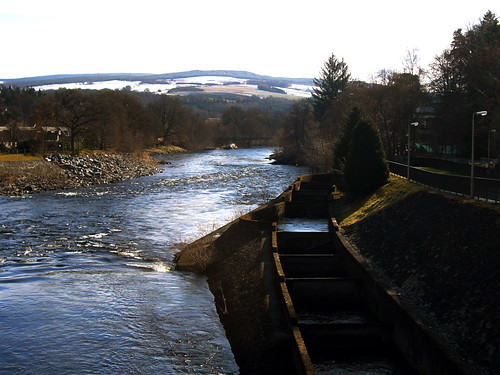
The Scottish government seems keen to hit its renewable energy targets, with the latest initiative being a new generation of hydropower facilities - Scotland hopes for big increase in hydro power.
A new generation of large hydroelectric dams and smaller plants across the Highlands could produce enough clean energy for more than half a million homes, a ministerial taskforce has estimated.
A report published today by Scottish ministers suggests that up to 128 new dams and scores of smaller schemes powered by the natural flow of a river could be built across the western and southern Highlands, generating enough electricity for a quarter of Scotland's homes. Scottish executive officials said this would be a "significant step forward" to meeting the Scottish National party's ambitions of generating half the country's electricity from renewable sources by 2020.
Yesterday, water began flooding into the reservoir for the largest new hydro scheme to be built in a generation after the first minister, Alex Salmond, ceremonially closed a sluice gate at Glendoe, a 200 megawatt scheme buried under a mountain near Loch Ness.
The report is due to be presented today by the Scottish energy minister, Jim Mather, who expects it will greatly boost the SNP's claims that Scotland can become the "Saudi Arabia of renewable energy" - a claim based on the country's significant natural wind, wave and tidal power resources.
The report estimates these new dams could increase Scotland's hydro-power output by 50%, taking it to more than two gigawatts and potentially meeting a quarter of the estimated 8GW of renewable energy needed to meet the 2020 target.
Posted
by Big Gav
in
canada,
hydro,
river
TreeHugger has a post on the quantity of "run of river" hydro power available in British Columbia. Like the Mississippi, its a significant amount - 1000 Megawatts of Run-of-River Hydro on Tap for British Columbia.
When most people think of hydro-electric power they probably think of large dam projects such as China’s Three Gorges Dam, India’s dams on the Narmada River , or closer to home (at least to my home) the Hoover Dam. Perhaps needless to say, big hydro-electric projects like this can generate a great deal of power, but there are significant environmental trade offs.
A less environmentally intrusive way to develop hydro power is known as run-of-river hydro—skip down if you’re unfamiliar with how this works—and more of this is just what’s being planned for British Columbia. Plutonic Power and GE Financial Services have signed a memorandum of understanding that will have the two developing 1000 MW of run-of-rive hydro-electric capacity.
At a total cost of approximately USD 4-billion, the Upper Toba Valley Project will consist of of three sites totaling 120 MW, while the Bute Inlet Project will consist of 18 sites for 900 MW of capacity.
GE will contribute $70 million for a 50% stake in the Upper Toba Valley Project; $650 million for a 60% interest in the Bute Inlet Project.
Both projects are being submitted for BC Hydro’s Clean Power Call, which is part of British Columbia’s greater goal of having at least 90% of the province’s electricity come from clean or renewable sources by 2016.

Posted
by Big Gav
in
amazon,
brazil,
dam,
hydro,
xingu
Plenty Magazine has a look at efforts to expand hydro-electric capacity in Brazil and the opposition this is meeting from the native inhabitants of the Amazon rainforest.
Tensions are so high over a proposed dam in the Brazilian Amazon that violence broke out at a May meeting in the city of Altamira to discuss the project. A thousand indigenous people from 26 ethnic tribes crowded into a high school gymnasium. Members of the the Kayapó, Juruna, Arara, Xipaia, Kuruaia, and other tribes that live along the mighty river’s second longest tributary, the Xingu, don’t get together in Altamira very often. But the $6.6 billion dam, called the Belo Monte, that Brazil’s electric utility, Electronorte, plans to build along the 1,200-mile Xingu River will affect them all. It would be the world’s third largest dam, with a potential installed capacity of 11,181 MW—and its reservoir would flood 100,000 acres, putting many tribal lands underwater.
Given this projection, what happened during the gathering may not have been all that surprising. Paulo Fernando Rezende, an Electronorte representative, gave a PowerPoint presentation touting the benefits of the dam, and telling the tribes that "the National Indian Foundation will fully participate in the studies affecting the indigenous lands,” according to a report by National Public Radio. But coming from a notoriously corrupt agency, the offer was interpreted as little more than a paper dove. A leader of the Movement of Dam Affected People of Brazil, Roquivan Alves Silva, took Rezende’s microphone, saying he would go to war if necessary. The tribes proceeded to rush the stage and physically attack Rezende.
“The indigenous people decided to send a clear message to the government. They were incensed, especially at Rezende´s smugness and arrogance in portraying the dams as not being a problem to the indigenous peoples,” says Glenn Switkes, of International Rivers Network, a California-based water policy nonprofit. “Brazilian tribes are guaranteed, under the Brazilian constitution, exclusive rights to the natural resources on their lands. When hydroelectric dams are proposed that affect indigenous lands, the constitution guarantees them the right ‘to be heard’ which courts have interpreted in many cases as ‘prior consent’.”
The Belo Monte Dam is just one of hundreds of dams planned on multiple tributaries of the Amazon like the Madeira, Tapajós, and the Tocantins. While building these structures will help Brazil meet its rapidly expanding energy needs, critics say the country should instead invest in alternative energy sources like biomass and wind that won’t endanger the riparian ecosystems and fisheries that native peoples rely on. ...
Brazil’s focus on developing new sources of power began with the Blackout Crisis, which stretched from June 2001 to February 2002, when Brazil experienced its worst drought in 70 years. Reservoir levels dropped so low electricity could not be consistently produced by hydropower, forcing the so-called “Blackout Ministry” to ration power use, slashing it to one-fifth. Politicians concluded they should increase the hydropower infrastructure, and by 2006 it was the source of more than 75 percent of the nation’s power.

Posted
by Big Gav
in
chile,
hydro
Forbes has a somewhat jaundiced look at the resurgence of big hydropower projects and looks at some better modern alternatives.
Chilean Patagonia is renowned for its rugged beauty: windswept Andean peaks, roaring rivers, pristine coastal rainforests. Years ago, those natural wonders inspired architect Peter Hartmann to abandon his native Santiago for Coyhaique, a small regional capital tucked away in a picturesque mountain valley.
"My family used to live near the biggest underground copper mine in the world, on the outskirts of Santiago, so I knew about environmental destruction firsthand," he says. "I came here for the forests, the lakes and the rivers--all untouched."
But the industrial world has caught up to Hartmann, and to Patagonia. To feed Santiago's growing demand for electricity, the Spanish-based energy giant Endesa (nyse: ELE - news - people ) wants to build a series of dams on two major Patagonian rivers. Endesa and the Chilean government say the $4 billion project will provide 2,430 megawatts of much-needed power to the nation's industrial north.
Hartmann and many of his neighbors are fighting the dams, claiming they would damage the southern region's ranching and tourism economies. For Hartmann, the irony is bitter: Endesa would send the power 1,500 miles north to the very mines that he came to Coyhaique to escape--and the whole thing's being done in the name of green power.
These are tough times for Hartmann and other opponents of big hydro. As the world scrambles to embrace green energy, the hydroelectric industry is enjoying a massive resurgence. American hydro is ramping up--projects totaling nearly 9,000 megawatts of capacity, much of it in next-generation wave- and tidal-power projects that convert ocean motion into electricity, are now in the permit pipeline at the Federal Energy Regulatory Commission.
The real action, though, is still in conventional dams, and it is happening abroad, mainly in Asia and Latin America. The high price of oil and surging demand for non-carbon fuels have energy executives dusting off old plans for major dams. "The last four years have been unprecedented in terms of orders for hydropower services and equipment," says Richard Taylor, executive director of the International Hydropower Association. "Our indicators are through the roof."
Here's the rub. As a green energy source, hydro is still far from perfect. In fact, it might not even be green. ...
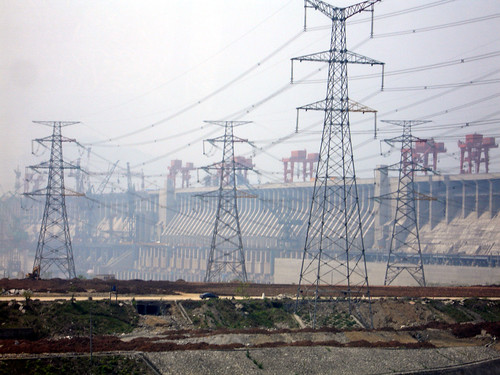
China's Three Gorges Dam project is probably a carbon-footprint winner, because it's in a temperate climate and displaces the power of 20 coal-fired plants. Brazil's Balbina dam, completed in the late 1980s, is more questionable: Fearnside calculated that in its first three years, it emitted 23 million tons of carbon dioxide and 140,000 tons of methane, four times the greenhouse gas output of a coal-fired plant producing the same amount of power. (The dam's CO2 and methane eventually dissipated, however, decreasing its relative footprint.)
Meanwhile, hydro comes with plenty of other problems. Because of their enormous construction costs, big dams tend to be magnets for corruption. With contracts worth billions of dollars, there's a tendency for money to leak into "well-connected" pockets--a million here, a million there. Argentina's Yacyreta Dam, budgeted in 1983 at $2.5 billion, bloated to $15 billion by the time it was done in 1994, which led then-president Carlos Menem (who knew a thing or two about graft) to declare it "a monument to corruption."
In fact, the Patagonia project exists only because Chile's notorious Gen. Augusto Pinochet, in one of the dictator's last acts of office, gave away Patagonia's water rights to a privatized energy company that was later bought by Endesa. Some anti-dam activists believe Endesa is pushing the project hard now partly out of fear that the Chilean government could wise up, and, like Bolivia, re-nationalize resources like water.
Environmental mitigation, one of the industry's proud new buzz words, is too often a Lothario promise. Companies gain approval and funding by pledging to carry out substantial eco-improvements and mitigation. But once the dam goes up--as is happening right now in Laos, Turkey and Belize--the costly eco-plans are conveniently forgotten.
While the science of methane release gets sorted out, environmental activists in places like Patagonia are left with this unambiguous conclusion: Their beloved landscapes are slated to be drowned and torn asunder in the name of saving spectacular landscapes like those which will be drowned and torn asunder. They want renewable energy, just not this kind.
"We've got incredible potential for clean green energy up and down Chile," says Juan Pablo Orrego, director of the Chilean environmental group Eco-Sistemas. "We could have solar thermal in the Atacama Desert, wind power in Patagonia and tidal energy all along the coast."
That's right: They're ready to embrace hydro in Patagonia--the next generation, that is.
Posted
by Big Gav
in
canada,
hydro,
tidal power,
verdant power
TreeHugger has an update on tidal/hydro power company Verdant Power's latest project - harnessing Canada's St Lawrence river.
The province of Ontario is investing C$2.2 million into a project to demonstrate the feasibility and commercial viability of using free flow turbines to harness some of the St. Lawrence River's kinetic energy and turn it into electricity.
This project is for 15 megawatts, enough to power 11,000 average-sized homes, but Verdant estimates that "there is enough potential power in the water currents of Canada’s tides, rivers and manmade channels to generate 15,000 MW of electricity using its technology". That would be about the equivalent of 15 big coal power plants.
But we have to wonder... Did they pick Cornwall just because they could make a really cool acronym? The Cornwall Ontario River Energy (CORE) Project.
Posted
by Big Gav
in
free flow power,
hydro,
mississippi,
river
Earth2Tech has an interesting post on a plan to put a lot of run-of-river micro-hydro devices into the Mississippi River, generating a fairly respectable gigawatt of power.
Waves, tides, rivers, canals…if it flows, chances are someone’s figuring out a way to harness it to produce clean energy. And a Massachusetts-based startup called Free Flow Power is even working on tapping the mighty Mississippi. The company has a $3 billion plan to place thousands of small electric turbines down the Mississippi river — from St. Louis to New Orleans — which could generate over a gigawatt of electricity, according to the St. Louis Post Dispatch.
The startup reportedly has preliminary three-year permits to study 59 sites in the Mississippi, granted by the marine power gatekeeper, the Federal Energy Regulatory Commission. Each turbine is about 2 feet in diameter, and harnesses the current to spin and generate electricity; each of the sites would require hundreds of thousands of turbines. So yeah, a massive project.
Posted
by Big Gav
in
energy,
hydro,
hydro-kinetic,
power,
river
Adam Siegel at Energy Smart has a post on hydro-kinetic power generation (putting turbines directly into a river, in similar fashion to tidal and ocean current generation) - "A quick fix to up hydro power globally?".
In the United States, traditional hydropower (dams) provides roughly 10% of the electricity. Traditional hydro plants, in many cases, are century+ old with embedded technology that is far from 21st century in terms of productivity for every gallon that passes by. Thus, opportunities exist for taking existing hydropower facilities and making them more productive with the existing water resources. And, there are literally 1000s of dams and spillways across the country that do not have existing electricity production. But, modernization operations can cost millions and take years to go through regulatory processes to seek to minimize environmental impacts (or, in the case of old facilities, perhaps to reduce environmental impact). The hydro industry often comments that the hydro regulatory process is more difficult than nuclear power’s.
Is there, however, an opportunity for getting a quick 3-7% increase at existing hydropower facilities and to put electricity production at some non-power producing dam sites with a far easier regulatory process, low per kilowatt installation costs (with, then, near free fuel), and do so quickly? Until yesterday, at WIREC, the options didn’t really seem apparent. Now, however, my head is whirling with the possibilities.
Hyrdo Green Energy has developed a hydro-kinetic power system that can be placed in-stream for generating power, for example, along rivers without the massive installation requirements of a dam and, thus, minimal implications on the river’s natural flow. Their approach got some attention a couple years ago and seemed quite Energy COOL at the time. They mount their system on a barge, lowering the turbine into the water, rather than building from the river bottom (or damning the river), and generate power from the river’s current. The barge enables moving the system (as it makes sense or is required) and also provides a platform for any required maintenance. Hmm. This looked of real interest as a way to quickly establish power generation on rivers around the world at relatively low cost and in a distributed fashion.
A specific application of their technology, one that they are actively pursuing for a test program in Minnesota, seems potentially quite valuable as some Silver Dust to help change the energy equation. Rather than putting the system somewhere on a river, for example, independent of existing infrastructure, Hydro Green will be putting one of their systems in the spillway of an existing dam. What are some of the benefits of this approach?
* It is reusing a resource, gaining more power from the water that has already generated power. This is a quick ‘boost’ to the plant’s energy efficiency.
* The dam has existing infrastructure (such as transformers, power lines) that can be used to move the power ‘to market’.
* Permitting processes are, as mentioned above, a real nightmare for hydro projects. As this is within a spillway, the licensing process is different, within the existing plant’s “capacity”, and thus lowering the cost/time for getting permitted. [Note: fast permitting isn’t necessarily “good”, but work through the negatives here. The only serious one (and it does matter) seems likely to be the potential impact on fish survivability for fish that have gone through the dam and are disoriented coming through the turbine. Thus, this merits better understanding and evaluation before this technology is deployed on a massive scale.]
* If it works (as promised), this is a quite fast way to increase clean power production from existing facilities with (it seems on the first blush) minimal (if any) environmental impact.
They will be testing the system at an existing 4.4 mw plant and expect to see about 200 kilowatts of addition production. This is a 5.7% increase in the dam’s productivity.
Hmmm …. Multiple 5.7% by 95,000 megawatts and we’re talking some real power generation. Could Hydro Green (or similar) technology provide a path for 5+ gigawatts of additional green power over, let’s say, the next decade. (And, by the way, in a ‘mind spinning’ fasion, there is the consideration of what the implications for this technology would be for pumped hydro storage, which is generally discussed at 80-90% efficiency. Adding 5.7% more to that efficiency potentially helps make the wind/pumped hydro storage combination even more effective for displacing coal-fired electricity.) This isn’t a Silver Bullet to solve Global Warming and keep coal in the ground, but it is some nice Silver Dust to add to the pile for holistic solutions.
Posted
by Big Gav
in
aluminium,
congo,
electricity,
hydro,
power
The Australian has an article on BHP considering a $3.4bn Congo aluminium smelter. It is interesting to see companies that depend heavily on cheap energy starting to move towards large renewable power sources (similar to the move of petrochemical companies to the middle east).
MINING giant BHP Billiton is considering spending $US3 billion ($3.365 billion) on building an aluminium smelter in the once war-torn Democratic Republic of Congo to take advantage of cheap and green hydro-electric power in the country. Under a memorandum of understanding with the DRC Government, BHP will spend $US20 million on a feasibility study for the smelter and an associated expansion of the Inga hydro power station on the Congo River.
BHP could source alumina for the refinery from its $3 billion alumina and bauxite project in Guinea, and the move will stoke speculation that BHP is stalking its Canadian-based partner in the Guinea project, Global Alumina, which is valued at more than $US500 million.
The Congo project is the latest sign that miners are having to go into riskier geographies to find key assets - the key asset in this case being hydro power.
Aluminium is often referred to as "congealed electricity" because of the large amount of power needed to smelt alumina. Aluminium producers are scouring the world for sources of so-called stranded power that can guarantee low costs, and the inevitability of a price on carbon means green power is high on the list. Rio Tinto's $43 billion takeover of Canadian aluminium giant Alcan is largely driven by Alcan's large sources of hydro-electric power in Canada.
While aluminium producers including Rio increasingly see the Middle East as an attractive site for smelters, given the region's surplus natural gas reserves, BHP is believed to be wary of the area, given the potential for the gas to be exported as liquefied natural gas.
WorldChanging notes that
New Zealand Aims to be World’s First Carbon Neutral NationNew Zealand has declared its aim to be carbon neutral in electrical energy by 2025, in stationary manufacturing energy in 2030 and in transport energy by 2040.
The New Zealand government has a history of leadership in sustainable energy planning already signaled its intention to be a leader in carbon neutrality when it announced its Emissions Trading Scheme in September. The October launch of the New Zealand Energy Strategy to 2050, titled Powering our Future: Towards a sustainable low emissions energy system, has provided further detail of the steps.
The strategy includes plans for substantial reductions in emissions, along with carbon offsetting projects such as increasing national forest area by 250,000 hectares by 2020. By 2025, the goal is to obtain 90 percent of all electricity from renewable sources. Is this achievable? We think so: Provision of renewable electricity is cheaper in New Zealand compared to other countries due to abundant renewable energy resources. Around 70 percent of New Zealand energy production is already from renewable sources, and a number of large scale wind farm proposals have recently been approved.
Crikey notes that the Greens are actually economic rationalists compared to the pork-barrelling Rodent -
Greens show up Howard on energy subsidiesIt's a bizarre election campaign when the economic flat-earthers in the Greens make more sense than the Government. But their attack on the Liberals' proposal to subsidise low income earners for higher energy bills as a consequence of emissions trading is exactly right.
As the Prime Minister noted on Sunday night, addressing climate change will actually entail costs for consumers. That's exactly the point, really, because only costs, not good intentions, will cause consumers to make decisions with lower carbon impacts. You can't stop a runaway greenhouse effect with a few fluoro light bulbs and the occasional bike ride to work.
But Howard promptly undermined this by announcing a climate change fund, sourced from proceeds from emissions trading, to subsidise low income earners' power bills, which an emissions trading scheme will – or should, if it actually works - increase. Of course, we are talking here about a proper emissions trading scheme, not Morris Iemma's version that exempts the biggest carbon producers because they're mates of the government.
Quite how you encourage people to reduce their carbon emissions when you're subsidising their power usage isn't clear. It's like subsidising a smoker's cigarette costs because of all the taxes you've imposed on tobacco.
Greens senator Christine Milne has pointed this out, arguing that funding energy efficiency measures in low income households will provide a more permanent and effective guarantee against higher power bills. Even better, she calls the Liberals' proposal "a bandaid cheque", which is the best entry so far in the "Mixed Metaphor of the Campaign" competition.
Perhaps the Government has had its preferred inventor of greenhouse fictions, ABARE, produce some evidence that carbon emissions from low income earners have less of a greenhouse impact than those from everyone else. But on that basis, the Government wouldn't justify its refusal to sign on to the Kyoto Protocol because it leaves out China and India. Clearly carbon emissions from foreign low income earners have to be addressed, even if ours don't.
Public Opinion has a post on
Climate change: rhetoric+realityJim Douglas, writing in the Canberra Times on climate change, says that:
You get the feeling, under these circumstances, of being in a luxury car accelerating towards a sheer drop, as its demented driver ignores your shouts of alarm and regales you with enthusiastic details of what a wonderful vehicle it is, and how well he has maintained it.
That's what the Liberal's "Go for Growth "campaign slogan signifies. It means more of the same kind of growth with the economy machine being run with energy produced by dirty coal power.
Some reality is dawning. The Liberals are backtracking on nuclear power as the key solution, due to the unpopularity of nuclear power plants in the electorate. Clean coal is the key. But that's ten years down the track, if not more. In the meantime?
What is lacking is an acknowledgment that any plan for deep cuts in greenhouse emissions entails a major roll-out of renewable energy technologies and the introduction of ambitious renewable energy targets to reduce emissions and to secure Australia’s share in the boom in renewable energy occurring globally. The danger is that Australia is becoming a renewable technology importer and it's losing the chance to move to a clean energy economy.

Links:
* Pop!Tech -
The Pop!Tech Blog* The Economist -
Roll out the $100 barrel?* AP -
US Electricity prices see biggest jump in 25 years* Jerome a Paris -
Energy: the fundamental unseriousness of Gordon Brown* The Oil Drum -
The Bullroarer - Wednesday 24 October 2007. Lots of links.
* BBC -
Oceans are 'soaking up less CO2'* The Energy Blog -
Unexpected Growth in Atmospheric CO2* Wired -
Carbon Dioxide in Atmosphere Increasing* Climate Savers -
Climate Savers Computing initiative* SMH -
Yahoo aims to be carbon neutral. Through offsets, not their own generation capability.
* Thomas Friedman -
Save the Planet: Vote Smart* Joshua Holland -
Ron Paul Schools Democrats; Stands Up Against Terror Hysteria* Chicago Tribune -
Blackwater and me: A love story it ain't. US troops seem to think Blackwater is a lot more dangerous than Al Qaida. To them.
* Crikey -
Howard and Cheney in 'iron curtain' Hicks deal?* Past Peak -
Fair's Fair. Miami residents will soon welcome their new Ecuadorian overlords.
* Past Peak -
Today's Bush Joke* Cryptogon -
Scientists Want to Steer Hurricanes with Industrial Slag and Directed Energy Systems* Boing Boing -
Tale of the tree that ate cows. Feed me Seymour !


 Posts
Posts