Showing posts with label rejection. Show all posts

Sunday, February 17, 2019

5 Ways Online Magazines Can Energize Your Writing Mojo

It's no secret that the Writing Life can contain a few pitfalls. Slogging through the query trenches is a lonely, soul-crushing experience, often flavored with loneliness, angst, and self-doubt.

One antidote to such misery -- far better than spiraling into either a Fitzgerald or a Hemingway of despair -- might be online magazines. Literary ones, genre ones, big ones, startups: each has a special place in the heart of my career. The top 5 reasons for my love affair:

This is no time for a trail ride...
1. I Feel the Need; The Need For Speed
Every writer knows this business of ours moves at a g-l-a-c-i-a-l pace.

Glacial.

Writing a good book takes months, at least. Often, it takes years. Finding representation can take longer than your child lasts in elementary school. Getting a publisher to take a chance on you is an exercise in not eating one's own liver.

But magazines, especially digital ones, have a much shorter publication schedule. The submission-to-publication time frame is measured in mere weeks or months, instead of geologic eras. While I'm waiting for a book editor who has had a manuscript since May to make a decision, a short work sent out this month can be published before the snow melts. That's about as close to instant gratification as the writing world gets.

2. Exciting Editorial Interaction
Every publisher, every publication, has a particular vision, tone, or style that sets it apart from the rest. This includes e-zines, from the bigwigs to the tiniest literary startup. Working with editors to polish shorter pieces for their publications builds critical skills and awareness that will be invaluable when working with an editor on longer projects.

There is no such thing as "too many bylines."
3. Bylines, Beautiful Bylines
Call me shallow, but I like seeing my name in print. "By Ami Hendrickson" never ceases to fill me with an Enterprise-sized payload of warm fuzzies.

Fun fact: people who are not in the publishing biz (your mom, your kids, your dentist) often do not make a distinction between having a book published and having a thing published. They do, however, understand being unpublished.

While waiting for the book deal, the script option, or the staging of your play, placing a few poems, or articles, or short stories with e-zines can not only help mitigate Byline Fever, but it can also help shut up those people who wonder aloud, within earshot, when you're going to be a "real writer."

4. Reckoning with Rejection
We fall down. We get up again...
I know some writers who are paralyzed with fear at the thought of rejection. Somehow, they have equated rejection with failure. (This, of course, is ridiculous. Even Lin-Manuel Effing Miranda got rejected when he applied for the Jonathan Larson grant in 2004.)

Getting published is like playing a massive game of Concentration. (Remember, from when you were a kid? There's a deck of a jillion picture cards. Each card has a match. You lay all the cards face down and then turn two over, hoping for a match. You get a match, you keep the cards and go again. No match, your turn is over.) You send out a piece hoping it finds an editorial match. If it does, it gets published. Yay! Confetti-flinging ensues. If it doesn't, you send it somewhere else. Lather, rinse, repeat.

I used to worry about rejection. Now, I realize it's just part of the game. FWIW, I even sent queries out when my husband was dying. I figured no rejection could possibly compare with losing my WunderGuy. You can't win if you don't play. You can't get published if you don't go out on sub. If rejection worries you, let the quick turnaround of e-zines help you get used to it. The sooner, the better.

5. Bend! And Stretch! And Reach for the Stars!
The shorter length of pieces for online magazines allows me to stretch myself, trying something new with presentation, or with language, or with ideas, without committing months of my life to it.

If I run across an interesting tangent in my research (helloooooo, YouTube rabbit hole about Æthelflæd, Lady of the Mercians...), exploring it in poetry, or flash fiction, or flash non-fiction allows me to sink my teeth into it far enough to know if I need to devote a larger chunk of my writing time to it -- or if I can let this Bright, Shiny Object lie and return to my work-in-progress.

You never know what new interests you might discover if you give yourself permission to try them. I once wrote a contest winning six-word short story ("No taxidermist loved his daughter more.") that not only brought with it a lovely, unexpected winner's check, but it also permanently kick-started a love of micro-fiction.

Added bonuses:
As I review an e-zine to see if what I've written might be a good fit, I invariably find new writers that I like, wrestle with new ways to look at the world, and discover some new technique to put into play. My research almost always results in immediately improving my writing -- whether I submit something to them and get it published or not.

Bragging Rights:
If you've had something published online recently that you're proud of, tell me about it. It's ok to brag. Let the world know what you did this nifty thing.

I'll go first: I'm thrilled that my poem "Drive By 'I Love You'" was published this past weekend in The Cabinet of Heed.

Ok... Your turn!


Friday, September 14, 2012

Getting Past "I Just Didn't Love It"

Rejection in the Wonderful World of Writing comes in many sizes, styles, and colors.

Some are the one-size-fits-all form letter rejections that tell the writer nothing about the publishing industry pro's true thoughts on the work in question. "Thank you for the opportunity to review your work. Unfortunately, at this time, we do not feel it is a good fit for us. Best of luck in placing it elsewhere."

Some rejections are more personal, offering insights on both the perceived strengths and weaknesses of the piece, as seen through the eyes of the rejector.

Fu Fu - lolcats.comAnd then there are the killers. The ones that say things like: "While elements of the story were certainly interesting, and the general premise was OK, unfortunately, I just didn't love it as much as I had hoped."

I can't speak for other writers, but those blasted "I Just Didn't Love It" missives used to sucker punch me. I'd open the email with pathetic hopefulness, then suddenly find myself transported back to high school -- making me all "aww, geez, I didn't get accepted into the popular kids' clique. Waaahhhh!"

For a long time, I thought the IJDLI rejections were the WORST.

Well, no more.

You see, I made the colossal mistake of equating "I just don't love it" with "I just don't love you." Which, of course, is ridiculous. I am not my book. My book is not me. ::Yeesh:: As if.

Strangely enough, it was a reading experience that gave me my writing epiphany.

Lately, I had the opportunity to experience IJDLI from the other side of the Great Writing Divide. A friend recently recommended a novelist -- a terribly accomplished, internationally bestselling writer -- whose tone and sense of humor is a very close match to my own. Though said novelist writes a genre I generally don't read, because of the similarities in our styles, I wanted to acquaint myself further with her works. So I checked out six titles from the library and started to read.

Same twisted sense of comedy: check. Same penchant for writing strong female characters: check. Same loopy approach to plot: yeah, Baby! Check!

But something was... missing.

Maybe it was the genre. Even in the hands of someone so talented, it's Just. Not. My. Thing.

Maybe it was the fact that every time the plot line skewed north, I was more interested in what would have happened if it had gone south. Or east. Or north by northwest.

I finished two of the six books, and got over halfway through three others. And I had to admit that though there was nothing wrong with the writing, the plots, or the execution of ideas, I just didn't love them.
Photo by wintersixfour via MorgueFile.com

This clicked on the Lightbulb of Revelation in my dim little brain. Suddenly, I understood exactly what IJDLI means. It means exactly what it says:

"I didn't hate it. I may have liked it. I may, in fact, have really liked it. But it's not something I want to read again. It's not you; it's me. Others may (and probably will) disagree with me on this. But since this isn't a book I can't stop thinking about, I'm going to cut you loose to find someone more passionate about this project."

In other words, it's the literary equivalent of "let's not get into a marriage of convenience. Better far to wait for someone who loves you truly, madly, deeply."

Who, I ask, can quibble with that kind of logic?

I know what it's like to have a long-term relationship a spouse who is one hundred percent crazy about me. It's awesome. It was so worth waiting for. I'm thinking if I receive any more IJDLI rejections, I'll not allow them to kill my optimism or enthusiasm. I'll just keep on keeping on till I find true love. It's out there. Don't give up till you find it!

Tuesday, April 17, 2012

For the Sake of Argument

I remember very little of my actual university course work, but I remember most of my "American Literature" class. Not because the professor was interesting, erudite, or inspired in any way. Far from it. The best that could be said for him was that if recorded speaking, he could singlehandedly wipe out insomnia. Ah, but in that class we read books. Good books. Great books! After reading them we not only got to discuss them -- but we were actually encouraged to do so!

I was 19, so I, of course, knew everything. I had read most of the titles required for the class before graduating high school and considered Twain, Hawthorne, Poe, and Salinger old friends. I'd read enough Hemingway, Steinbeck, and Crane to know that their work didn't speak to me in the same way my "friends" did. I had definite opinions and was thrilled to discover a kindred spirit in the class.

T. was 10 years older than I. Not only did she have opinions, but -- praises be! -- her views on literature differed significantly from mine. On many occasions, the two of us would take over the class with our discussion of the work at hand. The professor never stopped us. I'm not sure he could have. And the other students would privately thank us for Siskel-and-Eberting because they learned more and found the class more interesting than when the professor droned on unchallenged.

That class introduced me to F. Scott Fitzgerald. How I'd managed to miss out on reading him before then, I'll never know, but I became an instant fan. We read "The Great Gatsby," and it was like finding a book that someone had written just for me. Oh. My. God, how I loved all of its glorious, golden tragic excess.

Product DetailsUntil I got to the end.
"So we beat on, boats against the current, borne back ceaselessly into the past."
WTF?

To young, know-it-all me, that was the DUMBEST ENDING EVER. I thought just about any ending would have been better than that. If the book had ended one paragraph sooner ("And one fine morning..."), I argued, it would have been perfect.

T. disagreed with me on just about everything with "Gatsby."

While I loved the metaphor of the eyes of Dr. T.J. Eckleburg, T. found the imagery tiresome.

I hated Daisy with a purple passion. I thought she was a conniving, simple-minded bitch. T. took into consideration where Daisy came from and sympathized with the choices she made.

I thought Gatsby's "you loved me too?" is one of the saddest lines of dialogue I've ever read. I still do. I don't remember whether T. agreed with me or not on that. What she thought didn't affect my supreme enjoyment of that line in the slightest.

In fact, one of the few things T. & I agreed upon with regards to Gatsby was that we both loved the book and hated the Robert Redford / Mia Farrow-ization of the movie.

Today, years later, "Gatsby" remains one of my all-time favorite books. And here's the thing: I no longer hate the ending. With age comes wisdom, perhaps. Maybe there's just something to be said for accepting another's creative vision, even when it differs from your own.

For the sake of argument, imagine if Fitzgerald was an unpublished writer tackling today's publishing system with his manuscript for "The Great Gatsby." (Yes, yes, I know Gatsby was his 3rd published book. But honestly, do you think "This Side of Paradise" would ever make it past the intern in charge of the slush pile?)

Gatsby falls just shy of 50,000 words: too short for a novel / too long for a novella. It includes flashbacks, inventive punctuation, and has no clear antagonist. We don't even get to meet the book's protagonist, its namesake, until Chapter 3.

For the sake of argument, imagine if Scott, fresh from finishing his manuscript with a metaphor that (ahem) some 19-year olds might hate, attended a writer's conference where he got to spend a glorious, hope-infused 3 WHOLE MINUTES with a harried editor or agent, pitching his story about the doomed relationship between a poor little rich girl and a hopeless romantic. Show of hands: how many times would he hear "I just don't love it" before he got a green light to submit a synopsis and a partial?

Do we live in a world where agency interns would recognize Scott's brilliance if it shone at them from their email inbox? Would Scott himself have been able to craft a query letter that would "hook" the reader into requesting a partial -- or would his query render him Query Shark bait?

If he did get a partial, either from a conference connection or from shining through slush, would the fact that his protagonist doesn't appear in the first 50 pages of the manuscript nix a request for a full?

In order to get Gatsby published, he would have to find an agent who wasn't trolling for Amish romances, paranormal, YA, steampunk, urban fantasy, horror, mystery, or freaky zombie / vampire / werewolf mashups involving literary or historical characters.

Once such an agent was found, Scott would have to write a hell of a query letter that piqued the interest of the agent's unpaid intern enough to get the intern to request a partial. Then he'd have to rely on the intern liking the story enough to request a full, read the whole thing, recognize its merit, and pass it to the agent with a recommendation. The agent would then have to sell a publisher on the project -- a process as fraught with potential pitfalls as finding an agent.

Could such a thing really happen without Scott receiving notes like:
  • Need at least another 20,000 words. Perhaps add a paranormal element? Better market share.
  • Consider bumping up erotic tension between Nick and Daisy.
  • Does Myrtle have to die? If so, show in more detail. Make me feel her evisceration.
  • We need to see at least one sex scene between Daisy & Gatsby. Ramp up the heat.
  • The final paragraph doesn't work. Suggest rewriting and / or eliminating completely.
For the sake of argument, I sincerely hope so, though privately, I wonder. Because if F. Scott couldn't get Gatsby published in today's world, then what hope do I have of succeeding where he would fail?

Thursday, October 06, 2011

Mystery Guest Blogger: Q & A with An Agent's Slush-Pile Reader

Regular readers know that I facilitate a weekly Writing Practicum whose members are working toward publication. Most have no real publishing credits yet. Quite a few are great at doing their homework, reading online, studying up on the industry & honing their craft, but the aspect of querying (and the dismal acceptance rates from slush pile submissions) stymies them.

I have a friend who worked as an agent's slush reader. She was gracious enough to answer my Writing Practicum members' questions.

I thought her responses were great and asked her permission to share them with my blog readers. She agreed, as long as she retained her anonymity. (She's female. That narrows it down from 8 billion possibilities to just over 4 billion. Anonymous enough...) "I was waxing snarky and I shouldn't," she explained. I honestly thought she was quite kind, but will honor her request and keep her identity a secret.

And now, without further ado... A straight-shooting Q & A with an agent's slush-pile reader!

~Cue theme song & dancing girls~

The questions, in no particular order, follow:

Q:  I've studied websites like Query Shark & AgentQuery. I think I understand how to avoid making the major "newbie" mistakes, but what are some "red flags" that turn you off from an otherwise well-written query letter?

A:
  • Starting out with high word count or very low word count as well and slamming me with adverbs and adjectives.  
  • If you don't do your homework and begin the letter with "Dear Sir/Madam." 
  • Spelling the agent's name wrong is a big no-no as well as mentioning books/authors that have unrelated genres or having nothing to do with your genre.  
  • I try not to be skeptical when the bio reads "first time author" but I've read enough really bad stuff from first timers that turn me off.  
  • Also, be nice.  We are people too.  If you come off as needy or a jerk we will probably be turned off to working with you.  
Honestly, I let a lot of things slide in queries because nobody is perfect.  BUT, if I am in the middle of a query reading day and the query starts out with "XXXX novel is a heart rending tale of redemption...(insert ANY descriptive word of what you think your novel is)" you just awarded yourself a rejection.  Those kinds of queries are a dime a dozen and are usually not written well at all.


Q:  When you've read through a pile of queries at a sitting, what specific aspects pique your interest and make one particular query stand out from the crowd?

A:  Oh geez, this is a toughy.  It's hard to tell.  Sometimes it is the writer's credentials, or if a writer can say they met me someplace, or tweeted me on Twitter (or are a fan of my blog is always nice).  The queries that wake me up out of a glassy-eyed stupor are the unusually creative novels that have amazing main character names, to die for plots, and a great voice.

The camel whispers in my ear what I must write.
Betcha never heard a camel's voice before!

Q: I keep hearing that agents and publishers want to find a writer with "a great voice." What constitutes a great voice? What qualities does a great voice have that makes that writing "work?"

A:  Ah, the elusive voice!  Anyone who knows me, or listens to me talk for that matter, knows that I am a speed chatter with loads of snark and humor.  When I write, my brain goes into hyperdrive and all my inner thoughts spill out on the page.  Some things are better left in my brain. However, THAT is the voice we agents / interns are looking for.  The voice can be sweet, unassuming, bold, masculine, crass, sarcastic, abrasive, brutal -- you name it, it's been written.  Mainly, we want to read a character whose voice matches the writing.  It is a difficult thing to pull off, but not impossible.  It just takes practice.


Q:  I want my query to be memorable, but I'm terrified of inadvertently doing something stupid in my letter that turns an agent off. Any advice?

A:  Short really is sweeter.  If you can't hook me onto your plot in the first paragraph, my eyes glass over.  It is my MAJOR pet peeve to read three paragraphs of why the author chose to write and why their book is going to blow my socks off.  Just tell me the damn plot already!  Get down to business, make it snappy, make me drool and then end it.


Q:  On average, how many manuscripts (or partials) do you request for every 100 query letters you read?

A:  Depends.  When I first started I requested about 6 partials and one full.  I do a little more now mainly because the quality of queries have increased and we are caught up in reading submissions.  My last batch of queries was 78 queries, 5 fulls, 2 partials and that didn't include what my boss requested.


Q: Are you ever "on the fence" about a project pitched in a query letter, or are queries generally easily separated into Requests and Rejections? If you are on the fence, what aspects can affect your decision?

A:  I sit on the fence all the time.  It is easy to dole out rejections when the writing is clearly awful and the query is a muddy mess.

However, there is an increase of decent queries that I am not sure if I love or not.  Usually, I star it and let it sit in my inbox for a few days.  If the plot sticks with me, I request it.  If I forget all about it and I reread it without interest, it gets a rejection.  A lot of the time coming back to it with a clear head on a different day makes me realize that I had been silly for not rejecting it, or glad that it is still around to request.


Q:  When you've requested a manuscript, how do you decide whether it's worth bringing to the agent's attention?

A:  This is going to be a novel length answer.  Many factors go into me pitching a book to the agent.  Just so you know, I pitch everything I've requested to my boss even if I am firm on rejecting it.  I am not an agent, so I am not allowed to reject a book without gaining her approval first.  As the intern I act like a gate keeper who gives the gate owner (agent) a whittled down version of the submission process.

Here are some tips that get you read:
  • Your first five pages need to be awesome.  They need to hook me and keep me reading.  
  • After I have requested a 50 page partial, I want to see a story that moves quickly with all the elements aligned.  The dialogue needs to be engaging, the characters need to be developed and the plot needs to be steadily increasing to a climax. If, after fifty pages, I am drooling for more I'll ask for a full (or keep reading as I give all manuscripts up to 50 pages to impress me). 
  • The full needs to deliver the goods.  There needs to be tension, deep character development, a story arc that has me glued to it, and a chain of events I can follow.  
  • I am not a fan of books that skips around a lot between the past and the present.  
  • When you get to a climax, I want to be plastered to the story and gasping (whether that means happy or sad is up to you) and the ending is crucial.  There is nothing more heartbreaking than an ending that drops me off a cliff abruptly. Very unfair.  
  • In a nutshell, 99% of writers query me with novels that are not ready to be queried.  Either the writing is not polished or the story is flawed, or any number of things can go wrong, like me not connecting with a main character to hating where you took the story (or taking your character through improbable scenarios).  
Not to break your hearts, but I have read three submissions I thought were wonderful.  One, my boss agreed was good, but with the other two she was not nearly as impressed as I was.  It is a matter of subjectivity, especially since a novel I hated and highly recommended she pass on, she loved!  Is it frustrating?  Yes it is, but to ease the irritation, it is just as insanely frustrating for us to root out a story we love as much as it is frustrating for you to get rejected.

Finally: Good luck to all of you!

******

I want to publicly thank my friend for agreeing to share her insider's wisdom with my readers. I hope you found her insights into the querying process useful.

Keep on keeping on!

Friday, August 26, 2011

Why We Think "I Want To Quit Writing!" And Why We Can't

A writer friend sent me a copy of her most recent communique with a Fabulous Agent she'd met at a writer's conference. Here's what it said:

Subject: Your YA Manuscript Request

Dear Writer,

Thank you for sharing your work with me. First of all, I should note that you have the teen voice down -- this is incredibly important; I often meet editors who, when I ask them what they're looking for, say "Excellent voice." Well, you have it.

"I am not in love." The phrase fries my brain.
I enjoyed reading this—but, I'm afraid, I'm just not in love -- so I'm going to pass, with regrets.

Still, I do hope you will continue writing and sending out your work. If you haven't done so already, you may wish to look at The Jeff Herman Guide to Editors, Publishers, and Literary Agents - there, you should be able to find someone who's a better fit for your work.

Best of luck with this and future projects.

All best wishes,
Fabulous Agent

When forwarding the email to me, the writer in question included a frowning emoticon and the comment: I want to quit writing!

I know just how she feels. Which is why she can't. And, fortunately, she won't.

~I slump under the weight of failure and abject depression.~
If you've ever received a rejection (And if you're a real writer, you have. Just sayin'...), you probably know the feeling. Another "No." Another "We don't love you enough to take a chance on you." Another "I wanted it to knock my socks off, but my shoes are still on."

But that isn't what the agent is saying at all. Real writers take their agents' advice, right? Well, then, every writer should take this agent's advice.

I mean really: this is a LOVELY rejection letter. It should be lovingly framed and admired. It's personal, positive, and encouraging.

Remember: you don't like every book published. That doesn't mean that if you don't like a book, the writer should hang it all up.

I don't care for Stephen King's stuff, myself. (Please, King fans, don't try to convert me. Or point out where I've gone horribly astray. I didn't say he can't write. He can. He's excellent. Doesn't mean I like reading it.) I don't read his books unless they are assigned reading. I can admire his writing prowess, but his stuff is just not for me. If I were an agent, I could never dredge up enough enthusiasm for his work to sell it.

Of course, that doesn't mean he should quit.

Push on. For every rejection you get, sent out 3 more queries to well researched agents who handle the kind of stuff you write.
You may imagine placing the agent's head in your mouth
and squashing it like a grape.

When you get a rejection, you may do several things:
  • You may cry. 
  • You may briefly overindulge on chocolate or gin or 80's ballads -- whatever's your drug of choice. 
  • You may back awa-a-a-ay from your current Work In Progress for a day or two so as not to taint it with any self-defeating "I suck as a writer" content. 
  • You may tell yourself that there is (unfortunately) one more person in the world whom you will not be adding to your Christmas card list.
However, you MAY NOT:
FYI: Destroying the innocent computer
is frowned upon.

  • Kick the cat / your kids / your spouse / a moving train / the bucket.
  • Write a nasty letter to the Fabulous Agent outlining where she went wrong and making dire threats against herself, her pets, or her family.
  • Allow your overindulgence of your drug of choice to render you incoherent for longer than 24 hours. Really: self-pity ain't attractive. It's also counterproductive to querying.
  • Quit.
Repeat: DO NOT QUIT!

You'll make it. But only if you hang in there.

Earlier this week, literary agent Rachelle Gardner posted this list of real rejection letters from publishers to agents. Some of those are brutal -- and every book mentioned eventually sold and did well. Imagine what would have happened if those writers gave up. All those success stories would have died a premature death.

Which would be tragic. Don't let that happen to you.

In short, I'll tell you what I told my writer friend: keep polishing what you've got. And keep on keeping on.

Tuesday, May 17, 2011

Rejection Letter Mad Libs

(Note: This is a re-worked, re-written, re-posting of the original "Rejection Letter Mad Libs" post of May 11 that was lost during Blogger's snafu-ridden outage. Blast it all. Humble apologies to those who commented on the first post. I am sorry your words were also lost. >:@ )

********
"We have received and reviewed your recent submission. Unfortunately, it is not what we are looking for at this time."  
For the same reason that not every first date ends in matrimony, not every query letter ends in a sale. No writer, regardless of talent or work ethic, escapes rejection. It's one of the many sad truths of working in the publishing industry.

(Another truth is that once you do get published, your workload increases. No laurel sitting for any writer who wishes to remain in print. But that's the topic for another post on another day...)

Photo by Rachel Montiel, from www.morguefile.com

Sometimes, an industry pro takes the time to pen a personal rejection. I am always grateful when that happens, for it can offer insight into why a particular work didn't connect with a reader.

Several months ago, before my novella had convinced me that it merited becoming a Real Novel, I submitted it to one of the few novella publishers. It's a quirky, darkly comic noir that I find hilarious. Several of my beta readers do too. I received a rejection letter that said good things about my writing in general, but that had nothing good to say about what I wrote. (I got the distinct impression that it genuinely disturbed the publishing pro.)

Now, if I had been going for "profoundly perverse," I'd have been thrilled. But I wasn't. So, as I fleshed the story out, I paid particular attention to the pro's concerns and addressed them in case others might share his sensibilities.

I doubt that my project will ever fit within the publisher's comfort zone and won't inflict the manuscript upon him when the novel is finished. I am grateful to him, however, for voicing his issues in the rejection letter.

Though reading rejection letters to famous authors can be cathartic, hearing "No" with regards to your work still stings.

Sadly, most rejections these days show about as much creativity and passion as a phone book. They tend to be tepid and generic -- with an unstated underlying fear of having harsh words thrown back in the industry pro's face when the genius manuscript they rejected finds a publisher and goes supernova.

 I haz solushun.

 As promised in my last post, offering a Mad Libs solution to query letters, I hereby humbly suggest the Mad Lib Rejection Letter. And why not? After all: what's good for the muse is good for the gatekeeper.

****** REJECTION LETTER MAD LIBS *******

STEP 1: Fill in the blank with the indicated words:

*  Author Name: ____________________

*  Noun: ____________________

*  Title of Manuscript: ____________________

*  Infinitive Verb: ____________________

*  Infinitive Verb: ____________________

*  Adverb: ____________________

*  Exclamation: ____________________

*  Adverb:  ____________________

*  Noun: ____________________

*  Adverb:  ____________________

*  Name of Publishing Professional: ____________________


STEP 2:  Insert your answers in order into the following rejection letter where indicated:

Dear (Author Name):

Thank you, from the bottom of my (noun) for submitting (Title of Manuscript) for my consideration. Reading it caused me (infinitive verb) and (infinitive verb). Upon finishing it, I (adverb) shouted (exclamation)!

(Adverb), I must pass on this project. It would be too hard on my (noun).

(Adverb),

(Name of Publishing Professional)

***********

What's your opinion: would you prefer personal (and potentially scathing) rejections? Or would you rather have the benign "thanks, but no thanks" form letter? Also, if you have a favorite rejection letter story, I'd love it if you shared it below.

Thursday, December 16, 2010

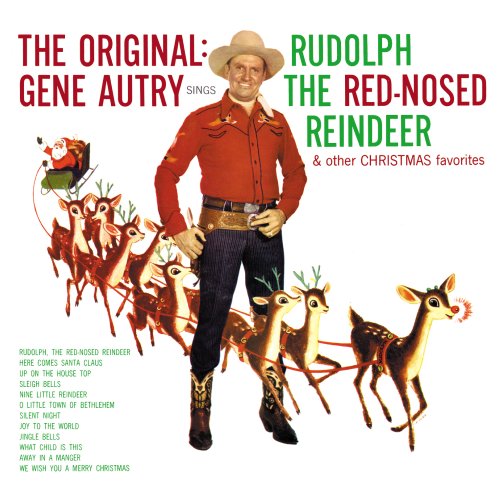
Rudolph's Rejection

(Humble apologies to Robert L. May and Johnny Marks.)

Dear Writer,

-- We have read and evaluated your work. Unfortunately, at this time, it does not fit our publishing needs. More detailed comments are annotated below:

Rudolph the Red-Nosed Reindeer


You know Dasher and Dancer,
And Prancer and Vixen,  
Comet and Cupid,
And Donner and Blitzen.
But do you recall
The most famous reindeer of all?


 -- "Prancer" is obviously a reference to a reindeer with homosexual tendencies, whereas "Vixen"is an overly suggestive name. I question whether either are appropriate in a story for small children.

-- You begin with a list of eight characters, all of which sound enough alike to be easily confused.  Furthermore, none of the characters are ever mentioned by name again.  If you must throw all of these names at the reader, do so in a way that piques the reader's interest instead of wasting the reader's time.


-- Do NOT begin your work with a rhetorical question. Few things scream "weak writing" more loudly.


-- In any case, the rhetorical question is patently ludicrous. If he's "the most famous reindeer of all" (line 6), why would you have to ask whether or not someone recalled him?

-- Eliminate the backstory and get to the point. I'm not hooked.  Furthermore, why begin with something the reader knows? Tell me something I don't know.

Rudolph the Red-Nosed Reindeer
Had a very shiny nose
And if you ever saw it
You would even say it glows.

-- Both "shiny nose" (line 2), and "it glows" (line 4) are redundant repetitions of the "red nose" introduced in line 1. Don't waste the reader's good will rehashing a simple fact that has already been established. Move the story along.


-- What drives the protagonist?  What does he want?  Acceptance?  A normal nose? A good night's sleep in a dark room? Without knowing what he wants, the reader cannot empathize with him.


-- The concept  in the final 2 lines is awkwardly expressed. These lines also suffer from tense issues. The shift in tense from simple past in the first two lines to the amalgamation of conditional ("if you ever saw it you would say") and present tense ("it glows") raises larger concerns with regards to your overall writing ability.

-- The glowing nose could be an intriguing paranormal element. Yet you have done nothing to develop the plot possibilities that present themselves.

All of the other reindeer
Used to laugh and call him names.
They never let poor Rudolph
Join in any reindeer games.

-- The protagonist's socio-economic condition has not previously been addressed. Is he ostracized because of his physical differences or because of his financial shortcomings? Be clear about what barriers stand in the way of him achieving his goal (though at this point, I remain uncertain what that goal is). Avoid the temptation of piling hardships upon him.

-- Who are these "other reindeer?" Are they the 8 introduced at the beginning?  What names did they call him?  What games did they play?  Specifics are necessary in order to connect with the reader and make your words memorable.  As it is, these words are so vague as to be instantly forgotten.

Then one foggy Christmas Eve
Santa came to say,
"Rudolph, with your nose so bright,
Won't you guide my sleigh tonight?"

-- I am extremely uncomfortable with the premise that Santa Claus, a sympathetic adult in a position of authority, would be so heartless as to call attention to the protagonist's deformity and would seek to profit from it. 


Then all the reindeer loved him
As they shouted out with glee
"Rudolph the Red-Nosed Reindeer,
You'll go down in history!"

-- At no time during the story was it established that the protagonist's driving desire was fame or leaving a historical legacy.   

--Three of the 22 lines submitted end with the word "reindeer." A hallmark of a successful writer is a sizeable vocabulary.
 
-- The pop-culture reference is a nice touch. Unfortunately, I suspect you do not have Fox's permission to use it, and their legal department has more clout than yours.  It has to go, unless you're considering this a piece of fan-fic, which is a dead end for anyone wishing to be taken seriously as a writer.

-- Speaking of dead-ends for a writer's career, few publishers are willing to tackle the white elephant of rhymed verse. Dr. Seuss got away with it. But he's dead.


Thank you for giving us the opportunity to consider your work. However, as we are only interested in "evergreen" projects with long-term sales potential from writers who have committed to mastering their craft, we'll have to pass on it. We wish you the best of luck in placing your work elsewhere.

Sunday, July 04, 2010

Recovering from Rejection

Few truisms exist in writing. For every writer who swears by an outline, there is one who swears at them. For every writer who needed an agent to make it big, there is one who did just fine without one.

But some universals do exist.

One is: A Writer Writes. (This has a huge “duh!” factor, but you’d be surprised how many people talk about writing or fantasize about it without actually doing it. This doesn’t make them writers any more than fantasizing about being married helps one find Mr. Right.)

Another is: A Writer Reads. (Also known as “continuing education.” Writers who don’t read start to think that they’re all that and a bag of chips. From there, it’s a short and slippery slope before they realize that the bag is nearly empty and the remaining crumbs are stale.)

And one is: Every Writer Will Experience Rejection.

“Thank you for your submission. Unfortunately, at this time, we must pass on your material. It is in no way a reflection of your writing. We wish you the best of luck in your search for an agent / publisher / meaning in life.”

This is the one that many – OK, most -- writers have difficulty accepting.

Rejection is neither a recurring nightmare nor a beloved friend. Instead, rejection is like the ugly crone at a family reunion: inescapable and cruel, but lacking real teeth, so unable to do lasting damage.

Every writer responds to rejection differently. I have, however, noticed certain trends. These fall into three general categories. I encourage you to scan the list below and see if one or more describes you.

How is this useful? Well…

The next time you experience rejection, perhaps it will help to know that there are others just like you out there, going through the same thing, and reacting in the same way. You. Are not. Alone.

Option 1. Fortify Oneself With Food Before Rejoining the Fray

For some reason, oatmeal and soy milk are not equipped to help one handle rejection well.

When a “No, we don’t want your pathetic excuse for a screenplay / article / short story / poem / title. No one does. Perhaps you should consider a career serving fries at McDonald’s” bomb lands in one’s in-box, it is often best defused with copious amounts of Comfort Food. Capital C. Capital F.

My drug of choice is Little Debbie NuttyBars. Or Heath Bars. Or half a sheet cake. Or a bag of rippled potato chips. With coffee. Lots and lots of coffee.

Those empty calories not only pack on the pounds so the slings and arrows of outrageous rejection no longer sting so badly, but they also provide the fortitude to keep on writing. Or they trigger a diabetic coma. Either way, one moves on.

From @RhondaLane ”Give myself overnight to mourn, cuss, stomp, OD on chocolate. Next morning, back to work.”

@amandabonilla advises “After you're done crying and eating pints of ice cream... (It’s like she’s been watching me through a webcam!) pick yourself off the floor and KEEP WRITING! :)

Option 2: Blast! This Lottery Ticket Isn’t a Winner. I Must Buy Another.

If one publisher / agent / editor does not give you the answer you seek (i.e. “Yes! We love it! You are brilliant! We must sign a multi-manuscript contract with you as soon as humanly possible!”), persevere in the knowledge that sooner or later someone has to win the lottery. But you can’t win if you don’t play.

Words of wisdom from @SimonKewin: “Have several submissions out there at once. Then it isn't the end of everything if one is rejected.”

From @CathrynGrant: “I tell myself it's a numbers game. The more I submit, the greater the odds. Yes, this does really help. So many different tastes in reading, & part of publishing is finding those with whom your words connect. At least it does for me. I work in a very analytical day job, so maybe that sets my brain on a different track.”

And from @Neil_ODonnell: “I take rejection as part of the game. Not everyone will like my writing -- just like I think some best sellers are poorly written.”

Option 3: Pretend It Doesn’t Matter. Take Out Frustrations On the World. Regroup. Try Again.

Sometimes, no matter how much we tell ourselves that the opinions of others don’t matter, our subconscious rears its ugly head and forces us to confront the fact that this is A LIE.

Super special thanks to the unflinchingly honest @_MorganIves for this insight. “I pick a fight with my husband. That can get pretty theatrical. I redirect my frustration into something completely unrelated. He left his socks out? Armageddon!

When asked to expound on Sock-Mageddon, she said:

"Here's an average rejection timeline for me:

7:00 AM - Check email, find rejection. Thoughts: "That's okay! I can totally deal with this! Moving on!"

7:10 AM - Eat breakfast. Thoughts: "No, really, I got this! I can totally deal!"

7:15 AM - Still eating breakfast. Thoughts: "What was wrong with it? Why didn't they like it?"

7:20 AM - Wash breakfast dishes. Thoughts: "What's wrong with me? Why don't they like me?"

7:30 AM - Start laundry. Thoughts: "Socks! Everywhere! Agh! How hard is it to put them in the basket?!"

7:35 AM - Stomp down to find husband. Rant about socks. He sits in stunned silence. Thoughts: "Ahhhhhh!!!!"

7:45 AM - Storm out the door to work. Thoughts: "&^%$ socks, *$@#! husband, !^%@$# agent/magazine/publisher!!"

5:30 PM - Slump home from work. Thoughts: "&^%^$@%^$! sigh"

5:45 PM - Curse about work. Husband hugs me from behind and asks, "What's really bothering you?" Dissolve into tears, share all self doubts and trauma. Husband shores up shaky confidence with assurances and compliments. Husband promises to pick up socks. Husband smiles when I laugh through tears.

6:22 PM - Grab new determination. Send to next market. Thoughts: "This, this is the one, I know it!"

Pretty much, it's always the same. I get a rejection, convince myself it is no big deal despite the blow to my ego, pretend I'm not worried, then blow up about little things all day. Finally, a husband or friend reassures me and gives me the pat on the back I need, and then I'm good to go. I'm so codependent ;)"

So there you have it: Three ways to deal with rejection. [Notice that NONE of them involved writing and sending snarky nasty attack letters to the one who rejected you. That is NOT on the accepted list of How Things Are Done.]

What works best for you? Is it on the list, or do you have another way of coping? Comment below and let the world know!