Showing posts with label magic. Show all posts

Monday, April 6, 2015

Spring Sale & Pre-Order News

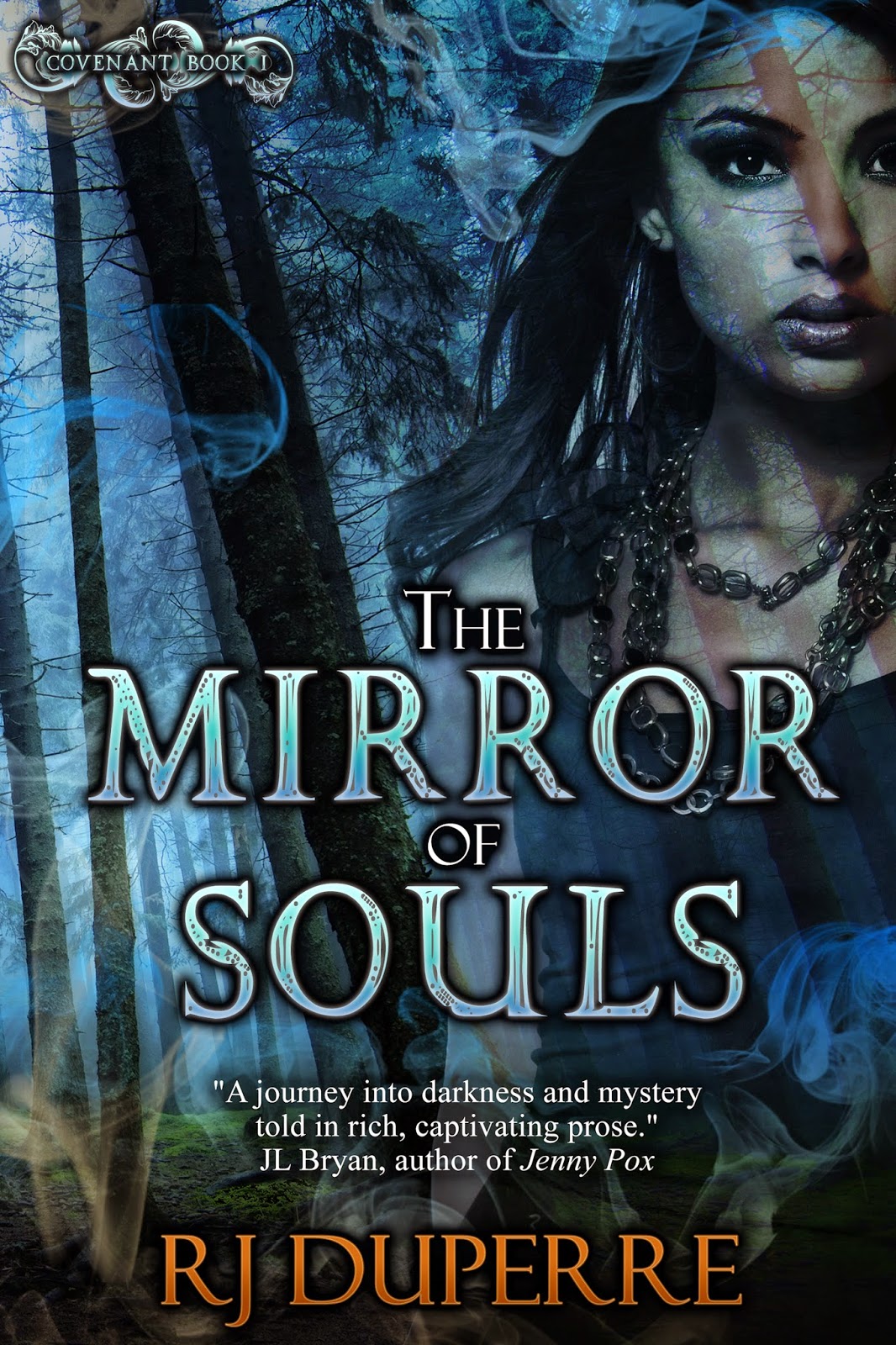
Taking a break from writing today to tell everyone that until Sunday, April 12th, the first Covenant book, The Mirror of Souls, is on sale across all venues. Mostly it's listed at 99¢, though there might be a slightly higher price on Google Play. Below is the list of venues. Just click on the name to obtain your copy:

Amazon
Amazon UK
Kobo
Barnes & Noble
Google Play

Also, I'd be remiss if I didn't mention that the 2nd book in the series, The Chalice of Sorrows, is currently available for pre-order on Amazon, with a firm release date of June 20th. Here's the cover:


For those who're curious...yes, that's Jordan!

Unfortunately, gaining readership for this series has proven a bit difficult. With this in mind, I'm offering up this second book for the same 99¢ that the first book is on sale for. The only difference being, this book will be 99¢ UNTIL THE DATE OF PUBLICATION!  After that, however, it will be raised to the standard price of $3.99.

In other words, for the next six days, you can get both these books for less than two bucks. And for the next two-plus months, you can pre-order the second book for less than a dollar. It's a win-win all around, people!

Here's the link to the pre-order: THE CHALICE OF SORROWS

And the blurb:

Now that the cat’s out of the bag, the other secrets regarding Jacqueline Talbot’s past—and future—begin to come clear. It’s a lot for a sixteen-year-old girl to deal with, especially when she’s told that the fate of the world rests on her shoulders. 

Jacqueline now must prepare herself to take on the rest of the Trials; the only problem is, no one’s really sure what they are. Not even her aunt, who seems to know a little too much about everything. 

At least she has her support system to help her through it all. But that system is as fragile as everything else in Jacqueline’s troubled life. Just one small misstep and it could all be over…for everyone.


So peace, everyone, and happy reading!

RJD

Saturday, December 20, 2014

COVER REVEAL: THE MIRROR OF SOULS

Three years ago, I wrote a book called Silas. In that book was a young girl named Jacqueline Talbot, whose character I've been thinking about for a long, long time. I said then that I would one day write her story, and a few months ago, I began to do just that.

That's right, folks. The first book in the Covenant series, The Mirror of Souls, is soon to be published. For the first time ever, here's the cover:

http://www.amazon.com/Mirror-Souls-Covenant-Book-ebook/dp/B00R9PCV7Y

Product description:

Fifteen-year-old Jacqueline Talbot’s boyfriend Mal lives in the mirror of her makeup case. But then there’s never been anything normal about Jacqueline, nor it seems her new hometown of Mercy Hills.

With rumors of actual monsters in the woods, the popular kids taking an unhealthy interest in her, and the revealing of her own dark past, all Jacqueline wants to do is run away forever with Mal. Too bad he’s trapped in the mirror.

But when she learns the ancient forces of the town want to destroy everything she loves, the race is on to free the boy in the mirror, because he just might be the only one who knows how to stop them.


---------------------------------------------------------------------------

The book is currently on pre-order over at Amazon, and I plan on making it available across most platforms come its January 22nd release. This book (and series) is Young Adult with a horror slant. It'll be my first solo new release in over two years, and I'm quite excited about it. (Writing all those books with David Dalglish sure took a lot out of me!) Currently, I'm working on the 2nd book (The Chalice of Desire), with a tentative publication date at the end of April.

In the meantime, there will be another announcement coming in the next few weeks to add even further excitement! I will also be posting the prologue to The Mirror of Souls shortly. So until then, read a good book, dammit! Preferably one of mine!

THE MIRROR OF SOULS PRE-ORDER (CLICK TO PURCHASE)


Monday, December 27, 2010

Review: Roman Hell by Mark Mellon


Rating: 4.5 out of 5


I receive some quirky books for review, works that don’t necessarily fit into any genre. Some are good, some are bad, some are just, well, strange. And some are this close to brilliant.


Which is where Roman Hell by Mark Mellon fits in.


Roman Hell is the story of Martial, a poet in first-century Rome. He’s a bit down on his luck until he gets an unusual offer from Titus, the acting Caesar. He is asked to spy on the intellectual circles he frequents, to see if there are whispered plots against his rule. For this, he will be paid handsomely.


Martial accepts the offer and along with an old-time legionary named Stilo sets about seeking information. During a chance encounter at a brothel, he spots Titus’ brother, Domitian, hurriedly leaving. He follows, only to find out that Domitian has been in cahoots with Canidia and Sagana, a pair of witches. Much clandestine spying ensues, with Martial and Stilo eventually learning that Domitian has arranged for his brother’s death so he will be granted the title of Princeps (Caesar).


Titus is eventually killed through magical means, Domitian takes over, double crosses Canidia, and is henceforth cursed to know the day his rule (and his life) ends. Martial, being a come-upper who latches on to those who may give him a better life (that being the new Caesar), is likewise cursed.


From there, the story jumps fifteen years into the future, chronicling how Domitian and Martial deal with the knowledge (or supposition – there are many instances, especially in Martial’s case, where he considers himself “superstitious” to believe in such nonsense as curses and magic) of their eventual fate. I won’t go into much more than that, because to do so would be to take away some of the best aspects of the storytelling, which include just how demented Domitian and Martial’s thought processes can be.

For the most part, the characters in this tale are fantastic. The only problem is that there are a lot of them.


Martial is one of the most original I’ve read in a long time, the obvious “hero” of the piece, yet so un-heroic that he become a caricature – or, more pertinent, a living metaphor for the pursuit of comfort. He wants nothing more than to have an easy life and be appreciated for his talents, two aspects that have been denied him. He is a moral man by the standards of the day (he can see, and his inner monologue often derides, the debauchery that goes on around him), and yet he gladly turns the other way when he sees behavior that is, ahem, objectionable.


Domitian is fantastically fleshed out, as well. His transformation from lazy, freeloading brother to paranoid leader is beautiful to see. It makes sense and is consistent with his mental framework that he would seek outside providence from magical beings in order to obtain his goal. He is, as I said, lazy…at least early on. But once he becomes Caesar, and his thirst for power grows, no one puts forth more effort when it comes to trying to steer public affection his way.


However, one character completely steals the show, and that’s Stilo, Martial’s legionary bodyguard. He’s an archetypal tough guy, from his scarred visage to his love of violence, and yet he differs in his poetic (and often hilarious) manner of speech. Unfortunately he disappears a little over halfway through the book (you’ll have to read it to find out why – it’s a fantastic and unexpected development), and in a way the second half falters the slightest bit without him.


Author Mellon did something very interesting with this novel. He uses real events and real historical figures as a skeleton and lets his imagination become the muscle and flesh. This works wonderfully, and drives the story to its inevitable end with pomp and vigor. Luckily for Mellon, I’m pretty sure not too many folks know the history of Domitian’s rule, because in that way the final outcome is a bit of a mystery. That being said, even if one who’s well versed in Roman history were to read this, they’d still come away with something fresh and surprising, for the author does a more than decent job of throwing you right smack in the middle of the first century and bending events to fit his vision. The language is there, the sights are there, and ancient Rome comes alive.


In fact, this is done so well that it can be somewhat of a drawback. I said at the beginning of this review that it’s this close to brilliance, and the reason I say this is because as a book, Roman Hell is almost too smart for its own good. Mellon is obviously a very talented writer and knows his history, but the proliferation of ancient terms, names, and locations can make for confusing reading for those who aren’t familiar with such language. Even this reviewer was a bit thrown off. Add to this the fact that the text is dense, and it becomes easy to lose one’s place.


Nevertheless, you shouldn’t be discouraged by this, for if the reader simply trudges their way through to the other side, there is something wonderful to be had. Roman Hell is an intense gender-bender – part horror, part fantasy, part comedy, all historical – that snatches your eye and holds you in place with its almost lyrical prose. It says something quite profound about the societies of old and their likes, fetishes, and tendencies, as well, presenting us with a vision of old Rome without the charm of time and distance. For myself, I had no choice but imagine what my life would be like in the rancid armpit of that ancient city, struggling to simply survive and taking pleasure from the intense suffering of others. That, in and of itself, is an accomplishment.


On the whole, I think Roman Hell is a truly original and enjoyable book. It may take a bit of work to get into, but once you do, you won’t be able to look at the culture of Ancient Rome the same way ever again. And by the last melancholy scene, you’ll ask yourself the most philosophical of questions: what good have I done in my life, anyway?


I know I did.


Plot - 9

Characters - 9

Voice - 10

Execution - 8

Personal Enjoyment – 9


Overall – 45/50 (4.5/5)


Buy this book:


Paperback


Ebook


Saturday, July 24, 2010

Review: Firefly Island by Daniel Arenson

Rating: 4.8 out of 5

Life, when we sit back and look at it from a certain point of view, is all about pain, our reaction to it, and the transitions that help us overcome it. From this perspective, there are sacrifices every person must make in order to reach that place in existence where we can appreciate love, joy, security, and even sorrow and death. In many ways we are defined by the choices we make. And, at the end of the day, we must forgive ourselves for making the wrong ones, because if the final result is an inner peace and sense of community and togetherness, then those bad decisions had just as much to do with our accomplishments as the good ones.

Firefly Island, the breathtaking novel by Daniel Arenson, is all about decisions. It’s all about pain and torment and horror and, at the end of the day, love. It’s a dark fairy tale about the lengths we will go to in order to prove our devotion to our siblings, our friends, our communities, our fathers. And, finally, it’s about mistakes. Horrible, world-shattering mistakes whose ramifications reach far and wide, affecting even those on the periphery we wouldn’t expect.

The story takes place on an island split into five separate and (oftentimes) warring states. Each state is unique, in that the different populaces hold different abilities, or “magic”, as it’s called. The isolateded communities look down on interracial breeding. In some places, those that do are outcast because they create “impure” offspring, children who hold fragments of the abilities both their parents have. In each community there is born, once a century, a “Firechild” (dubbed so because of the belief that the fireflies inhabiting the island have imbued the people with these magics). These are beings whose powers are the penultimate of their individual races.

Aeolia, a sixteen-year-old slave girl, is one of these Firechildren. She has the ability to merge minds (and possibly even souls) with any person within close vicinity. Whatever she feels, they feel. If her body dies, theirs does, too. In the novel, she is sold into slavery by her callous father very early on, and grows up for the next ten years, until the bulk of the tale begins, never knowing freedom, until one day, in an intense and heartbreaking scene, she achieves it by doing the one thing she promised she would never do – breaking a vow to a person she loves more than anything.

Along her travels after achieving freedom, she meets others much like her. This is a fast-moving novel, and sometimes their interactions can feel rushed, but in the end it works because author Arenson understands that in a fantasy tale like this, it’s the scope of the adventure that matters and not the minutia that can bog a story down. He handles it beautifully – we understand that Aeolia will fall in love with a man she’s just met because she’s never known love, only pain and despair. We know that two other characters will become romantically entangled, though they’ve never met, because they’ve dreamed of each other and this is a work of fantasy. And in fantasy if a vision tells you something, you believe it. Hell, this happens in real life sometimes, as well.

As I said earlier, however, this is a novel about pain. It drips from virtually every page. The awfulness people do to each other is affecting and oftentimes purely evil. We see five different communities all battling amongst each other, all on the brink of civil war, and in certain cases look at the others as being lesser than themselves. If there’s a better allegory for the dangers of racism, xenophobia, and jingoism, I haven’t seen one.

As I said, there are a LOT of horrors acted out in this book, but that doesn’t mean there isn’t beauty, as well. As a character, Aeolia embodies what it means to be human. She is at the same time weak, strong, lost, cowardly, brave, indecisive, firm, forlorn, and lustful. She’s a living contradiction. The choices she makes (here we are talking about choices again) in the name of decency are often times not so decent, and it is this sort of dichotomy that makes a story interesting and real. And yet she is a gorgeous person. We can see this, and we want her to succeed. She’s not perfect – not even close – and yet neither are any of the other characters. In fact, one could look at even the villains of the piece and find, at some point in their development, a sense that you might want to root for them. This makes for great conflict, as well as tension. Not to mention it’s simply great writing.

What I also appreciated about this particular example of fiction is the way it plays with genre conventions. It is fantasy, of course, and yet it has more of a historical feel, even though there are monsters and magic. There are promises made between characters, clichéd promises you’ve seen a thousand times since the onset of that little ring-carrying person with hairy feet, and yet Arenson doesn’t always allow those promises to be fulfilled. There are so many twists and turns, so many characters, that you truly don’t know what to expect. And yet, when you finish and look back on it, you realize that the directions he took make perfect sense. Even the end, which I found to be a bit formulaic at first, I grew to appreciate and even love when I went back and read it again. There is so much darkness held within these pages, so many atrocities, that the characters deserved to finish up with a respite of sorts. The author has a message to tell, and it comes through loud and clear, and it wouldn’t have worked if the story had ended any other way. Again, that’s just great writing.

My only problem with the book isn’t really a problem, but a longing for more. I wanted to know the history of Firefly Island. I wanted to know the legacy of the Firechildren throughout history. If they come about every hundred years, are the outcomes always the same? Have the Stonesons (those who control minerals) always hated the Esirens (psychic types like Aeolia)? Was there once a single monarchy that split, weakening the masses by isolating individual talents? Again, these are questions that could be answered in another book, or not at all if Arenson so chooses, because this particular novel works without these things being explained. So why did I mention it? Probably because it’s not in my nature to go through an entire review without being at least a little critical.

To wrap it all up, I LOVED THIS BOOK. I’m not usually one for fantasy, but I couldn’t stop reading it. It’s really that good.

Check it out. You won’t be disappointed.


Firefly Island in the Kindle Store

Plot - 9

Characters - 9

Voice - 10

Execution - 10

Personal Enjoyment - 10

Overall - 48/50 (4.8/5)