it was a clinic day like all the rest
until it wasn't
she was there with her son and granddaughter
winded
legs swollen "for a month"
afib, fast rate despite cardizem CD 300 mg daily, diabetic meds, norvasc.
EKG with LVH, RBBB, LAFB.
BP 178/84, HR 124
rales
meds to be started, but help?
EMR->no doctor
a nurse practitioner?
4:45 pm-> all gone
see you in two days
no appointments.
i wake too early
staring up
mind swirling
cases ahead
remembering her
and me
alone.
-Wes
Showing posts with label Life. Show all posts
Showing posts with label Life. Show all posts
Tuesday, January 14, 2020


Friday, May 05, 2017
Wingman

Business people now call quality and safety "MIPS," "MOC," "MACRA," or "measures." To me, these are not quality, but rather very flawed attempts to define it. Acronyms and business strategies, no matter how well-meaning, can't define "quality" or "safety" or 'value" in health care. When it takes teams of consultants dispatched hospitals to explain how to make money with these new terms, that's called marketing, not "quality" or "safety."
The truth be known, "quality" is very difficult to define. That's because each of us brings a different perspective as to what defines health care "quality." A gruff neurosurgeon who is technically flawless in the operating room is likely perceived differently by the recipient of his services compared to his coworkers. Defining quality in medicine is like defining pornography - you just know it when you see it. The tricky thing about "quality," though, is that we often miss it when it lies right beneath our nose.
Last Friday I had the luxury of working with my favorite technician as we worked to install a pacemaker. For that short period of time, he was my wingman. I didn't really think about much. Neither did he. It was a quiet, pleasant moment as we complemented each others' skills: instruments assembled neatly on the table, soft music playing in the background, the ultrasound ready, a blade dispensed, a quiet whisper for another instrument that was already in his hand. A sheath, a suture, a steristrip, a gauze and Tegaderm - and a mutual respect that had quietly developed over our many years working together. A "quality" effort for sure.
Foolishly, I took it for granted.
I have been fortunate to work with great wingmen (and women, too) all my career. They know who they are. They never ask for accolades and are often embarrassed when they are passed along. They get up every day, report like clockwork to do their job, and do it really well. There is pride in their work because they know it matters. They treat others as they'd want to be treated themselves, and patients remember - maybe not their name - but their touch, their reassurance, their confidence, their kind words. I have learned you don't need an advanced degree to define "quality." Nor do you need a National Quality Forum or National Committee on Quality Assurance. It takes time and mutual respect to develop real quality, not checklists, metrics, or administrators.
So when the call came a few days ago that my wingman was sick - suddenly and unexpectedly - time stood still for all of us. This quiet, humble guy who knew the composer of every golden oldie that played in our lab. A guy who's stood at my side so many times, helped so many, now a patient himself. Why? Naively, I had convinced myself that things would always stay the same and only get better. Instead, life intervened and his vacation trip to California became a trip to the hospital - a scan - a serious cancer - and a life turned upside down in an instant.
Sometimes it takes tragedy to open our eyes and appreciate the small but important things we have. Sometimes it takes tragedy to help us acknowledge the real quality we have among our ranks. Quality metrics, by comparison, seem trite.
My wingman is back home now among family and friends. I went to check in on him and there he was smiling, with PICC line in place and chemo infusing. He spoke a bit and exchanged some pleasantries. As I turned to walk away, what did he say?
"Thank you, doc. It might be a while before I can come back."
Spoken like a typical wingman.
I thanked him back. "Take your time," I said. My response seemed so trivial compared to all he's done for me.
I returned to our lab and saw our closely-knit team working together on another difficult case - like flying in formation with one jet missing. The elephant in the room was standing there. We could feel it. No one said a word. They chose to focus instead.
Quality wingmen all.
-Wes
Saturday, July 30, 2016
When Patients Tweet Their Own Heart Attack
I was called at 04:30AM for a patient with tachycardia in the hospital and as I logged into my EMR from home, I saw this on Twitter:
In under two hours, there were 15 retweets, 44 "likes," and 19 comments that appeared on Twitter (so far), most wishing the patient the best, looking forward to pictures of the angiogram, etc.
This is the lovely world of social media, but it also demonstrates his very real limitations of the medium when potential life-and-death health care issues arise.
Not a single person on Twitter with its myriad of participants rushed to Dr. Rogers' aid, called an ambulance (tho' I suppose this depends on who's "following" Dr. Rogers on Twitter), started an IV, placed him on oxygen, gave him an aspirin, grabbed that EKG, prepped the cath lab, opened Dr. Rogers' coronary artery, spoke to his family, or held his hand. Social media reassurance, prayers, and good wishes can only go so far.
This is not too say there is not value in those prayers and good wishes. But we should remember that medicine and medical issues are real life, not digital.
And we should never forget the limitations of all of the digital technology in the world when it comes to delivering hands-on medical care to our fellow man, woman, or child. That requires those much-less-interesting real people, real workers, and real professionals (all on call 24/7/365) to help Mr. Rogers through his ordeal.
God speed, Dr. Rogers. I'm sure you're in the best of hands.
-Wes
Usually don't get excited about ECGs like this, but this one is mine...#NoJoke #LifeChanger pic.twitter.com/fSng2k5pxK— rob rogers (@EM_Educator) July 30, 2016
In under two hours, there were 15 retweets, 44 "likes," and 19 comments that appeared on Twitter (so far), most wishing the patient the best, looking forward to pictures of the angiogram, etc.
This is the lovely world of social media, but it also demonstrates his very real limitations of the medium when potential life-and-death health care issues arise.
Not a single person on Twitter with its myriad of participants rushed to Dr. Rogers' aid, called an ambulance (tho' I suppose this depends on who's "following" Dr. Rogers on Twitter), started an IV, placed him on oxygen, gave him an aspirin, grabbed that EKG, prepped the cath lab, opened Dr. Rogers' coronary artery, spoke to his family, or held his hand. Social media reassurance, prayers, and good wishes can only go so far.
This is not too say there is not value in those prayers and good wishes. But we should remember that medicine and medical issues are real life, not digital.
And we should never forget the limitations of all of the digital technology in the world when it comes to delivering hands-on medical care to our fellow man, woman, or child. That requires those much-less-interesting real people, real workers, and real professionals (all on call 24/7/365) to help Mr. Rogers through his ordeal.
God speed, Dr. Rogers. I'm sure you're in the best of hands.
-Wes
Friday, May 01, 2015
Friday Read: The Not-So-Simple Pacemaker Check
Her breathing had never taken a second thought, except for the past several months. Slowly, gradually, her breathing became work so she came to our emergency room.
Her life had been an full one: married, kids, grandkids - all of whom brought her incredible joy. But since the loss of her husband and all of the changes that occurred in her life as a result, she felt more alone than ever. Perhaps this was the reason the pacemaker she had received some 14 years before just didn't seem so important any more. Her kids and grandkids were what remained now, and for them she was grateful for they had noted she'd become too short of breath with even the slightest effort, so they brought her in.
The chest-xray taken when she came to the Emergency Room showed her pacemaker and prompted the ER staff to ask about it. "She hasn't had a pacer check in a while, " the family mentioned. So we were consulted to check the pacemaker's function.
Before we'd done so, we looked at her EKG and weren't surprised at what it showed. After all, we'd seen this scenario before.
So with some confidence I entered her room. There sitting beside her was one of her sons and a granddaughter. She was propped up in bed wearing a green oxygen face mask that covered her mouth and nose but couldn't suppress her kind smile as I entered. After a brief introduction, I explained what her EKG showed and how I thought a good portion of her shortness of breath might be stemming from her pacemaker's low battery.
In our conversation she mentioned that she had been told her pacemaker battery would need to be changed soon. That was before her husband died. After his funeral, the need for a recheck of her pacemaker was quickly forgotten. So she had not anticipated that the pacemaker might be a cause of her symptoms.
We discussed her options. She could leave things well enough alone if she preferred while we arranged to keep her comfortable for her remaining days, or we could change her pacemaker battery. At the time, she didn't want excessive resuscitation measures and had declared herself a "DNR - Do Not Resuscitate" in the event of cardiac arrest. She thought hard about the choices but wasn't sure...
"Mom, it seems like such a small thing and it might be able to help you feel better! Don't you want to see your grandkids a little longer?" the son pleaded. She listened to him, then looked at me. It was clear she understood the choices and their implications. I suggested she think about it and left the room to give them time to discuss things. Some time later, she asked me to return.
She asked again, "So you think it might help me feel a bit better to have the battery changed?"
I replied, "Honestly, I do, but it's always hard to gauge how much."
So after a few more questions were answered and worried looks shared with her son, she agreed to have her battery replaced. I left the room to document my visit. (After all, nothing happens in medicine any longer unless typing occurs.) Seated next to me was my nurse practitioner, herself transfixed to the computer screen as she returned patient phone calls and made arrangements for procedures to be performed the next day. Next to her was the pacemaker programmer which she wisely brought with her to help check the patient's device. She finished her call and then offered to check the device while I finished my note. I thanked her and continued typing.
It was still relatively early in the afternoon and the eight computer terminals around me were completely occupied by nurses, physical therapists, and residents hammering away and looking stone-faced, somewhat akin to what the New York Times newsroom must look and sound like just before deadline.
Until that sound was shattered by "Call a Code! Code Blue! Get Dr. Fisher!"
Somewhat startled, I looked up to see a sudden shift of the masses. Was that the voice of my nurse practitioner? It couldn't be, could it?
It was.
Poor thing. It seems she placed the wand of the pacemaker programmer over the patient's device, only to see a strange screen on the programmer appear that read something like: "Pacemaker reached ERI 8/13/2013…" followed by a bunch of other text that said something about "Power-on Reset mode" among other things. As she struggled to read the long message and donned a pair of glasses, she noted some twitching in the corner of her eye coming from the patient's direction. She looked up to see a peaceful blank stare on the patient who now laid motionless and unresponsive - a quick glance at the monitor showed it had flat-lined with only a rare agonal ventricular escape rhythm. Realizing what had happened, she was briefly at a loss how to react. This was not supposed to happen. Fleeting thoughts raced through her head like "Seriously?" and "Oh, God, I'm too old for this!" That's when she called out for help.
The poor son and granddaughter sitting in the corner were stunned, not knowing what had just happened. A horde of medical personnel swept in to the room and ushered them out, terrified. I entered the fray and saw my pleasant patient lying there motionless, small puffs of condensation appearing on her face mask and her pupils somewhat dilated. The monitor, too, was devoid of motion, except for an occasional blip seen one the screen. I reached for a pulse. It correlated to the monitor. Not much at all.
"Can we get some atropine and epi?" A asked the code team nervously assembled, not knowing what to do in this "no code" situation. Fortunately, I removed the programmer head from her chest and watched her breathing carefully. Seconds seemed like hours as my poor nurse practitioner stood beside me with her mind scrambling. "Come on guys, we need those meds… What's taking so long?… " she snipped. "Get the pacing patches!" They still were rifling through the drawers of the crash cart when she offered like a pro: "Guys, the purple box!" And within a second, the purple box appeared. The first medication was administered as time seemed to stand still. An occasional blip, then more people in the room. "What can we do?" the anesthesiologist asked.
I looked at the monitor dreading the thought of starting CPR given her wishes, or the what I might say to the stunned family at her bedside if we didn't.
But then, just as unexpectedly as it had begun, a paced rhythm resumed on the monitor! "Hold it!" I said, "I think we have a pulse!" And like a wilted daisy that just received its water, she immediately regained consciousness and wondered what all the fuss was about.
"What happened? Where did all these people come from? Why are they here?"
"It seems your pacemaker battery is a lot lower than anyone expected, Ms. Jones (not her real name). When we checked it, we must have used some of the last energy that pacemaker had. It looks like we need to take you our laboratory and replace that battery right away!"
She smiled and looked up at me with her precious eyes gleaming. Here we were, total strangers just minutes before, now bound together by some unimagineable force. She looked so comfortable lying there, then out of nowhere she reached up to me and grabbed my head, pulling it toward her oxygen mask in an attempt to give me a kiss right through it.
"Thank you," she whispered and smiled, "Thank you."
After reassuring her family and explaining what had happened, we hurried off to the EP lab, our eyes transfixed on her monitor and me still reeling from that beautiful and totally unexpected kiss...
... plastic face mask and all.
-Wes
Her life had been an full one: married, kids, grandkids - all of whom brought her incredible joy. But since the loss of her husband and all of the changes that occurred in her life as a result, she felt more alone than ever. Perhaps this was the reason the pacemaker she had received some 14 years before just didn't seem so important any more. Her kids and grandkids were what remained now, and for them she was grateful for they had noted she'd become too short of breath with even the slightest effort, so they brought her in.
The chest-xray taken when she came to the Emergency Room showed her pacemaker and prompted the ER staff to ask about it. "She hasn't had a pacer check in a while, " the family mentioned. So we were consulted to check the pacemaker's function.
Before we'd done so, we looked at her EKG and weren't surprised at what it showed. After all, we'd seen this scenario before.

So with some confidence I entered her room. There sitting beside her was one of her sons and a granddaughter. She was propped up in bed wearing a green oxygen face mask that covered her mouth and nose but couldn't suppress her kind smile as I entered. After a brief introduction, I explained what her EKG showed and how I thought a good portion of her shortness of breath might be stemming from her pacemaker's low battery.
In our conversation she mentioned that she had been told her pacemaker battery would need to be changed soon. That was before her husband died. After his funeral, the need for a recheck of her pacemaker was quickly forgotten. So she had not anticipated that the pacemaker might be a cause of her symptoms.
We discussed her options. She could leave things well enough alone if she preferred while we arranged to keep her comfortable for her remaining days, or we could change her pacemaker battery. At the time, she didn't want excessive resuscitation measures and had declared herself a "DNR - Do Not Resuscitate" in the event of cardiac arrest. She thought hard about the choices but wasn't sure...
"Mom, it seems like such a small thing and it might be able to help you feel better! Don't you want to see your grandkids a little longer?" the son pleaded. She listened to him, then looked at me. It was clear she understood the choices and their implications. I suggested she think about it and left the room to give them time to discuss things. Some time later, she asked me to return.
She asked again, "So you think it might help me feel a bit better to have the battery changed?"
I replied, "Honestly, I do, but it's always hard to gauge how much."
So after a few more questions were answered and worried looks shared with her son, she agreed to have her battery replaced. I left the room to document my visit. (After all, nothing happens in medicine any longer unless typing occurs.) Seated next to me was my nurse practitioner, herself transfixed to the computer screen as she returned patient phone calls and made arrangements for procedures to be performed the next day. Next to her was the pacemaker programmer which she wisely brought with her to help check the patient's device. She finished her call and then offered to check the device while I finished my note. I thanked her and continued typing.
It was still relatively early in the afternoon and the eight computer terminals around me were completely occupied by nurses, physical therapists, and residents hammering away and looking stone-faced, somewhat akin to what the New York Times newsroom must look and sound like just before deadline.
Until that sound was shattered by "Call a Code! Code Blue! Get Dr. Fisher!"
Somewhat startled, I looked up to see a sudden shift of the masses. Was that the voice of my nurse practitioner? It couldn't be, could it?
It was.
Poor thing. It seems she placed the wand of the pacemaker programmer over the patient's device, only to see a strange screen on the programmer appear that read something like: "Pacemaker reached ERI 8/13/2013…" followed by a bunch of other text that said something about "Power-on Reset mode" among other things. As she struggled to read the long message and donned a pair of glasses, she noted some twitching in the corner of her eye coming from the patient's direction. She looked up to see a peaceful blank stare on the patient who now laid motionless and unresponsive - a quick glance at the monitor showed it had flat-lined with only a rare agonal ventricular escape rhythm. Realizing what had happened, she was briefly at a loss how to react. This was not supposed to happen. Fleeting thoughts raced through her head like "Seriously?" and "Oh, God, I'm too old for this!" That's when she called out for help.
The poor son and granddaughter sitting in the corner were stunned, not knowing what had just happened. A horde of medical personnel swept in to the room and ushered them out, terrified. I entered the fray and saw my pleasant patient lying there motionless, small puffs of condensation appearing on her face mask and her pupils somewhat dilated. The monitor, too, was devoid of motion, except for an occasional blip seen one the screen. I reached for a pulse. It correlated to the monitor. Not much at all.
"Can we get some atropine and epi?" A asked the code team nervously assembled, not knowing what to do in this "no code" situation. Fortunately, I removed the programmer head from her chest and watched her breathing carefully. Seconds seemed like hours as my poor nurse practitioner stood beside me with her mind scrambling. "Come on guys, we need those meds… What's taking so long?… " she snipped. "Get the pacing patches!" They still were rifling through the drawers of the crash cart when she offered like a pro: "Guys, the purple box!" And within a second, the purple box appeared. The first medication was administered as time seemed to stand still. An occasional blip, then more people in the room. "What can we do?" the anesthesiologist asked.
I looked at the monitor dreading the thought of starting CPR given her wishes, or the what I might say to the stunned family at her bedside if we didn't.
But then, just as unexpectedly as it had begun, a paced rhythm resumed on the monitor! "Hold it!" I said, "I think we have a pulse!" And like a wilted daisy that just received its water, she immediately regained consciousness and wondered what all the fuss was about.
"What happened? Where did all these people come from? Why are they here?"
"It seems your pacemaker battery is a lot lower than anyone expected, Ms. Jones (not her real name). When we checked it, we must have used some of the last energy that pacemaker had. It looks like we need to take you our laboratory and replace that battery right away!"
She smiled and looked up at me with her precious eyes gleaming. Here we were, total strangers just minutes before, now bound together by some unimagineable force. She looked so comfortable lying there, then out of nowhere she reached up to me and grabbed my head, pulling it toward her oxygen mask in an attempt to give me a kiss right through it.
"Thank you," she whispered and smiled, "Thank you."
After reassuring her family and explaining what had happened, we hurried off to the EP lab, our eyes transfixed on her monitor and me still reeling from that beautiful and totally unexpected kiss...
... plastic face mask and all.
-Wes
Wednesday, February 11, 2015
How Do I Say Goodbye?
So what does a son say to his mother for the very last time? What does he whisper in her ear?
I will say "I love you." I will say "thank you." I will say "God bless you." I will say "I'll miss you." I will say "You've been the best mother a son could ever hope for." I will say nothing, probably, and cry.
Go in peace knowing you gave your family more than they can ever repay. Know we'll always be reminded of your kindness, your tenderness, your gentleness and care. Be proud of what you've accomplished in your 89 years, especially with your family. You were our glue and always made your home so welcoming. You taught us the art of the written word and the special place for whimsy. Hundreds of kindergartners and first-graders that you taught all those years will miss you too.
Thanks for being so wonderful to my kids - they will always remember your kindness, thoughtfulness, compassion, warm home and tender words. Give Dad a high-five when you see him for me. We'll think of you every time we water the flowers, tend the garden, make a fire, cook a meal, attend the theatre, play guitar or gather as a family.
Our "Blessed."
Until we meet again, God bless. Thank you for everything you've taught me, showed me, and gave to me all these years. You'll always be my compass.
I love you, Mom.
-Wes
I will say "I love you." I will say "thank you." I will say "God bless you." I will say "I'll miss you." I will say "You've been the best mother a son could ever hope for." I will say nothing, probably, and cry.
Go in peace knowing you gave your family more than they can ever repay. Know we'll always be reminded of your kindness, your tenderness, your gentleness and care. Be proud of what you've accomplished in your 89 years, especially with your family. You were our glue and always made your home so welcoming. You taught us the art of the written word and the special place for whimsy. Hundreds of kindergartners and first-graders that you taught all those years will miss you too.
Thanks for being so wonderful to my kids - they will always remember your kindness, thoughtfulness, compassion, warm home and tender words. Give Dad a high-five when you see him for me. We'll think of you every time we water the flowers, tend the garden, make a fire, cook a meal, attend the theatre, play guitar or gather as a family.
Our "Blessed."
Until we meet again, God bless. Thank you for everything you've taught me, showed me, and gave to me all these years. You'll always be my compass.
I love you, Mom.
BARTER
by Sara Teasdale
Life has loveliness to sell,
All beautiful and splendid things
Blue waves whitening on a cliff,
Soaring fire that sways and sings,
And children's faces looking up
Holding wonder like a cup.
Life has loveliness to sell,
Music like a curve of gold,
Scent of pine trees in the rain,
Eyes that love you, arms that hold,
And for your spirit's still delight,
Holy thoughts that star the night.
Spend all you have for loveliness,
Buy it and never count the cost;
For one white singing hour of peace
Count many a year of strife well lost,
And for a breath of ecstasy
Give all you have been, or could be.
-Wes
 |
| At our last concert together |
Thursday, September 25, 2014
The Last Reprogramming
He had called the other day to update me up on his condition. He did not sound upset, but resolute. "They offered me peritoneal dialysis," he said, "but I decided against it and figured I'd just let nature take its course. The hospice people are so wonderful - I've got things all set here at home, but I have two questions. What should I do about my warfarin? You know, I just don't want to have a stroke. And what I do about my defibrillator?"
We were colleagues once and grew to be friends later when life's circumstances brought us together. He, a revered senior neurologist and me, a relatively new doctor in town. I could remember overhearing his heated discussions about administrative snafus with colleagues in the hall, or watching a horde of residents and medical students following him into a patient's room to teach at the bedside.
"Of course he didn't want a stroke," I thought.
So we decided to keep the coumadin and let him continue his daily INR checks at home and to turn off just the tachyarrhythmia detections on his biventricular defibrillator.
"I'll come over tomorrow and we'll turn it off," I said.
There was a brief silence, perhaps because of momentary disbelief that I'd do such a thing. Then he proceeded to give me detailed directions and landmarks to watch for on my way over. "I'm sure I can find it," I said thanking him.
So the next afternoon after most of the day's events had finished, I grabbed the programmer and drove to his home. It was an unusually beautiful day - mid 70's, sunny - as if Someone had wanted it that way. There in the yard, was his wife, wearing a large-brimmed hat and holding a hose while pretending to water the shrubs. She came over to greet me: "Thanks so much for coming over," she said, "I know this means so much to him." Then she realized she was still holding the hose. "Oh, I'm so sorry, it's just that someone has to try to keep the place up," she said, voice cracking.
The "place," of course, was beautiful. A majestic grande dame of a house - one I would later learn they had occupied for the past 44 years and bought when they were "just kids on the block." It was meticulousy kept, stately. I entered with his wife and noticed a shadowy figure two rooms away sitting at the edge of a mechanized hospital bed. The bed was placed in what must have been his study with a large bay window with a couch next to it. A reading lamp was over the head of the bed and the walls held books from the floor to ceiling with icons and statues, likely from other, more active time.
"Thanks for coming, Wes," he said, looking up.
"How are you feeling?" I asked, somewhat stupidly.
"Pretty good, considering everything. See? My legs aren't quite so swollen and my abrasions all have eschars on them," he noted as only a doctor could.
"Is there a plug nearby?" and he proceeded to point me the way so I could plug in the programmer to do my job while he explained the device to his wife. The process was quick and I interrogated his defibrillator, then turned off the tachyarrhythmia detections, therapies and now needless alarms. "There, that didn't take long. All done," I said.
There was a moment of silence as I sat with this man whom I known for so long. Like a wise sage and hospitable host, it was clear he wanted to talk for a bit, so I slowed my exit.
"You know, I've always appreciated your frankness about my condition," he said. "You're a lot like me in many ways, I think. You never overstepped, let me have control, to manage things like I wanted to, and I've always appreciated that," he said.
Embarassed by his frankness, I wondered what to say. At a loss for words, I told him how much I enjoyed meeting his family, wife, daughters, and grand-daughters recently in the hospital. He looked puzzled, forgetting. "You know, that day I brought my daughter in your room with them?" His eyes brightened and his smile widened as he remembered.
"Oh, yes! That was wonderful! How fast times flies, doesn't it?" he said.
"You know, I wrote about that day in my blog," I mentioned, ".. and included some pictures of my daughter from 10 years ago - about what she thought about medicine - can I show you?"
"Of course!"
So I showed him the picture and we shared our thoughts about family. Then, to make reading from my iPhone easier, I read him the post I'd written about that day. We talked about family and what they meant to each of us. And then he shared with me another nugget, that he grew to become a writer, too.
"You know, I spent some time and wrote an autobiography for my kids not too long ago - over a hundred pages - about everything I could remember - from my earliest years as a child, about my immigrant father and American mother. My father made it as a successful lawyer - came over from eastern Europe - I even know the ship - I remember the picture of him standing there with his hat..., and I wrote about my family, influential teachers in grade school, fellow professors, and people that I knew throughout the years - everything. You should do that, too, you know. I'm so glad I did. I gave them to my kids and even made some some extra copies - maybe for the grandkids, in case they want it someday..." He looked away to see his wife leave the room, trying not to be noticed as tears filled her eyes once more. She didn't want to him to see her this way.
He stared down at the floor beneath his swollen feet, then continued.
"You know, it was therapeutic for me to write that autobiography. After all, what we do is terribly isolating for the most part. No one understands that. Like you do your procedural stuff and I do my diagnosing. We do most of it all alone, with no one else there. Just the patient and the doctor. Wonderful, to be sure, but isolating. So many memories. I guess it helped me to put some of those feelings and the thoughts I had about those I loved into words. It's hard to capture it all..."
He looked up from the floor and stared in my eyes. "Thank you," he said extending his hand.
I sat motionless for a bit digesting the gravity of his words, lost in them before I saw his hand. Once I noticed, I lept up to shake it and gave him a long hug to his increasingly skeletal frame. It was a brief moment to share together once more and one I now realized I had done too infrequently with other patients in a similar circumstance. Here he was, an incredible man who'd given so much to his family, fellow colleagues and patients, now teaching me once more so much about life as a doctor, about grace, and about real love. Just the two of us, isolated again, but as friends.
With great reluctance I packed things up and found his wife on my way out. "Thank you," she whispered with swollen eyes, "I just don't want him to be in pain."
"He's going to be fine," I told her, "... perfectly fine, especially now. He's such a wonderful guy." She smiled and opened the door.
As I drove away I realized we probably won't see each other again - his remaining time here will be saved for others now. There were so many thoughts, so much to remember, so much still to learn. Perhaps because I'd been through something like this before I was more prepared - it's never easy - but I still felt okay about it all - not sad - confident that we did the right thing...
... together.
-Wes
We were colleagues once and grew to be friends later when life's circumstances brought us together. He, a revered senior neurologist and me, a relatively new doctor in town. I could remember overhearing his heated discussions about administrative snafus with colleagues in the hall, or watching a horde of residents and medical students following him into a patient's room to teach at the bedside.
"Of course he didn't want a stroke," I thought.
So we decided to keep the coumadin and let him continue his daily INR checks at home and to turn off just the tachyarrhythmia detections on his biventricular defibrillator.
"I'll come over tomorrow and we'll turn it off," I said.
There was a brief silence, perhaps because of momentary disbelief that I'd do such a thing. Then he proceeded to give me detailed directions and landmarks to watch for on my way over. "I'm sure I can find it," I said thanking him.
So the next afternoon after most of the day's events had finished, I grabbed the programmer and drove to his home. It was an unusually beautiful day - mid 70's, sunny - as if Someone had wanted it that way. There in the yard, was his wife, wearing a large-brimmed hat and holding a hose while pretending to water the shrubs. She came over to greet me: "Thanks so much for coming over," she said, "I know this means so much to him." Then she realized she was still holding the hose. "Oh, I'm so sorry, it's just that someone has to try to keep the place up," she said, voice cracking.
The "place," of course, was beautiful. A majestic grande dame of a house - one I would later learn they had occupied for the past 44 years and bought when they were "just kids on the block." It was meticulousy kept, stately. I entered with his wife and noticed a shadowy figure two rooms away sitting at the edge of a mechanized hospital bed. The bed was placed in what must have been his study with a large bay window with a couch next to it. A reading lamp was over the head of the bed and the walls held books from the floor to ceiling with icons and statues, likely from other, more active time.
"Thanks for coming, Wes," he said, looking up.
"How are you feeling?" I asked, somewhat stupidly.
"Pretty good, considering everything. See? My legs aren't quite so swollen and my abrasions all have eschars on them," he noted as only a doctor could.
"Is there a plug nearby?" and he proceeded to point me the way so I could plug in the programmer to do my job while he explained the device to his wife. The process was quick and I interrogated his defibrillator, then turned off the tachyarrhythmia detections, therapies and now needless alarms. "There, that didn't take long. All done," I said.
There was a moment of silence as I sat with this man whom I known for so long. Like a wise sage and hospitable host, it was clear he wanted to talk for a bit, so I slowed my exit.
"You know, I've always appreciated your frankness about my condition," he said. "You're a lot like me in many ways, I think. You never overstepped, let me have control, to manage things like I wanted to, and I've always appreciated that," he said.
Embarassed by his frankness, I wondered what to say. At a loss for words, I told him how much I enjoyed meeting his family, wife, daughters, and grand-daughters recently in the hospital. He looked puzzled, forgetting. "You know, that day I brought my daughter in your room with them?" His eyes brightened and his smile widened as he remembered.
"Oh, yes! That was wonderful! How fast times flies, doesn't it?" he said.
"You know, I wrote about that day in my blog," I mentioned, ".. and included some pictures of my daughter from 10 years ago - about what she thought about medicine - can I show you?"
"Of course!"
So I showed him the picture and we shared our thoughts about family. Then, to make reading from my iPhone easier, I read him the post I'd written about that day. We talked about family and what they meant to each of us. And then he shared with me another nugget, that he grew to become a writer, too.
"You know, I spent some time and wrote an autobiography for my kids not too long ago - over a hundred pages - about everything I could remember - from my earliest years as a child, about my immigrant father and American mother. My father made it as a successful lawyer - came over from eastern Europe - I even know the ship - I remember the picture of him standing there with his hat..., and I wrote about my family, influential teachers in grade school, fellow professors, and people that I knew throughout the years - everything. You should do that, too, you know. I'm so glad I did. I gave them to my kids and even made some some extra copies - maybe for the grandkids, in case they want it someday..." He looked away to see his wife leave the room, trying not to be noticed as tears filled her eyes once more. She didn't want to him to see her this way.
He stared down at the floor beneath his swollen feet, then continued.
"You know, it was therapeutic for me to write that autobiography. After all, what we do is terribly isolating for the most part. No one understands that. Like you do your procedural stuff and I do my diagnosing. We do most of it all alone, with no one else there. Just the patient and the doctor. Wonderful, to be sure, but isolating. So many memories. I guess it helped me to put some of those feelings and the thoughts I had about those I loved into words. It's hard to capture it all..."
He looked up from the floor and stared in my eyes. "Thank you," he said extending his hand.
I sat motionless for a bit digesting the gravity of his words, lost in them before I saw his hand. Once I noticed, I lept up to shake it and gave him a long hug to his increasingly skeletal frame. It was a brief moment to share together once more and one I now realized I had done too infrequently with other patients in a similar circumstance. Here he was, an incredible man who'd given so much to his family, fellow colleagues and patients, now teaching me once more so much about life as a doctor, about grace, and about real love. Just the two of us, isolated again, but as friends.
With great reluctance I packed things up and found his wife on my way out. "Thank you," she whispered with swollen eyes, "I just don't want him to be in pain."
"He's going to be fine," I told her, "... perfectly fine, especially now. He's such a wonderful guy." She smiled and opened the door.
As I drove away I realized we probably won't see each other again - his remaining time here will be saved for others now. There were so many thoughts, so much to remember, so much still to learn. Perhaps because I'd been through something like this before I was more prepared - it's never easy - but I still felt okay about it all - not sad - confident that we did the right thing...
... together.
-Wes
Sunday, August 10, 2014
From the Mouths of Babes
"Dad, you have the nicest patients!"
She was right, of course. Daughters that you bring to work with you to shadow for a day can bring you back to what's important in medicine. In fact, seeing medicine through fresh eyes is helpful, especially when we forget to look up from our work-a-day lives.
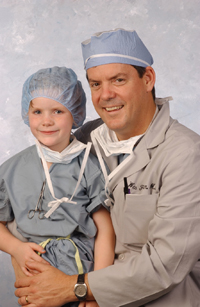 It had been over ten years since I had my first "Bring Your Daugher to Work" experience. Her first time she wore scrubs they were bigger than she was. She always remembered that day.
There probably won't be too many more times we'll share such an experience together. Like most young college kids she's growing her own life now, trying to decide what to do.
"Why not shadow me and my nurse practitioner for a day to see what think? I have a light day, you could really see what we do first-hand!"
Much to my surprise, she agreed. And so we spent the entire day together once more.
She saw everything I did but this time with a more critical eye. She saw everything my nurse practitioner did, too. Just in case. She witnessed the miracle of anesthesia, a strangeness of the "time-out," then the jolt of a cardioversion. She saw the smile of the patient after it was all over. She saw the real discourse that occurs between colleagues that are used to working with each other. She saw the computer. She saw the EKG. She saw the family discussion afterward. Everything.
Perhaps most touching was the moment we walked into a long-time patient's room - a fellow doctor - and there he was, lying in bed with his ankles too swollen with his wife, daughter, and granddaughters by his side. His eyes, while a bit sunken, were beaming when he saw me.
"I'd like to introduce you you my family!" he exclaimed. And one by one he introduced me to his lovely wife, daughter, and granddaughters who had all come to spend some time with him. Of course, I couldn't resist, and similarly gushed, "I'd like to introduce you to a member of my family, too!" I proudly introducing my daughter to him and the rest of his extended family. His grandaughters were slightly younger than my daughter - just starting to think about college. My daughter, now a veteran of the college experience, offered some words of encouragement to them. They graciously nodded. I couldn't help but marvel how therapeutic that interaction was for both of us - doctor and patient - a way to bring our lives a bit closer, our understanding, more meaningful. Medicine is like that sometimes: one minute you're there to help the patient then you realize how much, in their grace, they help you.
I pretended not to think about this as I checked his defibrillator. "Working fine," I told him. He glanced at me and said "thank you" in a way I'll never forget: non-verbally with his eyes, as if to say, "I know how you're feeling."
We left the room and returned to the nurse's station - or maybe it should be called the "Computer Terminal Station," since doctors, pharmacists, physical therapists were all playing a game of musical chairs waiting for a terminal to open. More typing and staring at screens, more phone messages, documentation, lab checks, more typing, all clicked as fast as possible. Finally, after seeing more patients and typing more notes, we had a debriefing. Relaxed and looking forward to heading home, I asked her: "So what did you think?"
"You know, Dad, it was wonderful. Your patients are all so nice. But..."
There was a moment of hesitation in her voice, a concern, as she wrestled with how to break the news to me slowly; I could tell she didn't want to disappoint me.
"What is it?" I asked.
"... there's just so much typing!"
-Wes
She was right, of course. Daughters that you bring to work with you to shadow for a day can bring you back to what's important in medicine. In fact, seeing medicine through fresh eyes is helpful, especially when we forget to look up from our work-a-day lives.
 It had been over ten years since I had my first "Bring Your Daugher to Work" experience. Her first time she wore scrubs they were bigger than she was. She always remembered that day.
There probably won't be too many more times we'll share such an experience together. Like most young college kids she's growing her own life now, trying to decide what to do.
"Why not shadow me and my nurse practitioner for a day to see what think? I have a light day, you could really see what we do first-hand!"
Much to my surprise, she agreed. And so we spent the entire day together once more.
She saw everything I did but this time with a more critical eye. She saw everything my nurse practitioner did, too. Just in case. She witnessed the miracle of anesthesia, a strangeness of the "time-out," then the jolt of a cardioversion. She saw the smile of the patient after it was all over. She saw the real discourse that occurs between colleagues that are used to working with each other. She saw the computer. She saw the EKG. She saw the family discussion afterward. Everything.
Perhaps most touching was the moment we walked into a long-time patient's room - a fellow doctor - and there he was, lying in bed with his ankles too swollen with his wife, daughter, and granddaughters by his side. His eyes, while a bit sunken, were beaming when he saw me.
"I'd like to introduce you you my family!" he exclaimed. And one by one he introduced me to his lovely wife, daughter, and granddaughters who had all come to spend some time with him. Of course, I couldn't resist, and similarly gushed, "I'd like to introduce you to a member of my family, too!" I proudly introducing my daughter to him and the rest of his extended family. His grandaughters were slightly younger than my daughter - just starting to think about college. My daughter, now a veteran of the college experience, offered some words of encouragement to them. They graciously nodded. I couldn't help but marvel how therapeutic that interaction was for both of us - doctor and patient - a way to bring our lives a bit closer, our understanding, more meaningful. Medicine is like that sometimes: one minute you're there to help the patient then you realize how much, in their grace, they help you.
I pretended not to think about this as I checked his defibrillator. "Working fine," I told him. He glanced at me and said "thank you" in a way I'll never forget: non-verbally with his eyes, as if to say, "I know how you're feeling."
 |
| Our "selfie" that day |
We left the room and returned to the nurse's station - or maybe it should be called the "Computer Terminal Station," since doctors, pharmacists, physical therapists were all playing a game of musical chairs waiting for a terminal to open. More typing and staring at screens, more phone messages, documentation, lab checks, more typing, all clicked as fast as possible. Finally, after seeing more patients and typing more notes, we had a debriefing. Relaxed and looking forward to heading home, I asked her: "So what did you think?"
"You know, Dad, it was wonderful. Your patients are all so nice. But..."
There was a moment of hesitation in her voice, a concern, as she wrestled with how to break the news to me slowly; I could tell she didn't want to disappoint me.
"What is it?" I asked.
"... there's just so much typing!"
-Wes
Thursday, October 10, 2013
You Can't Say You Weren't Warned
He looked ahead, seeing his feet on the hearth. There was smoke rising from one of the three logs, and he marveled at the small flicker of flame that stretched up and ignited the smoke that swirled above the log, dancing briefly somewhat joyously, then gone again, smoke returning.
"You can't say you weren't warned," she said.
He sat, reflecting on her words. So much years of work, so much effort, breadwinner, worker, eager participant in so many others' life-and-death moments. That was his job, right? It was his aphrodisiac, his salve, his calling for so long. Always being there for others, on call with pager on, nurses and Emergency Rooms calling. But now, after the sun has long set in a quiet house with his wife and blind, loving cocker spaniel next to him, he reflected: "Where did the time go?"
"You can't say you weren't warned."
With that, the door opened. The young man entered, unshaven, hurried and preoccupied, but seemed happy. So much was happening, albeit it was his own separate calling, full of its own challenges and pressures. He sprung to his feet to greet the young man, remembering when he had been in a similar place at a much earlier time: anxious, uncertain, excited, like when he directed his the first real code - so much responsibility.
"Happy birthday, Dad," the young man said.
They hugged, shared a story together, then a piece of cake. Before he knew it, "I wish I could stay longer, but I have to go. I've still got a ton to do."
"I understand. You'll do fine. Thanks for coming over. Good luck." And after grabbing the remaining piece of cake to bring to his roommate, the young man left as quickly as he had come. His wife, exhausted after a long day herself, headed to bed and left him to close up for the night.
He went to the front door, placed his hand on the lock and stood for a moment. The porch light shone dimly on the front walkway as it had done for so many years, a guide for the inevitable late night arrival that would always enter later.
Until now.
The house stood eerily silent, a stark reminder of all that has happened while he was busy doing other things. He turned the lock, switched off the unnecessary porch light, then headed to bed as her words echoed:
"You can't say you weren't warned."
-Wes
"You can't say you weren't warned," she said.
He sat, reflecting on her words. So much years of work, so much effort, breadwinner, worker, eager participant in so many others' life-and-death moments. That was his job, right? It was his aphrodisiac, his salve, his calling for so long. Always being there for others, on call with pager on, nurses and Emergency Rooms calling. But now, after the sun has long set in a quiet house with his wife and blind, loving cocker spaniel next to him, he reflected: "Where did the time go?"
"You can't say you weren't warned."
With that, the door opened. The young man entered, unshaven, hurried and preoccupied, but seemed happy. So much was happening, albeit it was his own separate calling, full of its own challenges and pressures. He sprung to his feet to greet the young man, remembering when he had been in a similar place at a much earlier time: anxious, uncertain, excited, like when he directed his the first real code - so much responsibility.
"Happy birthday, Dad," the young man said.
They hugged, shared a story together, then a piece of cake. Before he knew it, "I wish I could stay longer, but I have to go. I've still got a ton to do."
"I understand. You'll do fine. Thanks for coming over. Good luck." And after grabbing the remaining piece of cake to bring to his roommate, the young man left as quickly as he had come. His wife, exhausted after a long day herself, headed to bed and left him to close up for the night.
He went to the front door, placed his hand on the lock and stood for a moment. The porch light shone dimly on the front walkway as it had done for so many years, a guide for the inevitable late night arrival that would always enter later.
Until now.
The house stood eerily silent, a stark reminder of all that has happened while he was busy doing other things. He turned the lock, switched off the unnecessary porch light, then headed to bed as her words echoed:
"You can't say you weren't warned."
-Wes
Tuesday, October 01, 2013
Ten Crackers

For years they have been an on-call snack staple for young doctors in training throughout the United States. These little morsels have probably saved more lives than defibrillators after hours, especially if they are topped with a hefty dollop of peanut butter.
Admittedly, these flat brown crispy tastees don't contain much nutritional value. They are probably a dentist's nightmare. But after many late hours on call well after the dining hall closes, you'd be surprised how good these little devils taste, especially when they can be enjoyed in a quiet reflective moment alone or with a colleague in the nutrition room. Graham crackers have a way of bringing you back to earth after you've dealt with a code, had to pronounce someone dead, or worked through a difficult family interaction in the wee hours of the morning.
But times are tough for hospitals now: censuses are down (as are revenues) as the uncertain effects of health care reform descend. Consequently, it makes sense for hospitals to trim budgets where they can. After all, if its between graham crackers or nurses, I'm sure we'd all agree that graham crackers should be trimmed before nursing staff.
But I wonder if supplying an entire ward of fifty patients with only 10 of these little packets a day makes sense for physician and nursing morale. Doctors and nurses, already dealing with reduced incomes and threatened with even more to come, are finding it harder and harder to find the tiny perks that make the late nights and long weekends tolerable. Finding none of these hidden snack treasures on a ward after working 15 hours straight certainly isn't the end of the world, but when people are tired and hungry, it's noticed more than any highly-paid administrative decision-maker who's tucked neatly in bed could ever imagine.
Good leaders listen.
Good leaders know the value of small gestures.
But it's only the best of leaders that appreciate the importance of an ample supply of graham crackers.
-Wes
Monday, August 26, 2013
On Sabbatical
I will be sparsely interacting with the internet as I take my last child off to college this week. It's a strange time - one where the home becomes more quiet as a moment ends for the parent yet heralds and exciting beginning for their child. Others have recently articulated this strange time well, so I leave you with the words of a much better writer, Michael Gerson of the Washington Post:
"Eventually, the cosmologists assure us, our sun and all suns will consume their fuel, violently explode and then become cold and dark. Matter itself will evaporate into the void and the universe will become desolate for the rest of time. ... (Read the rest)-Wes
Wednesday, August 21, 2013
Why Do I Try So Hard?
It's always the same: It's the fifth hour of the procedure. As your ankles ache and the perspiration drips beneath your lead, you stand there wondering why you try so hard to fix this arrhythmia. You realize this is not cost effective. You're tying up the lab. The staff and anesthesiologist are getting restless. The music drones on. You feel you're not getting anywhere. "Then again, maybe if I just try this...," you think. And you try this and it fails. Meanwhile, the fluoroscopy clock ticks, your fight continues.
Then you remember the story: the syncope, the wife, the kids, the vocation. They're depending on you. Not a tech, not an anesthesiologist, not a nurse, not an administrator. You. So you keep going, just a bit longer.
And then, sometimes, miraculously, you win. It's all worth it. You've completely changed that person's life. You are the hero. You are the superstar.
But just as often, you have to quit. Your feet are too sore, the radiation dose too high, and the hour too late to safely continue. You have to face the family, the disappointed looks, the doubt about whether you were the right person to do this procedure, and the sad look on your patient's face when you break the news.
And you find yourself asking once again:
Why do I try so hard?
Why?
-Wes
Then you remember the story: the syncope, the wife, the kids, the vocation. They're depending on you. Not a tech, not an anesthesiologist, not a nurse, not an administrator. You. So you keep going, just a bit longer.
And then, sometimes, miraculously, you win. It's all worth it. You've completely changed that person's life. You are the hero. You are the superstar.
But just as often, you have to quit. Your feet are too sore, the radiation dose too high, and the hour too late to safely continue. You have to face the family, the disappointed looks, the doubt about whether you were the right person to do this procedure, and the sad look on your patient's face when you break the news.
And you find yourself asking once again:
Why do I try so hard?
Why?
-Wes
Saturday, July 13, 2013
The Clash of Cultures
"It looks like you've done very well, Mr. Smith..."
"Thank you, doctor."
He left the patient's room and ambled back to the nurses station, legs tired and ankles somewhat swollen. It had been a long case and now he just had to type his note, send an email message, and review his schedule for the following day. He sat down at the computer and logged in. That's when he looked up briefly and saw them.
They looked so young. Their newly-pressed white coats accentuated the faint glow of the computer screens on their perfect skin. They looked like thoroughbreds, while he the old horse put to pasture, if they had noticed. But they were each staring intently at the electronic screen arranged along the desk countertops, one with his back to the other two. Occasionally the one would turn to ask the other two a question, then return with a blank stare to the screen before him. The new residents had arrived.
"So different," he thought. There they are, seated before a computer looking more like telephone operators rather than doctors. "What were they thinking?" he wondered silently, then pondered how things had changed.
For now he realized that they didn't have to know where the blood or microbiology laboratories were. They didn't have to search for an x-ray. Instead, they had to find which button to click. This day, this moment, was probably their dream come true. For it was the day they had waited and worked so hard for, the day they became a working doctor. Underneath the electronic facade, they were probably excited, eager, wanting to do a good job: excitement and anxiety, all rolled up into one.
But somehow, it was different. The new doctors rarely looked at each other as they stared vacantly into their computer screens. It was as though they were transfixed by medical porn. It looked as though they were being bred into an interchangeable electronic medical documentation team, not a cohesive, personal one equipped with interpersonal skills. After all, they really didn't have to see or listen to each other any more. They could send each other an e-mail, text messages, or chose to stay isolated, listening to the rapid-fire clicking taking place next to them. Emotionally and physically, they could be miles apart or seated together, it really didn't matter any more. It was so efficient, so neat, that their organized orientation to electronic dehumanization required very little movement, very little patient contact.
But young doctors, he realized, were meeting their patients like they've always met new friends on Facebook: electronically first. Was this better? He wasn't sure. Would the initial impressions garnered from the chart skew their ability to look independently and objectively at their patient? Will they be capable of accurate empathy? Will a patient's undocumented concerns be missed? Will new doctors forget to use the subtle signs and symptoms brought forth by the physical exam to head off disaster or just wait for the test results to return before reacting instead? Will they see enough, smell enough, do enough, sweat enough, to learn enough?
He wondered.
But they were young. They could learn. They would learn. They'd adapt.
And they could type faster.
Perhaps. Maybe. We'll see. "I can only hope," he thought, realizing he wasn't getting any younger.
He turned his gaze back to his own screen and clicked the icons slowly, the way he had done hundred of times before, filling his note with voluminous immaterial drivel the government required, then added a single line: "Doing well. Home today." So meaningful, he silently quipped, meaningful indeed.
He rose to say goodbye to the unit clerk, who smiled as she peeled her eyes from her iPhone, "Goodnight, doctor."
"Take care of the new guys, okay?" as he pointed to the people behind her with the new white coats.
"You bet," she said, not turning to see them. Her eyes reset to to her iPhone screen instead.
-Wes
"Thank you, doctor."
He left the patient's room and ambled back to the nurses station, legs tired and ankles somewhat swollen. It had been a long case and now he just had to type his note, send an email message, and review his schedule for the following day. He sat down at the computer and logged in. That's when he looked up briefly and saw them.
They looked so young. Their newly-pressed white coats accentuated the faint glow of the computer screens on their perfect skin. They looked like thoroughbreds, while he the old horse put to pasture, if they had noticed. But they were each staring intently at the electronic screen arranged along the desk countertops, one with his back to the other two. Occasionally the one would turn to ask the other two a question, then return with a blank stare to the screen before him. The new residents had arrived.
"So different," he thought. There they are, seated before a computer looking more like telephone operators rather than doctors. "What were they thinking?" he wondered silently, then pondered how things had changed.
For now he realized that they didn't have to know where the blood or microbiology laboratories were. They didn't have to search for an x-ray. Instead, they had to find which button to click. This day, this moment, was probably their dream come true. For it was the day they had waited and worked so hard for, the day they became a working doctor. Underneath the electronic facade, they were probably excited, eager, wanting to do a good job: excitement and anxiety, all rolled up into one.
But somehow, it was different. The new doctors rarely looked at each other as they stared vacantly into their computer screens. It was as though they were transfixed by medical porn. It looked as though they were being bred into an interchangeable electronic medical documentation team, not a cohesive, personal one equipped with interpersonal skills. After all, they really didn't have to see or listen to each other any more. They could send each other an e-mail, text messages, or chose to stay isolated, listening to the rapid-fire clicking taking place next to them. Emotionally and physically, they could be miles apart or seated together, it really didn't matter any more. It was so efficient, so neat, that their organized orientation to electronic dehumanization required very little movement, very little patient contact.
But young doctors, he realized, were meeting their patients like they've always met new friends on Facebook: electronically first. Was this better? He wasn't sure. Would the initial impressions garnered from the chart skew their ability to look independently and objectively at their patient? Will they be capable of accurate empathy? Will a patient's undocumented concerns be missed? Will new doctors forget to use the subtle signs and symptoms brought forth by the physical exam to head off disaster or just wait for the test results to return before reacting instead? Will they see enough, smell enough, do enough, sweat enough, to learn enough?
He wondered.
But they were young. They could learn. They would learn. They'd adapt.
And they could type faster.
Perhaps. Maybe. We'll see. "I can only hope," he thought, realizing he wasn't getting any younger.
He turned his gaze back to his own screen and clicked the icons slowly, the way he had done hundred of times before, filling his note with voluminous immaterial drivel the government required, then added a single line: "Doing well. Home today." So meaningful, he silently quipped, meaningful indeed.
He rose to say goodbye to the unit clerk, who smiled as she peeled her eyes from her iPhone, "Goodnight, doctor."
"Take care of the new guys, okay?" as he pointed to the people behind her with the new white coats.
"You bet," she said, not turning to see them. Her eyes reset to to her iPhone screen instead.
-Wes
Friday, June 21, 2013
Journals R.I.P.
I cleaned house today: a few years of my favorite print journals were stacked high, soon to enter the recycling bin:
It's funny. As a medical student, I cut out articles and carefully sorted them by topic in manila folders separated by organ systems in a large standup file cabinet for easy reference. I cherished that file system for it contained the latest and greatest articles on whatever topic I needed.
Next came the purview of the really cool docs: bound journals. Boy, did you look bad-ass having bound journals on your shelf (just like those in the library!). It only cost a minor fortune to send them to a binding company, wait several months and, presto, you were as cool as your professors and ALWAYS had the latest articles you needed close by.
But as fast as that moment arrived, it disappeared.
After all, the volume of journals you needed quickly quadrupled, quintupled, and expanded faster than vinegar to baking soda. Stacks and stacks of journals accumulated in my office so quickly that I found I never had time to read them all. So I triaged: New England Journal of Medicine? Nope. Annals of Internal Medicine? Nope. JACC? Sure. Heart Rhythm? Have to have that one. PACE? Not so much.
And on and on it went.
But now, thankfully, there's RSS feeds. And Google.
So goodbye my paper-backed friends, it's been wonderful. Thanks for all the memories and the security of knowing you were there.
May you now, officially, rest in peace.
Somewhere else.
-Wes
 |
| R.I.P., journal clutter. |
It's funny. As a medical student, I cut out articles and carefully sorted them by topic in manila folders separated by organ systems in a large standup file cabinet for easy reference. I cherished that file system for it contained the latest and greatest articles on whatever topic I needed.
Next came the purview of the really cool docs: bound journals. Boy, did you look bad-ass having bound journals on your shelf (just like those in the library!). It only cost a minor fortune to send them to a binding company, wait several months and, presto, you were as cool as your professors and ALWAYS had the latest articles you needed close by.
But as fast as that moment arrived, it disappeared.
After all, the volume of journals you needed quickly quadrupled, quintupled, and expanded faster than vinegar to baking soda. Stacks and stacks of journals accumulated in my office so quickly that I found I never had time to read them all. So I triaged: New England Journal of Medicine? Nope. Annals of Internal Medicine? Nope. JACC? Sure. Heart Rhythm? Have to have that one. PACE? Not so much.
And on and on it went.
But now, thankfully, there's RSS feeds. And Google.
So goodbye my paper-backed friends, it's been wonderful. Thanks for all the memories and the security of knowing you were there.
May you now, officially, rest in peace.
Somewhere else.
-Wes
Thursday, May 30, 2013
Transitions
 |
The world was ahead of him now as the year ended. He had so much to do, so much ahead: a graduation, new city, wife with a new job, a need to find a home and new nanny, the need to learn a new hospital, community, and yes, even a need to sit through four hours of EPIC training, again, to fulfill his educational prerequisite for his new hospital's orientation.
"You bet," his mentor said, "good luck with everything. This will be an incredibly exciting time for you" as the fellow left. Silently, the older doctor reflected on the excitement and stress that change brings. He could see that the young fellow was already gone, his attention turned elsewhere. Good for him: focused, excited, slightly anxious, but eager to move forward.
 |
 |
Good for her, he thought.
As the cool carbonated bubbles of a lime Lacroix slid down his throat, he sat back, eyes closing, thankful he wasn't on call this night.
Good for me, he thought.
-Wes
Monday, April 08, 2013
Psychology's New Adjustment Disorder
You can see it in their eyes as they dart left and right, up and down. Their hands make rapid, self-flagellating movements over their chest, hips, buttocks. Their pulse quickens. Cold beads of sweat rise across their upper lip and forehead. Their breathing is shallow at first, then builds, gradually, to a large sigh. Inaudible words are whispered and the individual appears agitated, often pacing in circles as they speak.
They stop. They frantically look about, rechecking pockets, coats, desktops, and even peer under the keyboard. Their thoughts circle, pupils constrict, palms moisten, and mouth goes dry.
Then, as fast it came, nothing. They try to stay calm but the damage is done. A blank stare descends as they look toward somewhere in space, as if every hope, every friend, every loved one, is lost.
"Doctor, are you okay?"
"Oh, I'm sorry. Acute Rectangle Deficiency...."
"... I think I left my cellphone at home."
-Wes
They stop. They frantically look about, rechecking pockets, coats, desktops, and even peer under the keyboard. Their thoughts circle, pupils constrict, palms moisten, and mouth goes dry.
Then, as fast it came, nothing. They try to stay calm but the damage is done. A blank stare descends as they look toward somewhere in space, as if every hope, every friend, every loved one, is lost.
"Doctor, are you okay?"
"Oh, I'm sorry. Acute Rectangle Deficiency...."
"... I think I left my cellphone at home."
-Wes
Wednesday, February 06, 2013
On the Joy of Medicine
Medicine is unique because it involves people. While people make this job challenging, they also make this job the best job in the world. Today was no exception.
Today I met a new patient who has allowed me to share a brief story and a snippet of his medical history here on this blog. His name is Mr. Carl Bogaard.
On January 9, 2012, Mr. Bogaard wrote a brief note to the Chicago Tribune that said simply:
While this video is remarkable in its own right, there is a little something else you should know.
Mr. Bogaard has a permanent pacemaker that was implanted in 2009 for complete heart block and is completely dependent on his pacemaker for his heart to beat. Oh, and he really did 59 push-ups.
Now you know why I love my job.
-Wes
Today I met a new patient who has allowed me to share a brief story and a snippet of his medical history here on this blog. His name is Mr. Carl Bogaard.
On January 9, 2012, Mr. Bogaard wrote a brief note to the Chicago Tribune that said simply:
"My family is treating me like a hero just because I am going to be 95 years old. How lucky can I be to have a family like that?"The letter was noticed by a local radio personality, Jonathan Brandmeier from WGN, who contacted Mr. Bogaard and learned that he performed 50 push-ups a day, every day. So he decided to invite him to a push-up competition. Take a moment to view Mr. Bogaard's YouTube video of his competition:
While this video is remarkable in its own right, there is a little something else you should know.
Mr. Bogaard has a permanent pacemaker that was implanted in 2009 for complete heart block and is completely dependent on his pacemaker for his heart to beat. Oh, and he really did 59 push-ups.
Now you know why I love my job.
-Wes
Sunday, January 27, 2013
By the Numbers
Diagnosis codes: numbers.
Procedure codes: numbers.
Speadsheets of one's "productivity:" numbers.
Spreadsheets of RVU's: numbers.
Spreadsheets of total office visits: numbers.
Speadsheets of new office visits: numbers.
Spreadsheets of complications: numbers.
Spreadsheets of new codes on top of old codes: nothing more than more numbers.
Then numbers converted to numbers.
Speadsheets of revenue: numbers.
Spreadsheets of accounts receivables: numbers.
Spreadsheets of patient satisfaction scores: numbers.
Number of Patient calls: numbers.
Number of Staff messages: numbers.
Miles traveled: numbers.
Continuing Medical Education credits: numbers.
National Practitioner Identifier: numbers.
Letters typed, converted to bytes, then bits, then zeros and ones.
Fingers numb, eyes searching. Unable to find a number...he stopped and looked up.
He wondered.
Where are the codes for color, for smell, for sound, for touch, for tears, for fear, for terror, for pain, for exhaustion, for laughter, for teaching, for listening, for learning, for love, for patience, for tenderness, or for grace?
"They paved paradise and put up a parking lot," he thought as he marveled at the revery of medicine's latest myopic trend:
cold, raw, unemotional, unassailable, yet remarkably error-prone,
numbers.
-Wes
Procedure codes: numbers.
Speadsheets of one's "productivity:" numbers.
Spreadsheets of RVU's: numbers.
Spreadsheets of total office visits: numbers.
Speadsheets of new office visits: numbers.
Spreadsheets of complications: numbers.
Spreadsheets of new codes on top of old codes: nothing more than more numbers.
Then numbers converted to numbers.
Speadsheets of revenue: numbers.
Spreadsheets of accounts receivables: numbers.
Spreadsheets of patient satisfaction scores: numbers.
Number of Patient calls: numbers.
Number of Staff messages: numbers.
Miles traveled: numbers.
Continuing Medical Education credits: numbers.
National Practitioner Identifier: numbers.
Letters typed, converted to bytes, then bits, then zeros and ones.
Fingers numb, eyes searching. Unable to find a number...he stopped and looked up.
He wondered.
Where are the codes for color, for smell, for sound, for touch, for tears, for fear, for terror, for pain, for exhaustion, for laughter, for teaching, for listening, for learning, for love, for patience, for tenderness, or for grace?
"They paved paradise and put up a parking lot," he thought as he marveled at the revery of medicine's latest myopic trend:
cold, raw, unemotional, unassailable, yet remarkably error-prone,
numbers.
-Wes
Sunday, December 16, 2012
Trying to Make Sense of the Senseless
I believe that every human soul is teaching something to someone nearly every minute here in mortality.
- M. Russell Ballard
Aside from being a bit warmer than usual, it was a typical Friday afternoon. A patient with syncope, a paucity of heart beats, the need for pacemaker. The lab techs rolled their eyes as the room was prepped. An early as exit was not going to happen after all.But the later hour promised efficiency for the only way out was through. We each did our thing and like so many times before, sighed in relief that things went smoothly. Home at a reasonable hour was to happen after all.
Until the ER called while I was closing.
"Another patient, 97, heart rate 21, needs a pacer, too," they said.
“What does the family want? He is 97 after all…” I asked as I placed the final layer of sutures.
“The patient wants it. Takes care of his wife…,” they said.
“I’ll finish here and you guys get the room ready. I’ll see the ER patient. Has the family of this patient been called?”
Once again, the staff excelled. Patient transported from the table, family contacted, then the room cleaned and readied for the next potential patient.. For me, the note would wait. A brief discussion, orders entered, then ER visit, wondering all the while if the next pacemaker needed to be done.
It was easy to find the ER bay as every nurse and technician pointed the way to a small-framed man who was alert and conversant, but clearly not feeling himself. His symptoms started earlier in the morning and just didn’t get better- his medications hadn't changed.
“Do we have a potassium?” I asked.
“’lytes are fine,” someone said, “K’s 4.5.”
History, physical, review of the data – all pointed to one thing: a pacemaker. We talked risks, alternatives, pros and cons. He looked at his wife, quietly seated in the corner. “Of course you need it!” she bellowed.
And that was that.
And so it was. A temp wire, then permanent pacer with tripling of his heart rate. He became more talkative, his blood pressure easier to obtain.
But as the tension lifted, the chatter grew.
“Did you hear?”
“Hear what?”
“About the kids…”
Detail after horrible detail came to those of us shielded from the day’s events. The shock. The evil. The senselessness of it all.
I looked down at the tissue beneath my hands: thinned, frail, bleeding still as the closure was being completed. As time passed, the lab grew strangely silent, the irony clearly palpable...
... one old heart mended, while the others...
God, there are no words...
God bless them. God bless their families.
God bless us all.
-Wes
Monday, December 03, 2012
On Folding
Every surgeon has been there at some time in their career.
It's a horrible, exhausting feeling.
Yet one we all must come to grips with: knowing when to stop.
There you are, six hours into a case, legs rubbery, mind racing, and barely conscious of the world outside the narrow view of the operative field. A life, literally in your hands, asleep now, but hoping (with you) for the best of outcomes on this last try.
"Maybe if I just..." you think, and a new idea is tried to no avail.
"Now, let's look at that again," you ask your techs. "Which electrogram's earlier? That one is CLEARLY earlier...right?" as you try to convince yourself that another choice is better. "What about here?" You go back and recheck once more, just to be sure...
So you do.
And it's still a dangerous spot to burn.
"Maybe it's on the left side?" So you cross to the left side and repeat the process. Everything maps back to the spot your dreaded before.
"Maybe if I give just a little energy here...." You hold your breath.
No effect.
"But if I burn here, I risk giving the patient a pacemaker. We never talked about a pacemaker," you think.
Yet the tachycardia persists, as if laughing at you and your inability to locate its origin.
* Bruuuuhaaaahhaaaahhaaaa... *
"Bastard!" you think. "I can get this!"
So you map above, below, left and right, forward and back...
* Bruuuuhaaaahhaaaahhaaaa... *
Like stubborn mule, you fail to give in. Again.
And again...
Until finally...
... you quit. A white flag raised. It beat you. Yes, you lost.
The supporting team with you, ever helpful, feels the patient's loss with you. They are relieved, though, for a pacemaker will not be in the offing. Like you, they know there will be another day, another arrhythmia: another victory to quell the sting of this defeat.
And while the Defeated hangs his head low to talk to the family, you then realize the the family is just as exhausted and concerned as you. They thank you for trying. They understand.
That's when you know you did the right thing.
-Wes
It's a horrible, exhausting feeling.
Yet one we all must come to grips with: knowing when to stop.
There you are, six hours into a case, legs rubbery, mind racing, and barely conscious of the world outside the narrow view of the operative field. A life, literally in your hands, asleep now, but hoping (with you) for the best of outcomes on this last try.
"Maybe if I just..." you think, and a new idea is tried to no avail.
"Now, let's look at that again," you ask your techs. "Which electrogram's earlier? That one is CLEARLY earlier...right?" as you try to convince yourself that another choice is better. "What about here?" You go back and recheck once more, just to be sure...
So you do.
And it's still a dangerous spot to burn.
"Maybe it's on the left side?" So you cross to the left side and repeat the process. Everything maps back to the spot your dreaded before.
"Maybe if I give just a little energy here...." You hold your breath.
No effect.
"But if I burn here, I risk giving the patient a pacemaker. We never talked about a pacemaker," you think.
Yet the tachycardia persists, as if laughing at you and your inability to locate its origin.
* Bruuuuhaaaahhaaaahhaaaa... *
"Bastard!" you think. "I can get this!"
So you map above, below, left and right, forward and back...
* Bruuuuhaaaahhaaaahhaaaa... *
Like stubborn mule, you fail to give in. Again.
And again...
Until finally...
... you quit. A white flag raised. It beat you. Yes, you lost.
The supporting team with you, ever helpful, feels the patient's loss with you. They are relieved, though, for a pacemaker will not be in the offing. Like you, they know there will be another day, another arrhythmia: another victory to quell the sting of this defeat.
And while the Defeated hangs his head low to talk to the family, you then realize the the family is just as exhausted and concerned as you. They thank you for trying. They understand.
That's when you know you did the right thing.
-Wes
Sunday, November 18, 2012
The Encounter
They sat together, staring down at their feet not sure what to say.
One was a silent war hero from the French Resistance, the other his doctor.
It was a chance encounter. He, supporting his wife as she checked in to the orthopedic clinic, the other, there himself for the first time as patient. For each, as life, it was unexpected.
They sat smiling, reflecting on the irony of it all.
Their story together, while brief at first, was rich. On a trip back to his homeland of France, he had brought down a 747 single-handedly as his defibrillator fired repeatedly. The event both humbled and embarrassed his doctor whose hubris had assured him of the effectiveness of a prior ablation, only to awaken to the epiphany that arrhythmias, like life, are difficult to predict. An AV junction ablation would be required to quell another unexpected arrhythmic onslaught. Both realized they were doing the best they could at the time. Neither were in control. But both had prevailed together. And through their long history together, more stories were told - secret, personal stories - as they developed a deep sense of admiration and appreciation for the other. But the stories were always told on the doctors' turf.
Until now.
There they were again: younger doctor joining the war hero once more as equals.
Fighting the fight on the same field now. Quietly sitting. Staring. Smiling.
Together.
-Wes
Subscribe to:
Posts (Atom)