Showing posts with label Quotes. Show all posts

Sunday, February 20, 2011

Protestors Breakdancing In Wisconsin State Capitol Building


Emma Goldman in her 1931 autobiography Living My Life:

At the dances I was one of the most untiring and gayest. One evening a cousin of Sasha [Alexander Berkman], a young boy, took me aside. With a grave face, as if he were about to announce the death of a dear comrade, he whispered to me that it did not behoove an agitator to dance. Certainly not with such reckless abandon, anyway. It was undignified for one who was on the way to become a force in the anarchist movement. My frivolity would only hurt the Cause.

I grew furious at the impudent interference of the boy. I told him to mind his own business, I was tired of having the Cause constantly thrown into my face. I did not believe that a Cause which stood for a beautiful ideal, for anarchism, for release and freedom from conventions and prejudice, should demand the denial of life and joy. I insisted that our Cause could not expect me to become a nun and that the movement should not be turned into a cloister. If it meant that, I did not want it. "I want freedom, the right to self-expression, everyboy's right to beautiful, radiant things." Anarchism meant that to me, and I would live it in spite of the whole world--prisons, persecution, everything. Yes, even in spite of the condemnation of my own comrades I would live my beautiful ideal.


[Living My Life (New York: Knopf, 1934), p. 56]

Monday, January 17, 2011

Richard Eskow: Today's Visionary, Not Yesterday's Celebrity -- Martin Luther King, Jr's Words with Contemporary Images

Today's Visionary, Not Yesterday's Celebrity: Martin Luther King, Jr's Words with Contemporary Images
By Richard Eskow
Campaign for America's Future

A lot of people in the media are so afraid of offending anyone with controversial truths that they can't even tell the truth about the man whose holiday we're celebrating this weekend. Their coverage could give you the impression that the purpose of Martin Luther King, Jr's life was simply to make everybody in this country feel good about themselves - so good, in fact, that we deserve a day off just for having the wisdom to be born American.

You might be forgiven for thinking that everybody liked and admired Dr. King while he was alive - except maybe for a few angry old white people down South, who later realized the errors of their ways and were very sorry. The media have been so reluctant to convey Dr. King's true message that Glenn Beck can claim to have inherited his mantle and millions of people believe him. They're so afraid of telling his truth that a Pentagon official can claim that the recipient of the Nobel Peace Prize, the spiritual heir to Gandhi's mantle of nonviolence, would have supported the wars in Iraq and Afghanistan.

In this fame-addicted age, this activist and challenger of comfortable ideals has been presented as just another celebrity. And these days "celebrity" is another word for "commodity." Dr. King: Didn't they use his picture for one of those Apple ads? Or was it Nike? Didn't he have his picture taken with movie stars and singers? Future generations may come to believe he was famous just for being famous - you know, like Heidi Montag.

This weekend Dr. King's name will be spoken by politicians and business leaders who would probably despise what he would have had to say about 21st Century America. They'll try to appropriate his name and memory to ensure their own well-being. They hope to domesticate his moral challenge in order to protect their own ambition.

Fortunately, Martin Luther King left his words behind. In his honor, here are ten quotes from Dr. King, illustrated with images from today's events to show their continued meaning. If they don't manage to comfort the afflicted on this national holiday - and at least unsettle the comfortable - they're followed by a slide show with even more quotes.

To Read the Ten Quotes with the Images and the Meanings

Martin Luther King Jr.: We've Got to Begin to Ask Questions About the Whole Society

...And one day we must ask the question, “Why are there forty million poor people in America?” And when you begin to ask that question, you are raising questions about the economic system, about a broader distribution of wealth. When you ask that question, you begin to question the capitalistic economy. And I'm simply saying that more and more, we've got to begin to ask questions about the whole society...

Martin Luther King on racism, poverty, capitalism, and other big questions

The Southern Christian Leadership Conference Presidential Address: August 16, 1967

Saturday, November 20, 2010

Franz Kafka: On the Importance of Comrades

"We lead very uneasy lives: each day brings surprises, anxieties, hopes, and fears; it would be impossible for any individual to bear it all without the constant support of his comrades."

Franz Kafka, "Josephine the Singer, or the Mouse People"

Monday, November 01, 2010

The Verso Book of Dissent: From Spartacus to the Shoe-Thrower of Baghdad

Highly recommended... using this to keep my revolutionary spirit alive as I navigate the bureaucratic hoops of the tenure process ... my copy was only 14 bucks new.

The Verso Book of Dissent: From Spartacus to the Shoe-Thrower of Baghdad

Sunday, October 17, 2010

Alan Watts: The Most Strongly Enforced of All Known Taboos.....

"The most strongly enforced of all known taboos is the taboo against knowing who or what you really are behind the mask of your apparently separate, independent, and isolated egos." -- Alan Watts, The Book on the Taboo Against Knowing Who You Are (1966)

Saturday, October 02, 2010

Robert Barsky: Acting in Your Own Self-Interest

... any dissident or dissenter comes up against power, and interests, and, accordingly, considerable resources dedicated to the maintanence of status quo power relations, so it is incumbent upon him to offer up credible sources, "indisputable" facts and convincing rhetoric to guide people along the path to understanding not only the world but even their own self-interest. We ought to be concerned about how the government is spending our money, that is, the rational for spending a huge percentage of the federal budget on military and Pentagon expenses rather than upon the kind of social projects and programs that promote a higher standard of living for the majority of the population. This is self-interest, and informed involvement in political discussions by that measure is the exercise of our individual interest, in the same way as figuring out how our monthly income is being spent is in our own interest. But given that such self-interest conflicts with a power elite interest, because government officials like corporate managers would generally prefer to act with impunity (the cloaks of secrecy that surround our own government's actions on a range of fronts is testament to this), it's likely that attempts to become engaged in our own affairs will be met with resistance or scorn.
(xiii)

Wednesday, September 29, 2010

Charles Dickens: "It was the best of times, it was the worst of times..."

"It was the best of times, it was the worst of times, it was the age of wisdom, it was the age of foolishness, it was the epoch of belief, it was the epoch of incredulity, it was the season of Light, it was the season of Darkness, it was the spring of hope, it was the winter of despair, we had everything before us, we had nothing before us, we were all going direct to heaven, we were all going direct the other way - in short, the period was so far like the present period, that some of its noisiest authorities insisted on its being received, for good or for evil, in the superlative degree of comparison only."

Charles Dickens, A Tale of Two Cities (1859)

Thursday, September 23, 2010

Howard Zinn: Neutrality is Complicity

The world is already moving in certain directions--many of them horrifying. Children are going hungry, people are dying in wars. To be neutral in such a situation is to collaborate with what is going on.


--Howard Zinn, The Zinn Reader: Writings on Disobedience and Democracy. NY: Seven Stories Press, 1997: 17.

Wednesday, August 11, 2010

Victor Serge: On Anarchism

Anarchism swept us away completely because it demanded everything of us and offered everything to us. There was no remote corner of life that it failed to illumine ... or so it seemed to us... . Shot through with contradictions, fragmented into varieties and sub-varieties, anarchism demanded, before anything else, harmony between deeds and words.

--Victor Serge, Memoirs of a Revolutionary

cited in

Thursday, June 17, 2010

The Breeders: Divine Hammer

"Art is not a mirror held up to reality, but a hammer with which to shape it."
---Bertolt Brecht (German writer, 1898-1956)

"I'm just looking for one divine hammer … I'll bang it all day long."---Breeders "Divine Hammer" (1993)

Monday, June 07, 2010

Paul A. Baran: The Power of Sharks

The trouble with economics is not that it does not yet "know enough," as many of its practitioners love to repeat. Its fatal shortcoming is that is does not incorporate in its knowledge the understanding of what is necessary for the attainment of a better, more rational economic order. Hemingway's Old Man was a virtuoso fisherman. If he had a fault, it was his incapacity to realize the overwhelmingly destructive power of the sharks.


--Paul A. Baran, "Review of Joan Robinson's Economic Philosophy." in American Economic Review (June 1963)

Monday, May 31, 2010

Louis Brandeis: "The dominant element in our financial oligarchy..."

"The dominant element in our financial oligarchy is the investment banker. Associated banks, trust companies and life insurance companies are his tools... . The development of our financial oligarchy followed ... lines with which the history of political despotism has familiarized us: usurpation, proceeding by gradual encroachment rather than violent acts, subtle and often long-concealed concentration of distinct functions... . It was by processes such as these that Ceasar Augustus became master of Rome."

Louis Brandeis -- Other People's Money (1913)

Monday, May 17, 2010

Johnella E. Butler: What Is an American?

Butler, Johnnella E. “Reflections on Borderlands and the Color Line.” Power, Race, and Gender in Academe. eds. Shirley Geok-Lin Lim and Maria Herrera-Sobek. NY: The MLA, 2000: 8-31.

What is an American? What are new frameworks for community identity? How can the larger narrative for an inclusive civic culture and democracy be forged? . . . How do we encourage an American consciousness encompassing a cooperative, relational pluralism that connects, matrixlike, these merged entities with a mestiza consciousness to result in the American, the United States citizen, the America that Tocqueville projected, without the “tyranny of the majority” and binary individualism at the expense of community? … [How do we develop] ways of perceiving the relationships between and among people, our pasts, our pasts’ legacies, our present lives and struggles, our environments, disciplines, and texts. … How do we shape policies to encourage the best in human beings? How do we utilize scientific discovery and progress and technological advancement to the benefit of all human beings and our environment? How do we use our positions [of power] … to help the greatest number of [persons] become human beings who care about one another and their environment? How can we reveal the unity in diversity, the sameness in difference, and how can we engage long-term intractable differences and conflicts in ways productive to humans and not necessarily with the goal of winning and defeating? How can we live together with different moral positions without hatred, violence, or imposition and without permissiveness and amorality? How can we begin to understand that my freedom ends where your denial of freedom begins? Can we reconcile individualism with community and individual needs and desires with community needs and desires? (23-24)

Wednesday, May 05, 2010

Pierre Clastres: Classification of People's Histories

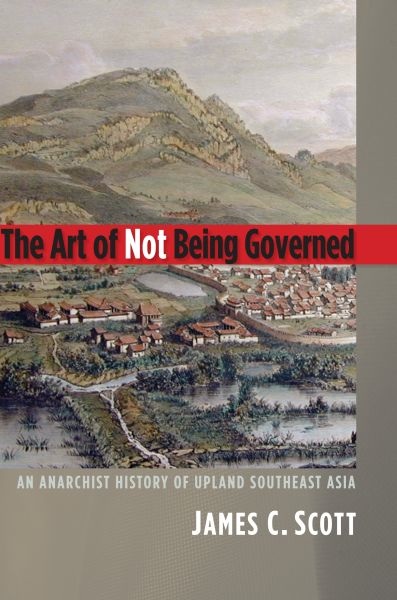
It is said that the history of peoples who have a history is the history of class struggle. It might be said with at least as much truthfulness, that the history of peoples without history is a history of their struggles against the state.


--Pierre Clastres La société contre l'État

quoted in:

Thursday, January 21, 2010

Ryszard Kapuściński: On A Dictator's Understanding of the Danger of Excessive Reading

"His Highness worked on the assumption that even the most loyal press should not be given in abundance, because that might create a habit of reading, and from there it is only a single step to the habit of thinking, and it is well known what inconveniences, vexations, troubles, and worries thinking causes. For even what is written loyally can be read disloyally. Someone will start to read a loyal text, then he will want a disloyal one, and so he will follow the road that leads him away from the throne, away from development, and straight toward the malcontents. No, no, His Majesty could not allow such demoralization to happen, such straying, and that's why in general he wasn't an enthusiast of excessive reading."

----Ryszard Kapuściński, The Emperor: Downfall of an Autocrat (1978)

Andre Gide: Words Inevitably Become More Beautiful...

"I came to understand that words inevitably become more beautiful from the moment they are no longer put together in response to the demands of others."

--Andre Gide, Philoctete (1898)

Thursday, October 29, 2009

Ursula K. Le Guin: On Anarchism

"An anarchist is one who, choosing, accepts the responsibility of choice."

--Ursula K. Le Guin, Mythmakers & Lawbreakers: Anarchist Writers on Fiction. ed. Margaret Killjoy. AK Press, 2009: 8.

Wednesday, October 28, 2009

Miguel de Unamuno: On Truth

"My religion is to seek for truth in life and for life in truth, even knowing that I shall not find them while I live."

--Miguel de Unamuno