Showing posts with label Environment. Show all posts

Sunday, March 20, 2011

David Korten: Agenda for a New Economy: From Phantom Wealth to Real Wealth

David Korten: Agenda for a New Economy -- From Phantom Wealth to Real Wealth
Needs No Introduction


Once a "very conservative republican," David Korten holds an MBA and PhD From Stanford Business School and worked for five and a half years as a faculty member of the Harvard University Graduate School of Business. After spending a number of years working in the global South, believing that all these low-income countries needed was to adopt America's capitalist system in order to resolve poverty, his perspective changed and he began to recognize the way in which our current economic system functions (and thrives) based on inequality, environmental destruction and social conflict.

Realizing that our global economy was based on the premise that individual greed is the path to collective prosperity and that this concept was completely flawed, David Korten came full circle and became an advocate for an economic system that is life-centred and community-based.

He has since authored several books, including: When Corporations Rule the World and The Great Turning: From Empire to Earth Community. His newest book and the title of this talk is called Agenda for a New Economy: From Phantom Wealth to Real Wealth, which argues for an end to the corrupt, phantom-wealth Wall Street money system. It must be replaced by a Main Street money system that favours life values over financial values, roots power in people and community, and supports local resilience and self-organization. This talk took place on October 29, 2010 at the Bronson Centre in Ottawa.

Listen to the Presentation

Friday, March 18, 2011

Alternatives: Steve Hounsell -- Biodiversity Primer

Biodiversity Primer
Alternatives (Canada)

Everything you ever wanted to know about Biodiversity, sustainability and fighting the good fight from the inside, with Steve Hounsell of Ontario Power Generation.

To Listen to the Interview

Tuesday, March 15, 2011

Hervé Kempf: Salary Ceiling, a Lever for Change

Salary Ceiling, a Lever for Change
by Hervé Kempf
Truthout

Over the last 30 years, disparities in income have exploded. While a big company CEO earned about 35 times the average salary of one of his employees during the Trentes glorieuses [the French appellation for the period of glowing economic prosperity from 1945 to 1975], today, he earns 300 times as much. Faced with this reality, the idea of a maximum salary is making its way in public debate. Let us review the arguments in favor of such a measure:

The idea is developing slowly - too slowly, undoubtedly, but surely - in sync with the awakening of the collective consciousness: a maximum acceptable income (MAI) is a necessity to repair societal connections and to institute environmental and social policy. Should it be called "allowable," "admissible," "acceptable?" That's not important. The principle is clear: too great inequality is not acceptable. Earning ten or thirty times more than others is perhaps admissible, earning three hundred times or a thousand times more is simply senseless. And in the period since Patrick Viveret and his research group relaunched the idea of a MAI at the beginning of the 2000s, it has become an essential element in policies of change.

I shall first show why the MAI is necessary from an environmental perspective. As we know, the increase in inequality over the last 30 years constitutes the central characteristic of capitalism's recent evolution. Numerous studies document this upsurge in inequalities. One of them, conducted by two economists from Harvard and the Federal Reserve Board, is among the most telling. Carola Frydman et Raven E. Saks [1] have compared the relationship between the salaries earned by the three top executives of the 500 biggest American companies and the average salary of their employees. This indicator of the progression of inequality remained stable from the 1940s, when the study's observations begin, up to the 1970s: the bosses at the companies included earned roughly 35 times the average salary of their employees. Then, starting in the 1980s, there's a discontinuity and the ratio increases constantly until it reaches over 300 in the 2000s.

Thus did capitalism experience a major turning point after the period known as the "Trente Glorieuses" in France [1945-75]. During that period, the collective growth in wealth allowed by the continuous rise in productivity was rather equitably distributed between capital and labor, such that the ratios of inequality remained stable. After the 1980s, a complex of circumstances, which are not appropriate to analyze here, led to an ever more pronounced discontinuity between the holders of capital and the mass of citizens[2]. The share of salaries (earned income) in Gross Domestic Product (GDP) sharply declined in favor of returns to capital. The European Commission's economic database, Ameco, elucidates the phenomenon [3]: in France, for example, salaries' share of GDP went from an average of 63 percent during the 1960s and 1970s to 57 percent during the 2000s, a drop of six points.

Consequently, the oligarchy is accumulating income and wealth to an extent not seen for a century. It spends its wealth in a frenzied consumption of yachts, private planes, immense residences, jewels, exotic trips: a flashy jumble of sumptuary squandering.

Why is this behavior a powerful motor of the environmental crisis? To understand that, we must turn to the great economist Thorstein Veblen. What did Veblen say? That the tendency to compete is inherent to human nature. We all have a propensity to compare ourselves to one another and we seek to demonstrate a little superiority, a symbolic difference compared to the people among whom we live, by such and such an external trait.

Veblen subsequently observed that several classes ordinarily exist within any given society. Each class is governed by the principle of competitive ostentation. And within each class, individuals take as their model the behavior pertaining in the class above, the conduct of which indicates what is good, what is chic, to do. The imitated social class itself takes its example from the class immediately above it on the scale of fortune and so on from the bottom to the top, such that the class located at the summit defines the cultural model of what is prestigious, of what extends to others.

What happens in a highly unequal society? It generates enormous waste because the material squandering that characterizes the oligarchy - itself prey to competition in conspicuous consumption - serves as an example to the whole society. Each at his own level, to the limit of his income, seeks to acquire the most attractive goods and symbols. Media, advertising, films, soap operas, magazines, celebrities are tools for the diffusion of the dominant cultural model.

Consume Less to Share Better

So then, how does the oligarchy block the developments necessary to prevent aggravation of the environmental crisis? Directly, of course, through the powerful - political, economic and media - levers it enjoys and which it exploits to maintain its privileges. Indirectly - and just as importantly - by this cultural model of consumption that impregnates the entire society and defines normality for it.

Now, preventing the aggravation of the environmental crisis and even beginning to restore the environment resides in the rather simple principle: humanity must reduce its impact on the biosphere. Achieving that goal is also simple in principle: it means reducing our extractions of minerals, wood, water, gold, oil etc. and reducing our green house gas emissions, as well as chemical, radioactive, packaging, and other wastes. In other words, reduce our societies' overall material consumption.
Who is going to reduce their material consumption? The 20 to 30 percent of the world's population that consume close to 70 percent of the resources extracted annually from the biosphere. Therefore, it's from these 20 to 30 percent that the change must come, which essentially means from the peoples of North America, Europe and Japan, as well as from the rich classes of emerging countries.

However, within these overdeveloped societies, we are not going to suggest that the poor, that those with modest income, reduce their material and energy consumption. Nor is it the hyper-rich only who must effect this reduction: there are not enough of them for that to sufficiently change the collective environmental impact. In fact, a reduction in material consumption must be suggested to the aggregate of Western middle classes.

To Read the Rest

Wednesday, March 09, 2011

“My Fear is that Climate Change is the Biggest Crisis of All”: Naomi Klein Warns Global Warming Could Be Exploited by Capitalism and Militarism

“My Fear is that Climate Change is the Biggest Crisis of All”: Naomi Klein Warns Global Warming Could Be Exploited by Capitalism and Militarism
Democracy Now

Award-winning journalist Naomi Klein has been reporting on global warming and the climate justice movement for years. “My fear is that climate change is the biggest crisis of all,” Klein says. “If we don’t come up with a positive vision of how climate change can make our economies and our world more just, more livable, cleaner, fairer, then this crisis will be exploited to militarize our economies, to create fortress continents. And we’re really facing a choice. What we really need now is for the people fighting for economic justice and environmental justice to come together.”

To Watch/Listen/Read

Thursday, March 03, 2011

Ian Urbina: Politics Seen to Limit E.P.A. as It Sets Rules for Natural Gas

Politics Seen to Limit E.P.A. as It Sets Rules for Natural Gas
By IAN URBINA
The New York Times

When Congress considered whether to regulate more closely the handling of wastes from oil and gas drilling in the 1980s, it turned to the Environmental Protection Agency to research the matter. E.P.A. researchers concluded that some of the drillers’ waste was hazardous and should be tightly controlled.

But that is not what Congress heard. Some of the recommendations concerning oil and gas waste were eliminated in the final report handed to lawmakers in 1987.

“It was like the science didn’t matter,” Carla Greathouse, the author of the study, said in a recent interview. “The industry was going to get what it wanted, and we were not supposed to stand in the way.”

E.P.A. officials told her, she said, that her findings were altered because of pressure from the Office of Legal Counsel of the White House under Ronald Reagan. A spokesman for the E.P.A. declined to comment.

Ms. Greathouse’s experience was not an isolated case. More than a quarter century of efforts by some lawmakers and regulators to force the federal government to police the industry better have been thwarted, as E.P.A. studies have been repeatedly narrowed in scope, and important findings have been removed.

For example, the agency had planned to call last year for a moratorium on the gas-drilling technique known as hydrofracking in the New York City watershed, according to internal documents, but the advice was removed from the publicly released letter sent to New York.

Now some scientists and lawyers at the E.P.A. are wondering whether history is about to repeat itself, as the agency undertakes a broad new study of natural gas drilling and its potential risks, with preliminary results scheduled to be delivered next year.

The documents show that the agency dropped some plans to model radioactivity in drilling wastewater being discharged by treatment plants into rivers upstream from drinking water intake plants. And in Congress, members from drilling states like Oklahoma have pressured the agency to keep the focus of the new study narrow.

They have been helped in their lobbying efforts by a compelling storyline: Cutting red tape helps these energy companies reduce the nation’s dependence on other countries for fuel. Natural gas is also a cleaner-burning alternative to coal and plentiful within United States borders, so it can create jobs.

But interviews with E.P.A. scientists, and confidential documents obtained by The New York Times, show long and deep divisions within the agency over whether and how to increase regulation of oil and gas drillers, and over the enforcement of existing laws that some agency officials say are clearly being violated.

Agency lawyers are in a heated debate over whether to intervene in Pennsylvania, where drilling for gas has increased sharply, to stop what some of those lawyers say is a clear violation of federal pollution laws: drilling waste discharged into rivers and streams with minimal treatment. The outcome of that dispute has the potential to halt the breakneck growth of drilling in Pennsylvania.

The E.P.A. has taken strong stands in some places, like Texas, where in December it overrode state regulators and intervened after a local driller was suspected of water contamination. Elsewhere, the agency has pulled its punches, as in New York.

Asked why the letter about hydrofracking in the New York City watershed had been revised, an agency scientist who was involved in writing it offered a one-word explanation: “politics.”

Natural gas drilling companies have major exemptions from parts of at least seven of the 15 sweeping federal environmental laws that regulate most other heavy industries and that were written to protect air and drinking water from radioactive and hazardous chemicals.

Coal mine operators that want to inject toxic wastewater into the ground must get permission from the federal authorities. But when natural gas companies want to inject chemical-laced water and sand into the ground during hydrofracking, they do not have to follow the same rules.

The air pollution from a sprawling steel plant with different buildings is added together when regulators decide whether certain strict rules will apply. At a natural gas site, the toxic fumes from various parts of it — a compressor station and a storage tank, for example — are counted separately rather than cumulatively, so many overall gas well operations are subject to looser caps on their emissions.

An Earlier Reversal

The E.P.A. also studied hydrofracking in 2004, when Congress considered whether the process should be fully regulated by the Safe Drinking Water Act.

An early draft of the study discussed potentially dangerous levels of contamination in hydrofracking fluids and mentioned “possible evidence” of contamination of an aquifer. The final version of the report excluded these points, concluding instead that hydrofracking “poses little or no threat to drinking water.”

Shortly after the study was released, an E.P.A. whistleblower said the agency had been strongly influenced by industry and political pressure. Agency leaders at the time stood by the study’s findings.

“It was shameful,” Weston Wilson, the E.P.A. whistleblower, said in a recent interview about the study. He explained that five of the seven members of that study’s peer review panel were current or former employees of the oil and gas industry.

“The study ended up being the basis for this industry getting yet another exemption from federal law when it should have resulted in greater regulation of this industry,” Mr. Wilson added.

Some E.P.A. scientists say this pattern may be playing out again in the national study of hydrofracking that Congress will consider as it decides whether drillers will have to operate under stricter rules.

Internal documents from early meetings, obtained through public-records requests filed by The Times and provided by E.P.A. officials who are frustrated with how research is being handled, show agency field scientists demanding that certain topics be included in the study. And earlier versions of the research plan indicate that many of those topics were to be included.

For example, the study was to consider the dangers of toxic fumes released during drilling, the impact of drilling waste on the food chain and the risks of this radioactive waste to workers.

But many of these concerns, cited by field scientists in earlier documents as high priorities, were cut from the current study plan, according to a version of it made public on Feb. 8.

Earlier planning documents also called for a study of the risks of contaminated runoff from landfills where drilling waste is disposed and included detailed plans to model whether rivers can sufficiently dilute hazardous gas-well wastewater discharged from treatment plants.

These topics were cut from the current study plan, even though E.P.A. officials have acknowledged that sewage treatment plants are not able to treat drilling waste fully before it is discharged into rivers, sometimes just miles upstream from drinking water intake plants. While the current study plan clearly indicates that the agency plans to research various types of radioactivity concerns related to natural gas drilling, this river modeling, which E.P.A. scientists say is important, has been removed.

In interviews, several agency scientists and consultants, who declined to be named for fear of reprisals, said the study was narrowed because of pressure from industry and its allies in Congress, as well as budget and time constraints.

Brendan Gilfillan, an agency spokesman, said that the plan remained broad and that the agency had taken additional steps to investigate the impacts of drilling, including recently issuing a subpoena against the energy services company Halliburton to force the company to provide fuller disclosure about its drilling operations.

To Read the Rest of the Article

Friday, February 25, 2011

Mark Bittman: How to Make Oatmeal . . . Wrong

How to Make Oatmeal . . . Wrong
By MARK BITTMAN
The New York Times

There’s a feeling of inevitability in writing about McDonald’s latest offering, their “bowl full of wholesome” — also known as oatmeal. The leading fast-food multinational, with sales over $16.5 billion a year (just under the GDP of Afghanistan), represents a great deal of what is wrong with American food today. From a marketing perspective, they can do almost nothing wrong; from a nutritional perspective, they can do almost nothing right, as the oatmeal fiasco demonstrates.

One “positive” often raised about McDonald’s is that it sells calories cheap. But since many of these calories are in forms detrimental rather than beneficial to our health and to the environment, they’re actually quite expensive — the costs aren’t seen at the cash register but in the form of high health care bills and environmental degradation.

Oatmeal is on the other end of the food spectrum. Real oatmeal contains no ingredients; rather, it is an ingredient. As such, it’s a promising lifesaver: oats are easy to grow in almost any non-extreme climate and, minimally processed, they’re profoundly nourishing, inexpensive and ridiculously easy to cook. They can even be eaten raw, but more on that in a moment.

Like so many other venerable foods, oatmeal has been roundly abused by food marketers for more than 40 years. Take, for example, Quaker Strawberries and Cream Instant Oatmeal, which contains no strawberries, no cream, 12 times the sugars of Quaker Old Fashioned Oats and only half of the fiber. At least it’s inexpensive, less than 50 cents a packet on average. (A serving of cooked rolled oats will set you back half that at most, plus the cost of condiments; of course, it’ll be much better in every respect.)

The oatmeal and McDonald’s story broke late last year, when Mickey D’s, in its ongoing effort to tell us that it’s offering “a selection of balanced choices” (and to keep in step with arch-rival Starbucks) began to sell the cereal. Yet in typical McDonald’s fashion, the company is doing everything it can to turn oatmeal into yet another bad choice. (Not only that, they’ve made it more expensive than a double-cheeseburger: $2.38 per serving in New York.) “Cream” (which contains seven ingredients, two of them actual dairy) is automatically added; brown sugar is ostensibly optional, but it’s also added routinely unless a customer specifically requests otherwise. There are also diced apples, dried cranberries and raisins, the least processed of the ingredients (even the oatmeal contains seven ingredients, including “natural flavor”).

A more accurate description than “100% natural whole-grain oats,” “plump raisins,” “sweet cranberries” and “crisp fresh apples” would be “oats, sugar, sweetened dried fruit, cream and 11 weird ingredients you would never keep in your kitchen.”

Since we know there are barely any rules governing promotion of foods, one might wonder how this compares to real oatmeal, besides being 10 times as expensive. Some will say that it tastes better, but that’s because they’re addicted to sickly sweet foods, which is what this bowlful of wholesome is.

Others will argue that the McDonald’s version is more “convenient.” This is nonsense; in the time it takes to go into a McDonald’s, stand in line, order, wait, pay and leave, you could make oatmeal for four while taking your vitamins, brushing your teeth and half-unloading the dishwasher. (If you’re too busy to eat it before you leave the house, you could throw it in a container and microwave it at work.

To Read the Rest of the Commentary

Jess Zimmerman: Costco agrees to stop ravaging the oceans

Costco agrees to stop ravaging the oceans
by Jess Zimmerman
Grist

It only took eight months for pressure from Greenpeace to make food-hoard purveyor Costco stop selling threatened fish. Twelve species that appear on Greenpeace's "red list" were also appearing on Costco's shelves. Activists finally made the wholesale giant revise its seafood policies, but first they had to open up economy-sized whoop@ss:

Over 100,000 people took action online -- sending messages to Costco's CEO demanding real progress. Thousands of concerned citizens downloaded our activist toolkit and participated in surveying Costco stores across the country. And, that's not all -- hundreds of phone calls were placed to stores, the Greenpeace airship flew over their headquarters and shoppers handed out informational flyers in front of stores on busy days.


Here's what the future of Costco's seafood purchasing and sales looks like:

-- Eliminate 12 red list species, which will not return unless the company can find an MSC-certified option. This is certainly not perfect -- we'd like to see these unsustainable options off the shelves until the populations recover -- but it's a major step forward. The species are:

- Atlantic cod
- Atlantic halibut
- Chilean sea bass
- Greenland halibut
- Grouper
- Monkfish
- Orange roughy
- Redfish
- Shark
- Skates and rays
- Swordfish
- Bluefin tuna

-- Pledge to play more of a leadership role within aquaculture;

-- Partner with World Wildlife Fund to examine their remaining wild-caught species and determine how to best transition to the most sustainable alternative; and

-- Acknowledge the role that the canned tuna industry plays within the global sustainable seafood movement and is in the process of shifting to more sustainable tuna sources in all sectors (fresh, frozen, and canned).


Whether you shop at Costco or elsewhere, there are apps -- like one from the Monterey Bay Aquarium -- that will let you know whether the fish you're buying is sustainable, and what to choose instead if it isn't.

To Read the Rest of the Report and Access Resources Mentioned

Wednesday, February 23, 2011

Silas House: My Polluted Kentucky Home

My Polluted Kentucky Home
By SILAS HOUSE
The New York Times

Berea, Ky.

LAST weekend I joined 19 other Kentuckians in a sit-in at the office of Gov. Steve Beshear. We were there to protest his support of mountaintop removal, a technique used by coal-mining companies that, as its name implies, involves blasting away the tops of mountains and hills to get at the coal seams beneath them.

Since it was first used in 1970, mountaintop removal has destroyed some 500 mountains and poisoned at least 1,200 miles of rivers and streams across the Appalachian coal-mining region. Yet Governor Beshear is so committed to the practice that he recently allied with the Kentucky Coal Association in a suit against the Environmental Protection Agency to block more stringent regulations of it. In court his administration’s lawyers referred to public opposition as simply “an unwarranted burden.”

The news media and the rest of the country typically think of mountaintop removal as an environmental problem. But it’s a human crisis as well, scraping away not just coal but also the freedoms of Appalachian residents, people who have always been told they are of less value than the resources they live above.

Over the past six years I’ve visited dozens of people who live at the edge of mountaintop removal sites. They bathe their children in water that has arsenic levels as high as 130 times what the E.P.A. deems safe to drink.

Their roads are routinely destroyed by overloaded trucks; their air is clouded with pollutants. Their schools sit below ponds holding billions of gallons of sludge. Their children lose sleep worrying that the sludge dams will break, releasing the sludge down upon them. It happened 40 years ago at Buffalo Creek, W.Va., killing 125 people, and it could happen again today.

It’s a horrible way to live. And yet, as it does in many other impoverished quarters of America, the news too often avoids covering Appalachia as if it were a no man’s land.

When a 3-year-old Virginia boy was crushed to death in his crib after a half-ton boulder was accidentally (and illegally) dislodged by a mining company, it barely made the national news. Many people around here believe the omission reflected that the child lived in a trailer home in the heart of coal country.

In 2000, 306 million gallons of sludge — 30 times more than the volume of oil spilled by the Exxon Valdez — buried parts of Martin County, Ky., as deep as 5 feet. Yet hardly anyone outside the region remembers the disaster, if they ever heard about it.

More recently, my friend Judy’s grandson was playing in a creek when he was suddenly surrounded by dozens of dead fish. Tests later proved that a coal company was releasing polyacrylamide — a cancer-causing agent used to prepare coal for burning — into the creek. When Judy complained to the state, no one replied. She recently died of brain cancer.

I’ve heard dozens of stories like these, but they rarely make it beyond the mountains. Is it any wonder then that Appalachian residents feel invisible?

In fact, invisible is how we’ve been taught to think of ourselves since coal was first discovered here. When I was little, teachers would stand over my desk and tell me that I had to change my accent if I wanted to get ahead in the world. Never mind that I had nearly perfect grammar and spelling.

We were also told the success of the mines mattered above all else, that if we complained about the dust, noise and disrespect pumped out by the mine in our community, people would lose jobs.

To Read the Rest of the Commentary

Friday, February 11, 2011

Group of Kentuckians Demand End to Mountaintop Removal Mining in Governor’s Office Sit-In

[Link to this report at KFTC includes live reports/video from the sit-in. The Kentucky activists declared their intent "to remain in his office until the governor agrees to stop the poisoning of Kentucky's land, water, and people by mountaintop removal; or until he chooses to have the citizens physically removed."]

They are asking that supporters call the Governor's office and demand that the Governor meet with them 502-564-2611

A group of citizens who are fed up with Governor Beshear's complicity with the coal industry and his neglect of impacted citizens and the environment are staging a sit-in in the Governor's office. Details are still forthcoming, but we have a live video stream of the events happening on the ground.

Press Release: Group of Kentuckians Demand End to Mountaintop Removal Mining in Governor’s Office Sit-In

11 February 2011

Contact: Silas House/Jason Howard 606.224.1208

FRANKFORT – A group of twenty Kentuckians has gathered at the state Capitol in an attempt to meet with Gov. Steve Beshear to discuss the issue of mountaintop removal mining. They plan to remain in his office until the governor agrees to stop the poisoning of Kentucky’s land, water, and people by mountaintop removal; or until he chooses to have the citizens physically removed.

Among the group are Wendell Berry, 76, the acclaimed writer who has decried mining abuses for the past fifty years; Beverly May, 52, a nurse practitioner from Floyd County; Erik Reece, 43, who has written extensively about the coal industry; Patty Wallace, 80, a grandmother and long-time activist from Louisa; Mickey McCoy, 55, former educator and mayor of Inez; Teri Blanton, 54, a grassroots activist from Harlan County; Stanley Sturgill, 65, a former underground coal miner of Harlan County; Rick Handshoe, 50, a retired Kentucky State Police radio technician of Floyd County; John Hennen, 59, a history professor at Morehead State University; and Martin Mudd, 28, an environmental activist.

While these Kentuckians realize they are risking arrest by refusing to leave the governor’s office, they say they have repeatedly petitioned Gov. Beshear for help, yet their pleas have been ignored. This action is a last resort to seek protections for their health, land, and water.

In a letter to Gov. Beshear, the citizens expressed their desire to communicate “respectfully and effectively” with the governor about the urgent need to stop the destruction of mountaintop removal mining. Among their requests were the following:

§ Accept a long-standing invitation to view the devastation in eastern Kentucky caused by mountaintop removal mining

§ Foster a sincere, public discussion about the urgent need for a sustainable economic transition for coal workers and mountain communities

§ Withdraw from the October 2010 lawsuit against the Environmental Protection Agency, in which the Beshear administration partnered with the coal industry to oppose the EPA’s efforts to protect the health and water of coalfield residents

“The office of the governor must be held accountable,” they citizens explained in a joint statement.

Wendell Berry elaborated: “This is not something we’re doing for pleasure. We’re doing it because it’s the next thing to do after all our attempts to attract serious attention to these problems have failed. We’re doing this as a last resort. Our intention is to appeal first to our elected representatives and the governor, and failing that, to appeal over their heads to our fellow citizens.”

Friday, January 21, 2011

Uprising Radio: Hedges, Shiva, and Scheer on Liberalism, Economy, and Corporate Domination

Hedges, Shiva, and Scheer on Liberalism, Economy, and Corporate Domination
Uprising Radio (Los Angeles: KPFK/Pacifica Radio)

Veteran journalist and author Chris Hedges says in his latest book, The Death of the Liberal Class, that American liberalism is dying. Surveying the current political state of affairs, Hedges makes the case that progressive institutions that have largely represented the interests of the poor, the working class, and the middle class— such as universities, the press, trade unions and the liberal Church—are being dismantled. Hedges makes the analogy with Tsarist Russia, Germany and Yugoslavia as he points out the enormous consequences that the fall of the middle class could have on the rest of American society. Chris Hedges spoke just 6 days ago about his new book at the Sanctuary for Independent Media in New York.

Chris Hedges is a columnist for Truthdig.com, and spent nearly two decades as a foreign correspondent in Central America, the Middle East, Africa and the Balkans. He has reported from more than 50 countries and has worked for The Christian Science Monitor, National Public Radio, The Dallas Morning News and The New York Times, for which he was a foreign correspondent for 15 years. Hedges is a senior fellow at The Nation Institute in New York City and has taught at Columbia University, New York University and Princeton University. He currently teaches inmates at a correctional facility in New Jersey. He has written nine books, including “Empire of Illusion: The End of Literacy and the Triumph of Spectacle” (2009), “I Don’t Believe in Atheists” (2008) and the best-selling “American Fascists: The Christian Right and the War on America” (2008). His book “War Is a Force That Gives Us Meaning” (2003) was a finalist for the National Book Critics Circle Award for Nonfiction.

* * *
Vandana Shiva, environmental activist, physicist, author, and founder of Navdanya. Her books include Water Wars; Privatization, Pollution, and Profit, Earth Democracy; Justice, Sustainability, and Peace, and her latest, Soil Not Oil. A winner of the Right Livlihood Award, known as the alternative Nobel Prize, Vandana Shiva is one of the most well known international advocate for the protection of our commons. She spoke recently at a fundraiser for Navdanya here in Los Angeles.

Shiva participated in the nonviolent Chipko movement during the 1970s. The movement, some of whose main participants were women, adopted the approach of forming human circles around trees to prevent their felling. She is one of the leaders of the International Forum on Globalization. She is featured in the documentaries, The Corporation, Dirt! The Movie, and FLOW: For the Love of Water.

* * *
In his new book, The Great American Stickup, author, journalist, and political watchdog Robert Scheer untangles the history of political maneuvering and financial deregulation that led to the financial crash. Scheer does not spare Former President Bill Clinton, President Barack Obama, or the media from blame. The book is an entertaining history and astute analysis of the free-market frenzy and lazy regulatory response that resulted in what Scheer calls “The Great American Stickup.”

Robert Scheer is founder and editor-in-chief of the progressive online news site Truthdig.com. His column is nationally syndicated in publications such as the San Francisco Chronicle and The Nation. He is a professor of communications at the University of Southern California. His earlier books include Playing President: My Close Encounters with Nixon, Carter, Bush I, Reagan and Clinton – and How They Did Not Prepare Me for George W. Bush, and The Pornography of Power: How Defense Hawks Hijacked 9/11 and Weakened America. Scheer’s latest book, The Great American Stickup: How Reagan Republicans and Clinton Democrats Enriched Wall Street While Mugging Main Street was published on September 7 of this year. Robert Scheer worked for the LA Times for 17 years, but was let go by the paper in 2005 and replaced with rightwing journalists, Joel Stein and Jonah Goldberg.

To Listen to the Episode

Monday, January 17, 2011

Wendell Berry: The Idea of a Local Economy

The Idea of a Local Economy: 'The idea of a local economy rests upon only two principles: neighborhood and subsistence..."
by Wendell Berry
Orion

A TOTAL ECONOMY is one in which everything—“life forms,” for instance,—or the “right to pollute” is “private property” and has a price and is for sale. In a total economy significant and sometimes critical choices that once belonged to individuals or communities become the property of corporations. A total economy, operating internationally, necessarily shrinks the powers of state and national governments, not only because those governments have signed over significant powers to an international bureaucracy or because political leaders become the paid hacks of the corporations but also because political processes—and especially democratic processes—are too slow to react to unrestrained economic and technological development on a global scale. And when state and national governments begin to act in effect as agents of the global economy, selling their people for low wages and their people’s products for low prices, then the rights and liberties of citizenship must necessarily shrink. A total economy is an unrestrained taking of profits from the disintegration of nations: communities, households, landscapes, and ecosystems. It licenses symbolic or artificial wealth to “grow” by means of the destruction of the real wealth of all the world…

Aware of industrialism’s potential for destruction, as well as the considerable political danger of great concentrations of wealth and power in industrial corporations, American leaders developed, and for a while used, the means of limiting and restraining such concentrations, and of somewhat equitable distributing wealth and property. The means were: laws against trusts and monopolies, the principle of collective bargaining, the concept of one-hundred-percent parity between the land-using and the manufacturing economies, and the progressive income tax. And to protect domestic producers and production capacities it is possible for governments to impose tariffs on cheap imported goods. These means are justified by the government’s obligation to protect the lives, livelihoods, and freedoms of its citizens. There is, then, no necessity or inevitability requiring our government to sacrifice the livelihoods or our small farmers, small business people, and workers, along with our domestic economic independence to the global “free market.” But now all of these means are either weakened or in disuse. The global economy is intended as a means of subverting them.

In default of government protections against the total economy of the supranational corporations, people are where they have been many times before: in danger of losing their economic security and their freedom, both at once. But at the same time the means of defending themselves belongs to them in the form of a venerable principle: powers not exercised by government return to the people. If the government does not propose to protect the lives, livelihoods, and freedoms of its people, then the people must think about protecting themselves.

How are they to protect themselves? There seems, really, to be only one way, and that is to develop and put into practice the idea of a local economy—something that growing numbers of people are now doing. For several good reasons, they are beginning with the idea of a local food economy. People are trying to find ways to shorten the distance between producers and consumers, to make the connections between the two more direct, and to make this local economic activity a benefit to the local community. They are trying to learn to use the consumer economies of local towns and cities to preserve the livelihoods of local farm families and farm communities. They want to use the local economy to give consumers an influence over the kind and quality of their food, and to preserve land and enhance the local landscapes. They want to give everybody in the local community a direct, long-term interest in the prosperity, health, and beauty of their homeland. This is the only way presently available to make the total economy less total. It was once, I believe, the only way to make a national or a colonial economy less total. But now the necessity is greater.

To Read the Rest of the Essay

Monday, January 03, 2011

Worldview: Megacities Must Not Lose Their Humanizing Qualities

Megacities Must Not Lose Their HumanizingQualities
Worldview (WBEZ: Chicago Public Media)

Shanghai's population is approaching 20 million and as it, and other mega cities expand, Barry hopes that our global obsession with development doesn't come at a great cost…

Traveling through the world's megacities has resembled the journey described in Invisible Cities by Italo Calvino. In this fictional masterpiece Marco Polo describes to Kubla Khan what he saw on his journey. After four decades of visits to megacities, it is also difficult to describe, let alone understand, the modern megacity, world city or global city. What they have in common are qualities of size, scale, shape and speed that are new in human development and unique in the history of globalization. For example, size proportionately affects both the physical and mental health of people and geometrically increases the global footprint of a city. We make cities, but they remake us.

The megacity, determined by a population of ten million or more, or the global city, determined by capital concentration, signals a new partition of the world. This spatial partition is represented within the city by formal vs. non-formal settlements or vertical vs. horizontal growth.

These new (in)human settlements are full with both promise and peril, beauty and barbarism. More important than the fact that half the world's population is living in cities is the emergence of the very large city. It is in the megacities that the fate of global and planetary development rests. In such cities there is a dance between promise and peril, each partner uncertain of who is leading.

The promise of the megacity can be the diversity of experience, people and cultures; economies of scale; human capital; or the concentration of science-technology-innovation. The peril of the megacity includes both planetary and global threats, such as inequality, pollution, violence or earthquakes. Martin Oppenheimer, father of the atomic bomb, recognized that “Today's city is the most vulnerable social structure ever conceived by man.”

The bewildering methods of defining and measuring urban population suggest that even our conception of the city is indefinite. The megacity has been the subject of numerous horrific fictional accounts. But no one has managed to depict a city of twenty, thirty or forty million people as equitable and ecological. Such an idea cannot be sustained in the imagination.

Cities are problems in “organized complexity,” stated Jane Jacobs in 1961. The most difficult challenge facing megacites is to discover the challenge of this “organized complexity”. It is the interaction between the hard and soft infrastructure that sustains the urban area, including the full array of global and planetary systems that engage or are engaged by cities. One obvious example is the Icelandic Volcano. A planetary event dramatically impacted the global system of air traffic, and related activities.

Looking at the movement in and out of people, freight, power, ideas, services, waste in cities, it is obvious that Tokyo, New York, Shanghai, Mumbai, Sao Paulo or Lagos represent distinct examples of “organized complexity.” They are driven by factors that are poorly understood in isolation, let alone in their interaction.

To Listen to the Episode

Thursday, November 04, 2010

Zada Mae: No, I Don’t Find Your Hillbilly Jokes Funny: Cultural Stereotyping & the Destruction of Appalachia

No, I Don’t Find Your Hillbilly Jokes Funny: Cultural Stereotyping & the Destruction of Appalachia
By Zada Mae
The Seams & the Story

...

As an anti-mountaintop removal activist currently living outside of Appalachia, challenging mainstream cultural assumptions about the region is a critical part of my work against strip mining. Admittedly, I don’t always do this well. I’ve sometimes found myself staying quiet when hillbilly* jokes are made, afraid of seeming argumentative or overly politically correct. These are poor excuses, especially because commonly held cultural assumptions about Appalachians are not harmless. They are part of what allows destructive practices like mountaintop removal, which has leveled over four hundred peaks across the region and sullies its’ air and water, to occur.

Let’s face it: Many Americans see Appalachian people as expendable. Consciously or not, when we stereotype them as white, poor, uneducated, backward, patriarchal and racist we are justifying our comfort (the comfort brought to us from light and heat via mountaintop removal coal) at the expense of Appalachians dying from poisoned air and water. Many Appalachian activists have suggested that if mountaintop removal were happening in more culturally important or affluent areas, it would not be tolerated.

In her essays “Moved by Mountains” and “To Be Whole & Holy,” black feminist and native Kentuckian bell hooks writes eloquently about the real world consequences of stereotyping backwoods folk. In the former essay, hooks, who was brought up in black hillbilly culture (thus challenging the notion that all mountaineers are white) writes:

It is not difficult to see the link between the engrained stereotypes about mountain folk (hillbillies), especially those who are poor, representations that suggest that these folks are depraved, evil, ignorant, licentious, and the prevailing belief that there is nothing worth honoring, worth preserving about their habits of being, their culture . . . To truly create a social ethical context wherein masses of American citizens can empathize with the life experiences of Appalachians we must consistently challenge dehumanizing public representations of poverty and the poor.

Are there some rural, white Appalachians who are racist and patriarchal? Certainly. Do I think it’s important to call people out on their racism/patriarchy and engage in dialogue with them about it, if possible? Of course. But these actions must be coupled with continued examination of our own prejudices. In “To Be Whole & Holy,” hooks writes:

Houses in the hollows close to ours [growing up] were inhabited by poor white folk, who we were taught were rabid racists . . . Even if they were by chance neighborly, we were taught to mistrust their kindness . . .Racial hatred and the racist actions it engenders are not the exclusive domains of poor whites. Class prejudice is at the core of their belief that these white people are more likely to be free of racial prejudice . . .I have found white neighborhoods in all the privileged-class neighborhoods I have lived in across the United States, including Kentucky, to have as much a presence of racial prejudice as their poor counterparts.

I see racism and patriarchy among the New York City coffee shop crowd I interact with daily, and grew up with it in the suburbs, where whites are struggling with their prejudices in the face of growing and vibrant black and Hispanic communities. I’d like to go so far as to suggest that, by demarcating a white other (in this case, rural Appalachians) as more racist & sexist than us (progressives/radicals living in urban, affluent areas), we avoid confronting our own prejudices. Stereotyping also carries with it an inherent classism and cultural bias that lets us privilege certain forms of knowledge, such as college degrees and careers, over traditional Appalachian skills like wild crafting, hunting, crafting and food storing. I’ve found Appalachia to have as much, if not more, cultural richness as New York City, where I live now, and the liberal arts college town that I called home for two years.

Appalachian activism, culture and values have had tremendous impacts on life in the United States. Union coal miners put their lives on the line, and sometimes lost them, for worker’s rights, and we have reaped the rewards of their legacy. The miners who fought in the Battle of Blair Mountain, the largest labor insurrection in United States history, laid the foundation for a national movement that eventually won the eight-hour day, weekends and minimum wage. Appalachians were pioneers of popular education, founding the Highlander Folk School and settlement schools, and were critical leaders and allies in the Civil Rights Movement. Appalachia gave us the songs of Johnny Cash, the liberal hipness of Asheville, North Carolina and an anarchic spirit of resistance all but dead in the contemporary United States. I am constantly awed and intimidated by the skills my friends who grew up in southern Appalachia possess– deep knowledge of the mountains, the land, traditional crafts and community history.

If we are choosing to fight capitalism and oppression, whether generally or in their specific manifestations through the destruction of the globe’s most ancient mountain range, we must examine our own understandings and popular representations of hillbilly culture. To win this struggle and any other that impacts Appalachia, it is imperative that we stand in solidarity with its people and call on our comrades to do the same.

To Read the Entire Essay

Tuesday, November 02, 2010

Ryan T. Cooney: Take Only Memories, Leave Only Footprints

Ryan T. Cooney
ENG 102
Take Only Memories, Leave Only Footprints


Travel and camp on durable surfaces. Dispose of waste properly. Leave what you find. Minimize campfire impacts. These are some of the tenants of Leave No Trace trail ethics, a widely adopted set of guidelines developed for individuals and groups visiting the wilderness to follow in order to minimize human impact on the environment. The Appalachian Trail, particularly in Grayson Highlands National Park, Virginia exemplifies the benefits of these rules, as this highly trafficked trail is pristine and wild. In unfortunate contrast, the Red River Gorge in the Daniel Boone National Forest, Kentucky demonstrates what happens when these guides are not followed.

While hiking in the Gorge, the first thing you will notice is the large number of campsites that are very close to the trail within a mile of the trail-head, along almost all of the established trails. These sites tend to be overused and suffer from fairly severe erosion. The ground is littered with trash and broken glass from beer bottles, and the trees in the immediate area tend to be wounded and scarred. This is a far cry from the pine carpeted clearings found well off the trail in Grayson Highlands, where the only signs anyone has camped recently are the damp pine needles in the footprint where a tent stood the night before.

As you continue down any of the Gorge's many trails, you will notice that there are many places where the trail forks only to rejoin itself on the other side of an obstacle, and shortcuts avoiding switchbacks on the side of a ridge seem as permanent and intentional as the trail itself. It seems with hiking trails, where one walks, a thousand will follow. Leave No Trace teaches to keep to the center of a trail, even when wet and muddy to avoid widening or eroding the trail, and not to trail blaze shortcuts. On sections of the Appalachian Trail, people have adhered to this so well that even though thousands have hiked through, the path is no more intrusive than a game trail.

The Gorge is renowned for its breathtaking rock formations, from natural arches to caves and sandstone cliffs. Sadly, even the hardest-to-reach formations are covered in carvings and graffiti. Many rock shelters have been damaged by the smoke of campfires, and some have even gotten so bad as to have been barricaded to prevent people from camping under them. The barricades, intended to protect the areas they block off, are as much an eyesore as the damage that led to their installation. The only true solution is to teach Leave No Trace trail ethics to as many as possible, and make the information available to all who visit the Red River Gorge.

Leave No Trace states that you should “travel and camp on durable surfaces”. At the gorge this would be best interpreted as hiking only on the official trails, and camping in the established campsites found farthest from the trail. When a group is crossing an area where there is no trail, they should spread out to avoid unintentionally creating a new trail. It is also wise to avoid areas where you can still see the impact of a previous group, to allow time for a natural recovery. This helps to reduce the unavoidable impact caused by even the most conservation-minded individuals, and gives the forest its best chance at continued survival.

Perhaps the least practiced guideline is to minimize campfire impacts. Everyone loves a big roaring campfire, but they aren't always appropriate. When back-country hiking, it is preferential to avoid fires when at all possible, cooking by stove and using flashlights or candles for light. When a fire is needed, it is best to keep it small, and use existing fire pits when available. Everything thrown into the fire should be burned to ash, and scattered over an area the size of a football field once completely cooled. When a campsite is left, it should be impossible for the next group to tell that you even had a fire.

In order to preserve an area, you wouldn't want to remove anything from the environment that belongs there. It is important to leave anything you find, where you found it; look but don't take. Leave flowers, rocks, wildlife and artifacts where they lay, so the next group to happen across that spot can see it just as you did, without your personal souvenir missing. Some of the trails at the Gorge are hiked by thousands of people every year. If they all took a plant or a rock with them, it wouldn't be long before things were looking awfully bare. Just as you shouldn't take anything you didn't bring, it is pertinent to make sure you leave with everything you brought.

The most visible concern at the Red River Gorge today is litter. Standard trail practice is to pack out anything you pack in. Any trash you generate as well as any you find should be stored in a bag in your pack and thrown away in a proper bin when you next encounter one, usually at the trail head. Repackage food and beverages to cut down on trash before you hit the trail, and avoid anything in a glass container. Broken glass makes for a very unfriendly campground, potentially cutting feet, tent floors, sleeping pads, and other gear. It seems more and more of my favorite spots at the gorge are covered in broken glass each year. My four-legged friend does not approve.

As if trash on the trail wasn't enough to ruin an otherwise beautiful area, proper disposal of human waste is becoming an issue at the Gorge. The statistics would surely be disgusting as to how many people actually distance their waste from water. It is necessary to maintain a minimum distance of two hundred feet from any body of water when leaving human waste and when washing. Liquids and particles of waste can seep into groundwater and carry into water sources, contaminating the water and, at worst, spreading disease. When latrines are not available, cat-holes should be dug six to eight inches deep, and when done being used, should be covered and disguised. While these things may all seem like common sense, it is amazing to see the impact being made by not taking these simple steps to preserve the places we love to visit.

On May 12th, 2010, the Leave No Trace Center for Outdoor Ethics declared the Red River Gorge as it's inaugural Hot Spot in an effort to “raise awareness for areas with critical recreational impact”. Their goal is to set up programs to educate the public and provide materials about conservation. They will also be teaming up with local associations which help to maintain the area to restore the natural beauty of the Red River Gorge. For their cause to be effective, it will take a public understanding of how to enjoy nature without destroying it. If their efforts are embraced, perhaps the generations to come will see the Gorge in the same awesome glory our generation can find along the Appalachian Trail, as all of the natural areas of world should be. This is a dream that can be made into reality, as long as we are all willing to do our part, and be conservation-minded.

Monday, October 18, 2010

This Land is Our Land: The Fight To Reclaim the Commons

(Extra credit for ENG 102 and HUM 121 students)

This Land is Our Land: The Fight To Reclaim the Commons
Uprising Radio


Everywhere we look there is corporate control of American lives, from the private stranglehold of our food systems, to the privatization of the internet. A brand new documentary released earlier this month by the Media Education Foundation called “This Land is Our Land”, makes the case for reclaiming The Commons, and awakens audiences to what we are losing as ideas, and even the air we breathe and the water we drink, become the private property of corporations. This Land is Our Land: The Fight to Reclaim the Commons, is narrated by David Bollier author, blogger, and activist for commons based policy. The film gives a history of the commons in the United States and explains how values shifted and a movement to privatize everything from medical research to natural resources overtook our nation. Finally, the film offers examples of ways people around the world, and here at home, are reclaiming the commons.

To Listen to the Episode

Monday, September 27, 2010

Jeff Biggers: Mass Arrests in DC -- We Shall No Longer Be Crucified Upon the Cross of Coal

Mass Arrests in DC: We Shall No Longer Be Crucified Upon the Cross of Coal
by Jeff Biggers
Common Dreams

Over one hundred protesters from the Appalachian coalfields were arrested in front of the White House today, defiantly calling on the Obama administration to abolish mountaintop removal mining. As part of the Appalachia Rising events, the coalfield residents took part in a multi-day series of events to bring the escalating human rights, environmental and health care crisis to the nation's capitol.

Kentuckians for the Commonwealth leaders Teri Blanton and Mickey McCoy, the first arrested in today's nonviolent act of civil disobedience, were joined by allies from around the country, including NASA climatologist James Hansen. Meanwhile, protesters led by the legendary Rev. Billy Talen staged a nearby sit-in at the office of the PNC bank, which remains one of the last major financiers of coal companies engaged in this extreme form of strip-mining in Appalachia.

In a stark reminder of the national connection to the coalfields, the Obama administration officials looked on from their White House offices, as their electricity came from a coal-fired plant generated partly with coal stripmined from Appalachia.

As a litmus test of the administration's commitment to science and the rule of law, Appalachian residents are calling on the EPA to halt any new permit on the upcoming decision over the massive Spruce mountaintop removal mine.

Mountaintop removal coal only provides, in fact, less than 10 percent of all coal production.

Fed up with the regulatory crisis and circumventions by outside coal companies, coalfield residents have been rising up against reckless strip-mining practices against the country, from Alaska to Alabama to Arizona.

In southern Illinois, scores of black crosses were found at coal mines, strip mines, coal-fired plants, coal ash piles, and at the Southern Illinois University Coal Research Center.

To Read the Rest of the Report

Wednesday, August 11, 2010

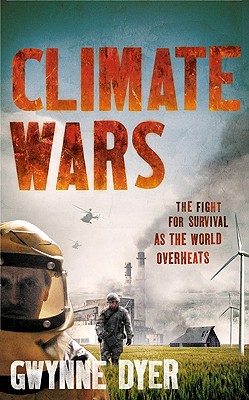
Gwynne Dyer on "Climate Wars: The Fight for Survival as the World Overheats"; A Debate on Geoengineering: Vandana Shiva vs. Gwynne Dyer

Democracy Now

Gwynne Dyer on "Climate Wars: The Fight for Survival as the World Overheats"


As a heat wave from Boston to Baghdad to Beijing sets record-breaking temperatures in cities across the world, a new analysis says the world is headed for an average temperature rise that far exceeds pledges at the Copenhagen climate conference last year. We speak with geopolitical analyst and columnist Gwynne Dyer about his new book, "Climate Wars: The Fight for Survival as the World Overheats."

To Watch/Listen/Read


A Debate on Geoengineering: Vandana Shiva vs. Gwynne Dyer

Supporters of geoengineering have proposed radical ways to alter the planet to decrease the level of greenhouse gas emissions. Proposals include creating artificial volcanoes to pollute the atmosphere with sulfur particles, fertilizing the oceans and placing sun-deflecting aluminum foil in the sky. But opposition is growing to geoengineering. We host a debate between Indian environmentalist, scientist, philosopher and eco-feminist, Vandana Shiva, and geopolitical analyst and columnist, Gwynne Dyer.

To Watch/Listen/Read