My ramblings on beer, beer making, and thoughts from the world of professional brewing. Plus some other stuff that isn't beer related... like travel... and photography...
Last Monday was our last day of exams for our MSc Brewing course, and naturally we went out drinking. We stopped for a pint at Mather's Bar, a relatively famous pub in Edinburgh. Four of our group grabbed pints of Batemans XB Bitter... and we each independently and immediately thought "this is off". The beer was clearly acetic (acidic character often a sign of an older cask). So we sent them back and got something else. The bar staff was very grumpy about this, as they all claimed it was fine when they tasted it (as well by some bloke at the bar drinking Foster's... clearly a man of fine taste). It was clearly off... I don't mind acidic beers, but if I buy a bitter I expect a bitter not a lambic.
To make matters worse, I tasted somebody else's Theakston Old Peculiar as I heard them say "wow, this beer tastes like apples!"... since I know this beer well I knew that wasn't right. I judged it was full of acetaldehyde (green apple character) which can be a sign of infection too or bad brewing practice. I assumed the former. I didn't tell them to send it back as I think I was in enough trouble with the bar staff and my friend seemed to be enjoying his beer regardless.
To make matters even worse, a couple of months ago we had the former brewing students dinner and the pub crawl stopped there for a few pints. I met an older gentleman who was sending back his pint as he said it was acetic. Turns out he was a retired brewer of 30 years.
My point is that there is a pattern of unkempt beers at Mather's. The only bad pints I've had in Edinburgh were there. Cask ales are alive need attention and proper cellarmanship. Bar staff needs training on off flavours. But perhaps if they're tasting the off beer regularly, and nobody complains, then they'll think everything is fine.
Otherwise, Mather's is a great little traditional pub with great beer selection. Its a shame that I'll unlikely go back there.
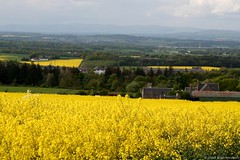
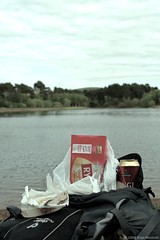
I've been meaning to do more walking around the rural area near where I live on campus just South of Edinburgh. So I went for a decent 3 hour walk today, towards the Pentland hills. I brought along my iPod and caught up on podcasts from Quirks & Quarks, the science show from CBC back home. So those are a few photos from the relatively short hike. I ate some food by a reservoir, it was rather peaceful, although it started to get pretty chilly. Sometime this week I think I'll try to hike right into the pentland hills, which could be an 6-8 hour round trip depending on how many photos I take...
According to this article in todays Scotsman, Brew Dog Craft Brewery faces a threat of a boycott action by advertising watchdog the Portman group. I'm not going to re-write the article here, you can read the article yourself as its not very long. I just have three points I want to make about this issue:
1. I think that some people live in fear that other people will make bad decisions. Its a control issue for them. Its a beer label. Certainly, no label on any product should boast something that isn't true (eg, if you buy our beer women will want have sex with you). The debate gets into implied product effects in marketing, though. Luckily the nanny state is there to protect the most weak-minded of us, who would be convinced by aggressive marketing tactics. Personally, I find it an insult to my intelligence that the Portman group thinks Brew Dog's marketing slogans are too aggressive for my obviously weak mind.
2. Brew Dog makes some DAMN good beers... I'm a professional in the industry, and I've tasted a hell of a lot of 'average' beers. These guys aren't selling beer because of their marketing, they're selling it because they have an artistic talent that makes their beer far better than most beers. Big breweries rely heavily on their marketing, as associating their brand with different footy clubs seems to be the only way to tell the difference between the brands in the 'uninteresting yellow fizz' market.
3. That being said, the big guys and the little guys still ought to play by the same rules for marketing. Of course, the Portman group has only suggested that Brew Dogs marketing mightviolate their rules. And all they can do is initiate a boycott, apparently. But I think people would still buy the beer.
I say Brew Dog keeps marketing the same way they've always done, keep doing a damn fine job making their beers, and I'll keep drinking them (when I can find them, that is). If they get more pressure from this Portman group, thats some pretty good publicity and scores high with the 'stickin it to the man' type people.
Anyway, you ought to read Brew Dog's response on their website, its pretty funny and unprofessional. Its a nice change from the PR crap we're used to. These guys know how to sell beer to me... I'll seek out a pint tomorrow.
This term in "beer school" we're learning all about distilling. And since my university is in Scotland, most of what we learn is about Scotch whisky. I've knows a bit about whisky for some time now, but only what I've been told from other people. Some of it was right, some of it wrong. The amount I've learned in the last few weeks has been quite phenomenal. Most of it was what you'd expect... distilleries, oak casks, maturation, etc. Whisky is a product that has a long history and is surrounded by some romanticism... but certainly its an industry that has also had to grow and adapt to make a profitable business. So the unfortunate part about learning the depths of the distilling industry is you also have some of that romanticism shattered. I would say, however, that a lot in the Scotch industry is still done quite traditionally... more so than other industries.
Anyway, I digress, as the real point of this story is to tell you about some places we're recently visited on class trips. We've visited a couple of distilleries of course. But thats not what I want to talk about. Distilleries are interesting, but they are usually open to the public. I'm going to talk about some locations that few people get to see: a copper smiths where they make the stills, a cooperage where they make the oak barrels, and a huge warehouse where they age the whisky. All three are out near Alloa, NW of Edinburgh on the edge of the highlands.
First, a little background story. All three locations are owned by Diageo, a company that produces many premium alcoholic beverage brands. As far as Scotch goes, they own 28 distilleries in Scotland (about 1/3). Talisker, Carol Ila, Glenkinchie, Lagavulin, and many other single malts are all part of their family. Most Scotch, however, is blended into brands such as J&B and Johnnie Walker (which they also own).
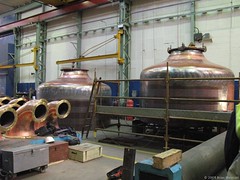
Diageo is quite supportive of the brewing & distilling program here, and have been very kind to give us tours of many of their sites. Diageo is quite well vertically integrated, owning all three places we visited. The first place was a copper smiths where we were quite privileged to see just how copper stills are made. Copper smiths: two new stills! (Click any photo for a larger version!)
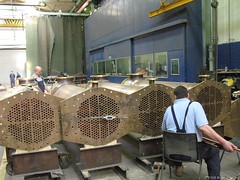
A still is, basically, a big boil kettle that evaporates alcohol then condenses the alcohol-rich vapour. Most Scottish malt distilleries use two stills... the first to strip the wash (beer at about 7-8% abv) of its alcohol and flavour compounds. This creates the low wines (a liquid of about 25% abv), which is then distilled in the second still to approximately 70% abv. Most stills are made of copper, which reacts with sulphur to remove it from the product. The result of this is that the stills need to be replaced every 10 years or so. The Abercrombie Copper smiths do just this for all of Diageo's distilleries. Putting together shell-and-tube condensers that will one day cool new spirit from vapour to liquid.
The construction of a still starts with the welding of copper plates together, followed sometimes by a machine hammering to get the basic shape. The final shape is all pounded in by hand, which is still the best way to do it as it turns out. Needless to say, the shop we visited was quite noisy! At the shop they were producing 14 new stills for a new distillery that will come online next year. Stills are designed to a very specific shape... a small change in design can change the final spirit character. They have to work to exacting specifications. It was very interesting to see where stills are born, it certainly looked like a lot of work. Foreground: the bottom of a new still in production.
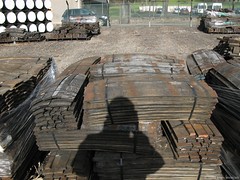
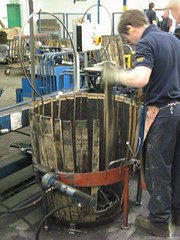
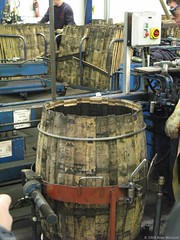
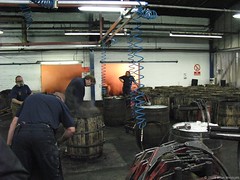
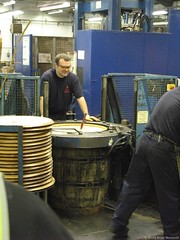
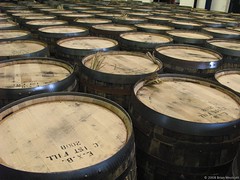
Oak barrels are another key to the whisky industry. By law, all Scotch has to be produced in Scotland and aged for at least three years in barrels less than 700 L in volume. Oak barrels come second-hand from two sources: the American whisky industry (bourbon), and Europe (wine/sherry/etc). A cooper is a highly skilled tradesman that can build these barrels, which consist of staves (thick wood strips) bent into shape and held together with metal rings. The nature of the wood and the compression between the staves results in a liquid-tight seal (although alcohol and water can evaporate through the cask over time). 1) Bunched staves as they arrive from overseas. 2) A cooper placing the staves back together to create the appropriate sized barrel.
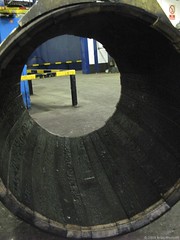
The oak barrels are broken down into the staves, packed on a shipping skid, and shipped over to Scotland. The coopers here put them back together. In traditional cooperages this is all done by hand, but the location we visited was machine assisted (its still a really hard job though!). Casks are charred with a flame on the inside to release wood flavour compounds (and create a layer of carbon that will absorb undesirable compounds from the whisky). 1) The cooper tightens the staves with a machine to place the upper hoop on. 2) casks are steamed to expand the wood, and charred for flavouring. Inside a charred barrel.
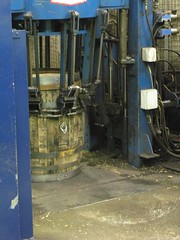
Once the barrels are put back together, newly charred ones are sent off for "sherrying". Now I'll tell you, this is where one of the romantic 'myths' about Scotch that I had heard was refuted right in front of my eyes. The story goes that oak cask with sherry from Spain are shipped to Scotland, where the sherry is removed and bottled for consumption, and the barrels are used for Scotch maturation. Not so. They have a big tank of sherry... they fill the newly charred casks with sherry... they let it age for three months... then they empty the sherry back into the sherry tank (through a filter). They can use the same sherry batch for about 8 or 9 years. Yes, that is what they do. Unfortunately, they don't allow you to take photos in any area that has ethanol floating around in the air, so you'll have to take my word for it (and lets face it, it makes more sense than shipping these casks all over the place). 1) A machine to help place the lid in the cask. 2) A machine to push down the metal rings that keeps the wood tight together.
The purpose of adding the sherry to the cask is a little bit different that I had thought, too. The main purpose of the sherry is to remove some character from a newly charred cask. Otherwise, the character of the wood would overpower the distillery character of the whisky over the maturation time. Apparently it doesn't add colour, that comes from the char and the wood. Finished casks!
Moving on, the third place we were privileged to see was the Blackgrange warehouse. Blackgrange houses about 3.5 million casks of whisky. In duty owed in taxes alone, its about 10 billion pounds sterling. Needless to say... its HUGE. They have very strict regulations too... you can't bring anything that could possibly contain liquid on site, you can't bring matches or lighters, nor cell phones, nor cameras. They are quite paranoid about any accident.
Anyway, there are three key parts to this operation. First, tanker trucks from carrying new make spirit from the distilleries arrive and their contents are pumped to vats. The new make spirit is diluted to usually 63% for aging to get the ideal flavour reactions with the oak wood. New make is horrid stuff, I wouldn't drink it. This is one reason you age for at least three years! The new make is then pumped into casks, sealed with a bung, and carted off to be placed in a massive warehouse. Every cask is bar coded... they know where every cask in that place is!
After aging, casks are brought out from storage and disgorged (emptied). This is done along a troph... simply take out the bung, stick an air tube in the hole (for faster emptying), and turn it upside down. This isn't a terribly sanitary operation, but nothing going to grow in a strong alcohol solution anyway! The whisky is pumped into a big tank, mixed with air for an hour or so, then pumped into tanker trucks. The trucks head off to the packaging facility, where the whisky is filtered, diluted to sales strength (usually 40-45% abv) and bottled!
I think I've rambled on about this enough for now; its hard to convey the enlightenment I've gained in the last few weeks into a small amount of space. If you want to see more photos you can check out my flickr set at http://www.flickr.com/photos/brianwestcott/sets/72157603996924944/
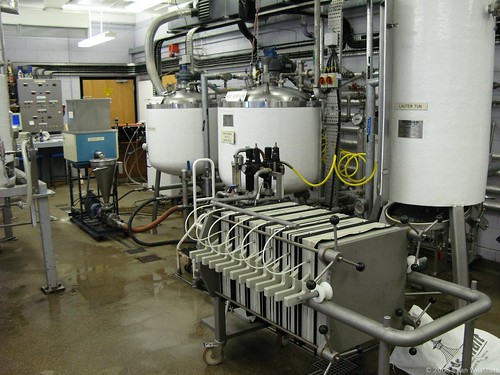
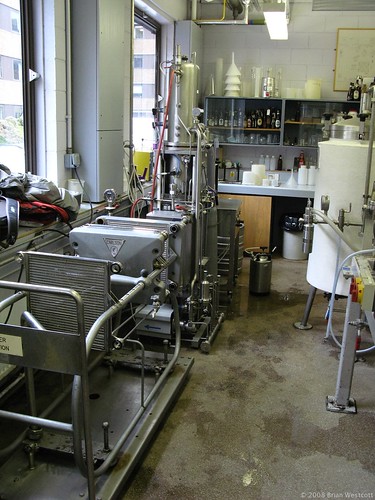
So its about time I posted some photos of the pilot brewery here at school. Its basically a 200 L system custom made just for the school for training purposes. These photos and more can be viewed by clicking on them or as part of this set.
The brewhouse. In front is a mash filter, a common device in larger breweries. There is also a lauder tun, which is a bit more traditional. In the middle to the back is the mash mixer / boil kettle, and a cereal cooker beside it to the left.
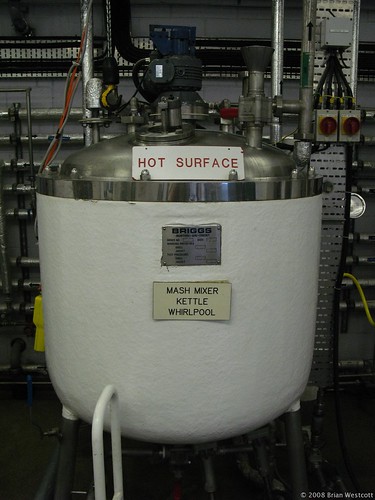
Mash mixer / boil kettle. The boil kettle is fitter with an external calandria, which I think is pretty much the best available wort boiling method if you can afford it.
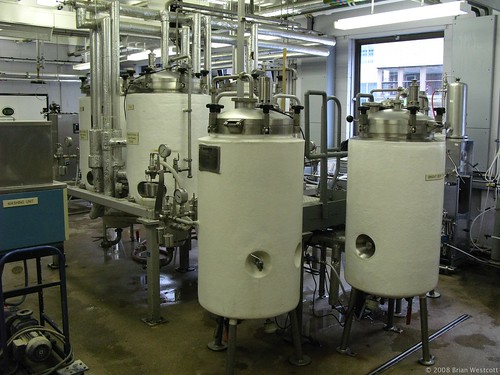
In the front are some cold conditioning tanks, flanked by the fermenters. Everything is glycol jacketed and the fermenters have heaters too.
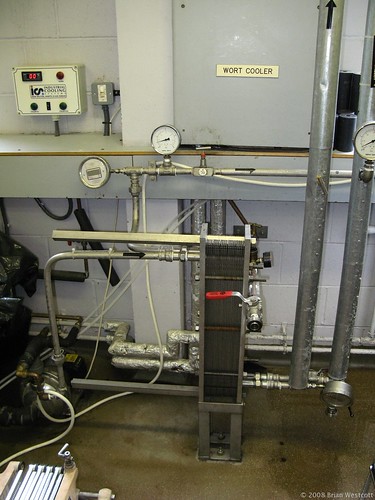
Nice small plate heat exchanger.
A taken-apart sheet filter. The beer produced here isn't usually meant to be sterile. It doesn't have to last more than a few weeks usually, so nothing fancy is needed.
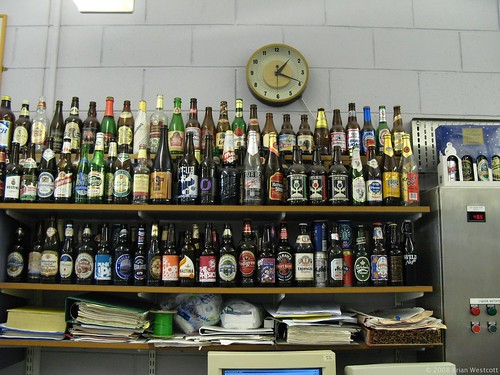
A wall of bottles from around the world, mostly from former brewing students I believe... can you spot the Alley Kat Barley Wine bottle? Thats the brewery I used to work at in Edmonton.
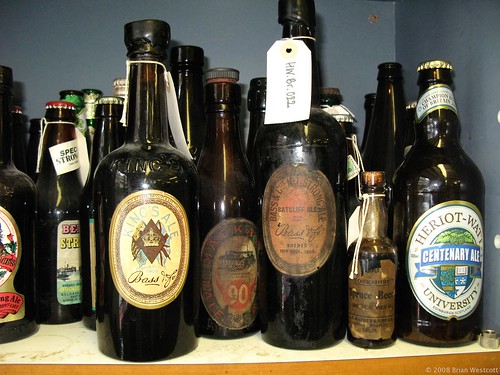
Fucking old bottles... the Bass bottle says it was brewed in 1869!!
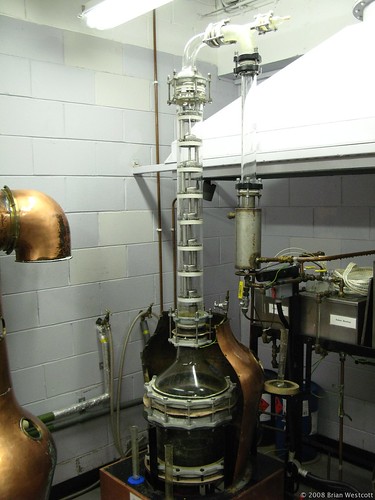
There is also a pilot distillery. This is the spirit still, with a bubble cap distillation column attached to it.
Well, thats it for this update. Enjoy the photos. Cheers
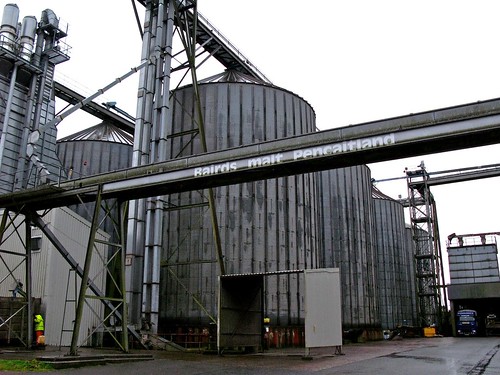
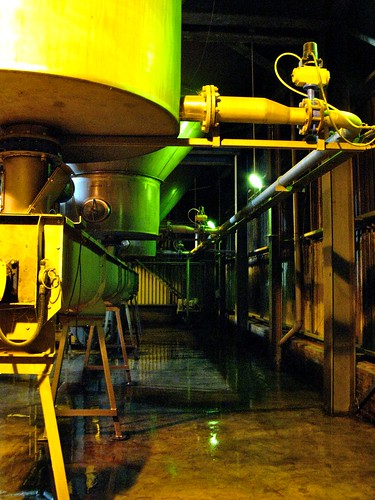
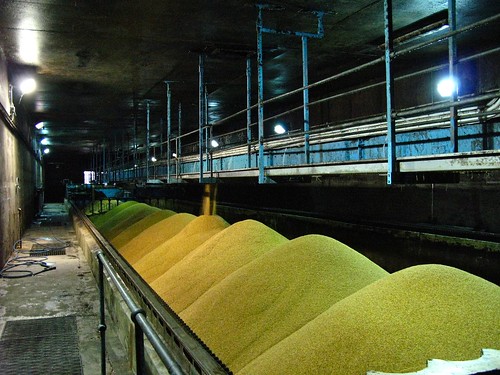
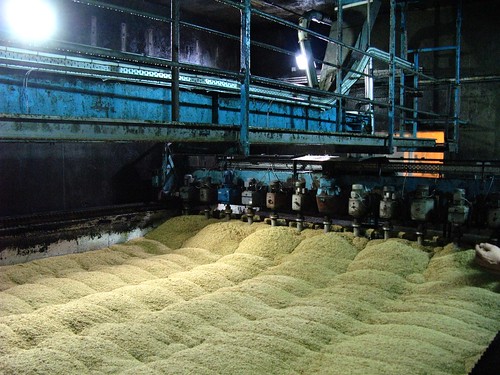
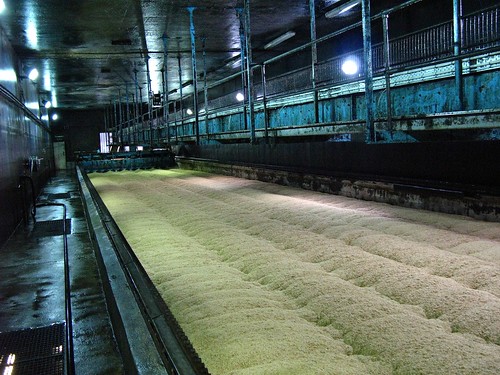
Last week our class took a trip to see a malt production facility. Malted barley comes from... well, barley, and the primary dry ingredient in beer. Baird's Malt, about 30 min outside of Edinburgh, processes quite a bit of malt for the distilling industry which is taking off right now (they have other plants elsewhere that make other malts). I took a few photos... here they are:
So I suppose its time to write a bit about some beers I've had here. Now I haven't been that great on keeping notes on this but this is the few I've written:
Edinburgh "3" Scotch Ale (Cask, 4.3%) Very malty, sweet but balanced with a dry finish. Appropriate "scotch ale" style for sure. Very drinkable, no offensive flavours. Very dark amber-red with moderate head.
Clipper IPA (Cask, 4.2%) Not much on aroma or flavour from hops. Medium hop bitterness, pleasant finish. Not very malty. Dry finish. Quite nice, but also not "interesting". Very drinkable though.
Stewart 80 (Cask, abv?) "Exactly what I think of when I think of a Scottish beer". Malty but not too sweet. Slightly fruity start, very nice dry finish, some roast notes. Quite excellent!
Timothy Taylor Landlord (Cask) Very fruity/estery character, likely from yeast strain used. Again, a dry finish... "proper english pint". Honestly, I found it not that easy to drink, but it was "interesting".
"Moo Coo Brew" (Cask)... unfortunately I remember little about this beer ;)
Where do I like to drink? So far I've found no place better than "The Blue Blazer" down on Bread st. I've been to the Guildford Arms too... but I found it a little pricey. "The Golden Rule" is also a pretty good place with lots of cask pumps.
So now that I've been here at Heriot-Watt University on the outskirts of Edinburgh for a little over half a week, I bet the few readers I have to this blog want to know how its going. To sum it up...
Pretty good. Of course I don't really know anybody yet, but I've met several nice people. I've moved into my residence room and have pasted it with photos and am slowly making it my own (ie, making it messy). I took some photos around the university yesterday. Its a very nice campus, lots of green space. If you click here you can see more photos from the parks around the campus. The walk from my dorm to the place I'll be taking classes is about 10 min. Theres a little convenience store on campus, but for any real food selection I'll have to head out into town for a Tesco or ASDA. Not to worry though, the bus system is pretty awesome. When there isn't too much traffic its a 15-20 min ride to the city center.
I registered for my courses the other day too, its a pretty decent schedule. 9:15 start every day. Some days busy with classes, other days only one lecture. I'll just have to keep on top of my reading, as this is expensive and I haven't been in school for almost 5 years. But its brewing/distilling, and I've had a passion for that for awhile... plus my biochemistry background should help. Apparently the university was built near a graveyard too.
There are several pubs on campus, but the ones run by the university seem closed on the weekend. I liked the Lecern Bar which seems like more of an "old man" bar. Better beer selection than at the student union pubs. Its too bad that due to marketing the most popular beers (and thus the ones sold on tap) are pretty much foreign lagers... not really my thing, I'm looking for a fine english bitter or scottish ale. They exist luckily, but not much variation available.
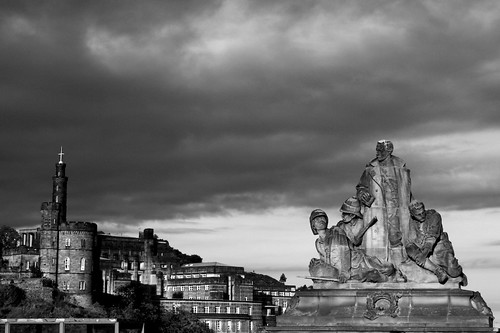
Today I took a hike around central Edinburgh today, its a very nice city. And easier to get around than you'd think. You can't really get lost since you can almost always see the castle or other landmarks. The Castle Oddly, I remembered my way around the city from the last time I was here in 2003. Which led me back to Bobby's Bar where I had a couple of pints of CASK ale (finally!) - first Caledonian 80 (4.?%), a Scottish style of beer thats supposed to be quite malty, but I think the cask was a bit off. Then a pint of Deuchar's IPA (I probably misspelt that), which was rather tasty and only 3.8%. I'd have another pint or three of that. Taken whilst crossing North bridge.
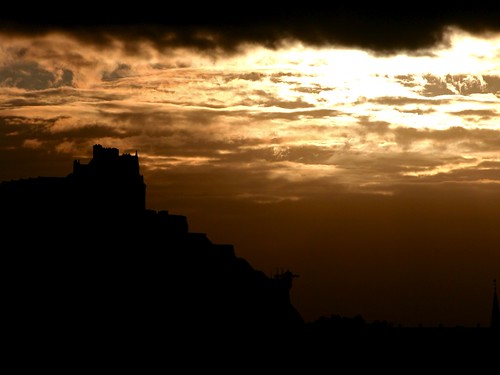
I wandered around quite a bit and snapped lots of photos, the best of which can be found by clicking here. Of course I had to try for a good sunset shot, this was the best I could muster:
Theres something about the way the light reflects in the air in Scotland that I love... in the evening when the sun is getting low there is a ... colour... its hard to describe and I can't seem to capture its essence in a photo (always overexposed or the colour just doesn't come through)... but its peaceful and feels "old". Its a beautiful country, I must make sure I leave time to see it.
I try to make this blog mostly about beer, but lets face it there are other interesting things in life too. So this is really just my blog on me. I just happen to like talking about beer a lot ;)